
Answer First: Match the Model to How Predictable Demand Is
One question: can you forecast this SKU well enough to commit cash to stock abroad?
If demand is still moving, stay origin-side; a repeat pattern justifies a local 3PL.
What China-Side Fulfillment Covers — and What It Does Not
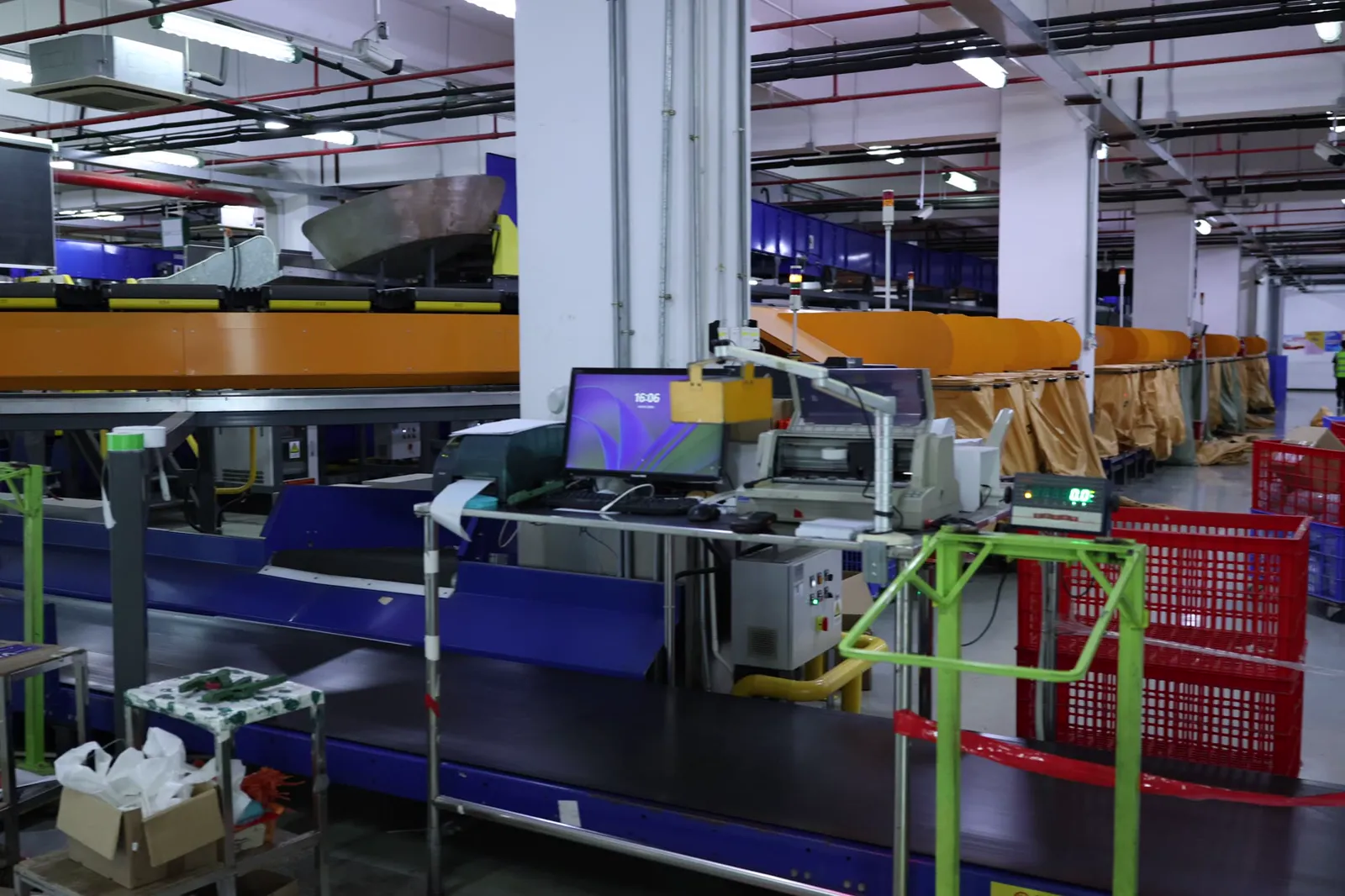
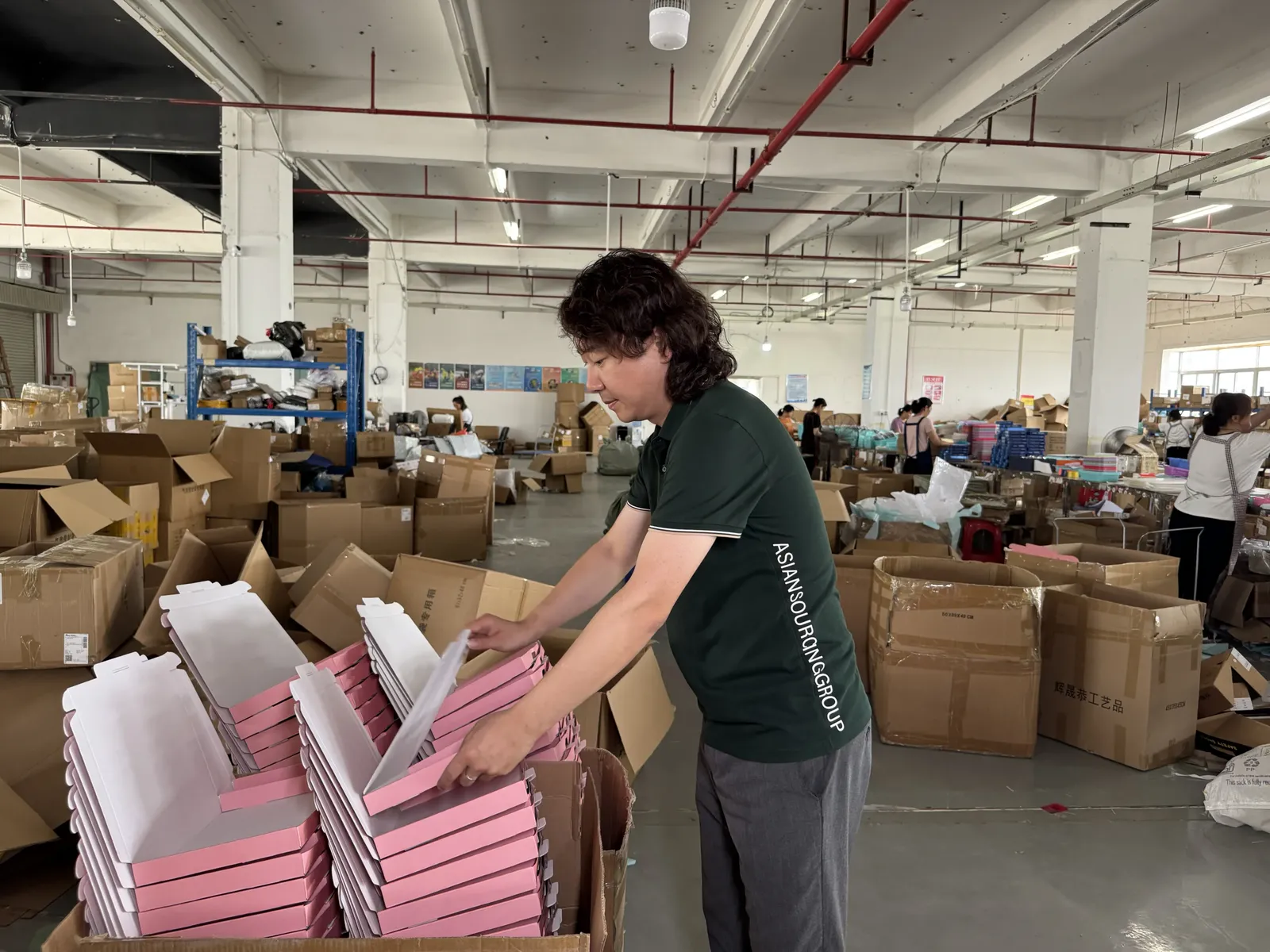
China-side fulfillment assembles and dispatches at origin, next to production — catching a wrong variant before shipping.
It doesn't put stock near your customer; the last leg is a route decision, not a warehouse one.
Shopify defines ecommerce fulfillment as "the process of picking, packing, and shipping online orders to customers" — the same steps regardless of location.
What an Overseas 3PL Covers — and What It Does Not
Responsibility begins once inventory reaches the facility, per Shopify's ecommerce 3PL guide; DHL describes 3PL the same way.
It doesn't select suppliers or inspect at the factory; Shopify's own list stops short of that.
Want the ASG team to check this step for your store?
Compare the Two Models Dimension by Dimension
No row resolves to a winner; each names a condition.
| Dimension | China-side fulfillment | Overseas 3PL | What decides it |
|---|---|---|---|
| Where stock sits | At origin, near suppliers | In the destination market, as your stock | Forecast confidence for this SKU |
| Cash | Closer to per-order | Committed before the first local order | How long cash can sit idle |
| Supplier faults | Caught before dispatch | Found after the border | Supplier and variant stability |
| Packaging changes | A packing instruction | A priced prep task | How often packaging changes |
| Dispatch timing | Origin processing and cut-off | The 3PL's processing terms | Which side is slow today |
| Final leg | Cross-border parcel per order | Domestic parcel from local stock | Whether your promise needs local stock |
| Duties | Per parcel, per destination | Once, in bulk, before stock lands | Whether duty can be paid up front |
| Returns | Return to origin is slow | Local address and disposition included | Return volume and reasons |
| Breaks first | Delivery expectations on slow routes | Storage cost on stalled stock | Which failure you would rather manage |
Sourcing, QC and Packaging Do Not Move With the Warehouse
Shipping location doesn't move production control:
Inventory and Cash Flow Change More Than Delivery Speed Does
Stock nearer the customer shortens the local leg.
Goods, freight, duty and storage paid before shipping.
Example only, not customer data. 600 units selling at 20 a week is 30 weeks of cover; if sales halve, 60 weeks.
Order by reversibility, not speed:
- Supplier holds the stock. Longest customer path; no owned inventory yet.
- Origin-side buffer. Committed, but still routable to any market.
- One overseas position. Faster locally; exposed if that market slows.
- Several overseas positions. Faster in more markets; forecast errors multiply.
Decision rule: storage on stock that sells is operating cost; storage on stalled stock is margin leakage.
Want the ASG team to check this step for your store?
Who Owns Each Handoff, From Inbound to Delivery
Most disputes sit where responsibility ends.
| Stage | China-side fulfillment | Overseas 3PL | Stays with you |
|---|---|---|---|
| Inbound receiving | Counted at origin on arrival | Counted against a booking document | Matching labels, cartons, quantities |
| Receiving discrepancy | Raised while the supplier is local | Raised as a claim, later | Evidence of what was ordered |
| Available to sell | Dispatchable once checked and stored | Received, put away, then synced | Which status your store reads |
| Storage | Short holding before dispatch | A metered fee clock | How much stock meets it |
| Pick and pack | To your packing instruction | To the 3PL's standard process | A followable instruction |
| Carrier handoff | Cross-border route per order | Domestic carrier, the 3PL's routing | Route supports your promise |
| Delivery exception | Chased via origin provider | Chased via 3PL and carrier | Telling the customer something true |
Arrived stock and sellable stock differ — the receiving count separates them.
Returns Are the Dimension Sellers Underestimate
Reverse logistics covers goods moving back for resale, reuse, disposal, exchange or credit. A returned unit isn't automatically sellable stock.
Where does the parcel go?
Who decides its condition?
How does the outcome reach inventory?
China-side setups often use a return address in the customer's country, or refund without a physical return; an overseas 3PL gives a local address, but terms need agreement.

System Sync Is Not Finished When the App Is Connected
Connecting an app moves data, not agreement:
- Which inventory number is authoritative — whether on-hand, available, allocated, reserved, incoming and damaged report separately.
- When an order counts as accepted — a store status such as processing is not proof the warehouse took it.
- Who returns tracking, when, and to where — notifications and platform metrics depend on it.
- What happens when a sync fails — retry, event log, fallback, and who is alerted.
- What the manual fallback is — creating an order or uploading tracking by hand.
Shopify describes real-time visibility as stock counts updating "as items are received, picked, and returned".
Read the Cost Stack, Not the Per-Order Price
A per-order price isn't comparable across different stacks.
| Cost layer | China-side fulfillment | Overseas 3PL |
|---|---|---|
| Getting goods in | Supplier delivery to origin | Freight, duty and clearance, pre-sale |
| Being received | Receiving and inbound handling | Receiving fees; non-compliance charges |
| Sitting still | Short holding before dispatch | Storage, long-term storage, peak storage |
| Being prepared | Packing, inserts, labeling | Pick and pack, prep, kitting, surcharges |
| Going out | Cross-border parcel per order | Domestic parcel plus markup |
| Coming back | Return to origin, or local arrangement | Returns fee, inspection, restock or disposal |
| Being an account | Coordination | Account fees, minimums, setup fees |
| Leaving | Stop ordering | Removal, transfer, disposal, final invoice |
The row most comparisons omit: exit cost.
Want the ASG team to check this step for your store?
The Hybrid Model: Split by SKU, Not by Company
Most hybrid sellers sort a catalog rather than choose a model.
| SKU behavior | Usually placed | Because | Watch for |
|---|---|---|---|
| Unproven or new | Origin-side | Lower up-front commitment | Delivery expectations on slow routes |
| Seasonal or campaign-led | Origin-side, or a late forward buy | Peak storage on a missed peak | Committing before the peak confirms |
| Steady weekly repeat, one market | Forward position there | Forecast supports scheduled replenishment | The first slow month |
| Steady, high return rate | Forward position | Local judgment beats return to origin | Whether restock syncs back |
| Heavy, bulky, low value | Compare both ways | Weight can dominate either stack | Storage cost of that bulk |
| Long tail, low velocity | Origin-side | Cover time is the problem | Aged stock building quietly |
Move one SKU, hold everything else constant, and run it before moving a second. See the agent versus 3PL breakdown.
Decide by Growth Stage, Not by Order Count
Order count is a weak trigger — stage matters more.
| Stage | What is true | Usually fits | Breaks first | Check before moving |
|---|---|---|---|---|
| Testing | Product and market still moving | Origin-side, supplier-held or small buffer | Delivery expectations | Whether the product is validated |
| First winner | One SKU repeats; the rest is noise | Origin-side, plus a forward test on that SKU | Stockouts while ad spend scales | Weekly repeat rate and return rate |
| Multi-market | Same SKUs, several destinations | Origin-side core, one forward position | Duplicated safety stock | Whether one market dominates |
| Stable forecast | Weekly demand predictable, few SKUs | Forward core; origin-side keeps the tail | Aged stock when a trend ends | Cover in weeks if demand halves |
Two signals matter: repeat rate and return rate.
Run These Checks Before You Switch
Complete this list — a blank is a finding.
Checked: 0 / 8
If you can't complete this list, that's the answer.
Want the ASG team to check this step for your store?
Frequently Asked Questions
What is the difference between China fulfillment and a destination-country 3PL?
China fulfillment dispatches each order at origin; a destination 3PL holds inventory first — commitment, not speed.
Which model fits testing, scaling, or stocked inventory?
While you are testing, origin-side fits; once demand is predictable, a 3PL is worth costing out.
When should a seller use a hybrid setup?
When SKUs sit at different stages, mature repeats go forward; the rest stays origin-side.
Will an overseas 3PL make delivery faster?
For SKUs you stock locally, the final leg shortens — you paid for that speed upstream.
Can a 3PL handle sourcing, QC and custom packaging as well?
Some offer prep like labeling, but supplier selection stays outside it.
What costs are easiest to miss when comparing a 3PL?
Long-term storage, non-compliance charges, returns and exit cost.
 Ethan Santos
 James A. Blackwood
 Robert F. Underwood