
Custom Packaging Dropshipping: What to Control Before You Upgrade
Custom packaging dropshipping is justified only when the product, artwork approval, packaging stock, warehouse instruction, shipment geometry and retained evidence can all be controlled. If one is still moving, use neutral packaging with a written pack rule. Most packaging failures are execution problems, not design problems.

01–11
How to read this page. Official sources are used only for the boundaries they state; everything else is an operating method, not proof. No minimum, price, lead time, defect rate, saving or uplift is asserted. Nothing here settles compliance, origin, certification, platform acceptance, carrier liability or an insurance outcome.
Answer First: Upgrade One Layer, Not Four
A parcel is four layers doing four different jobs. Pick the layer that is failing, prove you can control it, change that layer only, and leave the rest neutral until the same test passes again. The final route — keep neutral, pilot or upgrade — depends on what you can put on paper.
This keeps the decision reversible. In dropshipping packaging, a missing insert calls for an insert-routing fix, not necessarily a custom box. A crushed product calls for protection and transit evidence before new artwork. Treating every symptom as a branding problem increases commitment without identifying the failed control.
Four Packaging Layers, Four Different Jobs
Each layer has a different owner, failure mode and closing record.
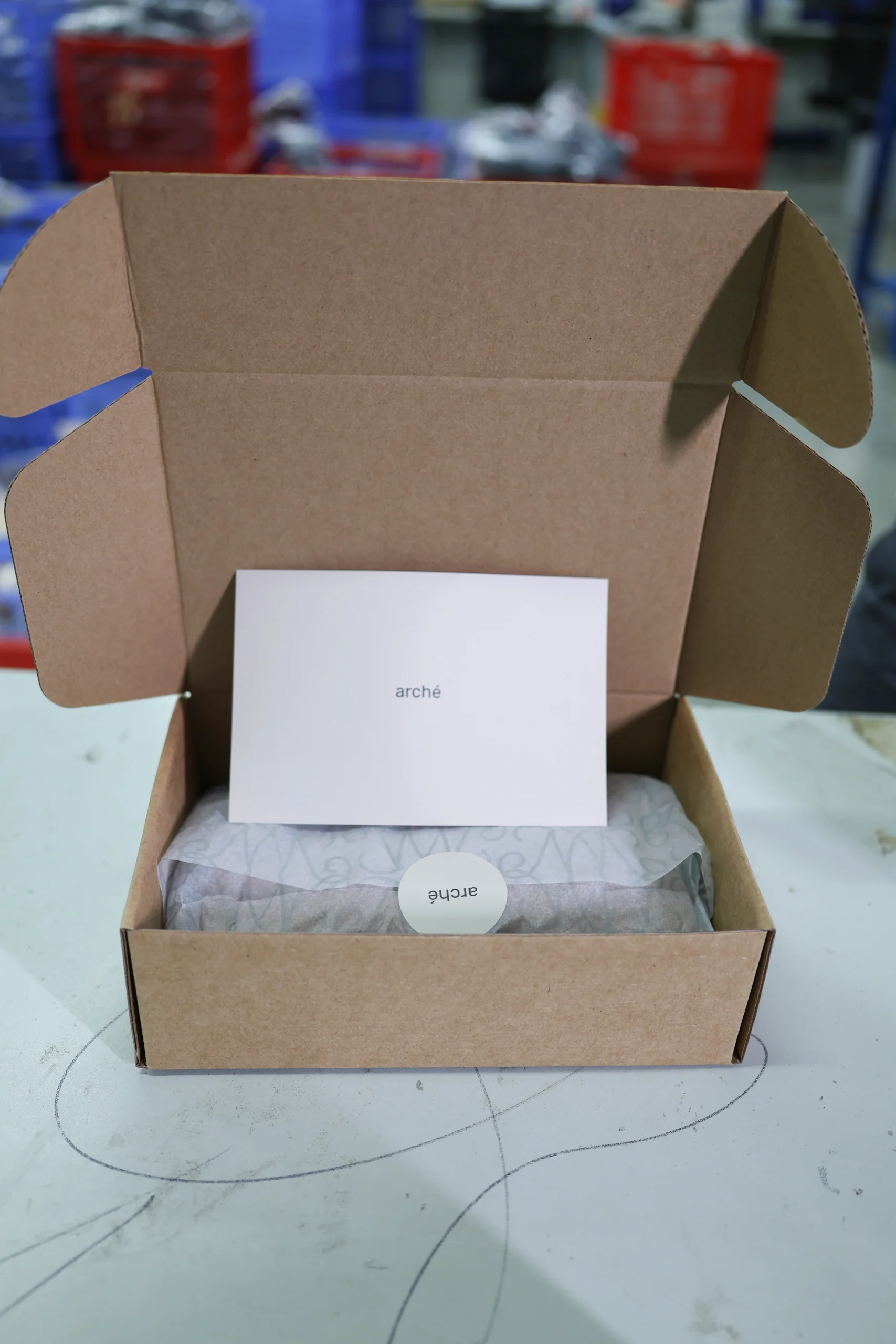
- Layer 1 — sales packaging. The customer-facing pack: identity, product information, warnings, instructions and packaging inserts. It informs; it does not protect.
- Layer 2 — product protection. Bags, trays, sleeves, cushions and separators that keep the item intact.
- Layer 3 — transit packaging. The mailer/carton, void fill and closure that face handling, stacking and moisture.
- Layer 4 — destination packaging. Preparation, labelling and receiving expectations set by a marketplace, warehouse or importer.
Layer 4 is often discovered late. Amazon's programme page describes conditional eligibility, requirements, testing and certification. Walmart's WFS guidance sets destination-specific preparation, packing and labelling expectations. Check current receiving rules for the actual SKU and destination.
Write one owner and one acceptance record beside every layer. A sales pack may be approved visually while its transit carton is still unmeasured; a destination label may be correct while the warehouse has no SKU-to-pack rule. Keeping the layers separate shows exactly which approval is still open.
Upgrade Triggers, Evidence and Hold Conditions
A trigger is an evidenced condition, not a feeling that the parcel looks cheap. Pair it with the smallest justified pilot and a stop condition.
| Trigger | Evidence that makes it real | Smallest pilot | Hold if |
|---|---|---|---|
| Stable product repeats | Dated reorder against one specification | Insert/label on one SKU | Specification moves |
| Supplier material appears | Photos from separate receipts | Neutral pack + written rule | No instruction owner |
| Parcel complaints repeat | Unedited, dated messages | Protection change first | Product itself failed |
| Destination sets rules | Current dated requirement | One compliant inbound shipment | Rule unread |
| Write-off ceiling is written | Accepted loss ceiling | Shortest committed run | Run exceeds ceiling |
| Artwork has an owner | Dieline, version, approver | One SKU/variant/artwork | File is called “latest” |
Without a matching record, a trigger is only a preference.
The hold column matters as much as the pilot. It prevents a good-looking sample from moving forward while the product specification, destination rule or ownership record remains unsettled. The pilot should answer one execution question at a time and stop when its prerequisite changes.
What Each Step Up the Packaging Ladder Commits
There is no universally correct end of this ladder. One step may be your finished state.
| Step | What it commits | What it tests | What it does not fix |
|---|---|---|---|
| Neutral | Written pack standard | Pack-out consistency | Recognition |
| Insert/label | One printed item | Artwork/approval habit | Protection or footprint |
| Branded mailer | Material, size, artwork | Stock and reorder | Rigid/fragile protection |
| Custom box | Structure, dieline, run | Footprint/protection | Product quality |
| Deeper private label | Product, pack, stock | Full commitment | Easy reversibility |
Neutral packaging can remain the final state. Deeper commitment belongs in the private label readiness decision.
Move one rung only when its new commitment answers a current failure. Labels test artwork handling without changing protection; a mailer tests packaging stock and reorder behavior; a custom box adds structure and footprint. Jumping rungs makes it harder to know which change caused the result.
Custom Packaging MOQ Is Fragmented, Not Single
A quoted minimum is rarely one number. Product, material, print and variant each carry their own commitment, so compare custom packaging MOQ line by line.
| Commitment | Usually set by | Moves when | Ask in writing |
|---|---|---|---|
| Product | Stocked or made | Held stock fits | Stock or made-to-order |
| Material | Grade, size, finish | Stock material fits | Available stock size |
| Method and setup | Short run offered | Method/change cost | |
| SKU/variant | Artwork/language count | One variant pilots | Per SKU or order |
| Reorder | Repeat terms | Repeat is agreed | Minimum and lead time |
ASQ describes supplier quality as managed, not guaranteed. Written repeat-run requirements matter more than one good sample. The same supplier verification logic applies to the packaging printer.
Ask the supplier to restate every quote in the same units: per structure, per material, per artwork and per variant. Then separate first-run setup from reorder terms. This does not produce a universal minimum; it only makes two proposals comparable without hiding commitments inside one headline number.
Footprint: Dimensions, Protection and Shipping Exposure
Changing a pack changes its geometry and shipping exposure. Fill the footprint sheet from a measured physical sample, not a drawing.
| Field | What to record | Why it changes exposure |
|---|---|---|
| Product dimensions | Bare item, widest points | Baseline |
| Protected dimensions | Item plus protection | Cushioning growth |
| Pack dimensions | Closed outer L/W/H | Presented footprint |
| Void fill | Material and occupied space | Volume/protection trade-off |
| Gross weight | Complete outbound pack | Weight input |
| Destination/service | Country, service, receiver | Applicable rule |
No divisor, rate or cost outcome is asserted. Check the current service rule. More void fill adds volume; less protection adds risk. Route selection belongs with shipping optimization.
Keep both the product-only and protected dimensions. That difference shows what protection adds before the outer pack is chosen. Record the closed outbound pack separately, because drawings, open cartons and assembled samples can produce different measurements. Re-measure after any material or insert change.
Artwork, Dielines, Labels and Identifier Boundaries
Print runs get repeated because of the wrong file, an unowned label line or an identifier decided after artwork lock. Use an artwork control ledger.
| Ledger field | What it must state | Who owns it |
|---|---|---|
| Structure | Material, closure, cut/fold lines | Named owner |
| Artwork/version | File name and version | Issuer |
| Approval | Approver, date, reference | One person |
| Colour/print | Method, standard, tolerance | Printer |
| Barcode/label zone | Area and scan result | Identifier owner |
| Superseded state | Replaced version/date | Withdrawer |
| Source files | Editable-file holder | Agreed party |
Paying for printing does not automatically transfer the design, dieline, source files or reuse rights; write ownership down.
Approval should name both the object and the reference: artwork version against dieline version, printed sample against the approved file, and label zone against the identifier supplied. A screenshot in a chat is not a superseded-state record unless the withdrawn file and effective date are also clear.
GS1 frames GTIN as product identification, not selling approval. NIST notes that packaging/labels can carry consumer-information and measurement duties; FTC says U.S.-origin claims require substantiation. This page declares no label compliant and makes no origin decision.
Warehouse Execution: Pack Rules, Stockouts and Proof
Branded packaging exists only when the packer follows a written rule.

| Execution rule | What must be written | What happens when it is missing |
|---|---|---|
| SKU mapping | Pack/insert/label per SKU | Generic pack ships |
| Insert routing | Eligible orders | Everyone or nobody receives it |
| Inventory | Quantity/reorder trigger | Stockout |
| Stockout rule | Hold, neutral or substitute | Packer decides |
| Disclosure | Buyer message | Silent downgrade |
| Pack-out proof | Which orders/what view | No complaint baseline |
| Exception owner | Named decision maker | Order ships unresolved |
Packaging QC is a scope decision. Product-only quality control will not catch misplaced print, missing inserts or wrong pack variants.
The instruction must also define what happens when branded packaging is unavailable. Hold, ship neutral or substitute are different customer decisions, not warehouse improvisations. Name the exception owner before inventory reaches the reorder point, and state which orders require pack-out proof.
Packaging Damage Is a Chain, Not a Verdict
"The courier damaged it" is a conclusion, not evidence. Damage is a chain, and each link leaves a different trace.
- Product fragility. Specification and repeatable failure pattern.
- Packaging design. Structure, grade, cushioning, closure and measured sample.
- Packing execution. Pack-out photo against the instruction.
- Warehouse handling. Dispatch-condition records.
- Carrier handling. Arrival condition beside tracking.
- Received evidence. Outer/inner pack, item and retained material.
Read the chain backwards, but assign no liability here. Retain and photograph packaging before evidence is lost.
The chain is useful because each record answers a different question. The specification shows expected fragility; the measured pack shows the designed protection; dispatch proof shows execution; arrival photos show received condition. Missing one link does not prove another party caused the damage—it leaves the diagnosis open.
Keep Neutral, Pilot or Upgrade
Route on what is written down, not on how ready the packaging feels.
- KEEP NEUTRAL — specification, variants or supplier still move. Use a written pack rule and proof requirement.
- PILOT — one trigger and a write-off ceiling exist. Use one SKU/variant, a footprint sheet, approved artwork and first-order proof.
- UPGRADE — every layer has an owner, spec, version and stock rule. Stay inside the ceiling and recheck destination rules.
None of the three routes is a prediction. They sort what you can prove from what you would have to assume.
Record the chosen route, reason, owner and next review trigger. “Keep neutral” should name the missing prerequisite; “pilot” should name the single question and stop condition; “upgrade” should name the stock, version and destination checks that must repeat. That turns the decision into an operating instruction.
Frequently Asked Questions
When should a dropshipping store upgrade to custom packaging?
Upgrade when a stable product repeats, one layer fails measurably, artwork has an owner/version, a written pack rule exists and the run fits an accepted write-off ceiling.
What is the MOQ for custom packaging in dropshipping?
There is no single figure. Product, material, print run and variants each carry a commitment. Ask for every minimum and reorder term in writing.
Does custom packaging make shipping more expensive?
It changes dimensions, void fill and gross weight. Measure a physical sample, record its footprint and check the actual carrier/service rule.
What must be approved before custom packaging goes into production?
Approve the versioned dieline, approver/date, print method, colour standard, tested label zone and measured sample. Record superseded and editable files.
Who is responsible when a package arrives damaged?
Evidence must answer it. Keep outer/inner packaging and item photos, retained material and the dispatch record. This page assigns no fault.
Is neutral packaging with inserts enough?
Often. A written neutral pack rule can standardise pack-out; packaging inserts add a smaller printed commitment. Neither proves recognition has commercial value.
Choosing which packaging layer to change first? Bring the product specification, current pack, destination, absorbable run size and artwork status to discuss brand packaging options .