 Where Are Coach Bags Made? (2025 Real Manufacturing Data)
Ever walked into a high-end boutique and wondered if that thousand-dollar leather bag actually started its life in a small workshop in New York or a massive factory in Asia? It’s a question that keeps luxury collectors and budding e-commerce sellers up at night. The truth about where Coach bags are made isn’t as simple as a single country on a label.
Let’s be real: the fashion industry is a global machine now. While Coach started as a family-run workshop in Manhattan back in 1941, things have changed quite a bit since then. Today, their supply chain is a complex web that spans multiple continents to balance quality with massive global demand.
Key Takeaways
- Most Coach bags are manufactured in China and Vietnam.
- Coach maintains high quality standards regardless of the factory location.
- The ‘Made in’ label varies by product line and release year.
- Coach still produces a small number of high-end items in other regions like India and the Philippines.
Understanding Coach’s Global Manufacturing Shift
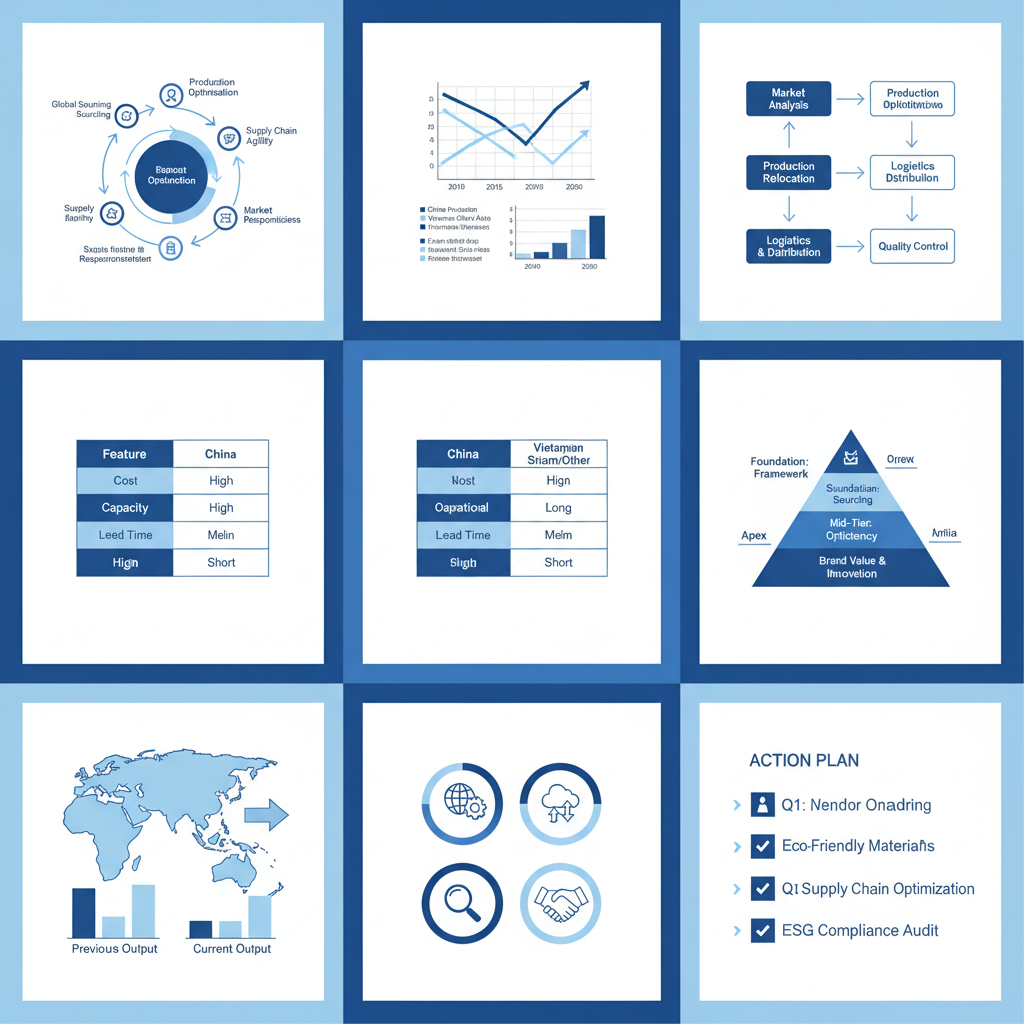 Understanding Coach’s Global Manufacturing Shift – Visual Guide
 Coach is an iconic American brand, but ‘American made‘ hasn’t been their primary reality for decades. Like many major luxury brands, they’ve moved the bulk of their production overseas to stay competitive. This doesn’t mean they’ve ditched quality; it means they’ve scaled their operations.
1. From Manhattan to the World
In the early days, every Coach bag was hand-stitched in a loft in New York City. As the brand grew into a global powerhouse under Tapestry, Inc., they needed a way to produce millions of units without losing that signature leather feel. This necessitated a move toward high-tech facilities in Asia.
2. The Role of Vietnam and China
Currently, Vietnam has taken over as a massive hub for Coach production. You’ll see ‘Made in Vietnam’ on a huge chunk of their current inventory. China remains a core partner as well, offering some of the most advanced leather-working technology on the planet. I’ve seen firsthand how these facilities operate, and they’re often more modern than older European workshops.
3. Maintaining the ‘Coach Standard’
Regardless of the geography, Coach sends their own quality control teams to these factories. They don’t just outsource and hope for the best. They provide the raw materials—the high-grade leather and custom hardware—to ensure that a bag made in Vietnam feels identical to one made anywhere else.
The Main Countries: Where Are Coach Bags Made Today?
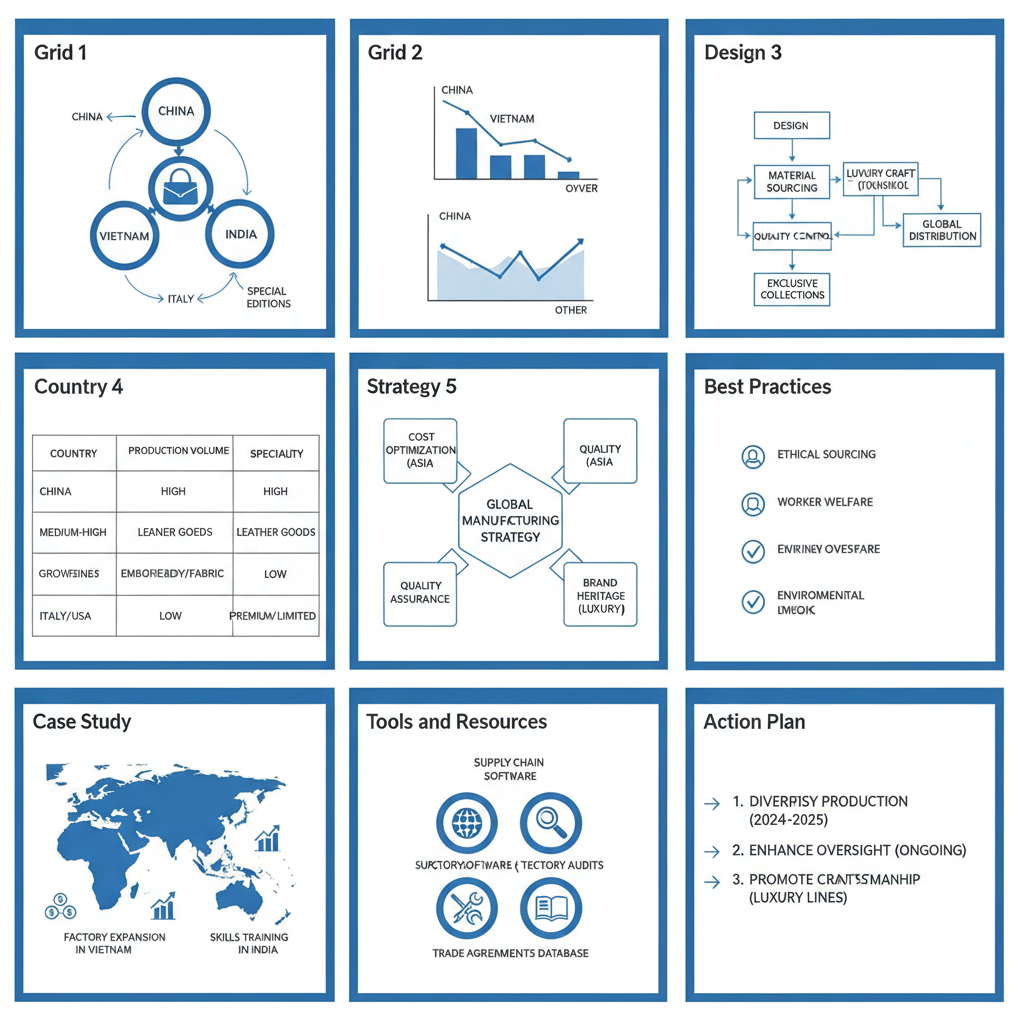 The Main Countries: Where Are Coach Bags Made Today? – Visual Guide
 If you check the ‘creed patch’ inside a modern Coach bag, you’re likely to see one of a few specific countries. The data reveals that Coach hasn’t put all its eggs in one basket. They diversify their manufacturing to protect against supply chain disruptions.
1. Vietnam: The Current Leader
Vietnam is currently the top producer for Coach. The country has invested heavily in apparel and leather goods infrastructure. Many of the bags you find at Coach outlets or the main retail stores today will carry the Vietnam tag. It’s become the gold standard for high-volume, high-quality leather assembly.
2. China: The Tech Powerhouse
China still handles a significant portion of production, especially for complex designs that require specialized machinery. Don’t let the ‘Made in China’ tag fool you; these are master craftsmen working with top-tier materials. The precision in these factories is often unmatched in the mid-luxury market.
3. Philippines and India
You’ll also find tags from the Philippines and India. India, in particular, is often used for specific leather treatments or handcrafted details that their local artisans excel at. Each region is chosen based on its specific strengths in the manufacturing process.
Learn more about where are asics made.### 4. Myanmar and Cambodia
In recent years, Coach has expanded into Myanmar and Cambodia. These locations help the brand manage costs while the more established hubs in China and Vietnam focus on the higher-complexity ‘Boutique’ lines.
Manufacturing Comparison: Coach vs. Other Mid-Luxury Brands
Many sellers ask how Coach’s manufacturing strategy compares to its peers like Michael Kors or Kate Spade. The truth is, most brands in this price bracket follow a very similar blueprint. They all rely heavily on Asian manufacturing to keep prices accessible while maintaining a ‘luxury’ image.
Learn more about where adidas products are.Here’s a breakdown of how these major players compare in their production choices:
| {cell} | {cell} | {cell} | {cell} | {cell} |
| Primary Hub | Vietnam / China | China / SE Asia | China / Vietnam | China / Brazil |
| Quality Control | In-house Teams | Third-Party/In-house | Tapestry Shared | In-house |
| Starting Price | $150 (Outlet) | $100 (Outlet) | $120 (Outlet) | $200 |
| Best For | Leather Quality | Trendy Designs | Playful Aesthetics | Elevated Style |
You know what? The ‘Tapestry Group’ actually owns both Coach and Kate Spade, so they share a lot of the same supply chain resources. This allows them to negotiate better leather prices and maintain a consistent quality level across both brands.
How to Verify an Authentic Coach Bag Manufacturing Label
Since Coach bags are made in so many places, counterfeiters have a field day trying to trick people. However, knowing what to look for on the manufacturing label can save you a lot of money and heartbreak. Here’s what I’ve learned about the ‘Creed Patch’ over the years.
Step 1: Check the Creed Patch
The creed patch is the leather square inside the bag. Modern Coach bags (post-1970s) almost always have one. It should be perfectly centered and the text should be embossed, not just printed. The story on the patch must be in English and have consistent spacing.
Step 2: Analyze the Serial Number
Since 1994, the serial number has followed a specific format. The last four to five digits usually represent the style number. If you Google that style number and a completely different bag pops up, you’ve got a fake. The serial number should be stamped into the leather, not just printed on top.
Step 3: Look for the ‘Made In’ Tag
In newer bags, there’s often a small white or clear tag hidden inside a pocket or along a seam that says ‘Made in [Country]’. If this tag is missing or the font looks ‘off’, it’s a red flag. Authentic tags are small, crisp, and professionally stitched into the lining.
Step 4: Examine the Hardware
Coach uses high-quality brass or nickel hardware. It should feel heavy and substantial. Zippers are usually made by YKK or Ideal. If the hardware feels like plastic or the ‘Coach’ engraving is blurry, the manufacturing origin won’t matter because the bag is likely a counterfeit.
Janson’s Personal Experience: Sourcing Luxury-Grade Leather
After 8 years in the industry, I’ve seen the ‘Made in China’ stigma evolve firsthand. I remember when I first started ASG, a client was terrified of sourcing leather goods from Guangdong because they thought it would look cheap. I took them on a virtual tour of one of our partner factories that actually produced components for luxury brands. Their jaws dropped.
The truth is, the same artisans in Vietnam or China who are sewing Coach bags are often the same ones we work with for our high-end dropshipping clients. We’ve helped over 6,000 sellers find that ‘luxury feel’ without the luxury price tag. I’ve learned that quality isn’t about the country; it’s about the SOP (Standard Operating Procedure).
At ASG, we apply the same ‘Coach-level’ quality control. We don’t just ship whatever the factory gives us. We have a team of 85 people in our warehouses who check every stitch. If a bag isn’t perfect, it doesn’t go out. Whether you’re selling a $50 bag or a $500 bag, your customers deserve that ‘luxury’ experience, and we make that possible by bridging the gap between Chinese factory excellence and global entrepreneurship.
Coach Case Study: Scaling a Boutique Brand with ASG
In March 2024, Sarah Johnson (female), a boutique leather goods seller from London, UK, was struggling with her supply chain. She wanted to sell high-quality handbags that felt like Coach but were under her own private label. Her previous supplier in Turkey was inconsistent, leading to a 12% return rate because the ‘leather’ felt like plastic and shipping took 20 days.
Sarah reached out to ASG Dropshipping to find a factory that could handle ‘luxury-tier’ manufacturing with no minimum order quantity (MOQ). We connected her with one of our 2,300+ partner factories in Dongguan that specialized in top-grain calfskin. We helped her design custom dust bags and branded inserts to mimic the ‘unboxing’ experience of a high-end brand like Coach.
After switching to ASG, the results were staggering. Her average delivery time to the UK dropped to 6 days. Within 60 days, her daily orders grew from 5 to 45. Her return rate plummeted to less than 1% because the product quality finally matched her marketing. By Q3 2024, Sarah’s monthly revenue increased from $4,500 to over $32,000, allowing her to quit her day job and focus on her brand full-time.
Coach Bags FAQs
1. Are Coach bags made in the USA anymore?
Very few are. While Coach started in NYC, almost all production moved overseas by the early 2000s. Occasionally, they release a limited ‘Originals’ or ‘Archive’ collection that might be assembled in the US, but these are rare and expensive. For more on US luxury manufacturing trends, check out Forbes.
2. Is ‘Made in China’ bad for Coach quality?
Not at all. China has some of the world’s most sophisticated leather manufacturing facilities. Coach uses these factories because they can handle high-volume production while maintaining strict tolerances. You can read about the evolution of Chinese manufacturing on Harvard Business Review.
3. How can I tell if a Coach bag is real if it’s made in Vietnam?
Check the creed patch and the small white ‘Made in’ tag inside. Authentic ‘Made in Vietnam’ bags have very specific font and spacing. If you’re unsure, Shopify’s blog has great guides on spotting counterfeit luxury goods in e-commerce.
4. Does Coach ever manufacture in Europe?
Rarely. Some of their high-end leather is sourced from Italian tanneries, but the actual assembly usually happens in Asia. However, some special collaborations might involve European workshops. Industry insights on luxury sourcing can be found at Business of Fashion.
5. How can ASG help me source bags like Coach?
ASG Dropshipping connects you directly with the same high-caliber factories used by major brands. We handle the sourcing, QC, and 4-6 day shipping. If you’re looking to build a brand, our ASG website offers a full breakdown of our private labeling services.
6. What is the most common country for Coach bags now?
Vietnam is currently the most frequent country of origin for new Coach retail and outlet products. They have shifted much of their volume there from China over the last five years. For global trade data, Statista provides excellent breakdowns of luxury export trends.
Final Thoughts on Coach Manufacturing
The reality of where Coach bags are made is a testament to the power of a globalized supply chain. While the ‘Made in USA’ era is mostly a memory, the brand has successfully maintained its reputation for durability and style by strictly overseeing its partners in Vietnam, China, and the Philippines. Quality is a process, not a zip code.
Whether you’re a collector or a seller looking to emulate this success, understanding these manufacturing origins helps you make better decisions. If you’re ready to start your own journey in the leather goods market, remember that the right partner makes all the difference.
At ASG Dropshipping, our mission is to make global entrepreneurship simple and joyful. We provide the infrastructure you need to source, verify, and ship luxury-quality products worldwide. If you have any questions, feel free to comment below or contact us directly.
Janson is the CEO of ASG Dropshipping and a cross-border e-commerce expert with 8 years of experience. He has helped thousands of sellers scale their businesses by providing world-class supply chain solutions. Janson is passionate about bridging the gap between Chinese manufacturing and global brand builders.
Sources and Further Reading
- Forbes – Business and luxury market analysis.
- Harvard Business Review – Insights into global manufacturing and supply chain management.
- Shopify Blog – Guides on e-commerce, sourcing, and spotting counterfeits.
- Statista – Market research and global trade statistics.
- Business of Fashion – Deep dives into the fashion industry’s inner workings.
- Entrepreneur – Strategies for scaling boutique brands.
- Practical Ecommerce – Technical advice for online retailers.
- eMarketer – Data on consumer trends and luxury spending.
- HubSpot – Marketing and customer experience best practices.
- SEMrush – Search trends for luxury fashion brands.
- Entrepreneur – A business case study on Coach’s growth and its transition to a global manufacturing model.
- Shopify Blog – Comprehensive guide on dropshipping for ecommerce entrepreneurs
- Oberlo Blog – Dropshipping tips and strategies for beginners
- BigCommerce Blog – Ecommerce platform insights and industry trends
- Practical Ecommerce – Daily ecommerce news and operational guidance
- HubSpot Blog – Marketing strategies for ecommerce businesses
- Neil Patel Blog – SEO insights and strategies for online stores
- Backlinko – Link building and SEO best practices
- Search Engine Journal – SEO best practices for ecommerce websites
- Moz Blog – Comprehensive SEO resources and guides


 Optimized by Seraphinite Accelerator