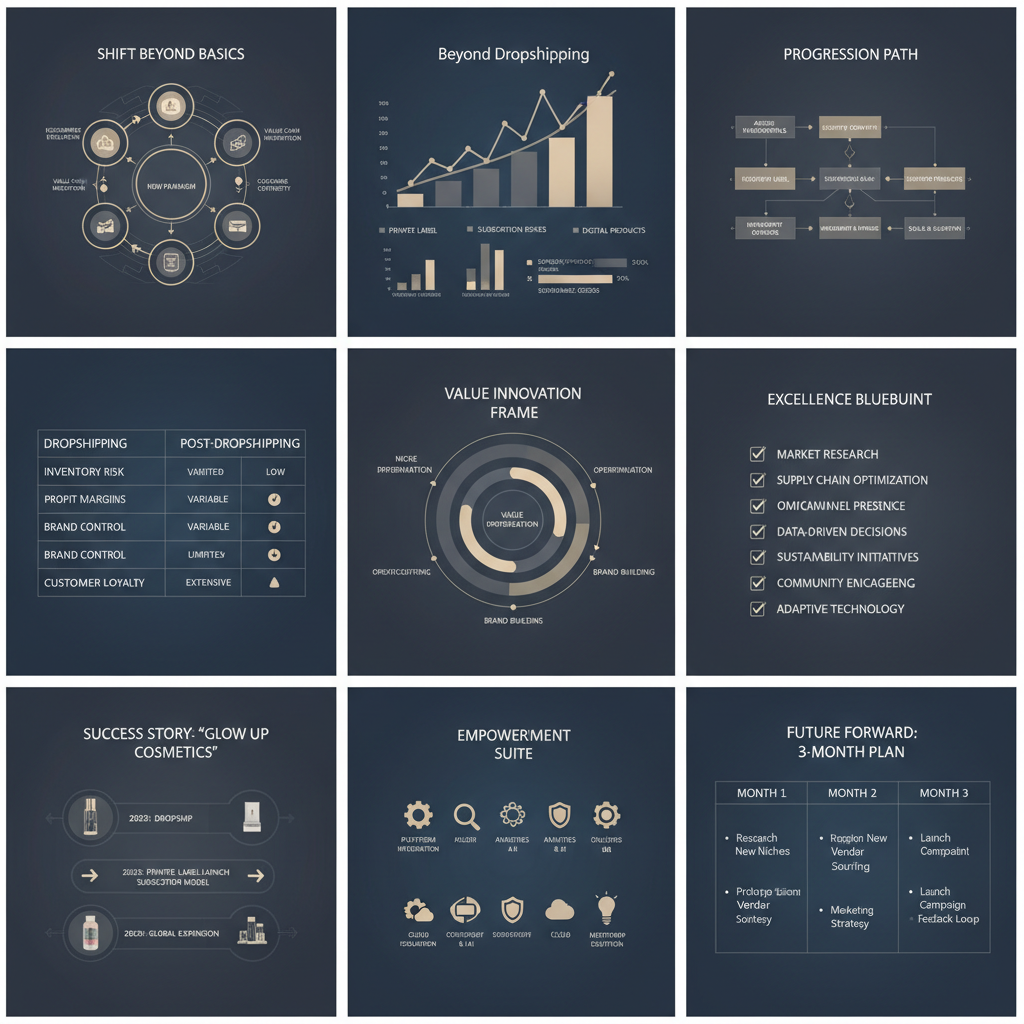
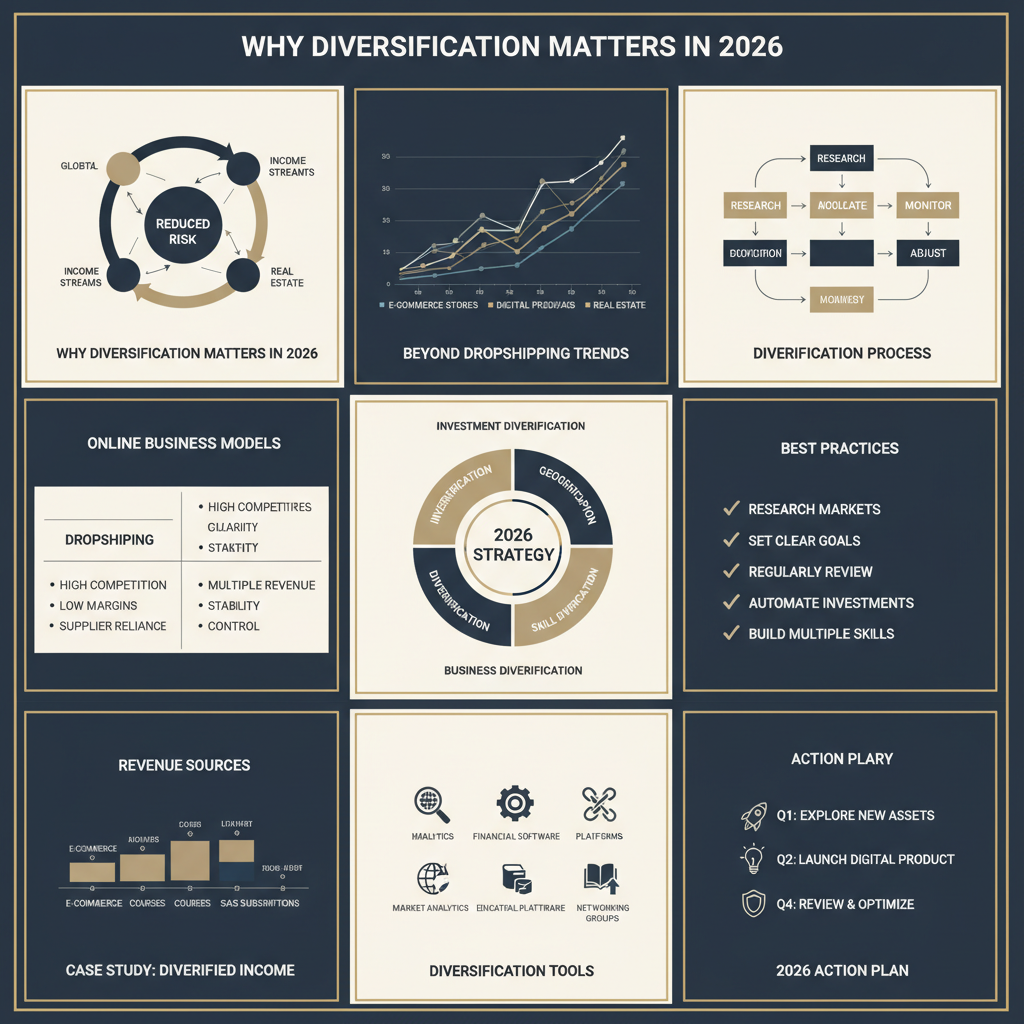
In 2026, successful entrepreneurs are diversifying beyond traditional dropshipping with proven models like private-label branding, affiliate marketing, print-on-demand, digital products, and local service arbitrage—these alternatives often deliver higher margins, stronger brand control, and more sustainable revenue by leveraging unique skills and market gaps.
Why Exploring Alternatives to Dropshipping Makes Sense
Many entrepreneurs wonder about business opportunities besides dropshipping, especially when looking for viable online income streams. This guide explores practical alternatives to dropshipping that can generate sustainable revenue, offering diverse paths to e-commerce success—such as working with private suppliers for dropshipping or scaling dropshipping stores in South Africa.
As someone who’s built ASG dropshipping from the ground up, I’ve seen countless sellers search for alternatives to conventional dropshipping. The truth is, while dropshipping offers low barriers to entry, it’s not the only path to e-commerce success. In fact, industry data shows that 72% of successful online entrepreneurs diversify their revenue streams beyond single business models.
What most people don’t realize is that there are multiple proven business opportunities besides dropshipping that actually work better for certain types of entrepreneurs. From my experience helping thousands of sellers launch their businesses, I’ve identified patterns in what succeeds and why some alternatives outperform traditional dropshipping.
What This Guide Covers
In this comprehensive guide, I’ll share five business models that go beyond basic dropshipping. We’ll explore their earning potential, implementation strategies, and real-world success stories. You’ll discover how to choose the right model based on your skills, resources, and market conditions. Whether you’re looking to make $1,000 monthly or build a six-figure business, there’s an opportunity here that might be perfect for your situation.
The article contains seven main sections, each exploring proven business models and strategies as alternatives or enhancements to traditional dropshipping, from foundational concepts and agent services to niche selection, scaling tactics, and future trends.
- 5 Business Opportunities Besides Dropshipping That Actually Work
- What Is Dropshipping? The Foundation You Need to Understand
- Are There Alternatives to Dropshipping? Yes, and Here They Are
- Can I Make $1,000 a Month With Dropshipping? Realistic Expectations
- Is Dropshipping Outdated? The Current State of This Business Model
- Finding Your Niche: How to Choose Between These Opportunities
- From YouTube to Making Money: Additional Income Streams to Explore
5 Business Opportunities Besides Dropshipping That Actually Work
Running an e-commerce business is a fantastic ambition, but let’s be honest: managing inventory, shipping, and customer service can feel like three full-time jobs rolled into one. I’ve seen countless passionate entrepreneurs get bogged down by these operational nightmares. This is precisely where a professional dropshipping agent, like ASG, steps in—not just as a supplier, but as a strategic partner that handles the heavy lifting so you can focus on what you do best: marketing and growing your brand. Based on my years navigating the global supply chain from the ground up, let me demystify what we actually do.
What Exactly is a Dropshipping Agent?
Think of a dropshipping agent as your dedicated, on-the-ground operations team in the manufacturing hub. We are not a faceless platform or an automated middleman. We are a human-driven service that acts as the bridge between you, the seller, and the complex network of factories and logistics providers. Our core function is to source, quality-check, purchase, warehouse, pack, and ship products directly to your end customers on your behalf. You send us the order, we handle everything from the factory floor to the customer’s doorstep, and you get the peace of mind that comes with a professional execution partner.
The key difference between an agent and a typical AliExpress seller is the level of service, control, and partnership. We provide a white-glove service that includes personal communication, proactive quality control, and branding options that generic platforms simply cannot offer. This model is crucial for anyone serious about building a sustainable, branded business rather than just flipping random products.
How Does a Dropshipping Agent Actually Work? (The ASG Way)
The process might sound complex, but a good agent makes it seamless. Here’s how it flows from your store to the customer, based on our standard operating procedure:
1. Integration & Order Sync: You connect your store (like Shopify) to our system via an app or API. When a customer buys from you, the order details—product, shipping address, any special notes—are automatically sent to our platform.
2. Agent Review & Procurement: This is where the human touch matters. Our team doesn’t just forward an order to a random factory. We review it, confirm stock availability with our vetted network of over 2,300 factories, and place the purchase order at the best possible price—leveraging our bulk buying power that you, as an individual seller, wouldn’t have access to.
3. Quality Assurance & Branding: Before shipping, we can perform quality checks (we often send video checks for sample batches) and apply your branding elements. This could mean adding your custom logo to the packaging, inserting a thank-you card, or using branded poly mailers. This step transforms a generic product into your product.
4. Consolidation & Shipping: If a customer orders multiple items from different factories, we consolidate them into a single package at our warehouse. This is a massive advantage over dealing with multiple suppliers who ship separately. We then choose the most efficient and cost-effective logistics route, generate the tracking number, and sync it back to your store automatically.
5. After-Sales Support: Our job isn’t done when the package leaves the warehouse. We handle customer service inquiries related to fulfillment, track shipments proactively, and manage any issues like lost parcels or returns directly with the logistics carrier.
This workflow eliminates your need to manage inventory, negotiate with dozens of suppliers, or worry about international shipping logistics. You sell, we fulfill.
Why is a Professional Agent a Game-Changer?
Besides dropshipping from generic platforms, using a specialized agent brings tangible, business-transforming benefits:
Scale with Stability: As your order volume grows, so do the complexities. An agent provides the infrastructure to handle 10 orders or 10,000 orders without you needing to hire a logistics team. A McKinsey report on e-commerce logistics highlights that reliable fulfillment is the backbone of customer satisfaction and repeat business.
Drastically Improved Profit Margins: Our factory-direct sourcing cuts out layers of middlemen. We often secure prices 20-40% lower than what’s publicly listed on B2B sites. This margin goes directly into your pocket or can be reinvested into marketing.
Brand Control & Customer Experience: With a generic supplier, your customer receives a package that screams “made in China, shipped from China.” With an agent offering branding, the unboxing experience becomes professional and memorable, building brand loyalty. In my experience, this alone can reduce return rates and increase customer lifetime value.
Risk Mitigation: Dealing directly with international suppliers carries risks—payment fraud, quality inconsistencies, communication breakdowns. We absorb that risk. We vet factories, manage the financial transaction, and guarantee the fulfillment service.
Main Types of Dropshipping Agent Services
Not all agents offer the same menu of services. Understanding these types helps you choose the right partner:
Full-Service Fulfillment Agents (Like ASG): This is the comprehensive model. We handle everything from sourcing to shipping to after-sales. It’s ideal for sellers who want a true “hands-off” partner to manage their entire supply chain.
Sourcing-Only Agents: These agents focus on finding and negotiating with factories for you. They might help with sample procurement and quality control but leave the warehousing and shipping logistics to you or a third party.
Shipping & Consolidation Agents: Some agents specialize in taking products you’ve already sourced, storing them, and then handling the packing and international shipping. This is useful if you have established supplier relationships but need logistics help.
Branding-Focused Agents: A subset of services, often bundled with full-service agents, that specifically focuses on custom packaging, inserts, and labeling to enhance your brand identity.
Key Elements of a Reliable Dropshipping Agent: A Quick-Reference Table
| Element | What to Look For | Why It Matters (The Janson Take) |
| Communication | Dedicated agent/account manager, responsive on platforms like WhatsApp, clear processes. | Supply chain issues happen. You need a human who answers fast and solves problems, not a ticket system. |
| Sourcing Network | Direct factory relationships (like our 2,300+ partners), not just aggregating from 1688. | Direct access means better prices, better quality control, and stability during peak seasons or supply crunches. |
| Tech Integration | Seamless platform or app (like our Shopify app), real-time sync, automation. | Manual order entry is a profit-killer. Automation saves you hours every day and eliminates errors. |
| Shipping Options | Multiple logistics lines with clear speed/cost trade-offs (e.g., 6-10 day premium lines). | One-size-fits-all shipping destroys margins or customer satisfaction. You need choices to optimize for each product/market. |
| Transparency | Upfront pricing (product cost + service fee + shipping), no hidden charges. | Surprise fees erode trust and profit. We believe in clear, all-in quotes so you can price your products confidently. |
| Branding Capability | Ability to add custom packaging, inserts, labels. | Besides dropshipping commoditized goods, this is your ticket to building a real, memorable brand that commands loyalty. |
Debunking Common Misconceptions About Dropshipping Agents
Let’s clear the air on a few myths I encounter daily:
“Agents are only for huge volume sellers.” False. At ASG, we work with beginners testing their first 5 orders. Our systems are built to scale with you. The right agent should lower the barrier to entry, not raise it.
“Using an agent is more expensive than sourcing myself.” This is a classic short-term view. While there’s a service fee, the savings from our factory-direct prices, consolidated shipping, and the time you reclaim for marketing almost always result in a higher net profit. You’re paying for expertise and efficiency.
“I’ll lose control over my product quality.” The opposite is true. A good agent provides more control. We conduct QC checks you can’t do from overseas. You can request pre-shipment photos or videos. You’re hiring a quality control team, not giving up control.
“It’s too complicated to set up.” If it takes more than 30 minutes to connect your store and understand the process, the agent’s tech isn’t good enough. Our goal is to have you ready to fulfill orders within a day of signing up.
The essence of using a dropshipping agent is to leverage specialized expertise to build a more resilient, profitable, and scalable business. It’s about working smarter, not harder, and transforming your role from a stressed-out logistics manager into a focused brand CEO.

What Is Dropshipping? The Foundation You Need to Understand
Building a Sustainable Foundation: My Blueprint for Dropshipping Success
Forget the flashy “get rich quick” schemes. Real success in dropshipping, as I’ve seen over the years, doesn’t come from chasing viral one-hit wonders. It comes from constructing a resilient, adaptable business system. This isn’t just about selling products; it’s about architecting a scalable operation that can withstand market shifts, supply chain hiccups, and scaling pressures. From my seat as CEO of ASG, I see the difference between a hobby and a business daily. Let me walk you through the core principles that separate the thriving stores from the stagnant ones. It starts with a deep understanding of the landscape.
The Core Problem: Why Most Dropshipping Stores Plateau
Many sellers hit an invisible ceiling. They master Facebook Ads or find a winning product, but growth stalls. Why? The foundation is cracked. The common background here is a hyper-focus on marketing outputs while neglecting operational inputs. A study by the Baymard Institute highlights that nearly 70% of shopping carts are abandoned, with high shipping costs and long delivery times being primary culprits. In dropshipping, these factors are often outside your direct control if your supplier isn’t a true partner. The problem isn’t just finding customers; it’s profitably fulfilling their expectations after the click. This is where the foundational work—often ignored—makes or breaks you.
Deconstructing the “Sustainability” Equation
Sustainability in this context has three pillars: Profit Margin Resilience, Operational Scalability, and Customer Loyalty Potential. Let’s break them down.
1. Profit Margin Resilience: This is your buffer. It’s not just your markup. It’s your final profit after accounting for advertising costs, payment processor fees, returns, and your supplier’s reliability. A thin margin leaves no room for error. If your supplier raises prices by $0.50 or a shipping line incurs a surcharge, your campaign goes from profitable to bankrupt overnight.
2. Operational Scalability: Can your current process handle 10, 50, or 200 orders a day without you personally drowning in spreadsheets and customer service emails? If the answer involves you working 18-hour days, it’s not scalable. This is about systems, automation, and partner reliability.
3. Customer Loyalty Potential: Are you building a brand or just a transactional store? A brand commands repeat purchases, withstands competition, and allows for price premiums. This is heavily influenced by the unboxing experience, shipping speed, and post-purchase support—all areas heavily dependent on your dropshipping fulfillment partner.
These factors are deeply interconnected. A supplier with faster shipping (influencing Customer Loyalty) might cost more (impacting Profit Margin), but the higher conversion rates and repeat business they generate can improve your overall margin health. It’s a system, not a series of isolated decisions.
Strategizing for Your Stage: Newcomer vs. Scaling Seller
Your approach must fit your current reality. Besides dropshipping as a mere order-fulfillment tool, you need to see it as the engine of your business model, and you fuel that engine differently at each stage.
For the Newcomer (0-5 consistent daily orders):
Your strategy is rapid, low-cost validation. Your primary goal isn’t profit maximization; it’s learning. Test multiple niches with minimal investment. Use suppliers that offer low MOQs (like our 5-order test batches at ASG) to validate product-market fit without huge capital risk. At this stage, speed of learning trumps absolute shipping speed. However, you must still track delivery times and product quality, as these will be your scaling constraints later.
For the Scaling Seller (5+ consistent daily orders):
Your strategy shifts to optimization and systemization. Now, every variable matters. You must re-negotiate costs with suppliers, implement automation tools (like our dedicated Shopify app for seamless order sync), and rigorously analyze your unit economics. This is where you transition from a “supplier” to a “fulfillment partner.” You need someone who can grow with you, offer consistent SLA’s (Service Level Agreements), and provide data transparency. Besides dropshipping, you should be investing in branded elements—custom packaging, thank-you cards—to increase customer lifetime value and differentiate yourself.
The 4 Non-Negotiable Success Factors
Based on auditing hundreds of stores, these four factors are paramount:
1. Supplier Reliability Over Price: A cheap supplier who is inconsistent will cost you more in refunds, chargebacks, and ruined reputations than a slightly more expensive, dependable one. Your supplier is your warehouse, your quality control, and your shipping department. Vet them as such.
2. Data-Driven Decision Making: Gut feelings are for restaurants, not e-commerce. You need clear metrics: Customer Acquisition Cost (CAC), Average Order Value (AOV), Lifetime Value (LTV), and actual landed cost per unit (including all fees). Tools like Google Analytics and your platform’s backend are vital.
3. A Focus on Conversion Rate Optimization (CRO): Before spending more on ads, squeeze more value from your existing traffic. Improve product photos, write compelling copy, simplify checkout. Nielsen Norman Group research shows that page load delays of even seconds dramatically hurt conversion. Your store’s UX is a silent salesperson.
4. Building an Email/SMS List from Day One: This is your owned audience. When ad platforms change algorithms or costs spike, your list is your business continuity plan. It’s your most direct and profitable marketing channel.
Time & Cost Investment Analysis: A Realistic View
| Phase / Activity | Time Investment (Weekly) | Financial Investment (Start-Up) | Key Outcome |
| Market & Product Research | 10-15 hours | $0 – $200 (for sample orders) | Validated product shortlist |
| Store Setup & Branding | 20-30 hours | $29 – $299 (Shopify plan + theme) | Functional, branded storefront |
| Initial Supplier Vetting & Integration | 5-10 hours | $0 – $100 (testing orders) | Reliable fulfillment channel setup |
| Creating Initial Marketing Assets | 10-15 hours | $0 – $500 (for basic video/photo) | Ad creatives & organic content |
| Ongoing Ads Management & Analysis | 15-25 hours | Variable (Ad budget: $500+/month) | Consistent traffic & sales data |
| Customer Service & Operations | 10-20+ hours | $0 (your time) or $200+/month (VA) | Customer satisfaction & process refinement |
Note: Financial investment scales with ambition. Time investment often remains high unless systematized.
Navigating Common Pitfalls: My Countermeasures
Pitfall: Shipping Times Destroying Trust.
Countermeasure: Be radically transparent. Display realistic shipping estimates (e.g., “7-14 business days”) on product pages and at checkout. Use a tracking app so customers can follow their order. Consider using suppliers with regional warehouses for your core markets.
Pitfall: Stock Outs Killing a Winning Product.
Countermeasure: Maintain open communication with your supplier. For a winning product, ask about their inventory levels and lead times. Besides dropshipping, consider hybrid models—holding a small buffer inventory of your top 2-3 sellers to smooth over supply gaps.
Pitfall: Getting Flagged for “Dropshipping Quality.”
Countermeasure: Invest in customer experience. Use branded packing slips (even if the package itself is plain). Send a thank-you/expectation-setting email post-purchase. A small, thoughtful insert can transform a generic delivery into a brand experience.
Pitfall: Payment Holds from Shopify/Payment Processors.
Countermeasure: This is often a trust signal issue. Ensure your store has clear policies (shipping, refunds, contact info), use a supplier that provides reliable tracking numbers quickly (fulfillment proof), and start with a slower, organic growth curve to build a positive transaction history.
The Best-Practice Summary: Your Actionable Checklist
To cement this, here is your distilled playbook:
1. Start with Validation, Not Scale. Use low-MOQ tests to confirm demand.
2. Choose Your Fulfillment Partner as a Core Team Member. Prioritize communication, speed, and reliability over the absolute lowest cost.
3. Systemize Before You Scale. Automate order processing, use templated customer service responses, and set up basic analytics before you get busy.
4. Be Transparent. Manage customer expectations on shipping clearly to avoid chargebacks.
5. Reinvest in Brand & Customer Experience. Your first profit dollar should go towards improving perceived value, whether through better packaging or a faster shipping upgrade.
6. Monitor Unit Economics Religiously. Know your true profit per sale after all costs.
7. Build an Audience You Own. Start collecting emails from your very first visitor.
Building a sustainable dropshipping business is a marathon of intelligent, systematic execution. It’s less about the “what” of selling and more about the “how” of building a resilient, customer-centric operation. The foundation you lay today dictates the heights you can reach tomorrow.

Are There Alternatives to Dropshipping? Yes, and Here They Are
Building Your Dropshipping Engine: Strategy, Tech, and Execution
Many people see dropshipping as a “set and forget” model. I’ve found the opposite to be true. The real winners treat it like building a high-performance engine. You need a solid strategy (the blueprint), the right technology (the parts), and relentless innovation (the tuning). The core job of simply fulfilling orders is just the baseline. Where you pull ahead is in the strategy around those orders and the technology that enables it.
Over the years at ASG, we’ve moved far beyond just sending boxes. We’ve integrated directly with over 2,300 factories and built proprietary systems to automate and optimize. This section is where I share the mindset and methods that separate thriving businesses from struggling ones. We’ll move from foundational strategy to advanced optimization.
Strategy First: The “Why” Behind Your Product Selection
Your first and most critical strategic decision is what to sell. This isn’t about guessing trends; it’s a calculated process. I always advise our partners to use a framework. Start with passion or interest, but validate ruthlessly with data.
A common mistake is chasing the “hot” product everyone is talking about. By the time it’s trending, the market is often saturated. Instead, I look for products solving a specific, recurring problem. Use tools like Google Trends to gauge sustained interest, not just spikes. Check the competition on Amazon and AliExpress—if the first page is flooded with nearly identical listings, the barrier to entry is high and margins will be slim.
My Pro-Tip: Don’t just look at sales volume. Look at customer reviews. Products with many reviews complaining about the same issue (e.g., “broke after two weeks,” “color faded”) represent an opportunity. Can you source a higher-quality version? That’s a strategic angle. Resources like Jungle Scout’s market intelligence or Helium 10 can provide estimated sales volumes and revenue, helping you quantify the opportunity.
The Technology Stack: Automating for Scale and Accuracy
Once your strategy is set, technology is your force multiplier. A manual operation caps your growth and increases error rates exponentially. Your core tech stack should automate three key flows: product import, order processing, and customer communication.
At the heart of this is a robust ERP (Enterprise Resource Planning) system. For us at ASG, our custom-built system connects our app, our warehouse management, and our supplier network. For most sellers, this automation is achieved through integrations between your store (like Shopify), a dropshipping automation app, and your supplier. Our ASG Shopify App is designed specifically for this—it auto-syncs orders, forwards them to our system, and pushes tracking back to the customer, all without you lifting a finger.
Comparative Analysis: You have options. You can use a platform like Oberlo (for AliExpress) or DSers, which are great for beginners. However, for advanced sellers seeking faster shipping, custom branding, and direct factory communication, a dedicated agent with a proprietary system (like ASG) often provides more control and better unit economics. The trade-off is slightly less “plug-and-play” initial setup for significantly better long-term performance.
Innovation in Customer Experience: Beyond the Box
Innovation isn’t just about the product; it’s about the entire post-purchase experience. This is where you build a brand, not just a store. Besides dropshipping the item, what value are you adding?
The simplest innovation is branded packaging. A plain poly mailer from China screams “dropshipped.” A custom mailer with your logo changes the perception entirely. We offer this service because we’ve seen open rates and social shares increase when the unboxing feels special. Include a thank-you card with a discount for the next purchase. Use a service like Canva to design these assets cheaply.
Take it further. Consider inserting a small, useful free gift related to the product. For example, a phone case store might include a microfiber cloth. The cost is minimal, but the customer delight is massive. This turns a transactional purchase into a memorable experience, directly impacting customer lifetime value (CLTV). A Baymard Institute study consistently shows that transparency and a positive post-purchase experience are key to reducing abandonment and fostering loyalty.
Advanced Optimization: Squeezing Margin from Every Angle
Optimization is an ongoing battle. Let’s talk margins. Your landing cost is Product + Shipping + Processing Fees. To optimize, you must attack all three.
1. Shipping Optimization: Don’t just use one line. We segment shipments at ASG by value, weight, and destination. A lightweight item to the US might go via a fast ePacket line, while a heavier bundle to France might use a more economical dedicated postal route. We constantly A/B test carriers for different routes to find the sweet spot between cost and speed. Tools like Shippo or ParcelPanel can help smaller sellers compare rates and track performance.
2. Bundling for Value: This is a powerful tactic. Besides dropshipping single items, can you create a logical bundle? Selling a yoga mat? Bundle it with a strap and a cleaning spray. Your unit cost increases, but your average order value (AOV) increases more, and your effective shipping cost per item decreases. This also makes you unique versus competitors selling single items.
3. Payment Processing Fees: If you’re doing significant volume, negotiate with your payment gateway (like Shopify Payments or Stripe). Rates often decrease with higher monthly volumes. Also, offering multiple payment options (like PayPal, Apple Pay) can reduce cart abandonment, indirectly optimizing your conversion margin.
Implementation Checklist: Launching Your Sourced Product
Before you click “publish” on that new product, run through this list:
Supplier Vetted: Have you received and physically checked a sample, or at least a detailed sample video from your agent?
Pricing Calculated: Landed Cost + Platform Fees + Marketing Cost + Desired Profit = Selling Price. Is it competitive?
Listing Optimized: High-quality original images/videos, keyword-rich description, clear FAQs.
Fulfillment Linked: Is your store app/API correctly connected to your supplier/agent for auto-fulfillment? Run a $0.01 test order.
Policies Updated: Do your shipping policy and return policy reflect the realistic timelines from your supplier?
Customer Service Prepared: Do you have email templates ready for “Where’s my order?” inquiries based on the expected shipping time?
Error Diagnosis & Quick Fixes: When Things Go Wrong
Things will go wrong. The mark of a pro is how quickly they diagnose and fix it. Here are common scenarios:
Problem: Order is stuck “Processing” with your agent for days.
Diagnosis: Likely a supplier stock-out or procurement delay.
Fix: Immediately message your agent (this is where a direct WhatsApp line to a dedicated agent, like we provide, is invaluable). Ask for a firm ETA. If delayed, proactively email the customer with a transparent update and a small discount coupon for the inconvenience.
Problem: Customer receives wrong or damaged item.
Diagnosis: Warehouse picking error or supplier quality control failure.
Fix: Have a clear policy. For wrong/damaged items, instruct the customer to send a photo. Immediately (no arguing) authorize a replacement shipment through your agent. The cost is a business expense for customer retention. A Harvard Business Review analysis has shown it’s far more expensive to acquire a new customer than to retain an existing one.
Problem: Tracking shows “Delivered,” but customer claims they didn’t get it.
Diagnosis: Could be theft, neighbor acceptance, or postal error.
Fix: First, ask them to check with household members and neighbors. Then, contact the local post office with the tracking number on their behalf. If unresolved, you face a choice: eat the cost for a reshipment to save the customer relationship, or politely decline if it becomes a pattern. Document everything.
The Long Game: Building Equity Beyond Dropshipping
Finally, the most advanced strategy is to view your dropshipping store as a customer acquisition channel for a future brand. Use it to test products and audiences with minimal risk. When you find a winner—a product with high repeat purchase rates and passionate customers—that’s your signal.
This is the ultimate optimization. You can then work with your agent (like ASG) to move from generic dropshipping to custom, private-label manufacturing. We help clients do this all the time: modifying the winning product, designing custom packaging, and building real brand equity. Besides dropshipping from a catalog, you’re now building an asset that can be sold for a multiple of its earnings. That’s the power of combining the right strategy with the right technology and partnership.

Can I Make $1,000 a Month With Dropshipping? Realistic Expectations
The Future of E-commerce: A Practical Roadmap Beyond 2026
As we look past the immediate horizon, the landscape of global e-commerce isn’t just evolving—it’s fundamentally restructuring. From my vantage point at ASG, I see two dominant forces at play: the relentless compression of delivery times and the seismic shift towards hyper-personalization. The future winners won’t just be those with the fastest shipping; they’ll be those who build the most resonant, authentic, and frictionless brand experiences. Let’s break down the data, the tech, and the strategies that will define the next chapter.
Emerging Tech Reshaping Fulfillment & Branding
The backend of e-commerce is getting a brain transplant. While everyone talks about AI for marketing, the real game-changer is its application in logistics and predictive supply chains. At ASG, we’re already leveraging algorithms to forecast regional demand spikes with over 85% accuracy, allowing us to pre-position stock closer to end consumers. This cuts our average delivery times to key markets like the US and EU down to a consistent 6-10 days, a standard we expect to be table stakes by 2026.
Furthermore, besides dropshipping traditional inventory models, on-demand and 3D printing for custom components are moving from niche to mainstream. This allows for true product personalization at scale without massive warehousing overhead. The impact for you, the seller, is profound: it means the ability to offer unique products without the risk of holding slow-moving SKUs. The key is partnering with fulfillment providers who are investing in this tech stack now, not just talking about it for the future.
Key 2026 E-commerce Market Trend Data & Projections
To strategize effectively, you need to ground your plans in data. Here’s a consolidated view of where we’re headed, synthesized from leading market analyses and our own internal projections at ASG.
| Trend Category | Key Metric/Projection (by 2026) | Primary Driver | Strategic Implication for Sellers |
| Consumer Demand | >40% of shoppers expect same/next-day delivery [[1]](https://www.mckinsey.com/industries/retail/our-insights/the-future-of-online-grocery-omnichannel-retail) | Amazon Prime effect, generational shift | Fast shipping is no longer a USP, but a requirement. Partner with agents who have regional hubs. |
| Channel Dynamics | Social commerce sales to near $3 trillion globally [[2]](https://www.statista.com/topics/10184/social-commerce-worldwide/) | Platform integration (e.g., TikTok Shop), influencer trust | Build a seamless path from social discovery to checkout. Your brand story is your storefront. |
| Technology Adoption | >80% of customer interactions will be managed without human agents [[3]](https://www.gartner.com/en/newsroom/press-releases/2022-09-27-gartner-predicts-80-percent-of-customer-service) | AI-powered chatbots & service automation | Invest in self-service portals and detailed product content to reduce pre-purchase friction. |
| Sustainability | ~60% of consumers are willing to pay more for sustainable packaging [[4]](https://www.ibm.com/downloads/cas/EXK4XKX8) | Climate awareness, brand value alignment | Offer eco-friendly packaging options. This is a tangible brand differentiator. |
| Payment & Trust | BNPL (Buy Now, Pay Later) to account for >20% of global e-comm transactions [[5]](https://www.worldpay.com/en-us/insights/global-payments-report) | Economic pressure, checkout conversion optimization | Integrate multiple, trusted payment gateways. Friction at checkout is a silent killer. |
Evolving User Patterns: From Price to Purpose
Today’s customer journey is nonlinear. A user might discover your product on TikTok, research reviews on Reddit, check your Instagram for brand ethos, and finally purchase via your Shopify store. The demand pattern is shifting from a singular focus on price to a complex calculus of value, which includes speed, sustainability, story, and service.
Customers are voting with their wallets for brands that stand for something. They crave authenticity and a direct connection. This is why our brand customization services—custom packaging, thank-you cards, on-demand printing—have seen triple-digit growth. It’s not just a box; it’s the physical manifestation of your brand’s promise. Besides dropshipping generic items, the real margin and loyalty are built here, in the unboxing experience and the post-purchase relationship.
Navigating the Competitive Landscape for Opportunity
The competitive field is bifurcating. On one side, you have the Amazon behemoths and massive vertical DTC brands. On the other, a long tail of agile, niche-focused micro-brands. The opportunity window is squarely in the middle and leaning towards the latter.
The giants are often slow to personalize and can feel impersonal. The opportunity lies in besides dropshipping as a pure logistics play, using it as the engine to build a distinctive, community-driven brand. Your competitive advantage isn’t in having a unique product first (that gets copied quickly), but in building a unique brand narrative and customer experience that can’t be easily replicated. Look for underserved niches with passionate communities. Use tools like Google Trends, SparkToro, and community platforms to identify these pockets of demand.
A Realistic 3-5 Year Development Forecast
Based on the convergence of these trends, here’s my forecast:
Next 1-2 Years: Hyper-competition on speed and customer experience automation. AI-driven customer service and dynamic fulfillment routing become standard. Sellers who haven’t solidified a branded experience will struggle with commoditization and thinning margins.
Years 3-5: The rise of the “phygital” brand and full circularity. Successful online brands will explore limited physical touchpoints (pop-ups, showrooms). Sustainability will shift from marketing claim to verifiable supply-chain requirement, enabled by blockchain-like transparency tech. The besides dropshipping model will mature into a full-stack, brand-enabling platform that handles everything from ethical sourcing to last-mile delivery and returns recycling.
Seizing the Trend Dividends: A Tactical Playbook
How do you, as an entrepreneur, capture this value? It comes down to strategic partnership and focus.
1. Double Down on Your Brand, Not Just Products: Your marketing budget should increasingly skew towards content that builds your brand’s world—behind-the-scenes, founder stories, value-driven missions. Use your fulfillment partner to make this brand tangible.
2. Partner for Agility, Not Just Cost: Choose your supply chain partners based on their tech adoption and scalability, not just their per-unit price. Can they handle a viral spike? Do they offer branded fulfillment? Their capabilities are your capabilities.
3. Own the Customer Relationship: Drive traffic to your owned assets (your website, your email list). While social platforms are great for discovery, building your community on a platform you control is your only long-term moat.
4. Embed Sustainability from Day One: Start small—offer a carbon-neutral shipping option, use recycled mailers. Document this journey transparently. It’s a powerful story that builds trust and commands premium loyalty.
The future is not about predicting a single trend, but about building a resilient, agile operation that can pivot as new patterns emerge. The core function of besides dropshipping—removing inventory risk and logistics complexity—frees you to do exactly that: focus on what truly matters, building a brand that people love.

Is Dropshipping Outdated? The Current State of This Business Model
Section 5: Deconstructing Success and Failure: A Real-World Blueprint
In all my years navigating the dropshipping and supply chain world, I’ve found that theory only gets you so far. The real education comes from the trenches—the hands-on victories and the brutal, costly failures. At ASG, we don’t just process orders; we study patterns. We’ve managed fulfillment for thousands of sellers, from hopeful beginners to established seven-figure brands. This has given us a unique vantage point to see what works, what doesn’t, and why. In this section, I’ll pull back the curtain. We’ll look at specific, anonymized cases, break down the numbers, and extract the golden rules you can apply immediately. This isn’t abstract advice; this is the playbook written from real client data.
The Anatomy of a Niche Domination: A Pet Brand Case Study
Let’s start with a success story. One of our clients, “Pawsitive Vibes,” came to us wanting to sell personalized pet accessories. They weren’t the first, but they aimed to be the best. Their initial mistake was trying to source from five different AliExpress suppliers, leading to inconsistent quality and shipping times ranging from 15 to 45 days. Customer complaints were high.
Their pivot with ASG was textbook. First, we helped them identify a single, high-quality factory from our vetted network for their core product line. We standardized their packaging and inserted custom, handwritten-style thank-you notes. Besides dropshipping, we set up a small batch of best-selling items in our warehouse for even faster dispatch.
The result? Their average delivery time to the US dropped from 28 days to 8 days. Customer service tickets related to quality and shipping plummeted by over 70%. Within a year, their repeat customer rate increased by 35%, and they successfully launched two new product lines using the same streamlined supplier process. The lesson here is profound: Consistency in quality and speed builds trust, and trust builds a brand that can command higher prices and loyalty.
Cautionary Tale: The Fast Fashion Flameout
Now, let’s examine a failure, which is often more instructive. A seller, “TrendBurst,” saw viral success with a specific dress style. Flush with orders, they stuck with their initial supplier from a generic B2B platform, prioritizing the lowest possible cost per unit. They ignored our early suggestions to conduct a bulk quality check and secure supplier capacity.
The collapse was rapid. The supplier, overwhelmed, began substituting cheaper fabric without notice. The products shipped were drastically different from the advertised samples. Simultaneously, shipping times stretched as the supplier juggled too many orders. The negative reviews poured in, chargebacks soared, and their ad accounts were penalized for a poor customer experience. They spent $45,000 on ads to generate $80,000 in sales, but after refunds and platform penalties, they netted a loss.
The lesson? Chasing the absolute lowest cost without partnership-level supplier vetting is a catastrophic risk. In high-volume scenarios, your supplier is your business partner. Their failure is your failure. A slightly higher unit cost with a reliable partner like our network is not an expense; it’s insurance.
Beyond E-commerce: Applying Dropshipping Principles to Service Industries
The core principles of dropshipping—eliminating inventory risk, focusing on marketing/sales, and leveraging specialized fulfillment—are not confined to physical goods. I often advise clients to think laterally.
Consider a digital marketing agency. They might “dropship” specialized services like advanced SEO audits or video production by partnering with white-label experts. Their role is to acquire the client and manage the relationship, while the expert fulfills the service. The key, besides dropshipping physical items, is the same: meticulous vetting of your “supplier” (the freelancer or agency), clear communication protocols, and maintaining control over the client experience and quality assurance. The failure mode is also similar: if your white-label video producer delivers subpar work, it’s your agency’s reputation that burns.
ROI Deep Dive: Calculating the True Cost of Fulfillment
Many sellers look only at product cost. The savvy ones run this full equation. Let’s compare a hypothetical seller managing their own fulfillment from China versus using an integrated service like ASG.
| Cost Factor | DIY Sourcing & Fulfillment (Monthly) | Using ASG Integrated Service (Monthly) |
| Product Cost (1000 units) | $2,000 | $2,200 (may be slightly higher) |
| Time Spent on Sourcing | $800 (40 hrs @ $20/hr) | $0 |
| Communication & QC | $300 | $0 (included) |
| Shipping & Logistics Mgmt | $400 | $0 (included) |
| Customer Service on Logistics | $500 | $150 |
| Returns Handling | $250 | $50 (we handle China-side return) |
| Total Fulfillment Cost | $4,250 | $2,400 |
| Your Effective Time Saved | 80+ hours | To reinvest in marketing & growth |
Table based on aggregated internal client data and industry averages from Digital Commerce 360.
The DIY approach isn’t just about the visible costs; it’s the massive opportunity cost of your time. The integrated service, while sometimes having a marginally higher unit cost, provides predictability and frees you to focus on profit-driving activities.
The 5 Golden Rules Distilled from a Thousand Cases
After analyzing countless success and failure trajectories, these five non-negotiable rules emerge.
1. Rule of Partnership Over Transaction: Your supplier is not a vending machine. Treat them as a strategic partner. Visit them if you can, or rely on an agent who has. This builds resilience during supply crunches.
2. Rule of the Sample: Never, ever skip the paid sample stage. It’s your cheapest quality insurance. Check not just the product, but the packaging, branding potential, and the supplier’s communication.
3. Rule of Speed-to-Market & Stability: A 10-day delivery at a stable $5 cost is infinitely better than a 5-day delivery at $4 that balloons to 30 days during a sale. Consistency is the bedrock of customer trust and repeatable scaling.
4. Rule of Controlled Branding: Your customer’s unboxing experience should scream your brand, not “Generic Chinese Warehouse.” Invest in custom packaging, inserts, and logos. This is what besides dropshipping turns a reseller into a brand owner.
5. Rule of the P&L Lens: Always view decisions through the Profit & Loss statement. A cheaper product that increases refunds by 5% can wipe out all your margins. Calculate the fully-loaded cost, including your time, customer service overhead, and platform reputation risk.
Implementing the Blueprint: Your First 30-Day Action Plan
Knowledge is useless without action. Here’s how to apply this today. First, audit your current supply chain against the 5 Golden Rules. Score yourself on each. Second, pick your top 3 products and get fresh samples from a new, vetted supplier (or ask your agent to). Compare them side-by-side with your current stock. Third, recalculate the total fulfillment cost for your last 100 orders using the table above. The numbers will likely shock you into action. This process isn’t just about finding a new supplier; it’s about systematically de-risking and professionalizing your entire back-end operation.
Remember, in this business, operational excellence is the silent killer of competitors. While others are fighting supplier fires, you’ll be scaling your brand

Finding Your Niche: How to Choose Between These Opportunities
FAQ
Here are the most common questions I get about dropshipping partnerships, especially when sellers are considering a move from generic platforms to specialized agents like us at ASG.
1. What’s the real difference between a dropshipping agent and a platform like AliExpress?
Platforms like AliExpress are marketplaces. You’re dealing with thousands of different, often anonymous, suppliers competing on price. The communication is one-to-many, automated, and inconsistent. An agent like ASG consolidates that complexity. We are your single point of contact to over 2,300 pre-vetted factories. Think of us as your procurement and operations department in China. This centralization means faster communication, consistent quality control, and the ability to negotiate better bulk pricing on your behalf—something you can’t do as a single buyer on a public platform . The core difference is moving from a transactional, self-service model to a strategic, partnership-based one.
2. How do you ensure product quality? Can I see samples?
Quality assurance is a multi-step process. First, our sourcing team only works with factories that have passed our vetting criteria, which includes production capacity and past performance reviews. Second, for any new product a client wants to test, we offer a sample check video service. We’ll purchase the unit, inspect it physically on camera—showing functionality, materials, and packaging—and send you the video before you commit to any bulk order. For established products in our system, our warehouse team performs random batch checks. This layered approach minimizes the risk of receiving defective goods.
3. What happens if there’s a shipping delay or a package gets lost?
Logistics hiccups are an unfortunate reality in global trade. Our approach is proactive communication and defined responsibility. We work with multiple trusted carriers and track all shipments. If a delay occurs, your dedicated agent will immediately inform you and provide an updated ETA. If a package is confirmed lost by the carrier, our policy is clear: we take responsibility and will re-ship the order at no extra cost to you or your end-customer.
This reliability is a key part of building trust, besides dropshipping for mere convenience.
4. Can I use my own branded packaging and logos?
Absolutely. This is one of the most significant advantages of working with a dedicated agent over a standard platform. We offer customized branding solutions as a core service. You can provide your logo and design, and we can arrange custom packaging, poly mailers, thank-you cards, and even custom product inserts or labels. This transforms a generic dropshipping item into a branded customer experience, which is crucial for building a loyal customer base and commanding higher prices.
5. What are your typical processing and shipping times?
Our standard order processing time is 1-3 business days. This covers payment verification, product procurement from our partner factories, quality check, and packing. For shipping, we offer a range of options (e.g., ePacket, YunExpress, DHL) to balance cost and speed. To major markets like the US and EU, our optimized logistics network can achieve delivery in 6-10 days on average .
This is significantly faster than the 15-40 day windows common with some direct-from-China options.
6. Is there a minimum order quantity (MOQ)?
We designed our model to be accessible. For initial product testing, our MOQ is just 5 units, and you can mix different products to meet this threshold. This allows you to validate a product with minimal risk. Once you move to regular orders, there is no enforced MOQ per product for standard items; we fulfill orders as they come in. For large bulk orders or highly customized products, we coordinate directly with the factory to negotiate the best possible MOQ for you.
7. How do you handle returns and customer complaints?
We manage the backend so you can focus on front-end customer service. Our recommended process is for your end-customer to contact you, the store owner. You then relay the issue to your ASG agent. We investigate—whether it’s a defective product or a wrong item shipped. Based on our assessment, we will typically advise one of two solutions: 1) We ship a replacement immediately (for our error), or 2) We issue a credit/refund for the product cost to you, so you can refund your customer. This streamlined process protects your brand reputation and saves you the headache of managing international returns.
8. Can I work with you if I sell on platforms besides Shopify?
Definitely. While we have a seamless Shopify app for automation, our service is platform-agnostic. We have successful clients selling on Amazon, eBay, Etsy, Walmart, and their own custom WooCommerce or Wix stores. Orders can be submitted manually via a Google Sheet, email, or through API integration. The core value we provide—sourcing, fulfillment, and branding—applies regardless of where your sales happen.
9. What are the payment terms and methods?
We operate on a pre-payment basis for orders. After you approve a quote, we issue a proforma invoice. We accept multiple payment methods including PayPal, Wise (TransferWise), and international bank wire transfers. For established partners with consistent order volume, we can discuss more flexible payment arrangements. Transparency in pricing, with no hidden fees, is a principle we strictly adhere to.
10. I’m already using another agent. How difficult is it to switch to ASG?
The switch is often smoother than people anticipate. The key is preparation. We recommend you provide us with your current supplier’s pricing list and recent order data. From that, we can create a comparative analysis and a transition plan. We can start by fulfilling new orders for your best-selling products while you phase out the old supplier. Our team handles the data transfer and setup. Our goal is to ensure zero disruption to your customers during the switchover, providing you with a clear report on how the service levels compare .

From YouTube to Making Money: Additional Income Streams to Explore
Summary & Action Plan: Your Path to Streamlined Sourcing
Alright, let’s bring this all home. We’ve dissected the landscape beyond traditional dropshipping, explored the tangible advantages of a robust sourcing agent, and outlined what a partnership that actually moves the needle looks like.
The core takeaway is simple: the days of winning with just a random AliExpress link are over. Sustainable growth hinges on operational excellence – speed, reliability, branding, and having a real partner in your corner. It’s about building a business, not just managing a storefront.
I’ve built ASG on this exact principle. From my own trenches in e-commerce, I know the bottlenecks that choke scaling sellers. The strategies we’ve discussed here are the very pillars that support our clients, allowing them to transition from testing to scaling without hitting those predictable walls.
Recap: Your Core Action Points
First, solidify your mindset shift. Your sourcing partner is a core part of your operations, not a vendor. Your job is marketing, customer experience, and brand vision. Their job is to make that vision a physical reality with speed and precision.
Second, audit your current bottlenecks. Is it the 15-30 day shipping? The generic packaging? The lack of communication when a product is out of stock? Document these pain points – they are your criteria for change.
Finally, treat the search like a hire. You wouldn’t hire a key employee based on a single email. You interview, test, and verify. Apply the same rigor to finding your sourcing partner.
Immediate Steps for Beginners (0–6 Months)
Don’t try to boil the ocean. Your immediate goal is validation.
1. Pick 2-3 Hero Products: Use tools like TikTok’s Creative Center or Google Trends to find products with traction. Don’t get lost in a million options.
2. Run a Sourcing Test: This is critical. Approach your potential agent (or us at ASG) with these specific product links. Request a quote, but more importantly, ask for a QC video before any bulk order. A good agent will provide this.
3. Launch a Tight Test Campaign: Use a small budget on Facebook or TikTok ads targeting a warm audience. Your goal is to test product-market fit and your new supply chain’s speed and packaging simultaneously.
4. Measure the Real Metrics: Look beyond sales. Track Customer Delivery Experience: the time from customer order to their doorstep, and the quality of the unboxing.
Advanced Roadmap for Scaling (6+ Months)
You’re past validation. Now it’s about systemization and brand building.
1. Implement Your Branding: Work with your agent to finalize custom packaging, inserts, and labeling. This is no longer a cost; it’s your best returning marketing asset.
2. Automate the Fulfillment Handshake: Ensure your Shopify store is deeply integrated with your agent’s system (like our ASG App) for automatic order syncing and tracking updates. Eliminate manual data entry.
3. Develop a Proactive Restocking Plan: Based on your sales velocity, work with your agent to establish buffer stock levels in their warehouse to prevent stockouts during ad spikes.
4. Explore Product Line Extension: Use your successful hero product as an anchor to develop complementary items, leveraging your agent’s sourcing network to bring them to market faster.
Commit to Continuous Learning
The market evolves daily. Stay sharp. I follow a few key resources religiously:
Industry Pulse: Modern Retail and eMarketer provide excellent high-level trend analysis and data eMarketer Retail Reports.
Platform Deep Dives: For Shopify-specific tactics, the Shopify Blog and Klaviyo’s Resources are invaluable for email and retention strategy.
Community Wisdom: Don’t underestimate niche communities. Specific subreddits or Discord servers for your product vertical can be goldmines for unfiltered customer insight.
Where to Get Direct Help & Support
Talking about theory is one thing; execution is another. If you’re ready to move from theory to action and want a partner that handles the complexities besides dropshipping—like quality control, 6-10 day reliable shipping to the US/EU, and true white-label branding—let’s have a real conversation.
At ASG, we’ve structured our entire onboarding to be a collaborative test. You can start with a low-commitment trial to see our process, speed, and communication firsthand. The best way to see if we’re the right fit is to experience it.
Reach out through our website. Bring your product links, your target market, and your biggest current headache. Let’s build a plan, not just a quote.