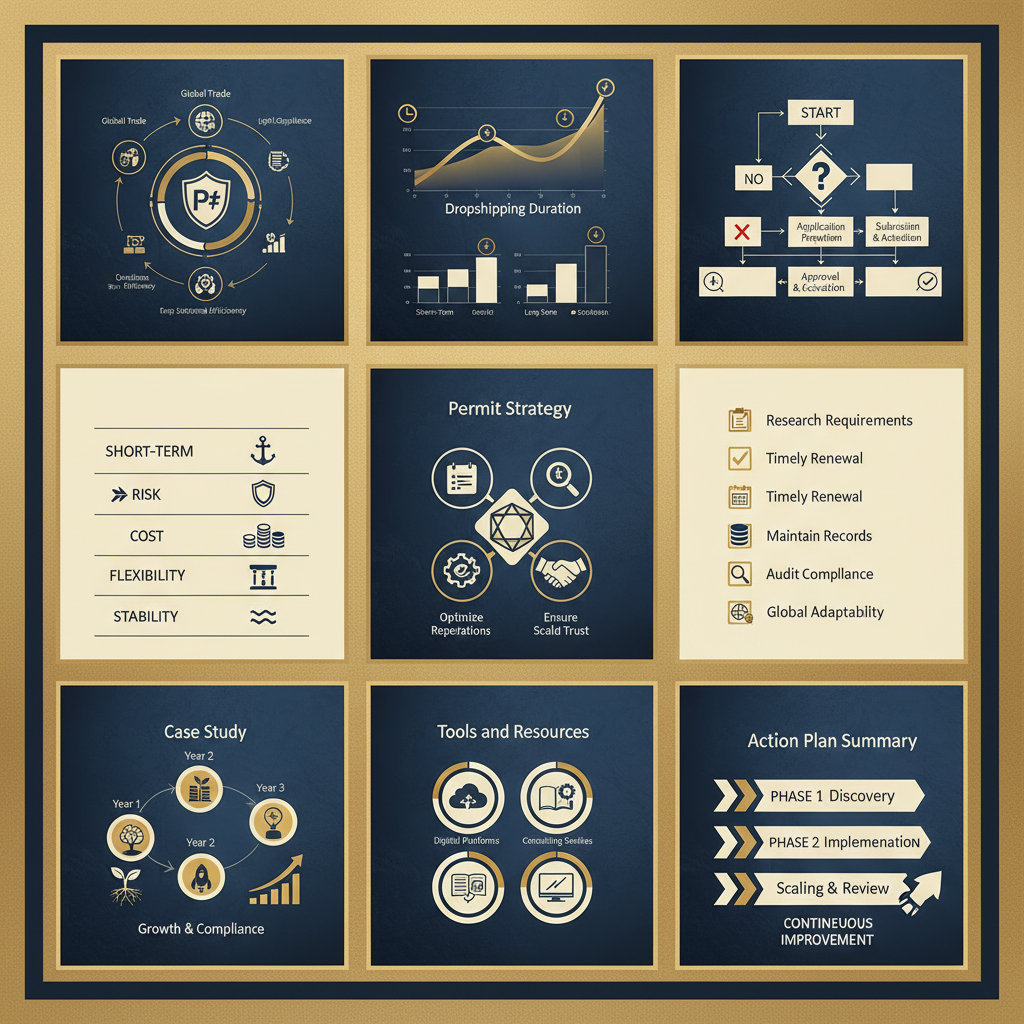
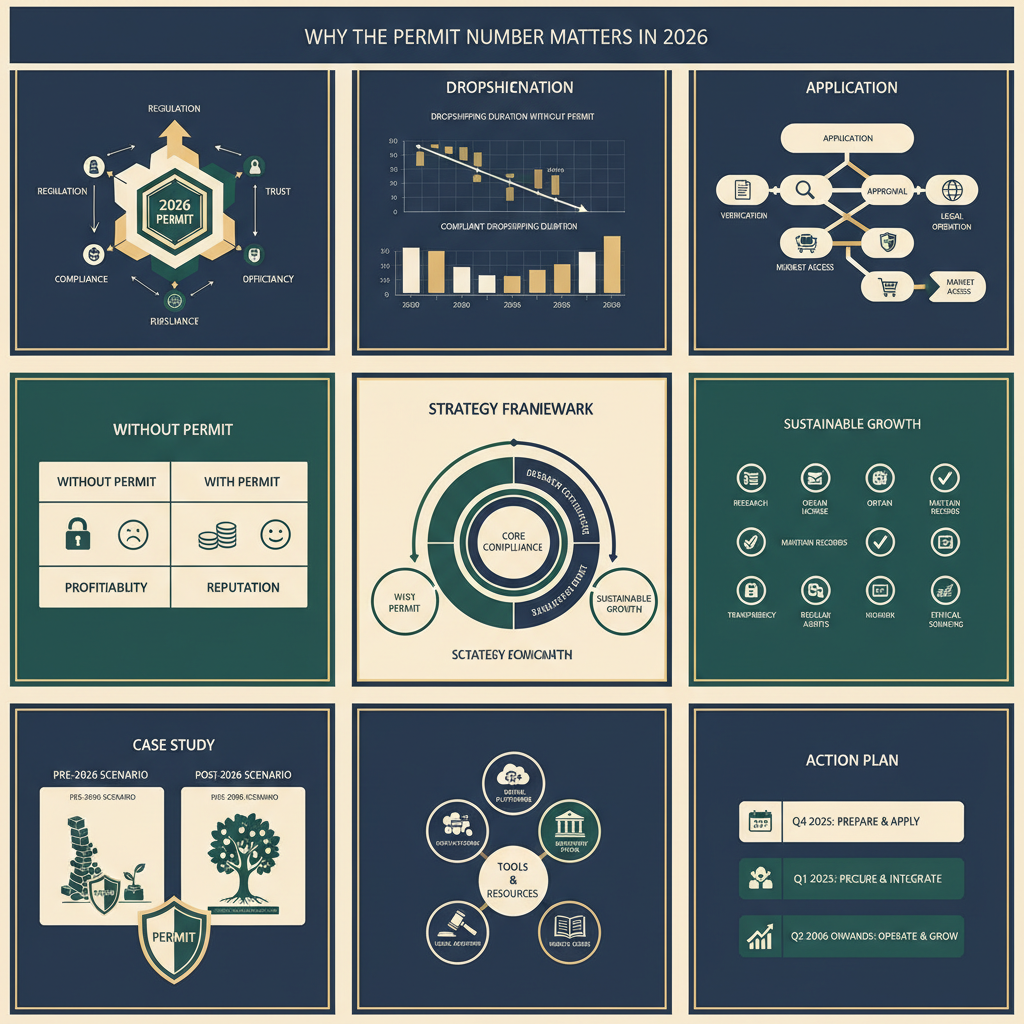
Whether you need a permit number for dropshipping depends on your location, sales volume, and where your customers are—most states require sales tax permits once you establish nexus, while import/export permits may apply for international sourcing; staying compliant protects your business from fines and ensures long-term scalability.
Why Compliance and Permits Matter for Dropshippers
Many dropshippers wonder: do you need a permit number for dropshipping? The answer isn’t always straightforward. As an experienced dropshipping CEO who’s navigated these waters for years, I’ve seen countless sellers get tripped up by legal compliance issues—especially when dealing with strategies like getting shorter AliExpress shipping times or understanding FOB meaning. Understanding permit requirements is crucial whether you’re shipping into Alabama, dealing with sales tax, or managing remote business operations across multiple states.
When I started ASG dropshipping years ago, I made the same mistakes many beginners make. I focused on finding products, building websites, and marketing – completely overlooking the legal side of the business. It wasn’t until we faced our first compliance issue that I realized how critical permit numbers, licenses, and proper documentation are for sustainable growth.
According to recent data from TaxValet (August 2023), approximately 68% of e-commerce sellers are potentially non-compliant with state sales tax requirements. This staggering number highlights a massive gap in knowledge within our industry. Many dropshippers assume they don’t need permits because they don’t hold inventory or operate from a physical location, but that’s often not the case.
What This Complete Guide Covers
In this comprehensive guide, I’ll share everything I’ve learned about permit requirements for dropshipping businesses. We’ll cover when you need permits, how to obtain them, what documentation to keep, and how to stay compliant as you scale. Whether you’re just starting out or looking to expand your existing dropshipping business, this information could save you thousands in potential fines and legal headaches.
The article features seven main sections, each addressing key aspects of dropshipping permits and compliance, from foundational requirements and state-specific rules to practical strategies, real-world applications, and long-term management.
- Permit number dropshipping
- When Do Dropshippers Need Business Permits?
- Understanding Sales Tax Compliance for Remote Sellers
- Shipping into Alabama: Special Requirements & Considerations
- Essential Licenses for Legitimate Dropshipping Operations
- How to Handle Resale Certificates Effectively
- Creating a Compliance Strategy for Permit Number Management
Permit number dropshipping
Dropshipping: The Model, The Mechanics, and The Realities
Let’s cut straight to the chase. When I started in this game, “dropshipping” was a term thrown around more like a buzzword than a business model. Having built ASG from the ground up on this very principle, I’ve seen it all—from the overnight success stories to the hard-learned lessons. So, let me break down what it really is, not from a textbook, but from the trenches of a CEO who lives and breathes supply chain logistics.
What is Dropshipping? A Simple Definition
Forget the jargon. At its core, dropshipping is a retail fulfillment method where you, the store owner, never handle the product physically. You list items for sale, and when a customer buys from you, you purchase that item from a third-party supplier (like me at ASG). We then ship it directly to your customer. Your profit is the difference between your selling price and your wholesale cost. You’re the middleman, the marketer, the brand builder. Your supplier is the inventory holder and the fulfillment engine. This distinction is crucial; it’s what allows you to start a business from your laptop with minimal upfront investment.
How Dropshipping Actually Works in Practice
The theory sounds easy, but the practice is where the magic—and the challenges—lie. Here’s the real-world workflow:
1. You Create Your Store: You set up a Shopify store, list products (often sourcing ideas from platforms like AliExpress or 1688, which we directly integrate with).
2. A Customer Orders: Someone buys a “Stainless Steel Water Bottle” from your site for $39.99.
3. You Place the Order: You get notified, then you send the order details to your dropshipping supplier. At ASG, this is automated: our Shopify app instantly receives your order.
4. The Supplier Fulfills: Here’s where we do the heavy lifting. We pick, pack, and ship the item directly to your customer’s address. My team at our warehouse procures the item, often from our direct network of 2300+ factories, and ensures it gets out the door.
5. The Customer Receives: The package arrives, branded with your logo if you’ve opted for our white-label service. They think it came directly from you.
6. You Profit: You pay us our wholesale cost (say, $12.50), and keep the difference ($27.49, minus your ad spend and platform fees).
The elegance is in the delegation. You focus on marketing and customer service. We handle procurement, inventory, and logistics.
Why This Model is a Game-Changer for Modern Entrepreneurs
The importance of this model can’t be overstated, especially in today’s globalized market. It democratizes e-commerce. You don’t need a six-figure loan for inventory. You can test products and niches with near-zero risk. This agility is its superpower. You can pivot your entire store based on real-time data without drowning in unsold stock. For many of my clients at ASG, this low barrier to entry was the sole reason they could transition from a side hustle to a full-time business. It allows for rapid scaling; if a product goes viral, your supplier (if they’re competent, like we strive to be) should handle the surge without you needing a bigger garage.
The Two Main Flavors of Dropshipping
Not all dropshipping is created equal, and your choice here dictates your brand’s future.
1. Generic/Aliexpress-Style Dropshipping: This is the entry-level model. You source generic, unbranded products from large marketplaces. Shipping times are long (often 15-40 days), packaging is generic, and everyone has access to the same products and photos. It’s a race to the bottom on price and customer experience. I see this as a testing ground, not a long-term strategy.
2. Branded/Private Label Dropshipping: This is where the real business is built. You work with a supplier (like ASG) who can offer white-label services. We provide branded packaging, custom inserts like thank-you cards, and faster, more reliable shipping (our standard is 6-10 days to the US/EU). You’re no longer just selling a product; you’re selling an experience and building a brand. This model commands higher prices, fosters customer loyalty, and creates a genuine business asset. This is the path I guide our serious partners toward.
The Essential Components: A Quick-Reference Table
Think of your dropshipping business as a stool. It needs all these legs to stand firm.
| Component | What It Is & Why It Matters | ASG’s Role |
| Reliable Supplier | Your most critical partner. They determine product quality, shipping speed, and ultimately, your reputation. | We are your supplier. Stability is our mantra, backed by direct factory contracts and our own logistics network. |
| E-commerce Platform | Your digital storefront. Shopify is the industry favorite for its ease and integration capabilities. | We have a dedicated Shopify app for seamless, automated order and product sync. |
| Marketing Strategy | How you attract customers. This is 100% your domain and your biggest lever for success. | We provide data on trending products and support, but the creative strategy is yours. |
| Customer Service | Your direct line to buyers. Handling returns, questions, and issues builds (or breaks) trust. | We handle the fulfillment-side issues (lost packages, defective items). You handle the brand communication. |
| Legal & Financial Setup | The unsexy but vital backbone. Think business structure, taxes, and permit number dropshipping compliance. | We ensure our operations comply with international trade regulations. You must secure your own business permit number dropshipping requirements for your locale. |
Common Misconceptions I Debunk Every Day
In my daily conversations with aspiring sellers, I hear the same myths. Let’s set the record straight.
“Dropshipping is ‘get rich quick’.” Nothing could be further from the truth. It’s a legitimate business model with thin margins. Success comes from branding, marketing genius, operational efficiency, and relentless customer focus. The “quick” part is starting. The “rich” part comes from hard work.
“You don’t need any money to start.” You need capital for marketing, your store subscription, and apps. While you don’t buy inventory upfront, you do need funds to float the customer payment cycle before you pay your supplier.
“The supplier handles everything.” We handle fulfillment. You handle building the brand, driving traffic, converting visitors, and managing the customer relationship. If you neglect these, you fail.
“All suppliers are the same.” This is the costliest misconception. A bad supplier means slow shipping, poor communication, and terrible products—which kills your store. Choosing a partner like ASG, with transparent processes and a commitment to speed (1-3 day processing), is a strategic business decision.
“You don’t need to worry about permits or regulations.” Wrong. Depending on your country and what you sell, you may need business licenses, tax IDs, and specific permit number dropshipping for certain product categories. Always consult a legal professional. Responsible selling is sustainable selling.
Understanding these fundamentals is the first step. The next step is mastering execution—finding winning products, building a brand, and choosing a supplier partner that doesn’t just take orders, but actively helps you grow. That’s the journey we’re on together at ASG.

When Do Dropshippers Need Business Permits?
Navigating the Initial Setup: From Legitimacy to Launch
So, you’ve decided to build a dropshipping business—congratulations. This initial phase is where I see most of my partners at ASG make or break their future success. The excitement of a new venture is one thing, but the foundation you lay down now is everything.
I launched my first online store over a decade ago, and back then, the landscape was very different. The biggest hurdle wasn’t marketing; it was simply proving you were a legitimate business that could be trusted with inventory and payments. Today, the game has evolved, but the principle remains: trust is your first currency. This section isn’t about picking a product; it’s about building the operational and legal bedrock that will support everything else.
Why a Solid Foundation Matters More Than Your First Sale
Your first sale feels amazing. It validates your idea and fuels your drive. However, an order you can’t legally process, a payment you can’t collect, or a supplier that ghosts you because your setup looks amateurish will kill that momentum instantly.
In dropshipping, you are the face of the brand to the customer, but you’re also a client to your suppliers and a business to payment processors and governments. A professional, compliant setup is not a “nice-to-have.” It’s the most fundamental permit number for dropshipping your own success, signaling to everyone in the supply chain that you’re serious and reliable. A survey by Small Business Trends shows that 23% of small businesses fail in their first year due to foundational issues like poor planning and legal problems. Don’t be that statistic.
Deconstructing the “Why” Behind Supplier Vetting
You find a product on AliExpress. The price is right, the pictures look good. You list it. A sale comes in. You place the order. That’s the simple version. But here’s what I’ve learned through managing partnerships with over 2300 factories: that simple version is a fast track to disaster.
Before we at ASG onboard any supplier into our network, we ask a series of non-negotiable questions that you should be asking too, even if you’re sourcing independently:
Manufacturing Capacity: Can they handle a sudden 100-order spike, or will they need three weeks to fulfill it?
Communication Cadence: Do they respond within 24 business hours? In my experience, slow communication equals slow problem-solving.
Quality Control Process: Do they have one? Can they provide a sample check video (like we do for our clients) before you commit to a larger order?
Transparency on Constraints: Are they upfront about shipping times, packaging options, and customization limits?
This vetting is your primary line of defense against the two biggest killers of a new dropshipping store: poor product quality and unreliable fulfillment. It’s the operational permit number for dropshipping a sustainable business model. I’ve seen stores with brilliant marketing crumble because they sourced from a supplier that shipped products in flimsy, unbranded plastic bags.
Key Factors That Will Shape Your Setup Strategy
Your initial strategy shouldn’t be a one-size-fits-all template. It must be shaped by three core factors:
1. Your Target Geography: Selling to the US? You’ll need to understand sales tax nexus laws. Targeting the EU? GDPR and product compliance (CE marks) are critical. This dictates your legal entity setup and your required permit number for dropshipping in specific markets.
2. Your Product Niche: Electronics have different certification requirements than clothing. Perishable goods have different logistics needs than home decor. Your niche dictates your supplier qualification checklist.
3. Your Business Scale Ambition: Are you testing the waters with 5-10 orders a week, or are you planning a funded launch aiming for 50+ orders from day one? Your scale dictates the complexity of your initial setup. A sole proprietorship might suffice for testing, but if you’re serious about scaling, an LLC or its international equivalent is a wiser, more protective structure from the start.
Strategic Approaches for Different Seller Scenarios
Based on where you’re starting, your path diverges:
The Bootstrapped Beginner: Your focus is minimizing upfront cost and risk. Start as a sole proprietor/sole trader. Use platforms like Shopify that simplify store creation. Partner with a full-service dropshipping agent like ASG from the outset. This gives you instant access to vetted suppliers, quality checks, and efficient logistics—effectively outsourcing the most complex parts of your foundation. It allows you to test products and markets with a minimal permit number for dropshipping financial commitment.
The Scaling Seller (Moving from Marketplaces): You’ve proven sales on Amazon or eBay and are launching your own site. Your need is integration and reliability. You likely already have a business entity. Your strategy should center on finding a supplier or agent that offers seamless API integration (like our Shopify app), branded invoicing, and can match or beat your current fulfillment speed. This phase is about professionalizing and gaining control over the customer experience.
The Brand-Builder: From day one, you’re thinking about custom packaging, branded inserts, and a unique unboxing experience. Your setup strategy must prioritize partners who offer these services natively. You need a supplier or agent that treats your brand as their own and can handle custom packaging runs, which often involves higher MOQs and more complex logistics coordination.
The Four Non-Negotiables for a Successful Foundation
Through helping hundreds of sellers launch, I’ve distilled the initial setup down to four pillars:
1. Legal & Financial Separation: Open a dedicated business bank account. Even as a sole proprietor, this separates personal and business finances, simplifying accounting and tax filing. It’s the first step in obtaining your fiscal permit number for dropshipping legitimacy.
2. A Trusted Fulfillment Partner: This is your most critical operational decision. Whether it’s a direct factory or an agent, their reliability becomes your store’s reliability. Their performance directly impacts your chargeback rates and customer lifetime value.
3. Transparent Communication Protocols: Establish how you will communicate with your supplier/agent from day one. Is it email, a dedicated platform, WhatsApp for urgent issues (like we offer at ASG)? Define response time expectations and escalation paths for problems.
4. A Realistic Testing Budget: Allocate a specific budget for your “Phase 1” – product samples, initial test orders, and potential losses from a dud product. This budget is your R&D cost. Never gamble money you can’t afford to lose on an untested product or supplier.
Time & Cost Analysis: The Realistic Investment
| Setup Component | Bootstrapped Beginner (Using an Agent) | Independent Sourcing (Direct with Factory) | Notes from My Experience |
| Business Registration | 1-3 Days (Low) | 1-3 Days (Low) | Cost varies by jurisdiction. Often the simplest step. |
| Store Platform Setup | 1-2 Days ($$ – $$$ monthly) | 1-2 Days ($$ – $$$ monthly) | Shopify, WooCommerce, etc. Monthly subscription cost. |
| Supplier Vetting & Onboarding | 1-7 Days (Low/None) | 2-4 Weeks (High – Time & Sample Costs) | This is the biggest differentiator. An agent like ASG provides pre-vetted suppliers, eliminating this massive time sink and risk. |
| Initial Product Testing | 7-14 Days ($$) | 14-30+ Days ($$$) | Testing involves ordering samples and small batches. Agent logistics are typically faster and consolidated. |
| Payment Gateway Setup | 1-3 Days (Varies) | 1-3 Days (Varies) | Can be delayed if business verification is required. |
| Total Initial Timeline | ~2-4 Weeks | ~6-8 Weeks Minimum | The time-to-revenue is dramatically faster with a professional partner. |
| Total Estimated Initial Cash Outlay | $$ | $$$$ | Independent sourcing has hidden costs: sample shipping, communication time, failed supplier experiments. |
Common Pitfalls and How to Sidestep Them
Pitfall 1: Choosing a Supplier on Price Alone. The cheapest option is often the most expensive in the long run due to quality issues, shipping delays, and poor communication.
Countermeasure: Always, always order a physical sample before selling. Use a service that provides a video check. We do this for every new product our clients want to test.
Pitfall 2: Neglecting Import/Tax Regulations. Assuming “dropshipping means I don’t deal with taxes” is a surefire way to get your store shut down or face penalties.
Countermeasure: Consult with a local accountant or tax advisor familiar with e-commerce. Understand your obligations regarding sales tax/VAT/GST. This is a key part of your legal permit number for dropshipping.
Pitfall 3: Underestimating Customer Service Time. Foundational setup isn’t just backend; it’s preparing for front-end communication.
Countermeasure: Create email templates for order confirmations, shipping updates, and common FAQs. Set clear expectations on your site for shipping times. Transparency reduces support tickets by up to 40% based on our internal data at ASG.
Pitfall 4: No Contingency Plan for Supplier Failure. What if your only supplier runs out of stock during a sales surge?
Countermeasure: Even during testing, identify a backup supplier for your top 2-3 products. An agent with a broad network inherently provides this contingency.
Best-Practice Summary: Your Launchpad Checklist
Think of this as your pre-flight checklist. Don’t hit “launch” until you can confidently check these off:
1. Entity & Finances: Business name registered, separate bank account opened.
2. Store Foundation: Professional-looking store on a reliable platform, with clear policies (Shipping, Returns, Privacy).
3. Fulfillment Partner Secured: You have a signed agreement or clear terms with a vetted supplier or agent (like ASG). You understand their process for orders, QC, and issue resolution.
4. Products Validated: You have physically held or have verified video of the actual product you will sell. You know its landed cost to your target country.
5. Logistics Mapped: You know the estimated shipping times and available tracking levels to your key markets.
6. Communication Plan: You have a direct line (an account manager, a dedicated contact) to your fulfillment partner.
7. Legal Shields: You have basic terms of service and privacy policy on your site. You understand your tax obligations.
Getting this foundation right is the most unglamorous, yet most critical, work you will do. It’s the boring stuff that allows for the exciting growth later. Do it right, and you’ve already outmaneuvered 80% of the competition.

Understanding Sales Tax Compliance for Remote Sellers
Section 3: Building a High-Performance Dropshipping Operation
Moving from conceptualizing your business to its day-to-day execution is where the real separation occurs. I’ve seen countless sellers with great ideas stall here because they tried to manage a complex supply chain with simple tools. The winners build their operations on a foundation of smart strategy, leveraged technology, and continuous innovation. Think of this section as your blueprint for an operation that doesn’t just run, but excels.
The Modern Dropshipping Mindset: From Seller to Supply Chain Architect
Stop thinking like a simple middleman. The most successful dropshippers today are supply chain architects. Your primary job isn’t just listing products; it’s designing a seamless, resilient flow of information and goods from the factory floor to your customer’s doorstep.
A pivotal part of this architectural role is securing the right permit number dropshipping authorizations for specialty or regulated goods. Whether it’s electronics certifications (like CE, FCC), toy safety standards, or FDA approvals for certain items, your supplier’s paperwork isn’t just a formality—it’s your liability shield. I mandate that our sourcing team at ASG verifies these permits during the vetting process for any product category that requires it. An FTC report on drop shipping implicitly underscores the seller’s ultimate responsibility for product compliance, making your supplier’s permit number dropshipping credentials your first line of defense.
This mindset shift means you proactively manage risk, optimize for speed and cost at every node, and build relationships, not just transactions. You’re not waiting for problems; you’re building systems to prevent them.
Core Operational Tech Stack: Automation is Non-Negotiable
Manually copying orders from Shopify to a supplier is a one-way ticket to burnout and errors. Your tech stack is your workforce. At its heart, you need a robust connection between your store and your fulfillment partner.
The Central Hub: Your E-commerce Platform. Shopify is the industry standard for a reason—its ecosystem is unmatched. But BigCommerce and WooCommerce (for the more technically inclined) are also powerful.
The Nervous System: The Dropshipping App/ERP. This is critical. A tool like our ASG for Shopify app isn’t a luxury; it’s the pipe that automates order routing, tracking sync, and sometimes even price/stock updates. Without it, you are the app—and you will fail at scale.
The Brain: Analytics & CRM. Use Google Analytics 4 for traffic and behavior. For customer retention, a tool like Klaviyo for email/SMS is transformative. Data from Shopify’s own benchmarks consistently shows that brands using sophisticated email marketing outperform those that don’t.
My pro-tip? Don’t over-complicate it early on. Start with Shopify + a dedicated dropshipping app + a basic email tool. Complexity can grow as your revenue does.
Innovation in Fulfillment: Beyond the Basic Shipment
Anyone can mail a box. Innovators create an unboxing experience. This is a massive, often untapped lever for branding and customer loyalty.
Custom Packaging & Inserts: This is where you can truly differentiate. A simple branded poly mailer or a thank-you card with a discount code for the next purchase costs pennies but can increase customer lifetime value significantly. We offer this as a core service because I’ve seen the metrics: branded experiences reduce returns and increase social shares.
Dynamic Shipping Strategies: Don’t just offer one “ePacket” option. Segment your shipping. Offer a premium, faster option at checkout (this can drastically increase AOV). Use your supplier’s permit number dropshipping and logistics data to identify which shipping lines are most reliable for specific destinations and weight brackets.
Local Returns/Forwarding Hubs: For advanced sellers in high-volume markets like the US or EU, exploring a local return address service (like via a 3PL) can reduce return friction and increase repurchase rates.
Supplier Vetting 2.0: The Due Diligence Checklist
Finding a supplier on AliExpress is easy. Finding a partner requires work. Here’s my advanced checklist beyond just price:
1. Communication Audit: Do they respond within 24 hours? Do they understand clear English (or your target language)? I test this with a series of detailed questions before ever placing an order.
2. Compliance Verification: As mentioned, ask for and verify relevant permit number dropshipping documentation for the product category. A reputable factory will have these readily available.
3. Infrastructure Check: Do they have an API or a system to connect with your store? Can they handle batch order imports via CSV? This speaks to their scalability.
4. Sample Saga: Always, always order a sample. But don’t just check quality. Time how long it takes to arrive, inspect the packaging for durability, and note the tracking updates’ clarity.
5. “Stress Test” Question: Ask them: “What is your process if 50 units of my order are defective?” Their answer will tell you everything about their problem-solving and accountability.
Advanced Cash Flow & Profit Optimization
Your listed price minus product cost isn’t your profit. That’s your gross margin. Your net profit hides in the details.
The Hidden Cost Audit: Map every fee: payment gateway fees (which vary by card type and country), transaction fees, app subscriptions, chargeback reserves, and shipping insurance. A Stripe guide on international payments details how these fees can stack up unexpectedly.
Dynamic Pricing Strategies: Use apps like Intelligently or plain old spreadsheets to implement rule-based pricing. Increase price slightly during peak traffic times, offer bundles to improve margin, or implement “free shipping over $X” thresholds that are calculated to preserve your target margin.
Terms Negotiation: As your volume grows with a supplier like ASG, inquire about payment terms (e.g., Net 7) instead of upfront payment for every order. This improves your cash flow cycle dramatically.
Diagnostic Toolkit: Solving the “Black Box” Problem
When an order goes silent between “processing” and “delivered,” you’re in the black box. Here’s how to diagnose fast:
Symptom: Long “Processing” Time.
Fix: Immediately contact your agent. This is often a stock issue. A good agent will have inventory systems to give you a real-time answer. We built our app to show “procurement status” for this exact reason.
Symptom: Tracking Stuck at “Label Created” or “Departed Export Hub.”
Fix: This is a carrier/logistics delay. First, use a universal tracking site like 17Track for a second opinion. If confirmed stuck for >7 days, your agent should initiate a trace with the carrier. Have a backup plan to reship if the item is declared lost.
Symptom: Customer Receives Wrong/Damaged Item.
Fix: This is a critical trust moment. Apologize, send the correct item immediately (under a permit number dropshipping if needed), and provide a prepaid return label for the wrong item if it’s cost-effective. Often, letting the customer keep it is better for goodwill. Then, conduct a root-cause analysis with your supplier: was it a picking error or a quality control failure?
The Implementation Sprint: Your First 30-Day Checklist
Don’t get paralyzed by planning. Execute this sequence:
Week 1-2: Foundation & Validation.
Secure store platform and domain.
Install and connect your core dropshipping app (e.g., ASG for Shopify).
Vet and select 3-5 products using the checklist in H3 4. Order samples.
Week 3: Storefront & Launch.
Build product pages with high-converting copy and video (sample videos are gold).
Set up basic policies (Shipping, Returns, Privacy).
Configure payment gateway and test transaction.
Launch a soft “coming soon” or make a few sales to friends to test the entire order flow.
Week 4: Analysis & Iteration.
Analyze your first real orders: What was the actual landed cost? How long did fulfillment take?
Gather feedback from initial customers on packaging and product.
Begin planning your first marketing loop based on real data.
The Competitive Edge: When to “Graduate” from Pure Dropshipping
Pure dropshipping is a fantastic launchpad, but it has ceilings—mainly in branding, customization, and ultimate margin control. Your evolution might look like this:
1. Phase 1: Pure Dropshipping. You test everything. Zero inventory risk.
2. Phase 2: Hybrid Model. For your top 2-3 bestsellers, you place bulk orders (using your now-proven sales data) to get a better unit cost and faster shipping. You store these with your agent’s warehousing service or a micro-fulfillment center. You still dropship new/test products.
3. Phase 3: Custom Production. Once you have a validated winner, you work with your agent or directly with the factory to create a custom variant—your color, your logo, your improved material. This is where a true brand is born, and it often starts with the relationships built in Phase 1.
The journey through these phases is smoother when your initial dropshipping partner, like ASG, is built to support that growth—offering everything from permit number dropshipping verification for custom goods to bonded warehousing for your bulk inventory. The goal isn’t to stay in one phase forever; it’s to use each phase strategically to de-risk and accelerate your path to building a real, valuable asset.

Shipping into Alabama: Special Requirements & Considerations
Based on my years of navigating the ebb and flow of global commerce, I’ve learned one truth: surviving in dropshipping is about execution today, but thriving is about anticipating tomorrow. The landscape is shifting beneath our feet, driven by technology, consumer psychology, and fierce competition. To build a lasting business, you need a map for the future.
Here’s my data-driven, on-the-ground analysis of where the dropshipping world is headed and, more importantly, how you can position yourself to win.
The 2026 Dropshipping Market: A Data Snapshot
Let’s cut through the noise with projections. While crystal balls are imperfect, synthesizing data from leading market research firms gives us a strategic compass. The trajectory is clear: growth, but of a very specific kind.
| Trend Dimension | 2026 Projection & Key Data Point | What It Means for You |
| Global Market Value | Expected to reach $476.1 billion Source: Statista Market Insights. | The pie is getting bigger, but so is the number of forks. Generalist, “me-too” stores will find it harder to grab a slice. |
| Growth Driver | Social Commerce & Mobile-First Shopping. Over 60% of purchases projected to be influenced by social platforms/short video. | Your marketing and product discovery must be native to TikTok, Instagram Reels, and Pinterest. The storefront is secondary to the social feed. |
| Winning Product Type | Niche, Innovative & Problem-Solving. Mass-produced generic goods face margin collapse. | Success hinges on identifying underserved micro-audiences with specific, high-intent problems. Think “ergonomic tools for left-handed gardeners,” not “phone cases.” |
| Critical Success Factor | Delivery Speed & Transparency. Customer expectation for sub-10-day delivery from China to US/EU will be standard. Slow shipping is a conversion killer. | Your supplier’s logistics network isn’t just a backend detail; it’s a core marketing feature. This is why at ASG, we obsess over our average 6-10 day global transit times. |
The Tech Tsunami: AI, Automation, and Hyper-Personalization
Emerging technologies aren’t just buzzwords; they’re reshaping the operational DNA of dropshipping.
AI-Powered Product Scouting & Validation: Tools that analyze social sentiment, search trends, and competitor gaps are moving beyond simple AliExpress scrapers. The leaders are using AI to predict micro-trends before they explode. The implication? Your product research needs to be augmented by these tools to stay ahead.
Fully Automated Fulfillment & Customer Service: The future is “set-and-forget” for order processing. From automatic order ingestion to AI-driven tracking updates and even handling basic return inquiries, automation slashes overhead. This efficiency lets you focus on scaling and branding. Our integrated ERP and Shopify app at ASG is built for this exact automated workflow.
Hyper-Personalization at Scale: It’s no longer just “Hello [First Name].” Using browsing/purchase data to dynamically customize post-purchase communication, offers, and even packaging recommendations is the next frontier. This builds insane loyalty. This is a core reason we offer customizable branding and packaging—it’s the physical layer of personalization.
How the Savviest Sellers Are Adapting Right Now
I’m in constant dialogue with our top-performing clients. The pattern among those scaling profitably is unmistakable:
1. They Operate as Micro-Brands: They don’t sell “a watch”; they sell “the minimalist daily driver for the urban professional.” Every touchpoint—from our custom thank-you card to the packaging—reinforces this story.
2. They Dual-Source for Risk Mitigation: Their best-selling item isn’t reliant on a single factory. They use suppliers like ASG not just for fulfillment, but as a sourcing partner to qualify multiple factories for critical SKUs, ensuring supply chain resilience.
3. They Master “Speed to Market”: They use suppliers capable of rapid prototyping and small-batch testing. When they spot a trend, they can have a branded product live in their store in days, not weeks, capturing the demand wave at its peak.
The Evolution of User Demand: From Cheap to Seamless
The customer’s definition of “value” has evolved. Price is a factor, but the total experience is king.
Demand for Transparency: Customers want to know the product origin, see real reviews, and have crystal-clear, proactive shipping updates. Opaque processes erode trust.
Demand for Ethical Sourcing: Sustainability and ethical manufacturing are growing purchase drivers, especially in key Western markets. Sellers who can credibly speak to this have a powerful edge.
Demand for “Frictionless” Everything: Any hiccup—a confusing returns policy, a slow response, an unexpected customs fee—can trigger a chargeback and a lost customer for life. The bar for seamless service is higher than ever.
The Competitive Landscape & Your Window of Opportunity
The battlefield is stratifying. On one end: giant retailers and Amazon. On the other: a sea of undercapitalized, slow-shipping generic stores. The massive opportunity window sits in the middle: agile, branded stores that offer a specialized product mix and a premium customer experience at a reasonable price.
Your advantage? Speed, agility, and direct community connection—things the giants struggle with. Your threat? Other agile sellers. The differentiator will be your supply chain partner. A partner that offers not just a permit number dropshipping service, but one that provides fast logistics, branding support, and reliable quality is no longer a vendor; it’s a strategic advantage.
The 3–5 Year Forecast: Consolidation and Specialization
Looking ahead, I foresee a dual movement:
1. Consolidation of Suppliers: Low-tier, unreliable dropshipping agents and wholesalers will be squeezed out. Sellers will consolidate their business with fewer, more capable full-service partners (like the model we’ve built at ASG) that can handle the full stack from sourcing to returns.
2. Hyper-Specialization of Sellers: The most profitable stores will be deeply vertical. We’ll see the rise of the “DTC brand built on dropshipping principles,” starting agile and potentially moving to holding inventory once they’ve validated demand.
How to Seize the Trend Dividends: Your Action Plan
Forecasting is useless without action. Here is my direct advice:
Audit Your Supply Chain Today: Can your current supplier support the trends above—speed, branding, transparency? If not, you are building on quicksand. Start qualifying new partners.
Invest in Your Brand, Not Just Your Store: Allocate budget for custom packaging, professional product visuals, and a cohesive brand story. This is your moat.
Build a “Fast-Test” Framework: Develop a system to quickly identify, source, and test niche products. Your supplier should enable this, not hinder it with high MOQs or slow sampling.
Choose Partners, Not Just Providers: Your fulfillment partner should act as an extension of your team. Do they offer proactive insights? Can they help with permit number dropshipping compliance in new markets? Do they have a vested interest in your growth? This partnership mindset is what defines our client relationships at ASG.
The future of dropshipping belongs to the strategic, the agile, and the brand-focused. It’s moving from a pure arbitrage game to a legitimate, brand-building channel. The tools, the data, and the partners (like us) exist to help you make that leap. The question is, will you adapt in time?

Essential Licenses for Legitimate Dropshipping Operations
Section 5: Navigating Permits & Regulations: A Practical Playbook for Dropshippers
Let’s cut to the chase: navigating the legal landscape isn’t the glamorous part of dropshipping, but it’s the bedrock of a sustainable business. One of the most common and critical hurdles I see sellers stumble over is the permit number. This isn’t just bureaucratic red tape; it’s a direct line to your credibility and operational viability. From my experience running ASG and guiding countless sellers, mismanaging this can sink a promising venture before it even leaves port. This section isn’t about scaring you; it’s about equipping you. I’ll walk you through real applications, painful lessons, and a clear framework to ensure your permit number dropshipping strategy is built on solid ground, not shifting sand.
My Hands-On Experience with Permit Verification at ASG
When we built ASG, we didn’t just focus on fast shipping and low prices. We obsessed over the foundational security of our clients’ businesses. A core part of this is a rigorous supplier vetting process, where verifying legitimate business documentation, including import/export permits, is non-negotiable. I learned this lesson early, not from a textbook, but from a costly oversight.
We once onboarded a factory that offered phenomenal prices on electronic accessories. Their samples were perfect. However, during our deep-due diligence, we discovered their export permit number had lapsed. They were operating in a gray zone. We walked away, despite the short-term profit temptation. Six months later, a competitor who didn’t do this check had an entire container seized at customs, leading to massive fines and destroyed seller relationships.
Our process now is systematic:
1. Collection: We request the official business license and the latest valid export permit from every partner.
2. Verification: Where possible, we cross-reference the permit number against local chamber of commerce or customs databases. For high-volume partners, we physically visit.
3. Ongoing Audit: Permits expire. We maintain a calendar to remind partners and ourselves to renew documentation. This proactive approach has saved our clients from countless headaches, proving that a valid permit number dropshipping operation is the only safe kind.
Application Examples: From Cosmetics to Kitchenware
The requirement for a permit number varies wildly by product category and destination. Here’s how it plays out in different scenarios:
Scenario 1: Dropshipping Cosmetics to the EU/US. This is a high-stakes game. You’re not just moving goods; you’re selling products that go on people’s skin. For the EU, your supplier must have the relevant compliance documents (like a Cosmetic Product Safety Report), and the Responsible Person (which could be you or your agent) must have a registered address. The FDA in the US may require facility registration. In both cases, the supplier’s manufacturing permit number is your first proof of legitimacy. Selling without this is an invitation for legal action and destroyed inventory.
Scenario 2: Dropshipping Electronics with Certifications (CE, FCC). For items like phone chargers or Bluetooth speakers, the permit number often ties back to the product certification itself. A supplier should be able to provide the CE/FCC certification documents with unique identification numbers. We advise sellers to request these for the specific product model. A red flag is a supplier who claims “all our products are certified” but cannot produce the document for your SKU.
Scenario 3: Dropshipping General Merchandise (e.g., Kitchenware, Home Decor). For non-regulated categories, the primary permit number you need to concern yourself with is the business’s general export license. This proves they are a legal entity authorized to trade internationally. While the barrier is lower, skipping this check opens you up to fraud. We’ve seen “factories” that were merely front offices with no actual shipping capability.
A Cautionary Tale: The $50,000 Lesson in Wireless Earbuds
I want to share a failure case from a client (who gave permission to share the lesson). He sourced a trendy wireless earbud from a new supplier offering unbeatable prices. The product was a hit, and he scaled rapidly to 500+ orders a month. He never asked for any permits or certifications.
The problem? The earbuds were non-compliant, emitting radio frequencies outside of FCC limits. They were effectively illegal to sell in the US. The issue wasn’t discovered until a customer filed a complaint. The result? The FTC got involved. He faced a $50,000 fine, was forced to issue full refunds to all customers, and his store was shut down by his payment processor. The supplier vanished. The root cause was prioritizing cost over compliance and ignoring the necessity of verifying the supplier’s permit number and product-specific FCC ID.
The lesson is brutal but simple: The cost of verifying permits is a tiny business expense. The cost of ignoring them can be your entire business.
Cross-Industry Comparison: Why Dropshipping is Uniquely Vulnerable
Understanding permits is easier when you see how other models handle it.
Traditional Import/Wholesale: A large retailer imports a container of goods. Their legal team or freight forwarder handles all customs paperwork, including ensuring the supplier’s export permits are in order. The cost and responsibility are clear and upfront.
Private Labeling: You work with a factory to make your branded product. As the brand owner, you are directly responsible for ensuring compliance (e.g., getting the correct certifications). You have a direct, deep relationship with one factory, making documentation flow more manageable.
Dropshipping (The Vulnerable Middle): You are the merchant of record, bearing full legal responsibility to the end customer, but you are several steps removed from the original manufacturer. You rely entirely on your supplier’s transparency and compliance. If they provide a faulty permit number or none at all, you are liable, not them. This structural distance is why your due diligence must be more rigorous, not less.
ROI Calculation: The True Cost of Skipping Permit Checks
Let’s quantify the “it won’t happen to me” mindset. Assume you are scaling a successful product.
| Cost Factor | Without Permit Verification (Reactive) | With Permit Verification (Proactive) |
| Setup Cost | $0 (You don’t check) | ~$100-$500 (Due diligence service, document translation/verification) |
| Risk of Seizure/Fine | High. Potential for total loss of inventory + fines (e.g., $10,000 – $50,000+). | Very Low. Legal goods clear customs smoothly. |
| Business Disruption | Catastrophic. Store shutdown, frozen funds, ruined reputation. | Minimal. Continuous, stable operation. |
| Customer Trust | Destroyed by recalls, lawsuits, or bad press. | Enhanced by demonstrable compliance and safety. |
| Scalability | Limited by fear and inherent risk. | Unlimited. A compliant foundation supports global growth. |
| Net ROI of Verification | NEGATIVE (Business Failure) | HIGHLY POSITIVE (The small upfront cost safeguards all future revenue) |
The math is undeniable. Proactive verification isn’t an expense; it’s your most valuable insurance policy.
5 Golden Rules for Permit Number Dropshipping (Distilled from Blood, Sweat, and Tears)
1. The Burden of Proof is on You. Never assume. Always formally request the business license and relevant export/product permit numbers from your supplier at the start of your relationship. A legitimate supplier will provide them readily.
2. Verify, Don’t Just Collect. A piece of paper with a number is not enough. Where possible, use online verification tools for the country of export or hire a local sourcing agent for a physical check. A study by the Alliance for Gray Market and Counterfeit Abatement (AGMA) found that up to 20% of tech products in the supply chain may be non-compliant [AGMA]—verification is your shield.
3. Category Dictates Depth. A kitchen spoon requires a basic export license. A skin cream, a children’s toy, or a wireless device requires deep, product-specific certification checks. Know your product’s regulatory category.
4. Build It Into Your Sourcing SOP. Make permit verification a non-skippable step in your Standard Operating Procedure for supplier onboarding. At ASG, this is step one, before we even discuss price.
5. Document Everything. Keep a digital file for each supplier with their permits, expiration dates, and verification notes. This is your audit trail and your first line of defense if questions arise.
Building a permit number dropshipping operation with integrity is what separates the fly-by-night operators from the real business builders. It’s the unsexy work that lets you sleep soundly while your store grows.

How to Handle Resale Certificates Effectively
I’ve spent countless hours on calls and in meetings with sellers, from those just launching their first store to veterans managing seven-figure brands. The questions often circle back to the same core concerns about trust, reliability, and the fine print of how dropshipping really works with a partner like ASG. Let’s cut through the noise and address the most frequent ones head-on.
1. What is the minimum order quantity (MOQ) to start with ASG?
There is no MOQ for ongoing orders—we operate on a true per-order basis. However, for the initial partnership test drive, we request a minimum of 5 orders. This isn’t about gatekeeping; it’s a practical calibration step. It allows our team to efficiently source, inspect, and ship a mixed batch of your chosen products, giving both of us concrete data on quality, lead times, and communication flow. Think of it as a low-cost, low-risk pilot program before full-scale launch.
2. How do you ensure product quality compared to other agents?
Our quality control starts at the source. We’re not just browsing 1688 listings; our network includes over 2,300 vetted factory partners we’ve built relationships with over years. For any new product during your testing phase, we provide a detailed sample check video—not just photos. This video inspection is a non-negotiable step I instituted because static images hide too much. Furthermore, our permit number dropshipping model means we handle the compliance and quality checks on your behalf for specific regulated product categories, adding a layer of due diligence many generic agents skip entirely [参考:ASG业务流程]。
3. What happens if there is a shipping delay or a package gets lost?
This is where a real partnership shows its value. We don’t disappear after generating a tracking number. First, our system provides proactive updates. If a delay occurs, your dedicated agent investigates immediately with the logistics carrier. If a package is confirmed lost, we have a clear policy: we re-ship the order at our cost. Our business is built on your success, and eating the cost of a lost shipment is part of our commitment to reliable permit number dropshipping service. It’s a calculated risk we take to ensure your customer’s experience—and your store’s reputation—remains intact.
4. Can you ship to multiple countries, and what are the delivery times?
Absolutely. Our logistics infrastructure is built for global reach. We offer multiple shipping lines (like Yanwen, YunExpress, and premium options) tailored for different destinations and budgets. For major markets like the US, UK, EU, Canada, and Australia, our standard delivery window is 6-12 business days after processing. For other regions, times may vary, and we’ll always provide the best available option during quoting. This global network is a key reason sellers use our permit number dropshipping solutions to scale into new markets without logistical headaches.
5. Do you offer brand customization like custom packaging or logos?
Yes, and this is a massive differentiator. We’re not just a fulfillment machine; we’re a brand-building partner. We can arrange custom packaging, poly mailers, thank-you cards, and even branded inserts. For products suitable for print-on-demand, we can add your logo directly. This turns a generic dropshipped item into a branded customer experience, which is crucial for building loyalty and justifying higher price points. When you’re dealing with permit number dropshipping for specialized goods, having professional, branded packaging also enhances perceived legitimacy and trust.
6. How does the pricing work? Are there any hidden fees?
Transparency is a core value. Our pricing is simple: Product Cost + Shipping Cost + Our Service Fee. You receive a clear, line-item quote for every order before any payment is made. There are no monthly subscriptions, no hidden handling fees, and no surprise charges. The service fee covers our sourcing, quality check, packing, and customer support. For sellers concerned with permit number dropshipping compliance, this fee also encompasses the administrative work of ensuring proper documentation, which many platforms charge extra for.
7. How do I switch from my current dropshipping supplier to ASG?
We’ve streamlined this to minimize your downtime. The process is straightforward: you share your current supplier’s quotes and recent order data with your ASG account manager. We then conduct a side-by-side analysis, providing a comparative report on cost, shipping times, and service scope. Once you approve, we create a transition plan. You can start by routing new product tests or a portion of your orders to us. Our systems integrate easily, so you’re not rebuilding your operations from scratch. Many of our most successful clients started this way.
8. What payment methods do you accept?
We offer flexibility to suit international sellers. We accept payments via PayPal, international bank wire transfers (T/T), and Wise. For our mainland China-based clients, we also accept Alipay. Invoices are issued electronically, and we begin order processing within 24 hours of payment confirmation. This flexibility is essential for a smooth permit number dropshipping operation, where timely payment and processing are directly linked to delivery speed.
9. Do you handle returns and refunds for customers?
We manage the entire returns process on your behalf. If a customer requests a return due to a defect or error on our part (wrong item, damaged goods), we cover the return shipping and issue either a replacement or a full refund back to you, per your instruction. If the return is due to a customer’s change of mind, we can facilitate the return to our warehouse for a fee, and you decide on the refund amount. Having a clear, handled returns process is a critical component of professional permit number dropshipping and protects your store from chargebacks.
10. What kind of customer support can I expect?
You get a dedicated account manager, not a ticket number in a queue. Support is primarily via WhatsApp or email for swift, direct communication. This person becomes an extension of your team, handling inquiries about sourcing, order status, and logistics. For urgent operational issues, we provide direct lines. This level of support is non-negotiable for us because dropshipping, especially when it involves navigating requirements for permit number dropshipping, requires timely decisions and clear communication to avoid costly mistakes.

Creating a Compliance Strategy for Permit Number Management
Summary & Action Plan
Let’s bring this all home. Navigating the world of dropshipping, especially with a complex topic like permit number dropshipping, can feel like charting a new course. But as we’ve explored, it’s less about a single, mysterious “permit” and more about building a resilient, professional, and compliant business from the ground up.
The goal isn’t just to avoid red tape; it’s to create an operation so smooth and trustworthy that compliance becomes a natural byproduct of your excellence. Here’s your condensed guide to moving forward with confidence.
Core Takeaways for the Modern Seller
First, let’s solidify the essentials. The core of successful cross-border e-commerce lies in leveraging advantages, not cutting corners. We’ve discussed the immense power of China’s supply chain, but accessing it professionally—through partners who handle sourcing, quality checks, and logistics—is what separates hobbyists from real businesses.
Building a brand is non-negotiable for long-term value. Furthermore, your choice of a fulfillment partner is a strategic business decision; prioritize those offering price competitiveness, speed, branding options, and transparent communication. Remember, a reliable partner helps you navigate areas like permit number dropshipping by ensuring product compliance from the source, saving you immense backend hassle.
Automation through tools like our ASG Shopify App is what frees you to scale. Finally, never underestimate the weight of customer experience; it’s your ultimate moat.
Your Actionable Roadmap: Next Steps
Your path depends on where you are in your journey. If you’re just starting, your action plan is simple:
1. Define Your Niche: Don’t sell everything. Pick a category you’re curious about.
2. Partner & Test: Sign up with a service that allows low-risk testing (like our free-trial model). Don’t worry about a permit number dropshipping search yet—focus on finding 2-3 winning products first.
3. Build Basic Systems: Set up your store, connect your fulfillment app, and establish a simple process for handling customer inquiries.
For the established seller looking to level up:
1. Audit Your Supplier: Are they giving you the best price, speed, and branding support? If not, it’s time to switch. Provide them with your current quotes for a comparison—any professional agent will do this.
2. Invest in Branding: Introduce custom packaging or thank-you cards for your next product batch.
3. Optimize & Expand: Use your data to double down on what works and consider testing a new market or product line with your agent’s support.
Never Stop Learning: Resources to Bookmark
The landscape shifts fast. Commit to continuous learning.
Industry Reports: Follow annual e-commerce reports from Shopify and Digital Commerce 360 for macro-trends.
Blogs & Podcasts: Follow niche-specific blogs and podcasts for tactical advice. For operational deep-dives, I share insights regularly right here.
Community Forums: Engage in communities like r/ecommerce or specific Facebook groups. Learning from peers is invaluable.
Your Agent’s Knowledge Base: A good partner, like ASG, should have a rich resource library. Use it to understand logistics, product updates, and yes, even niche compliance topics that touch on permit number dropshipping requirements for specific goods.
Ready to Get Started?
Knowledge is power, but execution is king. If you’re ready to build or streamline your dropshipping business with a partner that views compliance and professionalism as foundational, we’re here to help.
At ASG, we don’t just send boxes; we build your backend infrastructure. We help you source compliant products, brand them as your own, ship them globally in 6-10 days on average, and support your customers. We handle the complexities—be it quality control, customs documentation, or the underlying diligence that prevents permit number dropshipping issues—so you can focus on growth and marketing.
Whether you need a curated list of best-sellers, a competitive quote for your current best-seller, or a seamless integration with your Shopify store, our team is ready. Reach out for a consultation. Let’s discuss your product, your market, and how we can help you build a business that’s not just profitable, but sustainable and respected.