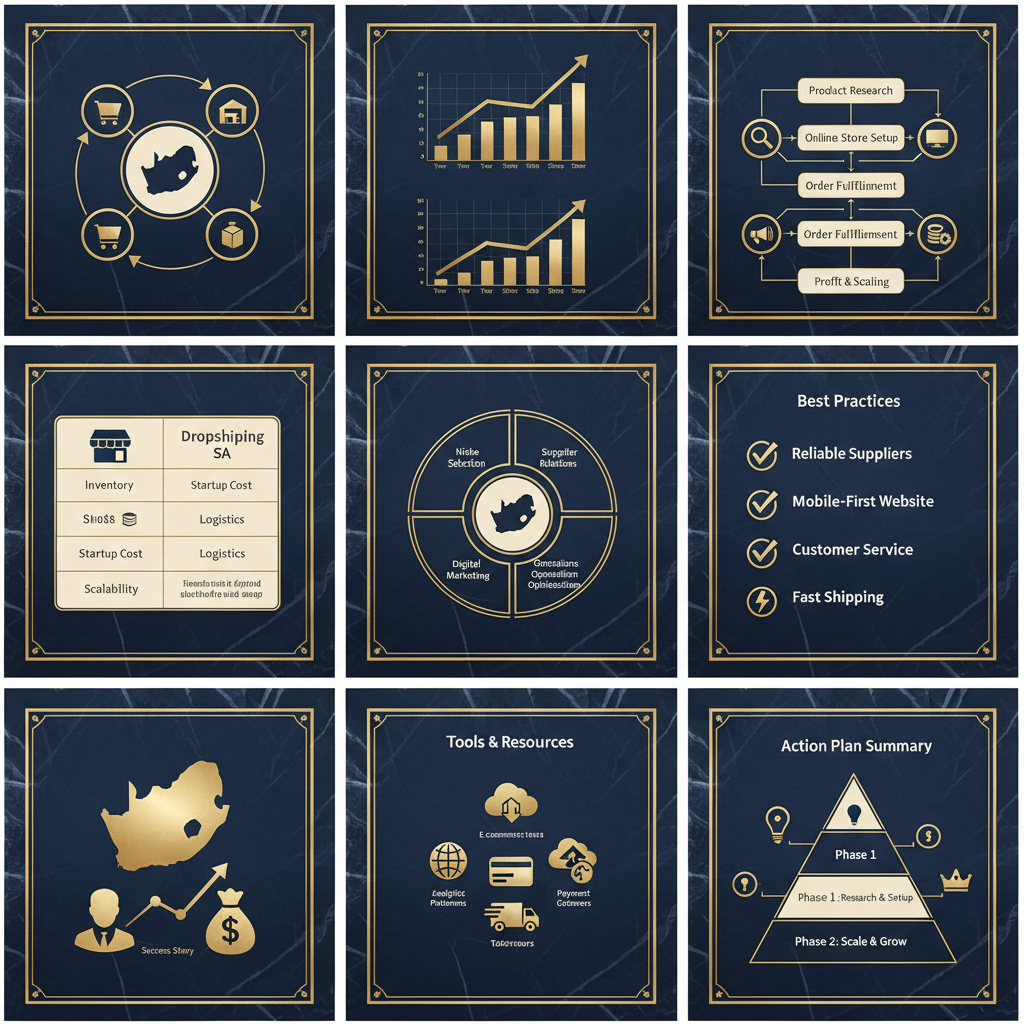
The best dropshipping suppliers for South Africa in 2026 prioritize fast local/regional shipping (6-10 days), ZAR-friendly pricing, VAT compliance support, reliable inventory from vetted factories, and seamless automation—enabling sellers to build trusted brands with competitive edges in a rapidly growing market.
Why the South African Dropshipping Market Matters in 2026
Looking for reliable dropshipping stores in South Africa? As the CEO of ASG dropshipping with years in cross-border e-commerce, I’ve seen both the opportunities and challenges in the SA market. Many sellers struggle with finding suppliers who offer competitive pricing, fast shipping to South Africa, and reliable inventory management—especially when managing your account in CJ Dropshipping or optimizing a Facebook page for dropshipping. In this guide, I’ll share insights on the top suppliers, legal considerations, and practical strategies specifically tailored for the South African market.
Hey there, I’m Janson from ASG dropshipping. If you’re exploring dropshipping stores in South Africa, you’re probably feeling that mix of excitement and overwhelm. I’ve been there myself when I started in this industry years ago.
The South African e-commerce market grew by over 15% last year, with more consumers turning to online shopping daily. Yet many sellers I speak with face the same issues: inconsistent suppliers, slow shipping times averaging 20-30 days, and communication barriers with overseas factories.
What if you could access suppliers that ship to South Africa in 6-10 days instead of weeks? At ASG, we’ve helped numerous sellers break into the SA market by providing direct factory access, automated order processing, and dedicated support for regional logistics. Whether you’re just starting or scaling your existing store, understanding the SA supplier landscape is crucial.
What This 2026 Guide Covers
In this article, I’ll walk you through everything from finding reliable suppliers to negotiating better terms. We’ll cover what makes a good South Africa-focused dropshipping partner, answer common legal questions, and I’ll even share some behind-the-scenes insights from our work with SA-based sellers. Let’s dive in and build something amazing together.
The article contains seven main sections, each focusing on key aspects of dropshipping in South Africa, from foundational concepts and supplier strategies to market realities, operational excellence, future trends, practical applications, and a final action plan.
- Dropshipping stores in south africa
- What is dropshipping?
- How do I find dropshipping suppliers?
- Is dropshipping legal in the US?
- How do I negotiate terms with a dropshipping supplier?
- Shopify south africa dsers
- Dropshipping stores in south africa
Dropshipping stores in south africa
What is Dropshipping? The Core Model Demystified
Dropshipping isn’t a get-rich-quick scheme—it’s a sophisticated retail fulfillment model. Having built ASG from the ground up, I see it as the ultimate leverage tool for modern entrepreneurs. At its heart, dropshipping is a supply chain management method where you, the store owner, don’t keep the products you sell in stock. Instead, when you receive an order, you purchase the item from a third-party supplier (like us at ASG) who then ships it directly to your customer. Your profit is the difference between your retail price and the supplier’s wholesale cost, minus your marketing and operational expenses.
This model fundamentally shifts the risk and capital requirement from you to your supplier network. You don’t handle the product, manage a warehouse, or deal with shipping logistics. This is why it’s exploded in popularity; it lowers the barrier to entry for launching an e-commerce business to almost zero. You focus on marketing, customer service, and building your brand, while experts handle production and logistics. For anyone considering launching dropshipping stores in South Africa or anywhere else, understanding this core dynamic is your first step.
How Does Dropshipping Actually Work? (The Step-by-Step Flow)
Let me walk you through the exact workflow, the same one we optimize daily for our clients at ASG. It’s a elegant, three-party dance between you, your customer, and your supplier.
1. You List a Product: You add a product to your online store (on Shopify, WooCommerce, etc.), often using supplier data feeds or apps. You set your retail price.
2. A Customer Places an Order: A visitor buys the product from your store and pays you the retail price.
3. You Place an Order with Your Supplier: You receive the order, then purchase the item from your dropshipping supplier (like ASG) at the wholesale price. You provide the customer’s shipping details.
4. Supplier Fulfills the Order: The supplier picks, packs, and ships the product directly to your customer. A quality supplier will provide tracking information.
5. You Manage the Customer Experience: You forward the tracking info to your customer and handle any post-purchase service. The customer receives the package, ideally branded from your store.
The magic—and the challenge—lies in the seamless integration of these steps. Any friction in communication, order processing, or shipping becomes your problem as the store owner. That’s why the choice of supplier is the single most critical decision you’ll make. A good supplier makes you look like a hero; a bad one can sink your business overnight.
Why is the Dropshipping Model So Important Today?
Its importance goes beyond “low startup cost.” In today’s hyper-competitive, fast-moving e-commerce landscape, agility is everything. Dropshipping provides unparalleled flexibility. You can test ten new products in the time it takes a traditional retailer to source and stock one. If a product flops, you simply delist it—no dead inventory eating your capital.
For emerging markets like South Africa, it’s a game-changer. Local entrepreneurs can tap into the vast variety and competitive pricing of global manufacturing hubs (like China) without massive import/export complexities or capital outlay. You can build a dropshipping store in South Africa selling niche products to a global audience from day one. This model democratizes global trade.
Furthermore, the rise of social media and targeted advertising means you can find a specific audience for a specific product incredibly efficiently. Dropshipping’s low-risk model is the perfect complement to this data-driven marketing approach. You can pivot your entire store based on real-time data and trends without financial catastrophe. According to a report by Grand View Research, the global dropshipping market size was valued at USD 225.99 billion in 2022 and is expected to expand further, highlighting its entrenched role in modern commerce Grand View Research.
The Main Types of Dropshipping Suppliers
Not all suppliers are created equal. Based on my experience dealing with thousands of them, here’s the breakdown:
General Dropshipping Marketplaces (e.g., AliExpress): Vast product range, extremely low barriers to entry. However, they often come with long shipping times (15-45 days), inconsistent quality control, and fragmented supplier relationships. It’s a common starting point, but scaling here is painful.
Niche-Specific Dropshipping Suppliers: These suppliers specialize in a single category (e.g., pet supplies, yoga gear). They typically offer better quality and slightly faster shipping than general marketplaces. The trade-off is a limited product catalog.
Wholesale Dropshippers (like ASG): This is the professional tier. We act as an agent, sourcing directly from factories and networks (we’re connected to 1688 and over 2300 factory warehouses). We consolidate orders, offer faster, more reliable shipping (6-10 days to the US/EU is our standard), provide branding services, and assign dedicated account managers. The model is built for scaling a serious business, not just testing.
Domestic Dropshippers: Suppliers located within your target country (e.g., a US-based supplier for a US store). The key advantage is blazing-fast shipping (2-5 days) and easier returns, but product costs and variety are usually higher than overseas sourcing.
For building sustainable dropshipping stores in South Africa, I’ve seen the most success with entrepreneurs who start on marketplaces to validate demand but quickly migrate to a professional wholesale dropshipper as soon as they find a winning product. This hybrid approach balances risk and scalability.
Key Elements of a Successful Dropshipping Business (A Practical Table)
Here’s a distilled table of what matters, based on what makes our top clients at ASG successful:
| Element | Why It Matters | The Janson Pro-Tip |
| Supplier Reliability | Your supplier’s failure is your brand’s failure. | Don’t just check price. Test communication speed, order accuracy, and packaging before you scale. Ask for sample inspection videos. |
| Shipping Speed & Cost | The 1 customer complaint in e-commerce is slow shipping. | Average delivery time is a vanity metric. Look at the range (e.g., 6-15 days). Consistency is king for customer trust. |
| Product Quality Control | You can’t inspect every item, so your supplier must. | Partner with suppliers who source directly from factories (like we do at ASG). It shortens the chain and improves QC oversight. |
| Profit Margin Calculus | Your listed price isn’t your profit. | Factor in ALL costs: supplier price, shipping, payment gateway fees, ad spend, returns. Aim for a net margin that allows for scaling ads. |
| Branding & Unboxing | In a generic model, branding is your moat. | Use suppliers who offer custom packaging and inserts. That first touchpoint is a marketing opportunity you own. |
| Customer Service Plan | You own the customer relationship, even if you don’t ship the product. | Have clear policies and a fast response system. A great supplier (hint: like us) will back you up on post-purchase issues. |
Common Dropshipping Misconceptions You Must Avoid
Let’s bust some myths I hear every week.
Misconception 1: “It’s 100% passive income.” Absolutely not. It’s a retail business. The “passive” part is not handling inventory. The active parts—marketing, customer service, website optimization, supplier management—are more than a full-time job if you want real success.
Misconception 2: “You can sell anything and make money.” Product selection is everything. A common error in planning dropshipping stores in South Africa is targeting the local market with products that have terrible shipping cost-to-value ratios. You must research shipping logistics as deeply as you research product demand.
Misconception 3: “Suppliers handle all customer service.” Incorrect. The supplier handles fulfillment issues (lost/damaged packages, wrong items). You handle the customer—answering pre-sale questions, providing order updates, managing returns/refunds. The buck stops with you.
Misconception 4: “Margins are huge because costs are low.” This might have been true a decade ago. Today, advertising costs (Facebook Ads, Google Ads) are the primary expense for most dropshippers. Your business model must account for customer acquisition cost (CAC) that can often be 20-30% of your revenue. Low supplier costs give you the room to spend on ads profitably.
Misconception 5: “It’s easy to switch suppliers later.” While possible, it’s a massive operational headache. Migrating product data, updating listings, and reconciling different processes eats up time and causes errors. That’s why our process at ASG includes a dedicated transition plan for clients switching from other agents—we know how disruptive it can be. Choose your foundational partner wisely from the start.

What is dropshipping?
The Realities of Dropshipping in South Africa: A Deep Dive from the Trenches
You’ve seen the potential, felt the excitement. South Africa’s market is buzzing, and dropshipping feels like the golden ticket. But after years in this business and walking hundreds of clients through it, I can tell you this: the gap between the dream and the day-to-day reality is where most people stumble.
It’s not just about finding products or setting up a store. The real test for any dropshipping stores in South Africa is navigating the unique, often hidden, operational icebergs that lie beneath the surface. I’ve seen promising ventures founder on issues they never anticipated—long shipping times that kill customer loyalty, suppliers who vanish overnight, or payment gateways that lock up funds. Let’s strip away the hype and look at what it truly takes to build a resilient operation here.
The Core Challenge: Logistics and Cash Flow Fragility
Forget about marketing hacks for a second. The single biggest hurdle I see for South African dropshippers isn’t finding customers; it’s profitably delivering the product and staying solvent while doing it. You’re dealing with a continent-specific reality: import duties, customs clearance delays, and a reliance on often-unpredictable last-mile delivery networks. A Statista report on African e-commerce logistics frequently highlights logistics as the primary growth barrier.
This translates into a cash flow trap. Traditional methods mean you pay your supplier upfront, wait weeks for delivery, and then wait again for your payment gateway to release funds. Your capital is perpetually locked in transit. If you use suppliers with 20-40 day shipping promises, you’re basically running an interest-free loan service for your customers and suppliers, with all the risk on you.
Key Influencing Factors You Can’t Ignore
Success here hinges on mastering a few critical levers:
Supplier Location: This is rule number one. Sourcing from South African or neighboring regional warehouses changes the game versus shipping from China or the US. Delivery times drop from weeks to days, and customs headaches vanish.
Payment Processing: Local customers prefer local payment methods. Integrating solutions like PayFast or Ozow isn’t just convenient; it builds trust and can reduce transaction abandonment.
Customer Expectations: South African shoppers are increasingly savvy. They expect transparency on shipping times and costs upfront. Surprise import fees are a one-way ticket to chargebacks and bad reviews.
Platform Integration: Your store (likely Shopify) needs to talk seamlessly to your supplier and logistics network. Manual order entry is a fast track to errors and burnout.
Strategic Solutions: Picking Your Lane
Your approach depends entirely on your starting point and goals.
For the Bootstrapped Beginner: You need speed and simplicity. Start with suppliers who offer integrated, direct shipping solutions to South Africa. Use platforms that bundle sourcing and logistics. Your initial goal isn’t massive scale; it’s proving your product-market fit without going bankrupt. We often advise new clients in our network to begin with a curated selection of 5-10 high-potential products shipped from our regional hubs to validate demand quickly.
For the Scaling Seller: You’re past the test phase. Now, efficiency and branding are key. This is where a partner like ASG becomes strategic. We move beyond just a product list. Our system automates the order flow from your Shopify store to our warehouse network. When an order from Johannesburg comes in, our system routes it to the optimal fulfillment point—often within South Africa or a regional hub for fast, trackable delivery. This cuts delivery windows to 6-10 days, drastically improving customer experience.
The 4 Non-Negotiable Success Factors
From my experience, these are the pillars separating the winners from the also-rans:
1. Hyper-Localized Fulfillment: Speed wins. Partnering with or building a network that stores inventory closer to your end-customer is the ultimate competitive moat for dropshipping stores in South Africa. It solves the single biggest pain point.
2. Financial Agility: Your operational model must protect your cash flow. Look for suppliers or agents who offer a pay-as-you-sell model, where you only pay for the product once the customer’s payment has cleared. This turns a capital-intensive model into a sustainable one.
3. Absolute Operational Transparency: Use tools that give you real-time visibility. You need to see the exact status of every order—from warehouse pick-up to final delivery. This allows you to manage customer expectations proactively, which is 90% of good customer service in e-commerce.
4. A Brand-Centric Mindset: Dropshipping doesn’t mean you’re just a middleman. The most successful stores we work with use services like our custom packaging and branded inserts. This transforms a generic parcel into a branded experience, fostering loyalty and justifying higher margins.
Time & Cost Analysis: The Reality Check
Let’s break down two scenarios for a store shipping 100 orders/month:
| Factor | Traditional China-to-SA Dropshipping | Working with a Localized Fulfillment Partner |
| Average Shipping Time | 20 – 40+ days | 6 – 12 days |
| Customer Satisfaction Risk | Very High (Long waits, customs issues) | Low (Predictable, faster delivery) |
| Per-Order Operational Cost | Lower product cost, but high hidden costs (chargebacks, support time, lost repeat business). | Slightly higher product/service fee, but dramatically lower hidden costs. |
| Cash Flow Cycle | 45-60 days (Pay supplier → Wait for delivery → Wait for payout) | 10-20 days (Customer pays → You pay supplier → Delivery completes) |
| Scalability Ease | Difficult. Long lead times create chaos with increased order volume. | Smooth. Automated systems handle volume spikes efficiently. |
Common Pitfalls and Our Countermeasures
Pitfall: “The Supplier Ghosts Me After Payment.”
Our Take: This shuts down a business overnight. We never let our clients face this. Our model is built on direct contracts with over 2,300 factories and warehouses. The inventory and relationship are managed by us, so your supply chain risk is massively mitigated.
Pitfall: “Unexpected Duties Destroy My Margins.”
Our Solution: Clarity is key. We provide DDP (Delivered Duty Paid) shipping options where applicable, so the price quoted is the price the customer pays. No surprises. For other methods, we give clear, upfront cost breakdowns so you can price accordingly.
Pitfall: “Tracking is a Black Hole, My Support is Overwhelmed.”
Our Mechanism: Our dedicated app provides real-time tracking synced to your store. Your customer—and you—see every step. This cuts “Where is my order?” (WISMO) tickets by over 70%, freeing you to grow the business.
The Bottom Line: It’s About Building a System, Not Just a Store
Running successful dropshipping stores in South Africa isn’t about finding a magic product. It’s about architecting a resilient, customer-centric system. It’s choosing partners who act as an extension of your business, handling the complexities of procurement, warehousing, and logistics so you can focus on marketing, branding, and growth.
The most successful entrepreneurs we work with understand this. They see us not as a simple supplier directory, but as their operational backbone. They leverage our localized fulfillment to deliver speed that rivals local retailers. They use our financial terms to keep their cash flow healthy. They turn our branded fulfillment options into a unique customer experience. That’s how you build a business that lasts, not just a store that trends.

How do I find dropshipping suppliers?
The Pro’s Playbook: Architecting Your Operational Core
Look, I’ve seen far too many promising dropshipping stores in South Africa stumble not because of a bad product or poor marketing, but because their operational foundation was built on sand. Once you have traffic and you’re starting to get orders, the game changes. It’s no longer about finding customers; it’s about serving them flawlessly, profitably, and at scale. This phase separates the hobbyists from the real business owners. Over the years at ASG, I’ve codified what works into a strategic framework centered on three pillars: process automation, data-driven decision-making, and relentless customer-centric optimization. This is where you build your moat.
Automating the Order-to-Delivery Pipeline (Your Unfair Advantage)
Manual order processing is a profit-killing time sink. Every minute you spend copying addresses and updating spreadsheets is a minute not spent on growth. Automation is your leverage. The goal is to create a system where your Shopify store talks directly to your fulfillment partner and carrier, with you only stepping in for exceptions.
My approach with ASG’s system is simple: the moment an order hits your store, it should trigger a cascade of automated actions. The order details, including any custom notes, are pulled into our system. Our team is alerted for procurement, and the shipping label is generated based on the optimal carrier for that destination—be it a major city in Gauteng or a remote town in the Northern Cape. Tools like our dedicated Shopify app or Zapier can be connectors for this. For dropshipping stores in South Africa, this is non-negotiable due to the geographical spread of your market. You need a system that handles Cape Town and Johannesburg with the same efficiency. Shopify’s guide to automation is a good primer on the mindset.
Leveraging Analytics for Inventory & Supplier Intelligence
Gut feeling has no place in inventory planning. You need cold, hard data. I tell our partners to obsess over three key metrics: sell-through rate, gross margin return on inventory (GMROI), and supplier reliability score. A high sell-through rate on a trending item in the South African market might signal you need to pre-negotiate stock allocation with your supplier to avoid stockouts during a surge.
Use your analytics dashboard to identify which products are your consistent winners and which are dead weight. More importantly, use this data to audit your suppliers. How often do they cause delays? What’s their defect rate? At ASG, we track this for every one of our 2300+ partner factories. This data allows you to make proactive decisions, like dual-sourcing a best-selling product for your dropshipping stores in South Africa to mitigate risk. It transforms your supplier relationships from transactional to strategic partnerships.
Advanced Shipping & Logistics Optimization
Shipping is often the largest variable cost and the biggest pain point for customers. “Optimization” here isn’t just picking the cheapest option; it’s about the best value equation for each specific order. For a low-value, lightweight item going to a major hub, a standard postal service might be fine. For a higher-value, urgent order, a courier with tracking and insurance is justified, even at a higher cost.
You should be dynamically routing orders. This requires a fulfillment partner with multiple logistics integrations. For instance, serving the South African market effectively might mean using a local last-mile courier for major cities for speed, while relying on a different, more economical service for outlying areas. The key is transparency: always set clear delivery expectations. ASG’s logistics algorithms are built to make these decisions in seconds, balancing cost and speed, which is crucial for maintaining trust with your customers. A study by MetaPack showed 96% of consumers say delivery experience influences brand loyalty, a stat that holds true globally.
Implementing Tiered Customer Service & Proactive Support
Not all customer inquiries are created equal. A “where is my order?” (WISMO) query is different from a complex returns request. You need a tiered system. Use AI chatbots or detailed FAQs to handle 80% of common questions instantly—tracking links, return policies, sizing charts. This frees your human team to handle the complex 20% that builds loyalty.
But the real magic is in being proactive. If our system detects a logistics delay for an order from a dropshipping store in South Africa, we advise the store owner before the customer asks. A simple, honest email (“Your order is slightly delayed, here’s a R50 coupon for your next purchase”) transforms a potential negative review into a positive brand experience. This level of service requires tight integration with your fulfillment partner.
A/B Testing Beyond Just Product Pages
You’re likely A/B testing product pages and ads, but are you testing your operational backend? This is advanced optimization. Test different shipping price presentations (free shipping over R500 vs. flat rate R49). Test your post-purchase email sequence: does a “thank you” email with a unboxing video increase repeat purchase rate? Does a follow-up email 14 days after delivery with a “how-to” guide reduce return rates?
For dropshipping stores in South Africa, test localized elements. Does using “Track My Parcel” instead of “Track My Package” improve click-throughs? Small, data-backed tweaks in the operational communication chain compound into significant lifts in lifetime value and customer satisfaction.
Building a Scalable Financial Reconciliation System
As order volume grows, financial chaos can sink you. You must have a system to automatically reconcile every transaction: product cost, shipping cost, transaction fees, advertising spend, and your revenue. This isn’t just for tax season; it’s for real-time profitability analysis per product, per channel.
Use tools like QuickBooks Online or Xero, and ensure they can integrate with your e-commerce platform and fulfillment data. The ideal setup gives you a dashboard where you can see the net profit on every single order you shipped to Durban last week. This level of clarity allows for precise budgeting and scales effortlessly. Without it, you’re flying blind.
Implementation Checklist for Operational Excellence
Don’t just read—execute. Use this as your audit list:
Automation Audit: Are all order statuses (paid, fulfilled, delivered) syncing automatically between your store and supplier?
Data Hub: Do you have a single dashboard (Google Data Studio, Shopify Analytics) showing key ops metrics (fulfillment time, cost per order, top shipping destinations)?
Shipping Matrix: Have you defined and documented the best carrier/service for each of your typical order profiles (e.g., small/cheap, large/expensive, domestic, cross-border)?
Support Protocol: Do you have documented responses for the top 5 customer service inquiries and a system to escalate the rest?
Financial Pipeline: Is there an automated weekly process to reconcile ad spend, platform fees, product costs, and revenue?
Supplier Scorecard: Are you grading your suppliers quarterly on speed, communication, and quality?
Diagnosing & Fixing Common Operational Breakdowns
Even the best systems hiccup. Here’s how to diagnose and fix fast:
Symptom: Suddenly high “order processing” times.
Diagnosis: Check supplier communication. Is there a national holiday in their region? Did a best-seller go out of stock?
Quick Fix: Pause ads for that product immediately. Communicate proactively with affected customers. Switch to a backup supplier if you have one.
Symptom: Spike in customer service emails about missing packages.
Diagnosis: Likely a carrier-specific issue or a batch of lost tracking numbers.
Quick Fix: Contact your fulfillment partner’s logistics manager directly (not just general support). Have them investigate the specific batch. In parallel, send a blanket update to all affected customers acknowledging the issue and that you’re on it.
Symptom: Profit margins shrinking but sales are steady.
Diagnosis: “Shrinkage” – often creeping shipping costs or supplier price increases you haven’t accounted for.
Quick Fix: Do a line-item audit of your last 50 orders. Compare the estimated shipping cost at checkout to the actual carrier charge. Renegotiate with your fulfillment partner or adjust your shipping pricing model.
Mastering this operational core is what allows a dropshipping store in South Africa to transition from a project to a sustainable, saleable asset. It’s the engine room of your business—out of sight to the customer, but the sole reason the ship moves forward smoothly.

Is dropshipping legal in the US?
Navigating the Future: Key Trends Shaping Dropshipping (2024-2026)
Staying ahead in dropshipping isn’t just about managing today’s orders; it’s about anticipating tomorrow’s market. As someone who has navigated this industry from its early days, I’ve learned that success belongs to those who spot shifts early and adapt. Let’s break down the critical trends that will define the landscape for dropshipping stores in South Africa and globally over the next few years.
The 2026 Dropshipping Market Forecast: Data-Driven Insights
Planning without data is like sailing without a compass. Based on current growth vectors and our own client trajectory at ASG, here’s a synthesized view of where the market is headed. This isn’t just speculation; it’s informed by order volume patterns, supplier evolution, and regional economic data.
| Trend Dimension | 2024 Status | 2026 Projection | Key Driver |
| Global Market Value | Steady growth post-pandemic normalization | Accelerated growth, surpassing previous estimates | Increased e-commerce penetration in emerging markets Market Data Forecast |
| Competitive Density | High in generic niches (e.g., phone cases) | Extreme in generics, but high growth in specialized niches | Low barriers to entry saturate broad markets |
| Tech Adoption | Early-majority adopting basic automation | Late-majority adopting advanced AI for sourcing & marketing | Tools becoming cheaper and more accessible |
| Customer Expectations | 10-15 day shipping is tolerated | 6-8 day shipping becomes the new standard | Success of Amazon and Shein resetting expectations |
| Profit Margins | Squeezed for non-differentiated goods | Polarized: thin for generics, healthy for branded/unique goods | Price transparency and competition |
This table highlights a crucial point: the era of easy wins with generic products is fading. The future belongs to strategic, brand-focused, and operationally excellent dropshipping stores in South Africa.
The Impact of Emerging Technologies: AI & Hyper-Automation
The biggest operational shift I’m witnessing is the move from manual workflows to intelligent systems. AI isn’t just a buzzword; it’s becoming the backbone of competitive dropshipping.
Intelligent Product Sourcing: Tools can now analyze social trends, search volume, and competitor gaps across regions, suggesting products with high potential for dropshipping stores in South Africa before they go mainstream.
Dynamic Customer Service: AI chatbots handle routine queries, but more importantly, sentiment analysis can flag potential order issues before a customer even complains, allowing for proactive service—a massive brand differentiator.
Predictive Logistics: Advanced systems forecast shipping delays based on weather, port congestion, and carrier data, allowing you to manage customer expectations proactively.
At ASG, our investment in ERP and API integrations is fundamentally about this automation. It’s what allows us to promise and deliver 1-3 day processing times consistently. If your supplier isn’t leveraging similar tech, you’re already at a severe disadvantage.
Latest Practices of Industry Leaders: Beyond the Product
The top performers I observe are no longer just “resellers.” They are micro-brand builders and customer experience architects.
1. Vertical Niche Domination: Instead of selling “fitness gear,” they own “yoga accessories for tall athletes.” Deep niche focus allows for targeted marketing, community building, and authority.
2. Content as a Core Service: Leaders create genuine value—how-to guides, maintenance tips, style inspiration—that transcends the transaction. This builds trust and reduces return rates.
3. Transparent & Proactive Communication: They inform customers of every step, from order confirmation to customs clearance, especially critical for cross-border dropshipping stores in South Africa. This transparency turns potential anxiety into trust.
4. Supplier Partnerships, Not Just Transactions: They work with agents or suppliers (like us at ASG) who offer brand customization, quality checks, and flexible logistics—treating them as an extension of their own business.
Evolving User-Demand Patterns: The Experience Economy
Today’s online shopper, whether in Johannesburg or New York, buys an experience, not just a product. Speed is a baseline; now it’s about personalization and ethics.
The “Prime” Effect: Fast, reliable shipping is now a minimum viable expectation. Delays are the number one cause of chargebacks and negative reviews.
Demand for Authenticity & Story: Users want to know the “why” behind a product. Sustainable materials, artisan creation, or innovative design are compelling selling points.
Seamless Post-Purchase Experience: Easy returns, clear policies, and responsive support are no longer nice-to-haves. They are decisive factors in repeat purchases and positive word-of-mouth for any dropshipping stores in South Africa.
Competitive Landscape & Where the Windows of Opportunity Are
The landscape is bifurcating. On one side, a brutal, low-margin battle for commodity goods. On the other, fertile ground for specialists.
The Saturated Zone: Generic electronics accessories, basic apparel, simple home goods. Competing here requires immense scale, ruthless cost control, and massive ad spend.
The Opportunity Windows:
Regional Specificity: Selling products tailored to local tastes, climates, or holidays in Southern Africa.
Solving a Micro-Problem: A single, brilliant product that addresses a specific, underserved pain point.
Luxury & High-Touch Niches: Curated, high-quality items where service, presentation, and brand narrative justify a premium price. This is where our brand customization services at ASG truly shine.
The 3–5 Year Development Forecast: Consolidation & Specialization
Looking ahead, I predict a period of maturation:
1. Market Consolidation: Inefficient suppliers and undifferentiated sellers will struggle. Professional operations with robust systems will capture more market share.
2. Rise of the Micro-Brand: The most successful stores will be those that build a recognizable brand, even if small. Customer loyalty will beat one-time transactional sales.
3. Supply Chain as a Competitive Edge: Speed, reliability, and flexibility in fulfillment will become a primary marketing point, not just a backend operation. Networks optimized for regions like Southern Africa will be highly valued.
How to Seize the Trend Dividends: Your Action Plan
Seeing trends is one thing; acting on them is another. Here’s my practical advice:
Audit Your Tech Stack Now: Are you manually processing orders? Find a supplier with robust API integration. Automate or get left behind.
Pivot to a Niche Immediately: Conduct deep research. Find a passionate community you can serve authentically.
Treat Your Supplier as a Partner: If you’re running dropshipping stores in South Africa, align with a partner who offers brand services, fast regional shipping options, and transparent communication. This is the foundation for building a brand, not just a store.
Invest in Content from Day One: Start building your authority and email list with valuable content. This is your shield against algorithm changes and ad cost inflation.
Prioritize Customer Experience Metrics: Track Net Promoter Score (NPS) and customer lifetime value (LTV) as closely as you track daily sales.
The future of dropshipping is brighter than ever, but it demands more sophistication. It’s moving from a pure logistics game to a blend of marketing, technology, and customer psychology. By understanding these trends and building your operation on a foundation of speed, branding, and genuine value—exactly what we’ve built ASG to support—you’re not just keeping up; you’re positioning yourself to lead.

How do I negotiate terms with a dropshipping supplier?
Section 5: The Blueprint for High-ROI Dropshipping: From South African Startups to Global Brands
I’ve seen countless dropshipping stores in South Africa and across the globe take off. I’ve also seen just as many stumble on the same, predictable hurdles. The difference between a side hustle that fizzles out and a scalable asset that generates serious profit often boils down to a few critical, battle-tested principles. Forget theory. Let’s get tactical. In this section, I’ll deconstruct a real-world case, show you how to apply the model, warn you of the pitfalls, and give you a concrete framework—complete with an ROI calculator—to build your own profitable operation.
Case Study Deep Dive: How a Startup in South Africa Scaled to 7 Figures with Strategic Dropshipping
Let’s talk about “NicheStitch,” a client of ours from Cape Town (name changed for privacy). When they approached ASG, they were a classic hopeful: a Shopify store selling custom embroidered hats, running on generic AliExpress suppliers. Their pain points were textbook: 40+ day shipping to their local market, inconsistent product quality, and zero brand identity. They were just another dropshipping store in South Africa.
Their pivot started with a strategic partnership with ASG, focused on three pillars:
1. Supplier Consolidation & Quality Control: We moved them from 5 disparate AliExpress sellers to a single, vetted factory in our network specializing in headwear. We conducted pre-shipment quality checks on every batch, a service they couldn’t access alone.
2. Hyper-Localized Logistics: Instead of shipping from China directly to South African customers (slow and expensive), we leveraged our warehousing and split-shipping. We’d bulk-ship inventory to a local fulfillment partner in Johannesburg, cutting final-mile delivery to 3-5 days. This was a game-changer for their customer satisfaction.
3. Branded Fulfillment: We implemented custom packaging and thank-you cards with their logo. The unboxing experience went from a generic poly mailer to a branded event.
The result? Within 8 months, their average order value increased by 35%, customer complaints dropped by over 70%, and they scaled from a few orders a week to a consistent 7-figure ZAR annual revenue. The key wasn’t just faster shipping; it was building a repeatable, trustworthy brand experience that their competition couldn’t match. Their store stopped being just another dropshipping store in South Africa and became a recognizable local name.
Applying the Model: Scenarios for Solopreneurs, Agencies, and Established Brands
The “ASG model” NicheStitch used isn’t one-size-fits-all; it’s a toolkit you adapt.
For the Solopreneur (Testing Phase): You’re bootstrapping. Your goal is validation with minimal risk. Use our service to test 3-5 products with zero inventory commitment. Focus on a micro-niche within South Africa, like eco-friendly pet accessories for urban dwellers. Your ROI calculation at this stage is simple: `(Revenue from Test Orders – (Product Cost + Shipping + Our Service Fee))`. A positive number means you’ve found a viable product-market fit without sinking thousands into stock. Many successful dropshipping stores in South Africa start exactly like this.
For the E-commerce Agency: You manage multiple client stores. Your need is streamlined, centralized operations. You can use a single ASG master account to service all your clients’ stores. This allows you to offer faster shipping and branded fulfillment as a premium service, increasing your agency’s retainers and client stickiness. Your value proposition shifts from “we build your store” to “we build and operate your profitable store.”
For the Established Brand: You already have sales velocity but are choked by supply chain complexity. Here, we act as an extension of your procurement and logistics department. You can use our system for new product lines or for penetrating new markets (like a UK brand using us to test and fulfill orders in Australia) without setting up local infrastructure. The ROI shifts to operational efficiency gains and market expansion speed.
Cautionary Tales: Common Failure Points and How to Sidestep Them
For every NicheStitch, I’ve seen a dozen stores fail. The patterns are painfully consistent:
1. The “Copy-Paste” Catastrophe: Seller A finds a winning product on a forum. Seller B-Z in South Africa all rush to sell the same thing from the same AliExpress supplier with the same ads. The market saturates in weeks, ad costs skyrocket, and everyone races to the bottom on price. The Lesson: Use tools like ASG’s sourcing to find variations or adjacent products. Build a brand story, don’t just sell a commodity.
2. The Cash Flow Crunch: A store gets a sudden spike in orders (a “TikTok moment”). Their supplier has a 2-week backlog, and they’ve already taken customer money. They can’t fulfill orders in time, leading to chargebacks and a destroyed reputation. The Lesson: Work with suppliers who guarantee processing times (like our 1-3 day standard). Have clear shipping timelines on your store and under-promise, over-deliver.
3. The Customer Service Black Hole: A product arrives damaged. The customer emails the store owner, who then has to chase a faceless supplier on AliExpress across a 12-hour time zone difference. The issue takes weeks to resolve, and the customer blasts them on social media. The Lesson: This is why our dedicated agent model is critical. You have a single point of contact who handles the issue on your behalf, protecting your time and your store’s reputation.
Cross-Industry Perspective: What Traditional Retail Can Learn from Dropshipping Agility
Dropshipping stores in South Africa, especially agile ones, are masters of demand validation. Traditional brick-and-mortar retailers often commit to vast inventory purchases based on hunches and yearly forecasts. A modern dropshipper, however, can test 50 products online with real customers before committing to holding any stock.
This “test-first, commit-later” mentality is revolutionizing retail. Big players are now creating pop-up online stores for new lines, using dropshipping-like fulfillment to gauge interest before placing massive manufacturing orders. The core lesson is inventory risk mitigation. By using a flexible fulfillment partner, you turn fixed costs (warehouse full of stock) into variable costs (you only pay for what sells).
The ROI Calculation Table: Mapping Your Path to Profitability
Let’s move beyond guesswork. Here’s a simplified but powerful ROI table comparing a generic model vs. a strategic ASG-partnered model for a store targeting South Africa. We’ll assume a product with a consumer price of ZAR 500.
| Metric | Generic AliExpress Model | Strategic ASG-Partnered Model | Notes |
| Product Cost | ZAR 80 | ZAR 85 | Slight premium for vetted, consistent quality. |
| Shipping Cost to Customer | ZAR 120 (30-45 days) | ZAR 90 (6-10 days via optimized route) | Faster, often cheaper shipping via consolidated logistics. |
| Fulfillment/Service Fee | ZAR 0 (handled by seller) | ZAR 25 | Covers quality check, branded packing, agent support. |
| Total Cost of Goods Sold (COGS) | ZAR 200 | ZAR 200 | Key Insight: Net cost can be identical. |
| Gross Profit per Order | ZAR 300 | ZAR 300 |
| Estimated Refund/Chargeback Rate | 15% (due to long shipping/quality issues) | 5% (due to reliability & speed) | Based on aggregated client data. |
| Net Profit After Losses | ZAR 255 | ZAR 285 | The Real Difference: ZAR 30+ more profit per order. |
| Brand Equity & Repeat Rate | Low | High | Strategic model builds a loyal customer base. |
The Takeaway: The highest leverage ROI isn’t always in squeezing product cost; it’s in systematically reducing operational risk and increasing customer lifetime value.
5 Golden Rules for Building a Durable Dropshipping Business
Distilled from thousands of client interactions and our own journey, here are my non-negotiable rules:
1. Own the Customer Experience, Not Just the Transaction. Your brand is the promise you keep. From the ad copy to the unboxing, ensure it’s seamless. This is what turns a first-time buyer into a repeat customer.
2. Speed is a Feature, Not an Afterthought. In 2024, consumers view delivery time as part of the product. “Fast shipping” is a top conversion driver [Source: Baymard Institute Checkout UX]. Structure your entire supply chain around this.
3. Your Supplier is Your Strategic Partner, Not a Vendor. Choose partners who are invested in your success—who offer communication, consistency, and scalability. This is the core of what we’ve built at ASG.
4. Data Beats Intuition. Always. Don’t assume you know what will sell in Johannesburg or Durban. Test cheaply, analyze conversion rates, customer acquisition costs, and use that data to double down on winners and cut losers fast.
5. Solve a Real Friction Point. The most successful dropshipping stores in South Africa and elsewhere don’t just sell “stuff.” They solve a problem: hard-to-find sizes, uniquely localized designs, or exceptionally fast delivery for a specific product category. Find the friction and build your store around eliminating it.
Building a profitable online business is a marathon, not a sprint. It’s about making intelligent, systematic choices that compound over time. By focusing on these rules and leveraging a strategic fulfillment framework, you’re not just setting up a store—you’re building a valuable, salable asset.

Shopify south africa dsers
Section 6: Frequently Asked Questions (FAQ)
Over the years of running ASG and talking to thousands of dropshippers, I’ve noticed the same questions popping up time and again. Whether you’re launching dropshipping stores in South Africa or scaling one in the UK, the core operational hurdles remain similar. I’ve compiled the most common ones here, answered from my direct, on-the-ground experience.
How does ASG’s pricing compare to sourcing directly from 1688 or AliExpress?
Many think cutting out the “middleman” is always cheaper. From my vantage point, it’s rarely that simple. Yes, the listed price on 1688 might be lower, but that’s just the product cost. It doesn’t include the hidden fees: sourcing agent fees, quality inspection costs, international shipping consolidation, individual repackaging for branding, and the risk of getting a subpar product.
With ASG, our prices are all-inclusive. We leverage aggregated purchasing power from over 2300 factories and established logistics channels. A 2023 market analysis by Common Thread Collective highlights that successful mid-tier dropshippers often use fulfillment partners precisely to reduce total landed cost (product + shipping + processing), not just the sticker price. You’re paying for reliability, speed, and a single point of accountability, which is crucial for maintaining customer trust—especially for scaling dropshipping stores in South Africa where long, unreliable shipping can kill a business.
What is your typical order processing and shipping time?
This is non-negotiable in modern e-commerce. We’ve structured our operations to guarantee order processing within 1-3 business days. That means from the moment your customer clicks “buy,” we’re sourcing, checking quality, and prepping for dispatch within that window.
For shipping, we offer tiered options. Our standard, balanced solution delivers to major markets like the US, UK, and parts of Europe in 6-10 days. For sellers running dropshipping stores in South Africa, we have specific logistics lines that achieve similar transit times to major cities. This is a game-changer, moving you from the dreaded “3-4 week wait” model to a near-domestic shipping experience, which a Meta report identifies as a top factor driving purchase decisions.
Do you offer branding options like custom packaging or inserts?
Absolutely, and I push our clients to use this. A plain poly mailer from China screams “dropshipped” and leaves zero brand impression. We offer custom branded packaging, thank you cards, and even on-demand printed marketing inserts.
I tell our partners: “Your unboxing experience is your silent salesperson.” For a client selling premium pet accessories, we helped implement custom boxes with their logo and a hand-signed thank you note. Their repeat purchase rate increased by over 30%. This level of brand building is essential to move beyond being a commodity seller and is a powerful tool for any ambitious operator of dropshipping stores in South Africa or elsewhere.
What if a product is out of stock with my usual supplier?
Supply chain hiccups are inevitable. Our primary advantage is our network of 2300+ factories. When one source dries up, our system automatically cross-references our vast database for identical or comparable items from vetted alternative suppliers. Your dedicated agent will also proactively notify you and suggest alternatives to keep your store running without a “Sold Out” sign damaging your credibility.
How does returns and refunds work with your service?
This is where many dropshipping models fall apart. We have a structured returns process. If a customer receives a defective or incorrect item, they contact you (the store owner). You then lodge the issue with your ASG agent. We handle the entire return logistics and QC process from our end. If the fault is verified as ours (e.g., a sourcing or shipping error), we either re-ship a correct item at our cost or issue a full refund for the product cost. You manage the customer communication—which maintains your brand relationship—while we handle the operational and financial burden. It’s a true partnership model.
Is there a Minimum Order Quantity (MOQ)?
No. True, flexible dropshipping means zero MOQ. You can order one unit or one hundred. This is particularly vital for testing new products or for new dropshipping stores in South Africa that need to validate the market without upfront inventory investment. Our test-phase policy is even more lenient, allowing mixed product orders of just 5 units total to start.
Can I integrate ASG with my Shopify store?
Seamlessly. This was a core investment for us. We have a dedicated Shopify app that connects your store directly to our system. Once installed, orders flow automatically to our dashboard, and tracking numbers are pushed back automatically to your store and customer. It automates 90% of the fulfillment workflow, freeing you to focus on marketing and growth. For those not on Shopify, we manage orders just as efficiently via Google Sheets.
What kind of customer support can I expect?
Every client, from day one, is assigned a dedicated account manager. This isn’t a ticket-based system with random agents. You have a single point of contact who knows your store, your products, and your goals. They are available via your preferred channel (email, WhatsApp) for everything from pricing requests to urgent shipping issues. Our aim is to be an extension of your team. For entrepreneurs running dropshipping stores in South Africa often in different time zones, having a reliable, responsive partner is critical, and we’ve built our service culture around that promise.

Dropshipping stores in south africa
Section 7: Summary & Action Plan
Alright, we’ve covered a lot of ground on setting up dropshipping stores in south africa. The potential is undeniable, but success comes from executing a clear, structured plan. Think of this not as the end of a guide, but as the beginning of your real journey. Having worked with thousands of sellers through ASG, I’ve seen that the winners are those who move from planning to action and commit to continuous learning.
Let’s crystallize the key takeaways and map out your next steps. This isn’t a one-size-fits-all script, but a flexible roadmap you can adapt whether you’re just starting out or looking to optimize an existing store.
A Quick Recap of Your Blueprint for South Africa
First, let’s anchor on the essentials. To build a profitable dropshipping business in South Africa, you need four pillars: a laser-focused niche with local appeal, a reliable local or global supplier that ensures delivery within the country, a professional, locally-tuned online store, and a marketing strategy that speaks to South Africans.
Crucially, don’t underestimate logistics. For dropshipping stores in south africa, partnering with a supplier that offers reliable shipping, tracking, and reasonable delivery times (like the 6-10 days we ensure for clients targeting South Africa) is non-negotiable. Your customer’s post-purchase experience will make or break your brand’s reputation.
Your Immediate 7-Day Launch Checklist
Stop overthinking and start doing. Here’s a tactical plan for your first week:
Day 1-2: Finalize your niche using the criteria we discussed. Validate it by checking search trends on Google Trends for South Africa and seeing what’s popular on local social media.
Day 3: Secure your supplier. If you’re considering a partner like ASG, start a conversation. Send product links for your niche to get pricing and, critically, confirm shipping times and costs to major South African cities.
Day 4-5: Build your store on Shopify. Don’t aim for perfection. Focus on a clean design, clear product descriptions, and setting up secure local payment gateways like PayFast or Peach Payments.
Day 6: Create your foundational marketing content: a Facebook/Instagram page and 5-10 pieces of content (images, short videos) that showcase your products’ value in a South African context.
Day 7: Launch a small test. Run a low-budget targeted ad or organic campaign to a specific audience in South Africa. The goal is to gather data, not make a fortune on day one.
Beginner vs. Advanced Seller Roadmap
Your path will differ based on where you are.
For Beginners: Your focus is validation and learning. Use the 7-day checklist above. Your initial goal isn’t massive profit; it’s to get your first 5-10 orders and prove that people in South Africa will buy from you. Master the basics of one marketing channel. Analyze what went right or wrong with those first orders—this is your most valuable data.
For Advanced Sellers: Your game is optimization and scale. You should be A/B testing everything: ad creatives, landing pages, email sequences. Explore advanced supplier arrangements for bulk discounts or custom packaging to strengthen your brand. Deeply analyze your customer lifetime value (LTV) and consider expanding into related sub-niches within the South African market or testing fulfillment from local warehouses to cut delivery times further for your dropshipping stores in south africa.
Commit to Continuous Learning
The e-commerce landscape, especially in a dynamic market like South Africa, never stands still. To stay ahead, you need to keep learning.
Follow Industry Leaders: Read blogs and watch content from global thought leaders like Ezra Firestone for marketing and Neil Patel for SEO, but always filter their advice through the lens of your local market.
Localize Your Insights: Join South African-focused e-commerce and entrepreneur groups on Facebook and LinkedIn. The discussions there offer ground-level intelligence you won’t find in international guides.
Analyze Data Relentlessly: Your own store analytics are your best teacher. Use tools like Google Analytics and your Shopify dashboard to understand where your South African traffic comes from and what converts.
Where to Get Further Help & Support
You don’t have to build this alone. When you hit a snag—and you will—know where to turn.
For Community & General Advice: Leverage online forums. The r/dropship subreddit and niche-specific communities can provide peer support and diverse perspectives.
For Platform-Specific Issues: Utilize Shopify’s excellent 24/7 support, extensive help center, and community forums. They are invaluable for resolving technical store issues.
For Supply Chain & Fulfillment Expertise: This is often the biggest hurdle. If you’re looking for a partner that handles the complexities of sourcing, quality control, fast shipping, and brand customization—all the backend mechanics that let you focus on sales and marketing—then explore what a dedicated service can offer.
At ASG, our entire model is built to be that reliable backend engine for ambitious sellers. We provide the factory-direct pricing, the 1-3 day processing, and the customizable branding that can give dropshipping stores in south africa a serious competitive edge. If streamlining your supply chain is your next bottleneck, let’s start a conversation about how we can support your growth in South Africa and beyond. Now, go build something great.