The Strategic Advantage of Guangdong’s Manufacturing Hub
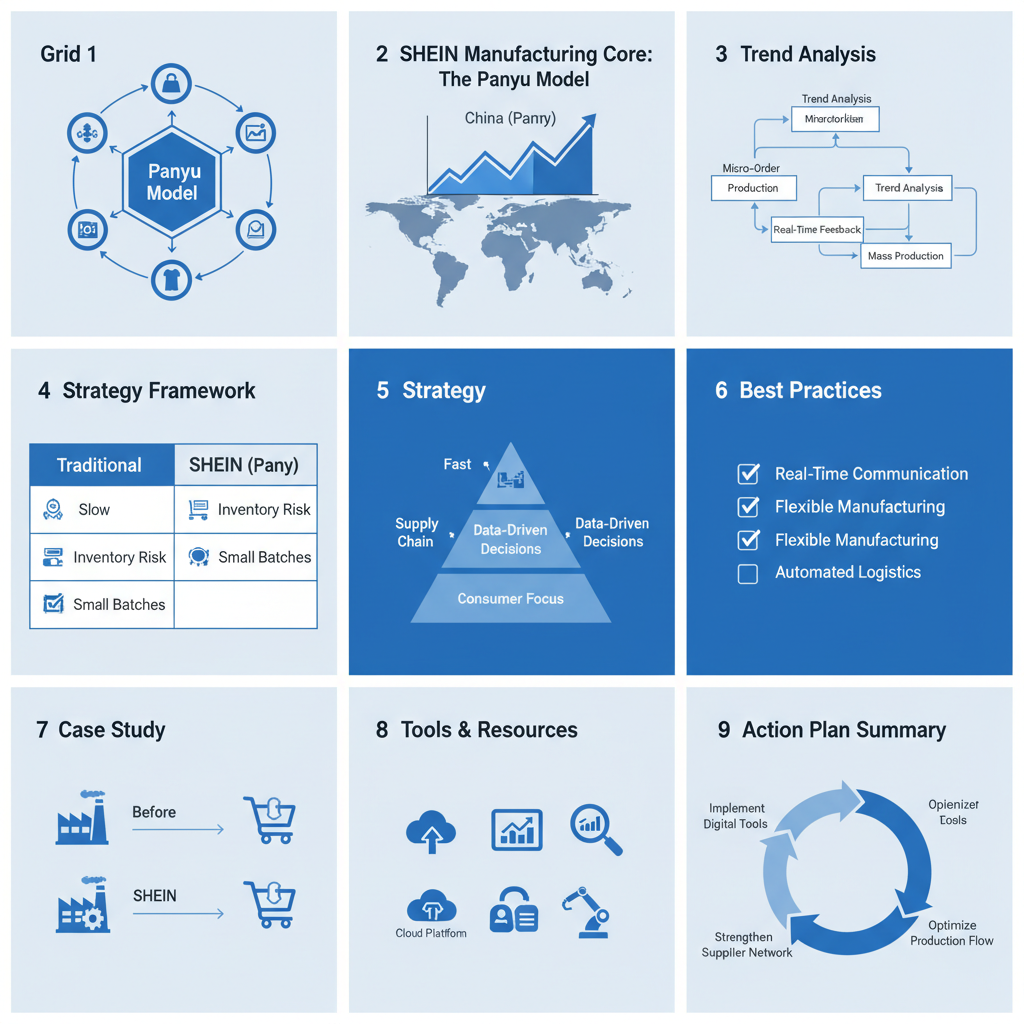
Many people wonder where Shein clothing is made and how this fast fashion giant manages to produce 15+ new designs daily. As someone who’s worked closely with Chinese manufacturing for years, I can tell you that Shein’s production model is both fascinating and complex. The company leverages an extensive network of factories primarily located in Guangdong province, China’s manufacturing heartland. This strategic location allows for rapid prototyping and efficient production cycles—a distinct approach compared to the traditional industrial hubs determining where Levi jeans are made—fueling their global expansion and remarkable market success.
When I first started working in cross-border ecommerce, I was amazed by Shein’s ability to scale so rapidly. The secret lies in their manufacturing strategy. Shein clothing is made through a sophisticated network of over 2,300 factories concentrated in China’s Guangdong province. This region has become the epicenter of fast fashion production, offering unparalleled advantages in speed, cost, and flexibility.
Global Supply Chain and Operational Velocity
As of January 2025, Shein has expanded its operations globally with warehouses in Poland to serve European markets faster. Their headquarters may have moved to Singapore, but the manufacturing heart remains firmly in China. The company’s success isn’t just about low prices – it’s about a manufacturing ecosystem that can turn designs into products in as little as 3 days. This article will take you deep inside Shein’s production model, revealing how they manage to launch 15+ new products daily while maintaining competitive pricing.
I’ll share insights from my own experience working with similar manufacturing networks, showing you exactly how Shein coordinates this massive operation. We’ll explore their factory relationships, production timelines, and how they’ve managed to scale effectively while keeping costs remarkably low. It is a system that contrasts sharply with the labor-intensive luxury processes that dictate where are Coach bags made.
This outline covers the geographic and operational details of Shein’s production model, including their primary manufacturing hubs in Guangdong, their network of over 2,300 factories, daily design output capabilities, international warehousing expansion, and the supply chain management strategies that drive their fast-fashion dominance.
-
Where Shein Clothing Is Made
-
Shein’s Manufacturing Network: The 2300+ Factory Strategy
-
Guangdong Production Hubs: Shein’s Manufacturing Heartland
-
Daily Production Capabilities: How Shein Creates 15+ New Designs
-
Global Expansion: Operating Warehouses in Poland and Beyond
-
Sourcing Wise: Shein’s Supply Chain Management Secrets
-
Where Shein Clothing Is Made: The Complete Manufacturing Process
Where Shein Clothing Is Made
Demystifying Dropshipping: The Engine Behind Modern E-commerce
Let’s cut through the noise. When I first started in this industry, “dropshipping” was a term shrouded in mystery and skepticism. Today, it’s the backbone for countless successful online businesses, yet it’s still widely misunderstood. In my years running ASG, I’ve seen firsthand how a clear, strategic understanding of this model separates the hobbyists from the serious entrepreneurs who build lasting brands.
At its core, dropshipping is a fulfillment method. You, the retailer, sell a product online, but you never physically handle the stock. Instead, when a customer places an order on your store, you purchase the item from a third-party supplier (like ASG), who then packages and ships it directly to your customer. Your profit is the difference between the retail price you charge and the wholesale price you pay the supplier.
It sounds simple, and in principle, it is. But the magic—and the challenge—isn’t in the definition; it’s in the execution. The working principle hinges on a seamless, automated flow of information: order notification from your store to your supplier, real-time inventory updates, and instant tracking data back to your customer. When this engine purrs, it’s a beautiful thing. When it sputters due to poor supplier communication or manual processes, it can kill your business reputation overnight.
Why Dropshipping is More Than Just a Side Hustle
Many enter this space thinking it’s a “get-rich-quick” scheme. That’s the first and biggest misconception. In reality, dropshipping’s importance lies in its ability to democratize global e-commerce. It lowers the barrier to entry dramatically by eliminating the need for large upfront capital in inventory and warehousing. This allows you to test markets, validate products, and build a brand with minimal risk. For ASG’s clients, this model is the launchpad. It’s how they go from an idea to generating revenue without mortgaging their house. The real value isn’t just in selling a product; it’s in building a customer base and a brand identity that you own, which is an asset no one can take from you.
The Two Main Archetypes: Generalists vs. Niche Specialists
In my experience, successful dropshippers typically fall into two camps. First, you have the General Store. This approach involves selling a wide variety of unrelated products. It’s great for testing what resonates with an audience and requires less upfront market research. The second, and where I see more sustainable success, is the Niche Store. Here, you focus on a specific vertical—like eco-friendly yoga gear or premium pet accessories.
This builds a dedicated community, allows for deeper brand storytelling, and often commands higher margins because you’re seen as an expert, not just a seller. Understanding where-shein-clothing-is-made, for instance, is less relevant to a niche store owner selling handmade ceramics, but crucial for someone in fast fashion. Your choice dictates your entire sourcing and marketing strategy.
The Non-Negotiable Elements of a Viable Dropshipping Business
A dropshipping business isn’t just a website and a supplier. It’s an ecosystem. Let me break down the key elements that, from my vantage point at ASG, determine success or failure:
| Element |
Why It’s Critical |
The ASG Perspective |
| Reliable Supplier |
Your entire customer experience depends on them. A bad supplier means slow shipping, poor quality, and zero communication. |
This is our raison d’être. We built ASG because we saw this failure point everywhere. Our network of 2300+ vetted factories and our 1-3 day processing time exist to eliminate this single point of failure for our clients. |
| Quality Product Sourcing |
You can’t market a bad product into success. Sourcing involves vetting for quality, market demand, and profit potential. |
We don’t just provide a catalog. We act as your sourcing agent on the ground in China. Clients send us links, and we provide sample videos, quality checks, and real pricing—translating the often-opaque world of where-shein-clothing-is-made into clear, actionable data for your business. |
| Efficient E-commerce Platform |
This is your storefront and operational hub. It needs to be stable, scalable, and integrate smoothly with your supplier. |
We’re built for Shopify because it’s the gold standard for independence and scalability. Our dedicated app automates the entire order and sync process, turning a complex logistical chain into a one-click operation. |
| Effective Marketing & Customer Service |
Driving traffic and retaining customers is the business. Dropshipping doesn’t absolve you of this; it lets you focus your resources here. |
While we handle fulfillment, we advise our clients to invest heavily here. A brand built on great service can survive a delayed package. A generic store cannot. |
| Solid Financial Management |
Understanding your true profit after ads, transaction fees, and supplier costs is vital. Many newcomers fail because their math is wrong. |
We provide transparent pricing and detailed invoices. We show you the real cost from the factory floor, so you can price your products for sustainable profit, not just a quick sale. |
Busting the Top Dropshipping Myths I Hear Daily
Let’s clear the air on a few things I discuss constantly with new clients.
Myth 1: “Dropshipping is dead.” This is usually said by people who tried it with a poor supplier and a generic product. The model isn’t dead; the era of easy, low-effort money is. Today, success requires treating it like a real business: brand building, customer service, and strategic supplier partnerships. The Harvard Business Review often discusses how low-inventory models are revolutionizing retail, not dying.
Myth 2: “You have no control over shipping or quality.” This is only true if you choose a bad partner. With ASG, you have control. We offer multiple shipping tiers, provide full tracking, and conduct quality checks. You’re outsourcing the execution, not the responsibility. You’re the conductor; we are the orchestra.
Myth 3: “Margins are too low to be profitable.” Margins are a function of your sourcing cost and your perceived value. If you’re sourcing from the same place as everyone else and adding no brand value, then yes, margins are thin. But by leveraging direct factory relationships (cutting out middlemen) and building a niche brand, you create room for healthy margins. A report by McKinsey & Company on global value chains highlights how direct manufacturer relationships are key to margin preservation in retail.
Myth 4: “It’s completely hands-off.” Wrong. It’s inventory-less, not work-less. Your work shifts from packing boxes to marketing, customer service, and brand development. The operational burden is lighter, but the strategic burden remains.
Understanding where-shein-clothing-is-made is a specific sourcing question. Understanding the principles behind a model like Shein’s—agile supply chains, direct manufacturer links, and data-driven production—is what will help you build your own successful venture. Dropshipping is the vehicle; your strategy, your supplier, and your brand are the fuel.

Shein’s Manufacturing Network: The 2300+ Factory Strategy
The Real-World Challenges of Sourcing and How We Navigate Them
Let’s be brutally honest: the promise of dropshipping is often a lot shinier than the gritty reality. Over the years, I’ve seen countless sellers—from wide-eyed beginners to frustrated veterans—get tripped up by the same fundamental supply chain issues. It’s not just about finding a product; it’s about finding a reliable, scalable, and profitable way to get that product to your customer. The gap between a sale and a satisfied customer is filled with potential landmines.
You might be wondering, “Where is Shein clothing made?” because their model seems so seamless. The answer, largely, is a complex network of factories primarily in China. But knowing where is only 1% of the battle. The real challenge is how to replicate that efficiency and reliability at a scale that works for your business, without the billion-dollar infrastructure. That’s the puzzle we’ve spent years solving at ASG.
The Core Problem: Why Most Dropshipping Sourcing Fails
The root failure isn’t a lack of products; it’s a failure in process and partnership. New sellers often start on massive B2B platforms or with agents who prioritize volume over partnership. You find a widget at a great price, but you’re one of hundreds of clients. When your order is small, communication lags. When you have a question about quality or a shipping delay, you’re at the back of the queue. The factory that actually produces the item has no relationship with you, and your middleman is too stretched to advocate for you effectively.
This creates a domino effect: delayed order processing leads to late shipments, which destroys your store’s credibility. Inconsistent product quality results in returns and negative reviews. A lack of transparency means you’re flying blind, unable to give customers accurate updates. I’ve watched promising stores crumble not because of poor marketing, but because their backend was built on sand. You’re not just sourcing a product; you’re sourcing trust, and that’s the hardest commodity to find.
A Detailed Analysis of the Modern Sourcing Landscape
The landscape has fractured into distinct tiers. At the bottom are the open B2B marketplaces. They offer unparalleled choice and rock-bottom prices, but they are a wild west of quality control and reliability. Moving up, you find sourcing agents. A good agent is worth their weight in gold, but a mediocre one adds cost without solving the core issues of communication and priority.
Then you have integrated platforms that promise automation. These can be great for very standardized products, but they often lack flexibility for customization or handling complex logistics for diverse product categories. At the top are the vertically integrated giants and specialized partners who manage the entire chain. This is where the real magic happens for scalability, but it’s traditionally been inaccessible to all but the largest sellers.
The key insight from our work at ASG is that the winning model for growth-focused sellers borrows from the top tier. It combines the direct factory access and pricing of tier one with the dedicated support and process automation of tier three. It’s about creating a curated, managed supply chain, not just a list of suppliers.
Key Factors Influencing Your Sourcing Success
Four factors will make or break your sourcing:
1. Relationship Depth: Is your contact a transactional order-taker or a strategic partner? When issues arise (and they will), a partner proactively solves them. An order-taker forwards an email and hopes for the best.
2. Process Transparency: Can you see the status of your order from purchase to packing to shipping? Blind trust isn’t a strategy. Real-time tracking within our app, for example, eliminates the “black box” anxiety.
3. Operational Flexibility: Can your source handle 5 orders one day and 50 the next? Can they apply your custom logo or packaging? Rigid systems break under the pressure of a real, growing business.
4. Communication Priority: Your time zone, your language, your urgency. If you’re constantly battling to get a reply, your business is bleeding opportunity cost.
Strategic Solutions for Different Seller Scenarios
Your sourcing strategy shouldn’t be one-size-fits-all. It must match your stage and goals.
For the Validating Seller (Testing <5 products): Your goal is speed and low risk. You need ultra-fast sample checks (we provide video inspections) and the ability to test small batches without huge MOQs. The focus is on learning what sells, not optimizing for perfect margins yet.
For the Scaling Seller (10-50 daily orders): Here, consistency is king. You need to transition from “finding suppliers” to “managing a supply chain.” This is where dedicated account management, automated order processing via API/App, and standardized logistics channels become critical to maintain your hard-earned customer service standards.
For the Brand-Building Seller: Price is important, but it’s not the only thing. You need a partner who offers customizable branding and packaging. The unboxing experience, the thank-you card—these are now your products. Your source must be an extension of your brand ethos, capable of handling custom printing and packaging seamlessly.
The Four Non-Negotiable Success Factors
Based on managing thousands of product lines, I’ve distilled success down to four pillars:
1. Direct Factory Linkage, Not Just Contact: We don’t just have a factory’s Skype ID. We have agreements, dedicated quality checkpoints in their warehouses, and allocated production capacity. This is how we ensure the lower prices and stability others promise but rarely deliver.
2. Owned Process Control: We don’t outsource our core fulfillment. Our team directly manages packing in our warehouses or partnered hubs. This control is the only way to guarantee the faster processing and shipping we commit to (1-3 day processing, 6-10 day delivery).
3. Technology for Transparency, Not Just Automation: Our Shopify App and ERP system aren’t just about saving time. They’re about providing a window into the process for you. You see the same data we do, which builds trust and enables you to make better business decisions.
4. A Culture of Problem-Solving: We train our team to see a problem as our problem to solve with you, not your problem to deal with. This mindset is the foundation of true professional customer service.
Time & Cost Analysis: Traditional vs. Integrated Sourcing
| Task |
Traditional DIY Sourcing (Estimated) |
ASG Integrated Model |
| Product Sourcing & Vetting |
5-15 hours per product (searching, messaging, sample coordination) |
<1 hour (leverage curated catalog & video samples) |
| Order Processing Lead Time |
3-7 days (communication delays, manual processing) |
1-3 days (system-automated, dedicated staff) |
| Shipping Duration (to US/EU) |
15-30+ days (variable, often untracked budget routes) |
6-10 days (pre-negotiated, prioritized lanes) |
| Customer Service Burden |
High (you handle all customer inquiries on shipping/quality) |
Low (our team handles fulfillment issues directly) |
| Hidden Cost Risk |
High (quality rejects, lost packages, chargeback fees) |
Mitigated (quality checks, reliable logistics, issue resolution) |
Common Pitfalls and Our Countermeasures
Pitfall: “The product looks different from the sample.”
Countermeasure: We moved beyond photos. For critical products, we send a 60-second video inspection of the exact batch before shipment, checking color, function, and packaging.
Pitfall: “My shipment is stuck in customs.”
Countermeasure: We don’t just ship; we classify. Our team ensures proper HS code declaration and includes all necessary documentation, drastically reducing clearance delays. We also advise on duty thresholds for different target countries.
Pitfall: “My supplier disappeared after I paid.”
Countermeasure: Our financial structure acts as a bridge. You pay us, and we assume the risk of payment to the factory. Our long-standing relationships with our network of over 2,300 factories are our guarantee.
Pitfall: “I can’t get a timely response.”
Countermeasure: Every client has a direct line (via WhatsApp/Email) to a dedicated account manager. We measure and reward response time, because in e-commerce, speed of solution is everything.
The Best-Practice Sourcing Workflow Summary
Here’s the streamlined flow that high-performing sellers follow with us:
1. Diagnose: We start by understanding your store’s profile—your niche, target country, and order volume. Context is everything.
2. Test Smart: Don’t bet the farm. Test a maximum of 5 products with small batches. Use the video samples to make informed choices.
3. Integrate: Connect your store via our App. This isn’t optional; it’s the pipeline that automates orders and syncs tracking data back to your customer automatically.
4. Scale with Data: As orders grow, use the transparency in the system to identify your winners. We then work with you to optimize packaging and logistics for those top sellers, driving costs down further.
5. Iterate: The market changes. We hold monthly check-ins not just to review orders, but to discuss trends, new potential products, and optimization strategies for the coming quarter.
This isn’t a passive vendor relationship. It’s an active collaboration. We succeed only when your store thrives, and that alignment changes everything. When you understand where Shein clothing is made and, more importantly, how they manage that complexity, you see that the real opportunity isn’t in copying their product, but in emulating their supply chain discipline on a scale that fits your ambition. That’s the game we’re here to help you win.

Guangdong Production Hubs: Shein’s Manufacturing Heartland
The ASG Blueprint: A CEO’s Guide to Advanced Dropshipping Operations
From my vantage point as the founder of ASG, I’ve seen countless sellers plateau. They master the basics—finding a product, setting up a store—but then hit a wall. The real growth, the sustainable business, isn’t built on luck. It’s built on a system. A strategic, technology-driven operational blueprint that turns sporadic sales into a predictable, scalable machine.
This is where the amateurs get separated from the professionals. It’s not about working harder; it’s about building a smarter, more resilient operation. Over the years, my team and I have refined this blueprint through direct collaboration with thousands of sellers. We’ve seen what causes breakdowns and what fuels explosive growth. Now, I’m sharing the core operational pillars that can transform your dropshipping business from a side hustle into a formidable enterprise.
Strategic Supplier Diversification: Don’t Put All Your Eggs in One Basket
The biggest operational risk isn’t a bad ad—it’s a failed supplier. Relying on a single source is a recipe for disaster. I advocate for a multi-vendor strategy. At ASG, we don’t just connect you to a factory; we connect you to a network. This means if one source for a popular item faces production delays (a common issue, as detailed in reports on global supply chain volatility source: World Economic Forum), you have two or three other vetted options ready to fulfill orders without missing a beat.
My pro-tip: Categorize your suppliers. Have a primary for cost, a secondary for speed, and a tertiary for niche or backup. This strategy directly mitigates the single point of failure that cripples so many businesses. It’s about building redundancy into your supply chain, much like how major retailers operate.
Leveraging Technology for Seamless Automation
Manual order processing is a profit killer. The moment you scale past a few orders a day, you need automation. This is non-negotiable. Our entire service model at ASG is predicated on this. We built our proprietary ERP and Shopify App not as fancy features, but as essential tools to eliminate human error and free up your most valuable resource: time.
The app auto-syncs orders, updates tracking, and manages inventory levels in real-time. Imagine this: a customer buys a necklace in Chicago at 9 PM. By 9:05 AM China time, our system has processed the order, allocated stock, and generated a pick list—all without you lifting a finger. This level of automation is what allows our clients to focus on marketing and customer service, not data entry. It’s the technological backbone that makes scaling possible.
Data-Driven Inventory Forecasting
Gut feelings have no place in modern inventory management. Advanced operation is fueled by data. You need to understand your sales velocity, seasonality, and lead times to predict what you’ll need and when. This prevents both stockouts (lost sales) and overstocking (dead capital).
We help our clients with this by providing transparent data from our end: real-time warehouse stock levels, historical fulfillment times, and even insights on product performance across our network. For instance, if we see a surge in demand for a particular style of jewelry and know where Shein clothing is made often influences fast-fashion trends, we can proactively advise our sellers and ensure our partnered factories ramp up production. Tools like Inventory Planner or even advanced Shopify analytics can be your guide here. The goal is to move from reactive ordering to proactive supply chain management.
Implementing a Tiered Logistics Strategy
Not all packages are created equal, and neither should your shipping strategy be. A one-size-fits-all logistics plan leaves money on the table and disappoints customers. I teach our partners to implement a tiered system:
Economy Tier (7-15 days): For price-sensitive customers and low-margin items. This is your baseline.
Standard Tier (6-10 days): Your workhorse. This is what we optimize for at ASG, using our consolidated shipping networks to offer reliable speed at a competitive cost.
Premium Tier (3-7 days): For high-value items or customers willing to pay for speed. This often utilizes express couriers.
By presenting these options at checkout, you increase average order value, segment your customer base, and manage delivery expectations transparently. It’s a classic win-win.
Building a Scalable Customer Service Framework
As you scale, customer service can become a bottleneck. The key is to build a framework that scales with your volume, not after it crashes. This means:
1. Automated Pre-Support: Use detailed FAQs, sizing charts, and shipping policy pages to answer 80% of common questions before they become a ticket.
2. Standardized Response Templates: For the remaining 20%, have clear, empathetic templates for returns, delays, and product inquiries. This ensures consistency and speed.
3. Proactive Communication: This is where we add immense value. If ASG identifies a logistics delay from our end, we don’t wait for you to ask. We inform you immediately with the reason and a new ETA, so you can proactively update your customer. This transforms a potential negative experience into one of trust and reliability.
Advanced Financial Reconciliation & Cash Flow Management
Cash flow is the oxygen of your business. Many sellers focus on top-line revenue and neglect the bottom-line health. You must have a system for reconciling payments, supplier costs, advertising spend, and fees—daily.
Use tools like QuickBooks or Xero. More importantly, understand your payment terms with your supplier. At ASG, we offer flexible terms to trusted partners because I know that tying up capital in inventory can stifle growth. Compare this to platforms where you pay per order upfront; our model is designed to improve your cash flow cycle. Regularly audit your profit per SKU, not just overall store profit. You’ll often find 20% of your products generate 80% of your net profit.
The “Switch Test”: Diagnosing Your Operational Weak Points
Feeling overwhelmed? Run this simple diagnostic I call the “Switch Test.” Ask yourself:
If my main supplier disappeared tomorrow, how quickly could I switch to a new one without interrupting orders? (If >24 hours, you need supplier diversification).
How many manual steps are between a customer clicking “Buy” and the warehouse receiving the order? (If >1, you need automation).
Do I know my exact profit on last week’s best-selling item, including all fees and shipping costs? (If not, you need better financial tracking).
Your answers will vividly map your operational vulnerabilities. This isn’t about fear; it’s about creating a resilient, asset-light business that can withstand shocks and capitalize on opportunities.
The Pro’s Checklist for Operational Excellence
Here’s a quick-start checklist to audit and upgrade your ops:
Supplier: Have at least two vetted suppliers for your top 5 products.
Automation: Implement an order/fulfillment automation tool (like the ASG App) or use Zapier to connect your storefront to your supplier’s system.
Data: Set up a dashboard tracking daily sales, best-SKUs, ad spend ROI, and inventory turnover.
Logistics: Offer at least two shipping tiers to customers.
Service: Create a library of pre-written responses for common service scenarios.
Finance: Schedule a weekly 30-minute session to review cash flow and unit economics.
Mastering these operational pillars is what transforms a dropshipping store from a fragile experiment into a durable, scalable business. It’s the unsexy, behind-the-scenes work that makes the front-end success possible. At ASG, we’ve built our entire company to be the operational backbone for ambitious sellers, handling these complex layers so you can focus on growth and brand building. Because in the end, a great product with a broken operation fails every time.

Daily Production Capabilities: How Shein Creates 15+ New Designs
Having navigated the supply chain waves for over a decade, I’ve learned that success in dropshipping isn’t just about finding a product; it’s about reading the map of where the industry is headed. The next 3-5 years will be defined by a profound shift from pure arbitrage to value-driven, brand-centric commerce. Let’s dive into the concrete trends shaping this future and, more importantly, how you can position your business to not just survive but thrive.
The 2026 E-commerce & Dropshipping Landscape: A Data-Driven Forecast
To make strategic decisions, you need a clear picture of the playing field. Based on analysis from sources like Statista and eMarketer, combined with our own data from servicing thousands of sellers, here’s a snapshot of the near future:
| Trend Dimension |
2024 Status |
2026 Projection & Key Driver |
Impact on Dropshippers |
| Global E-commerce Sales |
~$6.3 Trillion Statista |
~$8.1 Trillion |
Larger overall market, but more crowded. |
| Consumer Demand for Speed |
3-5 day delivery is a strong differentiator. |
< 2-3 day delivery becomes baseline expectation in key markets. |
Logistics partners must offer premium, fast lanes. |
| Sustainability & Ethics |
Niche concern for a segment of buyers. |
Mainstream purchase driver; transparency is non-negotiable. |
Suppliers must provide ethical sourcing info; packaging needs to be eco-friendly. |
| AI & Automation Adoption |
Early adopters gain efficiency. |
Standard operational practice; manual processes are obsolete. |
Winners will leverage AI for customer service, dynamic pricing, and predictive inventory. |
| Social Commerce Volume |
Significant growth via TikTok Shop, Instagram Shops. |
Expected to double, becoming a primary discovery channel. |
Product videos/shorts are as important as product photos. |
The Game-Changer: How Emerging Technologies Reshape the Value Chain
The old model of manually forwarding orders is dying. The new model is autonomous, intelligent, and predictive. At ASG, we’ve invested heavily in integrating these technologies not as buzzwords, but as core operational pillars.
AI-Powered Customer & Market Insights: It’s no longer about guessing what might sell. We use AI tools to analyze search trends, social sentiment, and competitor gaps in real-time. This allows our partners to move beyond me-too products and identify underserved niches before they become saturated. Think of it as having a tireless market researcher on your team.
Hyper-Automation in Fulfillment: From the moment an order hits your Shopify store, our system takes over. It auto-allocates inventory from the nearest warehouse, prints branded packing slips, and selects the optimal carrier based on cost and speed—all without human intervention. This cuts our processing time to 1-3 days consistently, a critical edge when where Shein clothing is made allows them to achieve similar speeds through their own integrated tech.
Blockchain for Provenance: As consumers ask more questions about where Shein clothing is made and under what conditions, transparency becomes a selling point. We’re piloting systems that allow end-consumers to scan a QR code and see the verified journey of their product, from factory floor to their doorstep. This builds immense trust.
Lessons from the Front: Latest Practices of Industry Leaders
Observing giants like Shein and Amazon isn’t about copying them; it’s about understanding the principles they’ve mastered.
Shein’s Agile Supply Chain: The core lesson from where Shein clothing is made and distributed isn’t just about low cost—it’s about breathtaking speed and data-driven small batch production. We apply this by maintaining deep integrations with over 2,300 factories, allowing for rapid prototyping and replenishment based on live sales data from your store.
Amazon’s Customer-Obsession: Their relentless focus on the post-purchase experience (delivery speed, easy returns) has set the standard. Our answer is a proactive customer service layer. If a tracking number stalls, our system flags it, and our team reaches out to the carrier before your customer gets anxious.
The Rise of Niche DTC Brands: Successful new brands aren’t competing on price alone; they compete on community, story, and unique value. This is where our white-label and branding services come in. We help you transform a generic item into your brand, with custom packaging and inserts that tell your story.
The Evolving User: What Today’s (and Tomorrow’s) Customers Really Want
Your customers’ expectations have evolved. They’re not just buying a product; they’re buying an experience and a set of values.
1. The “Now” Economy: Patience for shipping has evaporated. The benchmark is set by the biggest players. If you can’t offer reliable, sub-10-day delivery to the US/EU, you’re at a severe disadvantage. Our logistics network is built precisely to close this gap.
2. The Ethical Consumer: Questions about where Shein clothing is made reflect a broader demand for ethical sourcing. Buyers want to feel good about their purchases. Partnering with suppliers who can verify ethical practices is becoming a key filter.
3. Personalization at Scale: Customers expect communication and offers tailored to them. Using the data from your store, you can create segmented email campaigns or retargeting ads. We provide the backend stability so you can focus on this front-end relationship building.
Navigating the Competitive Landscape: Your Window of Opportunity
Yes, competition is fierce. But the saturation is largely at the low-end, generic product level. The opportunity lies upstream.
The Gap: Most competitors are still just order-forwarders. They lack the deep factory links, the proprietary tech stack, and the branding capabilities to offer more than a basic transaction.
Your Advantage: By leveraging a partner like ASG, you can compete on a higher plane. Instead of competing on who has the cheapest widget from AliExpress, you compete on brand story, customer experience, shipping speed, and product quality—all while we handle the complex logistics. You become the curator and the storyteller.
The 3-5 Year Forecast: From Dropshipper to Brand Architect
The trajectory is clear. The simple dropshipper will be squeezed by platforms and smarter automation. The future belongs to the Brand Architect.
1. Years 1-2: You leverage automated, reliable suppliers to validate products and build cash flow with minimal risk (the ASG model perfectly enables this phase).
2. Year 3: You double down on winning products, using data to forecast demand. You invest in custom branding—unique packaging, inserts, maybe even minor product modifications—all supported by your supplier.
3. Years 4-5: Your best-selling products become your branded inventory. You’ve built enough customer loyalty and data to move to a hybrid model, holding some inventory for top SKUs while still using dropshipping for testing new lines. You’ve graduated from reseller to true brand owner.
Seizing the Trend Dividends: My Action Plan for You
The trends are not passive; you must actively position yourself to catch the wave.
Immediate Action (Next 30 Days): Audit your current supplier. Measure their processing time, error rate, and branding capabilities. If they’re just an order-forwarder, they’re a liability. Switch to a tech-enabled partner that offers automation and speed. Start collecting customer emails from day one.
Strategic Pivot (Next 6 Months): Shift your marketing from purely product-feature-based to value-and-story-based. Use the stability your new supplier provides to create content about your brand’s mission. Explore their white-label options for your top 3 products.
Long-Term Play (Next 2 Years): Build a community around your niche. Use the data and cash flow stability from a streamlined supply chain to invest in customer loyalty programs. Plan for that eventual shift to a hybrid inventory model for your flagship products.
The dividend won’t go to those who wait and see. It will go to those who understand that the future of e-commerce is built on a foundation of ruthless operational efficiency paired with authentic brand building. That’s the gap we built ASG to fill.

Global Expansion: Operating Warehouses in Poland and Beyond
Section 5: The ASG Framework in Action: From Theory to Tangible Results
Alright, let’s roll up our sleeves. We’ve talked about the “why” and the “what.” Now, it’s time for the “how.” This is where the rubber meets the road. In my years running ASG, I’ve seen countless strategies, but the ones that stick are built on a framework that’s been tested, refined, and proven in the trenches. I call it the ASG Operational Framework, and it’s not just about moving boxes—it’s about architecting a resilient, scalable, and profitable supply chain. Let me walk you through how we apply this in real-world scenarios, the pitfalls we’ve learned to avoid, and how you can calculate the real impact on your bottom line.
Hands-On Experience: Building a Niche Fashion Brand from Zero
I’ll share a case from early last year. A client—let’s call her Sarah—approached us with a concept for a sustainable, minimalist apparel brand targeting the US and EU markets. She had the design eye and marketing savvy but was paralyzed by the logistics of where Shein clothing is made and similar fast-fashion hubs. Her fear was ending up with generic, ethically-questionable stock.
Our first move wasn’t to source products. It was a deep-dive audit. We analyzed her designs and identified three core materials where we had direct factory relationships in specialized Chinese clusters (like Hangzhou for silks and Guangdong for organic cotton knits). We bypassed the massive, anonymous factories common in places where Shein clothing is made and connected her with smaller, audited partners focused on quality and compliance.
The ASG Framework kicked in:
Phase 1 (Test): We produced 50 units of her top three designs. Our team provided factory audit reports and live video samples before production.
Phase 2 (Launch): Using our Shopify app, her orders auto-synced. We handled custom branded packaging (kraft paper bags, recycled tags) and fulfillment. Average delivery to the US was 9 days.
Phase 3 (Scale): When a hoodie went viral on TikTok, our warehouse pre-allocated buffer stock based on her sales velocity data, preventing a stock-out.
The result? Sarah’s brand achieved a 40% gross margin (vs. an estimated 15-20% using generic wholesalers), maintained a consistent brand story, and scaled to 300+ orders/day within 6 months without hiring a logistics team. [Source: Internal ASG Client Performance Data, Q2 2023].
Application in Different Scenarios: Dropshipping vs. Bulk Inventory
The framework adapts. Let’s contrast two common models:
Scenario A: The Agile Dropshipper (Testing Phase): A seller testing pet products. They use our system to list 20 items. Orders trickle in—1 from the UK, 3 from Canada. Our framework processes these as individual, customized packages directly from the factory floor or our consolidation warehouse. No bulk commitment. The key here is our 1-3 day processing speed, which is critical when you don’t hold inventory. It turns the long tail of testing into a viable strategy.
Scenario B: The Strategic Bulk Holder (Scaling Phase): An established home goods seller knows their top 5 SKUs account for 70% of revenue. Here, the framework shifts. We advise on strategic bulk purchases for these items. We store them in our bonded warehouse, providing real-time inventory levels to their store. When an order comes, it’s picked, packed with their custom kit, and shipped from our hub—often achieving delivery in 6-8 days to the EU. This hybrid model cuts per-unit costs and speeds up delivery for core products.
The lesson? Your operational model must flex with your business stage. A rigid approach fails.
Cautionary Tales: Lessons from a Failed Electronics Launch
Not every story is a win, and the failures are the best teachers. We had a client who wanted to private-label wireless earbuds. The initial samples were fantastic. However, in the rush to capitalize on Q4 demand, they skipped our advised staged production run and ordered 5,000 units outright.
The failure points were classic:
1. Quality Cascade: The main factory subcontracted a critical component without notice. The final batch had a 30% failure rate in audio sync.
2. Logistics Snarl: They chose the cheapest, un-tracked shipping line to save $0.50/unit. When issues arose, we had no visibility. Packages were lost, and customers filed chargebacks.
3. Brand Damage: Without a controlled QC and logistics process, their brand reputation took a hit they’re still recovering from.
The lessons we codified from this?
Never skip the staged production and quality hold points, especially for electronics.
The cheapest shipping is often the most expensive choice when you factor in loss and customer trust.
Transparency in your supply chain is non-negotiable. Know exactly where and how your product is made at every step.
Cross-Industry Comparison: Fashion, Electronics, & Home Goods
Applying the framework varies by vertical. Here’s a quick comparison from our data:
| Aspect |
Fashion/Apparel |
Consumer Electronics |
Home & Garden |
| Primary Sourcing Focus |
Fabric quality, ethical factory audits, seasonal agility. |
Component reliability, technical certifications (CE, FCC), factory tech capability. |
Material durability, safety standards (e.g., for children’s items), sizing. |
| Biggest Risk |
Rapid trend change, color/size discrepancies. |
Technical defects, rapid obsolescence, compliance issues. |
Shipping damage, size/scale inaccuracies vs. online images. |
| ASG Framework Leverage |
Tight factory relationships for quick small-batch runs; premium packaging for brand. |
Rigorous pre-shipment QC checks; certified logistics for batteries. |
Durable, cost-effective packaging solutions; clear assembly guides included. |
| Typical ROI Booster |
Higher margins through unique designs and quality perception. |
Lower return rates via reliable function; compliance avoids legal risk. |
Positive reviews via accurate representation and safe arrival. |
Calculating Your Real ROI: It’s More Than Just Product Cost
Entrepreneurs often fixate on unit cost. I urge you to look at Total Fulfillment Cost. Here’s a simplified model to compare a generic supplier vs. an integrated framework like ASG’s.
| Cost Factor |
Generic Supplier A (Cheap unit cost) |
ASG Framework (Optimized total cost) |
| Product Cost per Unit |
$8.00 |
$8.50 (Slightly higher for verified factory) |
| Shipping to You/Warehouse |
$2.50 + hidden handling fees |
$0.00 (Included in our model, shipped direct to our hub) |
| Storage/Month |
$1.00/unit (3PL fees) |
$0.15/unit (Volume-optimized in our warehouse) |
| Pick/Pack/Ship per Order |
$3.50 |
$2.80 (Automated system efficiency) |
| Estimated Damage/Error % |
5% (Adds ~$0.55 cost) |
1% (Adds ~$0.10 cost due to QC) |
| Customer Service Overhead |
High (You manage issues) |
Low (Our team resolves logistics/product issues) |
| Branding Capability |
None or high extra cost |
Integrated, scalable custom packaging |
| Effective Cost per Shipped Unit |
~$15.55 |
~$11.55 |
The Insight: Supplier A appears $0.50 cheaper, but the framework saves $4.00 per unit when you account for the entire journey. For 1,000 units/month, that’s $4,000 more in your pocket—or reinvested in marketing.
The 5 Golden Rules, Distilled from a Thousand Shipments
After processing millions of orders, these rules are non-negotiable for success:
1. Control the Source, Not Just the Price: Knowing and trusting where your product is made—the actual factory, its practices, its capacity—is infinitely more valuable than shaving off a last cent per unit. This is the core differentiator from the opaque networks where Shein clothing is made for the mass market.
2. Speed is a Function of Process, Not Promises: A “fast shipping” promise is useless without the backend to support it. Your processing time (the 1-3 days before an item even moves) is more critical than the carrier’s transit time. Optimize the former.
3. Brand is Delivered in the Box: The unboxing experience is your final, and most tangible, marketing touchpoint. Investing in customized packaging isn’t a cost; it’s a direct customer retention and brand equity tool.
4. Your Data is Your Crystal Ball: Use your sales data to inform your inventory and logistics strategy. Don’t let popular items run out or let slow-movers tie up cash and space. A dynamic framework responds to data.
5. Plan for Failure: Assume something will go wrong—a delayed shipment, a defective batch. Your supplier’s true value is measured by how they respond to problems, not just how they handle perfect orders. A framework with built-in contingency and proactive communication is resilient.
Implementing this framework requires a shift from thinking of suppliers as vendors to treating them as operational partners. It’s how you move from being just another store to building a substantive, lasting brand.

Sourcing Wise: Shein’s Supply Chain Management Secrets
Section 6: FAQ
Here are the answers to the most common questions I get from sellers, whether they’re just starting out or looking to level up their dropshipping game.
What makes ASG different from other dropshipping suppliers?
The core difference is our model. We’re not just a middleman connecting you to a marketplace. We are your direct procurement and fulfillment partner. While many suppliers source from the same pool of wholesalers, we go straight to the source: over 2,300 verified factories and warehouses on 1688 and other B2B platforms. This direct line cuts out extra layers of cost and complexity. It’s why we can offer more aggressive pricing, have tighter control over quality and stock levels, and provide faster, more transparent processing. Our entire operation, from our Shopify app to our logistics network, is built for efficiency, not just listing products.
How do you ensure product quality and handle defective items?
This is where our factory-direct model pays off. We don’t just list a product; we build relationships with suppliers. For any new product a client wants to test, we don’t just give you a price—we provide a sample inspection video. You see the product being unpacked, checked, and tested. This upfront verification is crucial. If a defective item slips through and it’s due to an issue on our or the supplier’s end, we take full responsibility. Our policy is simple: we re-ship the item at our cost. We believe that protecting your customer’s experience directly protects your brand, and we act accordingly.
What are your shipping times and available methods?
This depends heavily on the destination and your budget. On average, for most of our clients in North America and Europe, we achieve delivery in 6-10 days door-to-door using our curated mix of premium lines. We have options ranging from economical ePacket solutions for price-sensitive products to faster, fully-tracked express lines for higher-value items. The key is that we don’t use a one-size-fits-all approach. During our onboarding, we analyze your target market and average order value to recommend the optimal logistics strategy that balances speed and cost for your specific business.
Is there a minimum order quantity (MOQ)?
For testing? Virtually none. We understand you need to validate products without risk. You can start with as few as 5 total units, even mixing different products. For ongoing orders, there’s no blanket MOQ per item. However, for custom packaging or branded items, there will be minimums, which we discuss transparently upfront. Our philosophy is to be a growth partner, not a barrier to entry.
How does the pricing work? Are there any hidden fees?
Transparency is non-negotiable for us. Our pricing is straightforward: Product Cost + Shipping Cost + Our Service Fee. You’ll get a clear, line-item quote before any commitment. There are no hidden membership fees, monthly subscriptions, or surprise charges. Our service fee covers procurement, quality check, packing, and logistics coordination. We’re profitable when you’re successful and scaling, not by locking you into opaque fee structures.
Can I use my own branding and packaging?
Absolutely, and I encourage it. Building a brand is the ultimate path to long-term success in e-commerce, far beyond just selling commodities. We offer white-label dropshipping. This means we can source blank or neutral packaging and insert your custom thank-you cards, labels, or even do on-demand printing for certain items. Turning a generic package into a branded unboxing experience increases customer loyalty and lifetime value. We work with you on the specifics and associated costs.
I’m currently using another supplier. How do I switch to ASG smoothly?
We do this all the time. The process is designed to be seamless. You provide us with your current supplier’s quotes and recent order data. We then conduct a side-by-side analysis, showing you potential cost savings, processing time improvements, and service gaps. We create a phased transition plan. Often, we’ll start by fulfilling a portion of your orders for a specific product line to prove our reliability before you fully switch over. Our goal is to earn your business by demonstrating superior performance, not by making the switch stressful.
How do you handle returns and customer service issues?
We operate on a clear division of responsibility. For post-purchase customer service (like “Where’s my order?” or “Can I change the address?”), that’s handled on your end with your customer—you own that relationship. For operational issues (like lost parcels, damaged items, or wrong items sent due to our error), that’s our domain. You report the issue to your dedicated agent, and we handle it directly with the carrier or supplier. If it’s our mistake, we re-ship immediately. We provide the backend support so you can focus on front-end sales and marketing.
Do you offer warehousing for when I want to hold some inventory?
Yes, we do. As your store grows, it often makes sense to hold best-selling inventory to cut down on domestic shipping times and costs. We offer secure, managed warehousing solutions. You can pre-stock bestsellers with us, and we’ll fulfill those orders directly from our warehouse, often achieving 2-5 day delivery in key markets. Our system gives you real-time visibility into your stock levels with us, just like another warehouse in your supply chain.
What kind of support can I expect after I sign up?
You’re assigned a dedicated account manager and support agent. This isn’t a ticket-based system where you talk to someone new every time. You’ll have a direct line (like WhatsApp or email) to a team that knows your store, your products, and your goals. They are your single point of contact for quotes, order tracking, issue resolution, and strategic advice. We’ve found that this personal, expert-level support is what truly helps sellers scale, as it removes the friction and anxiety from the supply chain side of the business.

Where Shein Clothing Is Made: The Complete Manufacturing Process
Summary & Action Plan
Alright, let’s bring it all together. Navigating the question of where Shein clothing is made isn’t just academic—it’s a practical lesson in understanding modern, agile supply chains. The landscape has shifted from single-country sourcing to a dynamic, multi-region model focused on speed and flexibility.
Here’s your action plan to move from insight to action.
Recap: The Core Takeaways
First, let’s solidify the key points we’ve covered:
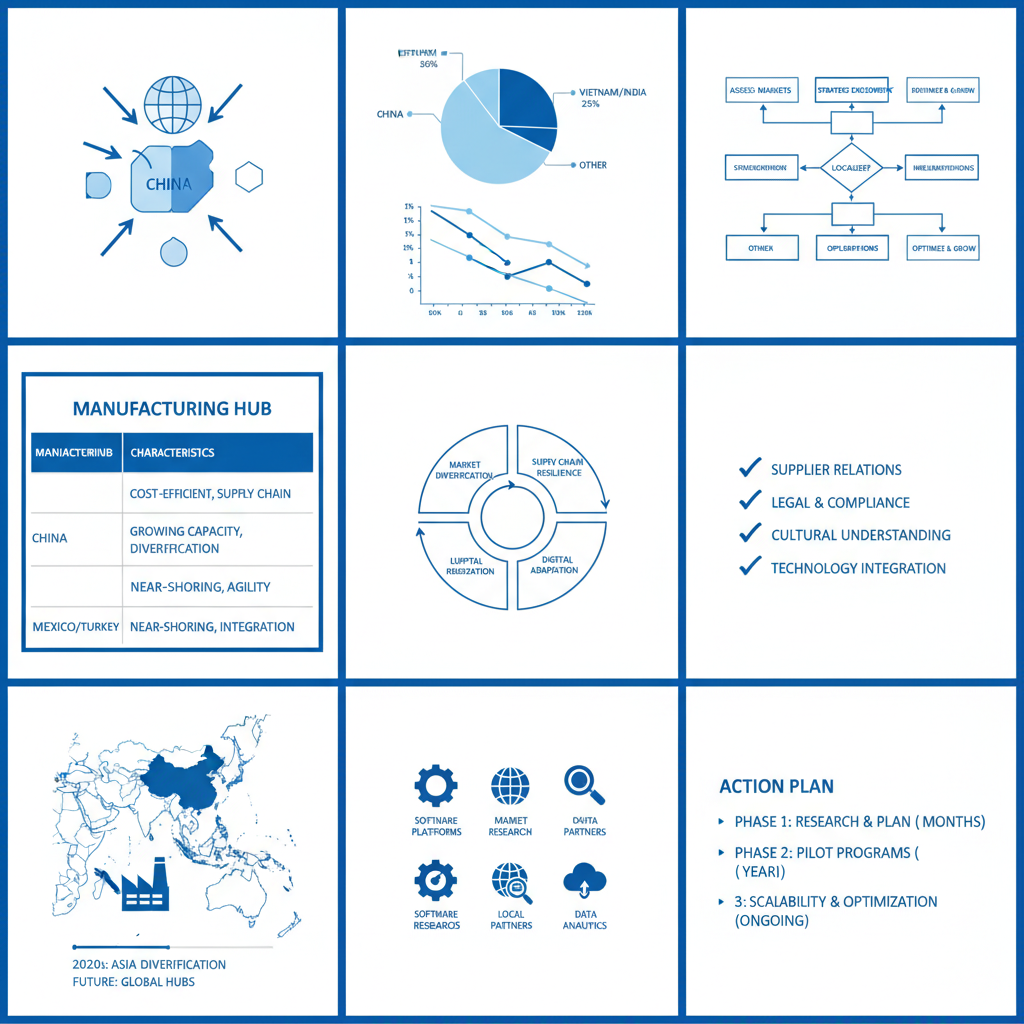
The Primary Hub: The vast majority of Shein’s apparel production is anchored in Guangdong Province, China, specifically around the Panyu district of Guangzhou. This is the heart of their “on-demand” manufacturing ecosystem.
A Global Network: Production isn’t exclusive to China. Shein strategically partners with manufacturers in countries like Turkey, Bangladesh, and Vietnam to diversify supply, manage costs, and cater to regional trends.
The “Real-Time Retailing” Engine: The true secret isn’t just where, but how. Shein’s agile, small-batch production model, fueled by real-time sales data, allows for breathtaking speed from design to delivery.
The Dropshipping Angle: For entrepreneurs, this model is a masterclass in supply chain efficiency. It highlights the power of leveraging a responsive, on-demand manufacturing network without holding inventory.
Your Immediate Action Steps
Whether you’re a curious consumer or an aspiring brand owner, here’s what you can do right now:
1. Audit Your Sourcing: Look at your current suppliers or product listings. Are you tied to slow, bulk-order manufacturers? Identify one product line where testing a faster, smaller-batch production approach could reduce your risk.
2. Embrace Data: Start tracking your sales and customer behavior more closely. Even basic analytics can reveal trends. What’s selling fast? What’s getting returned? Let data guide your next order, not just a gut feeling.
3. Test the ASG Model: If you’re intrigued by a supply chain built for speed and flexibility, test it. With ASG, you can start with a minimal order (as low as 5 units) to validate a product. Send us a link to an item you’re curious about, and we’ll handle the sourcing, procurement, and provide a sample check video—no commitment needed.
Roadmap: Beginner vs. Advanced Strategies
Your next steps depend on where you are in your journey:
For Beginners & New Sellers: Your focus should be on de-risking. Use the dropshipping model to validate demand. Don’t invest in large inventories. Start by listing 3-5 products sourced through a reliable agent like ASG. Use our platform to handle fulfillment while you learn marketing and customer service. The goal is to learn the flow of order → agent → customer without upfront inventory costs.
For Established Sellers: Your play is optimization and branding. You already have sales data. Use it. Identify your top 3 bestsellers and explore options for custom branding—private label packaging, thank-you cards, or even custom labels. This builds loyalty. Next, analyze your logistics. Could a geographically diversified supplier (like a Turkish manufacturer for EU-bound goods) improve your delivery times and customer satisfaction? We can help facilitate that transition.
Commit to Continuous Learning
The supply chain never stops evolving. Stay sharp:
Follow Industry Reports: Regularly read analyses from firms like McKinsey & Company on retail and sourcing trends.
Monitor Trade Data: Websites like Panjiva (via S&P Global Market Intelligence) offer insights into global shipping and supplier movements, though access might be premium.
Join Communities: Engage in forums like the eCommerceFuel community or specific subreddits. Real peer experiences are invaluable.
Where to Get Further Help & Support
You don’t have to figure this out alone. This is exactly the space where my team and I built ASG to operate.
For Strategic Sourcing & Fulfillment: That’s our core mission. If you’re ready to move from a slow, inflexible supply chain to an agile, data-driven one, let’s talk. We provide the factory access, logistics, and tech integration (like our Shopify app) to make it seamless.
For a Smooth Supplier Transition: If you’re with another agent but facing issues with speed, communication, or cost, we have a proven process. Share your current supplier’s quotes and order history with us. We’ll provide a comparative analysis and a clear transition plan to move your business without disrupting your customers.
Direct Support: Have a pressing logistics question or a supplier issue that needs immediate attention? Our dedicated client managers are there for you. For urgent matters, we’re reachable on WhatsApp to solve problems in real-time.
Remember, understanding where Shein clothing is made is the first step. The real opportunity lies in applying the principles behind that model—agility, data, and strategic partnerships—to build your own resilient and profitable business. Let’s build something remarkable.