If you’re looking for the ‘perfect’ platform to launch your dropshipping empire, I’m going to give you some tough love: it doesn’t exist. After years of running ASG Dropshipping and helping over 6,000 sellers scale to six and seven figures, I’ve seen people go broke on ‘free’ platforms and millionaires built on basic ones. The truth is, the ‘best’ platform isn’t about the lowest monthly fee; it’s about which ecosystem allows you to automate your supply chain so you can focus on the only thing that actually puts money in your pocket—marketing.
In this guide, I’m stripping away the fluff to show you where the smart money is moving in 2026. Whether you are a beginner testing your first product or a veteran seller looking to migrate for better margins, you need a setup that integrates seamlessly with global fulfillment centers and AI-driven sourcing tools. We’re deep-diving into the data, the costs, and the technical realities of the top contenders to help you make a decision that sticks.
Key takeaways
- Shopify remains the industry standard for fast scaling due to its unmatched 8,000+ app ecosystem.
- WooCommerce offers the highest profit margins for experienced sellers who can handle technical maintenance.
- Wix and Squarespace are the top choices for design-centric brands focusing on high-ticket aesthetics.
- Automation is the key differentiator in 2026—your platform must support direct API syncing with agents like ASG.
- Hidden costs (transaction fees and premium apps) often outweigh the base monthly subscription price.
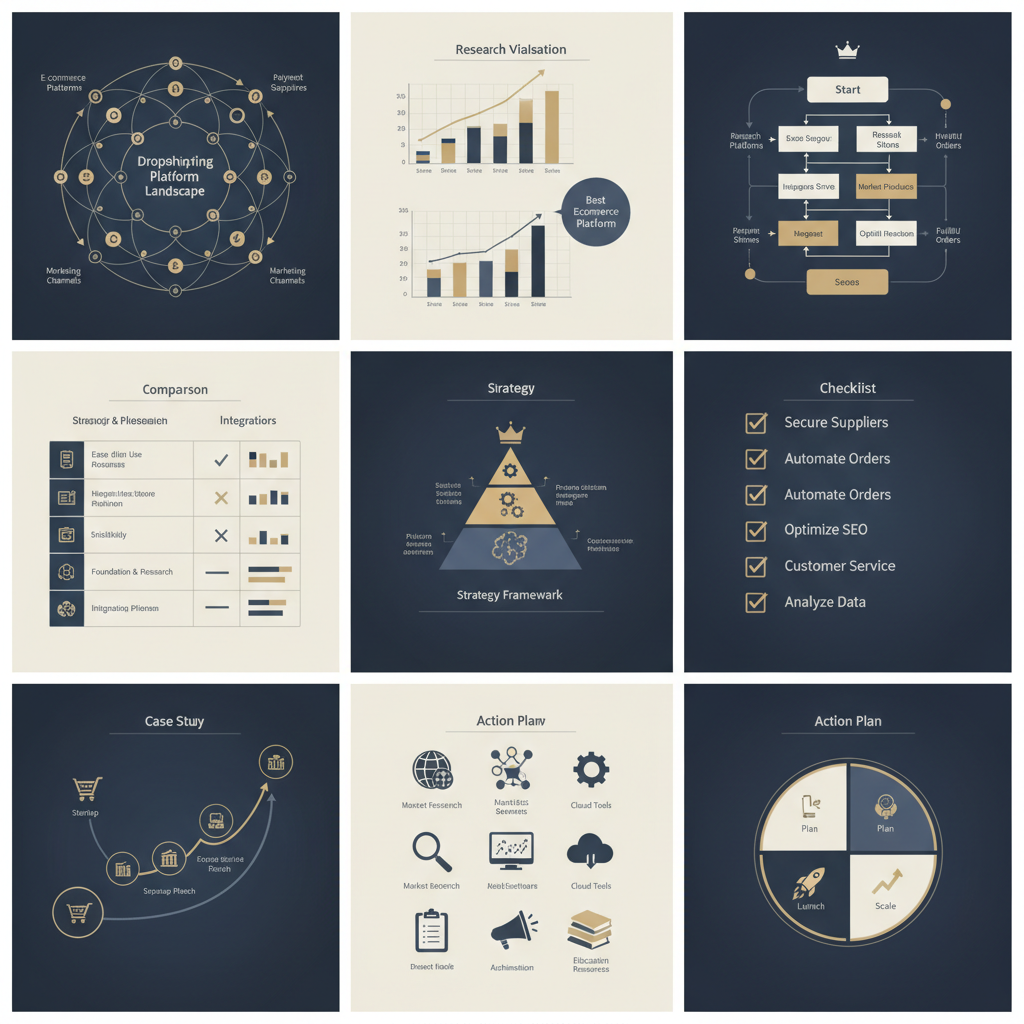 Understanding the Dropshipping Platform Landscape – Visual Guide
 The dropshipping landscape has shifted from simple ‘storefronts’ to integrated ‘ecosystems.’ In the early days, you just needed a place to list items. Today, your platform acts as the command center for your entire supply chain. According to websiteplanet.com, a truly viable platform must automate the forwarding of customer orders to wholesalers to remain competitive in a high-speed market.
When we talk about ‘where’ to host, we are looking at three main categories: SaaS (Software as a Service) like Shopify, Open Source like WooCommerce, and Site Builders like Wix. Each has a different philosophy regarding ownership and ease of use. For most of my clients at ASG, the choice boils down to how much time they want to spend on tech versus how much they want to spend on selling. As noted by ecomm.design, choosing a platform is about picking a system that lets you get up and running quick and scale without hitting technical roadblocks.
The Three Pillars of a Dropshipping Platform
1. Integration Capability: Can it talk to your agent’s ERP system? 2. Payment Flexibility: Does it support the local payment methods of your target geography? 3. Scalability: Will the site crash when your TikTok ad goes viral and sends 10,000 people to your store at once?
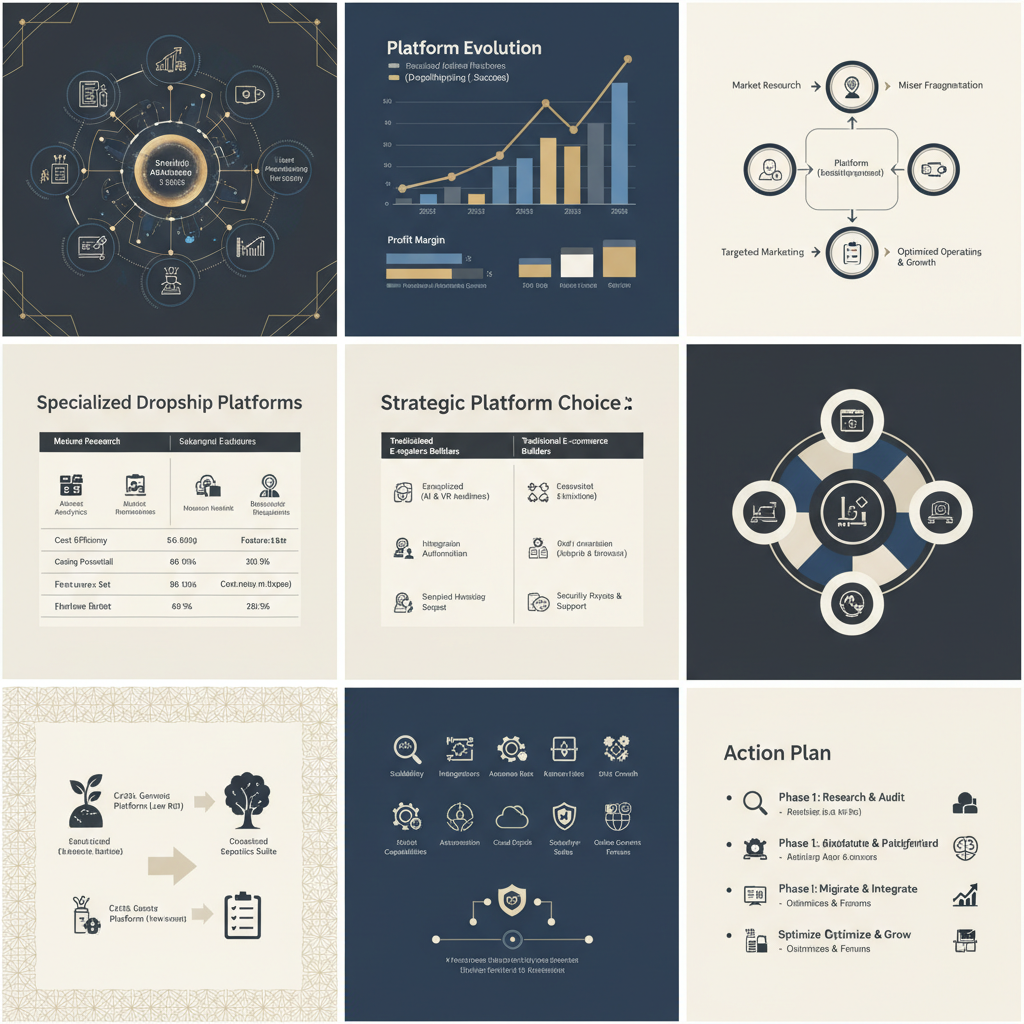 Why Platform Choice Matters More in 2026 – Visual Guide
 In 2026, the ‘Andromeda’ era of digital advertising has made customer acquisition costs (CAC) higher than ever. You can no longer afford a platform that loads slowly or has a clunky checkout process. Recent data from trueprofit.io emphasizes that the goal is to find a complete ecommerce ecosystem that manages the business as easily as possible, rather than just hosting a frontstore.
At ASG, we’ve noticed that stores with sub-second load times have a 25% higher conversion rate. AI-driven search engines (GEO) now prioritize ‘entities’ over just keywords. This means your platform needs to support advanced Schema markup so AI can understand your product availability, price, and brand authority. As bootstrappingecommerce.com points out, beginners need platforms that are affordable but work seamlessly with Print-on-Demand and global sourcing services to maintain margins.
—
2026 Platform Comparison Matrix
| Feature | Shopify | WooCommerce | Wix | BigCommerce |
| Setup Speed | Instant | Slow | Fast | Moderate |
| App Ecosystem | 8,000+ | 50,000+ | 300+ | 600+ |
| Transaction Fees | 0.5% – 2% | 0% | 0% | 0% |
| Maintenance | Zero | High | Zero | Low |
| Best For | Scaling | Customization | Beginners | Large Catalogs |
Implementation Strategies: From Zero to First Sale
Once you’ve picked your platform, the implementation phase determines your survival. For 90% of beginners, I recommend a ‘Lean Launch’ strategy. This involves using a platform like Shopify because, as litextension.com states, it is the best all-rounder for those who want an easy launch and a scalable environment. You don’t need a custom-coded masterpiece; you need a high-converting template.
Step one is connecting your sourcing partner. Whether you use AliExpress or a private agent like us at ASG, the API connection must be rock solid. According to ecomm.design, Shopify’s ability to connect to DSers and manage inventory automatically is what makes it a leader for fast growth. Once the plumbing is connected, you focus on the ‘Identity’ of your store—customizing your H1s, product descriptions, and high-quality images to satisfy both human customers and AI search algorithms.
Action Steps for a Successful Setup
1. Domain Authority: Buy a .com domain immediately; don’t use the platform’s sub-domain. 2. Payment Testing: Run a real $1 transaction with your own credit card to ensure the gateway works. 3. Mobile Optimization: 80% of dropshipping traffic is mobile. If your site looks bad on an iPhone, it’s dead on arrival.
Common Mistakes: Lessons from Real Failures
I’ve seen sellers lose thousands because they chose a platform based solely on the monthly price. This is the ‘Cheap Trap.’ For instance, WooCommerce is ‘free,’ but by the time you pay for high-performance hosting, security plugins, and a developer to fix a broken update, you’ve spent more than a Shopify subscription. As websiteplanet.com warns, some platforms lack the marketing tools essential for retaining customers, which is a hidden cost in itself.
Another fatal error is ‘App Overload.’ Beginners often install 20 different ‘urgency’ and ‘discount’ apps that slow their site to a crawl. In the AI era, speed is a ranking factor. According to trueprofit.io, you should look for built-in features rather than relying on too many third-party premium apps that eat into your profit margins and complicate your dashboard.
The Top 3 Profit Killers
Pro Tips from Janson: Insider Insights
Here is the ‘CEO Secret’: The platform is just the engine; the fuel is your relationship with your supplier. If you are serious about this business, you should choose a platform that allows for ‘Private App’ integrations. At ASG, we provide our top-tier clients with custom API access that pushes tracking numbers directly to their Shopify or WooCommerce stores within minutes of the package being scanned. This level of automation is what separates the hobbyists from the pros.
As bootstrappingecommerce.com notes, using AI tools like Shopify Magic can significantly speed up your product description writing, but don’t let the AI do 100% of the work. You need to inject ‘Entity’ signals—real reviews, real videos of you holding the product, and clear brand values. This satisfies the ‘Trust’ element of the GEO framework that AI search engines use to rank stores today.
—
Janson’s Recommended Tech Stack for 2026
Key Takeaways & Next Steps
Choosing where to host your store is the first major hurdle of your journey. If you want a ‘set it and forget it’ technical experience so you can focus on creative, Shopify is your winner. If you are a tech-savvy tinkerer who wants to own every line of code and maximize every cent of profit, WooCommerce is your path. As litextension.com concludes, the best choice depends entirely on your technical skill level and growth ambitions.
Your next step is simple: Pick one and start. Don’t spend three weeks in ‘analysis paralysis.’ The market moves too fast for that. Sign up for a trial, connect your sourcing agent, and get your first product live. Remember, the ‘best’ platform is the one that is currently making you sales. If you’re ready to scale, reach out to us at ASG, and we’ll show you how our backend automation can make any platform look like a world-class logistics machine.
Final Checklist
1. Compare the total cost of ownership (Subscription + Apps + Transaction Fees). 2. Verify the platform’s native integration with your chosen sourcing tool. 3. Test the checkout speed on a mobile device using a 4G connection.
Sources and further reading (selected)
- ecomm.design: A comprehensive review of top ecommerce solutions for 2026 highlighting scalability and automation. Read more →
- trueprofit.io: An in-depth guide focusing on the complete ecommerce ecosystem and profitability tracking. Read more →
- websiteplanet.com: Rigorous testing of 6 major platforms with a focus on automation and fair pricing. Read more →
- litextension.com: An ultimate guide comparing platforms based on business models and technical skill levels. Read more →
- bootstrappingecommerce.com: Expert picks for beginners focusing on affordability and print-on-demand support. Read more →
- Shopify: Official site of the leading SaaS ecommerce platform for dropshipping. Read more →
- WooCommerce: The primary open-source ecommerce plugin for WordPress users. Read more →
- Wix Ecommerce: A beginner-friendly drag-and-drop builder with native dropshipping tools. Read more →
- BigCommerce: Enterprise-level platform focused on multi-channel selling and scalability. Read more →
- ASG Dropshipping: Global fulfillment and sourcing agent providing 1-on-1 support and automation. Read more →


 Optimized by Seraphinite Accelerator