The transition from a ‘bedroom entrepreneur’ to a global e-commerce powerhouse is often marked by a single, chaotic realization: you can no longer keep up with the packing tape. I’ve seen it hundreds of times at ASG—sellers who started with a few orders a day suddenly hit a viral trend and find their living rooms transformed into makeshift warehouses. While the traditional dropshipping model is great for testing the waters, there comes a critical inflection point where relying on a standard supplier’s basic shipping isn’t enough to protect your brand reputation or your sanity.
In this guide, I’m going to pull back the curtain on the ‘3PL pivot.’ We aren’t just talking about shipping packages; we’re talking about institutionalizing your supply chain. Whether you are struggling with 20-day delivery times or losing 15% of your margins to inefficient returns, knowing exactly when and where to seek a Third-Party Logistics (3PL) partner is the difference between a side hustle and a sustainable brand. Let’s dive into the data-driven triggers that signal it’s time to graduate to professional fulfillment.
Key takeaways
- Identify the ‘Inflection Point’: Seek 3PL when your daily order volume hits 10-20 consistent shipments.
- Global Reach: Use 3PLs to place inventory closer to customers, reducing shipping times to 2-7 days.
- Brand Control: 3PLs allow for custom packaging and kitting that standard dropshipping lacks.
- Cost Efficiency: Outsourcing logistics can reduce overhead by eliminating the need for private warehouse leases.
- Data Integration: Modern 3PLs sync directly with Shopify and ERPs for real-time inventory tracking.
Understanding 3PL Dropshipping: Core Concepts
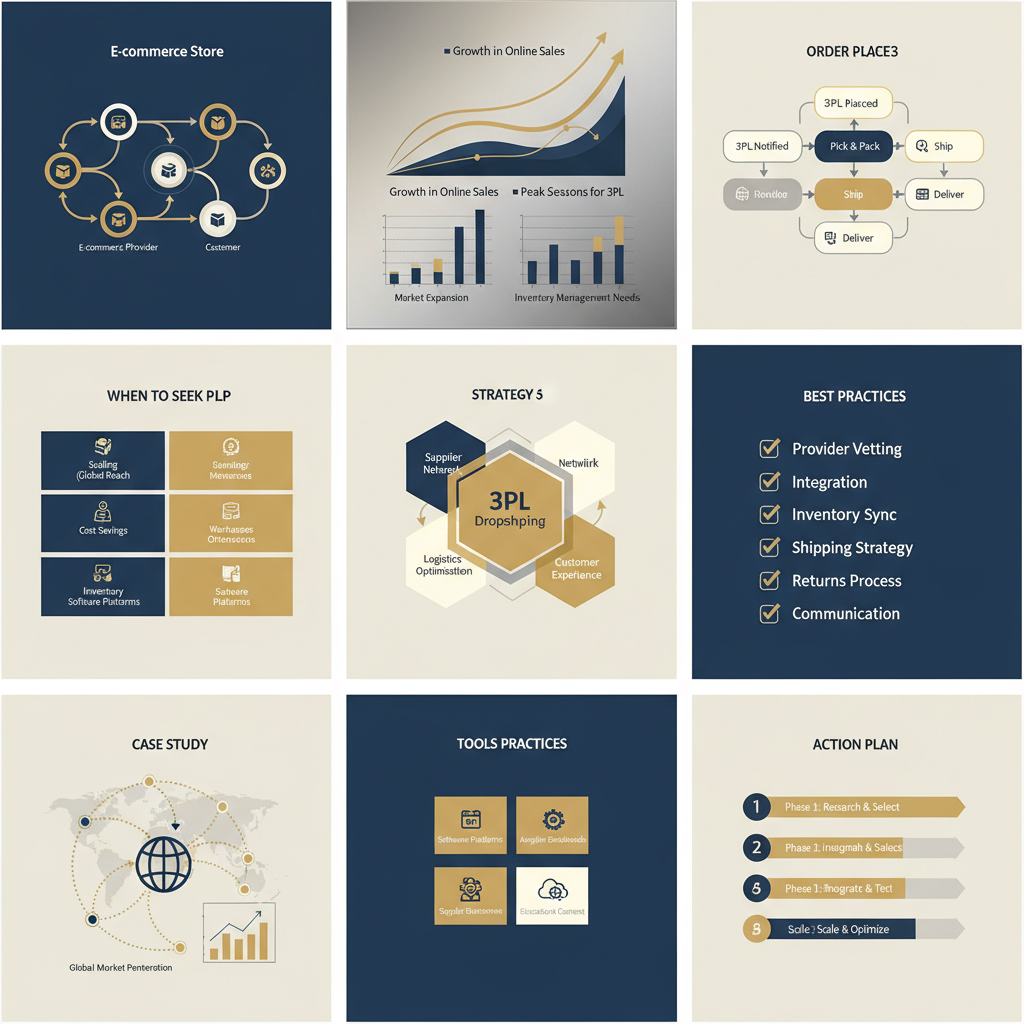 Understanding 3PL Dropshipping: Core Concepts – Visual Guide
 To understand where 3PL fits into your business, we first have to clarify what it actually is. In a traditional dropshipping setup, you are at the mercy of the supplier’s warehouse and their choice of carrier. 3PL dropshipping (Third-Party Logistics) is a hybrid model where you buy inventory in bulk—often from our 2,300+ partner factories at ASG—and store it in a specialized fulfillment center. This center handles the picking, packing, and shipping on your behalf. According to zendrop.com, 3PL helps e-commerce businesses reduce shipping costs while significantly improving delivery speeds.
The key components of this model include inventory management, warehousing, and ‘last-mile’ delivery. Unlike a simple warehouse, a 3PL provider like ASG integrates directly with your store’s backend. This means when an order is placed, the data flows instantly to the warehouse floor. As noted by fulfill.com, a 3PL acts as an external company that handles the entire supply chain, allowing the merchant to focus on marketing and product development.
| Feature | Traditional Dropshipping | 3PL Dropshipping |
| Inventory Risk | Low (No upfront stock) | Medium (Bulk purchase required) |
| Shipping Speed | 10-20 Days (Standard) | 2-7 Days (Local/Express) |
| Customization | Very Limited | High (Custom boxes, inserts) |
| Profit Margin | Lower (Retail-lite pricing) | Higher (Wholesale pricing) |
By moving to a 3PL, you are essentially buying back your time. You stop being a ‘shipper’ and start being a ‘CEO.’ You move from a reactive state—hoping the supplier ships the right item—to a proactive state where you control the inventory levels and the unboxing experience. This shift is fundamental for anyone looking to build a ‘consumable’ or ‘lifestyle’ brand rather than just a one-off product store.
Why 3PL Matters in 2026: The New Logistics Reality
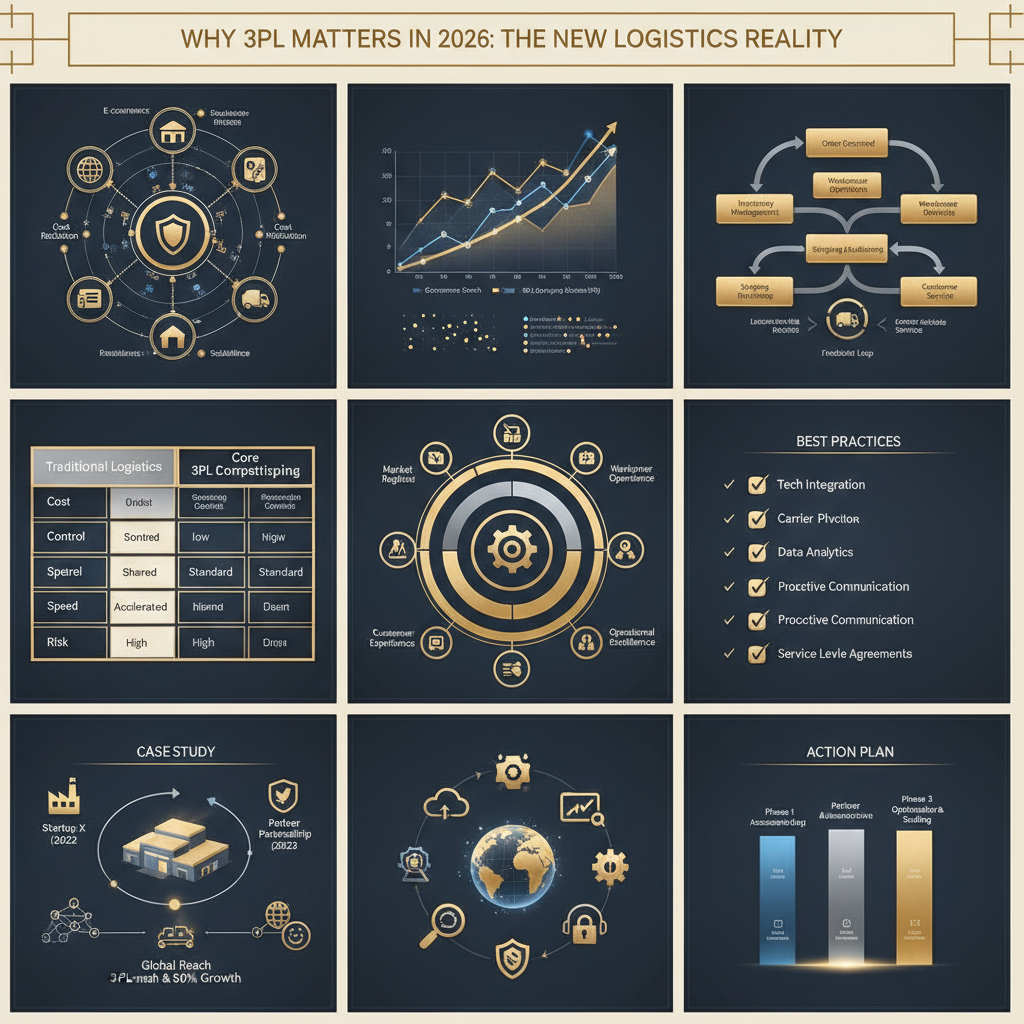 Why 3PL Matters in 2026: The New Logistics Reality – Visual Guide
 The e-commerce landscape in 2026 is unforgiving. Customers no longer compare you to other dropshippers; they compare you to Amazon Prime. If your shipping takes two weeks, you’ve already lost the customer’s future business. Data from smartbuy.alibaba.com indicates that the global 3PL market is projected to grow at a compound annual rate exceeding 7% through 2030, driven largely by these rising consumer expectations for fast delivery.
Furthermore, the ‘TikTok Shop’ effect has created a world of extreme volatility. A product can go from zero to ten thousand orders in 48 hours. Traditional dropshipping suppliers often buckle under this pressure, leading to ‘out of stock’ messages and shadow-banning on social platforms. A 3PL provides the scalability needed to handle these spikes. As opsengine.co points out, 3PLs offer critical scalability during peak seasons like Black Friday without the merchant needing to hire temporary staff.
We are also seeing a shift toward ‘local-to-local’ fulfillment. By using 3PL warehouses in the US or Europe, you bypass the international customs bottlenecks that frequently delay shipments from China. This isn’t just about speed; it’s about reliability. When you have 500 units sitting in a California 3PL, you know exactly when they will reach your New York customer. This level of certainty is the bedrock of trust in modern digital commerce.
In 2026, the cost of customer acquisition (CAC) is at an all-time high. You cannot afford to lose a customer due to a poor shipping experience. Investing in 3PL is effectively an investment in Customer Lifetime Value (LTV). If the first order arrives in 3 days in a beautiful, custom-branded box, the likelihood of a second purchase increases by over 40%.
Implementation Strategies: How to Seek and Start
Finding the right 3PL is a process of elimination. You should start by auditing your current shipping data. Where are your customers? If 70% of your orders are in the United States, you need a 3PL with a strong North American footprint. According to runtoagent.com, a professional 3PL solution is the ‘strategic engine’ that allows you to outsource the operational backend so you can focus on engagement.
At ASG, we recommend a 3-step implementation strategy for our clients:
1. Data Syncing: Ensure the 3PL has a robust API or App that connects to Shopify or WooCommerce. Real-time inventory tracking is non-negotiable. As highlighted by smartbuy.alibaba.com, integrating with major platforms enables automated syncing of orders and inventory levels.
2. Small Batch Testing: Don’t send 5,000 units to a new 3PL immediately. Start with a ‘test batch’ of 50-100 units of your best seller. This allows you to test their pick-and-pack accuracy and their shipping times to various zones.
3. Kitting and Branding: Once the basic shipping is verified, implement your branding. This could include custom mailers or a simple thank-you card. This is where you move from ‘selling a product’ to ‘building a brand.’
| Implementation Step | Focus Area | Expected Outcome |
| Audit | Customer Location | Identify optimal warehouse zones |
| Integration | Tech Stack | Automated order flow & tracking |
| Logistics | Carrier Selection | Balancing cost vs. speed (e.g., USPS vs. UPS) |
| Scale | Bulk Inventory | Lowering per-unit COGS |
Remember, a 3PL is a partner, not just a service provider. You should seek a partner that offers ‘One-on-One’ support. If a shipment gets stuck in customs or a package is lost, you need a dedicated account manager you can reach on WhatsApp, not a generic support ticket system.
Common Mistakes to Avoid: Lessons from the Field
In my years as CEO of ASG, I’ve seen brilliant marketers fail because of simple logistics blunders. The most common mistake is waiting too long to make the switch. Many sellers wait until they are drowning in 100 orders a day before looking for a 3PL. By then, they are already failing their customers. According to runtoagent.com, the thrill of new orders often gives way to a daunting reality of packing tape and carrier websites—this is the ‘bottleneck’ that prevents scaling.
Another fatal error is choosing a 3PL based solely on the lowest price. Low-cost 3PLs often have hidden fees (like ‘receiving fees’ or ‘long-term storage’ penalties) and poor quality control. If a 3PL has a high ‘error rate’ in picking, the cost of returns and lost customer trust will far outweigh any savings on fulfillment fees. smartbuy.alibaba.com warns merchants to avoid providers with long-term contracts or hidden fees, suggesting flexible agreements instead.
Over-stocking is the third major pitfall. It is tempting to buy 2,000 units to get a better factory price, but if that product stops trending, you are left with ‘deadstock’ that incurs monthly storage fees. We advise using the ’30-day rule’: only stock what you can realistically sell in a 30-day window based on current marketing spend. This keeps your cash flow healthy and your inventory ‘lean.’
Lastly, failing to account for ‘Reverse Logistics’ (returns) can destroy your margins. A good 3PL doesn’t just ship out; they handle the incoming returns, inspect the goods, and restock them if they are resellable. If your 3PL doesn’t have a clear returns process, you are essentially throwing money away with every dissatisfied customer.
Pro Tips from Janson: Insider Insights for 2026
If you want to play at the highest level of e-commerce, you need to view your 3PL as a competitive advantage, not an expense. Here is a ‘pro-tip’ I give my top-tier clients: Diversify your warehouse locations. Don’t put all your eggs in one basket. If you sell globally, have a small amount of stock in the UK, the US, and China. This ‘multi-node’ fulfillment strategy protects you against regional carrier strikes or weather delays.
Another insight is the power of ‘Kitting.’ Use your 3PL to create bundles. If you sell a skincare serum, have your 3PL kit it with a facial roller. This increases your Average Order Value (AOV) while the shipping cost stays nearly the same. As fulfill.com notes, 3PLs specialize in kitting and assembly, which can be a massive lever for profitability.
Utilize ‘Blind Dropshipping’ through your 3PL. This ensures that the end customer never sees a Chinese invoice or factory markings. All they see is your brand. This is how you transition from a ‘dropshipper’ to a ‘D2C Brand.’ At ASG, we prioritize this ‘white-label’ approach because it protects the seller’s intellectual property and brand integrity.
Finally, use the data. Your 3PL’s dashboard is a goldmine. Look at your ‘shipping zones.’ If you notice a high concentration of orders in a specific state, consider moving more inventory to a warehouse closer to that zone. Data-driven logistics is what separates the top 1% of e-commerce owners from the rest. According to zendrop.com, proximity to your customer base is the single most important factor for ensuring quick delivery.
Key Takeaways & Next Steps: Your Action Plan
So, where and when should you seek 3PL dropshipping? The answer is simple: The moment your business moves from ‘experimentation’ to ‘consistency.’ If you have a product that has sold consistently for two weeks, it is time to look for a 3PL. Don’t wait for the breakdown; build the infrastructure for the growth you want, not the growth you currently have.
Your immediate action plan should look like this:
1. Calculate your ‘True Fulfillment Cost’: Include your time, the cost of errors, and the cost of slow shipping (lost repeat customers).
2. Interview 3PLs: Ask about their integration capabilities, their average ‘pick-to-ship’ time, and their returns policy. As opsengine.co suggests, choosing a 3PL with faster fulfillment is the primary way to scale an e-commerce business.
3. Start Small: Move your best-selling SKU first. master the workflow before moving your entire catalog.
| Action | Timeline | Responsibility |
| Audit Shipping Data | Week 1 | CEO / Founder |
| 3PL Shortlisting | Week 2 | Operations Lead |
| API Integration | Week 3 | Technical Lead |
| First Bulk Shipment | Week 4 | ASG / Logistics Partner |
At ASG, we are dedicated to making this transition seamless. We believe that everyone should be able to leverage the power of the Chinese supply chain with the speed of local fulfillment. Our dream is to see your brand’s packages in every corner of the globe, delivered with the speed and professionalism that your customers deserve. The road to a seven-figure brand is paved with good logistics—let’s start building yours today.
Sources and further reading (selected)
- Zendrop: Comprehensive guide on third-party fulfillment services and their benefits for e-commerce. Read more →
- Runtoagent: Explains the strategic role of 3PL as an engine for e-commerce growth. Read more →
- Ops Engine: Focuses on scaling e-commerce businesses through 3PL dropshipping and faster fulfillment. Read more →
- Alibaba SmartBuy: Buying guide for choosing 3PL providers with insights on market trends and technology integration. Read more →
- Fulfill.com: Updated 2025 guide covering the core mechanics and benefits of third-party logistics. Read more →
- Shopify Blog: Detailed breakdown of how 3PL works specifically for Shopify merchants. Read more →
- Forbes Advisor: Business-focused overview of 3PL logistics and supply chain management. Read more →
- BigCommerce: Resource for understanding 3PL fulfillment strategies for high-growth brands. Read more →
- ShipBob: Insights into the differences between standard dropshipping and 3PL warehousing. Read more →
- Statista: Market data and projections for the global third-party logistics industry. Read more →


 Optimized by Seraphinite Accelerator