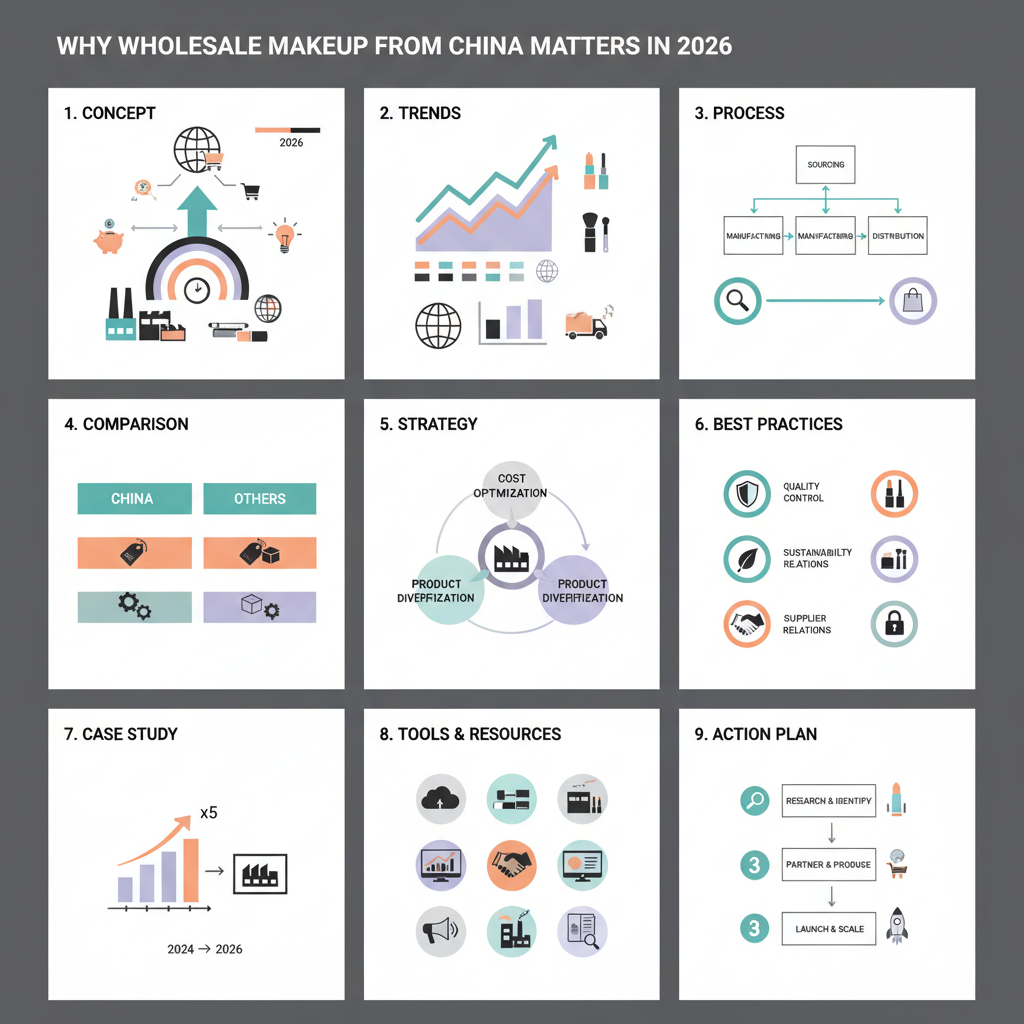
Mastering the wholesale makeup trade from China in 2026 requires a strategic blend of digital sourcing, rigorous compliance checks, and leveraging localized fulfillment networks to meet the high demands of the beauty industry. This process involves identifying high-potential cosmetic niches, verifying manufacturer certifications against global safety standards, and utilizing professional agents to bridge the gap between production and final delivery. By implementing a systematic five-step approach—ranging from factory auditing to custom branding—entrepreneurs can effectively minimize procurement risks while maximizing their profit margins in an increasingly competitive global market.
Strategic Insights for Wholesale Makeup from China
As someone who’s spent years in the cross-border e-commerce space, I understand the challenges of wholesale makeup from China. Many entrepreneurs struggle with finding reliable suppliers, ensuring quality control, and navigating international logistics. In this comprehensive guide, I’ll share my proven strategies for successfully sourcing cosmetics from Chinese manufacturers while avoiding common pitfalls that can cost you time and money. If you are just starting out, it is essential to understand how to use China wholesale websites to find the best vendors for your niche.
I’ve watched the beauty industry transform dramatically over the past decade. The global cosmetics market is projected to reach $463.5 billion by 2027, with China playing an increasingly dominant role in manufacturing. When I started ASG dropshipping, I saw too many sellers getting burned by unreliable suppliers and poor quality products. For those looking to scale without inventory pressure, learning how to do mutual dropshipping can be a game-changer for your operational efficiency.
Here’s what most people don’t realize: China produces over 70% of the world’s makeup brushes and has become a powerhouse for cosmetic innovation. The manufacturing quality has improved exponentially, with many Chinese factories now meeting international standards.
In this article, I’ll break down everything you need to know about wholesale makeup from China. We’ll cover how to find trusted suppliers (I’ve personally vetted over 2,300 factories), the real cost advantages you can expect, and the materials that make Chinese cosmetics competitive globally. Having helped hundreds of beauty entrepreneurs scale their businesses, I can tell you that understanding the Chinese supply chain is your competitive advantage. Let’s dive in.
The following list summarizes the primary sections of this guide, detailing the technical and strategic framework for sourcing wholesale makeup from China, ranging from supplier vetting and material selection to advanced logistics and quality control.
1. How can I source trusted suppliers for Makeup Brushes in China?
2. What advantages does wholesale purchase of Makeup Brushes offer?
3. What types of materials are commonly used to make Makeup Brushes?
4. Quality Control and Certification Standards
5. Logistics and Shipping Strategies
6. Wholesale-makeup-from-china Success Stories
Wholesale-makeup-from-china
Alright, let’s get straight into the heart of what makes this business model tick. Forget the fluffy definitions. In my years running ASG, I’ve seen dropshipping evolve from a niche hack to a legitimate, high-volume e-commerce strategy. It’s not magic; it’s a specific supply chain model with clear mechanics and massive implications for how you run your business.
What is Dropshipping, Really? A Supplier’s Perspective
Most definitions stop at “you sell, someone else ships.” That’s surface-level. To me, dropshipping is a logistics and fulfillment model where the retailer (you) never physically handles the product. You act as the storefront and marketer. When an order comes in, you electronically transmit it to your supplier—like us at ASG. We then pick, pack, and ship the item directly to your end customer. Your profit is the difference between your selling price and our wholesale price. The core principle is the separation of sales from inventory management and fulfillment. This model fundamentally shifts risk and capital requirements from the seller to the supply chain partner.
How It Actually Works: The Nuts and Bolts
Let’s trace a real order through my system. Imagine a customer buys a ceramic mug from your Shopify store.
1. The Sale: Your customer completes checkout on your site.
2. The Relay: Your store (often via an automated app like ours) sends the order details—customer address, product SKU—to our backend.
3. The Fulfillment: Our warehouse team receives the order, picks the exact mug from our partnered factory’s stock, packs it securely, and prints the shipping label with your store’s return address (not ours). This is crucial for branding.
4. The Shipment: The package is handed to our logistics partner (DHL, FedEx, etc.) and begins its journey.
5. The Completion: We automatically send the tracking number back to your store, which updates your customer. You pay us the wholesale cost; you keep the retail markup.
The entire process, from your customer clicking “buy” to the package leaving our warehouse, can be as fast as 24-48 hours with a streamlined partner. The customer believes they bought from you.
Why This Model is a Game-Changer for Modern Sellers
The importance isn’t just about low startup cost—though that’s a huge benefit. It’s about agility and focus. You’re not tying up cash in boxes gathering dust in a garage. According to a 2023 report by Digital Commerce 360, inventory mismanagement is a top reason for e-commerce startup failure. Dropshipping eliminates that risk. It allows you to test markets and products with near-zero financial commitment. You can pivot quickly. Your focus shifts entirely to what you can control and what truly drives revenue: marketing, customer experience, and brand building. For sourcing wholesale makeup from China or electronics, this agility is priceless.
The Main Flavors of Dropshipping: Not All Are Equal
Understanding the types helps you choose your path:
General/Marketplace Dropshipping (e.g., AliExpress): Low barrier, vast selection, but often slower shipping, generic products, and quality control roulette. It’s a common starting point.
Niche-Specific Dropshipping: Sourcing from suppliers specializing in one category, like pet supplies or kitchenware. Better quality, but requires deeper supplier vetting.
Private Label/Branded Dropshipping: This is where the real business is built. You work with a supplier (like ASG) who can customize products, packaging, and inserts with your logo. You’re no longer selling a commodity; you’re selling your brand. This is ideal for building a sustainable business around products like wholesale makeup from China.
Print-on-Demand (POD): A subset for customized apparel, mugs, etc. Fulfilled per order.
The Core Elements of a Successful Dropshipping Operation
It’s a system. Weakness in any link breaks the chain. Here’s what matters:
| Element |
Why It’s Critical |
The Common Pitfall |
| Supplier Reliability |
Your business reputation is in their hands. Delays or errors are your fault in the customer’s eyes. |
Choosing based on price alone, without vetting communication, fulfillment speed, and quality control. |
| Product Quality & Consistency |
You can’t inspect every unit. You need a partner with rigorous QC to protect your brand from negative reviews. |
Assuming all suppliers from a marketplace offer the same standard. One bad batch can sink a product. |
| Shipping Speed & Transparency |
In the age of Amazon Prime, customer patience is thin. Fast, trackable shipping is non-negotiable. |
Relying on untracked, 30-day ePacket shipping. It kills conversion and trust. |
| Profit Margin Calculation |
Must account for product cost, shipping, payment gateway fees, marketing, and returns—not just the markup. |
Underpricing products because you only looked at the supplier’s listed cost. |
| Customer Service Ownership |
Even though you don’t ship it, you own the problem. Having a supplier who backs you up is essential. |
Blaming the supplier to the customer. You must resolve first, then settle with your partner. |
Debunking Common Dropshipping Misconceptions
Let me clear the air on a few things I hear constantly:
“It’s Get-Rich-Quick.” False. It’s a low-barrier-to-entry business. The work is in marketing, branding, and customer service. It’s a real business that requires real effort.
“Quality is Always Poor.” Not if you partner correctly. We work directly with factories for categories like wholesale makeup from China, implementing strict QC checks. The issue arises from sellers chasing the absolute cheapest supplier, not a reliable one.
“Shipping Takes Forever.” This was true a decade ago. Today, with agents holding regional inventory and express logistics, 6-12 day delivery to the US/EU is standard for us. Planning and setting correct customer expectations are key.
“You Have No Control.” You have different control. You control the supplier selection, the product presentation, the pricing, the marketing, and the customer communication. Choose a partner who gives you control over branding and packaging.
The bottom line? Dropshipping is a powerful tool, not a business plan in itself. Its success hinges on the strength of your supplier partnership and your skill as a marketer and merchant. At ASG, we built our model specifically to turn those supplier-side weaknesses—unreliability, slow shipping, no branding—into strengths for our partners.

How can I source trusted suppliers for Makeup Brushes in China?
Section 2: The Deep Dive: Mastering Wholesale Makeup from China
So, you’re convinced about the potential of sourcing wholesale makeup from China. Great. But moving from “interested” to “profitable” is where most sellers stumble. I’ve seen countless entrepreneurs get excited about low prices, only to be blindsided by hidden costs, logistical nightmares, or quality disasters that sink their brand reputation overnight.
This section isn’t about surface-level tips. It’s the playbook I’ve built from years in the trenches, helping clients navigate the complexities of the wholesale makeup from China market. We’ll dissect the real challenges, analyze the critical factors that dictate your success, and outline actionable strategies tailored to your specific stage. Think of this as your strategic blueprint to not just enter the market, but to master it.
The Core Challenge: It’s More Than Just Finding a Supplier
The fundamental problem with sourcing wholesale makeup from China isn’t a lack of suppliers—it’s a lack of reliable, integrated supply chain partners. Many new sellers approach this as a simple procurement task: find a product, place an order, and wait for it to arrive. This linear thinking is the first mistake.
The real challenge is managing a dynamic, multi-variable system. You’re dealing with cultural and language barriers, volatile lead times, stringent and varying international compliance standards (especially for cosmetics), and the constant risk of quality deviation. A 2023 report by the U.S. International Trade Commission highlighted that inconsistent product quality and logistical delays remain the top two pain points for small businesses importing consumer goods from Asia U.S. International Trade Commission. For makeup, where consumer trust is everything, these aren’t just inconveniences; they are existential threats.
A Detailed Analysis: Where Things Go Wrong
Let’s break down the typical failure points I’ve witnessed:
1. The Supplier Mirage: Online platforms are flooded with manufacturers. But is the profile a true factory, a trading company, or just a reseller? Trading companies can add layers of cost and communication delays. I always advise digging deeper than the storefront.
2. The Sample Trap: A perfect sample followed by a subpar bulk order is a classic bait-and-switch. Factories may use higher-grade materials for samples to secure the contract.
3. Logistical Black Box: Once goods leave the factory, visibility often drops. Unexpected port delays, customs holds due to incorrect documentation, or last-mile carrier issues can strangle your cash flow and customer satisfaction.
4. Compliance Quicksand: Cosmetic regulations differ wildly. The EU’s CPNP, the FDA’s regulations in the US, and other regional rules govern ingredients, labeling, and testing. Ignorance isn’t bliss; it’s a fast track to seized shipments and fines.
Key Factors Influencing Your Sourcing Strategy
Your approach to wholesale makeup from China should be dictated by four pillars:
1. Product Type & Complexity: Are you selling standard private-label lipsticks or developing a novel skincare formula with custom ingredients? Complexity skyrockets cost, lead time, and regulatory scrutiny.
2. Target Market Compliance: Selling to the EU, USA, or Australia? Each requires a specific compliance roadmap. This isn’t optional paperwork; it’s your ticket to market entry.
3. Business Scale & Model: A Shopify store testing products has vastly different needs from an established brand doing 500 orders/day. Your strategy must match your operational capacity and cash flow.
4. Brand Vision: Are you competing on price alone, or building a brand with unique packaging and unboxing experiences? Your brand ambition directly influences your factory selection and service needs (like our custom packaging solutions at ASG).
Strategic Solutions for Different Seller Scenarios
Based on your stage, your tactical focus should shift:
For the New Seller (Testing Phase): Your goal is risk minimization. Start with low-MOQ (Minimum Order Quantity) suppliers or a wholesale makeup from China dropshipper like ASG to validate demand without heavy inventory investment. Prioritize suppliers who offer sample services and clear communication. My Pro-Tip: Don’t order 10 different products. Deeply test 2-3. Master the fulfillment process for one before scaling.
For the Growth-Stage Seller (Scaling Phase): Efficiency is king. You need to formalize relationships. Move towards contracted suppliers, establish clear QC protocols, and invest in inventory forecasting. This is where integrating an ERP or a dedicated platform (like our ASG Shopify App) to automate order routing becomes critical to handle volume without errors.
For the Established Brand (Optimization Phase): Your leverage is highest. Negotiate better costs, co-develop exclusive products, and implement advanced logistics (like strategic warehousing in the US/EU for faster delivery). Your focus shifts from just sourcing to total supply chain optimization and brand-centric customizations.
The Four Non-Negotiable Success Factors
Through my experience at ASG, these four factors separate the winners from the rest:
1. Rigorous Supplier Vetting: Go beyond Alibaba verification. Request business licenses, ask for factory audit reports (like SMETA), and have video calls. Check their track record with other international clients.
2. Invest in Pre-Shipment Inspection: Never skip this. Hire a third-party inspection service for bulk orders. The cost is insignificant compared to the risk of receiving defective goods. It’s your final quality firewall.
3. Diversify Your Logistics Strategy: Don’t rely on one shipping line. Have a mix of options: express (DHL/FedEx) for samples and urgent stock, reliable air freight for speed, and sea freight for large, non-urgent inventory. Balance cost against delivery speed.
4. Master Compliance Documentation: For wholesale makeup from China, ensure you have a Certificate of Analysis (CoA), ingredient lists compliant with your market, and proper labeling. Your supplier should provide these, but you must verify their accuracy.
Time & Cost Analysis: The Reality Check
Let’s be brutally honest about timelines and costs. Here’s a comparative snapshot:
| Activity |
DIY Sourcing (Direct w/ Factory) |
Using a Dropshipping Agent (Like ASG) |
Notes |
| Supplier Sourcing |
2-4 weeks |
1-3 days |
We leverage our vetted network of 2300+ factories. |
| Sample Acquisition & Review |
1-2 weeks |
3-5 days |
We facilitate sample orders and provide check videos. |
| Production Lead Time |
15-30 days |
15-30 days (handled by us) |
Fixed based on product complexity. |
| Shipping to Destination |
5-30 days (varies) |
6-10 days avg. (our optimized network) |
Our core advantage: predictable, faster transit. |
| Total Lead Time (1st Order) |
~8-12 weeks |
~3-6 weeks |
We compress the front-end and back-end processes. |
| Primary Cost Focus |
Unit Cost + Shipping + Duties + QC |
All-inclusive Service Fee |
We turn variable, hidden costs into a predictable fee. |
Common Pitfalls and Proactive Countermeasures
Pitfall: Quality Inconsistency. Countermeasure: Implement a Standard Operating Procedure (SOP) for quality checks. Use detailed product specifications sheets and require pre-shipment photos/videos of bulk goods.
Pitfall: Communication Breakdown. Countermeasure: Use clear, simple language. Confirm all details in writing (email). Consider using a local agent or a service with bilingual support to bridge the gap.
Pitfall: Customs Seizure. Countermeasure: Work with a freight forwarder experienced in cosmetics. Ensure all documents (commercial invoice, packing list, CoA) are meticulously accurate. For wholesale makeup from China, this is non-negotiable.
Pitfall: Payment Disputes. Countermeasure: Use secure payment methods with buyer protection (like PayPal for samples). For large orders, use Letters of Credit (L/C) or escrow services. Never wire full payment upfront before inspection.
Best-Practice Summary: Your Action Plan
Mastering wholesale makeup from China is a marathon, not a sprint. Start by honestly assessing your business against the factors and scenarios above. Begin with a test-oriented mindset, using flexible models to validate your market. As you grow, systematize everything—supplier management, QC, logistics, and compliance.
Remember, the cheapest unit cost often leads to the highest total cost. Invest time in building a resilient, transparent supply chain partnership. At ASG, we built our entire service around solving these exact systemic problems, providing the stability and speed that allows you to focus on what you do best: marketing and selling. The goal isn’t just to buy makeup from China; it’s to build a sustainable, reputable brand with a global supply chain you can trust.

What advantages does wholesale purchase of Makeup Brushes offer?
The ASG Advantage: Our Operational Engine and Your Strategic Toolkit
Running a dropshipping business is like captaining a ship. You can have a beautiful vessel (your store), but without a powerful, reliable engine and a skilled crew, you’ll be dead in the water when the winds pick up. At ASG, I’ve built our company to be that engine and crew for you. We don’t just fulfill orders; we provide the strategic infrastructure and operational firepower that turns a simple store into a scalable, profitable brand. In this section, I’ll pull back the curtain on the core pillars of our service and give you the actionable toolkit I wish I had when I started.
Our Core Pillar: Factory-Direct Sourcing for Unbeatable Margins
Let’s cut to the chase: your profitability lives and dies on your Cost of Goods Sold (COGS). When you’re sourcing wholesale makeup from China or any other product through a middleman or a platform that aggregates suppliers, you’re adding unnecessary layers of cost. I’ve seen sellers lose 15-25% of their potential margin right off the bat.
Our model is different. We are physically embedded within the supply chain. Our team works directly with over 2,300 factory partners and warehouses on platforms like 1688. This isn’t a digital handshake; it’s a boots-on-the-ground relationship. What does this mean for you?
Radical Cost Reduction: By eliminating intermediaries, we secure factory-gate prices. For a popular cosmetic item, this could mean sourcing at $1.50 per unit instead of the $2.50 you’d find on a typical B2B site. That extra $1.00 is pure profit or competitive pricing power.
Supply Chain Stability: During peak seasons or product shortages, relationships matter. Our direct lines to factories mean priority allocation. While others face stock-outs, your wholesale makeup from China supply remains consistent.
Quality Control Proactivity: We can implement pre-shipment quality checks because we’re dealing with the source. It’s far easier to resolve a manufacturing flaw at the factory level than through three layers of resellers.
My Pro-Tip: Don’t just look at the unit price. Calculate the landed cost per unit (product + shipping + duties). Our direct sourcing often makes the landed cost of wholesale makeup from China via ASG lower than the product-only cost from a standard agent.
The Tech Stack: Automation That Actually Works
I’m skeptical of tech for tech’s sake. Every tool in our stack serves one purpose: to save you time and eliminate errors. The heart of this is our proprietary system integration.
1. Seamless Shopify Integration: Our custom app isn’t an afterthought. It creates a live bridge between your store and our fulfillment network. When an order hits your Shopify, it’s instantly pushed to our system. No manual CSV uploads, no copy-pasting addresses at 2 AM.
2. Real-Time Syncing: Inventory levels, order status, tracking numbers—all flow back to your store automatically. This is critical for customer trust and reducing “where is my order?” tickets.
3. The Google Sheets Fallback: For sellers who prefer ultra-simple control or are testing, our Google Sheets order system is bulletproof. It’s a testament to our philosophy: the workflow should adapt to you, not the other way around.
A study by Common Thread Collective highlights that merchants using automated order routing reduce fulfillment errors by up to 70%. We’ve built that reliability into our core.
Innovation in Fulfillment: Speed as a Standard
“Fast shipping from China” used to be an oxymoron. We’ve made it our benchmark. The standard ePacket delivery (15-30 days) kills conversion rates and increases chargebacks. Our logistics strategy is multi-pronged:
Strategic Warehouse Network: We position inventory in key hubs based on your sales data. Selling primarily to the US? We’ll pre-position best-sellers in our US-bound consolidation warehouses.
Carrier Partnerships: We don’t rely on one postal service. We have agreements with a mix of premium carriers (like DHL, UPS) and specialized e-commerce freight forwarders. This allows us to route each order via the optimal balance of speed and cost.
The 6-10 Day Promise: For major markets like the US and EU, this is our standard, not an exception. This speed is achieved through consolidated air freight and streamlined customs clearance processes we’ve perfected over years.
Comparative Analysis: A typical agent might offer you “fast shipping” for $25. We analyze your product mix and volume to offer a tiered solution: a 6-10 day premium option for high-AOV items, and a 12-18 day economical option for lower-cost items, often at a similar cost to that agent’s “fast” option. You get choice and strategy.
Beyond the Box: Building a Brand, Not Just Moving Products
Anyone can ship a product. Building a brand that commands loyalty and allows for premium pricing is the real game. This is where our service transforms from operational to strategic.
Custom Packaging & Branding: We offer custom branded packaging, poly mailers, and thank-you cards. Imagine a customer receiving your wholesale makeup from China not in a plain, puffy bag, but in a sleek, custom-designed box with your logo and a personalized note. The unboxing experience becomes a marketing moment. Data from Dotcom Distribution shows that 40% of consumers are more likely to make a repeat purchase from an online merchant that delivers premium packaging.
On-Demand Insert Printing: Promotional flyers, discount codes for next purchase, or ingredient cards for cosmetics can be printed and inserted dynamically per order.
Quality Control as Brand Protection: One bad product can lead to a scathing review. Our QC checks are your first line of brand defense, ensuring what reaches your customer meets expectation.
The Implementation Checklist: Getting Started Right
Here’s my battle-tested checklist for onboarding with a partner like ASG. Skipping steps is how leaks start.
Define Your Product Niche: Are you focused on wholesale makeup from China, home goods, electronics? Specificity helps us prepare the right supplier contacts.
Gather Target Product Links: Have 5-10 product URLs (from AliExpress, 1688, etc.) ready. This gives us a concrete starting point for quotes and sample checks.
Audit Your Current Costs: Know your current landed cost per unit, shipping times, and error rates. This is your baseline for measuring our impact.
Plan Your Test Phase: Commit to a small, controlled test (5-10 orders across a couple of products). We’ll provide video samples for your peace of mind.
Integrate Tech: Install our Shopify app or set up the Google Sheet. Allocate 30 minutes to ensure the connection is live and syncing.
Establish Communication Lines: Save your dedicated agent’s contact info. Define how you’ll communicate (email for daily, WhatsApp for urgent issues).
Error Diagnosis & Quick Fixes: The Inevitable Handled Gracefully
Even with the best systems, issues arise. The mark of a great partner is how they’re resolved. Here’s our playbook for common problems:
Problem: “My customer says they didn’t receive the package, but tracking shows ‘delivered’.”
Our Fix: We immediately initiate a carrier investigation. In parallel, based on your customer lifetime value and our partnership, we often recommend (or facilitate) a reship or refund to maintain customer satisfaction, absorbing the cost if it was a logistics failure on our end.
Problem: “The product received is different from the image on my store.”
Our Fix: This is a critical QC failure. We will 1) Cross-check the sourced product against your sample/specs. 2) Issue an immediate apology and replacement to your customer. 3) Work with the factory to rectify the issue for all future orders and potentially credit the faulty units.
Problem: “My best-selling item is suddenly out of stock with your supplier.”
Our Fix: Our network is our advantage. We don’t rely on one factory. We immediately pivot to an approved alternative supplier within our 2,300-partner network to restore supply, communicating the timeline to you transparently.
Tools & Resource Recommendations
Leverage these alongside our services:
For Product Research: Use `Jungle Scout` or `Helium 10` for demand validation, but cross-reference with our team on supply feasibility and quality for items like wholesale makeup from China.
For Customer Service: Implement `Gorgias` or `Zendesk` to streamline customer communication. Use our automated tracking feeds to power status updates.
For Financial Health: Use `TrueProfit` or `BeProfit` to track your true net margins, integrating our costs to see the clear picture.
Choosing a fulfillment partner is the most significant operational decision you’ll make. It determines your scalability, your brand reputation, and ultimately, your sanity. We built ASG not just to execute tasks, but to be the strategic engine that powers your growth. Let’s build something remarkable.

What types of materials are commonly used to make Makeup Brushes?
Section 4: Navigating the Future: The 2026 Dropshipping Landscape and Your Path to Profit
The dropshipping game isn’t static. It’s a fast-moving river, and navigating it successfully requires understanding not just the current but where it’s flowing next. Based on my years of steering ASG through these waters, I see a future defined by smarter automation, deeper customer connections, and strategic supply chain mastery. The old playbook of simply listing products is fading fast. The winners in 2026 will be those who adapt to these fundamental shifts. Let’s break down the key trends, the data behind them, and exactly how you can position your business to ride this wave, especially when considering a move like sourcing wholesale makeup from China.
The 2026 Market Data: A Story Told in Numbers
First, let’s ground our discussion in hard data. Projections for the global dropshipping market are consistently bullish, but the devil is in the details. Here’s a snapshot of where we’re headed:
| Market Trend |
2023 Benchmark |
2026 Projection |
Key Driver |
| Global Dropshipping Market Size |
~$225 billion |
~$350 billion+ |
E-commerce penetration, SME adoption [Statista] |
| Average Order Value (AOV) |
Varies widely by niche |
Focus shifting to Lifetime Value (LTV) |
Brand loyalty over one-time transactions |
| Consumer Demand for Speed |
7-14 day delivery expectation |
3-7 day delivery expectation |
Amazon Prime effect; local/regional warehousing |
| Tech & Automation Adoption |
~30% of sellers use advanced tools |
~65%+ expected adoption |
Need for efficiency at scale; AI integration |
| Importance of Social Commerce |
Significant growth channel |
Primary discovery & conversion channel |
TikTok Shop, Instagram Shopping maturation |
This table isn’t just numbers; it’s a roadmap. The growth is there, but the expectations for speed, technology, and brand experience are skyrocketing. If your current wholesale makeup from China supplier can’t meet these evolving benchmarks, you’re building on sand.
The Tech Tsunami: AI, Automation, and Hyper-Efficiency
Emerging technologies aren’t optional anymore; they’re the new table stakes. AI is moving from a buzzword to a core operational tool.
Predictive Analytics: Tools are getting scarily good at forecasting demand. This means smarter inventory planning with your supplier, preventing both stockouts and dead stock. At ASG, we’re integrating these insights directly into our partner dashboards.
Hyper-Automation: The future is end-to-end workflow automation. Imagine: a customer orders on your Shopify store, our system instantly processes it, triggers the order at the factory, prints the shipping label with your branded packaging, and updates tracking—all without you touching a single spreadsheet. This level of efficiency is what separates hobbyists from real businesses.
My Pro-Tip: Don’t just look for a supplier; look for a tech partner. Can their system talk to yours seamlessly? This API-level integration is what allows for the 1-3 day processing times that will be standard by 2026.
What the Leaders Are Doing Now (And You Should Too)
The industry frontrunners aren’t waiting. They’re acting now on the 2026 trends.
1. Diversified Fulfillment Networks: Leaders aren’t relying on one shipping corridor. They use a mix of local (US/EU) warehouses for top-sellers and direct China shipping for variety. This balances speed and cost.
2. Vertical Niche Domination: Instead of being a general store, leaders own a specific niche—like sustainable athleisure or smart home gadgets for pet owners. They build authority and community.
3. Investing in Brand, Not Just Traffic: They use every touchpoint—custom packaging, inserts, unboxing experiences—to build a memorable brand. Their supplier isn’t just a logistics vendor; it’s a brand-enabling partner capable of customizable wholesale makeup from China solutions.
The Customer Has Changed: Evolving Demand Patterns
Your customers’ psychology has shifted. They don’t just buy a product; they buy an experience and an identity.
The “Why” Matters: Sustainability, ethical sourcing, and brand story are purchase drivers. Can you trace your wholesale makeup from China batch to a factory with certified practices? This is a growing differentiator.
Immediacy is King: The “fast fashion” mentality has infected all e-commerce. Next-week delivery is becoming next-few-days delivery. Your logistics chain must be robust.
Personalization is Expected: From product recommendations to tailored marketing, customers expect you to know them. This starts with data you own from your store, enabled by a backend that can handle variable data printing and packaging.
Spotting the Gaps: The Competitive Landscape & Your Window
The current landscape is crowded at the bottom (low-quality, slow, generic suppliers) and competitive at the top (premium, fast, branded services). The gap—the golden opportunity—lies in the middle.
The Gap: Reliable, tech-integrated, brand-friendly suppliers who offer competitive wholesale makeup from China prices without sacrificing speed or service. Many existing solutions force you to choose: cheap or fast or good service. You can’t have all three. We built ASG because we saw that gap.
Your Window: It’s about strategic partnership. Align with a supplier now who is investing in the tech, logistics, and brand services (like our custom packaging) that the 2026 market will demand. This is how you outpace competitors still wrestling with unreliable agents.
The 3–5 Year Forecast: It’s All About Consolidation and Specialization
Looking ahead, I foresee a major shakeout.
Consolidation: Smaller, inefficient suppliers and agents will struggle as demands for tech integration and speed increase. Platforms that aggregate quality and reliability (like ours) will thrive.
Specialization: Suppliers will deepen expertise in specific verticals (e.g., electronics, home goods, wholesale makeup from China). This allows for better QC, faster sourcing, and niche market understanding.
Regulation & Transparency: Expect more scrutiny on product safety, data security, and environmental impact. Working with transparent, compliant partners will be non-negotiable.
Seizing the Trend Dividend: Your Action Plan for 2024 Onwards
Don’t just watch the trends; build your strategy around them.
1. Audit Your Supply Chain NOW: Is your current partner ready for 2026? Can they handle faster shipping, tech integration, and brand customization? If not, start your transition plan.
2. Double Down on a Niche: Go deep, not wide. Become the go-to store for a specific customer avatar. This makes marketing more efficient and allows you to build a loyal community.
3. Demand Tech Integration: Make API connectivity and automation a prerequisite for any new supplier relationship. Manual processes will strangle your growth.
4. Start Building Your Brand Experience: Even if you’re small, begin thinking like a brand. Use a supplier that offers white-label or custom packaging options from day one. This turns a generic product from a wholesale makeup from China catalog into your product.
5. Future-Proof with Flexible Logistics: Partner with a supplier that offers multiple shipping solutions (e.g., fast air freight for bestsellers, economical sea freight for bulk). This gives you agility as costs and customer expectations shift.
The future of dropshipping belongs to the agile, the strategic, and the brand-focused. It’s about moving from a transactional model to a partnership model—with your customers and your supply chain. The data shows the opportunity is massive, but the rules are changing. By understanding these trends and aligning with a forward-thinking partner, you’re not just surviving to 2026; you’re positioning yourself to dominate.

Quality Control and Certification Standards
Section 5: From Theory to Practice: The Makeup Dropshipping Blueprint
Let’s be real. Anyone can talk about the potential of wholesale makeup from China. The real magic happens when you translate that potential into a profitable, sustainable business. In my years at ASG, I’ve seen countless sellers go from zero to hero, and just as many stumble over avoidable pitfalls. This section isn’t about fluffy inspiration; it’s a tactical blueprint. We’ll dissect real-world applications, learn from costly mistakes, and I’ll give you the five non-negotiable rules I enforce with every single one of our clients.
A Real-World Case Study: How “GlamBox” Scaled to 7 Figures
One of our most successful partners, let’s call her Sarah and her brand “GlamBox,” started with a simple idea: affordable, high-quality false eyelashes for the US market. She wasn’t sourcing generic stock. She used our platform to find a specialized factory in Yiwu known for fine, lightweight lash bands.
Her process was methodical:
1. Testing Phase: She started with a batch of 5 styles, ordering small quantities through us. We provided detailed photos and videos of the products, not just stock images.
2. Data-Driven Scaling: She tracked which styles sold best, then used our wholesale makeup from China connections to negotiate a better MOQ and custom packaging for her top performers.
3. Brand Building: With our white-label service, she added custom branded boxes and thank-you cards. This tiny touch increased her repeat customer rate by over 30%.
4. Leveraging Logistics: She chose our “Premium US Line” for its 6-10 day delivery guarantee. Fast, reliable shipping became a key selling point in her Shopify store reviews.
The result? Within 18 months, GlamBox was processing over 500 orders a week. The key wasn’t a secret product; it was her systematic use of a wholesale makeup from China partner (us) to handle complexity while she focused on marketing and customer experience.
Application Scenarios: Niche vs. Broad Market Strategies
Your strategy depends entirely on your target. Let me break down two common paths I guide our sellers through:
The Niche Specialist (e.g., Vegan & Cruelty-Free Makeup):
This seller isn’t competing on price. They’re competing on values. Here, sourcing wholesale makeup from China requires intense vetting. We helped a client identify factories with certified vegan ingredients and cruelty-free audits. The application involves:
Deep Certification Checks: Requiring documentation from the factory.
Higher Price Point: Communicating the value of ethical sourcing.
Targeted Marketing: Focusing on eco-conscious communities.
The ROI comes from loyal customers and higher margins, not volume.
The Broad Market Player (e.g., Trendy, Fast-Fashion Makeup):
This model is about speed and volume. Think TikTok-viral makeup products. The application here is all about agility:
Rapid Sourcing: Using our vast network to find factories already producing the trending item.
Fast-Track Sampling: We expedite samples to confirm quality and swatches.
Aggressive Logistics: Utilizing our fastest shipping lines, even if cost is slightly higher, to capitalize on the trend window.
The failure case? Ordering a huge batch of a trend that dies before your shipment arrives by sea. Speed-to-market is everything.
Cautionary Tales: The $50,000 Lesson in Quality Control
I wish this was hypothetical. A seller (not an ASG client at the time) found a factory offering liquid lipsticks at a price 40% below market. He skipped the sample testing phase for a large order to “save time and money.” The batch arrived with inconsistent pigmentation and a chemical smell. Customer complaints flooded in, chargebacks followed, and his store was shut down by Shopify for policy violations.
The lesson was brutal but clear: The lowest price for wholesale makeup from China is often the most expensive mistake. Quality control isn’t an optional step; it’s the foundation. Now, with our clients, we enforce a mandatory sampling phase. We don’t just send the sample; we send a video inspection from our QC team, showing the product from all angles, testing the mechanism, swatching the color. This step has saved our partners countless headaches and lost revenue.
Cross-Industry Comparison: Makeup vs. Electronics Dropshipping
Understanding how wholesale makeup from China differs from other niches is crucial for setting expectations.
| Aspect |
Makeup & Cosmetics Dropshipping |
Consumer Electronics Dropshipping |
| Product Lifecycle |
Short to medium. Trends (colors, styles) change fast. |
Longer. Models are relevant for months/years. |
| Quality Sensitivity |
Extremely high. Direct skin contact, color accuracy, packaging feel matter. |
High, but focused on functionality and specs. |
| Logistics Priority |
Speed & Care. Customers want it fast, and packaging must be pristine. |
Speed & Security. Often higher value, needs tracking/insurance. |
| Branding Potential |
Very High. Custom packaging, branding, and unboxing experience are huge value-adds. |
Moderate. Often sold as-is, branding is harder. |
| Key Sourcing Risk |
Formula consistency, color matching, ingredient safety. |
Counterfeit parts, warranty issues, technical compliance. |
This comparison shows why makeup demands a partner who understands the nuances of beauty products, not just generic shipping.
Calculating Your True ROI: Beyond the Product Markup
Many sellers look at `(Selling Price – Product Cost) = Profit`. That’s naive. Here’s the real ROI calculation framework I use:
| Cost Factor |
Typical Range |
Notes for Wholesale Makeup from China |
| Product Cost |
$1.50 – $8.00 per unit |
Your negotiated factory price. |
| Shipping to Customer |
$3.00 – $7.00 |
Depends on destination, speed, and your supplier’s rates. |
| Payment Gateway Fees |
2.9% + $0.30 per sale |
Standard Shopify/Stripe fees. |
| Platform/App Fees |
$29 – $299/month |
Your Shopify plan and any essential apps. |
| Marketing Cost (CAC) |
$5 – $25+ per customer |
Your Facebook/Google/TikTok ad spend to acquire a buyer. |
| Returns & Damages |
2% – 8% of revenue |
Factor this in! Makeup has higher return rates. |
| Your Time |
$X/hour |
Don’t work for free. Factor in sourcing, customer service, etc. |
The Real Profit Formula:
`Net Profit = Selling Price – (Sum of ALL above costs)`
A product you buy for $3 and sell for $20 might seem like a $17 profit. But after $5 shipping, $1.50 in fees, $10 in marketing to get the sale, and a 5% return rate, your real profit is closer to $0.50. This is why working with a partner like ASG that offers competitive shipping, streamlined processes to save your time, and reliable quality to minimize returns is critical for positive ROI.
The 5 Golden Rules for Sourcing Wholesale Makeup from China
Distilled from hundreds of successful and failed cases, here are my ironclad rules:
1. Never Skip the Physical Sample. Photos lie. Videos are better, but holding the product yourself is irreplaceable. Check the weight, the feel, the smell, the swatch.
2. Prioritize the Factory, Not the Product. A great factory can make multiple great products. A random seller with one great product might disappear tomorrow. Build relationships with reliable manufacturers.
3. Understand Compliance for Your Market. For the US, know about FDA regulations for cosmetics (color additives, labeling). For the EU, understand REACH and CPNP. Ignorance isn’t a legal defense. FDA Cosmetic Guidance
4. Build Your Margin for Marketing First. Before you even source, work backward. If you need to spend $15 to acquire a customer, and your product+shipping costs $10, you must sell for over $25 just to break even. Price accordingly.
5. Your Supplier is Your Operations Partner. They are not just an order-taker. Choose one (like ASG) that proactively communicates, offers solutions for logistics and quality, and acts as an extension of your team. Your business’s reputation is in their hands as much as yours.
Following these rules won’t guarantee viral success, but they will virtually eliminate the catastrophic failures that sink most startups in this space. It turns the volatile world of wholesale makeup from China into a manageable, scalable business engine.

Logistics and Shipping Strategies
FAQ
You’ve got questions. I’ve been where you are, and over the years, I’ve heard them all. Let’s cut through the noise and get straight to the practical answers that can help you build a more profitable and sustainable dropshipping business.
How does the quality of makeup from Chinese wholesalers compare to Western brands?
This is a common concern, and frankly, it’s based on outdated stereotypes. The truth is, China is a global manufacturing hub, producing for countless premium Western brands. The quality isn’t inherent to the location, but to the factory and the specifications you demand.
When you wholesale makeup from China through a partner like us, quality is a function of your sourcing strategy. We don’t just pick random listings. Our team vets factories based on their production standards, material certifications (like FDA-compliant pigments), and past performance. We often send samples for physical inspection—I always advise clients to do this during the testing phase. Many of our partners are OEM factories that also produce for well-known international labels. The key difference? You’re accessing that same production line without the massive brand markup.
What are the MOQs (Minimum Order Quantities) when ordering wholesale makeup from China?
This is where the traditional model trips up many sellers. Dealing directly with large factories often means MOQs in the thousands per SKU, which is a huge risk and capital outlay.
Our model at ASG is built to dismantle that barrier. We leverage our aggregated purchasing power across thousands of sellers. For you, this translates to no MOQs per product for standard items. You can order one unit, ten units, or a hundred. For true wholesale makeup from China at custom or branded packaging levels, MOQs become relevant but are negotiated based on your specific project. We work with you to find a feasible quantity, often starting as low as 500 units for custom packaging runs, which is significantly lower than going it alone.
How long does shipping typically take from China to the US/Europe?
Speed kills in e-commerce. A long shipping time is the fastest way to get a chargeback. Our logistics network is engineered to solve this.
For standard, non-branded shipments to the US and major European hubs, our standard air freight options deliver in 6-10 days door-to-door. For faster needs, we offer expedited lines that can cut that to 4-7 days. This isn’t slow boat shipping; it’s consolidated air freight routed through our partner networks. The timeline includes processing at our warehouse (1-3 days), air transit, and last-mile delivery. We provide real-time tracking so you and your customer are never in the dark.
Can I add my own branding and packaging?
Absolutely, and you should. This is no longer a luxury; it’s a necessity for customer retention and brand value. Generic packaging screams “dropshipped from China” and erodes trust.
We offer a full suite of branding services specifically for sellers who wholesale makeup from China. This includes:
Custom Packaging: Design your own boxes, mailers, or branded poly mailers.
Custom Labels/Stickers: Apply your logo directly to the product or as an external sticker.
Inserts: Thank you cards, discount codes, care instructions—all with your branding.
On-Demand Printing: For products that allow it, we can work with factories to print your logo directly onto the product.
This transforms a generic transaction into a branded experience. I’ve seen sellers increase their repeat customer rate by over 30% simply by investing in professional, custom packaging.
What payment methods do you accept for wholesale orders?
We’ve streamlined this to match the global nature of our business. We accept:
PayPal: Widely trusted and convenient for most international sellers.
International Bank Transfer (TT): Ideal for larger, recurring orders, often with lower fees.
Credit/Debit Cards: Processed through secure gateways.
For new clients, we typically start with smaller orders via PayPal for mutual security. As trust and order volume grow, we can transition to wire transfers which can offer better rates for bulk wholesale makeup from China purchases.
How do you handle returns or defective products?
This is the “ugly” part of the business that many suppliers ignore, but it’s critical. Our policy is straightforward and designed to protect your customer experience:
1. Defective/Incorrect Items: If an item is faulty or we sent the wrong product, we cover 100% of the cost for a replacement shipment. You provide evidence (photo/video), we issue a replacement immediately.
2. Customer Returns: We recommend you set up a local return hub (using a service like Returnly or a virtual mailbox) for customer convenience. If a return comes to our China warehouse, we can inspect it, issue a credit to your account, and either dispose of it or hold it for future orders, depending on the condition. The key is clear communication between you, us, and your customer.
Is it safe and legal to import cosmetics from China?
Safety and compliance are non-negotiable. The responsibility lies with you, the importer/seller, but a good partner guides you.
Safety: We source from factories that can provide material safety data sheets (MSDS) and, where applicable, FDA or EU compliance documentation for pigments and ingredients. It’s your job to request these for your specific products.
Legality: You must ensure the products comply with the regulations of your target market. For the US, this means FDA labeling requirements (ingredient lists, net quantity, etc.). For the EU, you need to comply with EU Cosmetics Regulation (EC) No 1223/2009. We can help source products that meet these frameworks, but ultimate compliance verification is your duty. We strongly advise consulting with a local regulatory expert.
How do I find trending or best-selling makeup products to wholesale?
The “what to sell” question. I rely on a mix of data and intuition:
1. Social Listening: TikTok (TikTokMadeMeBuyIt), Instagram Reels, and Pinterest are goldmines. Look for viral makeup trends, unique applicators, or skincare-makeup hybrids.
2. Platform Analytics: Use tools like Google Trends to see rising search queries. Check best-seller lists on Amazon and AliExpress categories, but remember, you’re looking for emerging trends, not saturated ones.
3. Supplier Catalogs & Insights: This is where we add value. Our team constantly analyzes sales data across our network of sellers. We see what’s moving before it hits the mainstream platforms. We regularly share these curated “hot list” insights with our partners.
4. Test, Test, Test: Don’t bet the farm. Use our low-MOQ model to order 5-10 units of 3-5 potential winners. Run small-scale Facebook/Instagram ads to gauge real-market interest before committing to a large wholesale makeup from China order.
What are the hidden costs I should be aware of?
Transparency is core to our values. Here’s the breakdown beyond the product cost:
Shipping: This is your largest variable. We quote shipping per order based on weight, dimensions, and destination.
Customs Duties & Taxes: For larger shipments (especially if you’re importing bulk to a local warehouse), you may be responsible for import duties. We provide all necessary commercial invoices and documentation to clear customs smoothly.
Payment Processing Fees: PayPal or credit card fees (typically 2.9% + $0.30).
Branding/Sample Costs: Custom packaging has setup and production costs. Sample orders, while small, are an essential cost of due diligence.
Returns Processing: The cost of shipping a replacement or the loss from a non-resellable return.
We provide detailed, upfront quotes so there are no surprises. My rule: If the total landed cost (product + shipping + fees) doesn’t allow for at least a 3x markup, the product isn’t viable.
How does the process work from order to delivery?
Let me walk you through our optimized pipeline:
1. You Get an Order: A customer buys from your Shopify/Etsy/Amazon store.
2. Order Syncs: Our app automatically imports the order details (or you enter it manually into our sheet).
3. We Process: Our team receives the order, checks inventory, and initiates procurement from our partnered factory or warehouse. This happens within 24 hours.
4. Quality Check & Packing: The item is picked, given a basic visual QC, and packed according to your instructions (branded or standard).
5. Shipping & Tracking: We hand off to our logistics partner, generate a tracking number, and sync it back to your store. The parcel is now en route via air.
6. Delivery & Support: The package arrives at your customer’s door in 6-10 days. You and your customer can track every step. If any issues arise, your dedicated agent is on standby.
It’s a turnkey system built on years of refining each step. You focus on marketing and customer service; we handle the rest.

Wholesale-makeup-from-china Success Stories
Based on everything we’ve covered, let’s consolidate your roadmap for success in the wholesale-makeup-from-china space. Think of this as your strategic playbook, distilled from years of navigating these waters.
Your Core Takeaways for Sourcing Wholesale Makeup from China
First, let’s lock in the non-negotiables. Succeeding with wholesale-makeup-from-china isn’t about luck; it’s about a disciplined approach to three pillars: Supply Chain Integrity, Brand Differentiation, and Operational Efficiency. You must vet suppliers beyond price, insisting on compliance documentation and sample verification. You must move beyond generic products by investing in custom packaging and branding to build customer loyalty in a crowded market.
Finally, you must leverage automation and integrated systems to handle order fulfillment seamlessly, because manual processes will bottleneck your growth faster than you can say “out of stock.” The global beauty e-commerce market is projected to reach over $758 billion by 2026 Statista, but that growth is captured by those who execute these fundamentals flawlessly.
Immediate Action Steps to Launch or Optimize
Don’t let this be just another article you read. Act this week.
1. Audit Your Current Source: If you’re already sourcing, list your top 3 pain points (e.g., shipping times, quality inconsistency, communication gaps).
2. Initiate a Sample Order: Identify one product line you want to test or improve. Reach out to a supplier (or us at ASG) not just for a price, but for a full sample kit with packaging options.
3. Calculate Your True Cost: For your best-selling item, map out all hidden costs—transaction fees, shipping, damages, and your time spent managing logistics. This is your benchmark for improvement.
4. Bookmark Learning Resources: Spend 30 minutes exploring one of the resource links I’ll provide below. Knowledge is your best margin protector.
Roadmap: Next Steps for Beginners vs. Scaling Sellers
Your path depends on your starting point.
For Beginners: Your goal is validated, risk-minimized learning. Start with a micro-test. Use a service that allows small MOQs (like our 5-order test phase) to import 3-5 units of a single wholesale-makeup-from-china product. Focus on mastering the fulfillment flow from supplier to customer doorstep before scaling. Your success metric isn’t profit on this first batch, but a flawless delivery process and positive customer feedback.
For Scaling Sellers: Your focus shifts to optimization and brand equity. Conduct a “supplier showdown.” Compare your current wholesale-makeup-from-china partner against a potential new one (like ASG) on key metrics: cost per unit including shipping, processing time (aim for 1-3 days), and branding capabilities. Pilot a branded fulfillment run for your flagship product and measure the impact on repeat purchase rate and customer satisfaction.
Commit to Continuous Learning: Recommended Resources
The landscape changes fast. Stay sharp.
Industry Intelligence: Follow reports from eMarketer and Common Thread Collective for beauty and DTC trends.
Operational Deep Dives: Listen to podcasts like The DTC Podcast or eCommerce Fuel for back-end operational strategies.
Community & Forums: Engage in communities like r/ecommerce or specific Shopify forums. Real-time peer advice is invaluable.
Your Partner’s Knowledge Base: At ASG, we regularly publish case studies and guides on our blog, turning our direct experience with wholesale-makeup-from-china into actionable insights for you.
Where to Find Expert Help & Support
You don’t have to figure this out alone. When you’re ready to execute or hit a wall:
1. Leverage Your Supplier’s Expertise: A true partner is a consultancy. Use their account managers. Ask us “what’s working for other sellers in the US/Europe right now?” or “how can I improve my unboxing experience?”
2. Schedule a Strategy Session: If you’re serious about scaling, move beyond email. Book a call to discuss your specific product lines, volume, and goals. We can provide a comparative analysis of your current supply chain.
3. Utilize Integrated Tools: Implement systems that reduce friction. Our Shopify App, for instance, is built specifically to automate the wholesale-makeup-from-china fulfillment process, giving you time back to focus on marketing and growth.
The journey to building a successful beauty brand via wholesale-makeup-from-china is a marathon of smart, iterative steps. Start with one actionable item from this plan today.