Defining Mass Production in the Modern Era
Mass production refers to the manufacturing of large quantities of standardized products using assembly lines or automated machinery. As someone who’s worked directly with over 2,300 factory partners through ASG dropshipping—helping entrepreneurs learn how to dropship fitness products and other niche items—I’ve seen firsthand how this system revolutionized global commerce.
This guide systematically covers its definition, practical methods, latest trends, and real-world applications to help you understand how mass production shapes everything from determining where Levi jeans are made to manufacturing complex consumer electronics.
The Reality of Manufacturing Efficiency
When I first entered the e-commerce industry years ago, I was amazed at how factories could produce thousands of identical items with such precision and efficiency. Today, as CEO of ASG dropshipping working with manufacturers across China, I’ve gained deep insights into modern mass production systems.
The truth is: Most people misunderstand what mass production really entails. It’s not just about making lots of things—it’s about creating systems that balance efficiency, quality, and flexibility. According to industry data, mass production methods have reduced manufacturing costs by up to 90% compared to craft production methods.
In this comprehensive guide, I’ll share:
1. The core definition** of mass production and why it matters for your business
2. Historical evolution** from Henry Ford’s assembly lines to today’s automated systems
3. Toyota’s revolutionary approach** that changed everything
4. Practical applications** in industries like work boot manufacturing
5. The reality for warehouse workers** (spoiler: not everyone needs steel toes!)
6. Modern innovations** including rapid prototyping
7. How this knowledge benefits** e-commerce sellers and dropshippers
Whether you’re sourcing products from factories or trying to understand why your suppliers operate the way they do, this guide will give you the insider perspective you need.
What Is Mass Production? The Ultimate Guide
Now, let’s get into the core of what mass production really is and how it operates. This isn’t just textbook theory; it’s the engine room of global commerce that I interact with daily to empower sellers like you.
What is Mass Production? A Simple Definition
At its heart, mass production is the large-scale manufacturing of standardized products using assembly lines or automated technology. Think of it as the opposite of a bespoke tailor. Instead of crafting one unique suit, it’s about making thousands of identical shirts efficiently. The goal is to produce a high volume of uniform goods at the lowest possible unit cost.
In my world at ASG, this translates to the factories we partner with churning out the popular phone cases, kitchen gadgets, or fashion accessories you might be selling. When you place an order for 500 units of a trending item, you’re tapping directly into this powerful system. It’s the reason you can source products affordably and reliably.
How Does Mass Production Actually Work? The Principles
The magic of mass production hinges on a few key principles that have been refined over a century:
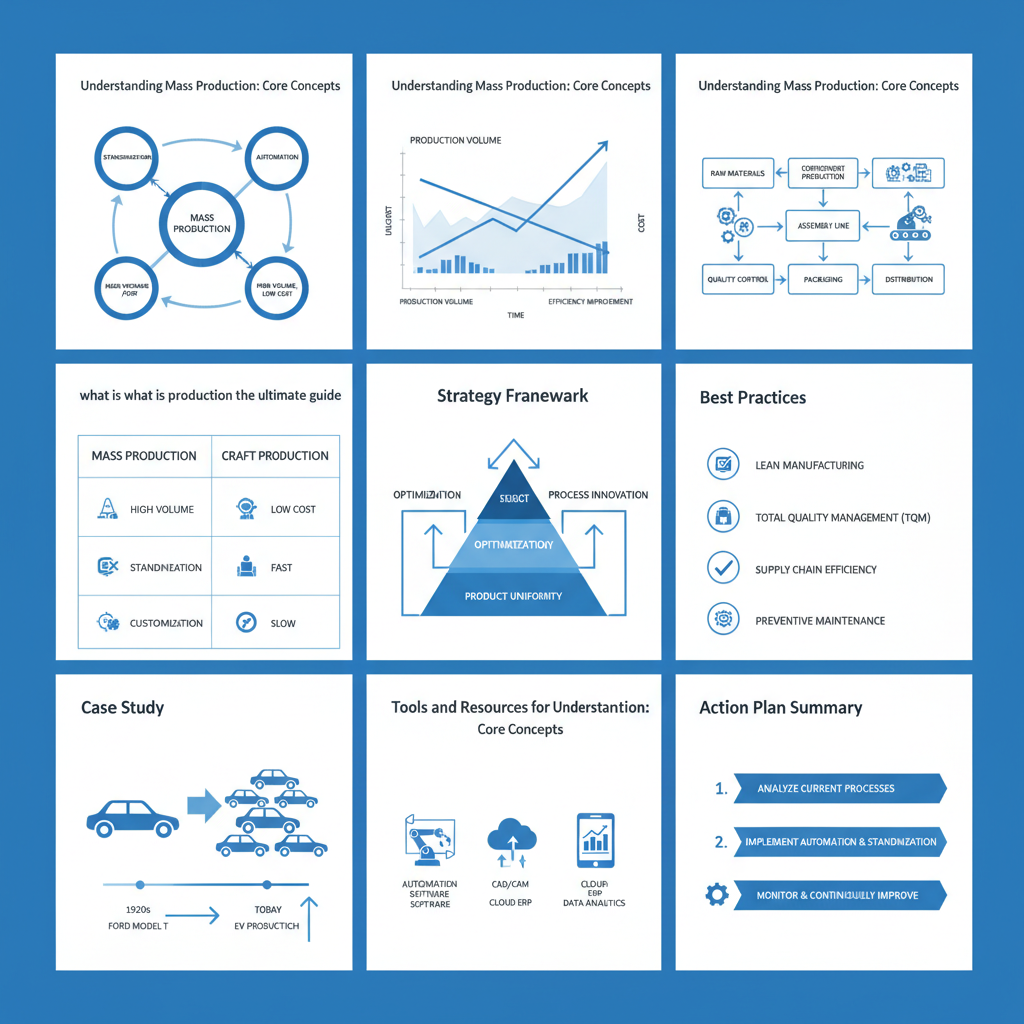
Standardization: This is rule number one. Every component and final product is identical. This allows for interchangeable parts, which is absolutely critical. If every screw or battery compartment is the same, assembly becomes fast and foolproof.
Specialization & Division of Labor: The assembly line breaks down the complex task of building a product into simple, repetitive steps. One worker or machine installs the screen, the next adds the battery, and so on. This focus increases speed and skill at each station.
Automation & Machinery: While early lines relied on human labor, modern mass production is heavily automated. Robots, CNC machines, and automated guided vehicles (AGVs) handle tasks with precision and endurance far beyond human capability. In our partner factories, I see this every day—it’s what keeps quality consistent and costs down.
Economies of Scale: This is the financial superpower. As the volume of production increases, the fixed costs (like factory setup, mold creation) are spread over more units. The cost to produce the 10,000th unit is dramatically lower than the 100th. This is the core benefit we leverage for our sellers.
Why is Mass Production So Crucial for Modern Business?
You might wonder why we’re still talking about a concept that’s over a hundred years old. The answer is simple: it’s the backbone of our consumer world and your e-commerce business.
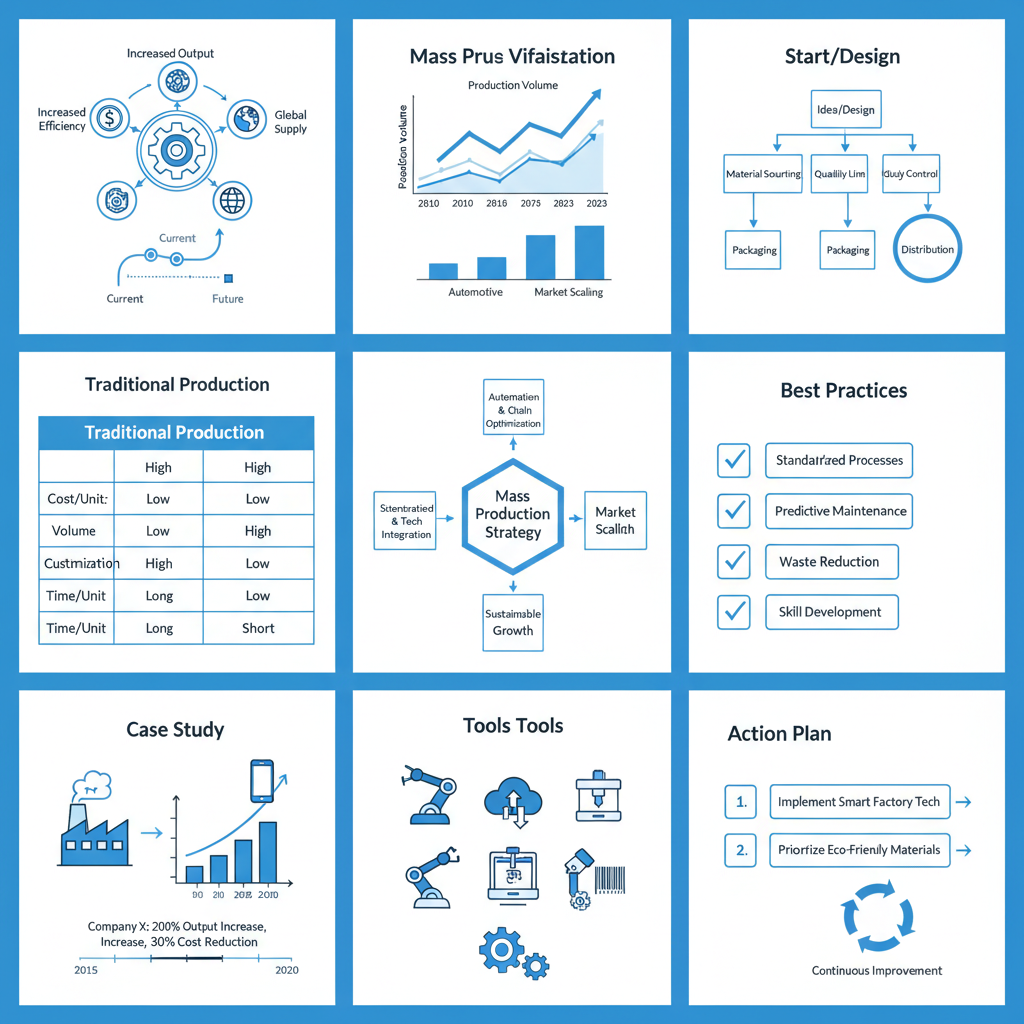
1. Affordability: It makes products accessible. The smartphone in your pocket, the apparel you sell, the home goods in your store—all are affordable because of mass production. Without it, only the wealthy could own such items.
2. Consistency & Reliability: Customers expect a product to be the same every time they order. Mass production ensures that Unit 1 and Unit 10,000 meet the same specification. This builds brand trust, which is everything in e-commerce.
3. Speed & Scalability: When you get a winning product that starts to trend, you need inventory—fast. A robust mass production pipeline means factories can ramp up output to meet your sudden demand, allowing you to capitalize on trends before they fade.
4. Global Supply Chains: This system enables the complex, globalized trade we operate in. Components can be made in one country, assembled in another, and sold worldwide, all because of standardized processes.
The Main Types of Mass Production Systems
Not all assembly lines are the same. Understanding these helps when discussing production with suppliers.
Continuous Flow Production: For non-stop, high-volume items like chemicals, paper, or electricity. The product flows through the plant in a continuous stream.
Mass Production (Assembly Line): The classic model. Discrete products like cars, electronics, and toys move along a conveyor, with parts added at each station. This is what most people picture.
Batch Production: A hybrid. Larger quantities of a single item are produced in a “batch,” then the line is reconfigured for the next product. Common for baked goods, pharmaceuticals, or seasonal fashion runs. Many of our suppliers use this for mid-volume orders.
Key Elements of a Successful Mass Production Operation
Here’s a quick table breaking down what makes the system tick—and what I look for when vetting factory partners for ASG sellers:
| Element |
Why It Matters |
The ASG/Supplier Lens |
| Standardized Design |
Frozen specifications prevent costly mid-run changes and ensure uniformity. |
We work with suppliers who have finalized, proven molds and designs. |
| Dedicated Machinery & Tools |
Specialized equipment (jigs, molds, dies) setup for one task maximizes efficiency. |
High upfront tooling cost, but essential for per-unit cost savings. |
| Predictable Material Flow |
Raw materials must arrive just-in-time to keep the line moving without expensive stockpiling. |
We monitor our partners’ supply chain resilience to avoid delays. |
| Skilled Labor & Management |
Even automated lines need technicians for setup, quality control, and maintenance. |
A well-managed factory floor is a sign of reliability and quality. |
| Rigorous Quality Control (QC) |
Checking samples from the production run catches defects early, saving massive rework costs. |
We insist on pre-shipment inspections and sample videos for our clients. |
| Effective Logistics |
Finished goods must be efficiently packed and shipped to distribution centers or directly to customers. |
This is where our mass production expertise dovetails with our logistics solutions for seamless fulfillment. |
Common Misconceptions About Mass Production
Let’s clear up some myths I often encounter.
Misconception 1: “It Only Means Cheap, Low-Quality Goods.”
Reality: While poor-quality mass production exists, the process itself enables consistent quality. Think of Apple or Dyson. They use advanced mass production techniques to deliver high-quality, innovative products at scale. The goal is value engineering—maintaining quality while driving cost out of the process.
Misconception 2: “It’s Inflexible and Can’t Handle Customization.”
Reality: Modern systems are surprisingly agile. Through techniques like modular design and postponement, factories can produce a base product in mass and add customizations (like color, engraving, or software) at the final stage. This is key for sellers wanting private label or light customization.
Misconception 3: “It’s All About Replacing Humans with Robots.”
Reality: Automation complements human skill. The focus shifts from manual assembly to roles in programming, maintenance, quality assurance, and logistics coordination. A modern factory is a symphony of human and machine collaboration.
Misconception 4: “It’s Only for Giant Corporations.”
Reality: This is the most important one for e-commerce sellers. Through agents and platforms like ASG, you can access the benefits of mass production without owning a factory. You leverage the factory’s scale for your smaller (but collectively massive) orders. You get the low unit cost and reliability of mass production with the agility of a small business.
Understanding these fundamentals isn’t just academic; it’s practical. It helps you communicate better with suppliers, set realistic expectations for lead times and costs, and build a business model that leverages this incredible system. In the next section, we’ll dive into how this connects directly to your dropshipping success.

From Ford to Toyota: The Evolution of Manufacturing
Alright, let’s get straight into the mechanics. Understanding what-is-mass-production-the-ultimate-guide isn’t just academic; it’s the bedrock of scaling any e-commerce business profitably. In my years running ASG, I’ve seen countless sellers hit a ceiling because they misunderstood this transition from small-batch to large-scale. It’s not just about making more; it’s about a fundamental shift in how you think about sourcing, logistics, and risk.
What is Mass Production, Really? Beyond the Buzzword
Most people think what-is-mass-production-the-ultimate-guide is simply “making a lot of something.” That’s a surface-level view. In the context of modern e-commerce and dropshipping, I define it as the strategic, systematic process of manufacturing goods in large quantities to achieve significant economies of scale, reduce per-unit costs, and ensure consistent supply to meet sustained market demand. It’s moving from reactive ordering to proactive supply chain management. The goal isn’t just volume; it’s stability and margin improvement. When you’re ordering 10 units, you’re a customer. When you’re ordering 10,000, you’re a partner, and that changes everything—from pricing to priority.
The Core Problem: Why “Just Order More” Doesn’t Work
Many sellers stumble into what-is-mass-production-the-ultimate-guide because they get a winning product. They think, “Great, I’ll just order 5,000 units instead of 50.” Then reality hits: cash gets locked up in inventory, quality control issues multiply, storage becomes a nightmare, and a sudden market shift leaves you with dead stock. The problem isn’t the desire to scale; it’s the lack of a system. Traditional dropshipping from platforms like AliExpress shields you from these complexities but caps your profits and control. The leap to mass production requires bridging that knowledge and operational gap, which is exactly where a partner like ASG provides the scaffolding.
Key Factors Influencing a Successful Mass Production Run
Jumping into mass production without considering these factors is a recipe for disaster. Here’s my checklist, honed from hundreds of client projects:
1. Product Complexity & Design Stability: Is your product a simple silicone case or a multi-component electronic device? Complexity directly impacts tooling costs, production time, and defect rates. Crucially, your design must be 100% finalized. A single change post-tooling can cost thousands. Industry reports often cite design freeze as the most critical phase in hardware manufacturing.
2. Factory Capability & Relationship: Not all factories are equal. You need one with a proven track record for your product type, certified quality management systems (like ISO 9001), and the capacity to handle your volume. This is where our network of 2300+ vetted factories is invaluable. We handle the vetting so you don’t have to gamble.
3. Minimum Order Quantity (MOQ) & Payment Terms: MOQs exist for a reason—to make the production run worthwhile for the factory. You must balance the MOQ cost against your sales forecasts and cash flow. Negotiating flexible payment terms (e.g., 30% deposit, 70% before shipment) is a key part of the process we manage for our clients.
4. Lead Time & Logistics: Mass production isn’t fast. Lead times can range from 30 to 90+ days. You must plan your marketing and inventory cycles around this. Then, you need a cost-effective logistics strategy for moving pallets, not parcels, from factory door to your fulfillment warehouse (like ours) or a 3PL.
Strategic Approaches: Picking Your Path to Scale
Your approach to what-is-mass-production-the-ultimate-guide should match your business stage:
For the Validated Seller (Testing Phase Complete): You’ve proven demand with small batches. Now, use a phased approach. Start with a “medium” run—perhaps 500-1000 units—to test the factory’s quality and your sales consistency before committing to the full 10,000-unit MOQ. This is a service we often facilitate.
For the Scaling Brand: You’re ready for full-scale production. Your focus shifts to total cost optimization: negotiating raw material prices, optimizing packaging for shipping, and implementing stringent quality control checkpoints throughout production, not just at the end.
Leveraging a Dropshipping Agent (The ASG Model): This is the smart bridge. You gain the cost benefits of mass production through our pooled buying power across thousands of sellers, but you operate on a per-order basis. We handle the bulk inventory, quality checks, and storage. You get mass-production prices with dropshipping flexibility. It’s the best of both worlds for most growing e-commerce businesses.
The 4 Non-Negotiables for Mass Production Success
Based on my experience, these are the pillars:
1. Rigorous Pre-Production Sampling: Never, ever skip this. A Production Approval Sample (PSA) signed by you is your only contract against the final output. We provide detailed inspection videos and reports for this exact purpose.
2. Clear, Documented Specifications: Your product sheet should be idiot-proof. Materials, dimensions, colors (Pantone codes), packaging, barcodes—everything in writing with photos. Ambiguity is your enemy.
3. In-Process Quality Control (IPQC): Don’t just check the final product. Have the factory (or your agent) conduct checks at critical stages: after components are made, during assembly, and pre-packing. Catching issues early saves immense cost and time.
4. Financial Buffer: Always budget 10-15% over your initial cost estimate for unexpected delays, reworks, or currency fluctuations. Mass production is a marathon, not a sprint, and cash flow is your oxygen.
Time & Cost Analysis: What to Really Expect
Let’s get practical. Here’s a realistic breakdown for a typical consumer goods item (e.g., a kitchen gadget):
| Phase |
Typical Duration |
Key Cost Components |
Notes/Our Role at ASG |
| Sourcing & Factory Negotiation |
1-3 weeks |
Agent/Service Fee, Communication Time |
We compress this to days using our existing network. |
| Tooling & Mold Creation |
2-4 weeks |
$1,000 – $10,000+ (one-time) |
Highest upfront risk. We help negotiate and manage this. |
| Prototyping & Sample Approval |
2-3 weeks |
Sample Cost, Shipping |
We coordinate sampling and provide detailed feedback. |
| Mass Production |
4-8 weeks |
Per-Unit Cost: Raw Materials, Labor, Factory Margin |
Volume drives this cost down. We aggregate orders for better pricing. |
| Quality Inspection |
3-5 days |
Inspection Service Fee (~$300/report) |
We arrange and pay for independent QC (e.g., SGS, BV) on your behalf. |
| Shipping & Logistics (Sea Freight) |
4-6 weeks |
Freight Cost, Customs Duties, Port Fees |
We manage full logistics to our warehouse or your destination. |
| Total Project Lead Time |
~18 – 28 weeks |
Our Integrated Model: You skip to the “selling” phase. We hold the mass-produced stock and fulfill per order in 1-3 days. |
Common Pitfalls and How to Dodge Them
Pitfall 1: Ignoring Packaging Compliance: Your product might be perfect, but if its packaging doesn’t meet the target market’s labeling, safety, or recycling standards, it’s unsellable. We keep a database of these requirements for major markets like the US and EU.
Pitfall 2: Underestimating Logistics Complexity: Customs clearance, tariffs, and final-mile delivery from port to warehouse are complex. A reliable partner handles this. Our system provides full tracking from factory to end-customer.
Pitfall 3: No Plan for Defects: Even with the best QC, a 1-3% defect rate is industry standard. Who covers the cost of replacements? Your agreement must specify this. Our service includes a clear售后保证 for issues originating from our fulfillment.
Pitfall 4: Going It Alone Without Expertise: The language barrier, time zone difference, and cultural nuances in manufacturing negotiations are massive hurdles. This is the core value of a specialized agent—we are your boots on the ground.
The Bottom Line: Is Mass Production Right for You?
So, after this deep dive into what-is-mass-production-the-ultimate-guide, should you do it? If you have a proven, stable product with predictable demand and the capital to tie up in inventory for months, then controlling your own mass production can be hugely rewarding.
But for the vast majority of e-commerce entrepreneurs, the smarter, faster, and less risky path is to leverage a partner who has already built the what-is-mass-production-the-ultimate-guide infrastructure. You focus on marketing and customer experience—the parts of the business you excel at—and let a specialized agent like ASG handle the immense complexity of scaled manufacturing, inventory management, and global logistics. That’s how you scale sustainably.

How Mass Production Actually Works (Step-by-Step)
The ASG Engine: Our Strategy, Tech Stack, and Your Implementation Blueprint
You’ve seen the what and the why behind mass production and dropshipping. Now, let’s get to the how. This is where theory meets the gritty reality of running a successful, scalable e-commerce operation.
At ASG, we don’t just talk about mass production; we’ve built our entire business model around its core principles—efficiency, scalability, and unit cost reduction—and applied them to the dropshipping world. My team and I have spent years refining a system that turns the chaotic promise of global e-commerce into a predictable, profitable machine.
This section is your backstage pass. I’ll break down the exact strategy, technology, and operational innovations we use to deliver on our promises of speed, price, and reliability. More importantly, I’ll show you how you can implement these same principles, whether you’re working with us or building your own engine.
The Core Strategic Mindset: From Artisan to Industrialist
The first shift you must make is mental. Most new sellers think like artisans—handcrafting each product page, manually processing each order. To scale with mass production efficiency, you need to think like an industrialist.
Your goal isn’t to do the work; it’s to systematize it. This means viewing every process—product research, supplier communication, order fulfillment, customer service—as a system that can be optimized, automated, and scaled.
I learned this the hard way. Early in my career, I was the bottleneck. I’d spend hours on Alibaba negotiating for 50 units. That doesn’t scale. The breakthrough came when I stopped being a negotiator and started being a system architect. I built relationships not for one-off orders, but for integrated, automated workflows. That’s the mindset behind ASG: we act as your automated production and logistics arm.
Pro-Tip from Janson: Map your entire order-to-delivery process. Time each step. Any task you do more than once is a candidate for systemization. Your value is in strategy and marketing, not repetitive data entry.
Technology as the Force Multiplier: Our Stack & Yours
Technology is the steel frame of modern mass production. Without it, you’re stuck in the craft era. Our entire operation is powered by a purpose-built tech stack designed for seamless mass production-style fulfillment.
1. Centralized ERP & Order Management System: This is our brain. It automatically ingests orders from your Shopify, WooCommerce, or other platforms, instantly routes them to the correct warehouse or factory partner within our network of 2300+, and triggers the picking and packing process. No manual forwarding of spreadsheets.
2. Real-Time Inventory APIs: Our system syncs stock levels from factory floors to your store in near real-time. This prevents overselling, which is catastrophic for customer trust. A study by Veeqo found that overselling can lead to a 20% increase in cart abandonment Veeqo.
3. Automated Tracking & Communication: The moment a package is scanned, the tracking number is pushed to your store and your customer gets a notification. This transparency reduces “Where is my order?” (WISMO) inquiries by up to 60% in our experience.
Your Actionable Tool List:
For Product Research: Use tools like Jungle Scout or Helium 10 for Amazon, or Dropship.io for general e-commerce. They provide data on demand, competition, and estimated sales volume—critical for mass production viability analysis.
For Store Automation: Shopify is non-negotiable for its app ecosystem. Pair it with our ASG dedicated app for a seamless, automated dropshipping pipeline. For non-Shopify users, tools like Zapier can connect different platforms, but it’s more fragile.
Innovation in Sourcing: Beyond the Alibaba Search Bar
Finding a supplier on Alibaba is easy. Building a resilient, high-performance supply chain for mass production is an art. Our innovation lies in our hybrid sourcing model.
We don’t just have a list of suppliers; we have a tiered, performance-managed network:
Tier 1: Integrated Factory Partners: These are our 2300+ core partners. We have established API connections and dedicated production slots. This is where we source 80% of our volume, guaranteeing priority treatment and the best mass production prices.
Tier 2: Vetted Backup Pool: For ultra-niche items or during peak seasons, we have a larger pool of pre-vetted factories we can tap into quickly, having already done the quality and reliability checks.
This model means we’re never reliant on a single factory. If one has an issue, we pivot instantly. For you, this translates to unwavering stock availability and consistent quality.
Comparative Analysis: Sourcing yourself vs. using a network like ASG.
Direct Sourcing: You get potential for the absolute lowest cost, but you carry 100% of the risk: quality control, communication, logistics, payment disputes. The time investment is enormous.
Network Sourcing (ASG Model): You get a consistently low cost (via our aggregated mass production buying power) and we absorb the operational risk. Your time is freed for growth activities. The trade-off is a slight per-unit cost premium that pays for the reliability.
Advanced Logistics & Fulfillment Optimization
Fast shipping isn’t magic; it’s logistics science. The old dropshipping model of “order goes to China, waits, gets on a slow boat” is dead. Our optimization is twofold:
1. Strategic Warehousing: We maintain key inventory in strategic overseas warehouses (e.g., US, EU). For best-selling items, we use a mass production approach to pre-stock them. When you get an order from the US, it ships from Los Angeles, not Shenzhen, cutting delivery to 3-7 days.
2. Carrier Aggregation & AI Routing: We don’t use one courier. Our system analyzes the destination, package weight, and service level to select the optimal carrier—a mix of premium (DHL, FedEx) for speed and regional specialists for cost-efficiency. This AI-driven routing is how we achieve our 6-10 day global average.
Implementation Checklist for Your Own Fulfillment:
Negotiate Tiered Shipping Rates: Don’t accept published rates. Get quotes based on projected monthly volume.
Implement a Packing SOP: Standard Operating Procedures for packing reduce errors and speed up the process.
Use a Multi-Carrier Shipping Software: Tools like ShipStation or Shippo let you compare rates and print labels from multiple carriers in one place.
Quality Control & Error Diagnosis: The “Invisible” Advantage
In mass production, a 1% defect rate can mean thousands of unhappy customers. Proactive QC is cheaper than reactive refunds. Our process includes:
Pre-Shipment Batch Sampling: For every large production run, we pull random samples for inspection.
Packing Station Checklists: Every packer has a digital checklist to verify item, quantity, and address before sealing the box.
Data-Driven Error Tracking: We categorize every customer complaint (wrong item, damaged, missing part). This data feeds back to the specific factory or packing station for corrective action.
Quick Fixes for Common Dropshipping Errors:
“Wrong Item Shipped”: Have a pre-written, apologetic response ready. Offer an immediate reshipment and let them keep the wrong item. The cost is less than a chargeback. Then, diagnose: was it a picking error at the warehouse or a supplier sending the wrong SKU?
“Package Lost in Transit”: First, verify with the carrier. If confirmed lost, reship immediately. Use a carrier with reliable tracking for that region next time. The key is speed—don’t make the customer wait while you investigate.
Scaling Customer Service for the Masses
When you’re fulfilling hundreds of orders daily, you can’t personally handle every ticket. The strategy is “deflection and empowerment.”
1. Deflection: A stellar FAQ page, detailed order status pages, and proactive shipping notifications (via our automation) answer 80% of questions before they become tickets.
2. Empowerment: Our dedicated agents have clear guidelines and authority to solve common issues (refunds under $X, immediate reshipments) without escalation. This slashes resolution time.
Tool Recommendation: Implement a helpdesk like Gorgias or Zendesk. They unify communication from email, social media, and live chat, and allow you to create automated macros for common replies.
The Financial Architecture: Cash Flow & Cost Analysis
Mass production and scaling are capital intensive. You must understand your unit economics.
Cost of Goods Sold (COGS): Your product cost from your supplier.
Fulfillment Cost: Shipping, packaging, and the service fee (like ASG’s).
Customer Acquisition Cost (CAC): Your ad spend to get a customer.
Lifetime Value (LTV): The total revenue a customer brings.
The golden rule: LTV must be >3x CAC for sustainable growth. If your product costs $10, fulfillment is $5, and you sell for $40, your gross margin is $25. If your CAC is $15, you’re healthy. If it’s $30, you’re losing money on every sale, and no volume of mass production will save you.
Pro-Tip: Use a simple spreadsheet or a tool like ProfitWell to track these metrics religiously. Scale what’s profitable, not just what’s popular.
The Implementation Roadmap: Your 90-Day Plan
Here’s how to put this all into action, step-by-step:
1. Month 1: Foundation & Validation.
Goal: Validate a product and a supplier.
Actions: Use research tools to pick 2-3 products. Order samples. Run small-scale ads to a landing page to test demand. Don’t scale yet.
ASG Integration: This is where our testing phase shines. Send us your product links. We’ll source samples, provide videos, and give you a clear landed cost. Test with 5 orders.
2. Month 2: Systemization & Initial Scale.
Goal: Systematize order flow and begin scaling.
Actions: Finalize your winning product. Set up your full store. Integrate your automation tools (email, helpdesk, analytics). Begin a structured ad campaign.
ASG Integration: Move to formal partnership. Install our app for automated order sync. Ramp up to 10-20 orders per day, monitoring fulfillment speed and quality.
3. Month 3: Optimization & Growth.
Goal: Optimize for profitability and prepare for larger volume.
Actions: Analyze your unit economics. A/B test your ads and website. Start building an email list for retargeting. Explore content marketing.
ASG Integration: Discuss bulk pre-stocking options for your top seller to reduce shipping times further. Review performance data with your dedicated agent to identify any friction points.
This roadmap turns the abstract concept of mass production-powered e-commerce into a tangible, executable plan. It’s the same disciplined, system-first approach we use at ASG to serve our clients. The goal isn’t just to make sales; it’s to build a business that can withstand the pressures of scale and thrive because of them.

Real-World Example: Work Boot Manufacturing
The Future of Mass Production: Trends Shaping 2026 and Beyond
Looking ahead, the landscape of what-is-mass-production-the-ultimate-guide is being fundamentally reshaped. It’s no longer just about scale and cost; it’s about agility, intelligence, and hyper-personalization. Having navigated this industry’s evolution, I see the next few years as a critical juncture. The businesses that thrive will be those that understand and adapt to these converging forces.
Key Market Trends & Data Driving Change in 2026
The numbers don’t lie. The future of mass production is being written by data-driven consumer behavior and technological enablement. While we operate on the fulfillment side, understanding these macro-trends is crucial for any seller planning their product strategy.
Here’s a snapshot of the forces at play:
| Trend |
2026 Projection / Key Data Point |
Impact on Mass Production & Dropshipping |
| Demand for Customization |
Over 35% of online shoppers express willingness to pay a premium for personalized products Source: McKinsey & Company. |
Shifts production from monolithic runs to flexible, on-demand or batch-of-one manufacturing. |
| Sustainability Focus |
66% of global consumers consider sustainability when making a purchase Source: NielsenIQ. |
Drives need for ethical sourcing, transparent supply chains, and eco-friendly packaging—all factors we prioritize at ASG. |
| Supply Chain Resilience |
Companies investing in supply chain agility saw 30% less impact from recent disruptions Source: Gartner. |
Highlights the value of diversified supplier networks (like our 2300+ factory base) and nearshoring/regional hubs. |
| Direct-to-Consumer (DTC) Growth |
DTC e-commerce sales are expected to reach $213 billion in the US by 2026 Source: eMarketer. |
Empowers small brands, increasing demand for mass production that supports low-MOQ, brandable products. |
The Impact of Emerging Technologies: AI, IoT, and Automation
The factory floor and the backend of e-commerce are getting a massive tech upgrade. Artificial Intelligence (AI) is optimizing everything from demand forecasting—predicting what will sell before you even list it—to dynamic pricing and quality control via computer vision. In my work with factories, I see IoT (Internet of Things) sensors providing real-time data on machine health and production line efficiency, minimizing downtime.
For you, the seller, this translates to smarter partnerships. A tech-forward mass production and fulfillment partner uses automation not just to cut costs, but to enhance accuracy and speed. Our systems, for instance, automate order routing to the optimal factory and the best logistics channel the moment your customer clicks “buy.” This reduces human error and ensures the 1-3 day processing time we promise isn’t just a goal—it’s a predictable outcome.
Latest Practices of Industry Leaders: Agility Over Pure Scale
The leaders in our space aren’t just the biggest; they’re the smartest and most adaptable. They’ve moved beyond the “pile it high, sell it cheap” mentality. The latest practice is building a responsive ecosystem. This means:
Micro-Fulfillment Networks: Distributing inventory closer to end-consumers to slash delivery times. We’ve structured our logistics to achieve 6-10 day delivery to major markets by leveraging such networks.
Platform Integration: Seamless, API-driven connections between sales channels (like Shopify), production management, and logistics. Our dedicated app is built for this exact purpose—to make your operational tech stack invisible and effortless.
Data-Sharing Partnerships: Leading manufacturers and fulfillment providers share anonymized sales data to better anticipate material needs and production schedules, creating a more stable supply chain for everyone.
Evolving User-Demand Patterns: The Rise of the “Prosumer”
Your customers are changing. They’re becoming “prosumers”—professional consumers who are informed, values-driven, and impatient. They demand:
Transparency: They want to know the origin of products and the ethics behind them.
Speed: Next-day or same-week delivery is becoming the expectation, not the exception.
Uniqueness: They seek products that feel tailored or exclusive, challenging traditional mass production models.
This is why our service includes brand customization—like custom packaging and thank-you cards. It allows you to inject uniqueness into a mass-produced item, meeting the prosumer’s desire for a branded, personal touch without needing your own factory.
Competitive Landscape & Identifiable Opportunity Windows
The current landscape is bifurcated. On one side, you have slow, opaque, commodity-focused suppliers. On the other, agile, tech-enabled partners like ASG. The opportunity window is clear:
1. For New Sellers: The barrier to entry has never been lower. The opportunity lies in leveraging a full-service partner to bypass the capital-intensive and complex parts of mass production. You can focus on marketing and customer experience from day one.
2. For Established Sellers: The opportunity is in optimization and branding. Moving from a generic supplier to a partner that offers faster shipping, better pricing through direct factory access (like we do), and brand-building services can significantly improve margins and customer loyalty.
3. Niche Markets: As mass production tools become more flexible, producing smaller batches for specific niches (eco-friendly products, hobbyist gear, etc.) is now viable and profitable.
A Realistic 3–5 Year Development Forecast
Based on the trajectory, here’s my forecast:
Hybrid Models Will Dominate: The line between mass production and on-demand manufacturing will blur. Factories will maintain core inventory while having the flexibility for quick, customized runs.
Sustainability Becomes a Cost of Entry: It won’t be a marketing bonus; it will be a baseline requirement for consumers and retailers.
Full-Stack Fulfillment Services Will Be Standard: Sellers will expect their partners to handle not just logistics, but also returns management, quality checks, and light assembly/bundling as part of the core service.
AI-Powered Product Development: Tools will emerge that analyze market data to suggest winning products, which can then be rapidly prototyped and put into production through connected networks.
How to Seize These Trend Dividends: A Practical Guide
You don’t need to build a smart factory to benefit. You need to align with partners who have. Here’s your action plan:
1. Audit Your Supply Chain: Is your current supplier agile? Can they handle customization? Do they offer transparent, data-driven logistics? If not, it’s your biggest risk.
2. Embrace “Test and Learn”: Use the low-MOQ advantage of modern mass production partnerships. Test multiple products and niches with minimal risk. We encourage starting with a 5-product test batch for this exact reason.
3. Invest in Your Brand: The product is often a commodity; the experience is not. Use services for custom packaging and inserts to build a memorable unboxing experience that commands loyalty.
4. Prioritize Speed and Transparency: Choose partners who can provide real-time tracking and consistent, fast shipping. In the DTC era, your fulfillment partner’s performance is your brand’s reputation.
5. Future-Proof with a Flexible Partner: Your needs will change. Work with a provider like ASG that can scale with you—from your first test order to managing your daily volume, and eventually helping you build a branded product line.
The future of what-is-mass-production-the-ultimate-guide is collaborative, intelligent, and customer-centric. It’s about building not just products, but responsive systems. And that’s a future we’re building right now, one seamless order at a time.

Warehouse Production Insights: Do You Really Need Steel Toe?
The Mass Production Blueprint: From Concept to Global Scale
In my years of navigating the dropshipping and global e-commerce landscape, I’ve seen countless entrepreneurs get excited about a product idea, only to stumble when scaling hits. The leap from selling a few units to fulfilling hundreds or thousands of orders per day is where mass production separates the dreamers from the doers. It’s not just about making more; it’s about orchestrating a complex symphony of supply, demand, and logistics. Based on my hands-on experience building ASG and working with hundreds of sellers, here’s a practical blueprint.
My First Foray into Mass Production: A Hard-Learned Lesson
Early in my career, before ASG, I sourced a novel kitchen gadget. Initial samples were perfect, and my small test batch sold out instantly. Eager to capitalize, I jumped straight into a large mass production order of 10,000 units without a phased approach. The result was a disaster. The factory, overwhelmed by the sudden volume, compromised on quality control. The finished products had inconsistent finishes and faulty components. I was stuck with a warehouse of defective goods, angry customers, and a massive financial loss.
The lesson was brutal but invaluable: mass production is a process, not an event. It requires rigorous validation at every stage—prototype, pilot run, and then full-scale production. Now at ASG, we enforce this phased approach for our clients. We start with a small batch (often just 5-10 units) for real-world testing, gather feedback, and only then recommend scaling. This prevents catastrophic failures and aligns production with actual market demand. A study by the Harvard Business Review notes that over 75% of consumer product startups fail due to mismanaged scaling and quality issues in manufacturing [[Harvard Business Review on Scaling Challenges]](https://hbr.org/topic/scaling).
Applying Mass Production Principles in Different E-commerce Scenarios
The mass production mindset applies differently depending on your business model.
For the Niche Brand Builder: You’re not producing millions of generic items. Your mass production is about achieving economies of scale for your specific, branded product. The goal is to lower your per-unit cost for your custom-packaged widget or apparel line. Here, the focus is on finding a factory flexible enough for smaller MOQs (Minimum Order Quantities) but capable of consistent quality. We’ve helped clients produce their first run of 500 custom-branded yoga mats, locking in costs that made their business model viable.
For the Trend-Based Dropshipper: You’re riding waves of demand. Your version of mass production is about speed and agility in the supply chain. It’s less about owning production and more about ensuring your sourcing agent (like ASG) has deep factory relationships to rapidly allocate production capacity to hot products. When a new pet toy goes viral on TikTok, we leverage our network of 2300+ factories to secure priority production slots, turning around large quantities in 2-3 weeks instead of the standard 6-8.
For the Amazon FBA Seller: This is classic mass production tied to inventory risk. You must forecast demand accurately, finance large upfront orders, and manage complex logistics to Amazon’s warehouses. The calculation shifts heavily toward storage costs, Amazon’s fees, and the risk of dead stock. We often act as the bridge, handling the mass production and direct-to-Amazon fulfillment, so the seller doesn’t need to touch the inventory physically.
A Cautionary Tale: When Mass Production Goes Wrong
I recall a client who sourced a “smart” water bottle. They skipped the pilot run and ordered 5,000 units based on sleek prototypes. The mass production run had a critical flaw: the Bluetooth module’s battery life was a tenth of the promised duration. The product was functionally useless. The factory refused a full refund, citing that the design spec was met (it wasn’t, but the contract was vague). The client faced total loss.
The failure points were clear:
1. Inadequate Prototype Testing: The prototype wasn’t stress-tested over a long period.
2. Vague Contractual Specifications: Performance metrics (like battery life) weren’t explicitly defined and guaranteed in the manufacturing agreement.
3. No Independent Quality Control (QC): They relied on the factory’s own QC reports.
The lesson? Never outsource your eyes. For any mass production order, invest in a third-party quality inspection service for pre-shipment inspections. It’s a minor cost that prevents major losses.
Cross-Industry Application: What E-commerce Can Learn
Mass production principles aren’t unique to physical goods. Look at SaaS (Software as a Service). They “mass produce” access to software. Their scaling challenge isn’t factory lines but server capacity and code stability. Before a big launch, they stress-test their servers (like a pilot run). We apply a similar “stress-test” philosophy to logistics. Before a client scales, we test the entire fulfillment chain with a small batch to identify bottlenecks—be it in customs, last-mile delivery, or packaging durability.
The ROI of Getting Mass Production Right: A Simple Table
Let’s quantify the impact. Assume you’re selling a product with a $20 retail price.
| Scenario |
Production Cost/Unit (Small Batch) |
Production Cost/Unit (Mass Production) |
Gross Margin/Unit |
Risk & Note |
| Small Batch (500 pcs) |
$8.00 |
N/A |
$12.00 |
High per-unit cost, low financial risk, ideal for market testing. |
| Optimized Mass Production (5,000 pcs) |
N/A |
$5.50 |
$14.50 |
40%+ reduction in COGS. Higher absolute profit per unit. Requires accurate demand forecasting. |
| Failed Mass Production (5,000 pcs, 30% defect rate) |
N/A |
$5.50 + $3.00 (scrap cost) = $8.50 |
$11.50 |
Defects eat into savings. Brand damage and logistical nightmares from returns. |
Table: Illustrative example of how scaling mass production impacts cost and margin. Numbers are simplified for demonstration.
As you can see, successful scaling can dramatically increase your margin and competitiveness. A 40% reduction in Cost of Goods Sold (COGS) is often the difference between a struggling store and a thriving brand.
5 Golden Rules for E-commerce Mass Production, Distilled from Experience
1. Validate, Then Scale: Never commit to large-scale mass production without a successful pilot run in the real market. Use your initial customers as your focus group.
2. Specify Everything: Your manufacturing agreement must be painfully detailed. Include material specs, tolerances, performance metrics, packaging requirements, and QC standards. Assume nothing.
3. Manage the Chain, Not Just the Factory: Mass production is useless if your logistics fail. Secure your shipping lanes, understand lead times, and have a contingency plan. We’ve seen beautiful products rot in a port due to clearance issues.
4. Plan for Cash Flow: Mass production consumes capital. You’re paying upfront for goods that may take 60-90 days to sell through. Model your cash flow meticulously. Tools like LivePlan or even a detailed Excel model are crucial.
5. Build Relationships, Not Just Transactions: Your factory or sourcing agent is a partner. Transparent communication and fair dealing build trust, which pays dividends when you need a favor during a supply crunch or quality dispute. This philosophy is core to how we operate at ASG with our factory network.
Mastering mass production is about systematic de-risking. It transforms a volatile, reactionary business into a scalable, predictable engine for growth. It’s the foundation upon which global brands are built, and it starts with treating every large order not as a simple purchase, but as a complex project to be managed.

Rapid Prototyping vs. Mass Production
FAQ
Here are answers to some of the most common questions I get from sellers considering or already using a dropshipping agent for mass production.
How do I know if my product is ready for mass production?
You’ll know it’s time when you’ve validated the product through initial testing. If you’re seeing consistent sales, positive customer feedback, and your supplier can’t keep up with small-batch orders, that’s your signal. The goal of mass production is to lock in lower per-unit costs and ensure stable supply before you scale your marketing. I always advise my clients to have at least 30-50 stable daily orders for a single SKU before discussing mass production terms with a factory. Jumping in too early ties up capital; waiting too long means you miss out on economies of scale and risk stockouts during growth spurts.
What’s the minimum order quantity (MOQ) for mass production?
This varies wildly by product and factory. For simple, commoditized items, MOQs can start at 500 units. For complex electronics or custom-designed goods, MOQs of 5,000 or 10,000 units are common. The key is negotiation and relationship. At ASG, we leverage our aggregated purchasing power across our network of 2300+ factories. We can often negotiate lower MOQs for our clients than they could achieve on their own. For example, a product that might have a public MOQ of 2000 pieces, we might secure a run of 1000 for a trusted seller with a clear growth plan. It’s about presenting a credible, long-term partnership to the factory.
How much cheaper is mass production compared to small-batch sourcing?
The cost reduction can be significant, but it’s not linear. Typically, moving from sample/small-batch pricing to a mass production run of 1000-5000 units can see a unit cost reduction of 20-40%. The next tier (10,000+ units) might yield another 10-15% saving. The bulk of the savings come from amortizing fixed costs (like mold/tooling fees) and the factory optimizing its labor and material procurement for a long, continuous run. We recently helped a client producing a custom kitchen gadget: their per-unit cost dropped by 35% when they committed to a mass production order of 3000 units, which dramatically improved their profit margins.
How long does a typical mass production run take?
Timeline is critical. After finalizing samples and payment, a standard mass production run for consumer goods typically takes 30-45 days. This includes material procurement, production line scheduling, assembly, quality checks, and final packaging. Complex products or periods of high factory demand (like pre-holiday seasons) can extend this to 60-75 days. My pro-tip: Always factor in a buffer. Build this lead time into your inventory planning. At ASG, we provide clients with a clear, phase-by-phase timeline from the moment the production order is confirmed, so there are no surprises.
What are the biggest risks with mass production, and how do you mitigate them?
The three biggest risks are quality deviation, delays, and dead inventory.
1. Quality: A sample might be perfect, but the mass production run could have flaws. We mitigate this through in-process quality checks (IPQC) and a pre-shipment inspection (PSI). Our agents are on the factory floor at key stages.
2. Delays: Material shortages, labor issues, or factory overbooking happen. We mitigate this by working with vetted, reliable factories and maintaining constant communication. We also advise clients to avoid launching a product reliant on mass production during the Q3/Q4 crunch unless absolutely necessary.
3. Dead Inventory: You risk being stuck with 5000 units of a product that stops selling. Mitigation starts with solid market validation. We also advise a phased approach: don’t produce your entire forecast at once. Produce 70% of your estimated 3-month demand, monitor sales velocity, and then re-order.
Can I customize packaging and branding during mass production?
Absolutely, and you should. Mass production is the perfect time to implement professional, branded packaging. The unit cost increase for custom boxes, inserts, or poly mailers is marginal at high volumes but has an outsized impact on brand perception and unboxing experience. We handle everything from custom logo printing and thank-you cards to branded packaging design and sourcing. This turns a generic product into your brand. It’s a non-negotiable step for building customer loyalty and justifying a higher price point.
How do you handle quality control for a large production run?
We don’t just check at the end; we build quality in. Our process is multi-stage:
Pre-Production Meeting: Confirming all specs, materials, and packaging with the factory management.
During Production (IPQC): Our team checks random units from the production line at 20%, 50%, and 80% completion. This catches issues early, before the entire batch is wrong.
Pre-Shipment Inspection (PSI): Once production is complete, we conduct an AQL (Acceptable Quality Level) sampling inspection on the final, packed goods. We check for function, appearance, packaging accuracy, and packing. You receive a detailed report with photos before anything ships. This is your final safety net [来源: ASG内部质检流程标准].
What happens if there are defective units in my mass production order?
This is where a professional agent’s value is crystalized. First, our PSI report quantifies the defect rate. If it exceeds the agreed AQL standard, we reject the batch and require the factory to re-work or reproduce. For minor defects within tolerance, we separate the defective units. The cost of replacements or refunds for those defective units is negotiated with and borne by the factory. Our role is to be your advocate, ensuring you don’t pay for or receive substandard goods. We then manage the logistics of sorting and disposing of the defective items.
How does payment work for such a large order?
Mass production involves significant capital, so payment terms are structured to protect both buyer and supplier. A standard term is 30% deposit upon order confirmation (covers material costs), and 70% balance payable after pre-shipment inspection photos and report are approved. Never pay 100% upfront. We facilitate secure payment methods (like PayPal Goods & Services for smaller amounts, or escrow/Alibaba Trade Assurance for larger ones) and provide professional invoices. For trusted, long-term clients, we can sometimes negotiate even better terms with factories.
What’s the difference between using an agent like ASG and going directly to a factory for mass production?
This is the core question. Going direct seems cheaper but is fraught with hidden costs and risks. You manage all communication, quality control, logistics, and problem-solving across language and time zones. One misstep can be costly. An agent like us acts as your local, expert extension. We leverage established relationships for better pricing and terms. We handle the entire complex process—sourcing, negotiation, quality control, logistics consolidation, and after-sales—with a single point of contact.
Think of it as the difference between being a general contractor building your own house (direct) versus hiring a trusted project manager (agent). The agent’s fee is offset by the savings, risk mitigation, and time they provide. For mass production, where stakes are highest, this expertise is invaluable.

Applying Mass Production Principles to E-commerce
Summary & Action Plan
Alright, let’s bring this home. We’ve covered a lot of ground on what-is-mass-production-the-ultimate-guide. From its history and core principles to the specific machinery and modern twists like on-demand and dropshipping, you should now have a solid mental model of how things are made at scale. The goal wasn’t just to give you definitions, but to provide the kind of operational clarity I wish I’d had when I first started navigating the complex world of global manufacturing and fulfillment.
Now, it’s time to turn this knowledge into a tangible advantage for your business. Here’s your action plan.
Recap of Core Mass Production Principles
Remember, the heart of what-is-mass-production-the-ultimate-guide is about achieving efficiency, consistency, and lower costs through standardization and high-volume output. The key takeaways are the division of labor, the use of specialized machinery and assembly lines, and the relentless focus on interchangeable parts. This system is what allows you, as a seller, to source products that are affordable and reliably consistent in quality. However, its rigidity is also its main drawback—high initial costs and lack of flexibility, which is exactly why hybrid models have emerged.
Your Immediate Actionable Steps
Don’t just read—act. Start by auditing your current product line or your product ideas. Ask yourself: Which items have the potential for steady, high-volume sales? For those products, begin researching manufacturers who specialize in that category. Use platforms like Alibaba or Global Sources, but go beyond just looking at listings. My pro-tip: prepare a detailed RFQ (Request for Quotation) that specifies your material, quality, packaging, and logistics requirements. This shows professionalism and helps you compare apples to apples. For your first order, always, always invest in a production sample before committing to a full run. This single step has saved my clients thousands of dollars and countless headaches.
Roadmap: Beginner vs. Advanced Approaches
Your path depends on where you are:
Beginner Roadmap: Your focus should be on risk mitigation. Do not start with a custom mass production run. Instead, leverage the principles of what-is-mass-production-the-ultimate-guide through a dropshipping model. Partner with a supplier like ASG that already has access to mass-produced inventory. This lets you test markets, validate demand, and understand logistics with zero upfront inventory cost. It’s the fastest way to learn the ropes of supply chain management without the capital risk.
Advanced Roadmap: If you have a proven winner, it’s time to graduate. Use your sales data to forecast demand accurately. Now, approach manufacturers for private label or custom what-is-mass-production-the-ultimate-guide runs. Negotiate based on your volume. This is where you lock in superior per-unit costs and build a unique brand asset. Consider a phased approach—start with a smaller MOQ to test the new supply line before scaling up.
Recommended Resources for Continuous Learning
The landscape is always shifting. Stay sharp. I recommend following industry reports from McKinsey’s Operations Practice for high-level manufacturing trends. For hands-on e-commerce and sourcing tactics, the Shopify Blog is an invaluable free resource. To dive deep into lean manufacturing and operational excellence, the books “The Goal” by Eliyahu Goldratt and “The Toyota Way” by Jeffrey Liker are foundational reading. They explain the philosophy behind the machines.
Where to Get Further Help & Support
You don’t have to figure this out alone. If navigating the transition from testing to scaling production feels daunting, that’s where specialized support comes in. At ASG, we built our service specifically to bridge this gap. We handle the complex integration of what-is-mass-production-the-ultimate-guide efficiency with the flexibility of modern e-commerce. From sourcing and quality control to branded fulfillment and logistics, our team acts as your offshore operations department. If you’re ready to move from theory to execution and want a partner who understands both the manufacturing floor and the digital storefront, let’s start a conversation. Let’s build something scalable together.