If you have ever refreshed your tracking page only to see the cryptic status ‘International Warehouse,’ you are not alone. For most shoppers, this phrase feels like a black hole where trendy outfits disappear for days on end. As the CEO of ASG Dropshipping, I have spent years dissecting the supply chains of giants like Shein to help our clients replicate that same efficiency. The truth is, Shein’s ‘International Warehouse’ isn’t just one building; it is a sophisticated, multi-tiered logistics web that allows them to process over 5,000 new products every single day.
In this guide, I will pull back the curtain on where these hubs are actually located—from the mega-centers in Guangzhou to the ‘Quick Ship’ facilities in Indiana and Poland. Whether you are a curious shopper wondering why your package is taking two weeks or a seller looking to understand the gold standard of fast-fashion fulfillment, this breakdown will explain exactly how the Shein engine works in 2026.
Key takeaways
- Shein’s primary ‘Mega Hubs’ are located in Guangzhou and Foshan, China, handling 90% of new inventory.
- The ‘International Warehouse’ status refers to a network of regional hubs in the USA, Europe, Canada, and the Middle East.
- Shipping times vary from 3-5 days for locally stocked ‘Quick Ship’ items to 7-14 days for standard items from China.
- Shein uses a two-tier logistics system that prioritizes best-sellers in secondary regional warehouses to reduce delivery times.
- Advanced automation, including WMS and RFID technology, allows Shein to fulfill orders within hours of placement.
Understanding the International Warehouse Concept
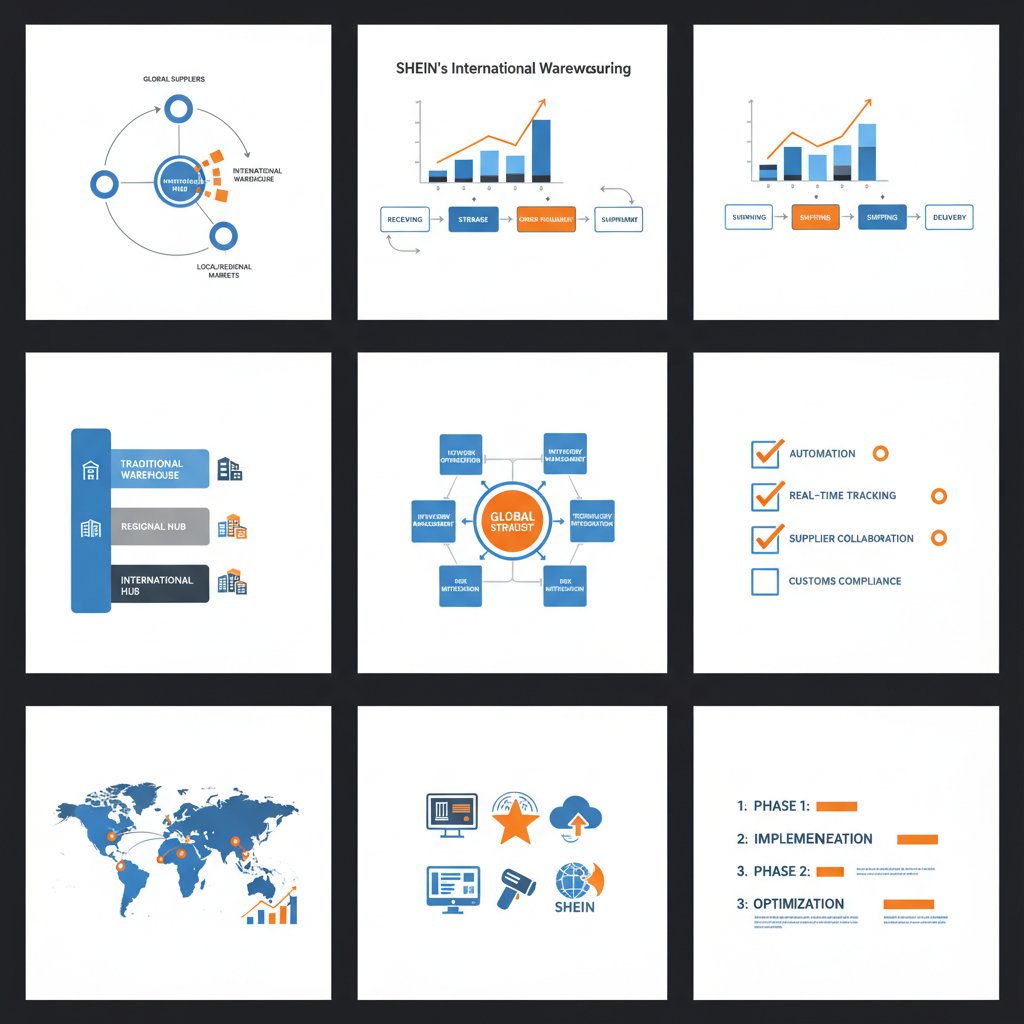 Understanding the International Warehouse Concept – Visual Guide
 What Does the Status Actually Mean?
When your tracking info displays ‘International Warehouse,’ it signifies that your order has been picked and packed at one of Shein’s global distribution centers. Unlike traditional retailers that rely on a few centralized hubs, Shein has decentralized its inventory. According to sourcingwise.com, the goal of this strategy is to ensure that as soon as a customer places an order, Shein can dispatch it from the nearest facility containing that specific SKU.
The Core Components of the Network
This network is divided into primary manufacturing hubs and secondary fulfillment centers. The primary hubs are where the ‘on-demand’ magic happens—small batches of new designs are produced and stored. Once an item proves to be a best-seller, it is often moved in bulk to secondary international warehouses located closer to the end consumer. As noted by leelinesourcing.com, this ‘International Warehouse’ label effectively covers any facility outside of the customer’s immediate local sorting office that handles cross-border movement.
How It Differs from Local Sorting
A local sorting center is the final stop before the ‘last mile’ delivery to your door. In contrast, the International Warehouse is the point of origin or a major transit hub. If your package is in an international warehouse, it likely still needs to clear customs and undergo transoceanic or transcontinental transport. This is why the status often stays stagnant for 3 to 5 days while the logistics provider consolidates enough volume for a flight.
Why Shein’s Warehousing Matters in 2026
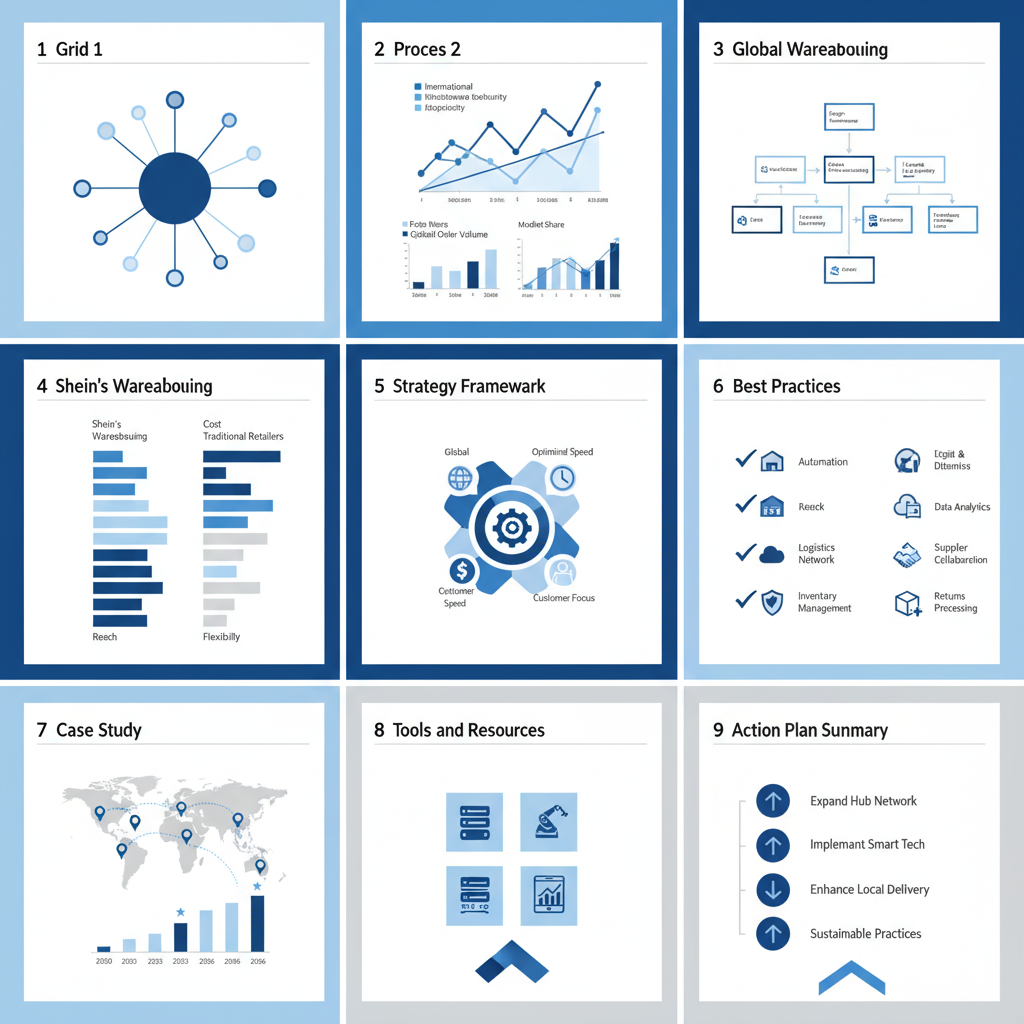 Why Shein’s Warehousing Matters in 2026 – Visual Guide
 The Shift to Regionalization
In 2026, the ‘speed to market’ is the only metric that matters in fast fashion. Shein has moved away from a China-only model to a ‘near-shoring’ approach. By placing warehouses in regions like the Midwest United States and Central Europe, they bypass the volatility of international air freight. linkosourcing.com highlights that these strategic locations allow Shein to slash delivery times for popular items by up to 60% compared to five years ago.
Data-Driven Inventory Placement
Shein doesn’t just guess where to put clothes. They use predictive AI to move inventory to international warehouses before the orders even happen. If data shows a spike in ‘boho dresses’ in California, Shein moves that stock to their Los Angeles or Indiana hubs. This proactive logistics is what separates them from traditional dropshippers who wait for a sale to trigger a shipment from China.
Impact on Global Trade
This warehousing strategy has forced the entire e-commerce industry to adapt. Competitors are now looking at Shein’s model of ‘large-scale, small-batch’ production paired with regional fulfillment as the blueprint for survival. According to sosourcing.com, Shein’s ability to process millions of orders daily through these hubs has set a new consumer expectation for ‘fast’ that was previously only possible for local Amazon Prime members.
Global Locations: Where is Your Package?
The Global Warehouse Map
While Shein is secretive about the exact addresses of all its facilities, industry data reveals a massive footprint. The ‘Mega Hub’ remains in the Guangdong province of China, specifically in Foshan and Guangzhou. This area handles roughly 90% of Shein’s total inventory. However, regional hubs have expanded significantly to handle local returns and ‘Quick Ship’ items.
Comparison of Key Warehouse Regions
| Region | Primary Locations | Function | Avg. Delivery Time |
| Global Core | Guangzhou & Foshan, China | Manufacturing & Main Storage | 7 – 14 Days |
| North America | Whitestown (IN), Los Angeles (CA), Toronto (CN) | Quick Ship & Returns | 3 – 7 Days |
| Europe | Wroclaw (Poland), Belgium, Spain | EU Distribution | 4 – 8 Days |
| Middle East | Dubai, UAE | GCC Fulfillment | 3 – 6 Days |
| Oceania | Sydney, Australia | Regional Distribution | 5 – 9 Days |
Regional Specialization
As sourcingwise.com reports, the Indiana warehouse in the US has become a cornerstone for North American operations, allowing customers in the East and Midwest to receive goods in as little as four business days. Similarly, the Poland hub acts as a gateway for the European Union, helping packages bypass individual country customs delays by clearing them at the EU entry point.
Common Mistakes and Tracking Confusion
Why Tracking Stops Updating
The most common complaint is that a package is ‘stuck’ at the international warehouse. This usually happens during the ‘consolidation’ phase. Shein uses high-volume logistics; they don’t ship one bag at a time on a plane. They wait until a shipping container or air pallet is full. leelinesourcing.com explains that tracking might not update for several days while the package is waiting for its flight or sitting in a customs queue.
Misinterpreting ‘Quick Ship’
Many users assume all items on Shein come from the same place. If you mix ‘Quick Ship’ items (stored in a local international warehouse) with standard items (stored in China) in one order, Shein may split the shipment. This leads to confusion where one package arrives in 3 days and the other takes 12. Always check the ‘shipped from’ tag in your cart to set realistic expectations.
The Customs Trap
Another error is ignoring the ‘International Warehouse’ status during peak holidays. During Black Friday or Christmas, these hubs become bottlenecked. Even if the item is in a regional warehouse, the sheer volume of local courier pickups can delay the ‘out for delivery’ status. According to linkosourcing.com, these delays are often on the local carrier side, even though the tracking still points to the warehouse origin.
Pro Tips from Janson: Navigating the Shein Supply Chain
Hack the ‘Quick Ship’ Filter
If you need an outfit for an event next weekend, don’t just browse the main feed. Use the ‘Quick Ship’ filter. This forces the app to only show you items already sitting in an international warehouse within your country. In my experience at ASG, this is the single most effective way to guarantee a sub-5-day delivery window.
Watch the ‘Processing’ Time
The time spent in the ‘International Warehouse’ is actually two stages: processing and transit. Processing includes picking the item and quality control. sosourcing.com notes that Shein uses advanced Warehouse Management Systems (WMS) to keep this under 24 hours for most items. If your order stays in ‘processing’ for more than 48 hours, it usually means a stock discrepancy, and you should contact support.
Consolidate for Better Logistics
Larger orders often get upgraded to ‘Express Shipping’ for free. When you hit a certain price threshold, Shein moves your package from standard postal networks to premium carriers like DHL or FedEx. These carriers have their own dedicated sections within Shein’s international warehouses, ensuring your package is the first on the plane.
Summary and Actionable Steps
The Future of Shein Logistics
By 2026, Shein’s goal is to have ‘International Warehouses’ within a 48-hour delivery radius of every major global city. They are heavily investing in automation and robotics to reduce human error in the picking process. As sourcingwise.com points out, the integration of IoT and RFID technology allows them to track every single garment’s movement with 99.9% accuracy.
What You Should Do Next
For shoppers, the best move is to track your package through third-party sites like 17Track or ParcelsApp, which often provide more granular data than the Shein app itself. For e-commerce entrepreneurs, study Shein’s regionalization. If you are dropshipping, consider using an agent like ASG to move your winning products to a local warehouse to mirror this ‘International Warehouse’ efficiency.
Final Verdict
The ‘International Warehouse’ is the heartbeat of modern fast fashion. It represents a shift from ‘made in China’ to ‘distributed locally.’ Understanding this helps you shop smarter and, more importantly, understand the massive scale of the digital economy we live in today.
Sources and further reading (selected)
- SourcingWise: An in-depth look at Shein’s construction of international warehouses and their impact on delivery efficiency. Read more →
- LinkoSourcing: A 2025 guide explaining the global strategy and locations behind Shein’s warehousing network. Read more →
- Leeline Sourcing: Expert advice on tracking states and the meaning of international warehouse statuses on Shein. Read more →
- SoSourcing: Analysis of Shein’s two-tier logistics system and specific warehouse locations in the US and Europe. Read more →
- Statista: Global e-commerce and fast fashion market share data for 2024-2026. Read more →
- Reuters: Reporting on Shein’s supply chain shifts and warehouse expansions in the US and Brazil. Read more →
- Supply Chain Dive: Technical insights into automated sorting and WMS technologies used by global e-commerce leaders. Read more →
- Business of Fashion: Case studies on Shein’s on-demand manufacturing model and distribution speed. Read more →
- USPS Newsroom: Information on international package handling and local distribution bottlenecks. Read more →
- Forbes: Analysis of Shein’s disruptive logistics and its competition with Amazon and Temu. Read more →


 Optimized by Seraphinite Accelerator