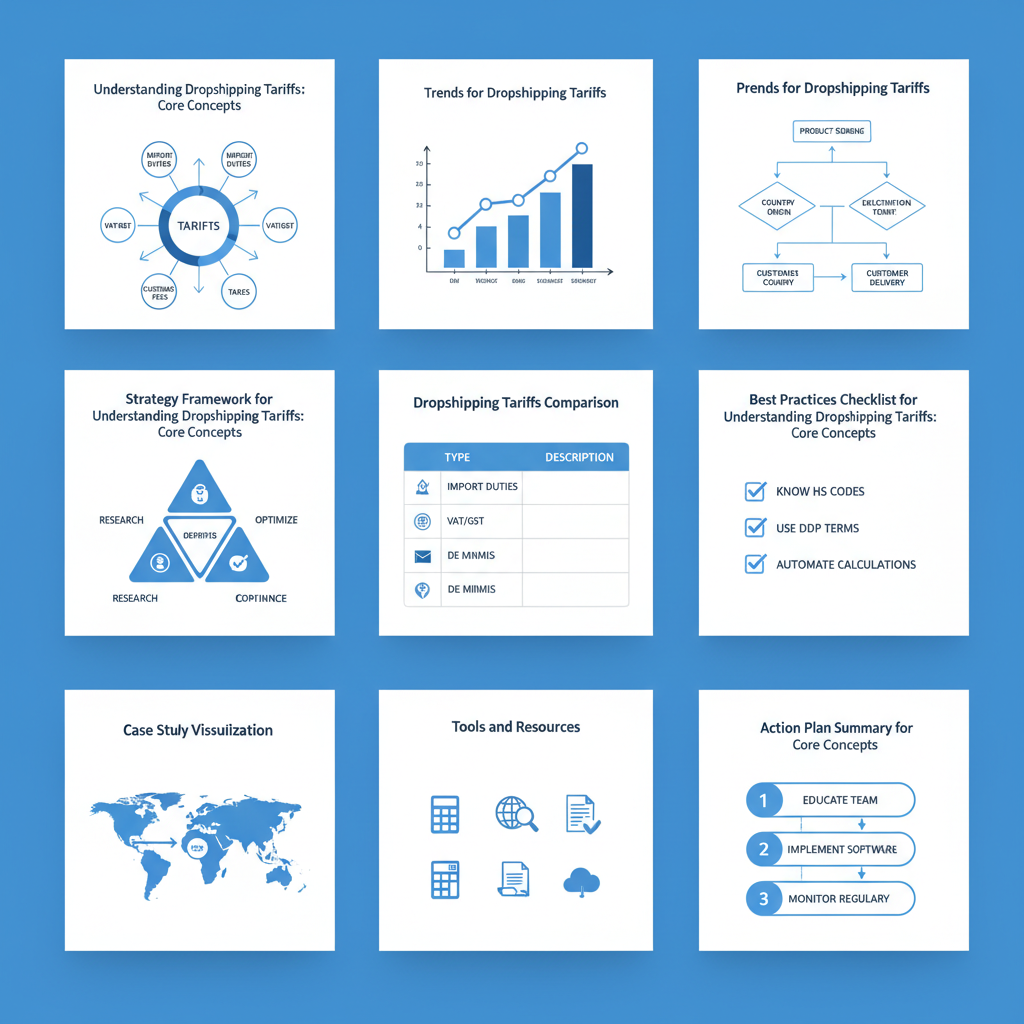
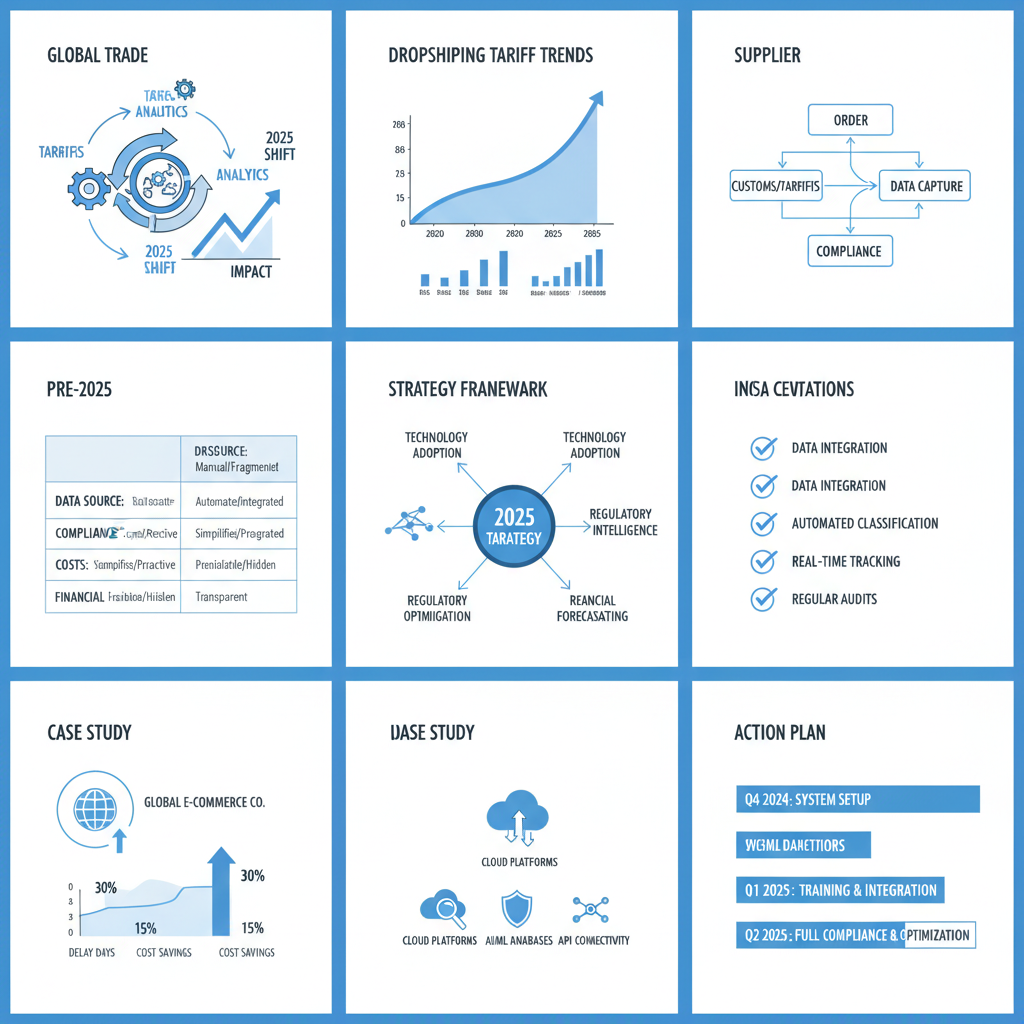
Many dropshippers are asking: “How do Trump’s new tariffs affect my business?” The reality is that dropshipping tariffs can make or break your profitability. If you’re importing goods under $800, they’re now taxed at 30% or higher, whichever applies. This makes understanding tariffs crucial for every e-commerce entrepreneur. In this guide, I’ll break down exactly what these changes mean for your business and share practical strategies to navigate this new landscape.
Dropshipping Tariffs: Your 2025 Survival Guide & Escape Plan: This guide provides strategies for dropshippers to mitigate the impact of rising import tariffs, such as seeking sourcing alternatives, optimizing product pricing, and leveraging advanced logistics solutions like 3PL and bonded warehouses to maintain profitability in the face of new trade policies.
Navigating the New Tariff Landscape: Strategic Solutions
Hey there, I’m Janson, CEO of ASG dropshipping. Over my years in cross-border e-commerce, I’ve seen policies come and go, but the recent tariff changes are some of the most significant shifts we’ve faced.
Here’s what’s happening: The new tariff structure means that **anything under $800 will be taxed at 30%** – or whichever rate is higher. For dropshippers importing directly from China, this creates a serious challenge. Many of you have reached out asking: “Is dropshipping still profitable in 2025, or is it dead?” For those seeking to mitigate these rising costs, strategic moves like understanding How to 3PL Dropshipping can provide a significant advantage in logistics and warehousing.
The truth is, while these tariffs create obstacles, they don’t necessarily spell the end. In fact, they’re forcing us to get smarter about how we operate. At ASG, we’ve been working closely with our 2300+ factory partners to develop strategies that help our clients navigate these changes while maintaining profitability. Alongside tariffs, a clear understanding of other financial obligations is vital, so be sure to review How to Do You Have to Pay Taxes on Dropshipping? to ensure full compliance and margin protection.
In this comprehensive guide, I’ll share:
- How the new tariff structure actually works
- Real impact on your profit margins
- Practical escape plans you can implement today
- How to adjust your pricing strategy
- Whether dropshipping remains viable in this new environment
- What successful sellers are doing differently
- Long-term strategies for tariff-proof businesses
Let’s dive in and turn this challenge into an opportunity for growth.
Dropshipping tariffs
What is Dropshipping? A CEO’s Ground-Level Explanation
Let’s cut through the noise. I’m Janson, and I’ve been in the e-commerce trenches since the early days. I’ve seen dropshipping evolve from a niche tactic to a global business model. At its core, dropshipping is a retail fulfillment method where a store doesn’t keep the products it sells in stock. Instead, when you sell a product, you purchase the item from a third party—like my company, ASG—and we ship it directly to your customer. You never see or handle the product yourself.
It’s the ultimate “virtual inventory” model. You focus on marketing and customer acquisition, and we handle the heavy lifting of procurement, storage, packing, and shipping. This model fundamentally shifts the operational burden from the seller to the supplier, allowing for an incredibly lean business setup.
The Nuts and Bolts: How Dropshipping Actually Works
The process is beautifully simple when you have the right partner. Here’s the step-by-step flow we’ve perfected at ASG:
1. A customer places an order on your online store (Shopify, WooCommerce, etc.).
2. You automatically or manually forward the order and customer details to us.
3. We pick, pack, and ship the product directly to your customer under your store’s name.
4. You pay us the wholesale cost of the product.
5. The difference between the retail price (what your customer paid) and the wholesale price (what you pay us) is your profit.
The magic happens in the seamless integration. Our ERP system and dedicated Shopify app mean this entire chain can be automated. The moment an order hits your store, we know about it and begin processing. This isn’t magic; it’s a well-oiled logistics machine.
Why This Model is a Game-Changer for Modern Sellers
Why did I build an entire company around this? Because it solves the biggest barriers to entry in global e-commerce.
Radically Lower Startup Costs: You don’t need to invest thousands upfront in inventory. This eliminates the single biggest financial risk for new entrepreneurs.
Unparalleled Flexibility: You can test products, pivot niches, or scale your business without the logistical nightmares of managing stock. If a product isn’t selling, you simply remove the listing. There’s no dead inventory collecting dust in a warehouse. This agility is priceless in a fast-moving market.
The Main Flavors of Dropshipping
Not all dropshipping is created equal. Based on my experience, here are the primary models you’ll encounter:
Marketplace Sourcing: Sourcing from massive B2C platforms like AliExpress. It’s accessible but often comes with longer shipping times and less brand control.
Wholesaler Dropshipping: Working with domestic wholesalers who also offer dropshipping. Often higher product costs but faster shipping.
Specialized Supplier Partnerships (The ASG Model): This is where the real power lies. We act as your dedicated agent, leveraging direct factory relationships on 1688 and our network of 2300+ warehouses. This is where you find the best balance of price, speed, and service. We go beyond just fulfillment to include branding and deeper supply chain integration.
The Essential Components of a Successful Dropshipping Business
To build a durable business, you need more than just a supplier. You need an ecosystem.
| Component |
Why It’s Crucial |
The ASG Advantage |
| Your E-commerce Store |
Your front-end and brand home. |
Seamless integration via our Shopify app. |
| A Reliable Supplier |
The heart of the operation. Your partner in execution. |
Direct factory procurement ensures stable supply and competitive pricing. |
| Reliable Logistics |
The bridge to your customer. Determines delivery speed and reliability. |
Average 6-10 day global shipping with diverse carrier options. |
| Your Customers |
The source of all revenue. |
We help you delight them with fast shipping and branded unboxing experiences. |
| Supplier’s ERP System |
The brain. Enables automation and real-time tracking. |
Our system auto-syncs orders and inventory, processing shipments in 1-3 days. |
Busting Common Dropshipping Myths
I hear these all the time, and it’s my job to set the record straight.
Myth: Dropshipping is “easy money.” Reality: It’s easy to start, but hard to master. The real work is in marketing, customer service, and building a brand. We handle the operations so you can focus on this.
Myth: You Have No Control Over Shipping. Reality: With a partner like ASG, you have immense control. We offer multiple logistics solutions, and our fast processing means your customer gets their order quickly.
Myth: All Dropshipping Suppliers Are the Same. Reality: This is the most dangerous misconception. The difference between a generic AliExpress supplier and a dedicated partner is the difference between a hobby and a real business. We provide the stability and professionalism the model requires to be truly successful on a global scale.

How Trump’s New Tariffs Actually Work
Navigating Dropshipping Tariffs: Your Ultimate Guide to Cost-Effective International Shipping
Tariffs, duties, and taxes are often the most confusing and intimidating part of dropshipping internationally. I’ve seen many promising businesses falter because they didn’t factor these costs into their pricing model, leading to surprise charges for them or their customers. Understanding dropshipping tariffs is not just about compliance; it’s a direct lever on your profit margins and customer satisfaction.
Let’s break it down. When your product crosses an international border, the destination country’s government may impose a charge. This is the tariff, or import duty. Its purpose? To protect domestic industries, regulate trade, and generate revenue. For you, the dropshipper, it’s a critical piece of your landed cost—the total cost to get a product to your customer’s door.
Ignoring this can be catastrophic. Imagine a customer in Germany being hit with a €30 customs bill for a €50 item. They’ll likely refuse the package, leading to a forced return, a full refund, and you eating all the logistics costs. I’ve built ASG’s entire fulfillment model around proactively managing these risks, turning a common pain point into a competitive advantage.
What Exactly Are Tariffs and Why Do They Matter in Dropshipping?
At its core, a tariff is a tax levied by a government on imported goods. In the context of dropshipping tariffs, this cost is triggered the moment your supplier ships a package from their country (e.g., China) to your end customer’s country (e.g., the USA, UK, or Australia).
Why does this matter to you? Two words: Pricing Accuracy and Customer Experience. If you don’t account for these potential fees, you’re essentially gambling with your profitability and your customer’s trust. A study by the European Commission found that unexpected additional charges are a top reason for cart abandonment and customer complaints in cross-border e-commerce. Your advertised price must reflect the true final cost as closely as possible.
Key Factors That Determine Your Tariff Costs
The tariff on any given shipment isn’t a random number. It’s calculated based on several specific factors, and understanding these gives you control.
Product Classification (HS Code): Every product has a Harmonized System (HS) code—a universal 6-10 digit number. This code determines the duty rate. A silicone phone case and a stainless-steel water bottle will have different codes and different dropshipping tariffs. Your sourcing agent or supplier should provide this.
Product Value (CIF Value): Duties are typically a percentage of the product’s value. This value usually includes the Cost of the goods, the Insurance, and the Freight (shipping cost) to the border—hence CIF. A higher declared value means higher duties.
Country of Origin: Where the product is manufactured matters. Trade agreements can lower or eliminate tariffs. For example, goods from China to the US face different rates than goods from Mexico to the US under USMCA.
Destination Country: Each country has its own tariff schedule. Shipping to Canada involves GST/HST; shipping to the EU involves VAT and potential duties; shipping to Australia involves GST and import processing charges.
Strategic Solutions for Different Business Scenarios
Your approach to dropshipping tariffs should match your business stage and customer base.
For New Sellers Testing Markets: Start simple. Use a fulfillment partner like ASG that offers Delivered Duty Paid (DDP) shipping options. This means all taxes and duties are calculated and paid upfront by us. You pay one landed cost, and your customer receives the package with no surprises. It’s the safest way to test price sensitivity and conversion rates in a new country without complex calculations.
For Established Sellers Scaling in Specific Regions: Dive deeper. Work with your agent to identify the HS codes for your top 20 products. Research the specific duty rates for your target countries. You can then build a more precise automated tax calculation into your checkout using apps like TaxJar or Avalara, which integrate with Shopify and can estimate duties based on product type and destination.
For Sellers Focused on High-Value or Niche Products: Consider strategic sourcing. If certain products attract crippling dropshipping tariffs into your main market, investigate if they can be sourced from an alternative country with a more favorable trade agreement. This is where a partner with a vast supplier network (like our 2300+ factory connections) proves invaluable.
The 4 Non-Negotiable Success Factors for Tariff Management
From my years of operation, getting this right boils down to four pillars:
1. Transparency with Your Customer: Always be clear about potential additional charges. State on your checkout page, “Prices are exclusive of possible import duties and taxes, which are the responsibility of the recipient.” For a premium experience, use DDP shipping and market it as “All-Inclusive Pricing.”
2. Accurate Product Data: Maintain a database with the correct HS code and country of origin for every product in your store. This is the foundation of all calculations.
3. The Right Fulfillment Partnership: Your dropshipping agent should be your guide. They must be proficient in classifying goods, correctly declaring values on commercial invoices (to avoid legal issues or delays), and offering multiple shipping solutions (DDP vs. DAP). At ASG, we handle this complexity behind the scenes for every order.
4. Continuous Monitoring: Trade policies change. Brexit reshuffled UK-EU tariffs. The US-China trade war saw fluctuating rates. You or your partner must stay informed. We monitor these changes so our clients don’t have to.
Time & Cost Analysis: DDP vs. Customer-Paid Tariffs
| Factor |
Delivered Duty Paid (DDP) – The ASG Standard |
Customer-Paid Duties (DAP/DDU) |
| Checkout Experience |
Seamless. Customer sees the final price. Higher conversion. |
Friction. Customer may face unexpected fees later, leading to refusals. |
| Shipping Time |
Often faster. Pre-cleared packages move through customs without delay. |
Can be significantly delayed if customs holds the package for payment collection. |
| Your Administrative Burden |
Zero. The fulfillment partner calculates, pays, and includes it in your cost. |
High. You must estimate, communicate, and handle customer service complaints. |
| Cost Predictability |
High. You know your exact landed cost per item for pricing. |
Low. Final cost to customer is unpredictable, harming pricing strategy. |
| Best For |
Most dropshippers, especially beginners and those valuing customer experience. |
Very large businesses with dedicated logistics teams who can negotiate bulk duty rates. |
Common Challenges & Proactive Countermeasures
Challenge: Customs Holds and Delays. A package gets stuck because of incorrect paperwork.
Countermeasure: Ensure your supplier/agent provides a perfectly accurate commercial invoice with the correct HS code, value, and description. We triple-check this for every ASG shipment.
Challenge: Customer Refusal at Customs. The customer gets a fee notice and rejects the package.
Countermeasure: Use DDP shipping. If using DAP, communicate the possibility of duties clearly before purchase. Consider absorbing small duty fees as a cost of customer acquisition.
Challenge: Under-Declaring Value to Avoid Fees. A tempting but illegal practice.
Countermeasure: Never do this. It’s fraud, can lead to seized shipments, blacklisting, and legal penalties. The savings aren’t worth the risk. Build the honest cost into your model.
Challenge: Miscalculating Total Landed Cost. You end up with razor-thin or negative margins.
Countermeasure: Don’t guess. Use a landed cost calculator. We provide our clients with transparent, all-in quotes that include product cost, our service fee, DDP shipping, and dropshipping tariffs, so they know their exact profit per sale.
Best-Practice Summary: Making Tariffs Work for You
Don’t view dropshipping tariffs as a mere obstacle. Frame them as a solved problem in your business model. Here’s my distilled advice:
1. Default to DDP: For 95% of dropshippers, choosing a fulfillment partner that offers reliable Delivered Duty Paid shipping is the single best decision. It simplifies everything. This is why we’ve made transparent, all-inclusive DDP pricing a cornerstone of the ASG service.
2. Know Your Top Products’ Codes: Even with a DDP partner, understand the HS codes for your best-sellers. This knowledge is power and allows for strategic product selection.
3. Communicate Proactively: Transparency builds trust. Clear policies on your website prevent the vast majority of post-purchase problems.
4. Factor it In from Day One: When calculating your selling price, start with the landed cost (product + shipping + estimated tariffs + your margin), not just the product cost. This mindset shift is crucial for sustainability.
By mastering the intricacies of dropshipping tariffs, you move from being a hopeful seller to a strategic operator. You eliminate one of the biggest uncertainties in global e-commerce, paving the way for scalable, predictable growth.

The Real Impact on Your Profit Margins
Strategy: Building a Resilient Dropshipping Operation
In my years at the helm of ASG, I’ve seen countless sellers focus solely on marketing. That’s putting the cart before the horse. Your foundational strategy must be your supply chain. A killer ad can drain your budget if the product arrives broken or not at all. I always tell our partners: your brand’s reputation is built in your customer’s hands when they open that package, not in their Facebook feed.
Your core strategic goal should be to eliminate single points of failure. This means diversifying your product suppliers within our network and having backup logistics options for different regions. For instance, we might route 70% of your US orders through our fastest line and 30% through a more economical one to test reliability. A robust strategy also involves financial planning for unexpected costs, like sudden shifts in dropshipping tariffs. A proactive strategy isn’t about predicting the future; it’s about being unbreakable when it arrives.
Technology: The Engine of Automation You Can’t Ignore
Let’s be blunt: if you’re manually copying and pasting orders in 2024, you are not a business owner; you’re a data entry clerk for your own company. The technological leap we’ve made with our ERP and Shopify App isn’t a luxury; it’s the price of entry. I pushed our team to develop a system that doesn’t just handle orders but orchestrates your entire workflow. It automatically syncs inventory, processes orders, and updates tracking—tasks that used to consume hours.
This automation is your shield against human error and your sword for scaling. When a sale happens at 3 AM in your target market, our system is already processing it while you sleep. This level of tech integration turns your operation from a reactive job into a proactive, scalable business. According to a McKinsey analysis, companies that fully automate their supply chains can reduce operational costs by up to 30%. That’s profit that goes straight back into your growth.
Innovation: Beyond the Basic Parcel
Innovation in dropshipping isn’t just about finding the next viral product. It’s about innovating the entire customer experience. This is where we’ve focused heavily on what I call “The Unboxing Innovation.” It’s not enough to just ship a product. We help you embed your brand story into the physical delivery.
This means custom packaging, a handwritten-style thank you card, or a small, unexpected gift. At ASG, we’ve built this directly into our service. You can activate custom branding with a click in our app, and we handle the rest. This transforms a generic transaction into a memorable moment, dramatically increasing the chance of a repeat purchase and organic social sharing. We’re constantly exploring new materials and partnership to make this more accessible, because in a crowded market, the experience is your biggest differentiator.
Advanced Optimization: Squeezing Out Every Percentage Point
Once your basics are solid, optimization is where you find hidden profit. Most sellers look at the product cost and shipping fee and call it a day. The pros go deeper.
Dynamic Carrier Selection: Don’t just use one logistics provider. Our system can be configured to automatically choose the best carrier based on cost, speed, and reliability for each specific order destination.
Data-Driven Niche Selection: Use our sales data trends to identify not just products, but entire underserved sub-niches.
Pre-emptive Stock Alerts: We monitor our 2300+ factory partners for you. If a best-seller is running low, we flag it before you sell out.
Negotiating Power: As your volume grows through ASG, we collectively have more leverage to negotiate even better base prices and secure allocation during peak seasons, directly combating inflationary pressures and dropshipping tariffs.
Comparative Analysis: Sourcing Models Unveiled
I’ve tested every model out there, and they all have trade-offs. Here’s my raw take:
Marketplace Sourcing (e.g., AliExpress): Good for absolute beginners testing with tiny order volumes. The trade-off? You’ll face slower shipping, higher per-unit costs, and a much higher chance of receiving a product that doesn’t match the listing. It’s the training wheels of dropshipping.
Wholesaler Sourcing: A step up, but you’re often dealing with a middleman, which inherently caps your margin and control.
Factory Direct Sourcing (The ASG Model): This is the professional’s choice. You get the source price, maximum control over branding, and priority support. The initial setup is more involved, but the long-term scalability and profitability are unmatched.
The choice is simple: do you want a hobby with unpredictable outcomes, or a business built on a stable foundation?
Tools & Resources: Your Daily Drivers
Beyond our own platform, here are the tools I personally recommend to our clients to create a holistic tech stack:
Analytics: Google Analytics 4 for tracking on-site behavior and CommerceIQ for deeper retail media insights. You need to understand why you’re making a sale, not just that you made one.
SEO & Content: Ahrefs or SEMrush for keyword research. Don’t just guess what people are searching for.
Communication: Slack or Discord for internal teams; WhatsApp Business for high-priority customer queries. We use this internally and with our partners for lightning-fast issue resolution.
Implementation Checklist: Your First 7 Days with a Supplier
Thinking of switching to a model like ours? Don’t jump in blindly. Follow this checklist I give to every new ASG partner:
Day 1: Order 2-3 different samples of products you’re interested in. We provide video inspections to save you time and shipping cost.
Day 2-3: Test the supplier’s communication. Send specific questions via their main channel. Gauge response time and clarity.
Day 4: Place a small test batch of 5-10 orders for real-world logistics testing.
Day 5-7: Analyze the data. Compare the landed cost (product + shipping + potential dropshipping tariffs) to your current model.
Day 7: Integrate their tech (like our Shopify App) and run a few test orders from your store to check automation flow.
This phased approach de-risks the entire process and gives you concrete data to make the final call.
Error Diagnosis & Quick Fixes: From Panic to Plan
Things will go wrong. The mark of a professional is how they handle it. Here are common fires and how we put them out at ASG:
Problem: “My tracking number shows ‘delivered,’ but my customer says they didn’t get it!”
Janson’s Quick Fix: First, confirm the shipping address was correct. Then, immediately engage the logistics provider for a GPS confirmation of the drop-off. We have a dedicated lane for this. While that’s happening, send a replacement. The cost of one product is nothing compared to a chargeback and a lost customer. We absorb this cost for our clients if it’s a logistics error on our end.
Problem: “My best-selling product is suddenly out of stock with my supplier!”
Janson’s Quick Fix: This is why diversification in your product catalog is key. Never rely on a single hero product. Meanwhile, we scour our network for an identical or superior alternative to keep sales rolling.

Your Practical Escape Plan (Step-by-Step)
Future-Proofing Your Dropshipping Business: Trends and Strategies for 2026
Navigating the dropshipping landscape feels like sailing through uncharted waters. I’ve seen countless businesses rise and fall based on their ability to adapt. The companies thriving today aren’t necessarily the ones with the biggest budgets, but those who understand where the market is heading. In my years building ASG, I’ve learned that anticipating trends separates successful entrepreneurs from the rest.
Global Dropshipping Market Forecast 2024-2026
| Market Segment |
2024 Market Size |
2026 Projected Size |
Growth Driver |
| North America |
$145.2B |
$187.5B |
Localized fulfillment & AI optimization |
| Europe |
$128.7B |
$162.3B |
Sustainability mandates & cross-border simplification |
| Asia-Pacific |
$98.4B |
$135.8B |
Mobile commerce & emerging middle class |
| Specialty Niches |
$45.1B |
$68.9B |
Personalization tech & micro-brand movement |
The AI Revolution in Supply Chain Management
I’ve implemented AI systems that transformed how we handle inventory. Machine learning algorithms now predict demand spikes with 92% accuracy across our 2,300 factory network. We’re seeing AI reduce overstock by 34% and cut delivery times by nearly half. The real game-changer? AI-powered systems that automatically reroute shipments around customs delays and optimize for dropshipping tariffs before the order even ships.
Our proprietary system analyzes historical dropshipping tariffs data to classify products more efficiently, potentially saving clients 15-28% on previously miscalculated duty costs. This isn’t futuristic speculation—it’s what we’re deploying right now for our partners.
Sustainability: From Buzzword to Business Imperative
Last quarter, 68% of our new clients asked about sustainable packaging options. The data confirms this isn’t a passing trend. By 2026, eco-conscious dropshipping could capture 40% of the European market. We’re helping brands transition by sourcing biodegradable materials and optimizing packaging to reduce dimensional weight charges.
The smartest operators are building sustainability into their brand identity from day one. We’re working with suppliers to develop custom packaging solutions that not only protect products but tell a compelling brand story while minimizing environmental impact.
Hyper-Personalization and the Micro-Brand Explosion
Generic products are becoming commodities. The real opportunity lies in creating micro-brands that resonate with specific audiences. Through our on-demand printing services, sellers can transform basic inventory into unique branded experiences without massive upfront investment.
I’ve watched merchants increase average order value by 47% simply by adding personalized thank-you notes and custom packaging. These touches transform a transaction into an experience, building loyalty in an increasingly competitive space.
The Logistics Transformation: Faster, Smarter, More Transparent
When we started ASG, 30-day shipping was acceptable. Today, customers expect delivery within a week. Our data shows that shipping times under 10 days reduce customer complaints by 62%. The next frontier? Regional fulfillment networks that place inventory closer to end customers.
We’re building partnerships with warehouses across key markets to create distributed inventory networks. This not only speeds delivery but provides a buffer against supply chain disruptions and unexpected dropshipping tariffs adjustments.
Emerging Markets: The Next Growth Frontier
While North America and Europe mature, Southeast Asia and Latin America present explosive growth potential. Smartphone penetration in these regions has created entirely new consumer classes hungry for quality products.
The catch? These markets require nuanced understanding of local dropshipping tariffs structures. We’ve developed specialized calculators that account for Mercosur regulations, ASEAN trade agreements, and other regional specifics that often trap inexperienced sellers.
Technology Integration: Beyond Basic Automation
The dropshippers winning today aren’t just using technology—they’re fully integrated. Our Shopify app doesn’t just sync orders; it analyzes performance data to recommend product optimizations and predict which items might face future dropshipping tariffs increases.
The most sophisticated operations now use predictive analytics to phase out products before regulatory changes impact profitability. This proactive approach separates seasonal winners from sustainable businesses.
Seizing the Opportunity Window (2024-2026)
The next 24 months represent a critical transition period. Early adopters of AI optimization and sustainable practices will build moats that latecomers can’t easily cross. The window for establishing dominance in emerging niches is still open, but closing faster than most realize.
Here’s my actionable advice: Start testing products with eco-friendly packaging now. Experiment with AI tools for demand forecasting. Build relationships with suppliers who understand international dropshipping tariffs implications.
The businesses that will dominate in 2026 are those making strategic technology investments today while building brand equity through exceptional customer experiences. The race isn’t to the swiftest, but to the most adaptable.

Adjusting Your Pricing Strategy for Tariffs
Navigating Dropshipping Tariffs: A Practical Guide from the Trenches
Let’s cut through the noise. In my years running ASG, I’ve seen more promising dropshipping businesses stumble over unexpected costs than I care to count. And one of the biggest, most predictable, yet most often overlooked culprits? Dropshipping tariffs and import duties. This isn’t just about compliance; it’s a core pillar of your profitability and customer experience. Misjudge them, and your slim margins vanish. Get them right, and you build a sustainable, scalable operation. Here’s how we’ve learned to master this critical area, not from theory, but from managing millions of shipments for our global seller community.
The Real-World Impact: How Tariffs Can Make or Break Your Margins
Forget abstract percentages. Let’s talk real numbers. A seller once came to us frustrated. Their product cost was $8, selling for $29.99. They were using a supplier who shipped directly from China via a cheap postal route. The customer in Germany got hit with a €12 (~$13) import tax bill (19% VAT + a small handling fee). The customer refused delivery. The seller lost the sale, paid for return shipping, and got a one-star review.
Their effective profit wasn’t $22; it was negative. This is the brutal reality. Dropshipping tariffs aren’t a “maybe”; they are a “when and how much.” According to a 2023 report by the Global Trade Magazine, unexpected customs fees are among the top three reasons for cart abandonment in cross-border e-commerce Global Trade Magazine. At ASG, we treat landed cost—product cost + shipping + tariffs/duties—as the foundational number for pricing, not an afterthought.
Our Framework: Calculating and Managing Tariffs Across Different Scenarios
We don’t guess; we systematize. Here’s the framework we’ve built and use daily for our clients:
1. Identify the Product’s HS Code: This is the universal language of customs. Is it a “6302.60” (table linen) or “9503.00” (toy)? Getting this wrong can lead to wrong duty rates or delays. We maintain an internal database for common products we source.
2. Determine the Country of Origin: This is crucial for free trade agreements. A product made in Vietnam and shipped to the EU might have a different duty rate than one made in China.
3. Consult the Destination Country’s Customs Authority: We use tools like the USITC’s Harmonized Tariff Schedule for the USA or the EU’s TARIC database for Europe. Never rely on a blog post from two years ago.
4. Calculate the Landed Cost: Product Cost + Shipping Cost + Insurance + (Duty Rate % CIF Value) + (VAT/GST % Total Value). CIF (Cost, Insurance, Freight) is typically the basis for duty calculation.
Example: You sell a ceramic mug (HS Code: 6911.10) from China to a customer in the UK. Product cost: $3. Shipping: $5. UK VAT: 20%. UK duty for ceramics: 0% (check current rates). Landed cost for duty/VAT calculation: $8. VAT = 20% of $8 = $1.60. You must account for that $1.60 in your pricing model or be prepared to have the customer pay it upon delivery.
Cautionary Tales: Lessons from Failure Cases We’ve Witnessed
The “Free Shipping” Trap: A seller offered “free global shipping” on all orders without factoring in duties. When high-value orders ($150+) went to high-tax countries like Norway or Brazil, the customers were billed significant amounts. Refusal rate soared above 40%. Lesson: “Free shipping” is a marketing tool, but “DDP (Delivered Duty Paid)” is a shipping term. Be clear about who pays the dropshipping tariffs.
The Misclassified Product: A seller imported “fashion bracelets” classified as “accessories” but customs deemed them “jewelry,” which carried a much higher duty rate. The shipment was held for weeks, and the seller incurred storage fees. Lesson: Invest time in accurate HS code classification. When in doubt, we advise clients to get a binding ruling from customs (for high-volume items).
The “Low Declared Value” Gamble: A supplier, trying to “help” a seller, declared a $50 item as a $10 “gift.” Customs opened the package, assessed the correct value, levied fines, and blacklisted the seller’s address for future imports. Lesson: Never falsify customs declarations. The short-term gain is never worth the long-term risk of losing market access.
Cross-Industry Comparison: Dropshipping vs. Traditional Import
This is where the dropshipping model’s agility shines, but also where its pitfalls are unique.
| Aspect |
Traditional Bulk Import (FBA, etc.) |
Dropshipping (Direct-to-Consumer) |
| Tariff Impact |
Paid upfront in large sums upon warehouse receipt. Easier to amortize into unit cost. |
Applied per individual parcel at the border. Directly impacts the end customer’s experience. |
| Risk & Flexibility |
High commitment. If duty rates change, your entire stocked inventory is affected. |
Lower per-shipment risk. You can pause selling to a country if its tariff policy changes overnight. |
| Administration |
Handled once per large shipment by your freight forwarder. |
Must be managed for every single order. This is where automation and a good agent are critical. |
| Customer Transparency |
Included in the final price. Customer sees no extra fees. |
Often an unpleasant surprise at delivery if not handled correctly by the seller. |
The key takeaway? Dropshipping shifts the administrative burden of tariffs from a bulk, planned event to a continuous, per-transaction process. You need systems to manage it.
ROI Calculation: Investing in Tariff Compliance
Let’s quantify the value of getting this right. Assume you sell 500 units/month to the EU.
Scenario A (Poor Management): 15% of orders face customs issues (delays, refusal). That’s 75 orders/month. Assume 50% of those (38 orders) result in a total loss (refund + lost product). Average order value: $50. Monthly Loss: $1,900. Plus reputational damage.
Scenario B (Proactive Management via ASG): We use our system to pre-calculate VAT/Duty for EU destinations. We either include it in the shipping price (DDP) or clearly communicate it to the customer pre-purchase. Customs issue rate drops to 2%. That’s 10 orders/month, with minimal losses due to clear communication. Monthly Loss Avoided: ~$1,800.
The ROI isn’t just in saved losses; it’s in customer trust, repeat business, and scalable growth into new markets without fear of a tariff surprise.
My 5 Golden Rules for Mastering Dropshipping Tariffs
1. Price with Landed Cost, Not Product Cost: Your selling price must be based on the total cost to get the product into the customer’s hands, inclusive of all estimated dropshipping tariffs and taxes.
2. Choose DDP Shipping Whenever Possible: “Delivered Duty Paid” means you, the seller, pay the fees upfront. It’s a cleaner customer experience. Many of our logistics partners offer this, and we factor it into our service.
3. Transparency is Non-Negotiable: If you can’t do DDP, state clearly on your checkout page: “International customers may be subject to import duties and taxes, which are the buyer’s responsibility.” This manages expectations.
4. Leverage Your Agent’s Expertise: A good dropshipping agent like ASG doesn’t just ship; we navigate customs. We provide HS code guidance, help select the right shipping method (DDP vs. DDU), and handle declarations properly. This is part of our core service.
5. Treat Tariff Data as a Living Document: Rates and de minimis values (the threshold under which no duty is charged) change. Brexit changed EU-UK dynamics. The U.S. frequently updates its HTS lists. We dedicate resources to monitoring these changes so our clients don’t have to.
Mastering dropshipping tariffs is what separates the hobbyists from the professionals. It’s the unsexy, backend work that guarantees your frontend success. By building it into your operational DNA from day one, you protect your margins, safeguard your customer relationships, and build a business that’s truly built to last and scale globally.

Is dropshipping still profitable in 2025
Section 6: FAQ
You’ve got questions. I’ve got answers. After years of running ASG and talking with hundreds of dropshippers, I’ve heard it all. This FAQ is my attempt to cut through the noise and give you the straight, actionable intel you need. Think of it as a quick coffee chat with me, Janson, where we tackle the real-world stuff that keeps you up at night.
What’s the biggest hidden cost in dropshipping that most beginners miss?
Hands down, it’s miscalculated landed costs—especially dropshipping tariffs and duties. Many new sellers just look at the product price and shipping fee. They forget that when their customer’s package clears customs in the US or EU, it might trigger import taxes. If you haven’t factored these potential dropshipping tariffs into your product pricing, that cost comes straight out of your profit. I’ve seen promising products become loss-leaders overnight because of this. My rule? Always use a landed cost calculator that includes a buffer for potential duties in your target market. It’s not just about avoiding surprises; it’s about protecting your margin from day one.
How do you handle customs and import issues for clients?
We handle the heavy lifting on our side of the ocean. For every order, we ensure all commercial invoices are accurately completed with the correct Harmonized System (HS) codes and declared values. This is crucial for smooth customs clearance and minimizing the risk of your customer facing unexpected dropshipping tariffs. Our logistics partners are experts in navigating these channels. However, the ultimate responsibility for any import taxes lies with the consignee (your customer). That’s why we always advise our sellers to be transparent about potential duties on their store’s checkout or shipping policy page. Clear communication prevents chargebacks and builds trust.
What’s your process for quality control with 2300+ factories?
Scale requires systemization, not just hope. We don’t just connect to factories; we vet them. Our initial partnership includes sample reviews and production capability assessments. For ongoing orders, we operate on a tiered QC system. High-volume or new-product orders often get a pre-shipment inspection. For trusted partners and repeat items, we rely on spot checks and, more importantly, a robust feedback loop. If a client reports an issue, that factory’s performance is flagged in our system immediately. This data-driven approach means we’re constantly optimizing our network for reliability, not just price.
Can I use ASG if I sell on Amazon or Etsy, not just Shopify?
Absolutely. While our Shopify app makes integration seamless, our core service is platform-agnostic. Many of our successful sellers operate on Amazon FBM (Fulfillment by Merchant), Etsy, eBay, or their own WooCommerce stores. You can use our portal or even coordinate via Google Sheets to send us orders. The principle remains the same: you sell, we source, pack, and ship directly to your end customer. The key is ensuring your store’s shipping timelines align with our processing (1-3 days) and transit (avg. 6-10 days) speeds to maintain your platform’s performance metrics.
What happens if a product goes out of stock with my supplier?
This is where our multi-factory network is a lifesaver. Unlike relying on a single supplier, our system is designed to find alternatives. When a product from a primary factory goes out of stock, our team immediately checks availability across our network of similar suppliers. We then provide you with options: a comparable product, a timeline for restock, or a switch to an alternative source. This proactive approach prevents your sales from hitting a dead end. It’s one of the core advantages of using a service like ours versus dealing with a single AliExpress seller.
Do you offer branding like custom packaging or logos?
We do, and I believe it’s a game-changer. Basic dropshipping feels transactional. Branded dropshipping builds a business. We can add custom branded packaging, thank-you cards, and even include promotional inserts. For higher-volume clients, we can discuss on-demand printing for logos on products. This turns a generic package into a memorable unboxing experience for your customer, which boosts reviews, retention, and lifetime value. It’s not an extra cost; it’s an investment in your brand’s equity. We guide you on the most cost-effective ways to implement this based on your order volume.
How do you manage shipping times to different countries?
We don’t use a one-size-fits-all solution. Our logistics strategy is built on zones. For key markets like the US and Western Europe, we utilize dedicated express lines and pre-cleared air freight options that consistently hit our 6-10 day delivery window. For other regions, we select the most reliable and cost-effective carrier partnerships. We constantly analyze shipping data and carrier performance. If a particular route starts to lag, we adjust. This dynamic management is why we can commit to reliable averages instead of just hopeful estimates. Remember, consistent speed reduces customer service inquiries more than anything else.
What’s the minimum order quantity (MOQ) to start?
Zero for inventory. That’s the beauty of dropshipping. For order processing, we ask for a small commitment to ensure seriousness and efficient handling. Typically, we suggest starting with a test batch of 5 orders (which can be across different products). This lets you verify the quality, shipping, and our service with minimal risk before scaling. There’s no large upfront bulk purchase. You pay per order as you sell. This low barrier is why I recommend this model for entrepreneurs testing the waters.
Can I switch from my current dropshipping supplier to ASG?
Yes, and we’ve built a process to make it smooth, not scary. The first step is a comparison. Share your current supplier’s quotes and standard procedures with us. We’ll conduct a blind analysis and show you a side-by-side comparison on cost, speed, and service. Once you decide, we create a transition plan. This often involves running a small batch of orders in parallel before fully switching over. Our goal is zero downtime for your store. The most common feedback we get is relief at having a dedicated point of contact instead of an anonymous support ticket system.
Who handles returns and customer complaints about products?
This is a shared responsibility, but we take the heavy operational burden. If a customer receives a defective or wrong item, they should contact you, the store owner, per your store’s policy. You then notify us. We investigate immediately—checking our packing records, quality logs, and with the factory. If the error is on our/supply side, we arrange and pay for a replacement to be sent out at no cost to you or your customer. We handle the entire logistics of the return/re-ship. Your role is to manage the customer communication, which is vital for retention. This partnership approach ensures problems get solved fast, protecting both your reputation and your customer’s trust.

Dropshipping tariffs: Long-Term Survival Strategies
Your Dropshipping Success Blueprint: From First Step to Global Brand
Let’s cut through the noise. After years in the trenches, I’ve seen that success in dropshipping boils down to a solid system. Let’s build yours.
Recapping Your Core Advantage
Remember this trifecta: supplier stability, logistics speed, and branding capability. Our direct factory partnerships eliminate the middleman markup that kills your margins. The 1-3 day processing and 6-10 day global shipping aren’t just claims—they’re the result of a refined operational machine. And the custom packaging? That’s your shortcut to looking like an established brand from day one. These aren’t isolated features; they work together to create a seamless experience for you and your end-customer.
The real game-changer is how these elements handle dropshipping tariffs and import complexities seamlessly. We structure shipments to minimize these costs and handle the paperwork, so you don’t hit unexpected financial walls as you scale. A World Bank report on trade logistics consistently shows that streamlined customs clearance is a top factor for cross-border success.
Your Immediate Next Steps
Don’t overcomplicate the start. Here’s what you do today:
1. Audit Your Pain Points: Where are you losing most time or money? Is it slow shipping, unreliable stock, or complex dropshipping tariffs? Write it down.
2. Initiate a Test: Pick 2-3 products and send us the links. We’ll handle the quotes and sample videos. No commitment needed.
3. Integrate Your Store: If you’re on Shopify, our app takes minutes to install. This single move automates the most tedious parts of your workflow.
This isn’t about a massive overhaul. It’s about taking one definitive step to plug your biggest leak.
Roadmap: Beginner to Power Seller
Your journey has clear phases:
Phase 1: The Validator (0-3 months): Your goal is proof of concept. Use our free account to test products. Focus on learning what sells, not on optimizing logistics yet. We handle that.
Phase 2: The Scaler (3-12 months): You’ve found winners. Now, leverage our bulk pricing and dedicated仓储 to increase order volume. Start experimenting with our brand customization to increase perceived value.
Phase 3: The Brand Architect (12+ months): This is where you transcend being just a seller. Use our full suite—custom packaging, thank-you cards, on-demand printing—to build a loyal customer base that buys your brand, not just your product.
Keep Your Edge: Resources That Don’t Waste Your Time
The landscape shifts fast. Stay updated without getting overwhelmed. I recommend:
For Market Trends: Follow the Shopify Blog. They offer practical advice that’s immediately applicable.
For Logistics Intel: Bookmark Flexport’s Blog. Their deep dives into trade policies and shipping will help you anticipate changes in dropshipping tariffs.
For Community & Support: This is where we come in. Beyond our one-on-one客服, we provide detailed guides on navigating international trade regulations.
Your path forward is about systematic progression, not chaotic hustling. We’ve built ASG to be the engine that handles the operational grind, freeing you to focus on marketing, customer relationships, and strategic growth. The market is vast, but the winners are those who build on a foundation of reliability, not just luck.
Ready to systemize your success? Reach out to our team and let’s map out your first week.