If you’ve launched a dropshipping business with dreams of easy passive income, you might be in for a rude awakening come tax season when the IRS or state authorities come knocking. Here is the cold, hard truth: the ‘hands-off’ nature of dropshipping makes it one of the most complex business models for tax compliance. Unlike traditional retail, where you buy stock and sell it from one location, dropshipping involves a three-way dance between you, your supplier, and your customer—often across three different states or countries. This triangular relationship creates a web of sales tax obligations that can quickly eat into your 15-20% profit margins if you aren’t prepared.
In this guide, I’m pulling back the curtain on how sales tax actually works for dropshippers in 2026. Whether you are a Shopify beginner or a scaling pro with a small team, understanding ‘nexus’ and ‘resale certificates’ isn’t just about following the law; it’s about business survival. We will break down exactly who is responsible for collecting the tax, how to avoid paying tax twice on the same item, and the specific triggers that mean you owe money to states where you don’t even have an office. Let’s get your compliance sorted so you can focus on scaling your store without the fear of an audit hanging over your head.
Key takeaways
- Sales tax in dropshipping is a consumption tax triggered by ‘Nexus’—a significant connection to a state.
- Economic Nexus thresholds (typically $100k in sales or 200 transactions) mean you may owe tax in states where you have no physical presence.
- Resale Certificates are your most powerful tool to avoid paying sales tax to your supplier.
- The ‘Triangular Transaction’ determines whether the retailer or the supplier is responsible for tax collection.
- Automation tools are no longer optional for dropshippers managing multi-state sales in 2026.
Understanding the Core Concepts of Dropshipping Sales Tax
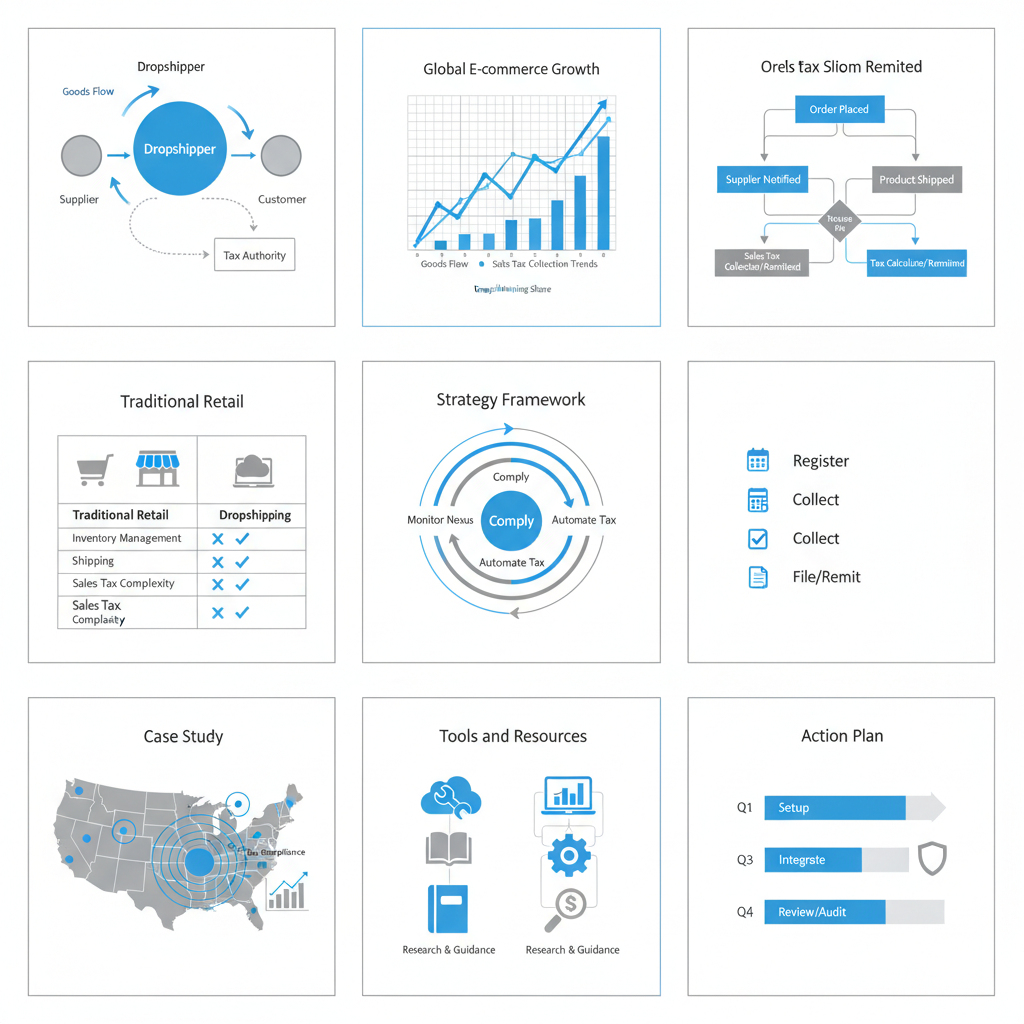 Understanding the Core Concepts of Dropshipping Sales Tax – Visual Guide
 To understand what a dropshipping business is for sales tax purposes, you must first view it as a ‘triangular transaction.’ In a standard retail model, there are two parties: the seller and the buyer. In dropshipping, there are three: the customer (the end-user), the retailer (you), and the supplier (the fulfillment partner). Each leg of this triangle can trigger a tax event depending on where the parties are located. According to yourlegal.org, sales tax is a consumption tax imposed on the sale of goods, and in dropshipping, the responsibility for collecting it shifts based on specific legal ‘nexus’ triggers.
There are two types of transactions happening simultaneously. First, the customer buys the product from you at a retail price (Transaction A). Second, you buy that same product from your supplier at a wholesale price (Transaction B). Ideally, only Transaction A should be taxed because sales tax is intended for the ‘final’ consumer. However, if you don’t provide a valid resale certificate to your supplier, you might end up paying tax on Transaction B as well, which effectively double-taxes the product and kills your margins. As noted by avalara.com, this complexity arises because transactions create indirect relationships that state tax authorities find difficult to track without proper documentation.
The Role of ‘Nexus’
Nexus is the legal term for a ‘significant connection’ to a state that allows that state to require you to collect sales tax. Historically, this meant having a physical warehouse or office. Today, ‘Economic Nexus’ is the standard. If you sell enough into a state—even if you’ve never stepped foot there—you are legally a ‘seller’ in that state for tax purposes. This is why a dropshipper in New York selling to a customer in California via a supplier in China must understand California’s specific tax code.
| Term | Definition for Dropshippers |
| Nexus | The link between a business and a state that triggers tax collection obligations. |
| Resale Certificate | A document you give your supplier to prove you are reselling the item, exempting you from paying tax to them. |
| Remittance | The act of sending the collected sales tax from your customers to the state government. |
| Marketplace Facilitator | Platforms like Amazon or eBay that often collect and remit tax on your behalf. |
Why Sales Tax Compliance Matters in 2026
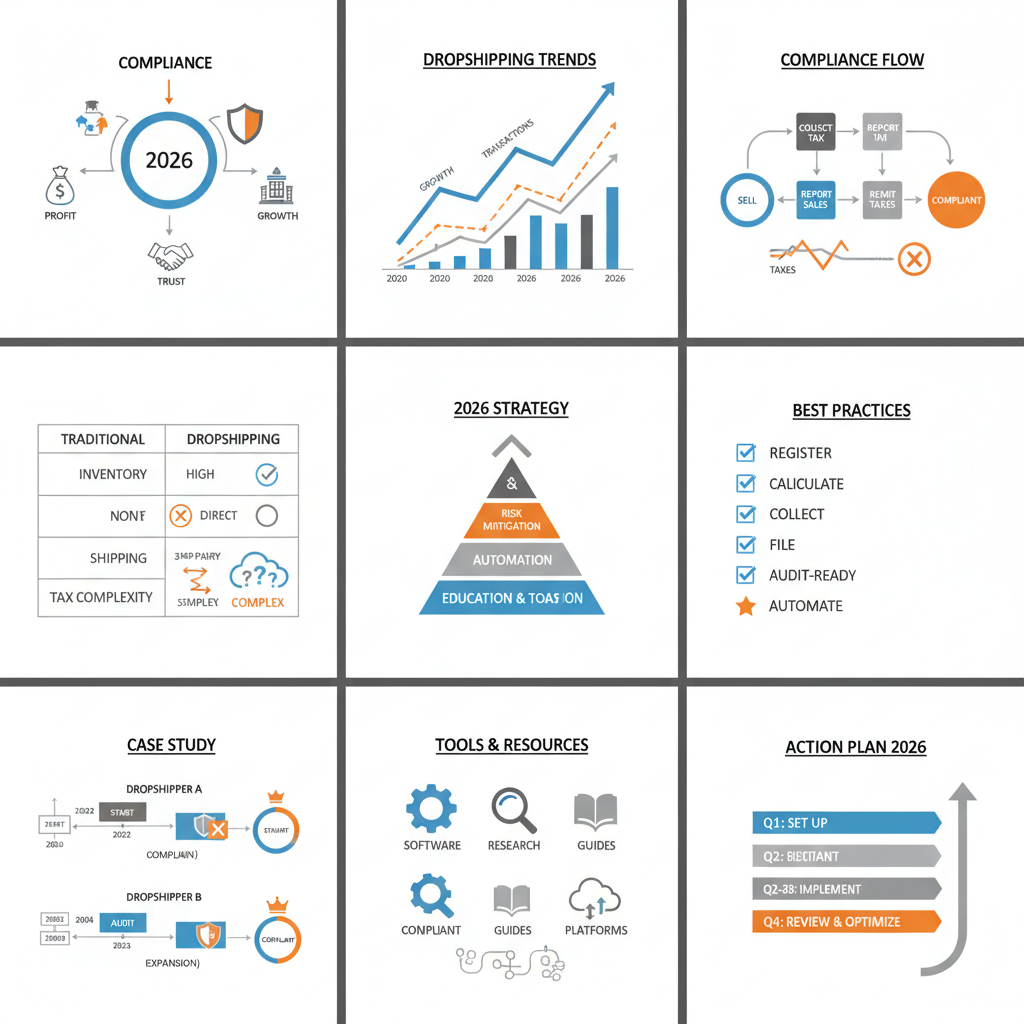 Why Sales Tax Compliance Matters in 2026 – Visual Guide
 The landscape of e-commerce taxation has shifted dramatically since the 2018 Wayfair vs. South Dakota Supreme Court decision. In 2026, states have become incredibly aggressive in hunting down uncollected revenue from online sellers. For a dropshipping business, the stakes are higher because your margins are typically thinner than private label brands. If a state discovers you have exceeded their economic nexus threshold and failed to collect a 7% sales tax over two years, they won’t just ask for that 7%—they will add penalties and interest that can exceed the total profit you made on those sales.
According to taxjar.com, the rise in online sales has forced states to close ‘tax gaps,’ meaning dropshippers are now under a microscope. Furthermore, international dropshipping adds another layer of complexity. If you are sourcing from China through a partner like ASG Dropshipping, you must account for ‘import VAT’ or customs duties in addition to local sales tax. Shopify.com highlights that juggling retail sales taxes across multiple US states while navigating international customs is the ‘Rubik’s Cube’ of modern e-commerce.
Data from recent industry reports suggests that over 60% of mid-sized dropshippers are currently non-compliant in at least one state where they have nexus. This isn’t just a legal risk; it’s a valuation risk. If you ever plan to sell your dropshipping store, a savvy buyer will perform ‘tax due diligence.’ Unpaid sales tax liabilities are a massive red flag that can tank your exit price or stop a deal entirely. In 2026, being ‘tax-compliant’ is a competitive advantage that proves your business is a professional entity rather than a hobbyist’s side hustle.
Implementation Strategies: Setting Up Your Tax Workflow
Getting your sales tax in order requires a systematic approach. The first step is determining where exactly you have nexus. Start by looking at your headquarters (Physical Nexus). Then, use your Shopify or ERP analytics to see which states represent your highest volume (Economic Nexus). Most states use a threshold of $100,000 in gross sales or 200 separate transactions. According to taxslayer.com, once you hit these thresholds, you must register for a sales tax permit in that state before you start collecting tax.
Once registered, you must implement a system to collect the correct amount at checkout. Most modern platforms like Shopify have built-in tax engines, but they need to be configured correctly. You must decide if you are going to charge tax based on the ‘Origin’ (where you are) or ‘Destination’ (where the customer is). Most states are destination-based. As Shopify.com notes, dropshippers must be particularly careful to avoid paying sales tax to their suppliers by providing a Resale Certificate. This certificate proves the purchase is for resale, shifting the tax burden to the final transaction with the customer.
Step-by-Step Compliance Checklist
1. Identify Nexus: Map out where you have a physical and economic presence.
2. Register for Permits: Apply for sales tax IDs in those specific states.
3. Collect Tax: Enable automated tax collection on your storefront.
4. Issue Resale Certificates: Send your permits to your suppliers (like ASG or AliExpress) to stop them from charging you tax.
5. File Returns: Remit the collected funds to the states on a monthly, quarterly, or annual basis as required.
Failure to provide a resale certificate to a US-based supplier means they are legally required to charge you sales tax based on the delivery address. If you are dropshipping from a China-based factory, you won’t pay US sales tax to the factory, but you are still responsible for collecting it from your US customers if you have nexus in their state.
Common Mistakes to Avoid: Lessons from the Field
The biggest mistake I see new dropshippers make is the ‘ignore it until it’s big’ strategy. Many believe that if they are small, the state won’t notice. However, state revenue departments now use automated software to scrape marketplace data and identify high-volume sellers. Another critical error is collecting sales tax without a permit. In many jurisdictions, collecting tax without being registered is considered fraud or a criminal offense. You cannot legally hold ‘tax money’ unless you are an authorized agent of the state.
Another common pitfall is misunderstanding the ‘Wholesale vs. Retail’ distinction. Avalara.com points out that if a retailer has nexus in a state but the supplier does not, the retailer is solely responsible. But if the supplier has nexus in the state and the retailer doesn’t, the supplier might be forced to charge the retailer tax based on the retail price, not the wholesale price, in certain ‘strict’ states like California. This can lead to a ‘tax on tax’ scenario that is difficult to untangle.
Finally, don’t forget about ‘Marketplace Facilitator’ laws. If you sell on Amazon, eBay, or Walmart, these platforms collect and remit the tax for you in most states. However, you may still have a ‘filing requirement’—meaning you still have to tell the state how much you sold, even if the tax was already paid by the platform. Taxslayer.com emphasizes that even if you don’t owe money, failing to file a ‘zero-tax’ return can lead to automatic fines of $50 or more per month.
Pro Tips from Janson: Insider Insights on Scaling Safely
As CEO of ASG Dropshipping, I’ve seen thousands of sellers struggle with this. My first pro tip: Automate from day one. Don’t try to calculate sales tax in a spreadsheet. Use tools like TaxJar or Avalara that integrate directly with your Shopify store. These tools monitor your sales thresholds in real-time and alert you the moment you are approaching nexus in a new state. This proactive approach prevents the ‘surprise bill’ at the end of the year.
My second tip is to vet your suppliers’ tax capabilities. If you are using a professional agent like ASG, we understand the international nature of these transactions. When sourcing from China, you generally don’t pay US sales tax to us, but you must be prepared for the ‘Import VAT’ if you are selling into the UK or EU. According to Shopify.com, understanding customs duties (which can range from 0-37%) is just as vital as sales tax for maintaining healthy margins.
Lastly, keep a ‘Tax Reserve’ account. I always advise my high-volume clients to set aside 8-10% of their gross revenue in a separate high-yield savings account. This isn’t your money; it belongs to the government. By separating it immediately, you avoid the common trap of using tax money to fund more inventory or ad spend, only to find yourself broke when the tax bill arrives. Business is about cash flow management, and tax is the largest predictable cash outflow you will face.
| Strategy | Benefit | Difficulty |
| Software Automation | Real-time compliance and filing | Low |
| Multi-State Registration | Legal protection for scaling | Medium |
| Resale Certificates | Protects profit margins | Medium |
| Tax Reserve Account | Prevents cash flow crises | Low |
Key Takeaways & Next Steps: Your Action Plan
Understanding what a dropshipping business is for sales tax purposes boils down to managing the documentation of your triangular transactions. You are the ‘middleman’ who must prove to the supplier that you are a reseller while proving to the state that you are a responsible collector of consumer taxes. As yourlegal.org summarizes, the retailer is generally the one responsible for the tax at the point of sale, provided they have nexus.
Your next steps are clear: First, pull your sales report for the last 12 months and check your transaction counts per state. Second, if you’ve hit 200 orders in any state, go to that state’s Department of Revenue website and register. Third, send your new tax ID to your suppliers to ensure your wholesale costs stay low. As taxjar.com reminds us, the rise of e-commerce has made compliance a ‘when,’ not an ‘if.’
At ASG Dropshipping, we handle the heavy lifting of the supply chain so you can focus on these critical back-office operations. By staying compliant, you aren’t just avoiding fines; you are building a legitimate, scalable brand that can stand the test of time. Don’t let a simple tax oversight be the reason your business fails. Take action today, consult with a CPA who specializes in e-commerce, and get your ‘tax triangle’ squared away.
Sources and further reading (selected)
- Shopify: Comprehensive guide on dropshipping taxes, including income tax and customs duties. Read more →
- TaxJar: Expert advice on managing sales tax specifically for the dropshipping model. Read more →
- Avalara: In-depth whitepaper on the tax implications and legal nexus of drop shipping. Read more →
- YourLegal: Legal glossary and breakdown of sales tax responsibilities in three-party transactions. Read more →
- TaxSlayer: Guide to federal and state income tax requirements for self-employed dropshippers. Read more →
- IRS.gov: Official US government resource for small business tax obligations. Read more →
- Streamlined Sales Tax Governing Board: Resource for understanding multi-state sales tax agreements. Read more →
- BigCommerce: Broad overview of e-commerce sales tax laws and economic nexus. Read more →
- TaxFoundation.org: Database of state-by-state remote seller and economic nexus laws. Read more →
- US Customs and Border Protection: Official guidelines on importing goods and paying relevant duties. Read more →


 Optimized by Seraphinite Accelerator