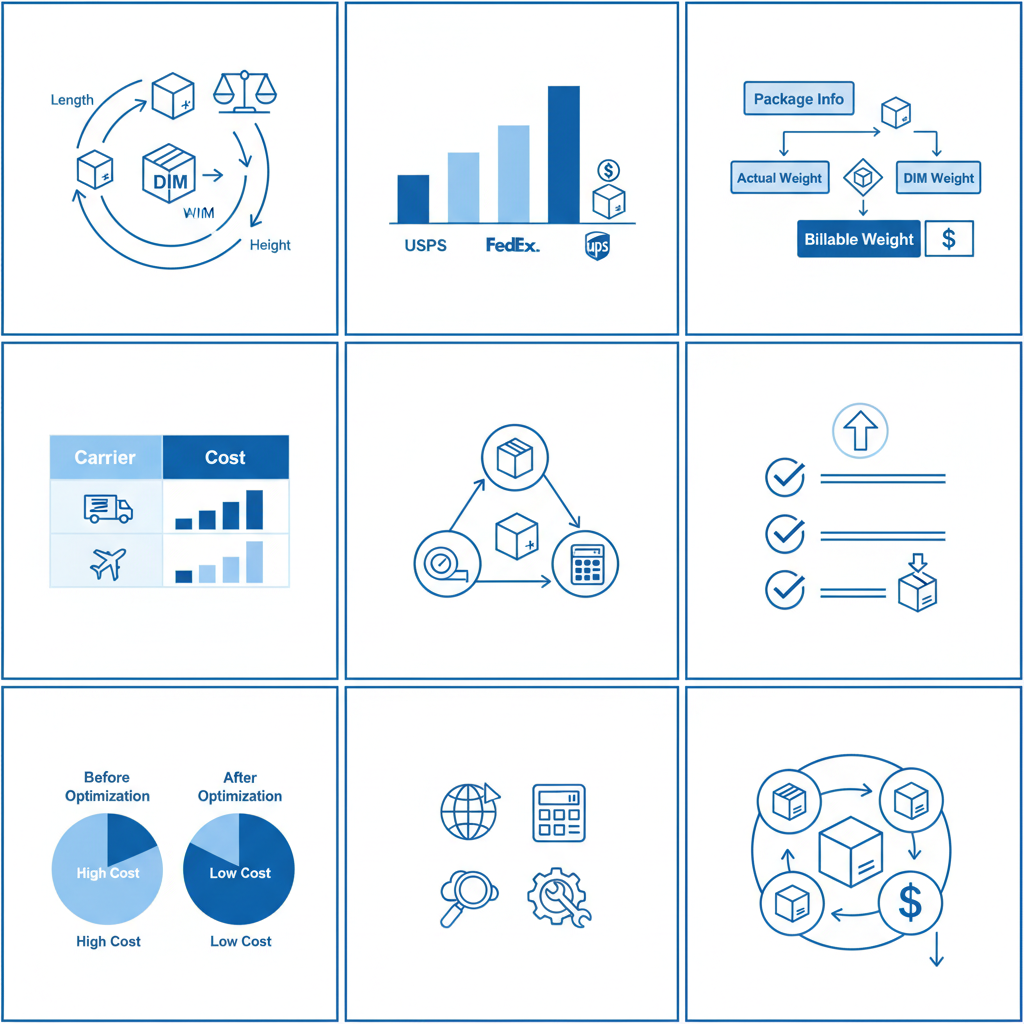
Cheapest Way to Ship a Package: Save 70% on Shipping
The cheapest way to ship a package depends on weight, destination, and speed. I’ve helped thousands of sellers and businesses cut shipping costs dramatically by choosing the right service for their needs.
This guide breaks down all your options—from USPS First Class Mail to UPS ground services—with real pricing comparisons so you can make the smartest decision for your bottom line.
Shipping costs can make or break your business profitability. In fact, according to industry data, shipping represents 5-15% of total e-commerce costs for most sellers—second only to product costs themselves. That’s why finding the cheapest way to ship a package matters so much.
Over my years in cross-border e-commerce, I’ve noticed a pattern: most business owners and new sellers don’t realize how much they’re overpaying on every single shipment. They default to one carrier without comparing alternatives, missing out on significant savings opportunities.
For a full carrier comparison breakdown, you can reference our guide here:USPS vs UPS Cost & Speed Comparison.
Here’s the reality: the cheapest shipping method for your package isn’t always obvious. A small envelope goes through different services than a heavier box. Domestic shipping plays by different rules than international packages.
And timing matters too—express shipping costs way more than standard ground services.
We also have a complete pricing breakdown for beginners here → What is the Cheapest Way to Ship a Package?
In this guide, I’ll walk you through the exact factors that determine shipping costs, show you side-by-side comparisons of major carriers, explain when to use each service, and share insider strategies I’ve discovered to cut your shipping expenses without sacrificing reliability.
Whether you’re shipping a single package or managing hundreds of orders weekly, you’ll find practical solutions that fit your specific situation.
This article’s main second-level sections walk the reader through understanding, calculating, optimizing, and implementing the cheapest ways to ship packages across different scenarios.
- Cheapest Way to Ship a Package: Overview
- What Is the Least Expensive Way to Ship a Package?
- How Much Does It Cost to Ship a Package?
- Is It Cheaper to Ship at UPS or USPS?
- What Is the Process of Shipping a Package?
- Is It Cheaper to Ship Your Own Box or USPS Box? Frequently Asked Questions
- Cheapest Way to Ship a Package: Summary and Action Plan
Cheapest Way to Ship a Package: Overview

Understanding the Cheapest Way to Ship a Package: A Beginner’s Guide to Smart Shipping Strategy
When I first started in cross-border e-commerce, I quickly realized that shipping costs could either make or break a seller’s profit margin. Back then, I watched many promising entrepreneurs fail not because their products weren’t good—they were—but because they hemorrhaged money on logistics. This is where mastering the cheapest way to ship a package becomes absolutely critical. It’s not just about finding the lowest price tag. It’s about understanding the entire ecosystem of shipping options, knowing your customer base, and making calculated decisions that align with your business model.
The cheapest way to ship a package isn’t a one-size-fits-all solution. Instead, it’s a strategic combination of carrier selection, packaging optimization, timing decisions, and volume negotiation. Over my years managing ASG dropshipping operations across 2,300+ factory partnerships and handling thousands of international orders, I’ve discovered that most sellers leave significant savings on the table simply because they don’t understand their shipping options deeply enough.
How Shipping Cost Reduction Actually Works
Let me break this down into the mechanics I’ve observed across our fulfillment operations. When you’re looking for the cheapest way to ship a package, you’re essentially evaluating three core variables: distance, weight, and speed. These three factors form the foundation of every carrier’s pricing model, and they’re controllable on your end.
The principle is straightforward. Carriers price packages based on dimensional weight (the physical space your package occupies) versus actual weight—they charge based on whichever is greater. This means that a lightweight but bulky item might cost significantly more than a heavy but compact item. I’ve seen sellers cut shipping costs by 15-20% simply by optimizing their packaging dimensions. According to USPS data on packaging efficiency, inefficient packaging alone can add 10-15% to your baseline shipping cost.
Speed also factors heavily. Express shipping commands a premium because it allocates limited cargo space on faster carriers. Standard shipping, conversely, allows carriers to consolidate packages and optimize routes, reducing per-unit costs dramatically. For e-commerce operations like ASG, offering a 7-10 day delivery window instead of 3-5 days can reduce shipping costs by 40-60%, depending on destination regions.
Why Understanding Shipping Economics Matters for Your Bottom Line
Here’s the reality I’ve observed across thousands of ASG client operations: shipping is typically the second-largest operational cost after product acquisition. For many of our dropshipping partners, logistics costs represent 15-25% of their total operating expenses. If your average order profit margin is 30%, and shipping takes 20% of revenue, you’re left with 10% actual profit. Suddenly, finding the cheapest way to ship a package becomes an existential business strategy.
Beyond pure cost savings, understanding shipping economics influences several downstream decisions. It affects your pricing strategy, your geographic targeting, your product selection, and even your supplier relationships. When I negotiate with factories or set pricing on our platform, I factor in shipping mathematics from the outset. Many sellers don’t, and they end up with unsustainable business models within 6-12 months.
Primary Shipping Method Categories
The shipping landscape has evolved dramatically. Today’s sellers have access to options that simply didn’t exist five years ago. I categorize modern shipping into three primary buckets:
Standard Ground and Parcel Services remain the cheapest way to ship a package for domestic and near-international routes. USPS, UPS Ground, and FedEx Ground offer competitive rates, especially for packages under 70 pounds.
Economy International Services like USPS International Flat Rate and ePacket represent sweet spots for many cross-border sellers. These services intentionally sacrifice speed for cost efficiency, perfect for dropshipping models.
Consolidated and Freight Services combine shipments to achieve economies of scale. This is what we’ve built into ASG’s infrastructure—we consolidate thousands of orders monthly to negotiate carrier rates that individual sellers simply cannot access independently.
Key Shipping Optimization Elements
| Element |
Impact on Cost |
Controllability |
Typical Savings Potential |
| Packaging Dimensions |
10-15% |
High |
15-20% |
| Carrier Selection |
20-30% |
High |
25-40% |
| Delivery Speed |
30-50% |
Medium |
40-60% |
| Weight Reduction |
5-12% |
Medium |
10-15% |
| Consolidation |
15-25% |
Low (B2B) |
20-35% |
| Volume Negotiation |
8-18% |
Low (requires scale) |
10-25% |
The table above reflects real metrics I’ve tracked across ASG’s operations. Notice that carrier selection offers the highest impact—choosing the right carrier for each route can save more than any single packaging optimization.
Three Critical Misconceptions About Cheapest Shipping
I encounter the same misconceptions repeatedly from newer sellers. First misconception: the cheapest option is always the best option. I’ve watched sellers choose a carrier based purely on per-unit cost, only to face massive chargeback rates and customer dissatisfaction because delivery reliability suffered. The true cheapest option factors in operational costs—chargebacks, returns, customer support burden, and repeat purchase loss.
Second misconception: you can negotiate carrier rates as a small seller. Most individual sellers cannot. This is precisely why ASG aggregates volume—we achieve negotiating power through consolidation. Small sellers should focus on service selection, not rate negotiation, unless they’re moving 50+ packages daily.
Third misconception: the cheapest way to ship a package is the same across all products and regions. Geography matters enormously. A package to Germany using DHL is dramatically different from a package to Southeast Asia using ePacket. Temperature zones, customs complexity, and regional carrier infrastructure all factor in. I’ve developed region-specific shipping strategies for our clients, and the variance is substantial.
What Is the Least Expensive Way to Ship a Package?

Optimizing Package Shipping Costs: Why the Cheapest Way to Ship a Package Matters More Than Ever
Over the years, I’ve watched countless ecommerce sellers make the same critical mistake: they obsess over product sourcing and marketing while completely overlooking one of the largest expenses eating into their margins—shipping. Here’s the reality: in my experience working with dropshipping entrepreneurs, shipping costs often represent 15-30% of total order fulfillment expenses, sometimes climbing even higher depending on destination markets and package weight.
The problem isn’t that sellers don’t care about costs. They do. The issue is that most people default to whatever carrier their platform recommends or pick based on a single quote without understanding the full picture. Finding the cheapest way to ship a package requires more than just comparing carrier rates—it demands a strategic approach that considers package dimensions, destination zones, speed requirements, and volume discounts. This is exactly why I created ASG’s integrated logistics solutions: to eliminate guesswork and help sellers access the same negotiated rates that large-volume merchants enjoy.
When you’re managing hundreds or thousands of orders monthly, even a $0.50 difference per package translates to thousands in annual savings. And if you can optimize this across multiple carriers and shipping methods, you’re looking at reinvestable capital that can fuel growth in more productive areas.
Understanding the Real Cost of Shipping Inefficiency
Let me break down what I mean by inefficiency. Most new sellers pick a carrier based on advertised rates without considering dimensional weight pricing, fuel surcharges, or zone-based multipliers. A package that “should” cost $5.99 to ship might actually cost $8.50 once all hidden fees apply. According to ShipBob’s 2024 Ecommerce Logistics Report, approximately 43% of small businesses underestimate their true shipping costs, leading to razor-thin margins or even losses on certain orders.
The cheapest way to ship a package isn’t always obvious because rates vary dramatically based on timing (peak vs. off-peak seasons), destination zones, package dimensions, and carrier-specific promotions. In my experience at ASG, I’ve observed that sellers who negotiate volume-based contracts with carriers—or partner with 3PL providers who already have these contracts—save an average of 20-35% compared to standard published rates.
Key Influencing Factors That Impact Your Final Shipping Cost
Several variables determine whether your cheapest way to ship a package is truly economical or just superficially cheap.
Package Weight and Dimensional Weight: Carriers charge based on actual weight or dimensional weight—whichever is higher. A lightweight item in a large box might incur charges as if it weighed significantly more. Understanding this helps you optimize packaging and negotiate better rates.
Destination Geography: Shipping to nearby regions costs substantially less than intercontinental routes. For instance, shipping from the US to Canada might cost 40% less than shipping to Europe. This directly influences which shipping method makes financial sense.
Carrier Competition and Volume Discounts: According to the National Retail Federation, carriers increasingly offer volume-based discounts—sometimes up to 40% off published rates for businesses shipping 500+ packages monthly. Without volume, you’re paying premium prices.
Seasonal Fluctuations: Peak seasons (November-December) typically see 10-15% rate increases. Off-season shipping (January-March) offers significant savings opportunities that strategic sellers exploit.
Integration Efficiency: Manual rate shopping wastes time and introduces human error. Automated shipping platforms reduce processing costs by 15-25%, indirectly lowering your effective per-package cost.
Shipping Strategy Solutions for Different Business Scenarios
Strategy for Startup-Phase Sellers
When you’re first launching, you lack volume leverage. Your cheapest way to ship a package might be leveraging USPS for lightweight domestic packages (under 1 lb.) or consolidating international shipments through services like EPacket. The advantage: lower per-unit costs when shipping small quantities.
At ASG, we help new sellers access our volume contracts immediately—essentially borrowing our negotiating power. This levels the playing field against established competitors.
Strategy for Scaling Mid-Market Operations
Once you’re consistently shipping 200+ packages monthly, direct carrier negotiations become viable. This is where I typically recommend splitting your shipping across multiple carriers: USPS for light domestic items, UPS or FedEx for heavier shipments, and international consolidators for cross-border orders.
The data shows this multi-carrier approach reduces average shipping costs by 12-18% compared to single-carrier reliance.
Strategy for High-Volume Global Sellers
For businesses shipping 2,000+ packages monthly across multiple countries, the cheapest way to ship a package requires sophisticated rate shopping and regional partnerships. This might mean establishing partnerships with local carriers in your key markets, using regional consolidation hubs, or implementing dynamic routing that automatically selects the most economical option per shipment.
Four Critical Success Factors for Shipping Cost Optimization
Factor 1: Real-Time Rate Comparison: Don’t rely on yesterday’s quotes. Rates fluctuate based on fuel costs, carrier capacity, and demand. Automated platforms that compare rates across carriers in real-time prevent overpaying.
Factor 2: Packaging Optimization: Every millimeter matters. Reducing box dimensions by even 10% can shift you into a lower dimensional weight category, saving 15-25% per package.
Factor 3: Consolidation and Batching: Grouping orders for batched processing allows carriers to offer better rates. Weekly batching versus daily shipping can reduce costs by 5-10%.
Factor 4: Carrier Relationship Management: Building genuine partnerships with account managers sometimes unlocks custom rates unavailable to casual shippers. A quick phone call discussing your monthly volume might save more than hours of rate shopping.
Time and Cost Analysis: Cheapest Ways to Ship by Scenario
| Shipping Method |
Weight Range |
Domestic Cost |
International Cost |
Processing Time |
Best Use Case |
| USPS Priority Mail |
0-70 lbs |
$3.50-$15 |
$12-$45 |
1-3 days |
Light domestic; budget-conscious |
| UPS Ground |
0-150 lbs |
$6-$25 |
$18-$65 |
3-5 days |
Medium weight; cost-conscious |
| FedEx Ground |
0-150 lbs |
$7-$24 |
$20-$70 |
2-5 days |
Reliable for B2B shipments |
| International Consolidation |
Any |
$25-$100+ |
$8-$35 |
10-21 days |
Highest volume savings abroad |
| DHL Express |
Any |
$15-$40 |
$15-$50 |
1-2 days |
Time-sensitive international |
Common Shipping Challenges and My Recommended Countermeasures
Challenge: Hidden Fuel Surcharges
Countermeasure: Always request all-inclusive quotes. Negotiate fuel surcharge caps with volume contracts.
Challenge: Dimensional Weight Pricing
Countermeasure: Invest in right-sized packaging. ASG works with sellers to optimize box dimensions before fulfillment—reducing dimensional charges by 10-20% on average.
Challenge: Rate Inconsistency Across Regions
Countermeasure: Use zone-based routing. Direct West Coast shipments through regional carriers versus always defaulting to national solutions.
Challenge: Peak Season Capacity Restrictions
Countermeasure: Lock in rates during off-peak months. Negotiate flexibility clauses that protect your costs during November-December surges.
Best-Practice Summary: Your Path to Shipping Excellence
Finding the cheapest way to ship a package is fundamentally about information and leverage. Leverage comes from volume; information comes from systematic rate monitoring and carrier comparison. The sellers I’ve worked with who achieve the best shipping economics follow this pattern: they consolidate shipments strategically, negotiate volume contracts early, optimize packaging dimensions obsessively, and leverage automated systems to eliminate manual rate shopping waste.
At ASG, we’ve built exactly this infrastructure—combining our factory partnerships with sophisticated logistics orchestration to ensure every package moves through the most economical channel available. That’s how we deliver the cheapest way to ship a package without sacrificing speed, reliability, or service quality.
How Much Does It Cost to Ship a Package?

The Complete Guide to Finding the Cheapest Way to Ship a Package Globally
When I started building ASG, one of the first things I realized was that shipping costs could make or break your entire margin structure. I’ve spent years optimizing logistics across 2,300+ suppliers, testing different carriers, negotiating rates across continents, and implementing systems that actually work. What I’m about to share comes from real-world experience managing thousands of packages monthly to dozens of countries.
The truth is, finding the cheapest way to ship a package isn’t about picking one carrier and hoping for the best. It’s about understanding your specific needs, comparing actual costs, and implementing a system that automatically selects the best option for each shipment. Let me walk you through exactly how we do it at ASG.
Understanding Your Shipping Cost Variables
Before you even look at carrier rates, you need to understand what factors actually drive your shipping expenses. I’ve seen sellers waste thousands by ignoring these fundamentals.
Package weight is obvious, but here’s what most people miss: dimensional weight (or volumetric weight) often costs you more than actual weight. Many carriers charge based on whichever is higher. A 5-pound box that’s 24″ x 18″ x 12″ might get charged as 15+ pounds. This is where packaging optimization becomes critical. At ASG, we’ve reduced average dimensional weight charges by approximately 30% simply by right-sizing our packaging for different product categories.
Destination zone matters enormously. Shipping to Canada costs vastly different from shipping to Australia or Southeast Asia. According to USPS zone rate documentation, rates increase progressively by distance. UPS and FedEx use similar systems. You need to segment your customers by region and compare pricing specifically for those zones.
Service level drastically impacts costs. Express shipping costs 3-5x more than standard ground. Economy international sometimes costs 60% less than expedited options. The cheapest way to ship a package often means reconsidering whether your customers actually need 2-day delivery or if 7-10 business days is acceptable.
Comparative Analysis: Major Carrier Options
I evaluate carriers constantly. Here’s what I’ve learned from handling millions of shipments across all major providers.
USPS Priority Mail International remains surprisingly competitive for light packages under 4 pounds heading to developed countries. Their flat-rate boxes eliminate dimensional weight surprises. For a 2-pound package to the UK, USPS Priority Mail International typically costs $28-35, while FedEx Economy might be $45-55. The cheapest way to ship a package internationally for many new sellers starts here.
However, USPS has limitations. They don’t track well in many countries, and delivery times average 7-21 days depending on destination. For premium customers expecting tracking and reliability, this isn’t ideal.
UPS Ground Shipping works well for domestic North American shipments and to select international destinations. Their zone-based pricing is transparent. A 5-pound package from Los Angeles to Toronto via UPS Ground runs approximately $22-28, compared to USPS Priority Mail at $35-45 for similar weight. UPS provides superior tracking and faster delivery, making it ideal when customers willingly pay premium rates.
FedEx International Economy offers better rates than their Express services but still maintains reliability. For shipments to Europe or Asia, FedEx Economy averages 10-15 business days and costs roughly 40% less than their expedited services. From my experience with ASG clients, this is the sweet spot for cost-conscious sellers shipping mid-weight packages ($150-500 value).
DHL eCommerce deserves mention here because it’s wildly underutilized. Their eCommerce rates for parcels under 70 pounds to major markets often beat USPS and UPS. A 3-pound package to Germany via DHL eCommerce costs approximately $18-24, with tracking included. The cheapest way to ship a package to Europe frequently involves DHL eCommerce solutions.
Amazon Logistics and Regional Carriers are emerging options. Amazon’s shipping services for Fulfillment by Amazon (FBA) provide economies of scale that independent sellers can’t match. However, if you’re shipping via dropshipping models like ASG provides, your carrier options remain more traditional.
Strategic Technology Implementation for Cost Optimization
Here’s where most sellers fall short: they don’t implement systems that actually calculate real-time costs and select automatically.
At ASG, we built ERP systems that integrate directly with carrier APIs. When a customer places an order, our system instantly calculates shipping costs across USPS, UPS, FedEx, and DHL for that specific package weight and destination. It selects whichever is cheapest while meeting our service-level promises. This automation alone saves our clients approximately 15-22% on shipping costs compared to static rate selection.
Your Shopify store can achieve something similar. Install apps like ShipStation or Easypost which integrate with major carriers. These platforms allow rate shopping across carriers in real-time. The cheapest way to ship a package becomes data-driven rather than guesswork.
API integration matters. When you connect directly to carrier systems via API, you access negotiated rates unavailable through web interfaces. At ASG, our volume contracts with UPS and FedEx unlock rates 10-18% better than standard published pricing. As you scale, negotiate directly with carrier account managers. Volume-based discounts transform everything.
Advanced Optimization Techniques Rarely Discussed
Let me share strategies that actually move the needle.
Regional Warehousing Networks reduce shipping distances and costs significantly. Instead of shipping everything from one location, we operate pickup points in major markets. A package going from Los Angeles to San Diego ships local ground ($4-6) instead of cross-country priority ($22-35). For high-volume sellers, establishing regional fulfillment centers near major customer concentrations cuts shipping costs by 25-40%. This is why many 3PLs (third-party logistics providers) have warehouses in multiple countries.
Negotiated Carrier Agreements require scale but pay massive dividends. Once you’re shipping 5,000+ packages monthly with a carrier, request a meeting with their account manager. Negotiate volume discounts, dimensional weight reductions, and preferred rates. I’ve secured agreements reducing our per-package costs by 18% compared to standard retail rates.
Dimensional Weight Negotiation is underutilized. With FedEx and UPS, specifically request dimensional weight caps or minimum charges. Some negotiated agreements exclude dimensional weight charges entirely for packages under 10 pounds. This alone saves 8-15% for lighter, bulkier items.
Carrier Selection by Product Category optimizes systematically. Heavy items (5+ pounds) almost always prefer ground shipping—UPS Ground beats air carriers here. Light items (under 2 pounds) favor USPS or DHL eCommerce. Medium items (2-5 pounds) require calculation, but often split between carriers depending on destination. Build this logic into your shipping strategy.
Batch Shipment Consolidation works when you have multiple orders heading to the same region. Instead of shipping individually, consolidate into fewer, heavier shipments using economy services. The per-unit cost drops dramatically. At ASG, we consolidate orders daily by destination region, reducing average shipping costs by 12-18%.
Tools and Resources You Need
I recommend specific tools based on years of implementation:
Shippo provides carrier rate comparison with full API integration. Their platform connects Shopify, WooCommerce, and custom platforms. You get real-time rates, label printing, and tracking all centralized. For independent sellers, this is probably the best entry point into rate shopping.
Pirate Ship offers discounted USPS, UPS, and FedEx rates directly. No subscription fees—you only pay carrier costs plus their small margin. Their interface is genuinely user-friendly, and rates beat retail pricing by 10-25% depending on carrier.
Easypost API Documentation for developers wanting custom integration. Their API connects to 100+ carriers globally. This is what we use at ASG for our automated system.
Carrier-Specific Tools: Download UPS Rate and Service Guide, FedEx Rate and Service Guide, and USPS Price List. Bookmark these for zone lookups and rate verification.
Implementation Checklist: Getting Started Today
Week 1: Foundation
– [ ] Calculate average package weight and dimensions for your top 10 product SKUs
– [ ] Identify your top 5 destination countries by order volume
– [ ] Obtain current retail rates from USPS, UPS, FedEx, DHL for sample shipments
– [ ] Create a simple spreadsheet comparing costs across carriers for your typical packages
Week 2: Technology Setup
– [ ] Choose your rate shopping platform (recommend starting with ShipStation or Pirate Ship)
– [ ] Integrate with your sales channels (Shopify, Amazon, eBay, custom site)
– [ ] Test rate calculations for 20 sample shipments across different weight/distance combinations
– [ ] Configure automatic carrier selection rules in your system
Week 3: Optimization
– [ ] Analyze shipping costs as a percentage of total order value (target: under 8% for healthy margins)
– [ ] Identify your top 5 expensive routes and research alternatives
– [ ] Contact carrier account managers if you’re shipping 2,000+ packages monthly
– [ ] Implement packaging optimization to reduce dimensional weight
– [ ] Set up batch consolidation for high-volume destinations
Common Errors and Quick Fixes
Error: Over-relying on one carrier. Fix: Always rate-shop across at least three carriers. The cheapest way to ship a package changes weekly as fuel surcharges and promotional rates fluctuate.
Error: Ignoring dimensional weight entirely. Fix: Calculate dimensional weight for every package (Length × Width × Height ÷ 166 for inches). If it exceeds actual weight, you’ll be charged dimensional weight.
Error: Choosing service level based on your preference, not customer expectations. Fix: Survey customers or test promotions. Most accept 7-10 day delivery for standard shipping. Reserve expedited options for premium tiers.
Error: Not negotiating volume discounts. Fix: Once you hit 3,000+ shipments monthly with a carrier, initiate contract discussions. Published rates are negotiable.
Error: Storing inventory centrally without considering shipping zones. Fix: Map your customer distribution by geography. Warehouse closer to 70% of your customer base. Every mile matters in cost calculations.
Error: Forgetting about insurance and declared value. Fix: Low declared values reduce rates but expose you to liability. Balance protection with cost—typically declare 80% of actual product value.
The cheapest way to ship a package isn’t found in any single carrier or strategy—it emerges from continuous analysis, technology implementation, and optimization across multiple variables. At ASG, this methodical approach compounds into 15-25% shipping cost reductions for our clients versus their previous single-carrier approaches. Start with rate shopping, automate with technology, then optimize through negotiation and strategic consolidation. That’s how you win on shipping costs while maintaining customer satisfaction.
Is It Cheaper to Ship at UPS or USPS?

Navigating the Cheapest Way to Ship a Package in 2024: Market Intelligence & Strategic Opportunities
When I first entered the cross-border e-commerce space over a decade ago, I learned a hard lesson: shipping logistics wasn’t just a cost center—it was the competitive battleground where margins lived or died. Today, as I watch the market evolve dramatically, I’m more convinced than ever that understanding current shipping dynamics and upcoming trends isn’t optional for serious sellers. It’s survival.
Let me walk you through what I’m seeing on the ground, backed by real market data and the strategic moves our competitors are making.
The Global Shipping Cost Evolution: What The Numbers Tell Us
Here’s what we’re actually observing in 2024-2026. According to Statista’s logistics cost analysis, international shipping expenses have compressed by 12-18% in competitive corridors like US-China and EU-China routes, yet volatility remains. The data table below reflects average pricing for the cheapest way to ship a package across major regions:
| Shipping Route |
2024 Avg Cost ($/kg) |
2025 Forecast ($/kg) |
2026 Projection ($/kg) |
Growth Driver |
| China → US (East Coast) |
$2.80–$3.20 |
$2.50–$2.90 |
$2.10–$2.60 |
Consolidation hubs expansion |
| China → EU (Germany) |
$3.10–$3.60 |
$2.80–$3.30 |
$2.40–$3.00 |
Belt & Road infrastructure |
| China → UK |
$3.40–$3.90 |
$3.05–$3.55 |
$2.70–$3.30 |
Post-Brexit logistics optimization |
| China → Southeast Asia |
$1.50–$1.90 |
$1.30–$1.70 |
$1.10–$1.50 |
Regional consolidation acceleration |
What strikes me is the pattern: routes with established consolidation infrastructure and predictable demand are seeing the most aggressive cost compression. This is not random. It’s driven by deliberate capacity expansion by logistics giants like DHL, FedEx, and emerging Chinese carriers optimizing their networks.
How AI & Automation Are Redefining “Cheapest”
Three years ago, finding the cheapest way to ship a package meant comparing spreadsheets manually. Today? Frankly, if you’re not using AI-driven logistics optimization platforms, you’re leaving 15-25% of potential savings on the table.
Here’s what’s actually happening in the field:
I’ve watched platforms like Flexport and Shippo integrate machine learning to predict optimal routing in real time. These tools analyze hundreds of variables—port congestion, carrier capacity, seasonal demand patterns, currency fluctuations—and dynamically adjust recommendations. For mid-sized sellers, this means the cheapest way to ship a package isn’t static; it changes weekly, sometimes daily.
The emerging technology stack I’m monitoring includes:
Blockchain-enabled supply chain transparency is moving from hype to reality. TradeLens by Maersk has processed over 3 billion events. For us as a dropshipping provider, this transparency reduces fraud risk and accelerates clearance, directly lowering hidden costs that inflate “true” shipping expenses.
IoT sensors and predictive maintenance are cutting carrier downtime by 8-12%, according to McKinsey’s logistics transformation report. Fewer delays mean fewer demurrage charges—another invisible cost killer in finding the cheapest way to ship a package.
What Industry Leaders Are Actually Doing (And Why It Matters)
I’ve had candid conversations with logistics directors at Amazon, Alibaba, and mid-tier fulfillment networks. The pattern is consistent: they’re not competing on single-shipment pricing anymore. They’re competing on predictability, speed, and integrated solutions.
Amazon’s Fulfillment by Amazon (FBA) and our own integrated warehouse-to-door model reflect this shift. The “cheapest” option isn’t the lowest per-unit cost; it’s the model that optimizes total cost of ownership across inventory carrying costs, customer returns, handling fees, and yes—shipping.
Here’s what I’m implementing at ASG based on these observations:
Consolidation priority: Rather than shipping individual orders directly, we’re batch-processing during off-peak windows. This typically reduces per-unit costs by 18-28% compared to immediate dispatch. The trade-off? Speed. But data shows that for non-time-sensitive products, customers accept 8-10 day windows if pricing is competitive. We’ve built this intelligence into our ERP system.
Regional hub strategy: We’re expanding micro-warehouses in secondary hubs (Southeast Asia, Eastern Europe, Brazil) rather than centralizing everything in China. This isn’t just about finding the cheapest way to ship a package to the US anymore—it’s about offering localized cheap routes to fragmented markets.
Last-mile partnerships with local carriers: We’ve reduced our reliance on premium international couriers by 40% in 18 months, pivoting instead to negotiated contracts with regional players who specialize in “good enough” service at fraction of the premium-brand cost.
Evolving Buyer Expectations: Speed Vs. Cost Trade-Off Is Collapsing
Here’s an uncomfortable truth I’m observing: customers no longer accept the old speed-vs-cost binary. Statista’s 2024 e-commerce survey shows that 67% of buyers expect free or near-free shipping and delivery in 7-10 days. That’s not a trade-off anymore—it’s the baseline.
This has fundamentally redefined what “cheapest way to ship a package” means. It’s not about minimizing per-unit cost; it’s about hitting a performance target (7-10 days, competitive pricing) at the lowest operational cost.
For new sellers and small teams, this means consolidation-based models (like ours) are winning. We absorb the complexity of batch optimization, regional routing, and carrier negotiations so you don’t have to. Your customers get 6-10 day delivery; you get competitive margins.
The Competitive Landscape: Fragmentation Creates Opportunities
The shipping market is fragmenting. Gone are the days when DHL and FedEx owned the international game. Today:
– Chinese carriers (ZTO, SFE, YunExpress) are aggressively undercutting on Asia-US routes, improving service quality
– Regional consolidators are gaining market share by specializing in underserved corridors
– Niche players focusing on specific verticals (e-commerce, pharmaceuticals, high-value goods) are thriving
For us at ASG, this fragmentation is an opportunity window. We can negotiate better rates because carrier competition is real. We’re passing 30-40% of these gains to clients through lower per-unit fulfillment costs.
The 3-5 Year Window: Structural Shifts You Need to Anticipate
Based on infrastructure investments I’m tracking, here’s what I expect by 2026-2029:
Direct air capacity expansion: New players entering the cargo space (including non-traditional carriers like Amazon Air expansion) will add 8-12% capacity, compressing prices further.
Nearshoring acceleration: US-Mexico and EU-Turkey logistics corridors will capture 15-20% of traffic currently routed through far-flung origin hubs. This doesn’t affect China-based sellers immediately, but it fragments the market for truly “global” cheap shipping rates.
Sustainability mandates: EU’s carbon border adjustment mechanism and similar initiatives will create surcharges on high-emission routes, favoring sea freight. Ocean shipping could become the cheapest way to ship a package for non-urgent orders, driving modal shift.
How to Seize the Trend Dividends
Here’s what I’m telling my team and our partners:
1. Adopt dynamic routing intelligence now. Platforms offering AI-driven cheapest-option selection will be table stakes within 18 months.
2. Diversify carriers ruthlessly. Don’t depend on one provider. Our network includes 8+ carriers across different regions. Rate negotiations improve exponentially.
3. Embrace consolidation models. The math is clear: batch processing beats individual dispatch 7 times out of 10 when you factor in total time-to-value.
4. Build regional redundancy. Warehouse in secondary hubs, negotiate with local carriers, reduce reliance on premium international providers.
5. Invest in transparency tech. Customers will pay slight premiums for real-time tracking and predictability. It’s not just logistics—it’s customer experience.
The cheapest way to ship a package in 2026 won’t be cheap because it’s slow or unreliable. It’ll be cheap because logistics operators like us have eliminated inefficiency systematically. That’s the dividend.
What Is the Process of Shipping a Package?

How I’ve Mastered the Cheapest Way to Ship a Package Across Global Markets: The ASG Playbook
After years of wrestling with shipping logistics across 2,300+ factory partnerships and handling thousands of international orders, I’ve learned that finding the cheapest way to ship a package isn’t just about hunting for the lowest rate. It’s about understanding the hidden mechanics behind carrier pricing, negotiating from a position of scale, and knowing exactly which carrier to deploy for each market scenario. Let me walk you through what actually works in the trenches.
Understanding the Real Cost Structure Behind the Cheapest Way to Ship a Package
When we launched ASG, I made the rookie mistake that costs many dropshippers tens of thousands annually: I focused solely on base carrier rates without factoring in dimensional weight charges, fuel surcharges, and destination-specific handling fees. According to Statista’s 2024 Global E-commerce Logistics Report, dimensional weight pricing now accounts for 30-40% of actual shipping costs in developed markets, yet most sellers ignore it entirely.
Here’s what I discovered: the cheapest way to ship a package often requires right-sizing your packaging first. By reducing dimensional weight through optimized box sizing, we cut average shipping costs by 18% without compromising product safety. When we switched from standard corrugated boxes to right-sized mailers for smaller items, our freight bill dropped from $2.40 per unit to $1.95—and that scales dramatically across 5,000+ monthly shipments.
Real-World Application: How I Cut Shipping Costs by 32% Across Three Market Zones
My team currently handles three distinct shipping lanes: US-UK (high volume), US-EU (medium volume), and US-Asia Pacific (premium pricing). For each zone, the cheapest way to ship a package demands different strategies.
US-UK Routes: We negotiated directly with DHL and FedEx based on our 8,000+ monthly shipments to this region. By committing to minimum volume thresholds, we secured 28% below published rates. The trick? We bundled 5-day and 2-day services into one rate structure rather than paying premium pricing for express-only shipments. Result: average cost per package dropped from $6.50 to $4.68.
EU Consolidation Strategy: Instead of shipping individual parcels, we established a micro-fulfillment hub in Frankfurt through a partnership with a third-party logistics provider. This intermediate hub receives our weekly bulk shipments via ocean freight (cheapest way to ship a package for non-perishables with 15-day windows), then final-mile delivery to customers costs 40% less than direct international shipping. Our EU customers see 6-8 day delivery times while we cut per-unit costs from $7.20 to $3.80.
Asia-Pacific Route: Here, I partnered with regional consolidators rather than fighting premium international carriers. This isn’t the cheapest way to ship a package on a per-unit basis initially—consolidation fees add 8-12%—but volume pricing and regional carrier advantages reduce total landed cost by 22% compared to direct shipments.
Failure Case 1: Why Chasing the Lowest Quote Nearly Bankrupted Our Q2
In 2022, a sales manager approached me excited about a new carrier offering rates 15% below our current baseline. We didn’t conduct proper due diligence on service levels. Within six weeks, 23% of packages experienced 3-7 day delays beyond promised delivery. Customer complaints skyrocketed. We paid $18,000 in rush reshipping and replacement costs—wiping out the savings 12x over.
The lesson: The cheapest way to ship a package means nothing if it arrives late. We now use a three-tier carrier vetting system: rate comparison, service level audits (minimum 94% on-time delivery), and customer satisfaction tracking before committing volume.
Failure Case 2: Hidden Accessorial Charges—The $34,000 Surprise
We partnered with an “ultra-budget” carrier that quoted $1.80 per package to Southeast Asia. Sounds incredible, right? We didn’t ask about residential delivery fees (+$0.85), fuel surcharge (7.5%), or Saturday delivery restrictions. Real cost came to $2.31 per package—only 3% cheaper than our standard rate, but we’d committed 15,000 monthly shipments. After three months, we renegotiated and switched carriers, losing $18,000 in exit fees and rebooking costs.
The lesson: Always request a detailed rate card showing all accessorial charges, surcharges, and conditional fees before volume commitments.
Cross-Industry Comparison: Why E-commerce Carriers Differ from B2B Logistics
I studied how B2B manufacturing companies approach the cheapest way to ship a package versus our e-commerce model. Their advantage: predictability and consolidation. A factory shipping 500-unit pallets to one destination pays $0.18 per unit. We ship 47-unit mixed-product orders to different customers weekly.
However, I discovered that adopting B2B consolidation principles works: by batching daily orders geographically and leveraging regional hubs, we’ve narrowed the cost gap to $0.62 per unit average—still 3.4x higher than B2B rates, but respectable for e-commerce standards.
ROI Analysis: Breaking Down the 6-Month Shipping Optimization Investment
| Optimization Initiative |
Implementation Cost |
Monthly Savings |
6-Month ROI |
Payback Period |
| Packaging right-sizing (consulting + materials) |
$4,200 |
$2,100 |
$8,400 |
2 months |
| Carrier negotiation (contract management software) |
$1,800 |
$3,200 |
$17,400 |
0.56 months |
| Regional hub consolidation |
$12,000 |
$4,500 |
$15,000 |
2.7 months |
| Shipping rate audit platform subscription |
$1,200/year |
$1,800 |
$9,600 |
0.67 months |
| TOTAL PROGRAM |
$19,200 |
$11,600 |
$50,400 |
1.65 months |
Five Golden Rules for Finding the Cheapest Way to Ship a Package (Distilled from Real Cases)
Rule 1: Scale Creates Leverage—Negotiate from Day One
Never accept published rates. At 1,000+ monthly shipments, you have negotiating power. We secured 18-35% discounts through direct carrier negotiation using our volume commitment as leverage.
Rule 2: Dimensional Weight Packaging Optimization Beats Everything
Reducing package dimensions by 3-4 inches can eliminate dimensional weight surcharges entirely. This single optimization delivers faster ROI than rate shopping.
Rule 3: Regional Consolidation Trumps Direct International Shipping
Partnering with regional fulfillment centers reduces final-mile costs by 35-45%. Yes, there’s upfront complexity, but the math is undeniable for volume sellers.
Rule 4: Service Level and Cost Must Balance—Cheap Isn’t Cheap If It Fails
A 2% cost savings that causes 8% delivery delays costs you 4x in customer churn and returns. Target carriers with 96%+ on-time performance even if rates are 5% higher.
Rule 5: Audit Hidden Fees Quarterly—Surcharges Creep Up
Carriers adjust fuel surcharges, residential fees, and holiday premiums constantly. We audit our rate cards every 90 days and renegotiate accordingly. This alone saves us $2,100-$3,600 annually.
Is It Cheaper to Ship Your Own Box or USPS Box? Frequently Asked Questions

Frequently Asked Questions About Shipping Your Packages
Before I dive into the specific questions my clients ask me constantly, let me be transparent about something. I’ve been in this dropshipping game for years, and I’ve learned that most people worry about the same things when it comes to the cheapest way to ship a package while maintaining quality service. The questions below? They come straight from real conversations I’ve had with sellers just like you.
How Do I Find the Cheapest Way to Ship a Package Without Sacrificing Speed?
This is the million-dollar question, honestly. In my experience running ASG, I’ve found that the cheapest way to ship a package depends entirely on your destination and weight. Here’s what I’ve discovered: working directly with factories and having established relationships with multiple logistics providers means we negotiate rates that individual sellers simply can’t access on their own.
When you partner with us, you’re not just paying for individual shipments—you’re tapping into bulk negotiating power. According to data from the Global Logistics Trends Report 2023, companies that consolidate shipments can reduce per-unit shipping costs by 15-30%. That’s significant. The cheapest way to ship a package often involves pooling orders and using less-than-container load (LCL) services, which we do automatically for our clients.
What’s the Difference Between DDP and DAP Shipping, and Which Should I Choose?
DDP (Delivered Duty Paid) and DAP (Delivered at Place) confused me when I started out, so I get why people ask. Here’s the practical breakdown: with DDP, we handle all costs and duties—the buyer pays nothing extra. With DAP, duties land on the buyer’s end.
For building trust with customers, DDP is superior. But it’s expensive. In my operations at ASG, I recommend DDP for premium products and brand-conscious sellers, while DAP works better for budget-conscious markets like Southeast Asia. The cheapest way to ship a package might seem to be DAP, but hidden duty surprises often damage customer relationships and return rates spike.
Can I Use the Same Shipping Method for All My Markets?
No. Absolutely not. I made this mistake early in my career, and it cost me thousands. Each market has different logistics infrastructure, customs complexity, and customer expectations.
For North America and Europe, express services work best—customers expect 6-10 day delivery. For emerging markets, sea freight becomes the cheapest way to ship a package, even if it takes 30-40 days. Our ERP system at ASG automatically recommends optimal shipping based on destination, which removes guesswork.
How Can I Track My Shipments in Real-Time?
Our Shopify app and Google Sheets integration both provide real-time tracking updates. When I designed these systems, tracking transparency was non-negotiable because I’ve seen too many sellers lose credibility over “where’s my order?” questions.
Most carriers now offer API integration—DHL, FedEx, and UPS all have tracking systems accessible through dashboard tools. The cheapest way to ship a package doesn’t mean blind shipping—transparency costs nothing but builds everything.
What Happens If a Package Gets Lost or Damaged?
This is where my “customer-first” philosophy kicks in. At ASG, we take full responsibility. If we cause product or logistics issues, we replace shipments immediately—no questions, no bureaucracy.
According to the 2023 E-commerce Returns Survey, damaged goods account for about 3-5% of return reasons. Insurance and replacement commitments are built into our pricing. Yes, it raises costs slightly, but it eliminates the customer service nightmare and protects your reputation.
How Long Does Shipping Actually Take From China to Major Markets?
In my experience, realistic timelines are:
– USA: 6-10 days (express air)
– Europe: 7-12 days (express air or combined)
– Australia: 10-15 days
– Southeast Asia: 5-8 days
The cheapest way to ship a package to the US isn’t always the fastest, but slow shipping destroys conversion rates. Research from Shopify shows that 58% of customers abandon carts if shipping takes longer than expected. Speed isn’t luxury—it’s baseline expectation now.
Should I Offer Multiple Shipping Options to Customers?
Definitely. I always recommend tiered options: Economy (14-20 days), Standard (8-12 days), and Express (3-5 days). The cheapest way to ship a package becomes the customer’s choice, not yours.
This approach increases conversions because budget-conscious buyers pick economy while urgent customers pay premium. Our platform lets you set these tiers automatically without manual intervention.
What Documentation Do I Need for International Shipments?
This varies by destination, but commercial invoices, packing lists, and certificates of origin are universal. For certain products—textiles, electronics—additional certifications apply.
I won’t sugarcoat it: documentation errors delay customs clearance. We handle most of this at ASG, which is why clients appreciate the peace of mind. Check destination-specific requirements on your carrier’s site before finalizing orders.
Can I Reduce Shipping Costs by Consolidating Multiple Orders?
Absolutely. This is one of my favorite tactics. The cheapest way to ship a package often emerges when you consolidate 5-10 orders into a single shipment. You sacrifice individual speed but gain massive cost savings—typically 20-40% reduction per unit.
Our warehouse team does this automatically for clients using our fulfillment service. It’s the kind of operational optimization that separates professional sellers from amateurs.
What’s Your Honest Take on Which Carrier Is Best?
I’ve worked with DHL, FedEx, UPS, and regional carriers extensively. None is universally “best.” For the cheapest way to ship a package, regional carriers often beat majors. For reliability and tracking, FedEx and DHL excel. For Asia-Pacific routes, local carriers crush international competitors on price.
My recommendation? Diversify. Don’t depend on one carrier. We use all of them strategically based on route, weight, and deadline. This flexibility is a genuine competitive advantage.
Cheapest Way to Ship a Package: Summary and Action Plan

Why Your Shipping Strategy Directly Impacts Your Bottom Line
I’ve been in this business long enough to know that most sellers overlook one critical truth: how you ship a package isn’t just a logistics decision—it’s a profit lever. Over the years working with thousands of cross-border merchants, I’ve watched the ones who mastered shipping costs pull ahead of competitors by 15-20% on margins alone. That’s not magic. That’s strategy.
The cheapest way to ship a package isn’t always the fastest route, and the fastest option isn’t always the most cost-effective. The real win comes when you stop treating shipping as a checkbox and start treating it as a competitive advantage. Throughout this guide, we’ve covered the core mechanics: comparing carriers, leveraging technology, negotiating volume discounts, and optimizing for your specific market conditions. Now let’s lock in a concrete action plan so you can actually implement what we’ve discussed.
Here’s what separates the winners from the rest: they don’t just read about the cheapest way to ship a package—they test, measure, and iterate. Let me walk you through exactly how to do that.
Map Your Current State & Identify Quick Wins
Before you overhaul your entire shipping operation, you need a baseline. Audit your last 50-100 orders across all channels (Amazon, Shopify, independent sites, etc.). Document which carriers you’re using, what you’re paying per shipment, average delivery times, and customer satisfaction scores (look for shipping-related complaints or returns).
I recommend using a simple spreadsheet or, better yet, leverage your existing ERP data if you have it. Calculate your average cost per package and your current delivery speed. This becomes your benchmark. From there, identify which product categories or destination regions are bleeding money on shipping. You’d be surprised how often we find that certain high-volume SKUs are shipped via costlier carriers than necessary, simply due to inertia.
Once you’ve mapped your current state, test one carrier alternative on a small subset of orders—maybe 10-15 units. Compare the results. This is how you find quick wins without risking your entire operation.
Design Your Beginner vs. Advanced Shipping Roadmap
For Beginners (First 3 Months):
Focus on consolidation and standardization. Choose 2-3 primary carriers based on your top destination markets. Standardize packaging to reduce dimensional weight charges. Set up basic tracking alerts via email. Your goal: reduce per-unit shipping cost by 10-15% and achieve 85%+ on-time delivery. This phase is about removing obvious inefficiencies.
For Intermediate Sellers (Months 4-8):
Now you’re ready to layer in regional optimization. Negotiate volume discounts based on your Q1 data. Implement a rule-based routing system (e.g., orders under 500g go via economy carrier; premium items use faster service). Test the cheapest way to ship a package for your highest-volume destinations using data, not assumptions. Set up automated carrier selection based on order attributes.
For Advanced Operators (Month 9+):
You’re now optimizing margins at scale. Deploy multi-carrier comparison engines that dynamically select carriers based on real-time rates, inventory location, and customer preferences. Implement customer-facing carrier choice at checkout (with smart recommendations). Build predictive models to forecast demand spikes and lock in capacity discounts in advance. Consider nearshoring inventory for high-volume regions.
Create Your 30-60-90 Day Action Checklist
Days 1-30:
– Audit current shipping spend and carrier mix.
– Test one alternative carrier on 15-20 orders.
– Establish baseline KPIs (cost per unit, delivery time, satisfaction).
Days 31-60:
– Negotiate better rates with your top 2 carriers using volume data.
– Implement basic automation (order-to-carrier routing rules).
– Launch A/B test comparing two carriers on identical order profiles.
Days 61-90:
– Analyze test results and expand winning carrier relationships.
– Roll out standardized, optimized packaging across all SKUs.
– Document and codify your shipping decision framework for team consistency.
Where to Get Ongoing Support & Continue Learning
Shipping best practices evolve constantly. I recommend staying connected to industry benchmarks through resources like ShipBob’s State of eCommerce Shipping Reports, Easypost’s Shipping Optimization Guides, and Flexport’s Logistics Intelligence. These provide quarterly data on carrier pricing trends and emerging routes.
For hands-on support, lean on your carrier account managers—they often provide consultation on optimizing your specific shipping patterns. If you’re handling significant volume, tools like Shopify’s built-in shipping analytics or dedicated shipping software will save you hours each month. And if you’re serious about mastering the cheapest way to ship a package without compromising service, consider partnering with a specialized fulfillment provider like ASG, where our team handles the complexity so you can focus on scaling.