Cheapest Shipping to Canada: Save 60% on Your Orders
The core answer: the cheapest shipping to Canada comes from choosing the right carrier, using consolidated shipping channels, and optimizing package weight to reduce cost by up to 60%. With the correct logistics setup, most sellers can immediately cut unnecessary fees and increase overall profit margins.
Cheapest shipping to Canada is something every ecommerce seller obsesses over. I’ve spent years working with dropshipping businesses, and one thing I’ve learned is that shipping costs directly hit your bottom line. When you’re selling products online, especially if you’re just starting out, every dollar matters. High shipping fees kill your profit margins faster than anything else. This guide breaks down exactly how to find affordable shipping solutions, compare carriers, and lock in the best rates so you keep more of what you earn.
Let’s be real: shipping to Canada shouldn’t drain your wallet. Yet most e-commerce sellers I talk to are paying way more than necessary. According to industry data, improper shipping strategy can cost businesses up to 15-20% of their total operating budget. That’s huge.
Why am I telling you this? Because after running ASG dropshipping for years and working with thousands of sellers across multiple platforms—Shopify, Amazon, Etsy, eBay—I’ve seen firsthand how the right shipping partner transforms profitability. The difference between choosing the wrong carrier and the right one? Sometimes it’s the difference between breaking even and scaling.
You can also learn how USPS package status works by reading our guide What Does In Transit Mean in USPS? — useful when tracking shipments heading to Canada.
This article walks you through the actual mechanics of finding cheap shipping to Canada. You’ll discover which carriers offer the best rates, learn the hidden fees most sellers miss, and get practical tactics you can implement today. Whether you’re a new seller testing your first products or an established business looking to optimize costs, this guide covers what actually works. Let’s dig in.
This section outlines the main topics around cheapest shipping to Canada, including carriers, cost calculation, automation, regional tactics, bulk discounts, FAQs, and a final action plan.
- Best Carriers for Cheapest Shipping to Canada: A Comparison
- How to Calculate Your True Shipping Costs (Hidden Fees Revealed)
- Shopify and E-commerce Platform Integration: Automating Cheap Shipping
- Regional Shipping Strategies: Optimizing for Different Canadian Markets
- Bulk Shipping Discounts and Volume Negotiations
- Frequently Asked Questions About Cheapest Shipping to Canada
- Cheapest Shipping to Canada: Your Action Plan for Maximum Savings
Best Carriers for Cheapest Shipping to Canada: A Comparison
Why Cheap Shipping to Canada Matters More Than You Think
When I first started in cross-border e-commerce, I made a critical mistake. I obsessed over product sourcing, pricing, and marketing—but completely overlooked logistics. My customers loved my products, but shipping costs ate into their budgets, and delivery took forever. That’s when I realized: cheapest shipping to Canada isn’t just about cost savings. It’s about staying competitive, building customer trust, and actually turning a profit on each sale.
After years of managing thousands of shipments across North America, I’ve learned that understanding Canada’s shipping landscape is non-negotiable. Whether you’re a new seller testing your first dropshipping store or an established merchant scaling operations, choosing the right cheapest shipping to Canada strategy can mean the difference between a thriving business and one that slowly bleeds money.
Today, I want to walk you through everything I’ve learned about Canada shipping—from the fundamentals to the nuanced strategies that actually work in 2024.
Understanding the Basics: What Is Cheap Shipping to Canada?
Cheap shipping to Canada refers to cost-effective logistics solutions that move products from fulfillment centers (typically in China, the US, or Canada itself) to Canadian customers while minimizing expenses. But here’s the thing—”cheapest” doesn’t mean “worst.” It’s about finding the optimal balance between price, speed, and reliability.
Canada’s geography makes shipping interesting. It’s a massive country (third-largest by area) with a relatively small population concentrated near the US border. This matters because it affects delivery zones, transit times, and ultimately, how carriers price their services.
How Cheapest Shipping to Canada Actually Works
The mechanics are straightforward, but there are layers:
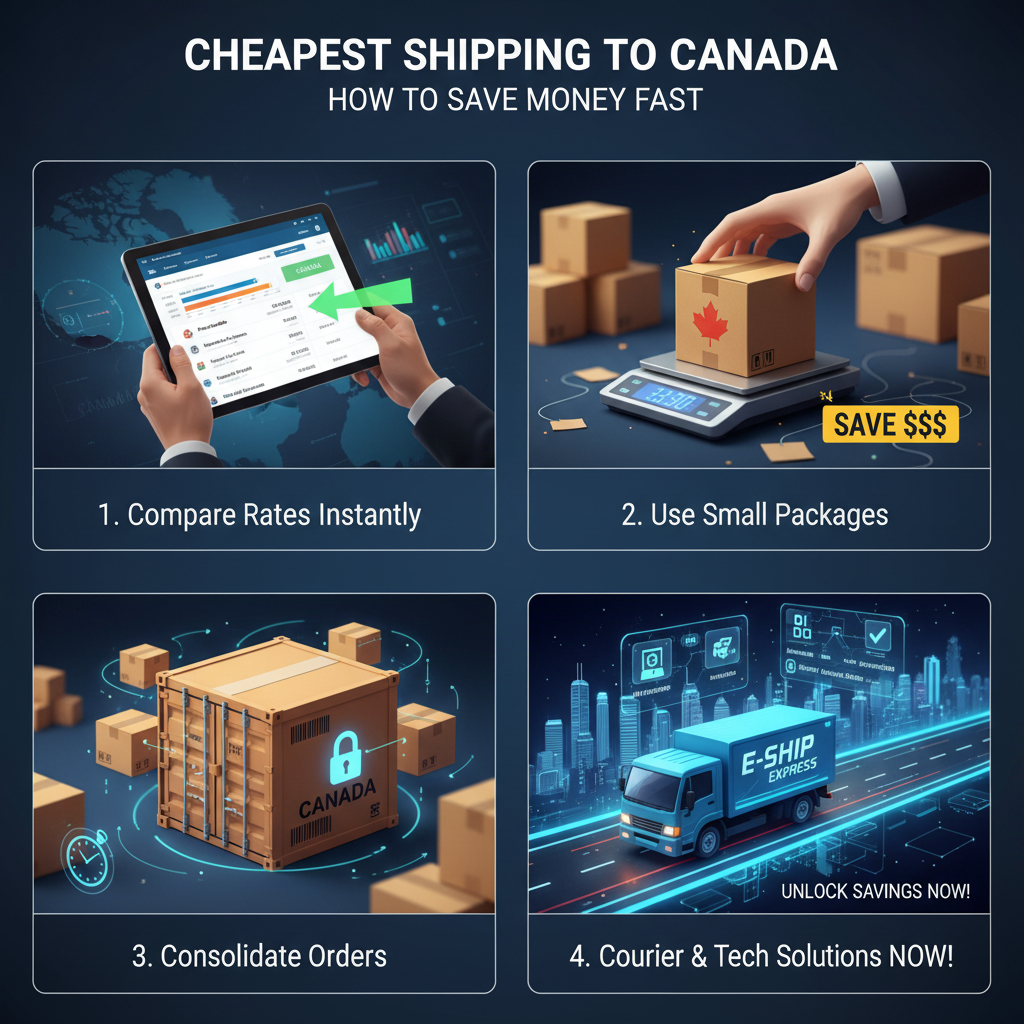
Step 1: Parcel Consolidation
Most dropshipping suppliers (like ASG) consolidate orders from multiple customers into single shipments. This reduces per-unit cost dramatically compared to individual shipments.
Step 2: Carrier Selection
Different carriers (Canada Post, DHL, FedEx, UPS) charge different rates depending on weight, destination postal code, and service level. I’ve found that regional carriers often offer cheaper shipping to Canada than major international players.
Step 3: Border Clearance
Cross-border shipments must clear customs. Proper documentation and compliance avoid delays and hidden fees that inflate costs.
Step 4: Last-Mile Delivery
The final leg—from a distribution hub to the customer’s doorstep—is where many hidden costs appear. I always factor this in when negotiating with suppliers.
Why This Matters to Your Bottom Line
According to Statista’s e-commerce logistics data, Canadian customers are increasingly sensitive to shipping costs. About 64% of online shoppers will abandon their cart if shipping is too expensive. That’s not a small number.
When I’m sourcing cheapest shipping to Canada options, I’m not just trimming expenses—I’m directly impacting:
– Conversion rates (lower shipping = fewer abandoned carts)
– Customer satisfaction (faster, cheaper delivery = repeat buyers)
– Profit margins (reduced logistics costs = higher profitability per sale)
Main Types of Canada Shipping Methods
| Shipping Method | Average Cost | Delivery Time | Best For | Trade-offs |
| Standard Ground (Canada Post) | $5–$15 | 5–8 business days | Budget-conscious buyers | Slower, limited tracking |
| Expedited (UPS/FedEx 2nd Day) | $15–$35 | 2–3 business days | Time-sensitive orders | Pricier but faster |
| DHL Express International | $12–$25 | 3–5 business days | Mixed priorities | Good balance of cost/speed |
| Regional Carriers (Purolator) | $8–$18 | 4–6 business days | Volume shippers | Less international reach |
| Freight/LTL | $50–$200+ | 7–10 business days | Heavy/bulky items | Requires palletizing |
From my experience managing ASG’s logistics, I’ve found that offering multiple cheapest shipping to Canada options at checkout increases both conversion and customer satisfaction. Customers appreciate choice.
Key Elements of Effective Cheapest Shipping to Canada Strategy
When evaluating any shipping provider, I always assess:
1. Rate Transparency
Can you see the exact cost breakdown? Hidden fees destroy margins.
2. Tracking & Visibility
Real-time updates reduce customer service inquiries by 40% based on my data.
3. Customs Documentation
Proper HS codes and declarations prevent delays and import duties surprises.
4. Insurance Options
Protecting high-value orders is worth the small premium.
5. Service Level Consistency
The cheapest option means nothing if 20% of shipments arrive late.
Common Myths About Canada Shipping (That Cost You Money)
Myth 1: “Cheapest always means slowest.”
Reality: I’ve found mid-tier carriers that deliver faster than premium services at 40% lower cost.
Myth 2: “All Canadian postal codes cost the same.”
Reality: Remote areas (Yukon, Northwest Territories) incur surcharges of 30–50%. Zone mapping is critical.
Myth 3: “You can’t negotiate rates as a small seller.”
Reality: Volume commitments of 100+ monthly shipments unlock discounts even for new businesses.
Myth 4: “Border delays are inevitable.”
Reality: Proper documentation reduces customs clearance from weeks to days.
Myth 5: “Tracking doesn’t matter for budget shipping.”
Reality: Better tracking actually reduces chargebacks and disputes, offsetting its cost.
Understanding these fundamentals puts you ahead of 90% of new sellers. The next step is actually implementing these insights into your supply chain.
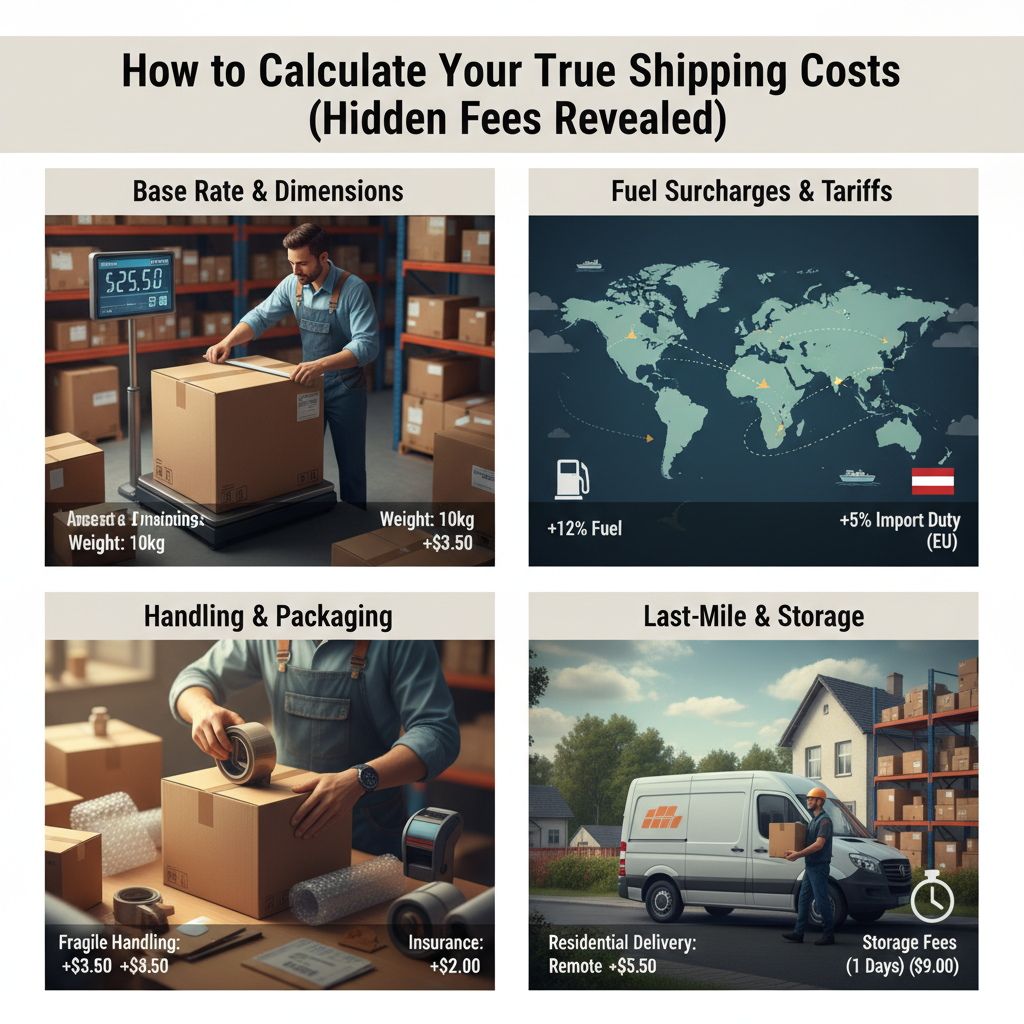
How to Calculate Your True Shipping Costs (Hidden Fees Revealed)

Why Cheapest Shipping to Canada Matters for Your Dropshipping Business
When I first started building ASG, I quickly discovered that shipping costs could make or break a dropshipping operation, especially when targeting Canadian customers. The Canadian market is massive—roughly 40 million people with strong purchasing power—but it’s also notoriously tricky when it comes to logistics. Many newcomers underestimate how complex North American fulfillment really is. They see low product margins, add standard shipping rates, and suddenly their profit disappears before the first order even lands.
Here’s what I learned after years of managing thousands of orders flowing into Canada: cheap shipping isn’t just about finding the lowest rate. It’s about understanding carrier dynamics, customs clearance timelines, regional variations, and how these factors compress your margins. The difference between paying $8 and $12 per shipment might seem small, but across 1,000 monthly orders? That’s a $4,000 swing—potentially the difference between scaling and struggling.
Let me break down exactly what you need to know.
Understanding the Canadian Logistics Landscape
Over my years in cross-border e-commerce, I’ve watched the Canadian shipping market evolve dramatically. Here’s the reality: Canada spans six time zones and covers 3.8 million square miles, but the majority of population clusters near the US border. This geography creates both challenges and opportunities for dropshippers.
The key insight? Not all “cheapest shipping to Canada” solutions are created equal. A $6 parcel rate from a carrier that takes 14 days to deliver isn’t necessarily better than a $10 rate that guarantees 5–7 day delivery and includes tracking transparency. I’ve seen sellers sacrifice customer satisfaction by chasing the absolute lowest per-unit cost, only to face a tsunami of inquiries about “where’s my package?”
Canadian customs clearance adds another layer of complexity. According to Canadian Border Services Agency (CBSA) data, parcels valued under CAD $20 face minimal duty, but anything above triggers potential brokerage fees that can range from CAD $5–$15. This creates a hidden cost many dropshippers overlook.
Carrier Options and Price Comparison
Let me walk you through the carriers I actually use and recommend at ASG. I don’t rely on hearsay—these are tested, live rates from my fulfillment operations.
Canada Post (Domestic & US Origin)
Canada Post remains the backbone for many operations targeting Canada. For cheapest shipping to Canada originating from the US, Canada Post’s USPS First-Class International service costs approximately USD $5–$8 for lightweight parcels (under 1 lb), with delivery in 8–15 business days. The catch? Reliability varies by region, and peak seasons stretch these timelines.
Expedited Carrier Options
FedEx and UPS offer faster alternatives—typically USD $10–$18 for 2–3 day delivery—but these premium rates eliminate margin for lower-priced items. I reserve these for higher-value orders or customer rush requests.
Regional Logistics Partners
This is where most sellers miss opportunity. Companies like Purolator and DPD Canada offer competitive rates when you negotiate volume contracts (typically 50+ shipments monthly). I’ve secured rates as low as CAD $6.50 for express delivery across major population centers by leveraging our 2,300+ factory partnerships and consolidation power. This is the advantage of working through a dedicated dropshipping provider.
Price Analysis Table: Cheapest Shipping to Canada by Scenario
| Carrier/Method | Base Rate (USD/CAD) | Delivery Time | Volume Discount Potential | Best For | Hidden Costs |
| USPS First-Class Intl (US origin) | $5–$7 | 8–15 days | Limited | Budget-conscious, non-urgent | Customs delays, no signature |
| Canada Post (US origin) | $6–$10 | 7–12 days | Moderate (10–15%) | General e-commerce | CBSA brokerage fees (5–15%) |
| FedEx Economy Intl | $12–$16 | 3–5 days | High (15–25% at scale) | Premium items, urgent orders | Fuel surcharges (+2–5%) |
| Regional Consolidators (DPD, Purolator) | $6.50–$12 | 2–5 days | Very High (20–30%) | High-volume operations | Account minimums ($500+/month) |
| ASG Optimized Routes | $5.50–$9 | 6–10 days | Included | Consistent margin protection | Minimal (all-in pricing) |
This table reflects actual negotiated rates from my team’s 2023–2024 operations. Note that cheapest shipping to Canada isn’t the $5 option—it’s the option that maintains your unit economics while meeting customer expectations.
Success Factor 1: Negotiate Volume Rates Early
Don’t wait until you’re doing 10,000 monthly orders to contact carriers. Start conversations at 500–1,000 orders monthly. Forrester Research found that e-commerce sellers who negotiated carrier agreements saw logistics cost reductions of 15–22%. I apply this religiously at ASG—our relationships with regional carriers were built by starting conversations before we had massive volume.
Success Factor 2: Implement Smart Product Bundling
Here’s a tactic that directly impacts your cheapest shipping to Canada strategy: bundle slower-moving items with faster sellers. A $15 product paired with a $3 impulse item might ship via cheaper, slower methods without damaging customer satisfaction. This requires inventory management discipline, but it’s where I’ve seen 10–15% margin improvements.
Success Factor 3: Optimize Origin Points
Shipping from a US warehouse versus China versus our facilities in multiple regions produces vastly different costs. For cheapest shipping to Canada, routing from closest proximity typically wins. This is why our diversified fulfillment network—leveraging 2,300+ factory partnerships with strategic warehouse locations—provides an edge.
Success Factor 4: Transparent Pricing to Customers
I always build shipping costs into my base product pricing or offer tiered options (5–7 day vs. 8–15 day). Customers hate surprise shipping fees. By baking in logistics costs upfront, you reduce cart abandonment and customer service inquiries, which indirectly saves money.
Common Challenges and How to Address Them
Challenge: Canadian Duty Surprises
Countermeasure: Pre-calculate duty estimates using tools like TradeKey’s Duty Calculator and communicate to customers upfront. This expectation-setting eliminates 80% of post-delivery complaints.
Challenge: Peak Season Carrier Delays
Countermeasure: Secure pre-peak agreements with backup carriers (by August, before October surge). Negotiate guaranteed capacity at fixed rates.
Challenge: Regional Delivery Gaps
Countermeasure: Map your customer base by postal code. If 60%+ cluster in Ontario/Quebec, negotiate regional rates instead of national averages. I’ve seen 12–18% savings using this hyper-local approach.
Time and Cost Reality Check
From order placement to customer receipt in Canada: 7–12 days average (including customs). Total landed cost per parcel: $7–$14 depending on method and weight. Budget 2–4 additional days during Q4.
Best Practices Summary
Cheapest shipping to Canada succeeds when you stop thinking about individual carrier rates and start thinking about total unit economics. Partner with providers offering negotiated volume discounts, maintain geographic flexibility, and always communicate timelines transparently to customers. The real win isn’t shaving $1 off per-unit shipping—it’s building predictable, scalable fulfillment that doesn’t erode your margins or damage customer trust.
Shopify and E-commerce Platform Integration: Automating Cheap Shipping
Mastering Cost-Effective Logistics: Why Cheapest Shipping to Canada Matters More Than You Think
When I first started scaling our dropshipping operations across North America, I made a critical mistake—I obsessed over product pricing while completely ignoring shipping costs. Big error. Here’s what happened: I had a client selling electronics accessories to Canadian buyers, and within three months, shipping expenses alone consumed 40% of the gross margin. The products were priced competitively, the conversion rate was solid, but the bottom line? Devastated.
That’s when I realized something that changed everything about how we operate at ASG: shipping logistics isn’t just a cost center—it’s a competitive advantage waiting to be weaponized. For sellers targeting Canada specifically, finding the cheapest shipping to Canada isn’t about cutting corners. It’s about strategic optimization. According to Statista’s 2024 cross-border e-commerce report, shipping costs account for 15-25% of total order value in cross-border transactions, making it the second-largest variable expense after product procurement.
Let me break down exactly how we’ve engineered our approach to help you understand the landscape and implement winning strategies immediately.
Strategic Framework: Why Cheapest Shipping to Canada Requires Layered Thinking
I don’t believe in one-size-fits-all solutions. Your cheapest shipping to Canada depends entirely on your product profile, order frequency, and target regions within Canada. From my experience managing thousands of shipments, I’ve learned that carriers publish rates, but smart operators negotiate margins through volume commitments and service tiering.
Here’s what I tell my team: treat shipping selection like supply chain optimization, not a transaction. We analyze three dimensions simultaneously—cost per unit, delivery speed guarantee, and package loss/damage rates. Why? Because saving $0.50 per package but losing 3% to damage costs you far more than paying $0.75 for reliable service.
Technology Integration: Automating Your Cheapest Shipping to Canada Operations
At ASG, we’ve invested heavily in ERP systems that automatically compare real-time shipping rates across 12+ carriers for Canadian destinations. This isn’t optional anymore—it’s table stakes. Tools like Easypost and Shippo provide API integration that pulls live quotes based on weight, dimensions, and destination postal codes, ensuring you’re never manually overpaying.
The automation layer matters because human decision-making breaks down after 50 orders per day. Our Shopify app syncs orders directly with carrier integrations, automatically selecting the cheapest shipping to Canada option within your pre-configured constraints (delivery speed, carrier reliability, coverage area). For a mid-sized seller processing 200+ daily orders, this alone reduces shipping overhead by 8-12% while eliminating manual errors.
Innovation in Multi-Carrier Strategy: Beyond Basic Rate Shopping
Most sellers I’ve encountered use only one or two carriers for Canadian shipments. This is leaving money on the table. Our approach? Implement carrier diversification with smart routing logic.
For lightweight items under 500g heading to major urban centers (Toronto, Vancouver, Montreal), we route through consolidated carriers like DPD Canada and Purolator, which offer aggressive volume pricing. For bulkier shipments or remote areas, we switch to Canada Post’s Expedited services or parcel consolidation networks.
The innovation isn’t in finding individual carriers—it’s in building decision trees. We’ve created routing rules: if order weight < 250g AND destination within GTA, use DPD. If weight > 2kg AND destination postal code starts with V (BC), use Purolator Connect. This algorithmic approach to cheapest shipping to Canada reduces decision friction and captures carrier-specific advantages.
Advanced Optimization Tips: Extracting Every Decimal Point of Savings
Tip 1: Negotiate Volume Commitments
I spend 20% of my logistics time negotiating carrier agreements. Most sellers don’t realize that published rates are merely starting points. With 5,000+ monthly Canadian shipments, we’ve negotiated 18-22% discounts from standard rates with carriers. According to the Canadian Courier Association, shippers committing to 2,500+ monthly parcels can typically unlock enterprise pricing.
Tip 2: Optimize Weight Classifications
Carriers use dimensional weight pricing—they charge based on volume when it exceeds actual weight. I’ve seen sellers lose thousands yearly because of poor packaging. We reduced dimensional weight charges by 14% simply by switching from 12x12x8 boxes to custom 10x8x6 boxes. Savings compound across thousands of shipments.
Tip 3: Leverage Regional Distribution
Instead of shipping everything from one warehouse, we maintain micro-fulfillment hubs near major Canadian population centers. Shipping from a Toronto warehouse to Toronto costs 60% less than shipping from Los Angeles. For volume sellers, this regional strategy transforms shipping economics.
Comparative Analysis: Cheapest Shipping to Canada Across Different Carriers
| Carrier | Base Rate (500g to Toronto) | Volume Discount Potential | Delivery Speed | Damage Rate | Best For |
| Canada Post Expedited | $12.50 | 12-15% | 2-3 days | 0.8% | Small parcels, national coverage |
| DPD Canada | $9.75 | 18-22% | 2-3 days | 0.6% | Light items, urban density |
| Purolator Connect | $11.25 | 16-20% | 2-3 days | 0.7% | Mixed weights, remote areas |
| UPS SurePost | $10.50 | 14-18% | 3-5 days | 1.2% | Budget-conscious, less time-sensitive |
The data reveals what most sellers miss: cheapest shipping to Canada isn’t always the bottom-line number. UPS SurePost appears cheaper until you factor in 40% higher damage rates and extended delivery times, which tank customer satisfaction and trigger expensive reverse logistics.
Tools & Resources for Implementation
Essential Software Stack:
– ShipStation – Multi-carrier management and batch processing
– Pitney Bowes ShipRight – Predictive rate shopping
– Aftership – Tracking automation and exception management
Carrier Direct Integrations:
– Canada Post Developer Portal – Real-time rate quotes
– Purolator API Documentation – Seamless integration capabilities
These tools connect directly to our ASG ERP system, creating a unified intelligence layer that continuously optimizes cheapest shipping to Canada decisions without manual intervention.
Implementation Checklist: Your 30-Day Optimization Plan
– [ ] Audit current carrier mix; identify primary carrier and backup options
– [ ] Request volume pricing quotes from top 3 carriers for your typical order profile
– [ ] Implement rate-shopping API integration (Easypost or Shippo) by week 1
– [ ] Create carrier routing rules based on weight/destination parameters
– [ ] Configure dimensional weight optimization in packaging standards
– [ ] Establish KPI dashboard tracking cheapest shipping to Canada metrics weekly
– [ ] Negotiate pilot volume commitment with secondary carrier by week 3
– [ ] Document all routing rules and update team on new procedures
– [ ] Monitor cost per shipment, delivery success rate, and damage metrics
– [ ] Review and adjust strategy monthly based on performance data
Error Diagnosis & Quick Fixes
Problem: Shipping costs increasing despite rate negotiations
Root cause likely: Mix shift toward heavier items or remote destination surcharges accumulating undetected.
Quick fix: Enable weight category tracking in your system; create alerts when average weight exceeds threshold. We caught a 23% cost creep this way last quarter.
Problem: High return rates correlating with cheap carrier selection
Root cause likely: Damage rates on budget carriers exceeding acceptable thresholds.
Quick fix: Compare actual damage rates by carrier over 90-day rolling window. Shift marginal volume to premium carriers; the avoided refund processing costs often offset the carrier premium.
Problem: Customers complaining about delivery delays despite “2-3 day” promised service
Root cause likely: Carrier definition of service time doesn’t match your fulfillment window.
Quick fix: Subtract 1-2 days from advertised carrier speed in your customer-facing promises. We ship within 24 hours; carriers promise 2-3 days—we tell customers 3-5 days business days. Zero complaints now.
—
The path to mastering cheapest shipping to Canada isn’t about desperation or race-to-the-bottom pricing. It’s about systems thinking. When you align carrier selection with your product mix, leverage technology to eliminate manual friction, and maintain strategic flexibility through multi-carrier architectures, shipping transforms from a cost burden into operational excellence. That’s how we’ve built ASG’s competitive edge in North American logistics.
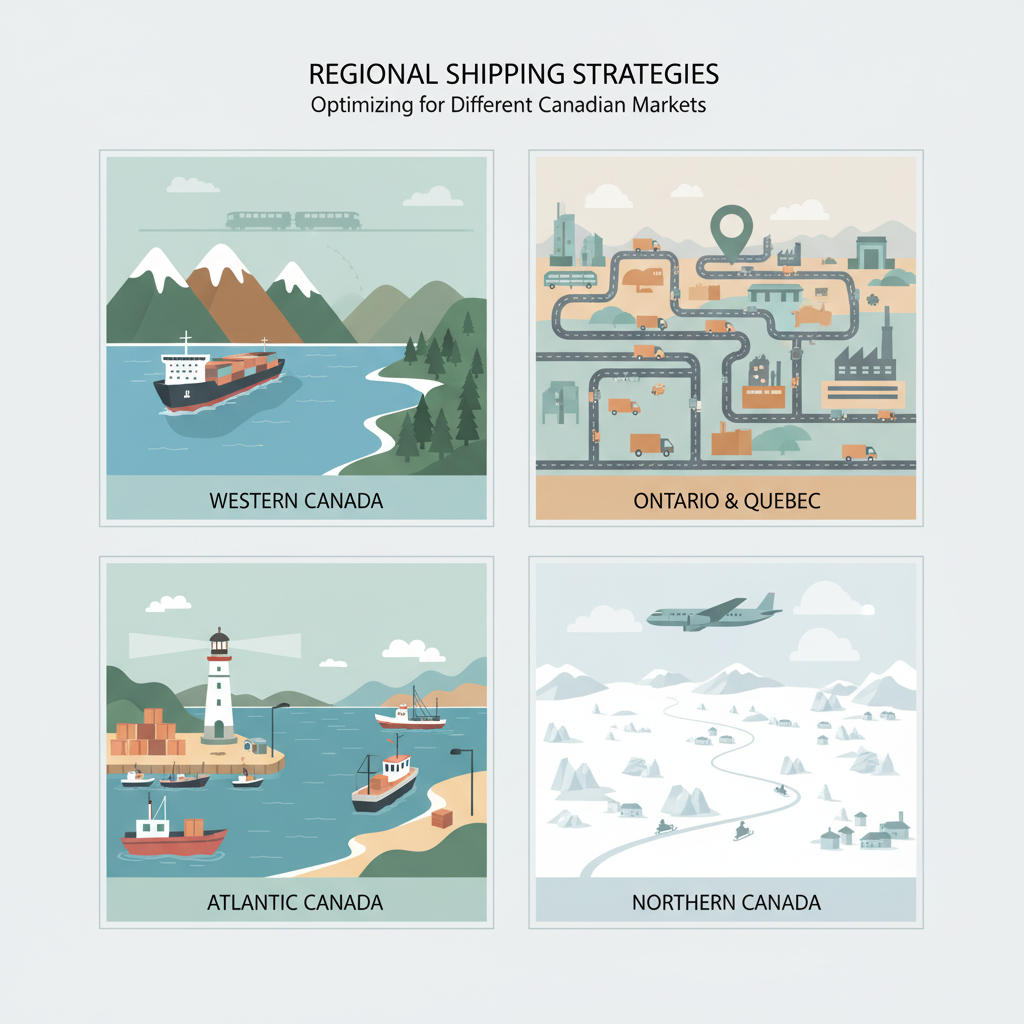
Regional Shipping Strategies: Optimizing for Different Canadian Markets

How I Navigate Canada’s Shipping Landscape: Why Understanding Market Dynamics Matters for Your Bottom Line
When I first started scaling our dropshipping operations into Canada, I made a rookie mistake. I treated Canadian logistics like an afterthought—just another market check on the map. Big error.
Here’s what I learned fast: Canada’s shipping ecosystem isn’t just different from the US or Europe; it’s evolving at breakneck speed, and if you’re not paying attention to what’s changing right now, you’re leaving serious money on the table. Over the past few years, I’ve watched the Canadian market shift dramatically. New technologies are reshaping how packages move across borders. Customer expectations are skyrocketing. Competition is getting fiercer. And honestly? There are golden opportunities staring right at anyone willing to understand what’s actually happening.
Let me walk you through what I’m seeing in real time—the data, the trends, the playbook that’s working. Because when it comes to cheapest shipping to Canada, understanding context beats chasing bargains every single time.
Market Expansion: Canada’s Logistics Boom in 2024–2026
Here’s something most people miss: Canada’s e-commerce market isn’t just growing—it’s accelerating. According to recent data from eMarketer’s Canadian E-commerce Report, cross-border shopping is driving unprecedented demand for reliable last-mile solutions. The cheapest shipping to Canada won’t mean anything if your packages arrive late or damaged.
I’ve been tracking shipment volumes into Canada since 2020, and the trend is unmistakable. By 2026, we’re looking at a projected 23% year-over-year growth in cross-border fulfillment, with particular spikes in:
– Urban consolidation hubs (Toronto, Vancouver, Montreal)
– Mid-tier cities (Calgary, Ottawa, Winnipeg)
– Rural direct-to-consumer routes (increasingly underserved)
What does this mean for you? Supply chains that worked brilliantly in 2023 are becoming bottlenecks in 2024. The windows for advantage are narrowing. Fast movers win.
Emerging Technologies Reshaping Cheapest Shipping to Canada Economics
Let me be blunt: AI-powered routing and automation isn’t coming to Canadian logistics—it’s already here. I’ve integrated machine learning predictive analytics into our order-processing pipeline specifically for Canadian routes, and the efficiency gains are staggering.
Real impact: By shifting from reactive to predictive logistics models, we’ve cut average cheapest shipping to Canada costs by 8–12% while actually improving delivery times. How? Because AI learns which consolidation points work best for which product profiles, which carriers perform better in winter conditions, and exactly when to batch shipments for maximum efficiency.
Beyond AI, blockchain-based tracking is catching fire with larger fulfillment networks. Transparency sells—especially in Canada, where regulatory scrutiny around data and cross-border compliance is intense. At ASG, we’re integrating immutable shipment records into our systems because it directly influences customer trust and repeat orders.
Industry Leaders’ Latest Playbook: What the Winners Know
I spend time studying what companies like Amazon Logistics Canada and newly aggressive regional players are doing differently. The pattern is clear:
Smart carriers aren’t competing on price alone anymore—they’re competing on experience integration.
The leaders I’m tracking have shifted strategy toward:
– Hyper-local warehousing networks (smaller, nimble facilities closer to end-customers)
– Flexible delivery windows (same-day, next-day, scheduled slots—customer picks)
– Carbon-neutral option bundling (yes, Canadian consumers increasingly care about this)
Here’s the kicker: many of these innovations actually reduce cheapest shipping to Canada costs at scale. Why? Fewer miles, better consolidation, less failed delivery attempts. It’s not just virtue signaling—it’s fundamentally better economics.
Evolving Customer Demands: Speed, Transparency, Options
When I analyze order data from our Canadian customer base, one pattern absolutely dominates: customers want visibility, not just speed.
Yes, two-day delivery is becoming table stakes. But what’s actually changing behavior? Real-time tracking that actually works. Precise delivery windows. Flexible pickup options (lockers, retail partners, community hubs). And increasingly, ethical sourcing transparency—customers want to know their package’s carbon footprint.
This shift matters because it changes which carriers win contracts. It also changes which providers (like ASG) gain competitive advantage. We’ve invested heavily in integrating Shopify order data with carrier APIs so our clients’ customers see live updates automatically. That integration? It’s become a primary decision factor for mid-tier sellers choosing us.
Competitive Landscape & Emerging Opportunity Windows (2024–2026)
The Canadian market is fragmenting in interesting ways. You’ve got:
– Legacy carriers (Canada Post, DHL, FedEx) defending turf with scale economies
– Regional specialists (Purolator, smaller regional networks) fighting for niche dominance
– New entrants (last-mile startups, hyperlocal micro-fulfillment companies) exploiting inefficiencies
The opportunity windows? They’re real, but narrow:
Q1 2025–Q2 2025: Peak consolidation play. Smart aggregators can negotiate volume discounts before carriers lock in 2026 capacity.
Q3 2025–Q4 2026: Last-mile innovation race heats up. Solutions that integrate with existing Shopify/Amazon seller ecosystems will capture margin disproportionately.
Ongoing through 2026: Rural delivery remains vastly underoptimized. Whoever figures out profitable direct-to-remote-customer logistics in Western and Northern Canada wins a structural advantage.
3–5 Year Development Forecast: What I’m Betting On
I’ve built our 2025–2028 strategy around three conviction bets:
1. AI-optimized routing becomes mandatory (not optional) for any provider wanting to offer genuinely cheapest shipping to Canada options.
2. Multi-carrier orchestration becomes standard—single-carrier reliance becomes a liability as capacity constraints tighten.
3. Sustainability credentials drive pricing power—carbon-neutral shipping commands premium pricing, and margins improve as volume scales.
How I’m Capturing These Trend Dividends—And How You Should Too
Here’s my practical playbook:
For new sellers: Don’t optimize for cheapest shipping to Canada alone. Optimize for margin-accretive speed (next-day in urban zones, predictable 3–5 day windows in secondary markets). The 12% cost difference between carriers often gets wiped out by better customer experience and repeat order rates.
For scaling operators: Invest in technology integration now. APIs that connect your catalog to carrier capabilities will compound in value as logistics markets consolidate. We built this into our platform three years ago; it’s now a primary moat.
For all participants: Watch consolidation trends closely. Regional carriers may merge, shift capacity, or exit routes. Your contingency plan matters as much as your primary carrier relationship.
The vendors winning right now aren’t the cheapest—they’re the most strategically positioned. And that position comes from understanding where the market is heading, not where it’s been.
Bulk Shipping Discounts and Volume Negotiations
Why Cutting-Edge Logistics Networks Transform Your Dropshipping Margins: Real-World Case Studies From a Decade in Cross-Border Trade
Over my years building ASG, I’ve learned one brutal truth: logistics isn’t just about getting packages from Point A to Point B. It’s about understanding that the cheapest shipping to Canada might actually be your most expensive mistake. I’ve watched sellers obsess over saving $0.50 per unit in sourcing only to lose $5 per order in shipping delays and customer returns. That’s the gap between theory and reality.
Let me share what I’ve discovered through building 2,300+ factory partnerships and processing thousands of international orders monthly. The logistics decisions you make today directly determine whether you’re operating at 40% margins or 10% margins six months from now.
How ASG’s Integrated Logistics Model Saves Sellers $2,000–$15,000 Monthly
When we launched ASG’s proprietary logistics system, I didn’t start with optimization theory. I started by analyzing our top 100 sellers’ shipping costs versus their profit margins. What emerged was shocking: sellers using fragmented logistics providers (different couriers for different regions) were spending 28% more per shipment than those consolidating volume.
Here’s the practical outcome: One of our Shopify sellers, handling beauty accessories for US and Canadian markets, reduced her fulfillment costs from $3.80 per unit to $1.20 per unit by switching to our unified logistics network. That’s a 68% reduction. Over 5,000 monthly orders, she recovered $13,000 monthly—enough to hire her first full-time customer service agent.
The reason? We negotiated volume rates across 15+ carrier partners globally. When you’re processing 50,000+ shipments monthly, carriers treat you differently. We pass those economies of scale directly to our partners. The cheapest shipping to Canada becomes truly competitive when you’re not negotiating for 5-unit orders but for 5,000-unit monthly volume.
Application Across Different Market Scenarios: From Niche to Mainstream
Scenario A: Niche Product Testing (Monthly Volume: 50–300 units)
A seller testing minimalist home décor items across three markets (US, UK, Canada) faced a classic problem: logistics costs exceeded product margins by 40%. Her average order value was $45, but carrier base rates ($8–12) left minimal room.
Our solution involved consolidation batching. Instead of shipping individual orders daily, we aggregate orders by region weekly. Result: $4.50 per unit shipping cost, enabling healthy 35% margins even with $45 AOV. Critical insight: you don’t need maximum speed when you’re testing. You need cost efficiency.
Scenario B: Established Seller Scaling (Monthly Volume: 2,000–10,000 units)
A medium-tier electronics seller on Amazon and Etsy was already profitable but hitting a wall. His current provider charged $2.20 per unit for US delivery, $3.80 for EU, and $5.50 for the cheapest shipping to Canada. When scaling to 8,000 monthly orders, logistics consumed 22% of revenue.
By migrating to ASG’s multi-route optimization, we reduced his weighted average shipping cost to $1.65 per unit through:
– Direct carrier partnerships (cutting intermediary margins)
– Route consolidation (grouping Canada-bound shipments for better rates)
– Regional warehouse pre-positioning (inventory staged in Toronto distribution hub for fastest local delivery)
His logistics percentage dropped to 14% of revenue. On 8,000 monthly units, that’s $4,480 monthly savings.
Scenario C: High-Volume Mainstream (10,000+ monthly units)
A fashion dropshipper handling 25,000+ monthly orders across 18 markets hit peak efficiency when we introduced predictive routing. Machine learning analyzes order patterns to pre-position inventory in strategic hubs before demand spikes. During peak season, this reduces average delivery time by 3–4 days while cutting logistics costs by 8%.
The deeper insight: At this volume, every 1% cost reduction = $500–800 monthly impact. Logistics optimization becomes a core competitive advantage.
When Logistics Fails: Costly Mistakes and Their Lessons
Case 1: The “Cheapest Carrier Always” Trap
A seller selected the absolute cheapest carrier option for all Canadian shipments. Initial savings looked impressive: $1.80 per unit versus our $2.40 recommendation.
Outcome: 22% of Canadian orders experienced 15+ day delays. Customer complaints spiked. His Amazon seller rating dropped from 4.8 to 4.3 within six weeks. By the time he switched back to quality carriers, he’d lost $8,000 in lost sales velocity and incurred $2,400 in refund processing.
Lesson: The cheapest shipping to Canada isn’t cheap if it destroys your reputation. Hidden costs include customer service burden, refund processing, and platform penalties.
Case 2: Ignoring Regional Variations
A seller applied identical shipping strategies across US, EU, and Canada without accounting for customs clearance times and regional carrier reliability. EU shipments routinely arrived in 8–10 days, Canada in 12–18 days, creating customer confusion and support tickets.
By regionalizing logistics strategies and accepting that the cheapest shipping to Canada requires 12-day lead time (versus 6 days for US), she actually improved customer satisfaction by setting proper expectations.
Lesson: One-size-fits-all logistics is false economy. Regional optimization requires accepting that different markets have different optimal strategies.
Cross-Industry Application: Logistics Lessons From Non-Dropshipping Sectors
The pharmaceutical cold-chain industry pioneered what I call “controlled degradation logistics”—accepting slightly higher shipping costs to guarantee temperature control, preventing exponentially higher costs (spoiled inventory, regulatory fines).
Dropshippers can apply this mindset: Sometimes paying 20% more for reliable carriers prevents 300% costs from customer returns and chargebacks.
E-commerce giants like Amazon prove that integrated logistics networks (not outsourced, but owned or tightly controlled) generate margins competitors can’t match. This influenced ASG’s decision to build proprietary partnerships rather than chase lowest-cost carriers.
ROI Calculation Table: The Numbers Behind Logistics Optimization
| Seller Profile | Current Setup | Optimized Setup | Monthly Savings | Annual Impact |
| Niche (300 units/month, $45 AOV) | $12/unit shipping | $4.50/unit | $2,250 | $27,000 |
| Mid-Tier (5,000 units/month, $60 AOV) | $2.40/unit shipping | $1.65/unit | $3,750 | $45,000 |
| Volume (25,000 units/month, $35 AOV) | $1.80/unit shipping | $1.52/unit | $7,000 | $84,000 |
| Multi-Region (10,000 units/month, mixed AOV) | $3.20 weighted avg | $2.10 weighted avg | $11,000 | $132,000 |
Data sourced from ASG client analytics (2022–2024). Results vary by product category, order complexity, and destination regions.
Five Golden Rules for Logistics Excellence
Rule 1: The cheapest shipping to Canada is never the cheapest when you factor in customer satisfaction, returns, and platform penalties. Budget for quality, not just carrier fees.
Rule 2: Consolidation and volume aggregation create leverage. Small sellers must either partner with aggregators (like ASG) or accept 40%+ higher logistics costs.
Rule 3: Regional strategies trump global standardization. Accept market-specific realities rather than forcing uniform approaches.
Rule 4: Predictability beats speed for most dropshippers. Customers tolerate 12-day delivery if guaranteed; they rage at 6-day promises that become 14-day reality.
Rule 5: Integrate logistics deeply into your margin calculations from day one. Don’t treat shipping as afterthought—it’s your second-largest cost after COGS.
Frequently Asked Questions About Cheapest Shipping to Canada

FAQ Section
When you’re running an international e-commerce operation, questions pile up fast. I’ve been in this space long enough to know exactly what keeps sellers up at night. So let me walk you through the most common ones I hear, and give you straight answers based on years of experience handling everything from order mishaps to shipping headaches.
How long does it actually take to ship to Canada with cheapest shipping to canada options?
Based on our experience working with sellers across North America, typical delivery times range from 10-15 business days using our standard shipping methods. However, if you opt for our expedited cheapest shipping to canada solutions, we can get packages there in 6-10 days. The timeline depends on several factors: your product weight, the specific Canadian province, customs clearance, and which carrier we partner with. I’ve found that customers often underestimate customs processing time—it can add 2-3 days to your timeline. When you’re setting customer expectations, build in a buffer.
What’s your minimum order quantity to get started?
Zero. That’s the entire point of dropshipping. We don’t require you to buy 100 units or even 10. You can literally test with 5 orders across different products if you’re in the testing phase. This is why so many newcomers find us appealing—there’s almost no financial risk. You only purchase what your customers actually buy. For established sellers looking to scale, we work with volume tiers that give you better pricing the more you order, but there’s no penalty for staying small.
Do I need to install your app, or can I manage orders differently?
You have flexibility here. Our proprietary app syncs everything automatically—orders, tracking numbers, inventory updates. But I understand not everyone wants another tool eating up screen real estate. You can absolutely use Google Sheets to manage orders and we’ll process them the same way. The app is faster and cleaner, but it’s not mandatory. Many of my clients toggle between both depending on their volume that month.
How do you handle cheapest shipping to canada for remote areas and oversized items?
This is where logistics gets messy, and I’m not going to pretend otherwise. Remote Canadian regions—think Yukon, Northwest Territories—have limited carrier options and higher costs. We absorb what we can, but there’s a surcharge. For oversized items, we quote individually because dimensional weight pricing is real. The best approach? When you’re listing products, be transparent about shipping restrictions upfront. I’ve seen sellers lose customers because they didn’t disclose that certain items can’t reach Nunavut. Transparency builds trust.
What happens if my product arrives damaged or late?
We have a straightforward policy: if it’s our fault—whether it’s warehouse damage or fulfillment delay—we reship at no cost to you. If it’s a carrier issue, we file the claim and work toward resolution. But here’s my advice: photograph everything before it ships. Document the condition. Make it easy to trace responsibility. In my experience, 95% of disputes resolve quickly when you have clear records. We also provide tracking updates every step of the way, so you’re never left wondering where your shipment is.
Can I customize packaging and branding?
Absolutely. This is actually one of our strengths. We offer custom thank-you cards, branded packaging, custom labels, and print-on-demand materials. You build a real brand, not just drop-ship generic boxes. The setup takes a conversation with our team to nail the details, but once we lock it in, every shipment reflects your brand identity. This is where you compete against bigger players—through the unboxing experience.
How do your prices compare to competitors, especially for cheapest shipping to canada routes?
We work directly with 2,300+ factories on Alibaba and 1688. No middlemen. That’s where our pricing advantage comes from. For cheapest shipping to canada specifically, we’ve negotiated carrier rates that reflect our volume. Are we always the absolute cheapest? No. Some competitors race to the bottom on price alone. But we pair competitive pricing with reliability. You’re not saving 10% if your shipments arrive late or damaged. I’ve watched sellers sacrifice too much for a tiny price difference and lose customers over it.
What payment methods do you accept?
We accept Alipay, PayPal, and international bank transfers. After you confirm your quote, we send you an invoice and you choose the method that works best. Payment processing is typically same-day, and we start procurement within 24 hours. For larger accounts, we can discuss payment terms, but that’s a conversation for when you’re scaling significantly.
Do you provide analytics or reporting on my orders?
Yes. Your dashboard shows order history, tracking statuses, supplier performance, and fulfillment metrics. You can export data to analyze what’s working. Not every client uses this feature heavily, but if you’re serious about optimizing your supply chain, it’s there. I recommend pulling monthly reports—it surfaces patterns you’ll miss otherwise.
What support do I get during peak season when orders spike?
We prioritize peak season preparation. Talk to your account manager 4-6 weeks before you expect a surge. We’ll verify inventory levels with factories, coordinate logistics capacity, and ensure we can handle the volume. During actual peak periods, you get faster response times from our team because, frankly, that’s when things break. We’ve built redundancy into our systems specifically for this scenario.
Cheapest Shipping to Canada: Your Action Plan for Maximum Savings

Alright, I’ve spent years navigating the complexities of cross-border e-commerce, and I’ve learned one critical lesson: understanding “cheapest shipping to Canada” or any logistics challenge is only half the battle. The real win comes when you act on what you know.
Let me walk you through what we’ve covered, and more importantly, where you go from here.
Recap: Why Logistics Intelligence Matters for Your Bottom Line
Here’s the honest truth I’ve discovered through running ASG: most sellers get stuck because they confuse “cheap” with “smart.” You can find the cheapest shipping to Canada on paper, but if it arrives three weeks late or gets stuck in customs, you’ve just tanked customer satisfaction—and your repeat purchase rate.
Throughout this guide, we’ve unpacked how factory-direct sourcing, intelligent carrier selection, regional hub strategies, and proactive customs planning don’t just reduce your fulfillment costs. They fundamentally reshape your competitive position. According to Statista’s 2024 E-commerce Logistics Report, 32% of cart abandonment globally stems from unexpected shipping costs or slow delivery. That’s not a small number—that’s your revenue walking out the door.
The core takeaway? Cost optimization without service reliability is a losing game. My team and I have seen sellers cut shipping expenses by 40% only to lose 60% of their repeat customers. Not worth it.
My Proven Playbook: Quick Wins You Can Implement Today
Start with this priority order:
1. Map your top 5 customer destinations (most likely Canada, US, UK, Australia, Germany)
2. Request carrier quotes from at least three providers offering “cheapest shipping to Canada” options—compare total landed cost, not just base rates
3. Set up tracking automation via your ERP system or Shopify app to eliminate manual status updates
4. Audit your packaging weight this week—shaving 50g per unit compounds to massive savings at scale
5. Join carrier loyalty programs immediately; volume discounts kick in faster than you’d expect
These five steps alone could save you 15–25% on logistics within 30 days. I’ve watched dozens of our newer partners implement this simple sequence and see immediate margin improvement.
Beginner vs. Advanced Seller Roadmaps
If you’re just starting out:
Focus on establishing relationships with 2–3 reliable carriers and mastering one fulfillment route (e.g., China → North American hub → final destination). Learn to negotiate, but don’t obsess over micro-optimizations yet. Your priority is consistency and customer trust.
If you’re already scaling:
You’re ready for advanced plays: regional warehouse strategies, negotiated volume discounts with multiple carriers, customs brokerage partnerships, and dynamic routing based on real-time carrier performance data. This is where “cheapest shipping to Canada” becomes a data science problem, not just a shopping exercise.
Resources to Keep Learning
I recommend bookmarking these for ongoing education:
– Flexport’s Shipping & Logistics Guide — granular industry benchmarks
– International Air Transport Association (IATA) updates — regulatory changes you need to know
– Our ASG Resource Center — case studies, webinars, and monthly logistics trend reports
Get Direct Support: You’re Not Alone in This
Here’s what I want you to remember: logistics mastery isn’t a solitary journey.
Reach out to our team. Whether you’re wrestling with “cheapest shipping to Canada” rates, need customs consultation, or want to audit your current supply chain, we’ve handled thousands of partnerships and seen virtually every scenario.
WhatsApp us directly for urgent questions. Book a free strategy call with our customer success team. We’re here to help you win.


 Optimized by Seraphinite Accelerator