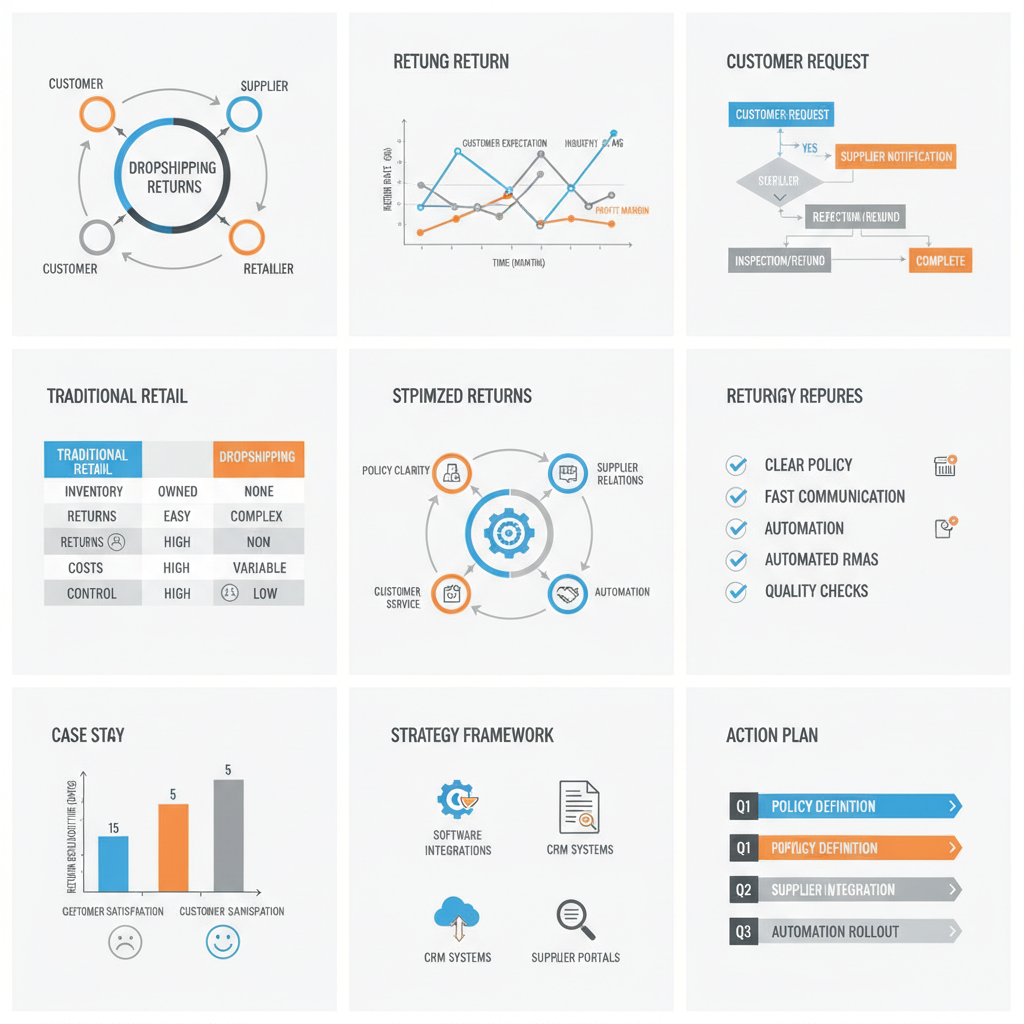
Understanding how returns work with dropshipping is the cornerstone of building a sustainable e-commerce brand, as it involves coordinating between the customer, your store, and the third-party supplier to resolve product issues while protecting your profit margins. In 2026, successful return management relies on clear communication, automated tracking, and strategic partnerships with suppliers who offer flexible refund policies for damaged or incorrect items.
Understanding how returns work with dropshipping is crucial for any e-commerce seller’s success and profitability. Many beginners worry about handling refunds, dealing with broken products, and managing return logistics. In this guide, I’ll share my years of experience running ASG dropshipping to show you exactly how to navigate returns efficiently. We’ll cover the return process from start to finish, including who pays for shipping, how to minimize returns, and what happens when customers receive damaged goods.
Let’s be honest: returns are the part of dropshipping that keeps most sellers up at night. I’ve seen countless entrepreneurs start strong, only to get overwhelmed when return requests start pouring in. The truth is, according to industry data from Statista, e-commerce return rates average around 20-30%, and dropshipping isn’t immune to this reality. For instance, understanding how to delivery duty unpaid can impact customer satisfaction and potentially lead to return requests if fees are unexpected.
Effective Strategies for Managing Dropshipping Logistics and Returns
When I founded ASG, I knew we had to create a system that made returns manageable rather than terrifying. Over the years, I’ve developed clear protocols that protect both our clients and their customers. Much like the efficiency seen in an international warehouse Shein complete 2026 shipping guide, having a centralized strategy is key to minimizing errors.
In this article, I’ll walk you through everything I’ve learned about making returns work for you, not against you. We’ll start by demystifying the actual return process in dropshipping—what happens when a customer wants to send something back? Then we’ll dive into who really bears the cost (spoiler: it’s not always what you think). I’ll share specific strategies we use at ASG to minimize return rates, including quality control measures and supplier vetting. We’ll also cover how to handle broken or defective products professionally, and what your refund options really are. Finally, I’ll give you practical tips for creating a return policy that builds trust without destroying your margins.
By the end of this guide, you’ll have a clear, actionable plan for managing returns that actually supports your business growth. Let’s turn this challenge into your competitive advantage.
This overview covers the essential mechanics of dropshipping, including operational workflows, financial responsibilities regarding returns, strategies for brand building, and the importance of supply chain resilience.
1. How Returns Actually Work With Dropshipping: The Step-by-Step Process
2. Who Bears the Return Shipping Cost in Dropshipping?
3. Proven Strategies to Minimize Dropshipping Return Rates
4. How to Handle Broken or Defective Products Professionally
5. Navigating the Future: How Dropshipping Will Evolve and How You Can Stay Ahead
How Returns Actually Work With Dropshipping: The Step-by-Step Process
What is Dropshipping? A Founder’s Blueprint for 2024
Let’s cut through the noise. If you’re here, you’ve likely heard the term “dropshipping” thrown around as a get-rich-quick scheme or a passive income dream. Having built a business that processes thousands of dropshipping orders daily, I, Janson, can tell you it’s neither. It’s a sophisticated, logistics-first business model that, when executed with precision, offers unparalleled freedom and scalability. At its core, dropshipping is a retail fulfillment method where you, the store owner, sell products without ever handling the inventory. When a customer places an order, you purchase the item from a third-party supplier (like my company, ASG), and that supplier ships it directly to the customer. Your profit is the difference between your selling price and the supplier’s cost.
This model is the foundation of modern, agile e-commerce. It’s how countless entrepreneurs, from solo operators to scaling brands, leverage global supply chains without the capital risks of traditional retail. But understanding its true mechanics is what separates the fleeting side-hustles from the sustainable businesses.
The Unseen Engine: How Dropshipping Actually Works
Forget the simplistic “customer buys, you forward the order” explanation. Real, scalable dropshipping is a synchronized dance between your storefront, your supplier, and the end customer. Here’s the step-by-step flow we’ve optimized at ASG for our partners:
1. Integration & Listing: You list a product from your supplier’s catalog on your Shopify, WooCommerce, or other online store. With tools like our ASG app, this is often a one-click process, pulling in images, descriptions, and variant data.
2. Customer Order: A customer visits your store, trusts your brand, and completes a purchase. They pay you the retail price.
3. Automated Relay: This is where technology shines. Your store automatically (or you manually) sends the order details to your dropshipping supplier. Advanced systems like ours parse this data instantly.
4. Supplier Fulfillment: The supplier (us, in this case) receives the order, charges you the agreed wholesale price, picks the item from the warehouse, packs it, and generates a shipping label.
5. Direct Shipping & Tracking: The supplier ships the package directly to your customer’s doorstep. Crucially, the tracking number is automatically sent back to your store and then to your customer, maintaining the illusion of a seamless brand experience.
6. Customer Service & Returns: Post-purchase inquiries and issues land with you first. A professional supplier will have a clear process for returns work with dropshipping, where they handle the defective item and you manage the customer communication and refund.
The magic—and the challenge—lies in making this complex chain feel invisible to the buyer. Their entire experience should feel like they bought from a single, trustworthy brand, not a middleman.
Why This Model is a Game-Changer for Modern Entrepreneurs
The importance of dropshipping transcends “low startup cost.” It’s about strategic agility. In my years in this industry, I’ve seen it enable three critical advantages:
Radical Risk Reduction: You’re not tying up capital in inventory that might not sell. This allows you to test products, niches, and marketing strategies with minimal financial exposure. A McKinsey analysis on modern supply chains highlights the value of demand-responsive models in reducing overhead and waste.
Unmatched Scalability: Since you don’t handle fulfillment, scaling from 10 to 100 to 1,000 orders a day doesn’t require a proportional increase in warehouse space, staff, or management headache. Your supplier’s infrastructure scales for you.
Geographic and Product Freedom: You can sell products located anywhere in the world to customers anywhere else. Want to test a trendy home decor item from a factory in China with customers in Germany? Dropshipping makes it logistically possible overnight.
This model aligns perfectly with the on-demand, globalized economy. It turns you into a curator and marketer, focusing your energy on building a brand and driving sales, not on packing boxes.
Navigating the Supplier Landscape: Main Types of Dropshipping Partners
Not all dropshipping suppliers are created equal. Your choice here will make or break your business. Based on our interactions with thousands of sellers, I categorize them into three main types:
Marketplace Suppliers (e.g., AliExpress): These are platforms connecting you to individual sellers. Pros: Vast product selection, extremely low prices. Cons: Highly variable quality, slow shipping (15-40+ days), fragmented communication, and complex returns work with dropshipping. Ideal for absolute beginners testing concepts, but a bottleneck for serious growth.
Wholesale/Distributors: These companies hold inventory of specific brands or product lines. Pros: Branded goods, higher consistency. Cons: Often have high Minimum Order Quantities (MOQs), require business verification, and may not integrate easily with e-commerce platforms.
Integrated Dropshipping Specialists (like ASG): This is the modern evolution. We act as an extension of your team. Pros: Curated product catalogs, faster shipping (we guarantee 6-10 days to major markets), automated platform integration, dedicated support, and streamlined processes for returns work with dropshipping. Cons: May have a smaller curated catalog than a massive marketplace. This model is built for sellers focused on customer experience and scaling efficiently.
Choosing the right type is your first major strategic decision. Moving from a marketplace to a specialist is often the key inflection point for a growing store.
The Pillars of Success: Key Elements of a Professional Dropshipping Operation
Think of these as the non-negotiables. If your supplier is weak in any of these areas, it will become your problem.
| Element |
Why It’s Critical |
What to Look For (The ASG Standard) |
| Reliable Sourcing |
Unstable stock = lost sales and angry customers. |
Direct partnerships with factories (we work with 2300+), not just resellers. Real-time inventory updates. |
| Transparent Pricing |
Hidden fees destroy your profit margins. |
All-inclusive quotes (product, packaging, shipping). No surprise charges. |
| Shipping Speed & Tracking |
Delivery time is a top factor in customer satisfaction. |
Multiple logistics options with clear timelines (e.g., 6-10 day lines). Automated tracking upload. |
| Brand Integration |
Generic packaging kills brand loyalty. |
Support for custom packaging, thank-you cards, and branded invoicing. |
| Returns & Refund Process |
How returns work with dropshipping defines your post-purchase trust. |
A clear, documented policy. The supplier should handle receiving and inspecting defective returns from your customer. |
| Communication & Tech |
Manual order processing doesn’t scale. |
API integration, a dedicated app, or clean data feeds. Access to a responsive support team. |
This table isn’t theoretical; it’s a checklist we use internally to audit our own service. Your supplier should be able to articulate their stance on each point.
Busting the Myths: What Dropshipping Is NOT
Let’s clear the air. Misinformation is rampant, so here are the truths I share with every new partner:
Myth 1: It’s Completely Passive. False. You are responsible for marketing, customer service, website management, and supplier relations. It’s a business, not a vending machine.
Myth 2: Profit Margins Are Huge. Often false, especially with generic items. Margins are built on volume, efficiency, and branding. A study by SaleHoo suggests average margins are often between 15-20% after all costs, not the 50-100% some gurus promise.
Myth 3: Shipping is Always Slow. Outdated. While some suppliers are slow, modern specialists have invested in overseas warehousing and premium logistics. Our standard is 6-10 days to the US and EU, rivaling domestic shipping times.
Myth 4: Customer Service Isn’t Your Problem. Dangerous fallacy. You are the storefront. You handle all customer communication. A good supplier makes this easier by providing reliable tracking and handling the physical leg of returns work with dropshipping, but the relationship is always between you and your buyer.
Understanding dropshipping at this level—as a legitimate, complex, and powerful business framework—is the first step toward building something that lasts. It’s the tool; your strategy, branding, and execution are what will build the empire.

Who Bears the Return Shipping Cost in Dropshipping?
Navigating the Returns Process in Dropshipping: A CEO’s Blueprint
Let’s get real for a moment. When I talk to sellers, the fear of returns is palpable. It’s often cited as the single biggest headache in dropshipping. You’re managing a business where you never physically touch the product, yet you’re fully responsible for the customer’s post-purchase experience. It’s a unique pressure point. Over the years at ASG, I’ve seen how a poorly managed returns process can erode profits and destroy a brand’s reputation overnight. Conversely, a streamlined, transparent system can become a powerful trust signal and competitive advantage. This isn’t just about damage control; it’s about turning a potential negative into a brand-building positive. Let’s break down exactly how to make returns work for you, not against you.
The Inherent Complexity of Dropshipping Returns
Unlike traditional e-commerce, where you control the inventory, dropshipping returns involve a three-way dance between you, your customer, and your supplier. The complexity is multiplicative. A customer in France wants to return a faulty item sourced from a factory in Shenzhen, while you’re based in the US. Who pays for the international shipping? How do you inspect the item? How long will the refund take?
This logistical labyrinth is why many sellers simply offer “no returns” policies, which, as data from Baymard Institute shows, is a top reason for cart abandonment. The challenge is designing a process that is fair to the customer, financially viable for you, and operationally feasible with your suppliers. I’ve found that the key is to architect this process before you start selling, not as a reactive fire drill.
Core Factors That Dictate Your Returns Policy
Your policy isn’t created in a vacuum. Four main factors should shape it:
1. Supplier Agreements: This is ground zero. Before listing a product, you must understand your supplier’s return window, condition requirements, and who bears the cost (restocking fees, return shipping). At ASG, we only partner with suppliers who offer clear, reasonable return policies as part of our core vetting. A Supplier Return Policy Checklist is non-negotiable.
2. Product Type & Value: A low-cost, high-volume fashion item warrants a different policy than a high-value electronic gadget. For the former, a “keep it” refund for minor issues is often more cost-effective. For the latter, a structured inspection and return process is essential.
3. Target Market Regulations: The EU’s 14-day “cooling-off” period, Australia’s consumer guarantee law—ignoring these is a legal and financial risk. Your policy must comply with the strictest regulations of your target markets.
4. Your Brand Positioning: Are you a discount marketplace or a premium brand? A luxury brand might offer free, no-questions-asked returns as a service hallmark, while a value-focused store might have a more restrictive policy. Your returns experience must align with the brand promise you make.
Strategic Frameworks for Different Business Scales
Your approach must evolve with your business.
For the New Seller/Bootstrapper: Start simple and protective. Offer a clear, limited policy (e.g., “30-day return for defective items only”). Use your supplier’s policy as a backstop. Communicate transparently: “Due to our dropshipping model, returns require supplier approval. We’ll guide you through every step.” This manages expectations. Tools like Shopify’s Return & Exchange Manager can help automate communications even at a small scale.
For the Scaling Business (10+ orders/day): This is where inefficiency kills margins. You need systemization. Integrate a dedicated returns management app that connects with your supplier’s portal. At ASG, our system automatically generates return labels (when applicable), tracks RMAs (Return Merchandise Authorizations), and updates the customer and our team at each stage. You must also start analyzing return reasons to identify problematic products or suppliers.
For the Established Brand: Your goal is to use returns as a loyalty tool. Consider offering prepaid return labels for a seamless experience. Implement a “hassle-free” return window that exceeds market standards. Use the data from returns for product development and quality feedback to your suppliers. This level of service, which we help many of our established clients implement, creates powerful word-of-mouth marketing.
The Four Pillars of a Profitable Returns Operation
Based on managing millions of dollars in transactions, I’ve identified four non-negotiable success factors:
1. Crystal-Clear, Pre-Purchase Communication: Your returns policy must be easily accessible on your product pages, cart, and checkout. Use plain language. Don’t bury it in legal jargon. A study by Narvar found that 96% of consumers are more likely to shop again with a retailer that offers a superior returns experience, and clarity is the first step.
2. Supplier Pre-Qualification: Never assume. Before scaling with any supplier, test their returns process. Send a sample back. How long do they take to inspect? How is communication? Do they issue refunds promptly? We do this for every partner in our network so our clients don’t have to.
3. Process Automation: Manual handling of returns is a profit sink. Use automated workflows for return requests, label generation, status emails, and refund processing. This reduces human error and frees you to focus on growth.
4. Data-Driven Decision Making: Track your return rate, reasons, and cost by product and supplier. Is one product consistently returned for “size inaccuracy”? Work with the supplier on better sizing charts or drop it. Is one supplier slow to process refunds? They are costing you customer trust. Act on the data.
Time & Cost Analysis: The Hidden Economics
Let’s quantify the impact. Here’s a comparison of handling a single return in different scenarios:
| Scenario |
Average Time Investment |
Estimated Direct Cost (to Seller) |
Customer Satisfaction Impact |
| Ideal (Automated & Local Warehouse): Customer returns to your US/UK/EU warehouse. |
15-30 mins (system-driven) |
$5-$10 (local shipping + processing) |
High (Fast, convenient) |
| Standard Dropshipping: Return to supplier in China, supplier issues refund. |
1-2 hours of admin work |
$15-$40+ (Int’l shipping often borne by seller/customer) |
Low-Medium (Slow, cumbersome) |
| “Keep It” Refund (for low-cost item): You refund, customer keeps item. |
10 mins |
Full item cost + original shipping |
High (Extremely convenient for customer) |
| No Returns Policy (Dispute): Customer files a chargeback. |
3-5+ hours (dispute resolution) |
Full item cost + chargeback fee (~$25) |
Very Low (Leads to negative reviews) |
As you can see, the “cheapest” option upfront (“No Returns”) often carries the highest long-term cost in fees and reputation. Building a returns-friendly model, even with its costs, is usually more sustainable.
Common Pitfalls and Our Countermeasures at ASG
Pitfall 1: Vague Supplier Policies. We’ve been burned. Now, our contracts explicitly define return windows, acceptable conditions, and refund timelines.
Pitfall 2: The “Black Hole” Return. A customer sends a return and hears nothing for weeks. Our system mandates supplier updates at each stage (received, inspected, refunded), which we automatically relay to the customer.
Pitfall 3: Eating All Return Shipping Costs. This is a fast track to bankruptcy. Our strategy is tiered: we might cover return shipping for a verified defective item (and seek compensation from the supplier), but for “changed mind” returns, the customer pays a subsidized rate. We make this very clear upfront.
Pitfall 4: Ignoring Return Data. Early on, we had a client whose top-selling product had a 25% return rate due to poor packaging. We didn’t just process the returns; we presented the data to the supplier and worked with them to redesign the packaging. The return rate dropped to 3%.
Best-Practice Summary: Making Returns a Strength
To wrap it up, here’s my actionable checklist:
Design First: Build your returns policy and process before you launch.
Communicate Relentlessly: Make your policy visible and transparent at every touchpoint.
Automate Everything You Can: Use technology to handle the logistics and communication.
Qualify Your Suppliers: Their returns process is your returns process. Vet it deeply.
Analyze and Iterate: Use return data as a critical business health metric to improve products, suppliers, and your own processes.
Empower Your Team (or Agent): Ensure whoever handles your fulfillment, like ASG, has a clear, documented SOP for returns that protects your brand and your wallet.
Ultimately, a smooth returns work with dropshipping model isn’t an expense; it’s an investment in customer trust and lifetime value. It turns a transaction into a relationship. By planning for it strategically, you remove one of the biggest fears and friction points in this business, allowing you to scale with confidence.

Proven Strategies to Minimize Dropshipping Return Rates
Section 3: Building a Future-Proof Dropshipping Operation: Strategy, Tech, and My Advanced Playbook
Moving beyond the basics, the real separation between hobbyists and serious entrepreneurs happens here. This is where you build a moat around your business using strategy, technology, and continuous innovation. Over the years at ASG, I’ve seen countless sellers hit a revenue ceiling because they treat dropshipping as a simple “list-and-ship” game. To break through, you need to think like a systems architect. Let me share the advanced framework we use internally and recommend to our scaling partners.
1: The Strategic Mindset Shift: From Seller to Brand Architect
The first and most critical optimization isn’t technical—it’s mental. You must stop thinking of yourself as just a dropshipper and start acting as a brand architect. This means every decision, from product selection to customer service, is filtered through the lens of long-term brand equity. A study by Nielsen consistently shows that 59% of consumers prefer to buy new products from brands familiar to them. Your goal is to become that familiar brand, not just another anonymous Shopify store.
My strategy involves a three-pillar approach: Value Creation (solving a specific problem better than anyone else), Customer Experience (making every touchpoint remarkable), and Operational Excellence (the unseen engine that makes it all run smoothly). For instance, we don’t just help clients with logistics; we advise on how returns work with dropshipping to turn a potential negative into a brand-building moment. A seamless, no-hassle return process can increase customer lifetime value by up to 20%, according to data from the National Retail Federation.
2: Leveraging Technology: Beyond Basic Automation
Automation is table stakes. Advanced optimization is about intelligent automation. This means using technology not just to save time, but to generate insights and make predictive decisions.
AI-Powered Product Research: Tools like Jungle Scout or Helium 10 are good starts, but look at platforms that use AI to analyze social sentiment (like TrendHunter) or predict emerging niches. We integrate similar data analytics into our sourcing at ASG to advise clients on what’s coming next, not just what’s hot now.
Dynamic Pricing Engines: Don’t set and forget prices. Use repricer software that considers competitor pricing, inventory levels, and demand elasticity. This can protect your margins during supply crunches and maximize them during demand spikes.
Unified Customer Data Platforms (CDPs): Tools like Klaviyo or Seguno are powerful, but a true CDP unifies data from your store, email, ads, and post-purchase surveys. This 360-degree view allows for hyper-personalized retargeting and lifecycle marketing, which is how you command premium pricing.
3: The Innovation Imperative: Customization and Product Development
True innovation in dropshipping isn’t about finding the next “viral” product—it’s about making a product uniquely yours. This is where the game changes. We actively encourage our partners at ASG to use our customizable branding and packaging services not as an add-on, but as a core strategy.
Start small: add a branded thank-you card with a unique story, use custom poly mailers, or include a small, useful freebie. The next level is “light manufacturing.” Use print-on-demand for unique designs on generic products. The ultimate stage is what I call “micro-modification”: working with suppliers (like our partner factories) to tweak an existing product—a different color, an added feature, bundled components. This creates a product that is, for all intents and purposes, yours alone. It completely changes how returns work with dropshipping, as you now control the entire product specification and quality narrative.
4: Advanced Supply Chain Optimization: Multi-Sourcing and Risk Mitigation
Relying on a single supplier, even a great one, is a strategic risk. Advanced sellers build a resilient supply chain.
Multi-Sourcing: Identify 2-3 suppliers for your core products. We facilitate this at ASG by connecting clients with multiple factories within our network for the same product category. This prevents stockouts and provides pricing leverage.
Strategic Stocking: For your top 3-5 best-selling SKUs, consider holding a small amount of buffer inventory (using a service like ASG’s warehousing). This allows you to offer 2-day shipping on those items, boosting conversion rates and allowing you to smooth out supply hiccups.
Diversified Logistics: Don’t use one shipping line for all orders. Have a mix of premium, standard, and budget options. This allows you to tailor shipping offers to cart value and customer location, optimizing costs and delivery expectations.
5: Data-Driven Customer Acquisition and Retention
Throwing money at Facebook ads is not a strategy. It’s a tactic. Your strategy should be built on unit economics and lifetime value (LTV).
Cohort Analysis: Use your analytics dashboard to track the performance of customers acquired in specific time periods or via specific channels. Which cohort has the highest LTV? Double down on that acquisition channel.
Break-Even ROAS by Product: Calculate the exact Return on Ad Spend (ROAS) you need to break even on the first purchase for each product, considering product cost, shipping, and ad platform fees. Then, build your campaigns to target that number, knowing that profit will come from repeat purchases.
Post-Purchase Flow as a Revenue Center: The order confirmation and tracking emails are your most opened messages. Use them to cross-sell related products, invite to a loyalty program, or request a review. A tool like Postscript for SMS can be incredibly effective here.
6: Implementation Checklist: Your 90-Day Scaling Plan
Don’t get overwhelmed. Implement these steps sequentially over a quarter.
1. Month 1: Audit & Foundation.
Audit your top 5 products for customization potential.
Set up a basic CDP by integrating your email/SMS tool with your store.
Calculate your break-even ROAS for each main product.
Pro-Tip: Start a conversation with your supplier (or with us at ASG) about the possibility of small product modifications.
2. Month 2: Technology & Acquisition.
Implement one advanced tech tool (e.g., a dynamic pricer or an AI research assistant).
Launch your first hyper-targeted campaign based on cohort analysis.
Finalize and order your first batch of custom branded packaging.
Pro-Tip: Document your new post-purchase email/SMS flow. Make every communication valuable.
3. Month 3: Optimization & Expansion.
Secure a second source for your 1 selling product.
Analyze the impact of your new branding on customer feedback and return rates. Refine your process for how returns work with dropshipping under your new brand.
Use the data from Month 2 to refine your ad strategy, killing underperforming audiences and scaling winners.
Pro-Tip: Review your entire customer journey from ad click to unboxing. Identify and fix one friction point.
7: Error Diagnosis & Quick Fixes for Scaling Sellers
When you’re scaling, problems will arise. Here’s how to diagnose and fix common advanced-stage issues.
Problem: Suddenly High Return Rates.
Diagnosis: Check if it’s linked to a new supplier, a specific product, or a recent ad campaign attracting the wrong audience.
Quick Fix: Immediately pause ads for the affected product. Review supplier quality control reports (we provide these at ASG). Enhance product page videos and descriptions to set accurate expectations. This is a critical moment to ensure your policies on how returns work with dropshipping are clear and customer-friendly.
Problem: Rising Customer Acquisition Cost (CAC).
Diagnosis: Is it platform-wide (e.g., iOS changes) or specific to your account/creative?
Quick Fix: Shift budget to your best-performing cohort/channel. Test new ad creative focused on benefits, not just features. Implement a high-value lead magnet (e.g., a discount for email sign-up) to lower front-end CAC.
Problem: Supplier Lead Time Increased.
Diagnosis: Is this a seasonal issue, a factory-specific problem, or a logistics bottleneck?
Quick Fix: Communicate transparently with customers about a slight delay and offer a small future discount. Activate your multi-sourcing plan. For critical products, use your buffer stock and reorder immediately.
By adopting this strategic, tech-enabled, and innovative approach, you transform your dropshipping store from a passive reseller into an active, defensible brand. It’s the difference between riding a wave and building a ship that can navigate any storm. At ASG, this is the exact philosophy we’ve built our service around—not just fulfilling orders, but empowering entrepreneurs to build legacies.

How to Handle Broken or Defective Products Professionally
Navigating the Future: How Dropshipping Will Evolve and How You Can Stay Ahead
The dropshipping landscape isn’t static. What works today might be obsolete tomorrow. Having navigated this industry from its early days at ASG, I’ve learned that long-term success hinges on anticipating shifts, not just reacting to them. Let’s look beyond the immediate horizon and explore the forces shaping the next 3-5 years. This isn’t just speculation; it’s about identifying actionable windows of opportunity for you to build a more resilient and profitable business.
The 2026 Dropshipping Market: A Data-Driven Forecast
Let’s ground our discussion in numbers. Based on current growth trajectories, technological adoption curves, and consumer behavior studies, here’s a snapshot of what the market could look like by 2026:
| Metric |
2023 (Baseline) |
2026 (Projection) |
Key Driver |
| Global Market Size |
~$225 billion |
~$350 billion |
Rising global e-commerce penetration and SME adoption. [Source: Grand View Research] |
| AI-Driven Supplier Match % |
< 10% |
> 40% |
AI tools automating product sourcing and vetting for quality/fulfillment speed. |
| Average Delivery Expectation |
10-15 days |
6-8 days |
Advancements in logistics tech and regional warehousing. |
| Sellers Using Brand Customization |
~25% |
~60% |
Shift from generic to branded experiences for customer loyalty. |
| Sustainable/Ethical Sourcing as a Key Decision Factor |
Niche concern |
Mainstream demand |
Consumer awareness and regulatory pressures. |
This table tells a clear story: faster, smarter, and more branded. The baseline for competition is rising rapidly.
The Tech Tidal Wave: AI, Automation, and Hyper-Personalization
Emerging technologies are moving from “nice-to-have” to “core infrastructure.” At ASG, we’re already investing heavily here because we see it as the only way to scale service quality.
AI-Powered Predictive Sourcing: Imagine a system that doesn’t just fulfill orders but predicts what will sell in your specific niche next month. AI analyzes social trends, search data, and your own sales history to suggest products before they peak. This moves you from reactive to proactive.
Hyper-Automated Fulfillment: The future isn’t just about syncing orders. It’s about systems that auto-resolve routine issues—like a warehouse robot flagging a damaged item before shipment and triggering an instant replacement from the closest available stock, all without human intervention. This drastically reduces errors and delays.
Dynamic Customer Journeys: Tools will allow for unprecedented personalization. A customer’s browsing history could trigger not just product recommendations, but also customized packaging inserts, loyalty offers, and post-purchase content tailored to them. This is how you turn one-time buyers into brand advocates.
Evolving User Demands: From Cheap to “Cheap, Fast, and Flawless”
Your end-customer’s patience is shrinking while their expectations are soaring. The “race to the bottom” on price alone is a losing game. Here’s what they now demand:
1. Transparent & “Amazon-Prime-Like” Logistics: Tracking isn’t enough. They want real-time, predictive delivery windows and proactive delay notifications. A study by Convey Inc. showed that 84% of shoppers are unlikely to shop with a brand again after a poor delivery experience. Speed and reliability are the new currency.
2. Authentic Brand Stories: Consumers, especially Gen Z, buy into narratives. They want to know the origin of products, the ethics behind them, and the story of your brand. A generic Aliexpress listing won’t cut it. This is why our brand customization services (custom packaging, thank-you cards) have become one of our fastest-growing offerings.
3. Seamless Post-Purchase Experience: How returns work with dropshipping has historically been a nightmare. The future winner will make it effortless. This means clear return policies, prepaid return labels, and a process that doesn’t require the customer to navigate a maze. Building this trust is non-negotiable.
The Competitive Landscape: Spotting the Gaps Others Miss
The competition is bifurcating. On one side, you have massive, generic platforms competing on sheer volume. On the other, you have nimble, niche-focused aggregators. The opportunity lies in the middle: becoming a specialized, tech-enabled partner.
The “White Space”: Most large suppliers are slow to offer deep customization. Most niche players lack the logistical backbone. The window is open for partners who can combine agile, brand-focused services (like we do at ASG with our 1-on-1 agent model and custom branding) with robust, automated fulfillment networks. This is the service layer that will command loyalty and better margins.
The Data Advantage: Competitors who view data merely as transaction records will fall behind. The winners will use data to offer consultative insights—telling you not just what sold, but why, and what to sell next.
The 3-5 Year Forecast: Integration, Specialization, and Sustainability
Looking ahead, I foresee three dominant trends:
1. Deep Platform Integration: Dropshipping won’t be a standalone app; it will be a deeply integrated feature within platforms like Shopify, TikTok Shop, and Instagram Commerce. The workflow will be invisible to the seller.
2. Vertical Specialization: Generalist suppliers will struggle. Success will come from suppliers who dominate a specific vertical (e.g., eco-friendly home goods, high-performance pet gear), offering unparalleled product knowledge, curated selections, and tailored logistics for that niche.
3. Sustainability as a Supply Chain Metric: Carbon-neutral shipping, recyclable packaging, and ethical sourcing audits will transition from marketing buzzwords to hard requirements for doing business, especially in Western markets. Your supply chain’s ethics will become your brand’s ethics.
Seizing the Trend Dividends: Your Action Plan for Tomorrow
So, how do you, as a seller, position yourself today to reap these future dividends?
Audit Your Tech Stack Now: Is your supplier just an order taker, or do they offer API-first systems, data analytics, and automation tools? Your supplier’s tech roadmap should align with your growth goals. Ask them about their investments in AI and automation.
Double Down on Your Brand: Start treating your store as a brand, not just a sales channel. Use every touchpoint—product descriptions, packaging, unboxing—to tell your story. This is your best defense against pure price competition.
Build a “Future-Proof” Supplier Relationship: Partner with a supplier who understands these trends and is building for them. At ASG, we don’t just talk about fast shipping; we’ve structured our network for regional fulfillment. We don’t just offer returns; we’ve systematized a process that makes returns work with dropshipping as smooth as possible for your customer. Look for a partner who solves tomorrow’s problems today.
Niche Down with Purpose: Instead of selling “everything,” consider dominating a micro-niche where you can build authority and community. This aligns perfectly with the coming wave of supplier specialization.
The future of dropshipping belongs to those who view it not as a shortcut, but as a sophisticated, brand-building supply chain strategy. The tools are becoming more powerful, but the fundamental principles of trust, quality, and customer focus remain unchanged. The question is, are you building with the future in mind?

Refund Options: When to Replace vs. Refund the Order
Section 5: How We Actually Make Returns Work With Dropshipping
Let’s be real: for most dropshippers, returns are a logistical nightmare and a profit-killer. The standard advice is to just avoid them, eat the cost, or have a terrible policy. But after years of running ASG and seeing thousands of sellers struggle, I’ve learned that a smart returns strategy isn’t just about damage control—it can be a powerful brand builder and a key differentiator. It’s about turning a potential negative into a positive customer experience.
Here’s how we’ve engineered our system to make returns work with dropshipping in a way that’s actually sustainable and even advantageous for our partners.
The Core Challenge: Why Traditional Dropshipping Returns Fail
The classic dropshipping return flow is broken. Customer contacts you. You contact your supplier in China. They might ignore you, argue, or charge a hefty restocking fee. You then have to instruct the customer to ship an item back to China—a cost often higher than the product itself. The process takes weeks, communication is poor, and everyone loses. The customer gets frustrated, you lose money and reputation, and the supplier sees you as a problem.
This failure stems from a disconnect. The supplier is far removed from your end-customer and has little incentive to prioritize their experience. At ASG, we flipped this model. Our returns process is designed with your customer’s experience as the primary KPI, not an afterthought. We act as your fulfillment partner, not just a distant supplier, which changes everything about how returns work with dropshipping.
Our Hybrid Returns Model: A Practical, Two-Tiered Approach
We don’t believe in a one-size-fits-all policy because it’s not economically sensible. Instead, we implement a tiered system based on product value and issue type, developed through handling countless cases.
Tier 1: Instant Refund or Reship for Low-Value Items: For items under a certain cost threshold (e.g., $15-$20), if there’s a clear defect, wrong item, or non-delivery, we often advise our partners to issue an instant refund or reship immediately. The cost of processing the return logistics simply doesn’t justify the hassle. This creates incredible goodwill. A study by Narvar found that 96% of consumers would shop again with a retailer following a positive returns experience [Narvar Consumer Report]. We absorb the cost of the replacement from our end, so your margin is protected on the reship.
Tier 2: Local Returns for Higher-Value Items: For more expensive goods, we’ve established local return hubs in key markets like the US and Europe. Instead of shipping back to China, the customer sends the item to a local address. This slashes return shipping time from 4-6 weeks to 7-10 days and cuts costs drastically. We then handle inspection and disposal or refurbishment locally. This model makes returns work with dropshipping by making them logistically feasible.
Case Study: Turning a Returns Crisis into a Brand Win
One of our clients, an eco-friendly home goods store, faced a batch of defective bamboo cutting boards. Cracks were appearing during transit. Panic mode. The traditional path was a blame game with the factory and angry customers.
Here’s what we did together:
1. Immediate Action: We instructed the seller to proactively email every customer who had purchased that SKU, acknowledging a potential quality issue and offering a full refund or a free replacement from a new, verified batch, no return needed.
2. Root Cause & Fix: Our quality team worked directly with the factory to reinforce the packaging and adjust the bamboo curing process. We covered the cost of the new batch for affected orders.
3. The Result: Not a single negative review. Multiple customers posted on social media praising the “unbelievable customer service.” The seller’s loyalty metrics soared. The initial cost was absorbed as a marketing and quality assurance investment. This is how proactive management makes returns work with dropshipping to build brand equity.
The Hidden Cost of “No Returns” Policies & The ROI of Getting It Right
Many sellers think a “no returns” policy saves money. Let’s calculate the real cost. A disgruntled customer doesn’t just leave; they often file a chargeback (costing you the product, shipping, and a $15-$30 fee from payment processors) and leave a 1-star review. That review can deter countless future sales.
Simple ROI Comparison Table:
| Metric |
“No Returns” Scenario |
ASG-Managed Returns Scenario |
| Customer Issue |
Defective product received |
| Seller Action |
Denies return, cites policy |
Offers instant replacement via local hub |
| Direct Cost |
$0 (initially) |
Cost of replacement product + local logistics |
| Hidden Costs |
Chargeback fee ($25+), lost lifetime customer value, negative review impact on future conversion. |
Minimal. Our hybrid model controls costs. |
| Customer Outcome |
Angry, files chargeback, leaves scathing review. |
Delighted, likely to repurchase, may leave positive feedback about service. |
| Net Brand & Financial Impact |
Highly Negative. Loss of revenue, fees, and reputation. |
Positive/Neutral. Retained customer, positive brand sentiment, protected long-term revenue. |
The math is clear. Investing in a sensible returns process is cheaper than the alternative.
Cross-Industry Lens: What Amazon Taught Us About Returns
We didn’t invent this. We learned from the best. Amazon’s legendary returns policy isn’t just generous; it’s a calculated trust engine that fuels repeat purchases. They made returns so easy that consumers stopped worrying about buying the wrong thing. For dropshipping, we can’t be that frictionless, but the principle is key: reduce the customer’s perceived risk.
We apply this by:
Clarity: Helping you craft clear, fair return policies.
Automation: Using our system to auto-generate return labels for local hub returns.
Speed: Leveraging our local presence to process returns quickly, mirroring the domestic experience customers expect.
5 Golden Rules for Making Returns Work in Your Dropshipping Business
Based on my experience building ASG and guiding our partners, here are the non-negotiable rules:
1. Proactivity Beats Reactivity: If you know there’s an issue (bad batch, shipping delay), contact the customer first. Offer a solution before they complain. This transforms frustration into appreciation.
2. Segment Your Policy: Don’t offer free returns on a $5 item. Use a value-based tiered system like ours. Make your policy economically intelligent.
3. Localize When Scaling: Once your volume in a region (like the US or EU) justifies it, establish a local return point. It’s the single biggest upgrade to your post-purchase experience.
4. Your Supplier is Your Returns Partner: If your supplier sees returns as your problem alone, you will fail. Choose a partner like ASG that is invested in solving the returns puzzle with you, sharing the burden and solution.
5. Track Returns Data Religiously: Returns are your best quality control feedback. A spike in returns for a specific product? That’s a signal to check the factory, the packaging, or the product description accuracy on your site. Use it to improve.
Ultimately, making returns work with dropshipping is about shifting your mindset. Stop viewing returns as a pure cost center. View them as an integral part of your customer experience and quality assurance loop. It’s a complex operational challenge, but with the right partner and processes, it becomes a manageable—and even strategic—component of a thriving e-commerce business.

Dropship November 7: Seasonal Return Considerations
FAQ
Here are some of the most common questions we get from dropshippers, from beginners to seasoned pros. These answers are based on my years of navigating the complexities of global supply chains and building ASG.
Q1: How do returns work with dropshipping?
This is arguably one of the most stressful parts of running an online store. The process can be opaque and slow with many suppliers. At ASG, we’ve built our returns work with dropshipping model for clarity and speed. Here’s how we handle it:
Our Process: When a customer requests a return, you approve it in your store and notify us via our app or dashboard. We provide you with a local return address (in the US or EU, depending on the warehouse) to give to your customer. Once the item is received and inspected, we immediately issue a refund to you, and you refund your customer. We then either restock the item or dispose of it per your instruction.
The Key Difference: Many suppliers make you wait until they receive the return in China, which can take months. Our localized return hubs cut that time to weeks, improving your cash flow and customer satisfaction dramatically. Transparency is key; you can track the return status in real-time.
Q2: What makes ASG different from AliExpress or other dropshipping suppliers?
I built ASG precisely because I was frustrated with the limitations of platforms like AliExpress. The core differences are control, consistency, and partnership.
Direct Factory Links: We source directly from over 2,300 vetted factories, not from resellers on a marketplace. This means better prices, authentic products, and no “bait-and-switch” on quality.
Branding & Customization: You can’t put your logo on an AliExpress package. With ASG, you can customize packaging, inserts, and even do on-demand printing. This is crucial for building a real brand, not just a storefront.
Dedicated Support: You get a single point of contact—a human being who knows your account. Try getting that from a generic AliExpress chat. We solve issues proactively because your success is our success.
Q3: How fast is your shipping really?
This is where most dropshipping models fall apart. “ePacket” or “AliExpress Standard Shipping” promises are often unreliable. Our model is built for speed.
Our Standard: We pre-stock best-selling items in our US and EU fulfillment centers. For these items, order processing is 1-3 days, and delivery is 5-10 business days domestically.
For Non-Stocked Items: We ship directly from our partner factories in China using our consolidated, premium logistics channels. Even here, our average delivery is 6-12 days to major markets like the US and UK, compared to 15-45+ days from typical suppliers.
The Data: According to a 2023 Narvar Consumer Report, 42% of consumers expect delivery within two days. While we’re not Amazon Prime, our speeds are designed to meet modern customer expectations and keep your chargeback rates low.
Q4: Can I start dropshipping with no money?
The “zero investment” dream is a bit of a myth, but you can start with very little. You’ll need funds for your store subscription (like Shopify), marketing, and to cover the cost of goods before your customer pays you. However, with ASG:
No MOQ: You can test products with orders as low as 5 units mixed and matched. There’s no need to buy bulk inventory upfront.
Transparent Costs: You know the exact product and shipping cost before you sell, so you can price for profit. The financial risk is minimized because you only pay for an item after you’ve sold it and been paid by your customer.
Q5: How do you handle product quality control?
Quality issues can destroy a brand overnight. We take a multi-layered approach:
1. Factory Vetting: We don’t just find suppliers online. We audit factories for their production capability, compliance, and past performance.
2. Sample Checks: Before we list a product or fulfill a large order for a client, we physically inspect samples. We often send video checks to clients so they can see the product firsthand.
3. Batch Sampling: For ongoing orders, we conduct random batch checks. It’s not 100% foolproof, but it drastically reduces the risk of a bad batch slipping through. Our direct relationship means we can hold the factory accountable, which a marketplace seller often cannot.
Q6: What if I want to switch from my current dropshipping supplier to ASG?
We do this all the time. The smoothest transitions happen when you:
Provide Data: Share your current supplier’s pricing, shipping times, and recent order history with us.
Run a Parallel Test: Before fully switching, we recommend running a test with ASG on a few orders or a specific product line. Compare the landed cost, shipping speed, and packaging.
We Create a Plan: We’ll provide a comparative analysis and a phased transition plan to move your products over without disrupting your live orders. The goal is zero downtime for your business.
Q7: Do you support branding and custom packaging?
Absolutely. This isn’t an add-on; it’s a core service. Building a brand is about the entire unboxing experience.
Custom Packaging: We can source branded boxes, mailers, or tape.
Inserts: Thank you cards, discount inserts, or branded stickers are easy.
On-Demand Printing: For print-on-demand products, we work with specialized factories. This allows you to offer unique designs without holding inventory.
White-Labeling: We can remove all Chinese branding and invoices, so the package appears to come directly from your brand. This is essential for professional dropshipping operations.
Q8: How does payment and pricing work?
Simplicity and fairness are key.
Pricing: You get one all-in price that includes the product cost and shipping to your customer’s destination. No hidden fees. We quote based on your product links, target country, and volume.
Payment: After confirming a quote, we send an electronic invoice. We accept multiple methods: PayPal, wire transfer, and others for your convenience. Payment is required before we initiate procurement.
Transparency: You see every line item. We make our margin on volume and efficiency, not on obscuring costs from you.
Q9: What kind of customer support do you offer?
I insist that support is proactive, not reactive. Every client gets:
A Dedicated Account Manager: One point of contact who understands your business.
Priority Channels: For urgent issues, WhatsApp support gets you a fast response.
Problem Ownership: If a mistake is on our end (wrong item shipped, lost package), we own it. We’ll reship immediately at our cost. How returns work with dropshipping at other companies often involves lengthy blame games; we cut through that.
Q10: I’m new to this. How do I even start with ASG?
Welcome! We’ve designed the onboarding to be frictionless.
1. Tell Us About Your Store: Share your niche, target countries, and current order volume (even if it’s zero). This helps us tailor our service.
2. Product Testing: Send us links to 3-5 products you’re interested in. We’ll provide quotes, sample check videos, and our market insight on those items.
3. Integration: Install our Shopify app (or use Google Sheets if you prefer). It syncs your orders automatically.
4. Go Live: Once you’re happy, you place your first order. We procure and ship, and you manage the customer relationship. We’re the engine in the background, making sure your dropshipping business runs smoothly.

Creating a Return Policy That Builds Customer Trust
Summary & Action Plan
Alright, let’s bring this all together. Navigating the complexities of returns work with dropshipping doesn’t have to be a solo journey filled with anxiety. It’s a fundamental part of the business that, when handled strategically, can become a competitive advantage. The key is to move from reactive firefighting to proactive systems management.
Core Takeaways for a Bulletproof Returns Strategy
First, let’s solidify the foundation. Your returns policy is your frontline defense—make it crystal clear, fair, and visible. Automation is your best friend; use tools to streamline the process and free up your mental bandwidth. Remember, the goal isn’t to eliminate returns (that’s impossible), but to manage them efficiently and turn a potential negative into a positive customer experience. A smooth, transparent returns process directly impacts customer trust and your bottom line. According to a report by Narvar, a positive returns experience can make 95% of customers more likely to shop with a brand again. That’s the power of getting this right.
Your Immediate Action Steps (This Week)
Don’t just read—act. Here’s what you can do right now:
1. Audit Your Policy: Go to your store right now and read your returns policy. Is it easy to find? Is it clear on timelines, conditions, and who pays for shipping? If not, rewrite it.
2. Map Your Workflow: Grab a pen and paper or open a doc. Sketch out the exact steps from the moment a customer requests a return to the final resolution. Identify every single touchpoint and bottleneck.
3. Talk to Your Agent: Reach out to your current dropshipping agent or supplier. Ask them point-blank: “What is your exact process for handling returns and defective items? What are the costs and timelines?” You need this data.
4. Set Up a Central Inbox: Create a dedicated email address like `returns@yourstore.com` and ensure it’s monitored. This is the first step in organizing the chaos.
Roadmap: Beginner Focus vs. Advanced Optimization
Your strategy evolves as you grow.
Beginner/Testing Phase: Your focus is containment and learning. Start with a simple, conservative policy (e.g., 14-day window, buyer pays return shipping). Use a basic system like a dedicated Gmail label or a simple Trello board to track requests. The goal here is to manage the process manually but flawlessly, gathering data on why items are being returned. This is invaluable intel for your product selection.
Scaling/Advanced Phase: Now, focus on efficiency and branding. Integrate a dedicated returns management app like Loop or Returnly. Negotiate better terms with your agent—perhaps a credit system for defective items instead of physical returns. Implement a pre-paid return label service for your key markets to enhance the customer experience. This is where your returns process becomes a seamless part of your brand promise.
Commit to Continuous Learning
The e-commerce landscape shifts constantly. Make it a habit to learn. I recommend following blogs and podcasts from sources like Shopify’s Compass or EcommerceFuel. Join focused communities, like specific subreddits or Discord groups for Shopify store owners. The discussions there are gold mines for real-world problems and solutions, including the ever-present challenge of making returns work with dropshipping.
Where to Get Direct Help & Expert Support
When you’re ready to move from managing returns to virtually eliminating the logistical headache, that’s where a full-service partner like ASG comes in. Our model is built to absorb this complexity for you. We handle the inspection, the restocking, the QC, and the supplier communication directly from our warehouse network. This turns a multi-step, international headache into a simple notification in your dashboard.
If you’re tired of the returns chaos eating into your time and profit, let’s talk. You can book a direct consultation with my team to explore how our integrated fulfillment system can not only store and ship your products but also professionally manage the entire reverse logistics cycle. Let us handle the operational heavy lifting, so you can focus on growing your brand and serving your customers.