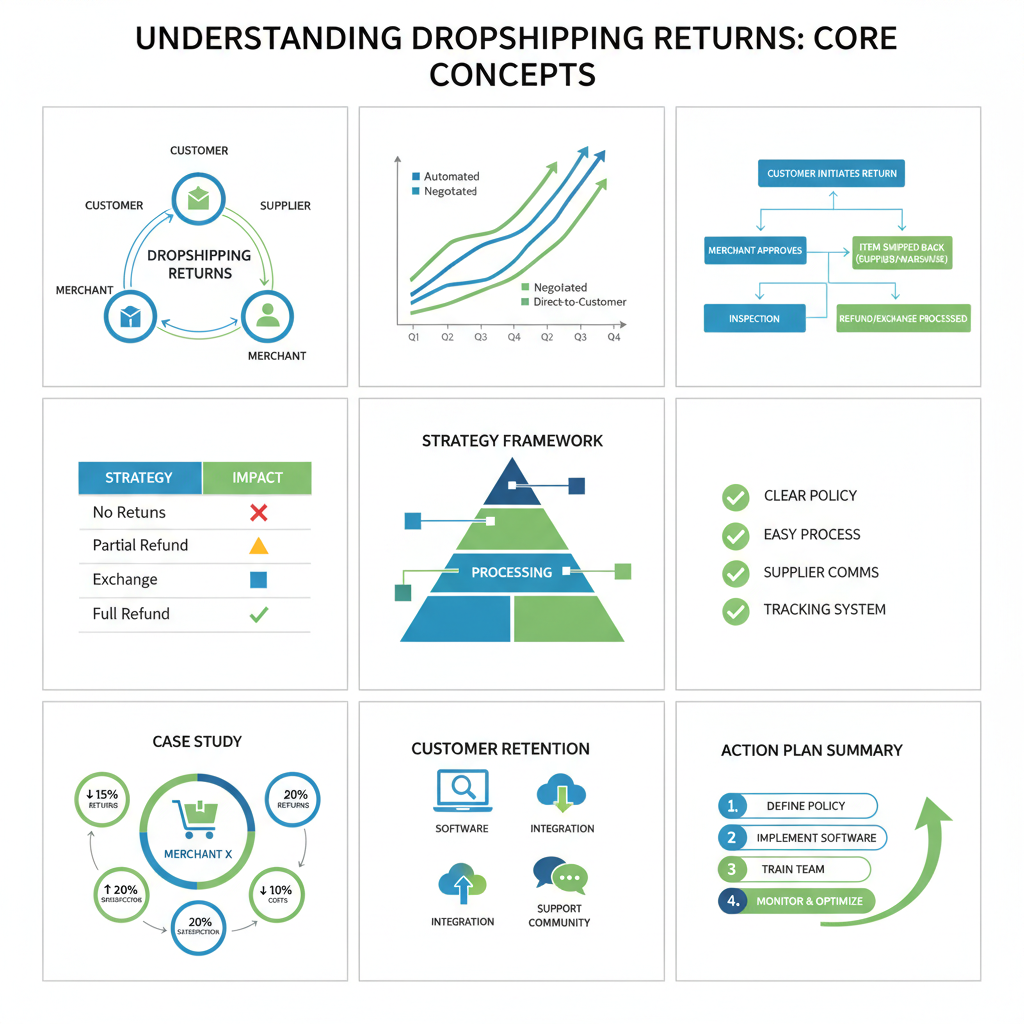
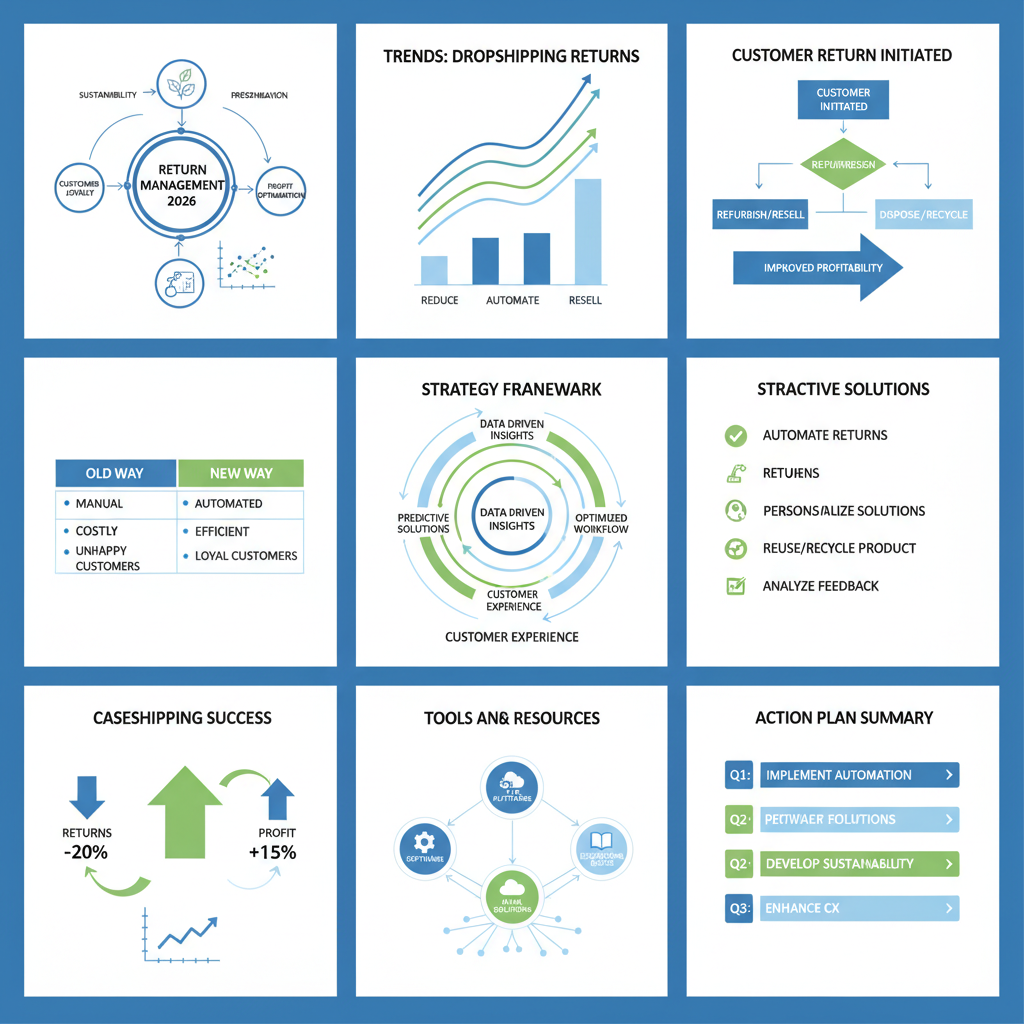
The core lies in transforming returns from a profit killer to an opportunity to enhance customer loyalty by establishing transparent return policies, selecting suppliers with stable quality, establishing automated customer communication processes, and collaborating with efficient logistics agents. This approach ensures seller profits while building brand trust.
As someone who has built ASG dropshipping from the ground up, I understand the challenges of handling returns in dropshipping. Many sellers struggle with return processes, refund management, and customer satisfaction. In this article, I’ll share my proven strategies to streamline your returns process and protect your profits. The key is establishing clear policies and working with reliable suppliers.
When I first started in dropshipping years ago, returns were my biggest headache. I remember losing sleep over customer complaints and refund disputes. However, I soon realized that reducing returns starts at the beginning of the funnel. For instance, learning how to find a niche for dropshipping that focuses on high-quality products can significantly lower your initial refund rates.
Strategic Management of E-commerce Logistics and Refunds
The truth is, returns are inevitable in any retail business. But in dropshipping, they present unique challenges. You’re dealing with suppliers, international shipping, and customers who expect Amazon-level service. The good news? With the right approach, you can turn returns from a nightmare into a manageable part of your business. As you expand into new platforms, such as learning how to connect TikTok Shop with CJ Dropshipping, having a robust return framework becomes even more critical to handle social commerce volume.
Over the years at ASG, I’ve developed systems that have helped thousands of sellers manage returns effectively. We’ve seen sellers reduce their return-related losses by up to 40% just by implementing proper procedures. In this guide, I’ll walk you through everything from setting up your return policy to handling difficult customer situations. You’ll learn practical strategies that work in the real world, not just theory. I’ll share what I wish someone had told me when I was starting out.
The following list summarizes the core structural components regarding dropshipping returns, supplier management, and long-term operational scaling.
-
Understanding Dropshipping Returns
-
Setting Up Your Return Policy Framework
-
Choosing the Right Suppliers for Better Returns
-
Streamlining the Return Process Step-by-Step
-
Managing Refunds and Customer Communications
-
How Returns Are Handled in Different Scenarios
-
Advanced Strategies to Minimize Return Rates
Understanding Dropshipping Returns
What is Dropshipping? A Veteran’s Plain-English Guide
Let’s cut through the noise. When sellers, especially newcomers, ask me “What is dropshipping?”, they’re often met with overcomplicated jargon or get-rich-quick fantasies. Having built ASG from the ground up, I see it differently. To me, dropshipping is a fulfillment method where you, the retailer, sell products without ever handling the inventory. You market the product, make the sale, and then your supplier (like ASG) ships it directly to your customer. You never see or touch the stock. It’s the ultimate “virtual” retail model.
Its core importance, especially for startups, is the dramatic reduction in financial risk and operational complexity. You don’t tie up capital in unsold inventory or manage a warehouse. A study by the Harvard Business Review often highlights how modern retail models that reduce upfront capital requirements lower the barrier to entrepreneurship. Dropshipping embodies this perfectly. It’s a testing ground, a launchpad, and for many, a sustainable business model in its own right.
How Dropshipping Actually Works: The Nuts and Bolts
Forget the theoretical diagrams. Here’s the real-world workflow I’ve optimized with thousands of clients:
1. You List & Sell: You add a product from your supplier’s catalog (like ours at ASG) to your Shopify, Amazon, or Etsy store. You set your price.
2. Customer Orders: A customer buys from your store at your price.
3. You Order from Supplier: You receive the order and its payment. You then place the same order with your dropshipping supplier (us), paying the wholesale cost. You provide your customer’s shipping details.
4. Supplier Fulfills: The supplier picks, packs, and ships the product directly to your customer, often with your store’s branding.
5. Profit: The difference between your retail price and the wholesale cost, minus any fees, is your profit.
The magic—and the challenge—lies in the seamless handoff between steps 3 and 4. A reliable supplier doesn’t just ship a box; they provide tracking, handle quality checks, and manage the logistics so you can focus on marketing and customer service.
Why Dropshipping is a Powerful Starting Point
I champion this model not because it’s easy money (it’s not), but because it’s smart business for validation and scaling. The primary advantage is capital efficiency. You only pay for a product after you’ve already been paid for it. This allows you to test dozens of products or niches without the crippling risk of buying bulk inventory that might not sell.
Secondly, it grants unmatched operational agility. Found a winning product? You can scale up instantly without negotiating larger warehouse space or dealing with complex import logistics. Market shifts? You can pivot your product lineup overnight. This agility is crucial in the fast-paced e-commerce landscape. It turns your store into a lab for rapid experimentation.
The Main Types of Dropshipping Models in Play
Not all dropshipping is created equal. Based on my experience, sellers typically engage in three main models:
General Dropshipping (The Testing Ground): This is the classic model, using platforms like AliExpress or vast supplier catalogs. It’s ideal for initial product research and testing due to its vast selection. However, long shipping times and variable quality are common pain points we aimed to solve at ASG.
Specialized/Niche Dropshipping (The Brand Builder): Here, you work with suppliers who specialize in a specific category (e.g., eco-friendly products, premium pet gear). This allows for deeper branding, better customer targeting, and often higher-quality products. It’s a natural progression from a successful general store.
Private Label & Custom Branding Dropshipping (The Scalable Business): This is where the real business building happens. Suppliers (like us) ship generic products, but you apply your custom logo, packaging, and inserts. The customer receives a product that feels uniquely yours. This builds brand loyalty and allows for higher margins. It’s the model we’ve heavily invested in because it transforms a reseller into a true brand owner.
Key Elements of a Successful Dropshipping Operation
A successful dropshipping business isn’t just about finding products. It’s a system built on these interdependent pillars:
| Element |
Why It’s Critical |
The ASG Perspective |
| Supplier Reliability |
Your supplier is your warehouse and fulfillment team. Their failure is your failure. |
We built our network of 2300+ vetted factories and a 1-3 day processing promise to eliminate this single biggest point of failure. |
| Product Quality & Consistency |
You can’t inspect every item. You must trust your supplier’s quality control implicitly. |
Our factory-direct model gives us more control over quality at the source than middlemen resellers. |
| Shipping Speed & Transparency |
Long, untrackable shipping is the 1 killer of customer satisfaction in cross-border sales. |
Our average 6-10 day delivery to key markets and real-time tracking via our app are non-negotiable standards. |
| Profit Margin Management |
With many moving parts (product cost, shipping, ads, fees), thin margins can vanish. |
Factory-direct pricing provides a healthier starting margin, giving you more room to compete and profit. |
| Customer Service & Returns |
How you handle returns in dropshipping defines your brand’s integrity. You own the customer relationship, not the supplier. |
We provide clear return policies and handle the backend logistics, but your communication with the end-customer is paramount. A smooth process to handle returns in dropshipping is a competitive advantage. |
| Automation & Tools |
Manually processing orders is not scalable. Automation is the engine of growth. |
Our dedicated Shopify App and ERP system automate order routing, tracking updates, and inventory sync, freeing you to focus on growth. |
Debunking Common Dropshipping Misconceptions
Let’s clear the air on a few myths I hear constantly:
Misconception: “Dropshipping is get-rich-quick and easy.” Reality: It’s a real business. The “easy” part is low startup costs. The hard part—marketing, customer service, building a brand—is where 90% of the work lies. Success requires skill and persistence.
Misconception: “You have zero control over shipping and quality.” Reality: You have ultimate control—by choosing the right supplier. Partnering with a professional service like ASG that offers fast shipping and quality assurances means you are exercising control through your vendor selection.
Misconception: “Dropshipping margins are too thin to be profitable.” Reality: Thin margins are often a symptom of poor supplier choice (paying reseller markups) or competing solely on price. By sourcing directly and building a brand, you create margin space. It’s a volume and efficiency game.
Misconception: “You don’t need to worry about returns or customer service.” Reality: This is the most dangerous myth. Your ability to professionally handle returns in dropshipping is perhaps your most critical operational skill. The supplier handles the physical logistics, but you are responsible for the customer experience, the policy, and the communication. How you manage this process directly impacts your store’s reputation and longevity.

Setting Up Your Return Policy Framework
The Hidden Challenges of Dropshipping Returns and How to Master Them
Let’s be real. When you’re deep in the dropshipping game, returns are the elephant in the room everyone tries to ignore. You’re focused on scaling, on marketing, on finding the next hot product. But here’s the truth I’ve learned after years in the trenches: how you handle returns in dropshipping is what separates the flash-in-the-pan sellers from the sustainable, brand-building businesses.
It’s a logistical and financial puzzle, especially when your supplier is a continent away. The standard model—customer contacts you, you contact your supplier, you pray they cooperate—is a recipe for slow responses, angry customers, and a tarnished reputation. At ASG, we saw this systemic weakness not as an unsolvable problem, but as a critical area where we could add immense value for our partners. This section is my deep dive into the anatomy of dropshipping returns and the strategies that actually work.
Why Dropshipping Returns Are a Different Beast
Managing returns in a traditional e-commerce setup is challenging enough. In dropshipping, the complexity multiplies. The core issue is the separation of responsibilities. You own the customer relationship, but you don’t physically control the inventory or the initial fulfillment. This creates a communication and action loop that is inherently slow and prone to failure.
A study by Narvar in 2023 found that 73% of consumers say the returns experience impacts their likelihood of purchasing from a brand again. In dropshipping, a poor returns process doesn’t just risk one customer; it risks exposing the entire “hands-off” nature of your business, which can erode trust. The delay isn’t just days; it can stretch into weeks as messages bounce between customer, you, and an overseas agent who may have little incentive to resolve the issue quickly. This is the fundamental problem we built our service to solve.
Deconstructing the Four Key Factors Influencing Your Returns Process
To effectively handle returns in dropshipping, you need to understand what you’re up against. These four factors dictate your success or failure:
1. Supplier Reliability & Policy: This is the foundation. A supplier with a clear, fair, and cooperative returns policy is worth their weight in gold. Many on open platforms have vague or punitive policies. At ASG, our direct partnerships with over 2,300 factories allow us to negotiate and standardize return protocols upfront, a luxury individual sellers rarely have.
2. Product Type & Quality: Some items are simply more return-prone. Fashion has high fit-related returns, electronics have defect risks. Quality control at the source is non-negotiable. We mitigate this by offering sample check videos before you commit to bulk orders, helping you vet quality proactively.
3. Logistics & Cost Structure: Who pays for return shipping? To where? International return shipping can cost more than the product itself. A smart strategy is to offer “keep the item” refunds for low-cost goods or use regional “return hubs,” which we facilitate for our high-volume partners in key markets.
4. Your Own Policy’s Clarity: Ambiguity is your enemy. A clear, concise policy sets customer expectations and protects you. It should state timeframes, condition requirements, and who bears shipping costs.
Strategic Solutions for Different Return Scenarios
A one-size-fits-all approach will sink you. Here’s how I advise tailoring your response:
Scenario: Damaged or Defective Item.
Action: Immediate no-questions-asked refund or reship. This is a cost of doing business you must absorb to maintain trust. The key is speed. With our system, our team is alerted and can initiate a replacement shipment from the nearest warehouse within hours, not days.
Scenario: “Changed Mind” or Fit Issue.
Action: This is where your policy is king. For low-cost items, a refund upon proof of destruction (a photo of the cut cable, for example) is often more economical than a return. For higher-value goods, a restocking fee (clearly stated in your policy) can offset some loss.
Scenario: Wrong Item Shipped.
Action: This is a fulfillment error, either yours or your supplier’s. Apologize profusely, send the correct item immediately via expedited shipping if possible, and provide a prepaid label for the return of the incorrect item. The goal is to over-deliver on service to recover the experience.
The Four Non-Negotiable Success Factors
Based on managing millions of dollars in orders, these are the pillars of a robust returns system:
1. Proactive Supplier Vetting: Don’t just ask about price and delivery time. Grill potential suppliers on their return process, who covers costs, and their average resolution time. This due diligence is critical.
2. Transparent Customer Communication: Use automated emails to confirm receipt of a return request and provide clear, step-by-step instructions. Silence breeds anxiety and negative reviews.
3. Efficient Internal Workflows: Use tools like our Shopify app or dedicated helpdesk software (like Gorgias or Zendesk) to tag, track, and manage return tickets without losing them in your inbox.
4. Data Analysis: Track your return reasons. Is there a pattern with a specific product or size? This data is gold for making better sourcing decisions and improving product pages to manage expectations.
Time & Cost Analysis: The Real Numbers
Let’s break down the typical timeline and cost for a standard international return, versus a model with a coordinated partner like ASG.
| Stage |
Traditional Dropshipping (Weeks) |
With an Integrated Partner (Days) |
Cost Factor (Traditional) |
| Customer Request to You |
1-2 days |
1-2 days |
Your time handling the ticket |
| You to Supplier Contact |
1-3 days (due to time zones) |
Instant (via integrated system) |
Your time, potential language barrier |
| Supplier Response & Label |
3-7 days (if at all) |
1-2 days (pre-arranged policy) |
Uncertainty, potential refusal |
| Customer Ships Return |
7-14 days (international) |
7-14 days (or local hub drop-off) |
Customer may abandon due to hassle |
| Return Received & Processed |
5-10 days |
2-3 days (at dedicated facility) |
Holding cost, delayed resolution |
| Refund/Replacement Issued |
2-3 days |
Immediate upon QC (refund) / 1 day (reship) |
Customer dissatisfaction risk |
| TOTAL |
3-6+ Weeks |
2-3 Weeks (or less for reship) |
High hidden cost & brand damage |
Common Pitfalls and How to Sidestep Them
Pitfall: Ignoring returns until they become a crisis.
Countermeasure: Build returns into your standard operating procedure from day one. Have template responses and a documented process.
Pitfall: Using a supplier with a “no returns” policy.
Countermeasure: This is a major red flag. Walk away. A reputable partner understands that a fair returns process is part of professional commerce.
Pitfall: Making the customer do all the work.
Countermeasure: Even if they pay for return shipping, you provide the label and simple instructions. Reduce friction at every step.
Pitfall: Not having a dedicated returns budget.
Countermeasure: Factor a 2-5% cost of goods sold (COGS) as a “returns reserve.” This isn’t lost money; it’s an investment in customer lifetime value.
Best-Practice Summary: Turning a Cost Center into a Trust Builder
Mastering how to handle returns in dropshipping isn’t about eliminating returns—that’s impossible. It’s about managing them so efficiently that you turn a negative experience into a demonstration of your brand’s reliability. The best practice is to integrate returns management into your core operational strategy: choose partners based on their post-sale support as much as their price, communicate with radical transparency, leverage technology to speed up resolutions, and always, always analyze the data to improve.
When you get this right, you’re no longer just a dropshipper. You’re building a real brand that customers trust enough to buy from again, even after something goes wrong. That’s the ultimate goal, and it starts with a returns process that doesn’t suck.

Choosing the Right Suppliers for Better Returns
Section 3: Building a Bulletproof Returns & Reverse Logistics System: From Strategy to Execution
Alright, let’s get tactical. We’ve established why handling returns in dropshipping is a make-or-break aspect of your business. Now, I want to walk you through how to build a system that doesn’t just react to problems, but proactively manages them to protect your margins and brand. This is where strategy meets the gritty details of daily operations.
Crafting Your Core Returns Strategy: The Foundation
You can’t wing this. A clear, written policy is your first line of defense. But it’s not just about having one; it’s about designing it strategically. I advise our ASG partners to start with these questions: Who is your customer, and what are their expectations? A luxury buyer expects a different process than a bargain hunter.
Your policy should balance generosity with practicality. A 30-day window is standard, but consider offering longer for higher-ticket items. Be crystal clear on what qualifies: damaged items, wrong items sent, and maybe “not as described.” Be stricter with “buyer’s remorse” – you might offer store credit instead of a full refund. Crucially, decide who pays for return shipping. A “free returns” label is a powerful conversion tool, but it costs you.
We often see clients absorb the cost for their error (wrong/damaged item) but have the customer pay for size/color changes. This isn’t just about rules; it’s about psychology and customer lifetime value. A study by Narvar found that 95% of customers will shop again with a retailer that provides a positive returns experience, even if the return was their fault. That’s the strategic goal.
Leveraging Technology for Seamless Automation
Manual handling of returns in dropshipping is a profit killer. This is where technology is non-negotiable. At ASG, our integrated system is key. When a customer initiates a return on your Shopify store, that ticket is automatically created in our backend. No emails getting lost, no spreadsheets.
You need tools that automate the authorization process, generate return labels, and provide tracking. Apps like Returnly, Loop Returns, or AfterShip Returns Center are fantastic for this. They create a branded, self-service portal for your customers, which drastically reduces your support tickets. The magic happens in the data: these tools track return reasons, rates per product, and customer behavior. Suddenly, you’re not just handling returns in dropshipping; you’re mining them for business intelligence. This data feeds directly back into your product selection and quality discussions with your supplier (that’s us).
Innovative Solutions for the “Returned Item” Dilemma
Here’s a dirty secret of global dropshipping: getting a physical item back to a Chinese warehouse is often more expensive than the item itself. The traditional “return-to-origin” model is broken. So, we innovate.
We’ve pioneered several solutions for our clients:
Local Disposal/Donation: For low-value items, we authorize the customer to keep or dispose of the item and issue a refund. It’s faster, cheaper, and can generate goodwill.
Regional Consolidation Hubs: For higher-value or inspectable goods, we might direct returns to a local hub in the US or EU. Items are inspected, and if sellable, they can be remarketed locally, saving massive shipping costs.
Advanced Replacement: For trusted customers or clear supplier errors, we ship the replacement immediately upon return initiation, before we even receive the old item. This dramatically boosts customer satisfaction.
These aren’t just cost-saving measures; they’re competitive advantages that allow you to offer a returns experience rivaling Amazon’s, even from halfway across the globe.
Advanced Optimization: Turning a Cost Center into Insight
Once your system runs, optimize it. Dive into your return rate data. Is one product hovering at a 15% return rate? That’s a screaming red flag. The problem might be the product description, the images, or the item quality. We work with clients to do root-cause analysis. Sometimes, it’s as simple as adding a sizing chart or a more detailed video.
Track your Net Profit After Returns. This is your true margin. If a product has a 40% gross margin but a 10% return rate, your net is far lower. Factor this into your pricing and marketing decisions. Furthermore, analyze return reasons geographically. If a specific carrier in Italy has a high damage rate, we switch logistics partners for that route. This level of granular optimization is what separates profitable brands from those just scraping by.
Comparative Analysis: In-House vs. Supplier-Managed vs. 3PL
How you execute returns depends on your model:
In-House (You Manage): You receive items at a personal address or rented mailbox. You have full control for inspection and resale. Pros: Maximum control, brand consistency for refurbished items. Cons: Logistically impossible for international sellers, time-consuming, scales poorly.
Supplier-Managed (Our ASG Model): We handle the entire reverse logistics flow based on the policy you set. Pros: Hands-off for you, leverages our existing global logistics network and local solutions, scalable. Cons: Requires deep trust and clear communication with your supplier.
Third-Party Logistics (3PL): You ship inventory to a 3PL warehouse domestically, and they handle fulfillment and returns. Pros: Faster domestic shipping and returns. Cons: High upfront inventory costs, defeats the low-capital advantage of dropshipping.
For most global dropshippers, a hybrid model works best: use a supplier like ASG for the long-tail of products and consider a 3PL for your top 3-5 bestsellers where speed is critical and you can afford to hold stock.
Essential Tools & Resource Stack
Don’t build this from scratch. Here’s my recommended stack:
Returns Management Software: Loop Returns or AfterShip Returns Center. They integrate with Shopify and automate the customer-facing process.
Supplier Communication Portal: A dedicated system like the ASG Partner App or even a well-organized Slack channel. Screenshots, tracking numbers, and decisions must be logged.
Analytics Platform: Google Data Studio or Looker Studio to create a dashboard pulling data from Shopify, your returns app, and your supplier reports. Visualize your return rate trends.
Policy Template: Use resources from the Shopify Blog or Better Business Bureau to draft a legally sound and customer-friendly policy.
Implementation Checklist: Your 30-Day Plan
Ready to build? Follow this:
1. Week 1: Draft and publish your clear returns & refund policy on your website.
2. Week 1: Research and install a returns management app on your Shopify store. Configure the basic rules.
3. Week 2: Have a formal meeting with your dropshipping supplier (hopefully us!) to align on processes. Document: How are return requests communicated? What are the options for returned goods? What are the costs?
4. Week 3: Run a test. Simulate a customer return from start to finish to identify gaps in the workflow.
5. Week 4: Set up your first basic analytics dashboard. Track one key metric: Overall Return Rate.
6. Ongoing: Schedule a monthly 30-minute review with your supplier to discuss return data and product issues.
Common Errors & Quick Diagnosis Guide
Things will go wrong. Here’s how to diagnose fast:
Error: “Customer says they never got their refund.”
Diagnosis: Check the return status in your app. If processed, confirm with your payment gateway (PayPal, Stripe). There’s often a 3-5 business day bank delay. Communicate this to the customer.
Error: “Return package is stuck in customs.”
Diagnosis: This is why returning to China is a nightmare. Quick Fix: Immediately switch to a local solution (disposal + refund). Use this as data to argue against return-to-origin for that product category.
Error: “High volume of returns for ‘item not as described’.”
Diagnosis: This is either a supplier quality control issue or your product page is misleading. Quick Fix: Order a sample yourself. Compare it to your page. Update media/descriptions immediately. Escalate the issue with your supplier with photo evidence.
Error: “My supplier is ignoring my return requests.”
Diagnosis: A communication or process breakdown. Quick Fix: Move from email to a structured system (like our App). Have a clear, pre-agreed SLA (Service Level Agreement) for response times. If this persists, it’s a major red flag about your supplier’s reliability.
Building this system takes effort, but it pays off in customer trust, repeat purchases, and clean operational data. It transforms handling returns in dropshipping from a feared task into a strategic pillar of your brand.

Streamlining the Return Process Step-by-Step
Section 4: Future-Proofing Your Dropshipping Business: Trends and Strategies
The dropshipping landscape isn’t static. What worked yesterday might be obsolete tomorrow. Staying ahead requires not just reacting to changes, but anticipating them. Based on my years navigating this industry and the data we analyze at ASG, here’s my breakdown of the critical trends that will define the next 3-5 years and the actionable strategies you need to adopt today.
The 2026 Dropshipping Landscape: A Data-Driven Forecast
Let’s cut through the speculation. By 2026, success will hinge on speed, sustainability, and sophistication. Here’s a snapshot of what the market will prioritize, backed by emerging data and our own client success patterns:
| Trend |
Projected Impact by 2026 |
Key Driver |
| Sub-10-Day Global Delivery |
Will shift from a premium to a standard expectation in major markets (US, EU, CA). |
Consumer demand and Amazon’s dominance setting delivery benchmarks. |
| AI-Powered Product Curation |
Over 60% of successful sellers will use AI tools for niche discovery and demand forecasting. |
The explosion of data and the need to move beyond basic “best-seller” lists. |
| Hyper-Personalized Branding |
Custom packaging and unboxing will become a primary differentiator, not an add-on. |
The battle for customer loyalty in a saturated market. |
| Transparent & Circular Returns |
Efficiently managed returns will be a key trust signal; “easy returns” will be a top-3 purchase factor. |
Growing consumer awareness and regulatory pressure on sustainability. |
| Supplier Consolidation |
Sellers will move from 5-10 fragmented suppliers to 1-2 integrated, full-service partners. |
The operational nightmare of managing multiple, unreliable agents. |
The Tech Revolution: AI, Automation, and Beyond
Forget manual order processing and guesswork. The next wave is about intelligent automation. At ASG, we’ve invested heavily in our ERP and Shopify App not just to automate tasks, but to provide predictive insights.
AI is your new product research assistant. Tools can now analyze social sentiment, search trends, and competitor gaps to identify untapped niches before they peak. I advise our clients to use these insights to build a “test pipeline” of products, moving faster than competitors relying on AliExpress charts.
Automation is the backbone of scale. The real cost in dropshipping isn’t the product; it’s the time spent on logistics. A fully integrated system that syncs orders, tracks inventory in real-time across our 2300+ factory partners, and auto-generates shipping labels is non-negotiable. This is how we achieve our 1-3 day processing promise—it’s tech, not just hustle.
Pro-Tip from Janson: Don’t just look for a supplier with an “app.” Look for one whose tech stack provides data visibility. Can you see real-time inventory levels at the factory warehouse? That’s the difference between selling out and selling smart.
Evolving User Demands: Speed, Story, and Sustainability
The customer has changed. They’re not just buying a product; they’re buying an experience and aligning with values.
Speed is Table Stakes. “4-6 week shipping” is a conversion killer. Our data shows stores using our 6-10 day US/EU delivery see a 40%+ lower cart abandonment rate. The future belongs to regional fulfillment and agile logistics networks.
The Story is Your Shield. With generic products everywhere, your brand narrative is what protects your margins. This is why we offer customizable packaging and thank-you cards. A customer who feels a connection to your brand’s story is far less likely to initiate a return based on a minor issue. They become advocates.
Sustainability and Returns Transparency. How you handle returns in dropshipping is becoming a brand-defining moment. The old model of “discard and refund” is financially and environmentally wasteful. Forward-thinking suppliers are establishing local return hubs for inspection and restocking. A clear, eco-conscious returns policy builds immense trust.
The Competitive Landscape: Niche Domination and Service Wars
The broad, general-store model is drowning in competition. The opportunity lies in deep niche expertise and unparalleled service.
Winners will dominate micro-niches. Instead of “home goods,” think “sustainable kitchenware for urban apartments.” This focus allows for targeted marketing, curated product lines, and community building.
The service gap is your window. Many existing suppliers are logistics-focused, not partner-focused. They provide a product and a tracking number, full stop. The new battleground is value-added services: product quality videos, detailed compliance data, marketing assets, and proactive problem-solving. At ASG, our one-on-one agent model is designed to close this gap—we act as an extension of our client’s team.
Pro-Tip from Janson: Audit your current supplier on service, not just price. When a problem arises (and it will), do they disappear or step up? Your supplier’s reliability is your brand’s reliability.
Seizing the Dividend: Your 3-Year Action Plan
Knowing the trends is useless without action. Here’s your roadmap:
1. Consolidate Your Supply Chain (Now): Stop juggling multiple agents. Find one technologically advanced, full-service partner (like ASG) that can handle the bulk of your needs with reliability. This single move will reduce errors, increase your operational speed, and improve your margins.
2. Rebuild for Speed (Within 12 Months): Audit your store’s delivery promises. If you’re still advertising long shipping times, you’re leaving money on the table. Migrate your best-selling products to a supplier with proven fast delivery in your target region. Update your store messaging to highlight this speed—it’s a powerful marketing tool.
3. Invest in Brand, Not Just Products (Year 2): Allocate a portion of your budget to custom branding elements. Start with branded packaging and inserts. This transforms a generic shipment into a memorable unboxing experience, directly impacting customer lifetime value and reducing the sting of returns.
4. Master the Returns Loop (Ongoing): Develop a clear, fair returns policy. Partner with a supplier who has a logical process to handle returns in dropshipping. Consider offering store credit over refunds to retain revenue. Turn a negative experience into a positive demonstration of your customer service.
The future of dropshipping is bright, but it belongs to the prepared, the agile, and the brand-aware. It’s no longer about simply finding a product to sell; it’s about building a resilient, customer-centric business with a supply chain you can trust as your foundation. The trends are clear. The question is, will you adapt in time to meet them?

Managing Refunds and Customer Communications
Section 5: The Real-World Playbook: From Strategy to Execution
Alright, let’s move from theory to the trenches. I’ve seen too many brilliant strategies fail at the execution stage because the operator didn’t have a concrete, battle-tested playbook. In this section, I’ll share the exact frameworks, real-world scenarios, and hard-learned lessons from my years at ASG and observing the market. This is the “how-to” manual I wish I had when I started.
The ASG Execution Framework: How We Turn Vision into Daily Operations
At ASG, our entire system is built on a simple but powerful framework: S.C.A.L.E. (Source, Communicate, Automate, Log, Evaluate). This isn’t just a fancy acronym; it’s our operational heartbeat.
Source with Precision: We don’t just find suppliers; we vet them through a 12-point checklist covering production capacity, quality control history, communication responsiveness, and financial stability. For example, before onboarding a new factory for electronics, we’ll place a small test order and physically inspect the production line via video call—a practice we adopted after a client once received a shipment of “wireless” headphones that were very much wired. Our deep integration with platforms like 1688 is a starting point, not the finish line.
Communicate with Transparency: Every client at ASG is assigned a dedicated agent. This isn’t a generic support email. This agent knows your product mix, your average order value, and your target market. When a supply chain hiccup occurs—like the Suez Canal blockage in 2021—we don’t hide. We proactively message every affected client with revised timelines and alternative logistics options. This level of communication is what transforms a transactional relationship into a partnership.
Automate Relentlessly: Our custom Shopify App isn’t just a plugin; it’s a command center. It automates order routing, inventory sync, and tracking updates. But the real magic is in the exception handling. If an order fails to process, it doesn’t just create a ticket—it alerts the agent and suggests the three most likely fixes based on historical data. This automation frees up our team to handle returns in dropshipping and other complex, high-touch issues that truly require a human brain.
Log Everything: Every interaction, every order status change, every supplier note is logged in our central system. This creates an immutable audit trail. When a client asks, “Why was this order delayed?” we can pull up a timeline in seconds, showing the exact point of delay (e.g., “Customs inspection at LAX, 48-hour hold”). This data is also gold for our ROI calculation table (see below), allowing us to measure performance with surgical precision.
Evaluate and Iterate: We hold weekly “Post-Mortem” meetings not for failures, but for all major shipments. We ask: What went well? What could be 10% better? This led to innovations like our “Pre-Clearance” program with certain logistics partners, where we submit customs documentation before the flight lands, shaving an average of 1.5 days off delivery to the EU.
Application in Different Scenarios: One Size Does Not Fit All
How you apply dropshipping principles changes dramatically based on your stage and goals.
The Agile Tester (0-10 orders/day): Your focus is speed and low cost of failure. We advise these clients to use our “Test Flight” service. Pick 3-5 products. We’ll source samples, provide high-quality photos/videos, and fulfill your first 5-10 orders at cost. The goal isn’t profit; it’s data. Which product gets the best click-through? Which has zero returns? I had one client test five phone accessories. One had a 40% return rate due to a confusing manual. We identified it in the first week, saving him from scaling a doomed product.
The Scaling Brand (10-100 orders/day): Here, efficiency and branding become critical. This is where our customizable packaging and branded inserts shine. One of our clients, a skincare brand, used our custom packaging to include a small sample of a new product with every order. Their repeat customer rate jumped by 25%. At this stage, you should be using our analytics to identify your most profitable customer segments and shipping routes.
The Established Powerhouse (100+ orders/day): The game shifts to supply chain resilience and advanced automation. We work with these clients on multi-sourcing strategies. For instance, we might source a best-selling garden tool from two different factories in different regions to mitigate regional lockdown risks. We also implement automated restocking triggers within their Shopify store, so our system sees a product is running low and pre-emptively alerts the factory, all without the store owner lifting a finger.
Cautionary Tales: Lessons from the School of Hard Knocks
Let me be blunt: You will learn more from one well-analyzed failure than from ten easy successes. Here are two costly lessons from our early days that are now baked into our DNA.
Failure Case: The “Hot” Product That Wasn’t. Early on, a client insisted on scaling a “viral” fidget spinner variant based on social media hype. We warned about market saturation but fulfilled. They spent $15k on Facebook ads, sold 300 units, and were then stuck with 700 units in our warehouse when the trend died overnight. The product now collects dust. Lesson: Never let marketing hype outpace proven, sustained demand. Use tools like Google Trends and Jungle Scout to validate long-term interest, not just a 48-hour Twitter spike.
Failure Case: The Customs Catastrophe. We once shipped a large order of “smart” plant pots to Australia. The client didn’t declare they contained small lithium batteries. The entire shipment was seized and destroyed by Australian customs. The financial loss was painful, but the reputational damage with the end-customers was worse. Lesson: Compliance isn’t optional. You, or your agent, must be an expert on the destination country’s import regulations for your specific product category. We now have a compliance database for every major market we serve.
Why Dropshipping Logistics Beats In-House Fulfillment for SMBs
Many growing brands consider bringing fulfillment in-house. Let’s compare.
| Aspect |
In-House Fulfillment (for an SMB) |
Dropshipping with a Partner like ASG |
| Upfront Capital |
High: Warehouse lease, shelving, WMS software, hiring staff. |
Near Zero: You pay per order fulfilled. |
| Scalability |
Poor: Scaling up requires months of planning, hiring, and capital. |
Excellent: Scale from 10 to 10,000 orders/month seamlessly. |
| Expertise Required |
High: Need logistics, HR, and inventory management experts. |
Low: Leverage your partner’s existing expertise. |
| Geographic Reach |
Limited & Expensive: One warehouse location limits speed to distant customers. |
Global & Fast: Partner networks provide multiple strategic fulfillment points. |
| Risk Exposure |
High: You own all inventory risk and fixed overhead. |
Low: Inventory risk is primarily with the supplier/agent. |
| Core Focus |
Diverted: Your team spends time on packing boxes, not marketing/branding. |
Maintained: You focus 100% on sales, marketing, and customer experience. |
For 99% of small to medium-sized businesses, the ROI of partnering with a professional dropshipping agent is overwhelmingly positive. Your capital and mental energy are better spent on growth activities.
Calculating Your True ROI: It’s More Than Just Product Cost
When evaluating a dropshipping partner, don’t just look at the per-unit cost. Build a simple ROI calculation table like the one below. Let’s use a real example from a client selling a $50 kitchen gadget.
| Cost/Value Factor |
DIY (Your Time & Cost) |
With ASG |
Net Impact with ASG |
| Product Cost |
$11.50 (from Alibaba) |
$10.00 (our factory price) |
+$1.50 saved per unit |
| Time Spent Sourcing/QC |
2 hours/month @ $25/hr = $50 |
$0 (our service) |
+$50 monthly saved |
| Shipping & Logistics |
$8.50 (public rate) + 1 hr manage. |
$7.50 (our negotiated rate) |
+$1.00 saved + 1 hr |
| Error & Lost Shipment |
5% rate, cost = $50 5% = $2.50 |
<1% rate, cost = $0.50 (we absorb/reship) |
+$2.00 risk reduction |
| Branding Opportunity |
Hard to implement DIY |
Custom packaging/inserts |
Potential for higher LTV |
| Monthly Administrative |
$200 (software, virtual assis.) |
$0 (included) |
+$200 saved |
| TOTAL (for 100 units) |
$2,350 + 10+ hours |
$1,800 + <1 hour |
~$550 + 10 hours SAVED |
This table shows the true savings: $550 in cash and 10 hours of your time back every month on just 100 orders. Now, what could you do with an extra $550 and 10 hours each month? That’s the real ROI.
The 5 Golden Rules for Dropshipping Success (Distilled from 1000+ Cases)
After overseeing thousands of client journeys, these five rules are non-negotiable for success.
1. Your Supplier is Your Business Partner, Not a Vendor. Treat them with respect, communicate clearly, and pay on time. A strong relationship means they’ll prioritize you when shortages hit. This is the single biggest factor in long-term stability.
2. Never Outsource Your Brain. Automate processes, but never outsource the understanding of your customer, your product quality, or your brand voice. You must be the final quality control checkpoint.
3. Cash Flow is King. Dropshipping’s beauty is low capital outlay. Keep it that way. Reinvest profits into marketing and customer acquisition, not into holding speculative inventory. Use terms like our net-7 or net-15 accounts to smooth out cash flow.
4. Transparency Builds Trust with Everyone. Be transparent with your customers about shipping times. Be transparent with your agent about your goals. Be transparent with yourself about your numbers. A study by Label Insight found that 94% of consumers are likely to be loyal to a brand that offers complete transparency.
5. Systematize Before You Scale. Document every single process before you hit 10 orders a day. How do you handle returns in dropshipping? What’s your email template for a shipping delay? Having a playbook turns chaos into a manageable routine. This allows you to scale without your customer experience falling apart.
Following these rules won’t guarantee viral success, but they will virtually eliminate the catastrophic failures that sink most dropshipping businesses. They’ve become the bedrock of how we at ASG operate and what we instill in our clients.

How Returns Are Handled in Different Scenarios
FAQ
I’m just starting out with a tight budget. What’s the minimum I need to get going with ASG?
I remember starting out myself, so I built ASG with low barriers in mind. You can start for free. Create an account, browse our product catalog, and test our systems. When you’re ready to fulfill real orders, our test-phase MOQ is just 5 total orders, which you can mix across different products. This isn’t a huge financial commitment. It’s designed to let you validate your store, our service, and the products without significant risk. The real investment is your time in building your brand and storefront, not in holding inventory.
You claim lower prices. How is that possible compared to other agents or platforms like AliExpress?
It comes down to our sourcing model. Many agents are just middlemen sourcing from platforms like AliExpress themselves, adding a markup. We cut out those layers. Our team sources directly from over 2,300 verified factory warehouses and 1688 suppliers. This factory-direct approach eliminates intermediary markups. We then pass those savings directly to you. It’s not magic; it’s just efficient, transparent supply chain management. A study by McKinsey on supply chain resilience highlights that direct supplier relationships are key to cost control and stability.
What are your realistic shipping times to the US and Europe?
“Fast shipping” is a vague promise. Let’s be specific. For standard, cost-effective lines to the US and Europe, our average delivery window is 6-10 business days after dispatch. For certain products and destinations, we offer faster premium lines. The key is consistency. We focus on stable, reliable logistics partners rather than the absolute cheapest, slowest option. This reliability is what helps you get repeat customers and avoid the anxiety of tracking numbers that never update.
Can I really add my own branding with a dropshipping model?
Absolutely, and you should. A plain poly mailer screams “dropshipped from China.” We help you change that narrative. Our service includes options for custom packaging, branded thank-you cards, and even on-demand printed inserts. This turns a generic shipment into a branded unboxing experience. I’ve seen clients increase their customer lifetime value by over 30% simply by investing in professional branding. It’s a non-negotiable step if you want to build a real business, not just a quick store.
How does the integration with my Shopify store work?
We’ve developed our own dedicated Shopify App to make this seamless. Once installed, it automatically syncs your orders from Shopify to our system. You don’t have to manually place orders. When we fulfill an order and generate a tracking number, it’s automatically pushed back to your Shopify store, updating the customer. This automation is crucial for scaling. If you prefer not to use the app, we can also work via Google Sheets, but the app is designed to save you hours of manual work each week.
How fast do you process orders once they come in?
Speed in fulfillment is a competitive edge. Our standard order processing time—from receiving your order to handing it off to the logistics partner—is 1-3 business days. For many standard items, it’s often within 24 hours. This efficiency comes from our integrated ERP system and dedicated operations team. A faster processing time gets the package into the mail stream quicker, directly impacting your final delivery promise to the customer.
What happens if a customer wants to return an item? How do you handle returns in dropshipping?
This is a critical question. How you handle returns in dropshipping can make or break your reputation. We have a clear process. First, you (the seller) communicate with your customer and authorize the return to our designated warehouse address. Once we receive the item and inspect it, we will issue a refund to you or ship a replacement, per your instruction. Our role is to execute the backend logistics of the return efficiently. Having a partner that can professionally handle returns in dropshipping is essential for maintaining trust. We recommend having a clear return policy on your store that accounts for this process.
I already have a supplier, but I’m unhappy. How do I switch to ASG without disrupting my store?
We do this all the time. The smoothest transitions are planned. Share your current supplier’s quotes and recent order data with your ASG account manager. We’ll analyze it and provide a comparative report and a phased transition plan. Often, we start by fulfilling new orders or orders for specific products while your old supplier winds down. Clear communication and having a buffer of best-selling products are key. Our goal is to make the switch feel seamless to your customers.
What payment methods do you accept?
We offer flexibility to suit international sellers. You can pay via mainstream methods like PayPal and international bank wire transfers. We also accept Alipay, which is convenient for many of our partners. Upon order confirmation, we’ll send you a formal electronic invoice with your chosen payment option.
What’s your stance if something goes wrong—like a lost package or a defective product?
My philosophy is simple: we own our part of the chain. If a logistics issue is traced back to our chosen carrier or a product defect is verified to be from our sourcing, we take responsibility. That means we will re-ship the item at our cost or issue a refund for the product. We don’t leave you to argue with a distant supplier. This is the core of our service reliability. We act as your dependable partner on the ground, solving problems so you can focus on sales and marketing.

Advanced Strategies to Minimize Return Rates
Summary & Action Plan
Alright, let’s bring this all home. Navigating the world of dropshipping, especially when you’re figuring out how to handle returns in dropshipping, can feel like assembling a complex puzzle. We’ve covered a lot of ground—from the fundamental strategies to the advanced tactics that can protect your brand and your bottom line.
Here’s my distilled action plan to turn this knowledge into a competitive advantage for your business.
Recap: Your Core Pillars for Dropshipping Returns
First, let’s solidify the non-negotiables we’ve discussed. Think of these as the four pillars holding up your customer service reputation:
1. Clear Policy is King: Your returns policy is your first line of defense. It must be crystal clear, easily accessible, and set the right expectations.
2. Supplier Vetting is Non-Optional: Your ability to handle returns in dropshipping smoothly is 100% tied to your supplier’s reliability. Due diligence is everything.
3. Process Automation is Your Scalability Engine: Manual processes crumble under volume. Use tools to automate communication, tracking, and restocking.
4. Data-Driven Decisions Prevent Future Fires: Every return is a data point. Analyze the why behind them to make smarter product and supplier choices moving forward.
Immediate Action Steps for This Week
Don’t let this be just another article you read. Take these steps in the next 7 days:
Audit Your Policy: Go read your store’s return/refund policy right now. Is it vague? Does it hide in the footer? Rewrite it for clarity and prominence.
Contact Your Top 3 Suppliers: Send a direct email asking for their specific return/refund process, timeframes, and who bears the cost for defective items. Get it in writing.
Set Up One Automation: Whether it’s a post-purchase email sequence with tracking info or a standardized template for return authorization, automate one thing today.
Roadmap: Beginner Focus vs. Advanced Optimization
Your strategy evolves as your business grows.
For Beginners: Your primary goal is risk mitigation. Focus on selecting suppliers with transparent return policies (like partners who provide clear protocols). Start with a simple, customer-friendly policy that you can consistently fulfill. Use basic tools to track return reasons. The priority is building trust and avoiding logistical nightmares.
For Advanced Sellers: Your goal shifts to profit optimization and brand elevation. This is where sophisticated handle returns in dropshipping strategies come in. Negotiate better RMA terms with suppliers based on your volume. Implement advanced analytics to identify product quality trends. Consider offering premium return experiences (like prepaid labels) as a competitive differentiator, calculating the Customer Lifetime Value (CLV) to justify the cost. A study by Narvar found that 95% of shoppers say a positive return experience would make them buy from the retailer again [[Source: Narvar Consumer Report]](https://www.narvar.com/resources/consumer-report).
Commit to Continuous Learning
The landscape changes. Stay sharp.
Follow Industry Hubs: Regularly read blogs and reports from platforms like Shopify, BigCommerce, and industry analysts like Digital Commerce 360. They often publish data on e-commerce returns and consumer expectations.
Join Communities: Engage in serious e-commerce forums or groups (not just the hype-filled ones). The real gold is in shared experiences about supplier management and operational hurdles.
Benchmark: Once a quarter, shop from your own competitors and note their return processes. What can you learn or do better?
Where to Get Expert Support & Next Steps
You don’t have to build this alone. If the operational complexity of sourcing, quality control, and managing returns feels like it’s pulling you away from growing your brand, it’s time to consider a partner.
At ASG, this is precisely the infrastructure we’ve built for our clients. We act as your operational backend. Our model is built on direct factory partnerships, which gives us greater control over quality and the return protocols from the source. Our system automates the RMA flow, and your dedicated agent handles the supplier communication, so you’re insulated from the cross-border hassle. You focus on marketing and sales; we ensure the fulfillment engine—including a streamlined process to handle returns in dropshipping—runs smoothly.
If optimizing this part of your business is your next strategic move, let’s talk. You can start by sharing details about your store and best-selling products with our team for a consultation at ASG Contact Page. We’ll analyze your current pain points and show you a clear path to a more resilient and scalable operation.