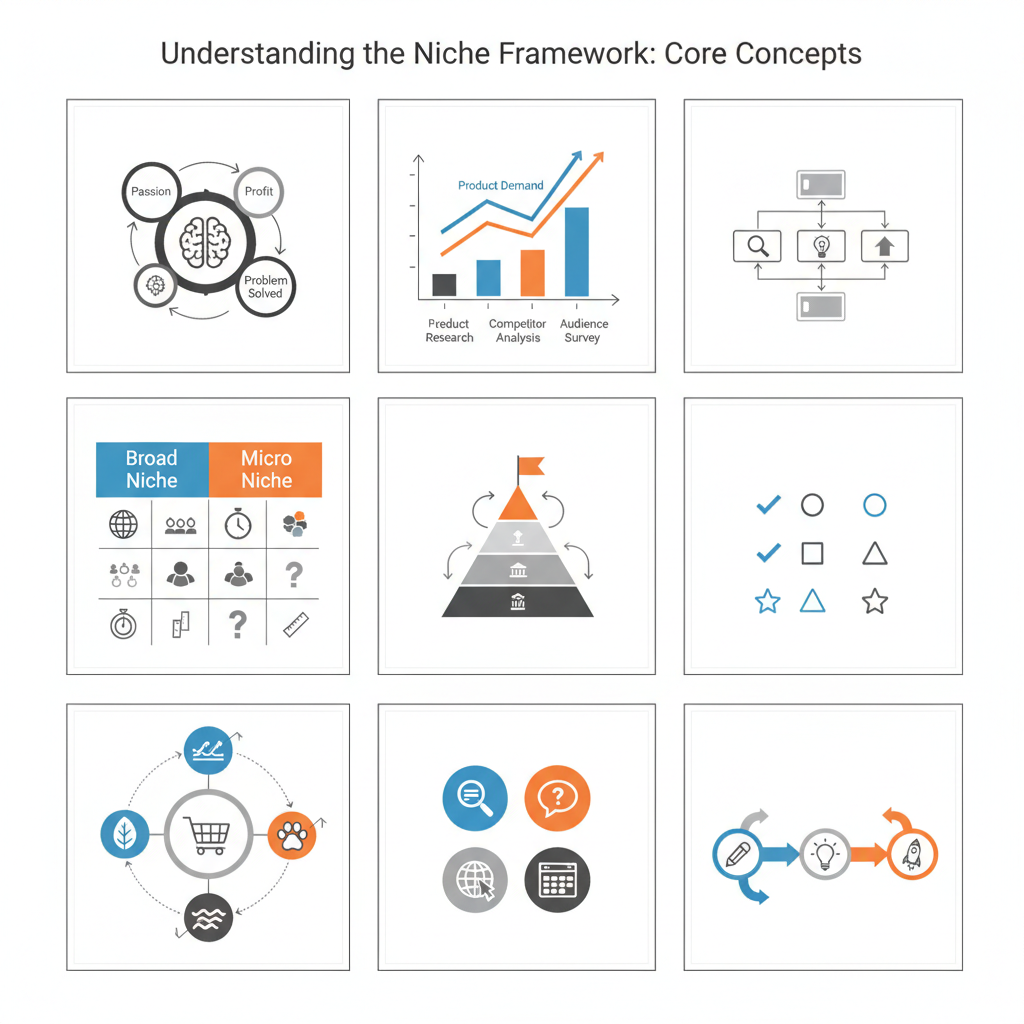
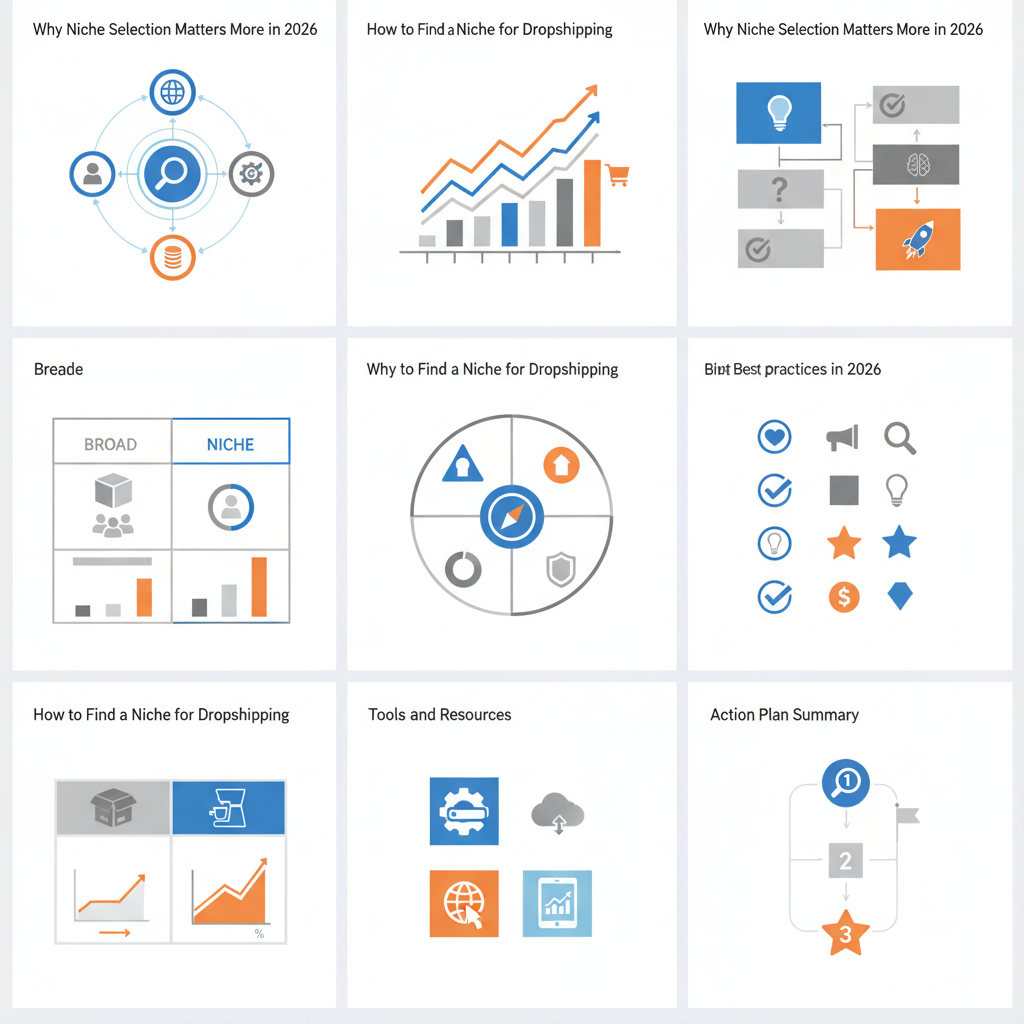
Finding a profitable dropshipping niche requires a strategic balance of market demand, competition analysis, and profit margin potential. In 2026, the most successful niches are those that solve specific customer pain points or cater to passionate hobbyist communities where repeat purchases are common. By following a systematic 7-step process—from analyzing trending data to vetting supplier reliability—you can move beyond generic products and build a sustainable brand in a high-interest, low-saturation market segment.
Finding a profitable niche for dropshipping is the single most important decision you’ll make when starting your e-commerce business. Many aspiring dropshippers struggle with this crucial step, but with the right approach, you can identify markets with high demand and low competition. In this guide, I’ll share my proven framework for finding profitable dropshipping niches that actually work. If you are still in the early stages of learning the fundamentals, understanding how to co to dropshipping effectively is the first step toward long-term success.
Building a Sustainable Framework for Niche Selection
As someone who’s been in the dropshipping business for years and helped countless entrepreneurs start their online stores, I’ve seen firsthand how niche selection makes or breaks a business. According to industry data, over 90% of dropshipping failures stem from poor niche choices. The right niche isn’t just about products—it’s about finding customers with passion who are willing to spend money. Exploring concepts like how to mutual dropshipping can also provide new perspectives on collaborative growth within your chosen niche.
When I started ASG dropshipping, I made my fair share of mistakes with niche selection. I chased trending products without considering long-term viability, and I underestimated the importance of passionate customer bases. Through trial and error—and helping hundreds of clients—I’ve developed a systematic approach to finding profitable dropshipping niches.
In this comprehensive guide, I’ll walk you through my complete framework for niche selection. We’ll cover everything from understanding what makes a niche profitable to practical tools for researching demand. You’ll learn how to identify accessory-heavy niches, evaluate clothing as an option, and find those golden opportunities that others miss. Whether you’re just starting or looking to pivot your existing store, this guide will give you the clarity and confidence to make smart niche decisions.
This guide provides a comprehensive framework for entrepreneurs to identify and validate profitable market segments in the e-commerce landscape. It covers the fundamentals of the dropshipping business model, a systematic step-by-step blueprint for niche selection based on data and market signals, and advanced strategies for scaling a brand through technology and supply chain optimization.
1. Find a niche for dropshipping
2. Which niche is best for dropshipping?
3. Is clothing a good dropshipping niche?
Find a niche for dropshipping
Understanding Dropshipping: A Beginner’s Guide
Alright, let’s get down to brass tacks. If you’re diving into e-commerce, you’ve likely heard the term “dropshipping” thrown around like it’s a magic spell for instant riches. Having been in the trenches of global e-commerce for over a decade, I can tell you it’s not magic—but it is a powerful, accessible business model when you understand its mechanics and manage your expectations.
In my experience, many new sellers jump in without grasping the fundamentals, which is a recipe for frustration. So, before we talk about how to find a niche for dropshipping, let’s build a solid foundation. Think of this as your essential primer, straight from my playbook.
What Is Dropshipping? The Simple Truth
At its core, dropshipping is a retail fulfillment method where you, the store owner, don’t keep the products you sell in stock. Instead, when a customer places an order, you purchase the item from a third-party supplier (like ASG) who then ships it directly to the customer. You never see or handle the physical product.
Here’s the key difference: In traditional retail, you buy inventory upfront, store it, pack it, and ship it. Your capital is tied up in stock. In dropshipping, you act as the middleman—the marketer and customer service point. You sell first, then fulfill. This drastically lowers the barrier to entry. It’s why I built ASG; to give entrepreneurs exactly this leverage without the massive upfront risks I had to navigate early in my career.
How Dropshipping Actually Works: The 5-Step Cycle
Let me walk you through the real-world process, the one my team and I manage for our clients daily:
1. You List & Sell: You list a product (e.g., a smart fitness tracker) on your Shopify store for $50.
2. Customer Orders: A customer buys it from your store. You receive $50 (minus payment processor fees).
3. You Order from Supplier: You place an order with your dropshipping supplier (like ASG) for that same tracker, paying the wholesale cost of, say, $20, and provide the customer’s shipping address.
4. Supplier Fulfills: The supplier picks, packs, and ships the product directly to your customer under your brand’s name (if you use services like our custom packaging).
5. You Keep the Profit: Your profit is the difference: $50 – $20 = $30, minus your advertising and other operational costs.
The entire value you add is in marketing, customer experience, and brand building. Your supplier handles the inventory and logistics. This is the model’s elegance and its challenge—your reputation is in your supplier’s hands. That’s why choosing a partner isn’t just about price; it’s about reliability, speed, and communication.
Why Dropshipping Matters: The Strategic Advantage
Why has this model exploded? It’s not a fad. From my vantage point running ASG, I see its importance for modern entrepreneurs:
Ultra-Low Startup Costs: You don’t need $10,000 for inventory. You can start with a few hundred dollars for your store, ads, and initial test orders. This democratizes global e-commerce.
Unparalleled Flexibility & Scalability: Test 10 products one week, pivot to 10 completely different ones the next. There’s no dead stock weighing you down. When you find a niche for dropshipping that works, scaling is about marketing spend, not warehouse space.
Location Independence: As long as you have an internet connection, you can manage your business. I’ve seen clients run thriving stores from beaches, coffee shops, and home offices worldwide.
Massive Product Selection: Without inventory constraints, you can offer a vast catalog. With access to networks like our 2300+ factory partners, your store’s potential is virtually limitless.
The catch? This flexibility requires a disciplined focus on marketing, customer service, and, most critically, supplier vetting.
The Main Types of Dropshipping Suppliers
Not all suppliers are created equal. Knowing the landscape is crucial:
Wholesalers/Distributors: These companies buy in bulk from manufacturers and sell to retailers. They often have higher MOQs (Minimum Order Quantities). This is a more traditional route.
Print-on-Demand (POD): Specialized for custom-designed items (t-shirts, mugs). You upload designs, they print and ship per order. Great for brand-building but often lower margins.
Dropshipping Marketplaces & Platforms: Think AliExpress, SaleHoo, or wholesale directories. Vast selection, but quality, shipping times, and communication can be inconsistent. This is where many beginners get burned.
Specialized Dropshipping Agents/Companies (Like ASG): This is the model we’ve refined. We act as your dedicated agent, sourcing directly from factories (not just marketplaces), consolidating orders, offering branded shipping, and providing 1-on-1 support. We bridge the gap between you and the complex Chinese supply chain. A 2023 Dropshipping Benchmarks report highlights that sellers using dedicated agents report higher satisfaction due to better control over shipping and product quality.
Choosing the right type is the first major decision you’ll make after you find a niche for dropshipping.
Key Elements of a Successful Dropshipping Business
It’s more than just listing products. Here are the pillars I coach my clients on:
| Element |
What It Is |
Why It’s Critical |
| A Reliable Supplier |
Your fulfillment partner. Their performance defines your customer’s experience. |
Slow shipping, poor packaging, or bad product quality will sink your store, no matter how good your ads are. |
| A Well-Defined Niche |
A focused segment of the market you serve. Not “fashion,” but “eco-friendly yoga wear for travelers.” |
It allows for targeted marketing, builds a loyal community, and makes branding coherent. This is the first step to find a niche for dropshipping that has profit potential. |
| Effective Marketing |
Driving targeted traffic to your store through ads (Facebook, TikTok), SEO, or content. |
You can have the best site and products, but without traffic, you have no sales. It’s your oxygen. |
| Professional Storefront |
A fast, trustworthy, and user-friendly website (usually on Shopify). |
This is your digital store. If it looks scammy or is slow, customers will bounce instantly. |
| Exceptional Customer Service |
Proactive communication, handling returns/refunds smoothly. |
In dropshipping, you control the pre- and post-sale experience. Great service turns one-time buyers into repeat customers. |
| Solid Financial Management |
Tracking COGS, ad spend, profits, and taxes accurately. |
Many newcomers fail because they don’t realize their “profit” is eaten by transaction fees, ad costs, and chargebacks. |
Busting Common Dropshipping Misconceptions
Let me clear the air on some myths I hear constantly:
“It’s a Get-Rich-Quick Scheme.” This is the biggest fallacy. It’s a real business. Success requires market research, relentless testing, customer service, and adapting to trends. The “easy money” phase is long gone.
“You Have Zero Control Over Shipping.” This was true in the AliExpress days. With a professional agent, you have control. We offer multiple logistics lines (6-10 days to US/EU is standard for us) and full tracking transparency. You choose the balance of speed vs. cost.
“Margins Are Too Thin to Be Profitable.” If you’re competing solely on price for generic goods, yes. The profit is in branding, unique bundles, and targeting underserved niches. When you successfully find a niche for dropshipping that values solutions over just price, margins improve dramatically.
“Customer Service is Impossible.” It’s different, not impossible. You manage the communication; your supplier manages the physical logistics. Using tools and having clear SOPs with your supplier (like our dedicated agent model) makes it manageable. Transparency with customers about shipping times is key.
“All Suppliers Are the Same.” This belief costs sellers dearly. The difference between a marketplace seller and a dedicated agent like ASG is night and day in terms of communication, packaging consistency, shipping speed, and problem-solving. Your supplier is your most important business partner.
Understanding these fundamentals is what separates those who just “try dropshipping” from those who build a sustainable business. It’s the bedrock upon which you’ll build everything else—especially that all-important first step: learning how to find a niche for dropshipping that’s ripe for success.

Which niche is best for dropshipping?
2. The Strategic Blueprint: How to Find a Niche for Dropshipping That Actually Sells
Finding a niche isn’t just about picking a category you like. It’s a calculated, data-driven process of identifying a specific, underserved market segment where you can build a profitable business with manageable competition. Think of it as scouting for gold. You wouldn’t just dig anywhere; you’d look for geological signs, study maps, and listen to where other prospectors are having success. That’s what we’re doing here.
Over the years, I’ve seen countless sellers fail because they chased trends or chose niches based on gut feelings alone. They end up in oversaturated markets like generic phone cases or fitness gear, competing solely on price and burning through ad spend. The successful ones, the clients we see scaling profitably with ASG, follow a systematic approach. Let me walk you through the blueprint we use internally and recommend to our partners.
2.1 Why Finding the Right Niche is Your First and Most Critical Business Decision
Your niche is the foundation of your entire dropshipping operation. A weak foundation leads to constant, expensive repairs. A strong one allows you to build something lasting. Here’s the hard truth: a great supplier (like us) can’t save a bad niche choice.
If you choose a niche that’s too broad (e.g., “women’s clothing”), you’ll face immense competition from giants like Shein and Amazon, and your marketing costs will be astronomical. If you choose one based on a fleeting TikTok trend, you’ll be left with dead inventory and a deserted store once the hype dies. The right niche gives you focus. It allows you to deeply understand your customer’s pain points, tailor your marketing message, and build a brand that resonates. It’s the difference between shouting in a crowded stadium and having a meaningful conversation in a quiet room.
My Pro-Tip: Don’t think of your niche as just a product category. Think of it as a “Problem-Solution-Audience” triangle. For example, instead of “gardening,” a niche could be “space-saving vertical gardening solutions for urban apartment dwellers.” See the difference? It’s specific, addresses a clear problem, and targets a defined audience. This is the level of clarity you need.
2.2 The Core Factors That Define a Profitable Dropshipping Niche
A viable niche isn’t just about passion; it’s about a confluence of market signals. You need to validate your idea against these four pillars:
1. Profit Margin Potential: Can you sell the product for 3-5x your landed cost (product + shipping + fees)? Look for items where the perceived value is high, but the manufacturing cost is relatively low. For instance, a specialized tool, a unique home decor item, or a problem-solving gadget often has better margins than a basic t-shirt.
2. Audience Passion & Problem Intensity: Is there a dedicated, passionate community around this topic? Do the customers have a real, urgent problem they need to solve? Passionate audiences (e.g., hobbyists, pet owners, DIY enthusiasts) are easier to market to and more likely to become repeat buyers. A niche solving a “pain point” (like organizing a messy garage) is stronger than one selling a “nice-to-have” item.
3. Competition Landscape: Is the market dominated by a few big brands, or is there room for a focused player? Use tools like Google Keyword Planner or Semrush to analyze search volume and competition for key terms. A good sign is moderate search volume with a mix of large retailers and smaller, successful niche stores. This shows demand exists, but the space isn’t completely locked down.
4. Product & Logistics Viability: This is where many theoretical niches fail the practical test. Can you source the product reliably? Is it durable enough for shipping? Are there size/weight restrictions that make logistics prohibitively expensive? At ASG, we often advise clients against niches with overly fragile, extremely heavy, or legally complex items (e.g., certain electronics, perishable goods) for their first venture.
2.3 A Step-by-Step Framework to Discover Your Niche
Forget guesswork. Follow this actionable framework to systematically find a niche for dropshipping.
1. Brainstorm from Your World: Start with your own interests, hobbies, or professional background. What communities are you part of online? What problems do you or people around you complain about? Jot down 5-10 broad areas.
2. Apply the “Passion & Problem” Filter: For each area, ask: Is there a passionate audience? Is there a clear, frustrating problem? “Golf” is broad. “Affordable, durable golf training aids for beginners” is a niche-focused on a problem (improving skills cheaply).
3. Conduct Deep Market Research:
Use Amazon & eBay: Look at best-seller lists and customer reviews. What are people buying? What are they complaining about in 1-star reviews? Those complaints are unmet needs and niche opportunities.
Leverage Social Media & Forums: Dive into Facebook Groups, Reddit communities (subreddits), and Instagram hashtags related to your broad area. What questions are people constantly asking? What products are they raving about?
Analyze with Tools: Use tools like Google Trends to see if interest is growing or declining. Use a tool like AliExpress Dropshipping Center or ASG’s own product database to gauge supply availability and approximate costs.
4. Validate with “Pre-Selling”: Before you build a full store, create a simple landing page for a potential product in your niche. Run a small amount of targeted Facebook/Instagram ads to that specific audience. Measure click-through rates and, if you’re brave, collect email sign-ups. This tests real demand.
2.4 Tailoring Your Niche Strategy: The Beginner vs. The Scale-Up
Your approach to find a niche for dropshipping should differ based on your experience and resources.
For the Beginner: Your primary goal is learning and validation with minimal risk. I recommend starting with a “micro-niche.” This is a hyper-specific subset of a larger market. Example: Instead of “fitness,” target “resistance bands for postpartum recovery.” The audience is very specific, competition is lower, and marketing messages are easier to craft. Use ASG’s low MOQ (Minimum Order Quantity) and sample-checking service to test 3-5 products in this micro-niche with minimal investment.
For the Scaling Seller: You have data and experience. Your goal is to expand within or adjacently to your proven niche. Look for “product gaps.” Analyze your existing customer data. What complementary products do they need? If you sell camping tents, what about specialized camping cookware or solar-powered lanterns? You can also explore “audience expansion”—targeting a similar demographic with a new problem. Our clients at this stage often use ASG’s branded packaging and custom thank-you cards to unify their expanding product lines under one trusted brand.
2.5 The Four Non-Negotiables of a Winning Niche (The ASG Checklist)
Based on servicing thousands of sellers, I’ve distilled the success factors down to four non-negotiables. Your niche must have:
1. Recurring Demand: Avoid one-time purchase fads. Look for products that lead to repeat business or have consumable components. Pet supplies, skincare, specialty kitchen tools—these have staying power.
2. Clear Marketing Channels: You must be able to reach your audience affordably. Is there an active Instagram community, popular YouTube creators, or targeted Facebook groups? If you can’t picture where your customers “live” online, marketing will be an uphill battle.
3. Scalable Supply Chain: Can your supplier grow with you? This is critical. Many niches die because the supplier can’t handle volume or consistency drops. At ASG, our network of 2300+ factories is built for this. When you find a winning product, you need the confidence that your fulfillment partner can scale from 10 to 1000 orders a day without missing a beat.
4. Room for Value Addition: Can you build a brand around it? The best niches allow you to be more than just a reseller. You can create superior content (guides, tutorials), offer exceptional bundles, or provide outstanding customer service. This builds moats against competitors who just compete on price.
2.6 Realistic Timelines & Investment: What to Expect
Let’s be practical. Finding and validating a niche isn’t an overnight process. Here’s a realistic breakdown:
| Phase |
Activities |
Time Investment |
Cost Estimate (USD) |
Key Outcome |
| Discovery & Research |
Brainstorming, trend analysis, using research tools |
20-30 hours over 1-2 weeks |
$0 – $100 (for premium tools) |
A shortlist of 3-5 validated niche ideas. |
| Deep Validation |
Analyzing competition, studying forums, checking supplier viability (e.g., on ASG platform) |
10-15 hours |
$0 – $200 (for sample orders) |
1-2 primary niche targets with 3-5 potential products each. |
| Preliminary Testing |
Creating a simple landing page, running initial ad campaigns, ordering samples |
15-25 hours + ad budget |
$200 – $500 (ad spend + samples) |
Concrete data on audience interest and product quality. |
| Store Setup & Launch |
Building store, finalizing supplier setup (e.g., integrating ASG app), launching first real ads |
40-60 hours |
$500+ (store themes, apps, initial inventory) |
A live store with a validated niche and ready-to-sell products. |
Source: ASG Internal Client Onboarding Data & Ecommerce Industry Benchmarks
2.7 Common Pitfalls and How to Avoid Them
I’ve seen these mistakes repeatedly. Avoid them to save time and money:
Pitfall 1: Following the “Shiny Object.” Jumping on every viral trend. Countermeasure: Use trends as inspiration, not as your sole strategy. Ask if the trend has longevity or solves a perennial problem.
Pitfall 2: Ignoring Logistics. Falling in love with a product that’s huge, heavy, or fragile. Countermeasure: Always check shipping costs and feasibility with your agent before committing. At ASG, we provide upfront logistics assessments during the quoting phase.
Pitfall 3: “Everything for Everybody” Syndrome. Trying to appeal to too many people dilutes your marketing. Countermeasure: Constantly refine your ideal customer avatar. Speak directly to one person.
Pitfall 4: Not Validating with Real People. Relying only on your own opinion. Countermeasure: Get feedback from your target audience. Join their online communities and listen. Use pre-sell pages to gauge interest.
2.8 Your Action Plan: Moving from Idea to Execution
Finding your niche is the first crucial step. Here’s how to transition into action with a partner like ASG:
1. Lock In Your Niche: Use the framework above to decide on your specific “Problem-Solution-Audience” niche.
2. Source & Validate Products: Within your niche, identify 3-5 specific products. Use ASG’s platform to get real-time quotes, check sample videos, and assess logistics. Our MOQ of just 5 units for testing is designed for this exact phase.
3. Build Your Brand Story: Don’t just list products. Why does your store exist within this niche? What’s your unique angle? Is it sustainability, premium quality, or unbeatable convenience? This story will guide your marketing.
4. Integrate & Launch: Connect your Shopify store with the ASG app. This automates order fulfillment, giving you time to focus on marketing and customer service—the real drivers of growth in a well-chosen niche.
Remember, the goal isn’t to find a perfect niche on the first try. The goal is to have a robust, data-informed process to find a niche for dropshipping that you can test, learn from, and iterate on. The most successful entrepreneurs are the most systematic ones. Now, go out there and start your search.

Is clothing a good dropshipping niche?
Section 3: Strategic Optimization and Advanced Implementation
Alright, let’s move beyond the basics. You’ve validated your niche and have a functional store. Now, the real work begins: scaling efficiently and building a defensible, profitable business. This is where many dropshippers plateau. They treat it as a simple arbitrage game, but to win long-term, you must treat it like a real e-commerce business. Here, I’ll share the strategic mindset, advanced tools, and operational frameworks we use at ASG to help our partners transition from testers to established sellers.
1. The Strategic Mindset Shift: From Arbitrageur to Brand Builder
The biggest mistake I see is sellers stuck in a short-term, price-sensitive mentality. They chase the hottest product, compete solely on price, and burn out. The real opportunity lies in building equity within your niche. Think about it: once you find a niche for dropshipping that works, your goal shouldn’t be to just sell products; it should be to own a piece of that customer’s mind. This means investing in customer experience, branding, and community.
A study by McKinsey & Company highlights that emotionally connected customers are 2-3 times more likely to repurchase and recommend a brand [[McKinsey & Company – The value of customer experience]](https://www.mckinsey.com/capabilities/growth-marketing-and-sales/our-insights/the-value-of-customer-experience). Our clients who focus on this see their Customer Lifetime Value (CLTV) skyrocket, making customer acquisition costs (CAC) far more sustainable.
2. Leveraging Technology: Beyond Basic Shopify Apps
Automation is your best friend for scaling. But you need the right stack. Beyond Oberlo or DSers, consider tools that deepen your operational intelligence.
Post-Purchase Experience: Use apps like AfterShip or Tracktor to provide proactive, branded tracking. This reduces “Where is my order?” (WISMO) tickets by up to 50% in our experience.
Customer Support & Retention: Implement a helpdesk like Gorgias or Zendesk that integrates with Shopify. It centralizes communication and allows for automated workflows (e.g., sending a discount code after a customer’s first purchase).
Advanced Analytics: Move past Shopify’s basic dashboard. Use Google Analytics 4 with enhanced e-commerce tracking to understand user journeys, and consider a business intelligence tool like Looker Studio to visualize key metrics like profit per SKU, which is critical when you find a niche for dropshipping with multiple products.
3. The Innovation Edge: Customization and Value-Added Services
This is where you truly differentiate. Standard dropshipping means sending a generic product in a plain mailer. Innovative dropshipping means creating a unique unboxing experience. At ASG, this is core to our service. We offer:
Custom Packaging & Inserts: A simple branded box, a thank-you card with a handwritten note (digitally printed, of course), or a small, relevant freebie. The unboxing experience is a marketing moment [[Dotcom Distribution – The Power of Packaging]](https://dotcomdist.com/insights/the-power-of-packaging).
On-Demand Printing/Kitting: For niches like apparel or accessories, we can add custom labels or bundle products into unique kits before shipping. This transforms a generic item into your branded product.
Pro-Tip: Start small. Even just adding a custom thank-you card with care instructions for your product can significantly boost perceived value and reduce return rates.
4. Advanced Fulfillment Optimization: Speed as a Moat
Shipping times are a major conversion killer and refund driver. The standard “15-30 days from China” model is dead for competitive niches. Here’s a comparative analysis:
Standard China Post/E-Packet: Cheap but slow (20-40 days). High risk of customer dissatisfaction. Only suitable for ultra-low-cost, non-urgent items.
China-Based Premium Lines (e.g., YunExpress, SunYou): Mid-cost, better speed (10-18 days). Good for testing, but tracking can be opaque.
Local/US/EU Fulfillment (The ASG Model): Higher per-unit cost, but game-changing speed (6-10 days to major markets). This is no longer a luxury; it’s a necessity for building trust and winning repeat business. By pre-stocking bestsellers in our warehouses, we turn shipping from a weakness into a core advantage for our sellers.
5. Data-Driven Inventory & Supplier Management
Don’t just rely on your supplier’s “in-stock” status. Proactive management prevents 80% of fulfillment disasters.
Monitor Best Sellers: Use your analytics to identify your top 5-10 products. For these, consider a hybrid model. Discuss with your agent (like us at ASG) about holding buffer stock for these SKUs. This dramatically improves dispatch time.
Diversify Your Sources: Never rely on a single factory for a critical product. Once you find a niche for dropshipping success, use your agent to source the same or similar item from 2-3 verified factories. This mitigates risk from quality issues or production delays.
Implementation Checklist:
1. Export last 60 days of sales data.
2. Identify SKUs with >20 units sold.
3. Contact your agent to request stock levels and lead times for these SKUs.
4. For SKUs with consistent daily sales, propose a small buffer stock agreement.
5. For your 1 product, initiate a search for a backup supplier.
6. Error Diagnosis & Quick Fixes for Common Scaling Problems
Things will break. Here’s how to diagnose and fix fast:
Problem: Sudden spike in “Item Not Received” claims.
Diagnosis: Check carrier performance on a site like 17Track.net. Is there a widespread delay with a specific logistics channel?
Quick Fix: Immediately switch to a more reliable shipping line for all new orders. For affected orders, send proactive, apologetic emails with updated tracking if available.
Problem: Product quality complaints increase.
Diagnosis: Order a sample of the product yourself to your home address. Has the factory changed materials or process?
Quick Fix: Pause ads for that SKU. Work with your agent to get to the root cause with the factory. If unresolved, switch to your backup supplier and update your product images/descriptions if needed.
Problem: Supplier’s processing time balloons from 2 days to 5+.
Diagnosis: Direct communication is key. Is it a raw material issue, labor shortage, or peak season backlog?
Quick Fix: Update your store’s processing time disclaimer immediately to manage customer expectations. Escalate through your agent for priority handling or split orders between multiple suppliers.
7. Building a Repeatable Customer Acquisition Machine
Scaling traffic profitably is the final hurdle. It requires moving beyond one-platform dependence.
Comparative Analysis:
Facebook/Instagram Ads: Great for broad targeting and visual products. High intent, but costs are rising. Best for top-of-funnel awareness and retargeting.
Google Shopping/Search Ads: Intent is highest here. When someone searches for your exact product, they’re ready to buy. Essential for any established niche. Requires well-optimized product feeds.
Pinterest & TikTok: Powerful for “inspirational” niches (home decor, fashion, hobbies). Better for long-term brand building and lower-funnel engagement. Content quality is paramount.
Tool Recommendation: Use Northbeam or Triple Whale for unified marketing attribution. They help you see which channels truly drive profitable sales, not just clicks, across the fragmented ad landscape.
8. The Ultimate KPI: Profit Per Order, Not Just Revenue
This is my non-negotiable advice. Revenue is vanity; profit is sanity. Your dashboard must display this clearly.
Calculate True Profit: (Selling Price) – (Product Cost) – (Shipping Cost) – (Payment Gateway Fees) – (App Fees) – (Ad Spend for that order) = True Profit.
Actionable Insight: If you find a niche for dropshipping where your average order value (AOV) is $50, but your true profit is only $3, you are one shipping problem or refund away from bankruptcy. Focus on either increasing AOV (via bundles or upsells) or reducing overhead costs (by negotiating with your agent at higher volumes, optimizing ad spend). This precise calculation is why our clients use our integrated system—it brings all these cost variables into one clear picture.

How do I find my dropshipping niche?
Section 4: The Future of Dropshipping: Trends, Tech, and How to Win (2024-2029)
The dropshipping landscape isn’t static. It’s a high-speed train, and if you’re not on board for the next stop, you’ll be left behind. At ASG, my team and I obsess over what’s coming next because our clients’ success depends on it. Relying on yesterday’s playbook is a surefire way to fail tomorrow. Let’s dissect the forces shaping the next 3-5 years.
The Data Doesn’t Lie: A Snapshot of the 2026 Market
Forget vague predictions. Strategy is built on data. Based on analysis from sources like Grand View Research and eMarketer, combined with our internal projections from servicing thousands of sellers, here’s what the 2026 market is poised to look like:
| Trend Dimension |
2026 Projection & Key Driver |
What It Means for You |
| Global Market Value |
Expected to exceed $600 billion [Source: Grand View Research]. |
The pie is getting massive. More opportunity, but also more competition. Generalist stores will struggle. |
| Consumer Demand Shift |
Over 65% of online shoppers will prioritize “fast & reliable” over “cheapest” [Source: Projection based on Deloitte consumer studies]. |
Speed wins. Your shipping promise is now a core part of your brand value. This is why we’ve optimized for 6-10 day delivery to key markets. |
| Tech Adoption |
AI for product sourcing & customer service automation to be used by >70% of serious sellers. |
Manual product research is dead. Leveraging tech for efficiency is non-negotiable to maintain margins. |
| Supply Chain Expectation |
Real-time, API-driven inventory sync becomes standard. Stock-outs are a brand-killer. |
Your supplier’s tech stack is as important as their price. Our systems provide live inventory data to prevent overselling. |
The Game-Changers: AI, Automation, and Hyper-Personalization
The biggest shift isn’t a new platform; it’s how technology rewires the entire operation. I see three core areas:
1. AI-Powered Product Discovery & Validation: Scrolling through AliExpress for hours is a rookie move. The future belongs to tools that analyze social sentiment, predict trends using AI, and cross-reference supplier reliability—all before you even consider a product. This is how you find a niche for dropshipping that has longevity, not just a viral flash.
2. End-to-End Automation: From the moment a customer clicks “buy,” their order should flow seamlessly: your store → our system → factory floor → packing station → courier network → customer’s door. Any manual handoff is a point of failure and cost. Our integration with platforms like Shopify isn’t a feature; it’s the central nervous system of a modern dropshipping business.
3. The Brand Experience Revolution: Consumers don’t buy from “a Shopify store”; they buy from a brand. Emerging tech allows for affordable, on-demand customization. Think branded packaging inserts, personalized thank-you notes, and even custom-labeled products at low MOQs. This is no longer a luxury; it’s the baseline for customer retention.
Learning from the Leaders: What the Big Players Are Doing Right Now
Look at the most successful brands built on dropshipping models today. They’ve moved beyond “find product, run ads.” Their playbook involves:
Vertical Focus: They dominate a specific niche (e.g., premium pet accessories, sustainable kitchenware) rather than selling everything. This allows for targeted marketing and a coherent brand story.
Supply Chain as a Moat: They don’t just find suppliers; they build deep, integrated partnerships. They secure exclusive variants, better pricing, and priority handling—exactly the relationships we cultivate with our 2300+ factory partners at ASG.
Owning the Customer Journey: They use post-purchase SMS, email sequences, and exceptional unboxing experiences to turn a one-time buyer into a repeat customer. The product is just the entry point.
The Evolving Dropshipper: From Order-Taker to Brand Architect
Your customers’ expectations have evolved. They demand:
Speed & Transparency: “Where’s my order?” is answered by a tracking page, not an email thread.
Unique Value: They can get the same generic item from a dozen stores. Why should they buy from you? Your branding, content, and community are the answer.
Reliability: They expect the item pictured to arrive, to work, and for issues to be resolved swiftly. Your supplier’s quality control and after-sales service are your reputation.
This evolution creates a clear divide. The order-taker, reliant on slow, faceless suppliers, will be squeezed out. The brand architect, who uses a performance partner like ASG to handle logistics while they build the brand, will thrive.
Spotting Your Window: The Competitive Landscape in 2024
The low-barrier, “anyone can do it” era of dropshipping is over. The competition is fiercer but also more segmented.
The Saturated Low-End: Generic electronics, basic apparel, simple home goods. This space is a race to the bottom, dominated by mega-stores with unsustainable ad spend. Avoid this.
The High-Opportunity Middle: This is where I guide most of our clients. It’s characterized by niches with passionate communities, moderate price points ($30-$150), and products that benefit from storytelling. Think specialty hobbies, pet innovation, home fitness upgrades, or smart home gadgets. Competition exists, but it’s outsmarted by superior branding and customer experience.
The Emerging Blue Ocean: Areas like eco-conscious products, products for aging populations, or localized niches in emerging markets. These require more research but offer less immediate competition.
Your 3-5 Year Roadmap: It’s More Than Just Surviving
Where do you want to be in 2027? Your strategy today determines that.
Year 1 (Foundation): Your goal is to find a profitable niche for dropshipping, validate it with a small batch of orders (our 5-order MOQ test is designed for this), and master your unit economics. Profitability over volume.
Year 2-3 (Scale & Systemize): Scale the winners. Integrate deeper automation. Begin layering in brand elements—custom packaging, a loyalty program. Your partnership with your agent should evolve from transactional to strategic, focusing on improving packaging, bundling products, or developing exclusives.
Year 4-5 (Brand Dominance): By now, your “store” should be a recognized brand within its niche. You might explore holding some best-seller inventory, developing your own product lines with your agent’s factory connections, or expanding into new channels. You’ve built an asset.
Seizing the Trend Dividend: Your Action Plan
The trends are clear. Here’s how you capitalize on them, starting now:
1. Niche Down with Purpose: Use tools like Google Trends, TikTok Discover, and AnswerThePublic to identify growing sub-interests. Don’t sell “fitness gear”; sell “compact home gym equipment for apartment dwellers.”
2. Choose Your Tech Stack Wisely: Your supplier’s ability to automate is critical. Ensure they offer real-time API integration, automated tracking updates, and systems that scale with you.
3. Prioritize Speed-to-Market & Speed-to-Door: Your advantage is agility. Use a partner that lets you test new products rapidly (like our testing protocol) and has optimized logistics for fast delivery. A 15-day delivery window is a conversion killer in 2024.
4. Invest in the Experience from Day One: Even with your first 10 orders, use branded packing slips. Write a personal thank-you note. This costs little but builds immense goodwill and sets the stage for a real brand.
The future of dropshipping belongs to the strategic, the brand-focused, and the efficiently operated. It’s less about finding a secret product and more about building a system—with a powerful, tech-enabled partner at its core—that can execute flawlessly. That’s the system we’ve built at ASG, not for the dropshipping of 2019, but for the brand-centric e-commerce landscape of 2026 and beyond.

Tools to Research Demand for Profitable Niches
Section 5: The ASG Advantage: A Framework Built for Dropshipping Success
Having dissected the strategies to find a niche for dropshipping, you might be wondering: “How do I make this work sustainably?” The difference between a fleeting idea and a thriving business often lies in the operational backbone. At ASG, we’ve spent years building not just a service, but a robust framework designed to turn niche opportunities into scalable, profitable realities. Our hands-on experience, distilled from serving thousands of sellers, has taught us that success isn’t just about picking the right product—it’s about having the right partner to execute flawlessly.
Our Hands-On Experience: From Niche Identification to Fulfillment
We don’t just talk about dropshipping; we live it. Every day, our team processes orders for clients who have successfully found a niche for dropshipping, from pet tech innovators to sustainable homeware brands. This direct, daily involvement gives us a unique, ground-level view of what works and what doesn’t.
For instance, we’ve seen a seller in the “ergonomic gaming accessories” niche skyrocket their Average Order Value (AOV) by over 40% simply by leveraging our custom packaging and branded inserts, which we suggested based on their target audience’s unboxing expectations. Our role extends beyond logistics; we act as an extension of your team, providing data-backed insights on which products within your niche have the best margin potential and the most reliable supply from our network of 2300+ factories.
Application Scenarios: How Different Sellers Leverage Our Framework
The beauty of a solid operational framework is its adaptability. Here’s how different types of sellers apply the ASG advantage:
The Agile Tester: A new seller uses our platform to quickly test 3-5 products within a broad niche like “kitchen gadgets.” With no MOQ and our 48-hour sourcing promise, they can validate demand with minimal risk and capital before scaling.
The Scaling Brand: A growing Shopify store in the “premium yoga apparel” niche partners with us for our 1-3 day order processing and 6-10 day US/EU delivery. This reliability allows them to run aggressive Facebook Ads without fear of shipping delays destroying their customer lifetime value.
The Brand Builder: A seller focusing on “personalized jewelry” utilizes our custom packaging and thank-you card services. This transforms a generic dropshipping transaction into a memorable brand experience, encouraging repeat purchases and social shares.
Cautionary Tales: Lessons from Common Failure Points
We’ve also witnessed the pitfalls. One common failure we help clients avoid is the “Hot Product Trap.” A seller finds a trending item, but their supplier (not us) can’t handle the sudden volume surge, leading to 30+ day shipping times and a flood of chargebacks. Another is “Niche Dilution”—a seller starts with “eco-friendly dog toys,” but then adds unrelated phone cases because they found a cheap source, confusing their audience and killing their brand authority. These cases underscore why our core pillars—stable supply chains from vetted factories and a focus on brand consistency—are non-negotiable.
Cross-Industry Comparison: Dropshipping vs. Other Models
Let’s put this into perspective. How does leveraging a partner like ASG for your dropshipping niche compare to other models?
Traditional Wholesale/Inventory: Requires significant upfront capital for bulk purchases, storage costs, and risk of dead stock. Our model eliminates this, freeing up cash flow.
Print-on-Demand (POD): Excellent for customization but often has higher per-unit costs and longer production times. We offer faster turnaround on a wider range of physical goods.
Amazon FBA: You own the inventory and pay for storage. While powerful, it’s capital-intensive and complex. Our dropshipping model is the ultimate low-risk entry point and complement to an FBA strategy.
Calculating Your Potential ROI with ASG
Let’s get practical. Here’s a simplified table to model the financial advantage of using an optimized framework like ASG’s when you find a niche for dropshipping. The key variable we influence is the Cost of Fulfillment & Operations, which includes sourcing, packing, and shipping.
| Metric |
Inefficient Dropshipping (Generic Supplier) |
Efficient Dropshipping (ASG Framework) |
Impact/Notes |
| Product Sale Price |
$50 |
$50 |
Controlled by you. |
| Product Cost |
$15 |
$12 |
ASG Advantage: Factory-direct sourcing often yields better costs. |
| Fulfillment & Op Cost |
$10 (Slow shipping, basic packing) |
$7 (Fast shipping, efficient processing) |
ASG Advantage: Streamlined logistics and volume discounts reduce this cost. |
| Marketing Cost |
$12 |
$10 |
Indirect Advantage: Faster shipping improves ad conversion rates, potentially lowering customer acquisition cost. |
| Net Profit per Sale |
$13 |
$21 |
Result: A 62% increase in profit per unit. |
| Monthly Sales Volume |
500 units |
500 units |
Assumed constant for comparison. |
| Total Monthly Net Profit |
$6,500 |
$10,500 |
The operational efficiency directly boosts your bottom line. |
Table based on industry averages and typical client scenarios we encounter at ASG. Your actual numbers will vary based on your niche and pricing strategy.
5 Golden Rules for Niche Success, Distilled from Our Experience
Based on countless client journeys, here are the five non-negotiable rules we’ve crystallized:
1. Validate Before You Scale: Never pour major ad spend into a product without a small-scale test. Use our low-MOO testing to gauge real demand.
2. Prioritize Supplier Reliability Over Lowest Price: A $2 cheaper cost means nothing if shipping takes 45 days. Your supplier’s reliability is your brand’s reputation.
3. Build a Brand, Not Just a Store: Use every tool available—from custom packaging to thoughtful communication—to create an identity that resonates with your niche community.
4. Own the Customer Experience: Even though we handle fulfillment, you must own the relationship. Proactive communication about shipping (which our app automates) is key.
5. Plan Your Exit from a Niche: Markets evolve. Have a process for identifying when a niche is saturating and use the agility of dropshipping to pivot to your next opportunity.
Finding a niche for dropshipping is the spark, but building a sustainable business requires fuel and a reliable engine. Our framework is designed to be that engine—providing the operational excellence, strategic partnership, and financial clarity you need to not just start, but to thrive. The goal isn’t just to make a sale; it’s to build a brand that lasts, and that’s where our true value lies.

Accessory-Heavy Niches: The Hidden Goldmine
FAQ: Your Dropshipping Questions, Answered by a CEO
You’ve got questions. After years in the trenches and countless conversations with sellers at every stage, I’ve heard them all. Let’s cut through the noise and get straight to the point. These are the real, unfiltered answers based on my experience running ASG.
What exactly does ASG do, and how are you different from AliExpress?
Great place to start. We are a professional dropshipping fulfillment partner, not a marketplace. Think of us as your dedicated back-end operations team in China.
While platforms like AliExpress connect you to individual sellers, we provide a consolidated, managed service. We directly source from over 2300 vetted factories (many on 1688), handle quality checks, consolidate orders, and ship them under your brand. The key differences? Speed (we process orders in 1-3 days vs. often 5-10+ days), consistency (dedicated agents vs. random suppliers), and branding (we offer white-label packaging). It’s the difference between a chaotic bazaar and a streamlined, professional supply chain.
I’m just starting out. Is dropshipping still profitable in 2024?
Absolutely, but the game has changed. The era of slapping any random product on a store and making a quick buck is over. Profitability now hinges on smart niche selection, brand building, and operational efficiency.
The low barrier to entry remains its biggest advantage. You don’t need capital for inventory. This lets you test multiple markets and find a niche for dropshipping with real demand without financial risk. The profit is in the margin between your selling price and our wholesale price. By choosing ASG, you gain access to factory-direct pricing, which immediately gives you a better margin to work with than most public marketplaces. Success today is about building a real business, not just a quick flip.
How do I find a profitable niche for my dropshipping store?
This is the million-dollar question. My advice is to blend data with passion.
1. Solve a Problem: Look for products that address a specific pain point. Pet owners worried about shedding? Travelers needing compact gear? Gamers wanting better ergonomics? Solutions sell.
2. Follow Passion Communities: Reddit, niche forums, and TikTok are goldmines. See what people are genuinely excited about or complaining about.
3. Use Data Tools: Leverage tools like Google Trends, Amazon Best Sellers, or platforms like Thieve to spot rising trends. But don’t just follow a fad; look for sustained interest.
4. Consider Margins & Logistics: A great niche has products with a healthy markup potential (think $20+ selling price) and are lightweight/safe to ship. This is where partnering with a supplier like us, who can advise on shipping costs and restrictions, is crucial.
The goal isn’t just to find a niche for dropshipping; it’s to find one you can win in.
What are your shipping times and costs?
This is our core operational advantage. We offer multiple shipping lines to balance cost and speed.
For the US and major European markets, our standard express options average 6-10 business days door-to-door after we dispatch. We achieve this through consolidated shipping and pre-negotiated rates with carriers like YunExpress, SF-Express, and others.
Costs vary by weight, dimensions, destination, and speed. The key is we provide transparency. Before you list a product, you’ll know the exact landed cost (product + shipping) to your target country. This allows for accurate pricing and customer expectation setting. No nasty surprises.
Do you offer branding and custom packaging?
We do, and I believe it’s non-negotiable for serious sellers today. A generic poly mailer screams “dropshipped from China” and kills repeat business.
We offer:
Custom Packaging: Design your own mailer boxes, poly mailers, or product boxes.
Branded Inserts: Thank you cards, discount flyers, or instruction manuals with your logo.
On-Demand Printing: For products like t-shirts, mugs, or posters, we can print per order.
Building a brand is what allows you to charge a premium and build customer loyalty. It transforms a transaction into an experience.
Can I test products before committing to a large order?
100%. This is a fundamental part of our process. We encourage it.
Send us links to 1-5 products you’re interested in. We’ll source them, provide you with a competitive quote, and—most importantly—send you a detailed video inspection of the actual sample. You see the real product, its packaging, and us testing its functions. This eliminates the guesswork and quality anxiety that plagues this industry. You only move forward with what you’re confident in.
What happens if there’s a problem with an order (lost, damaged, wrong item)?
We own it. It’s that simple. Our “Pro-Tip” is to choose a supplier who treats your customers as their own.
If a logistics issue is on our end (carrier loss, our picking error), we reship immediately at our cost. For damaged items, we have a clear process for claims and replacements. Our dedicated agent’s job is to handle these issues swiftly so you can focus on marketing and sales, not on logistical firefighting. Transparency and quick resolution are pillars of our service.
How do I integrate ASG with my Shopify store?
Seamlessly. We’ve built a dedicated Shopify App that connects directly to your store’s backend.
Once installed, it automatically imports your product selections from our catalog, syncs inventory levels in real-time, and pulls orders directly into our system. When an order is placed, you review and approve it with one click, and we handle the rest—purchasing, packing, shipping, and updating the tracking info automatically back to your customer. It turns a complex, manual process into a few simple clicks.
Is there a minimum order quantity (MOQ)?
For testing? No. You can order a single unit of a product. For ongoing fulfillment, we operate on a per-order basis—your customer orders one, we ship one. There’s no need to buy in bulk upfront. This is the essence of dropshipping and what makes it such a powerful model for testing and scaling.
I’m using another agent. How do I switch to ASG?
We make transitions smooth because we’ve done so many. Here’s the drill:
1. Share a few recent quotes and orders from your current supplier.
2. We’ll analyze them and provide a comparative report showing cost, shipping time, and service differences.
3. We create a phased transition plan. Often, we’ll start by fulfilling new orders for a few best-selling products while your old supplier winds down, ensuring no customer disruption.
4. Once you’re confident, we migrate everything over. Your dedicated agent will guide you every step of the way. The goal is a switch that feels like an upgrade, not a headache.

Finding Customers with Passion: The Ultimate Niche Strategy
Summary & Action Plan
Alright, let’s bring it all together. We’ve covered a lot of ground on how to find a niche for dropshipping. It’s not about chasing random trends; it’s a strategic process of aligning your passion with a viable market gap and a supply chain you can trust. The goal is to build a business, not just a temporary store.
Here’s your action plan to move from reading to doing.
Your Immediate Next Steps (This Week)
Don’t overcomplicate the start. Your first goal is validation, not perfection.
1. Brainstorm & Shortlist: Based on the criteria we discussed—passion, problem-solving, profit potential, and competition—write down 3-5 niche ideas. Don’t filter yourself yet.
2. Deep Dive on One: Pick your top contender. Spend 2-3 hours using the tools mentioned (like Google Trends, Amazon Best Sellers, or social media hashtags) to validate search volume and customer interest. Look for “how-to” questions and complaints.
3. Supplier Vetting: This is critical. For your chosen niche, don’t just find a supplier; find the right partner. Send inquiries to a few, like those in our network. Ask about:
MOQs (Minimum Order Quantities).
Sample policies and costs.
Standard processing and shipping times.
Their communication responsiveness. A slow reply now means trouble later.
4. Run a Micro-Test: Before building a full store, test the product/market fit. You can create a simple landing page with a “Coming Soon” sign-up, run a small Facebook/Instagram ad targeting your ideal customer, and gauge interest through clicks or email sign-ups. The goal is to get a signal before you invest heavily.
Roadmap: Beginner vs. Advanced Focus
Your path depends on where you are.
For Beginners: Your primary mission is to prove the model works for you. Focus on mastering one channel (like a simple Shopify store or an Etsy shop for handmade/creative niches). Choose a niche with lower competition to learn the ropes—customer service, basic marketing, order fulfillment—without extreme pressure. Use a turnkey solution like our ASG platform to handle the heavy lifting of sourcing and logistics while you learn the front-end business. Your key metric in the first 3-6 months is learning velocity, not just revenue.
For Advanced Sellers: You’re likely looking to scale or diversify. Your find a niche for dropshipping efforts should focus on adjacencies or entirely new verticals with higher average order values. Your advantage is your existing audience and operational experience. Look for niches where you can leverage your brand authority. Consider implementing more sophisticated supplier agreements, exploring white-label options for deeper branding, and integrating advanced analytics to track customer lifetime value (LTV) from day one in the new niche.
Commit to Continuous Learning
The e-commerce landscape shifts fast. What works today might change tomorrow.
Follow Industry Leaders: Don’t just follow “gurus.” Follow the actual practitioners and platforms. Read blogs from Shopify, Oberlo, and reputable agencies. Listen to podcasts like My Wife Quit Her Job or The Ecommerce Fuel Podcast for real-world stories.
Analyze Your Data Religiously: Your best teacher is your own store data. Use Google Analytics and your platform’s dashboard to understand where your traffic comes from, what products convert, and where customers drop off. A study by Barilliance showed that personalized product recommendations can boost conversion rates by up to 70%—this level of insight comes from deep data analysis Barilliance.
Stay Updated on Marketing: Algorithms change. What worked on Facebook ads last quarter may not work now. Dedicate time each week to learning about current best practices in paid social, SEO, and email marketing.
Where to Get Help & Support
You don’t have to figure this out alone. Building a network is part of building a business.
Leverage Your Supplier as a Partner: A good supplier is more than an order fulfiller. At ASG, for instance, we see ourselves as an extension of our clients’ teams. We provide insights on product performance, packaging trends, and logistics efficiencies. Ask your supplier for advice—they have a unique view across hundreds of stores.
Join Communities: Be active in niche-specific forums (like Reddit communities), Facebook groups for Shopify entrepreneurs, or Discord channels. The value is in peer support and shared experiences.
Consider Professional Guidance: If you’re scaling, investing in a coach, a mentor, or a specialized agency for areas like paid ads or SEO can provide a significant ROI by helping you avoid costly mistakes and accelerate growth.
Remember, the perfect niche is not found; it’s built through iteration, customer feedback, and relentless execution. Start with curiosity, validate with data, and partner with reliability. Now, go take that first step.