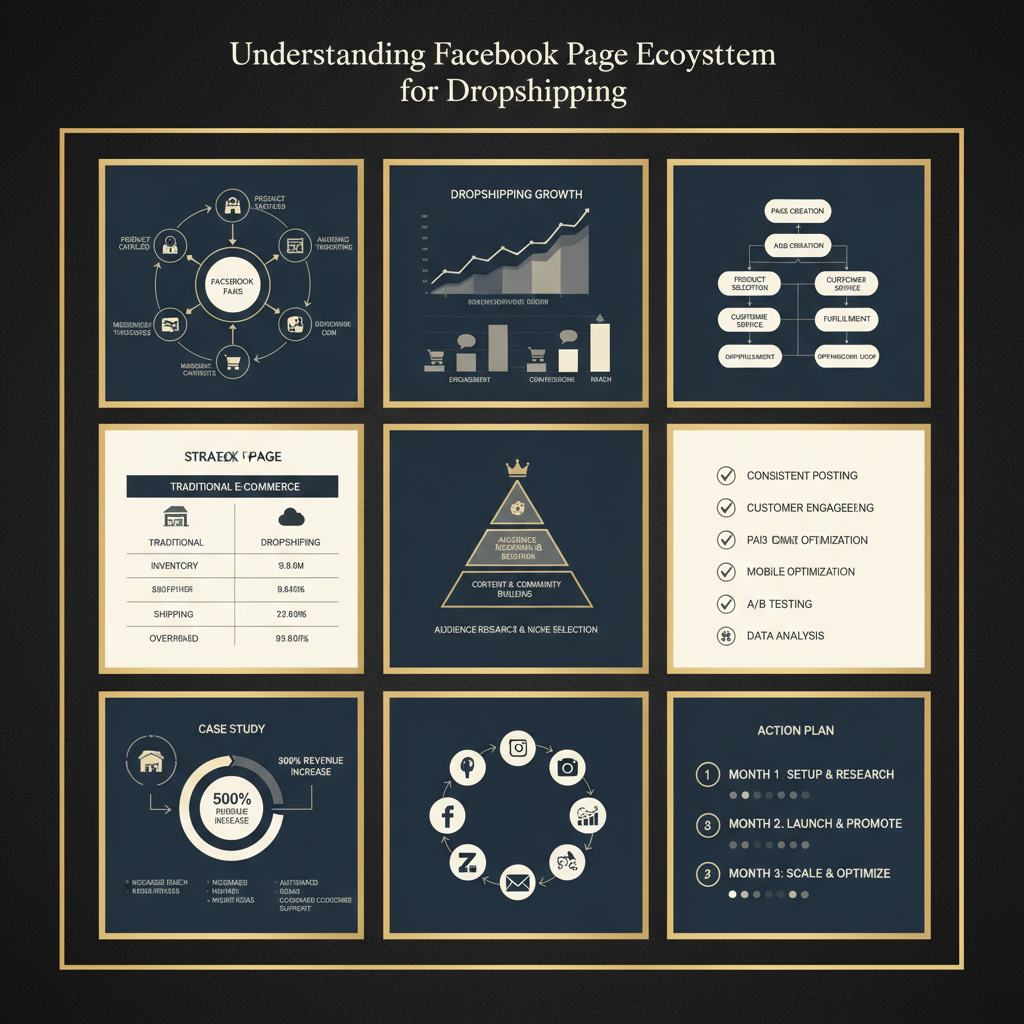
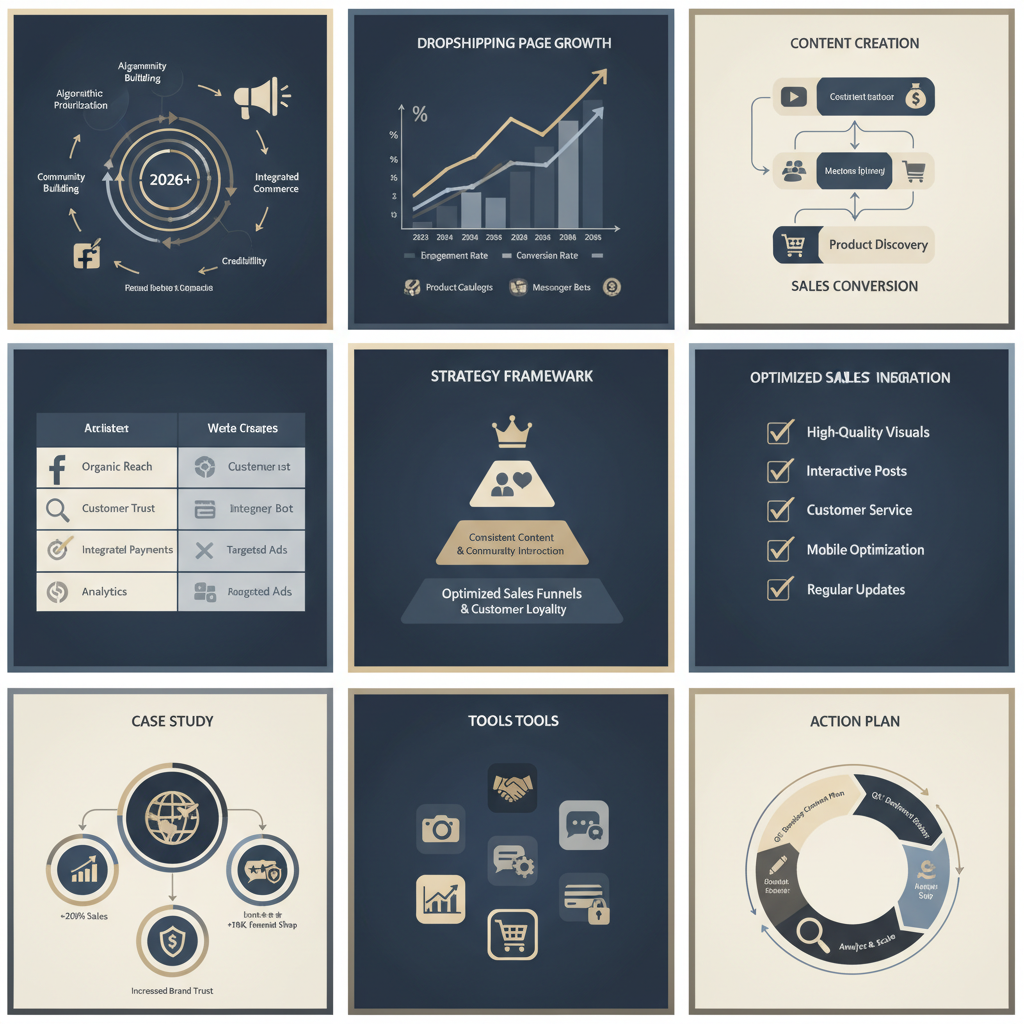
Building a high-converting Facebook page for dropshipping in 2026 requires a professional setup, consistent value-driven content, targeted engagement, seamless integration with sales channels like Marketplace and Shops, and data-backed optimization—turning your page into a 24/7 customer acquisition and trust-building engine.
Why Facebook Remains Essential for Dropshipping Success
A Facebook page for dropshipping is your digital storefront where you can connect with customers, showcase products, and build a brand without inventory hassles. As someone who’s built ASG from the ground up, I’ve seen how the right Facebook strategy can transform dropshipping businesses—especially when combined with platforms like Temu for dropshipping or Walmart dropshipping. In this guide, I’ll share the exact blueprint we use to help our clients succeed on Facebook, covering everything from page setup to profit optimization.
Let me be honest with you – when I started in dropshipping years ago, I completely underestimated Facebook’s power. I focused on SEO, Google Ads, and other channels while treating Facebook as an afterthought. Big mistake.
Fast forward to today, and I can tell you this: Facebook drives over 30% of our top-performing clients’ dropshipping sales. According to recent data, Facebook Marketplace alone has over 1 billion monthly active users – that’s a massive, ready-to-buy audience waiting for your products.
Here’s what most dropshippers get wrong: they treat their Facebook page like a static billboard rather than a dynamic sales engine. They post products randomly, ignore audience engagement, and wonder why they’re not getting sales. The truth is, a well-optimized Facebook page for dropshipping operates more like a 24/7 salesperson who never sleeps, constantly attracting and converting customers.
What This Strategy Guide Covers
In this comprehensive guide, I’m going to walk you through everything I’ve learned about building profitable Facebook pages for dropshipping. We’ll cover product research strategies specifically for Facebook Marketplace, profitability analysis, platform comparisons, and the exact tactics that work in 2025. Whether you’re just starting out or looking to scale your existing dropshipping business, this guide will give you actionable strategies you can implement immediately.
The article contains seven main sections, each exploring essential aspects of building and optimizing a Facebook page for dropshipping, from foundational setup and product sourcing to profitability analysis, platform comparisons, success stories, advanced advertising, and a final optimization checklist.
- Facebook Page for Dropshipping: The Complete Setup Guide
- How Do You Find Products to Dropship on Facebook Marketplace?
- Is Dropshipping on Facebook Marketplace Profitable in 2025?
- Which Social Media Platform Is Best for Dropshippers?
- Facebook Dropshipping Success Stories and Case Studies
- Advanced Facebook Advertising Strategies for Dropshipping
- Facebook Page Optimization Checklist for Maximum Conversions
Facebook Page for Dropshipping: The Complete Setup Guide
What Is Facebook Page for Dropshipping? A Business Owner’s Primer
Let’s cut through the noise. In my years running ASG drop shipping and talking with thousands of sellers, I’ve seen Facebook become a cornerstone for brand-building in this space. A Facebook page for dropshipping is your digital storefront on the world’s largest social network. It’s not just a profile; it’s a dedicated, public hub for your dropshipping business, designed to build trust, foster community, and drive sales directly or to your e-commerce site like Shopify or WooCommerce. Think of it as your 24/7 billboard in a town square where billions of people hang out.
Unlike a personal profile, this is a professional tool. It allows you to showcase your brand’s personality, share content, run targeted ads, interact with customers, and, most importantly, establish legitimacy. In a market where customers can’t physically see or touch your inventory (because you’re using a service like ours), this legitimacy is your currency. A robust Facebook page for dropshipping bridges the trust gap that many new online stores inherently have.
Why Your Facebook Page is More Than Just a Page
You might think, “I have a Shopify store; why do I need a Facebook page?” I used to wonder the same until I saw the data and, more importantly, the results. A Facebook page acts as a low-friction entry point for potential customers. Someone might not be ready to visit your website, but they’ll gladly scroll through your Facebook page, watch your videos, and read your reviews. It’s a softer sell that builds the know-like-trust factor.
From our partners’ success stories, we’ve observed that sellers with an active, engaging Facebook page for dropshipping often see higher conversion rates. It provides social proof through likes, follows, and reviews, which directly counteracts the “Is this store real?” anxiety many first-time visitors have. Facebook’s own data shows that over 1 billion people use Facebook Marketplace every month, highlighting the platform’s deep integration with shopping behaviors. A well-managed page taps into this ingrained user intent.
How a Dropshipping Facebook Page Actually Works
The mechanics are straightforward, but the strategy is what separates success from a ghost town. Your page functions as a central broadcast and engagement hub.
You post content—product highlights, user-generated content, tutorials, behind-the-scenes looks at your fulfillment process (maybe even showing off your seamless integration with your dropshipping agent’s platform, like ours at ASG). This content appears in your followers’ feeds. When users engage (like, comment, share), Facebook’s algorithm rewards you by showing your posts to more people, including their friends. This is organic reach.
You can also use the page as the foundation for Facebook Ads. You can target incredibly specific audiences based on interests, behaviors, and demographics, directing them to your page or your website. Furthermore, you can enable features like Shops on Facebook and Instagram, turning your page into a direct checkout point. The key is that every interaction—every like, every comment on a post about a new product—is a signal that feeds the algorithm and builds your brand’s equity.
The Non-Negotiable Importance of a Facebook Page Today
I’ll be blunt: neglecting your social media presence, especially a Facebook page for dropshipping, in today’s market is a strategic mistake. Here’s why, based on what I see across our client base:
Credibility & Trust: It’s your first line of defense against cart abandonment. A store with no social presence looks ephemeral. A page with consistent updates, positive reviews, and responsive messaging looks established and trustworthy.
Cost-Effective Marketing: While ads cost money, the page itself is free. The organic community you build there is a marketing asset that compounds over time. It’s a direct channel to your most interested customers.
Customer Service & Feedback: It’s where customers go to ask questions publicly. A quick, helpful public response not only solves that customer’s issue but also shows every other visitor that you’re attentive and reliable.
Market Research: The comments and engagement on your posts are a goldmine. They tell you what products your audience loves, what questions they have, and what content they want to see. This is invaluable for refining your product offers and ad copy.
Key Elements of a High-Converting Dropshipping Page
Building a page is easy. Building a high-converting one requires intention. Here are the core elements I always advise our partners at ASG to focus on:
Complete & Optimized Profile: Every field matters. A high-resolution profile picture (your logo), a compelling cover photo (could be a bestseller or brand slogan), and a meticulously filled “About” section with a clear description, contact info, and website link.
Content Strategy: Plan your mix. Don’t just post product links. Use a 80/20 rule: 80% value (entertainment, education, inspiration) and 20% promotion. Show the product in use, answer common FAQs, share customer testimonials.
Engagement Protocol: This isn’t a “set and forget” tool. You must respond to comments and messages promptly. Facebook even badges pages that are “Very Responsive to Messages,” which is a huge trust signal. We treat our ASG support with the same philosophy—speed and clarity build confidence.
Reviews & Recommendations: Actively encourage satisfied customers to leave reviews on your Facebook page. This is arguably the most powerful social proof you can gather outside your own website.
Call-to-Action (CTA) Button: Use the prominent CTA button Facebook provides. Set it to “Shop Now,” “Learn More,” “Contact Us,” or “Sign Up” based on your primary goal.
A Quick-Reference Table: Core Page Elements vs. Their Purpose
| Page Element | Primary Purpose | Pro-Tip from My Experience |
| Profile Picture | Instant brand recognition. | Keep it simple. Your logo on a clean background works best. It appears tiny in comments—make it legible. |
| Cover Photo/Video | Convey your brand message or showcase a flagship product. | Update it seasonally or for promotions. A short, looping video can significantly increase engagement. |
| About Section | Provide essential info and improve searchability. | Use keywords naturally (e.g., “dropshipping,” “your niche,” “worldwide shipping”). Include your story. |
| Username (@) | Makes your page easy to find and tag. | Secure a username as close to your brand name as possible. Consistency across platforms (FB, IG) is key. |
| CTA Button | Drive specific actions from visitors. | Test different CTAs. “Shop Now” is direct, but “Learn More” might have a higher click-through rate for a new brand. |
| Pinned Post | Highlight the most important announcement or offer. | Always keep your best-performing post or a crucial welcome message pinned to the top of your page. |
Common Misconceptions About Facebook Pages for Dropshipping
Let’s clear up some frequent misunderstandings I encounter:
“I only need it for running ads.” Wrong. Your page’s quality (engagement rate, completeness) directly impacts your ad performance and cost. Facebook’s algorithm favors pages it deems trustworthy and relevant.
“I should post 5 times a day to stay relevant.” Quality over quantity. One highly engaging, well-produced video is worth a dozen low-effort product images. Consistency in quality is more important than frequency.
“Negative comments will ruin my page.” Actually, how you handle them defines your page. A professional, solution-oriented response to a complaint can be more impressive than a positive review. It shows you care.
“It’s just for sales.” This is the biggest mistake. Your Facebook page for dropshipping is primarily for building relationships. Sales are a byproduct of trust. Share content that helps your audience, not just content that sells to them.
“I can use my personal profile instead.” This is unprofessional, limits your advertising and analytical capabilities, and violates Facebook’s terms of service for business activity. Don’t do it.

How Do You Find Products to Dropship on Facebook Marketplace?
Beyond Basic Posting: The Strategy Hub for Your Dropshipping Success
Many sellers launch their Facebook page for dropshipping thinking it’s just a digital storefront to post products. I see this all the time. In the early days of my own ventures, I made the same mistake. You push out posts, maybe get a few likes, and then… silence. The traffic doesn’t come, and sales are a distant dream.
Here’s the hard truth I learned and now teach every ASG partner: A successful Facebook page is not a bulletin board; it’s a strategic command center for your brand. It’s where you build a community, establish trust, and create a direct line to your target audience that algorithms will reward with visibility. A scattergun approach wastes time and ad budget. Let’s break down how to transform your page from a ghost town into a thriving hub.
The Core Problem: Why Most Dropshipping Facebook Pages Fail to Scale
The issue isn’t a lack of effort; it’s a lack of strategic alignment. I’ve analyzed hundreds of underperforming pages, and the pattern is clear. They treat Facebook as a one-way broadcast channel. They post product links with generic captions, hoping for a viral miracle. This ignores how the platform’s algorithm—EdgeRank and its successors—prioritizes content. Facebook favors posts that spark “meaningful interactions”: comments, shares, and sustained engagement. A lonely “Buy Now” link gets none of that.
Furthermore, these pages often have no connection to a reliable operational backend. What happens when a post does go viral? The seller scrambles to fulfill orders, faces stockouts from flaky suppliers, or gets crushed by slow shipping complaints that flood the page’s comments, destroying credibility instantly. Your Facebook page for dropshipping is your storefront’s face; if the body (your fulfillment) is sick, the face shows it.
Deconstructing the Algorithm: What Your Facebook Page Really Needs to Succeed
Understanding this is non-negotiable. Think of the algorithm as a gatekeeper deciding who sees your content. It asks: Is this post keeping users on Facebook longer? Is it encouraging conversations? My strategy focuses on three algorithm-pleasing pillars:
1. Value-First Content: Before you sell, educate, entertain, or inspire. For a kitchen gadget page, don’t just post the product. Post a 15-second video of it creating a perfect omelet. That’s value.
2. Community Building: Use your page to ask questions, run polls (“Which color should we stock next?”), and respond to EVERY comment. This signals active community management.
3. Consistency & Authenticity: The algorithm rewards predictable, quality output. A dormant page that suddenly spams links gets penalized. I advise partners to maintain a content calendar, mixing product spotlights with user-generated content and industry tips.
According to a 2023 report by Social Insider, pages that post at least once per day and prioritize video content see, on average, a 135% higher engagement rate than those posting less frequently. This isn’t about shouting louder; it’s about speaking the platform’s language.
Content Pillars: Building a Page That Attracts and Retains Followers
Your content should rest on four pillars, creating a balanced and engaging feed. I structure ASG’s own social strategy around this, and it works wonders.
1. Educational Content (The Expert): “How to” guides, tips, and explainers related to your niche. For a fitness gear store, this could be “5 Desk Stretches Using Our Resistance Band.”
2. Entertaining/Inspirational Content (The Personality): Memes, relatable humor, or stunning customer photos. This builds emotional connection. A great Facebook page for dropshipping in home decor showcases customer setup photos, not just catalog shots.
3. Promotional Content (The Seller): Your direct offers, new arrivals, and flash sales. Crucial, but should only be about 20-30% of your mix. Always frame it as a “special offer for our community.”
4. Community-Centric Content (The Host): Q&As, polls, “tag a friend” contests, and featuring follower comments. This directly boosts the algorithmic signals you need.
Scenario-Based Strategy: Tailoring Your Approach for New vs. Established Pages
Your tactics must evolve. Treating a new page like an established one is a recipe for frustration.
For a New Page (0-1k followers): Your goal is proof and traction. Focus heavily on Pillars 1 and 2 (Education & Entertainment). Run a low-budget “Page Likes” ad campaign targeting detailed interest groups. Collaborate with nano-influencers for a product giveaway. Importantly, use this phase to test product messaging. I guide ASG clients to use their page’s early posts to gauge interest on potential new items before scaling orders.
For an Established Page (1k+ followers): Your goal is monetization and retention. Here, you can leverage social proof. Use more Pillar 3 (Promotional) content, but always wrapped in value (“Back by popular demand!”).
Implement Facebook Shops directly on the page to shorten the buying journey. Use retargeting ads for page engagers to drive sales. This is also where leveraging a Facebook page for dropshipping as a customer service channel becomes critical—fast, public replies to issues build immense trust.
The Four Non-Negotiable Success Factors for a Profitable Page
In my years of scaling e-commerce brands, these four factors separate the winners from the also-rans:
1. Seamless Fulfillment Integration: Your page can drive demand, but can your supply chain fulfill it? This is the core of ASG’s value. When a post goes viral, our 1-3 day processing and 6-10 day global shipping mean you can capitalize on the momentum, not drown in it. A broken fulfillment promise will turn viral success into a PR disaster on your very own page.
2. Brand Cohesion: Your page’s aesthetic, tone, and messaging must match your website. Custom packaging from your supplier (a service we offer) isn’t just for the end customer; it’s for the unboxing videos shared back on your Facebook page for dropshipping, reinforcing the brand loop.
3. Data-Driven Iteration: Never post blindly. Use Facebook Insights religiously. Which post type gets the most shares at 7 PM on Thursday? Double down on that. See a lot of “how long to ship to Germany?” comments? Create a FAQ post and pin it.
4. Proactive Community Management: Don’t just wait for comments. Ask for them. End posts with a question. Have a team member or tool (like Agorapulse) dedicated to responding within hours. An active, managed community is your best defense against negative comments and your strongest signal to the algorithm.
Time & Cost Investment: A Realistic Breakdown for Sellers
Be realistic about the commitment. Here’s what sustainable management looks like:
| Activity | Time Commitment (Weekly) | Cost Consideration | Notes from My Playbook |
| Content Creation | 3-5 hours | $0-$500 | Can be done yourself initially. For scaling, budget for a freelance graphic designer or video editor. |
| Scheduling & Posting | 1-2 hours | $0 (using Meta Business Suite) | Batch-create and schedule all posts for the week in one sitting. Efficiency is key. |
| Community Engagement | 5-7 hours | $0-$200/hr | Critical. Can be owner-led early on, but plan to hire a VA or community manager as you scale. |
| Ad Management & Analysis | 2-4 hours | Ad Budget + $0-$500 | Start with a small, daily testing budget ($5-$10). Use Facebook’s Ads Manager. Consider an agency for complex scaling. |
| Strategy & Planning | 1-2 hours | $0 | Weekly review of insights and planning the next week’s content pillars. |
Common Pitfalls and My Recommended Countermeasures
Pitfall 1: Inconsistent Brand Voice. One day formal, the next day full of slang. It confuses your audience.
Countermeasure: Create a simple one-page brand guideline. Define your brand’s “personality” (e.g., “Helpful Older Sibling”) and 3-5 key messaging pillars.
Pitfall 2: Ignoring Negative Comments. Deleting or hiding them is the worst move.
Countermeasure: Respond publicly, professionally, and empathetically. “We’re so sorry to hear this, [Name]. We’ve just sent you a DM to resolve this immediately.” This turns a complaint into a public display of excellent service.
Pitfall 3: Linking Directly to Aliexpress/Supplier Pages. This looks unprofessional and kills trust.
Countermeasure: Always link to your own branded store. This is why a reliable supplier like ASG, which provides branded fulfillment, is essential. It maintains the illusion of your own inventory.
Pitfall 4: No Clear Call-to-Action (CTA). Posts just “exist” without guiding the user.
Countermeasure: Every post should have a purpose and a CTA. “Learn more in our blog,” “Tag a friend who needs this,” “Shop the look now.”
The Bottom Line: Your Facebook Page as a Growth Engine
A strategically managed Facebook page for dropshipping is your most powerful owned marketing asset outside your website. It’s a direct channel to build relationships, test products, provide support, and drive sustainable sales. But remember, it’s only as strong as the operational engine behind it. The trust you build on social media can be shattered in days by a single fulfillment disaster. That’s why at ASG, we view our role not just as a supplier, but as the reliable backbone that allows your brand’s personality—showcased brilliantly on your Facebook page—to shine without risk. Start by picking one content pillar to master this week, engage with ten followers a day, and watch the foundation of a real community begin to form.

Is Dropshipping on Facebook Marketplace Profitable in 2025?
Building a profitable Facebook page for dropshipping isn’t about throwing random posts at a wall and hoping something sticks. I’ve seen too many sellers invest months into content, only to see engagement flatline and sales stay at zero.
After years of running ASG and helping hundreds of clients, I’ve learned that success here is a deliberate, strategic engineering project. It’s about layering precise targeting, content psychology, automation, and conversion science. This section breaks down the exact blueprint I use and recommend to my partners. We’re moving beyond “post daily” advice into the deep mechanics of building a true sales asset.
The Core Strategic Pillars: More Than Just a “Business Page”
Forget thinking of your Facebook page for dropshipping as a simple company profile. To succeed, you must build it as a Branded Content Hub, a Targeted Community Magnet, and a Direct Sales Engine—all at once.
Your strategy starts with a “Trifecta Focus”:
1. Authority Building: Share value that positions you as a niche expert, not just a seller. This is trust capital.
2. Audience Priming: Use content to identify and warm up segments of your audience with specific interests (e.g., “eco-friendly home enthusiasts,” “gadget geeks”).
3. Seamless Conversion Integration: Every piece of content should have a clear, low-friction path to a product, lead magnet, or offer.
The biggest mistake I see is a disjointed approach. Your product research, ad creative, and organic page content must tell a cohesive story. If you’re selling ergonomic office chairs, your Facebook page for dropshipping should be a go-to source for home office setup tips, posture advice, and productivity hacks—not just chair photos.
My Pro-Tip: Before you post anything, ask: “Does this post build trust, warm an audience, or drive action?” Ideally, it does two of the three. A tutorial video (builds trust) can end with a link to the tool used (drives action).
Leveraging Technology & Automation: Your Force Multiplier
Manually managing a high-growth Facebook page for dropshipping is a recipe for burnout. You need systems. Here’s the tech stack I advocate for:
Content Scheduling & Management: Tools like Buffer or Later are non-negotiable. They allow you to batch-create and schedule weeks of content in one sitting. This ensures consistency, which the Facebook algorithm rewards. Consistency signals reliability.
Chatbots & Messenger Automation: This is your 24/7 sales and support agent. Using ManyChat or Chatfuel, you can automate responses to FAQs, qualify leads, send abandoned cart reminders, and even process orders directly within Messenger. For a dropshipping page, a welcome sequence that asks “What are you looking for today? [Product Category A] or [Product Category B]?” can instantly segment your audience and guide them.
Social Listening & Engagement Tools: Agorapulse or Sprout Social help you monitor comments, messages, and mentions across all posts from one dashboard. Prompt engagement (replying to comments within 60 minutes) dramatically increases post reach and builds community.
By automating the “when to post” and “initial engagement,” you free up your most valuable asset—time—to focus on strategy and creative.
Innovative Content Formats That Break Through the Noise
Everyone posts photos and links. You need to be different. Based on performance data across our clients’ stores, here are the high-impact formats:
“Sizzle” Reels & Short-Form Video: Don’t just show the product. Show the problem it solves, in under 15 seconds. Think: “Struggling with cable clutter? This one organizer changed my desk.” Facebook prioritizes native video, especially Reels.
Polls & Interactive Stories: Use Facebook and Instagram Stories features liberally. Polls (“Which color do you prefer: Sage Green or Terracotta?”), Q&A boxes, and “Add Yours” stickers are not just engagement bait; they are market research tools. They provide direct, real-time feedback on customer preferences.
User-Generated Content (UGC) Hubs: Create a unique hashtag for your brand and actively encourage customers to share their photos/videos. Feature this UGC on your page. This social proof is infinitely more persuasive than your own branded content. It transforms your Facebook page for dropshipping from a showroom into a community showcase.
Advanced Optimization: The Devil is in the Details
This is where experts separate from amateurs. Optimization is continuous.
Page SEO & Naming: Your page name and username should include your core niche keyword. “ZennaHome Decor” is better than “Zenna Finds.” Fill out every single section of the “About” info with relevant keywords and a clear link to your store.
CTA Button Optimization: This is prime real estate. Don’t just leave it as “Contact Us.” Cycle it based on goals: “Shop Now” during a sale, “Sign Up” when promoting a newsletter, “Learn More” for a new product launch. Test which drives the most clicks.
Pin Your Strategic Posts: The pinned post at the top of your page should never be outdated. Pin your current best-performing video, a welcome guide for new followers, or your flagship product launch. It’s your first impression maker.
Error Diagnosis: If your page reach is declining, first check your “Page Quality” status in Meta Business Suite. Penalties for policy violations (even accidental ones) can cripple reach. Next, audit your last 20 posts. How many are purely promotional vs. value-driven? The ratio should be at most 20% direct promotion.
Comparative Analysis: Organic Growth vs. Paid Amplification
You need both, but they serve different masters. Here’s my breakdown:
| Aspect | Organic Page Growth | Paid Ads (Boosted Posts/Page Likes) |
| Primary Goal | Build long-term trust, community, & brand loyalty. | Achieve rapid, targeted reach & immediate conversions. |
| Best For | Customer service, storytelling, UGC, deep engagement. | Scaling content that already performs organically, precise demographic targeting. |
| Cost | Time and creative effort. | Direct financial budget. |
| Speed | Slow and steady. Requires patience. | Fast and scalable. Results are budget-dependent. |
| My Recommendation | The foundation. Non-negotiable. Your page must have a strong organic pulse. | The accelerator. Use it to “supercharge” your top-performing organic content (Reels, UGC posts) to a cold, targeted audience that matches your buyer persona. |
Quick Fix: If your organic post gets above-average comments/shares in the first hour, consider putting a small ($5-$10) boost behind it to a “Lookalike Audience” of your page engagers. This leverages Facebook’s algorithm to find more people like your existing fans.
Essential Tools & Resource Recommendations
Beyond scheduling tools, here’s my curated list:
Graphic Creation: Canva Pro. For designing on-brand post templates, story graphics, and ad creatives quickly.
Video Editing: CapCut (free) or InVideo. Essential for crafting engaging Reels and short videos with text overlays and trending audio.
Analytics: Meta Business Suite Insights is your core. For deeper analysis, Socialinsider offers great competitive benchmarking against other pages in your niche.
Ad Spy/Trend Tool: AdEspresso or Powerspike. To see what ads and content formats are currently winning in your product category.
Implementation Checklist: Your 30-Day Page Revamp
Follow this sequence to build or overhaul your page strategically:
Week 1: Foundation & Audit.
Completely fill out all “About” sections with keywords and a clear value proposition.
Audit last 30 posts. Identify top 3 by engagement. Delete or hide any low-performing or off-brand posts.
Set up core automation: Welcome message in Messenger, link in bio tool (like Linktree), and content calendar in Buffer.
Week 2-3: Content Pipeline.
Create a content mix: 50% Value (tips, tutorials), 30% Community (polls, UGC features), 20% Promotion (products, offers).
Batch-create and schedule 15 pieces of content (5 per week).
Design 3 branded post/Reels templates in Canva for consistency.
Week 4: Amplification & Community.
Run a UGC contest (e.g., “Share your setup with YourBrandName for a chance to win”).
Identify your single best-performing post from Week 2/3 and boost it with a $20 budget to a detailed interest-based audience.
Engage with 10 relevant industry or community pages per day as your Page (not personal profile).
Error Diagnosis & Quick Fixes for Common Pitfalls
Problem: “My posts get likes, but no clicks to my store.”
Diagnosis: The call-to-action (CTA) is weak or missing. The content is engaging but not relevant to your product niche.
Quick Fix: Add a clear, curiosity-driven CTA within the post copy and image. Instead of “Check out our store,” try “I’ve linked the exact organizer that keeps my desk this clean in the comments!” (Then place the link in the first comment).
Problem: “My follower growth has completely stalled.”
Diagnosis: You’re not actively putting your page in front of new, relevant eyes. Organic reach is limited.
Quick Fix: Implement consistent cross-promotion. Mention your Facebook page for dropshipping in your Shopify store footer, email newsletter, and Instagram bio. Collaborate on a Live video with a complementary page in your niche.
Problem: “Negative comments or complaints are hurting my page’s image.”
Diagnosis: This is a public relations and customer service test. Ignoring it is the worst option.
Quick Fix: Respond publicly, promptly, and politely. “Hi [Name], we’re sorry to hear about this issue. We want to make this right. We’ve just sent you a private message to get the details and resolve this immediately.” This shows every other visitor that you are responsive and professional. Then, handle the specifics privately via Messenger or email.
Remember, your Facebook page for dropshipping is a living, breathing asset. It requires a strategic blueprint, the right tools, consistent execution, and agile optimization. Treat it with the same operational rigor you apply to your product sourcing and supplier relationships at ASG, and it will transform from a cost center into a predictable revenue driver.

Which Social Media Platform Is Best for Dropshippers?
Looking Further Ahead: Future Trends for Facebook Pages in Dropshipping
After diving deep into the core steps of building a Facebook page, content strategy, and traffic acquisition, we need to look further ahead. A successful dropshipping business isn’t just about managing a current social media account—it’s about anticipating future trends and positioning yourself early. Next, I’d like to share my in-depth observations and predictions on the trends for Facebook pages in dropshipping over the next five years. This isn’t just my personal speculation; it’s based on industry data analysis, conversations with top sellers, and the real-world experience our ASG team has gained from serving thousands of stores.
2026 Market Trends Outlook: Moving from Intuition to Data-Driven Decisions
By 2026, competition in social commerce will intensify dramatically, and decisions can no longer rely on “I feel this product will take off.” Successful sellers will heavily depend on real-time data and analytics tools. We foresee that Facebook pages for dropshipping will deeply integrate with advanced business intelligence platforms. For example, through Facebook’s Business Suite combined with third-party analytics tools, sellers will be able to track in real time:
- Breakdown of page traffic sources (organic, paid, cross-platform referrals).
- Per-post product click-through rates and add-to-cart rates, not just likes and comments.
- Dynamic shifts in audience profiles, including interest migration and purchasing power segmentation.
| Trend Dimension | 2023-2024 (Current) | 2026 (Prediction) | Implications for Dropshipping Sellers |
| Content Format | Short videos dominate, live streaming rising | Immersive AR/VR shopping experiences, interactive live streaming as standard | Start learning and testing AR filters and virtual try-ons now. Shift product presentation from “viewing” to “experiencing”. |
| Traffic Acquisition | Hybrid: organic content + precise ads | AI-driven highly personalized ads deeply fused with organic content ecosystem | Upgrade ad skills, understand AI algorithms, and create content that resonates with AI recommendation mechanisms. |
| Building User Trust | User reviews, influencer partnerships | Blockchain-verified product traceability, community DAO (decentralized autonomous organization) governance | Supply chain transparency becomes essential. Consider introducing traceable product info and empowering core users with decision-making in communities. |
| Transaction Closure | Facebook Shops, funneling to independent sites | Full in-app closed-loop shopping with deep integration of native payments and logistics tracking | Optimize the shopping experience within the Facebook ecosystem to reduce drop-offs. Partnering with suppliers offering efficient logistics tracking (like ASG) is critical. |
| Core Competition | Viral product speed, ad ROI | Brand community loyalty, personalized customer journey management | Shift operational focus from “traffic” to “retention.” Deeply cultivate niches and build irreplaceable brand communities. |
(Data synthesized from McKinsey’s “2023 Social Commerce Report” and eMarketer’s social commerce forecasts)
The Impact of Emerging Technologies: When AR/VR and AI Are No Longer Hype
I often tell our clients: don’t be intimidated by tech buzzwords—focus on how they solve real pain points. For Facebook pages in dropshipping, AR (augmented reality) and AI (artificial intelligence) will fundamentally change the game in the coming years.
- AR Try-Ons and Contextual Displays: Imagine users on your Facebook page being able to “try on” a watch or “place” furniture in their living room directly via their phone camera. This dramatically reduces returns due to size/color mismatches—a long-standing pain point for dropshipping sellers. Meta (Facebook’s parent company) is aggressively pushing the metaverse and AR tech. Getting familiar early with tools like Spark AR to create filters will be a major competitive barrier.
- AI-Driven Personalized Content and Customer Service: Future page feeds and ads will no longer be one-size-fits-all. AI will automatically generate or recommend different product videos and copy based on each fan’s interaction history and browsing behavior. Meanwhile, 24/7 AI chatbots will handle 80% of pre-sale inquiries, not only boosting response speed but also freeing us to focus on complex customer relationships and brand building.
Latest Practices from Industry Leaders: What Are They Quietly Building?
Observing the Facebook pages of top dropshipping stores earning millions annually, I’ve noticed they’re long past simply selling products.
- Content Community-Building: They transform their pages into “product enthusiast clubs.” Beyond posting product videos, they encourage users to share usage scenarios, modification ideas, and even launch design votes. This massively boosts user stickiness and repeat purchases.
- KOC (Key Opinion Consumers) Replacing KOLs: Instead of spending heavily on big influencers, they’re better at discovering and nurturing genuine super-users within their own communities (KOCs). Recommendations from these real users carry far more credibility and deliver stunning conversion rates.
- Closed-Loop Data Application: They rigorously track the full data chain from post exposure → click → add-to-cart → purchase → repurchase. Any drop-off in a link immediately triggers optimization testing (A/B tests). This lean operations approach is something mid-sized sellers must learn.
Evolution of User Demand Patterns: From “Wanting” to “Needing Resonance”
User shopping motivations are evolving. They’re no longer satisfied with just “buying an item”—they crave “finding a sense of identity and belonging.” This means for your Facebook page for dropshipping:
- Values-Based Marketing: Your page content needs to convey clear brand values (e.g., eco-friendliness, supporting niche designers, craftsmanship). Users buy to support ideas they identify with.
- Seeking Solutions, Not Products: When users search “lower back pain from sitting at a desk,” they don’t just want a lumbar cushion—they want a “complete solution for relieving back pain.” Your content should provide educational value, positioning the product as part of that solution.
- Extreme Demand for Transparency and Authenticity: Fake reviews or over-edited photos destroy trust instantly. Showing real customer feedback, production processes (even via supplier-provided footage), or honestly stating logistics times can actually build stronger trust.
Competitive Landscape and Opportunity Windows: Blue Oceans in a Red Sea
Yes, overall competition is intensifying, but I believe opportunity windows still exist—the key is differentiation:
- Red Ocean: Generic, low-ticket-price models driven by single viral products will become increasingly difficult. Profits will be severely squeezed by ad costs and homogenization.
- Blue Ocean Opportunities:
- Deep Vertical Niche Cultivation: Focus on an extremely specific audience or interest (e.g., kitchen tools designed for left-handed users, accessories for vintage motorcycles). In these communities, your Facebook page for dropshipping can easily become the authority hub.
- Mid-to-High Ticket + Strong Branding: Support higher pricing and margins through premium content, custom packaging (exactly what ASG provides), and excellent after-sales service.
- Localized Community Operations: Deeply localize for specific countries or regions, including language, cultural memes, local payment methods, and optimized logistics.
3-5 Year Development Forecast: Triple Evolution of Platforms, Sellers, and Supply Chains
Based on current trajectories, my predictions are:
- Platform Side: Facebook (Meta) will further blur the lines between social and shopping, launching more powerful in-app tools, logistics integration services, and creator commerce features. Pages may evolve into more functional “brand digital storefronts.”
- Seller Side: Pure “product mover” models will have shrinking survival space. Successful sellers must become “all-in-one operators”: content creators, community managers, data analysts, and brand founders. Control over the supply chain (e.g., response speed, customization capabilities) will become the core battleground.
- Supply Chain Side (like ASG): To meet sellers’ branding demands, service providers like us must offer far more than “shipping.” This includes faster logistics options (like our promised 6-10 day delivery to US/EU), deep product customization, seamless API data integration, and stable quality control. Supply chain partners capable of empowering sellers to create unique brand experiences will become scarce resources.
How to Capture Trend Dividends: My Four Action Recommendations
Seeing trends is important, but action delivers results. If you want to lay the foundation for success with your Facebook page for dropshipping over the next 3-5 years, I recommend starting now:
- Immediately Start Accumulating Your “Data Assets”: Don’t just focus on follower count. Begin building your customer email list (via Facebook Lead Ads) and meticulously record the audience profiles behind each viral product. This data is your private-domain wealth—algorithm changes can’t take it away.
- Invest in “Content Assets,” Not Just “Ad Spend”: Create high-quality, evergreen flagship content (e.g., in-depth product review series, problem-solving tutorials). These will continuously drive search traffic and endorsement effects.
- Find a Supply Chain Partner That Supports Your Branding Upgrade: Have deep conversations with your current supplier—can they support small-batch customization, rapid prototyping, and branded packaging? If the answer is no, it’s time to consider a comprehensive branding service partner like ASG. A reliable, forward-thinking supply chain is your greatest confidence against future competition.
- Test New Technologies with “Small Steps, Fast Iterations”: No need for massive upfront investment. Start by using Spark AR to create a simple product effect filter, or try an AI copywriting tool to assist creation. Maintain sensitivity and hands-on ability with emerging tech.
The future has arrived—it’s just unevenly distributed. In the realm of Facebook pages for dropshipping, those sellers who understand and adapt to these trends early won’t just follow the wave—they’ll define it. I hope these observations and insights light your path forward. Remember, the most dangerous moments often breed the greatest opportunities.

Facebook Dropshipping Success Stories and Case Studies
Section 5: Scaling Beyond Shopify: A Multi-Channel Perspective
In my years running ASG, I’ve seen countless sellers hit a frustrating ceiling. They pour their heart into their Shopify store, only to see growth stall. The truth is, relying on a single channel is like building a business on a one-lane road. To truly scale, you must become a multi-channel merchant. This requires a fundamental shift in your dropshipping strategy and, more importantly, your relationship with your supplier. My direct experience with our network of over 2300 factories has taught me that not all suppliers can support this evolution. Let’s break down what it really takes.
The Shopify-Only Trap and the Supplier Bottleneck
Early in my career, I worked with a brilliant entrepreneur, “Sarah,” who had a killer pet accessory brand on Shopify. She was doing $50K a month, but for 18 months, she couldn’t break past it. Her ads were optimized, her site was beautiful, but she was tapped out on that one platform. The bigger hidden issue? Her supplier couldn’t scale with her. When she tried to test Amazon, the supplier’s inconsistent packaging and 10-day processing times became catastrophic, leading to negative reviews and suspended listings.
This is a classic failure point. A dropshipping supplier for a one-channel store is a vendor; a supplier for a multi-channel empire is a logistics and brand extension partner. They need to handle varied platform rules, different packaging requirements, and disparate delivery expectations simultaneously. A study by Jungle Scout found that sellers using 3+ channels earn 156% more revenue than single-channel sellers, but it also exposes you to 156% more potential points of failure if your supply chain isn’t robust.
Case Study: From Shopify Niche to Multi-Channel Powerhouse
Let’s look at a success story. One of our clients, “EcoGear,” started with us selling reusable stainless-steel straws on Shopify. They had a solid facebook page for dropshipping that drove consistent traffic. Their initial request was simple: fast shipping and unbranded packages. After six months of stable sales, we initiated a strategy session. We advised them to:
1. Leverage Branded Packaging: We moved them from plain poly mailers to custom kraft boxes with their logo—a non-negotiable for marketplaces like Amazon and Etsy, which perceive plain packaging as low-quality.
2. Platform-Specific Compliance: We prepared inventory with FNSKU labels for Amazon FBA prep and ensured all products had Etsy-required safety documentation on file.
3. Diversified Launch: They launched the same core product on Etsy (emphasizing “handcrafted” and “eco-friendly” in a new listing) and Amazon (optimizing for keywords like “best reusable straws”).
Within a quarter, their Shopify revenue grew by 30% (as branded packaging boosted repeat rates), while Etsy and Amazon contributed an additional 60% to their total revenue. Their facebook page for dropshipping evolved into a brand hub, directing traffic to the platform offering the best promotion at that time. The key was our backend ability to fulfill identical orders with three different packaging and labeling protocols from the same warehouse stock.
Cross-Platform Comparison: Where Does Dropshipping Fit?
Not all channels are created equal for a dropshipping model. Your supplier’s capabilities dictate your viable options.
| Sales Channel | Dropshipping Viability | Critical Supplier Requirement | Primary Risk with Weak Suppliers |
| Shopify/Independent Site | High. Full control over customer experience. | Reliable 1-3 day processing, branded packaging options. | Poor delivery times kill customer trust and LTV. |
| Etsy | Medium-High. Must feel “handmade” or curated. | Exceptional product quality, ability to include thank-you cards, agile handling of low-volume, high-SKU orders. | Stock inconsistencies and generic packaging lead to policy violations and account suspension. |
| Amazon (FBM – Fulfilled by Merchant) | Medium. Strict performance metrics (Late Shipment Rate <4%). | Extremely fast & reliable processing (<48 hrs), flawless tracking upload, mastery of Amazon’s packing slip rules. | Account health deterioration due to late shipments or tracking errors. |
| Amazon (FBA) | Low (Hybrid Model). You must pre-send inventory to Amazon. | Bulk procurement efficiency, quality control for pre-packaging, and flexible MOQs for inventory testing. | High upfront cost and risk if product doesn’t sell; requires supplier to be a stable manufacturing partner. |
| eBay | Medium. Buyer expectations are shifting toward faster shipping. | Competitive pricing (key for eBay), transparency on item location/condition. | Negative feedback from slower shipping compared to marketplace giants. |
The ROI of a Multi-Channel Supplier: A Calculated View
Is it worth the complexity? Let’s quantify it. Assume a seller, “Mike,” has a $100 product with a $40 landed cost from Supplier A (slow, single-channel).
Scenario 1 (Single-Channel Supplier A):
Shopify-only revenue: $20,000/month
Profit Margin: 50% = $10,000
Growth Rate: Stagnant at 5% YoY.
Scenario 2 (Multi-Channel Partner like ASG):
Additional Costs: Slightly higher per-unit cost for branded packaging (+$1). Management overhead.
Additional Revenue Streams:
Shopify: +15% uplift from better unboxing = $23,000
Etsy: New channel, adds $8,000
Amazon FBM: New channel, adds $12,000
Total New Revenue: $43,000/month
New Profit (at ~48% margin): ~$20,640
Net Result: Mike more than doubles his profit by paying a slight premium for a supplier that enables multi-channel scaling. The ROI isn’t just in the unit cost; it’s in market access and risk diversification.
5 Golden Rules for Multi-Channel Dropshipping Success
From the trenches, here are my non-negotiable rules:
1. Your Supplier is Your Tech Stack: They must have an API or system (like our custom app) that syncs inventory and orders across Shopify, Etsy, and Amazon in real-time. Manual updates are a recipe for overselling disaster.
2. Brand Consistency is the First Test: If a supplier can’t or won’t do custom packaging, they cannot be your multi-channel partner. Your brand must be recognizable whether the box comes from your Shopify store or your Amazon store.
3. Stress-Test Communication: Before expanding, give your supplier a simulated crisis: “We have 10 negative reviews on Amazon about delayed shipping. What is your immediate response and data log?” Their answer reveals their platform experience.
4. Start with One, Then Layer: Never launch on three new platforms at once. Master one additional channel (e.g., Etsy) with your supplier, then add the next (e.g., Amazon FBM). This controls variables.
5. Your Facebook Page is the Glue: Your facebook page for dropshipping should no longer just promote products; it should promote your brand story across platforms. Use it to announce your new Amazon store, share Etsy customer reviews, and drive a community that follows you, not just your Shopify URL.
Scaling beyond Shopify isn’t about abandoning it; it’s about building orbital platforms around it. The gravitational center must be a supply chain partner built for this complexity, not just for fulfilling single orders. At ASG, we don’t just ship products; we architect the backend logistics that allow ambitious brands to exist seamlessly in multiple digital spaces at once. That’s the modern dropshipping partnership.

Advanced Facebook Advertising Strategies for Dropshipping
FAQ
I get a lot of the same questions from sellers just like you, diving into the world of dropshipping. Here are the answers to the most frequent ones, based on my years of navigating the supply chain trenches at ASG.
1. What are the biggest mistakes beginners make when starting a dropshipping business?
The number one mistake I see is choosing a supplier purely based on the lowest advertised price on platforms like AliExpress. This often leads to a cascade of problems: inconsistent quality, painfully slow shipping, and zero customer support when things go wrong. Beginners also underestimate the power of branding. They treat their store like a generic marketplace instead of building a unique identity that customers can trust. Finally, they fail to plan for scalability. They find a product that sells, only to have their supplier fail when order volume spikes. The key is to build your business on a foundation of reliable fulfillment from day one, which is why we emphasize our network of over 2300 vetted factories at ASG.
2. How do you ensure product quality when sourcing from overseas suppliers?
“Factory-gating” is non-negotiable. For our core partners, I or my team have visited the facilities. We audit their production lines, quality control processes, and packaging standards. For new products, we always start with a sample check—we don’t just trust the pictures. For our clients, we can provide detailed sample inspection videos before any bulk order is placed. This hands-on approach, born from years of dealing with quality inconsistencies, separates a professional facebook page for dropshipping supplier from a random middleman. According to a survey by the American Customer Satisfaction Index, product quality is a top driver of repeat purchases, so we don’t cut corners here source: American Customer Satisfaction Index.
3. Why is shipping speed so critical for dropshipping success in 2024?
Consumer expectations have been permanently reset by Amazon. A 2019 study by McKinsey & Company found that fast, reliable delivery is a key factor in purchase decisions for over 90% of consumers source: McKinsey & Company. In dropshipping, slow shipping is the 1 cause of chargebacks, negative reviews, and failed stores. It kills customer lifetime value. That’s why we’ve structured our logistics to hit a consistent 6-10 day delivery window to major markets like the US and EU. Speed isn’t just a feature; it’s a fundamental requirement for conversion and retention, making your facebook page for dropshipping ads convert much better.
4. Can I use ASG’s service for my Shopify store?
Absolutely, and that’s one of our core strengths. We’ve built a dedicated Shopify app that integrates seamlessly. Once connected, it automates the entire flow: orders from your store sync to us instantly, we process and ship them, and the tracking numbers are pushed back to your customer automatically. It removes hours of manual work each week. This automation is crucial for scaling. Many of our most successful clients run their entire operation through this integration, allowing them to focus on marketing and brand building on their facebook page for dropshipping and other channels.
5. What’s the minimum order quantity (MOQ) to start working with ASG?
We designed our model for agility. There is no high MOQ to start. You can begin with as few as 5 total orders, and these can be a mix of different products. This low barrier allows you to test products and markets with minimal risk. Once you validate a winner, we scale with you seamlessly. This flexibility is what modern e-commerce demands—you need a partner that supports testing, not one that locks you into a large, risky upfront commitment.
6. How do you handle returns and customer service issues?
We operate on a principle of shared responsibility. If the issue is due to a product defect or a fulfillment error on our end (wrong item, damage, etc.), we handle the replacement or refund directly at our cost—you don’t get caught in the middle. For customer remorse or size exchanges, we can facilitate the return to our warehouse. The critical point is communication: your dedicated ASG agent works with you to resolve any issue swiftly, protecting your store’s reputation. A transparent returns policy can actually increase conversion rates, as noted in a Baymard Institute study source: Baymard Institute.
7. Is it possible to add my own branding to the packages?
Not only is it possible, I highly recommend it. Unbranded packages from China scream “dropshipping” and destroy any brand equity you’re trying to build. Our customizable branding service includes branded packaging, custom thank-you cards, and even “packed with love by [Your Brand]” inserts. This transforms the post-purchase experience. When a customer receives a professionally branded package, it increases perceived value and makes them far more likely to post about it on social media or return to your store. It turns a generic transaction into a brand moment.
8. I already have a supplier. How do I switch to ASG without disrupting my business?
We have a structured transition process. You provide us with your current supplier’s quotes and recent order data. We’ll run a comparative analysis and create a phased transition plan. We often suggest starting by moving your best-selling 1-2 products to us first for a side-by-side test. Our goal is zero disruption. We match or beat your current landed costs and service levels, proving our value before you move your entire catalog. This methodical switch is how savvy sellers upgrade their supply chain.
9. How does your pricing compare to sourcing from AliExpress or 1688 directly?
On the surface, our per-item price might be slightly higher than the rock-bottom price you see on 1688. However, that’s not the full picture. Our price includes everything: product procurement, quality oversight, secure warehousing, efficient picking and packing, branded packaging options, and reliable 6-10 day shipping. When you source directly, you’re managing a dozen different vendors, dealing with hidden fees, unpredictable shipping costs, and immense logistical headaches. Our pricing is the total landed cost with reliability baked in. It’s the difference between a cost and an investment in a scalable business.
10. What kind of products or niches work best with your service?
We are agnostic and see success across verticals—from home goods and electronics accessories to fashion and pet products. The common thread among our top-performing clients isn’t a specific niche, but their approach. They focus on products with good margins that allow for branding, they understand their target audience (often built through a strategic facebook page for dropshipping), and they commit to building a real brand, not just flipping random items. We provide the stable, fast, and brandable fulfillment foundation; you bring the market insight and marketing creativity.

Facebook Page Optimization Checklist for Maximum Conversions
Summary & Action Plan: Your Blueprint to Facebook Dropshipping Success
Alright, so we’ve covered a lot of ground. From dissecting the real purpose of a Facebook page for dropshipping to building a brand and scaling with ads, the path is clear. Success here isn’t about luck; it’s about applying a proven, systematic approach. I’ve seen too many talented sellers get stuck because they treat this like a side project instead of a real business. Let’s change that. This action plan will help you bridge the gap between knowing what to do and actually getting it done.
Core Principles Recap: The Non-Negotiables
First, let’s lock in the fundamentals. These aren’t just tips; they’re the pillars your business stands on.
Brand Over Product: You’re no longer just selling a gadget from Alibaba. You are curating a brand experience. Every post, ad, and customer service interaction builds that narrative. This mindset shift is what separates hobbyists from professionals.
Trust is the Currency: On a platform built on personal connections, your Facebook page for dropshipping must be a beacon of reliability. Transparency, social proof, and responsive communication are your tools to earn it. Remember, a study by BrightLocal shows 98% of consumers read online reviews for local businesses; this behavior extends directly to social commerce.
Systematic Execution: Success comes from consistent processes, not sporadic bursts of effort. Whether it’s your content calendar, ad testing framework, or fulfillment workflow, systemize it. This is how my team at ASG ensures every client order is processed within 1-3 days—we don’t leave it to chance.
Your 30-Day Actionable Launch Plan
Don’t overthink it. Start here.
1. Week 1: Foundation. Finalize your niche and brand identity. Set up your Facebook Business Page and Instagram Professional account. Use our guide to create your 5 core page sections (About, Social Proof, Catalog, etc.).
2. Week 2: Content & Validation. Begin your content pillars strategy. Post 3-4 times per week focusing on value and community. Run a small, targeted PPE campaign (as discussed) to test initial creative and gauge audience interest. This is where many of our successful partners at ASG first validate a product.
3. Week 3: Mechanize & Launch. Integrate your Shopify store with ASG’s fulfillment app to automate order processing. Start a conversion campaign with a modest budget ($10-15/day) targeting a warm audience from your PPE campaign or page engagers.
4. Week 4: Analyze & Iterate. Review your Facebook Ads Manager data. Which ad creative had the lowest Cost Per Purchase? Double down on that. Use insights from comments and messages on your Facebook page for dropshipping to inform your next content batch.
Roadmap: Next Steps for Beginners vs. Scaling Sellers
Your path diverges based on your current stage.
For the Beginner (0-5 sales/day): Your singular focus is validation and process mastery. Don’t scale ads until your fulfillment process is flawless. Work with a supplier like ASG that offers low MOQ testing to minimize risk. Master creating one winning product page and one high-converting ad set. Depth beats breadth at this stage.
For the Scaling Seller (5+ sales/day): Your game is about optimization and expansion. Implement A/B testing on everything: ad copy, landing pages, email subject lines. Explore Lookalike Audiences based on your purchasers. Consider diversifying your traffic sources (e.g., TikTok, Google UAC) while using your Facebook page for dropshipping as your central community and trust hub. Investigate advanced fulfillment solutions, like our branded packaging options at ASG, to increase customer LTV.
Commit to Continuous Learning: My Go-To Resources
The market evolves daily. Stay sharp.
Industry Pulse: Follow trade publications like Digital Commerce 360 and eMarketer for macro trends.
Platform Mastery: Facebook’s own Blueprint courses are essential, if dry. For cutting-edge tactics, I follow practitioners like Nick Shackelford for paid media and Andrew Chen for broader product/growth thinking.
Community Intelligence: Niche-specific Facebook Groups and subreddits (like r/Entrepreneur and r/PPC) are goldmines for real-time problem-solving and peer insights.
Where to Find Further Help & Support
You don’t have to build everything alone. Leverage ecosystems.
For Fulfillment & Supply Chain: This is the engine of your business. If inconsistent suppliers or slow shipping are your bottlenecks, it’s time to partner with a professional agent. At ASG, we specialize in being that reliable backbone—from factory-direct procurement to 6-10 day global shipping—so you can focus on marketing and growth.
For Creative & Ad Strategy: Consider freelancers from platforms like Upwork or Fiverr for specific tasks (video editing, copywriting) once you have a proven creative direction.
For Community & Mentorship: Seek out mastermind groups or paid communities of serious e-commerce founders. The accountability and shared experience are invaluable.
The blueprint is in your hands. The difference between those who dream and those who achieve is simply execution. Start with your page today. Validate, systemize, then scale. I’m confident in your journey because I’ve walked it, and my team at ASG is here to support the crucial fulfillment piece of your puzzle. Now, go build something great.