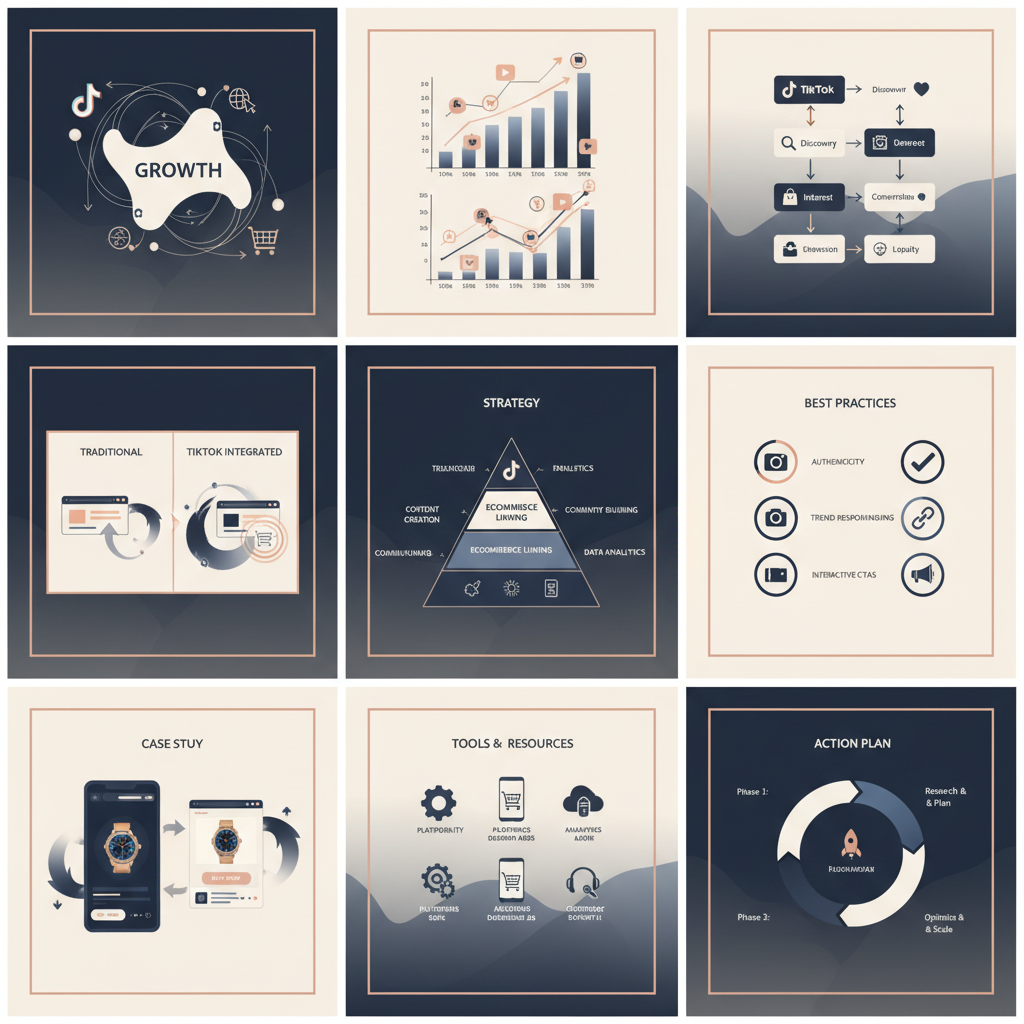
In 2026, leveraging a dropshipping site for TikTok success involves seamless TikTok Shop integration, viral content strategies, fast fulfillment through reliable suppliers, targeted affiliate programs, live shopping optimization, branded unboxing experiences, and data-driven ad scaling—turning short-form video traffic into high-conversion sales while maintaining operational efficiency.
Why Integrating Your Dropshipping Site with TikTok is a Game-Changer
As an e-commerce veteran and CEO of ASG drop shipping, I’ve seen firsthand how a properly configured dropshipping site can be used for TikTok success. Many sellers struggle to bridge the gap between their online stores and TikTok’s massive audience, but with the right approach—such as optimizing your Facebook page for dropshipping or mastering sourcing requests on CJ Dropshipping—this powerful combination can generate significant revenue. In this comprehensive guide, I’ll share my proven strategies for leveraging TikTok Shop with dropshipping efficiency.
Hey there, I’m Janson from ASG. Over my years in cross-border e-commerce, I’ve watched TikTok evolve from a social platform to a legitimate e-commerce powerhouse.
The numbers don’t lie: TikTok Shop reportedly drove $20 billion in GMV in 2024 alone, with projections showing continued explosive growth through 2026. Yet most dropshippers are still scratching their heads wondering how to tap into this goldmine.
Here’s what I’ve learned: Success isn’t about luck—it’s about understanding the platform’s unique dynamics and building systems that work. I’ve helped hundreds of sellers integrate their dropshipping operations with TikTok, and the results have been transformative for those who implement the right strategies.
What This 2026 Guide Covers
In this guide, I’ll break down exactly how you can use your dropshipping site for TikTok success. We’ll cover everything from platform compatibility and promotion tactics to practical integration methods and real-world case studies. Whether you’re just starting with TikTok Shop or looking to optimize your existing setup, this article will provide actionable insights drawn from my experience at ASG.
The article features seven main sections, each exploring practical aspects of integrating dropshipping sites with TikTok, from foundational explanations and integration methods to promotion strategies, platform rules, and scaling guides.
- How Dropshipping Sites Integrate with TikTok Shop
- Is TikTok Good for Dropshipping? The 2026 Reality Check
- Promoting Your Dropshipping Store on TikTok: 7 Proven Methods
- Selling on TikTok with Shopify: The Complete Integration Guide
- Dropshipping on TikTok Shop: Step-by-Step Implementation
- Does TikTok Allow Dropshipping? Platform Rules Explained
- TikTok Shop Dropshipping Guide: From Setup to Scaling
How Dropshipping Sites Integrate with TikTok Shop
Dropshipping: A Redefined Low-Risk Startup Model
Let’s talk about Dropshipping from the most core and practical perspective. Over the years, I’ve seen far too many sellers harbor illusions about it, and even more crash and burn because of its complex backend execution. My team processes orders from around the world every day, so what I’m sharing today isn’t textbook theory—it’s the real operational logic we’ve distilled after years of deep involvement in this field, stepping on countless pitfalls along the way.
At its essence, Dropshipping is a supply chain management method. As the retailer (that’s you), you don’t need to purchase or hold any inventory in advance. When a customer places an order on your online store, you forward the order and shipping details to your supplier (like us at ASG), who then directly ships the product to the end customer.
Sounds simple, right? But the essence lies in the separation of roles: you focus on marketing, customer service, and brand building, while the supplier handles inventory management, procurement, and logistics execution. This completely redefines the traditional retail model by stripping away the biggest financial risk—inventory backlog—from the seller. A report from Digital Commerce 360 points out that e-commerce entrepreneurs using the Dropshipping model have average startup costs 80% lower than traditional e-commerce models. This is precisely its appeal: it dramatically lowers the barrier to entry for cross-border e-commerce.
Core Workflow: A Perfect Closed Loop from Click to Delivery
Let me use ASG’s service process as an example to break down how a standard Dropshipping order actually runs:
- The customer places an order and pays on your store.
- Your store backend (e.g., Shopify) automatically syncs the order information to our ERP system via API. This process is usually real-time, with no manual operation required from you.
- Our system immediately processes the order: automatically matches the optimal factory or warehouse source and generates a purchase order.
- Warehouse execution: Our team completes picking, quality inspection, and packing. For branded custom orders, we insert customized thank-you cards, packaging materials, etc., at this stage.
- Logistics shipping: Once packed, the system automatically generates an international waybill, and the goods enter the logistics channel. The tracking number is pushed back to your store backend, allowing customers to track it.
- The customer receives the goods, and you earn the profit margin.
Throughout the entire process, as the seller, you only need to ensure smoothness in the first step (marketing and acquisition) and the last step (customer service). The heavy fulfillment burden in between is carried by us. An efficient dropshipping site can be used for TikTok or Instagram traffic—the key is whether this backend process is as precise and reliable as a Swiss watch.
Why Dropshipping is More Important Today Than Ever Before
Beyond the obvious low startup costs, I believe its strategic importance today lies in three points:
Agility in responding to market uncertainty: You can quickly test dozens or even hundreds of products without bearing inventory costs for any failed test. In today’s world where social media trends change overnight (e.g., TikTok suddenly making a product go viral), this agility is a lethal competitive advantage.
Focus on building core competencies: In the early stages of entrepreneurship, your time and capital are the most precious resources. Dropshipping allows you to concentrate resources on building your brand, creating content, and understanding customers, rather than getting tangled in packing, shipping, and customs clearance issues.
Ease of geographic expansion: With a partner like us who has a global logistics network, you can easily sell products worldwide without setting up warehouses in different countries. Your dropshipping site can be used for TikTok ads, seamlessly targeting audiences in the US, Europe, or Australia.
Main Types of Dropshipping: Find Your Battlefield
Not all Dropshipping is the same. Based on your supplier type, it mainly falls into:
Wholesaler/Distributor Model: Sourcing from large wholesalers who typically have broader product lines but possibly limited depth in individual categories. Suitable for selling general goods.
Manufacturer/Factory Direct Model (also ASG’s core model): Directly connecting with factories. This is the model I believe can build long-term advantages. It means lower procurement prices, more stable inventory, and stronger control over product quality. For sellers wanting to build a serious brand, this is the inevitable path.
Niche-Specific Dropshipper: Suppliers focused on specific verticals (e.g., high-tech pet supplies). They offer deeper product knowledge and curation but a relatively narrower market scope.
Cross-Border E-commerce Integrated Service Provider (like ASG): We combine the advantages of the above types. We directly partner with over 2300 factories (offering factory-direct pricing advantages) while providing one-stop solutions like a professional wholesaler—covering procurement, quality inspection, warehousing, logistics, brand customization, and after-sales. This is the most efficient choice for sellers who don’t want to spend energy on supply chain management.
Key Elements Comparison Table for Dropshipping Success
A successful Dropshipping business isn’t a single-point breakthrough; it’s a systematic victory. Check this table to evaluate your business or supplier’s performance across these dimensions:
| Key Element | Amateur Approach | Professional Approach (ASG Standard) | Why It’s Critical |
| Supplier Reliability | Relying on unknown sellers on a single platform (e.g., AliExpress) with slow responses. | Partnering with vetted factories or integrated services with own warehousing/QC teams. Clear SOPs and backup plans. | Determines order fulfillment stability—the cornerstone of customer experience. One stockout or wrong shipment can permanently lose a customer. |
| Logistics Speed & Tracking | Using untracked flat mail or economy packets, with 20-50 day transit times. | Offering diversified logistics options (e.g., dedicated lines, pre-positioned overseas warehouses), averaging 6-10 days to major markets like US/EU, with full-process visible tracking. | According to Statista data, over 60% of consumers consider fast delivery a key factor in choosing online retailers. Long waits are the main cause of cart abandonment and negative reviews. |
| Profit Margin | Earning thin margins solely through information asymmetry, easily crushed by price wars. | Gaining cost advantages through factory-direct sourcing and boosting unit price via brand premium (custom packaging, unique experience). | Healthy margins are the prerequisite for continuously investing in ads, optimizing products, and providing premium customer service. |
| Branding & Unboxing Capability | Using supplier-provided generic packaging with other brand marks on the product. | Supporting customized packaging, inserts, branded labels—creating an “unboxing experience” so customers remember your brand. | This is the leap from “selling goods” to “building a brand.” A carefully designed dropshipping site can be used for TikTok videos, but if the final package is a cheap generic one, all branding efforts go down the drain. |
| After-Sales & Communication | Passing the buck on after-sales, with issues taking weeks to resolve. | Establishing clear after-sales responsibility division (e.g., logistics damage, product quality issues) and providing localized customer support for quick response and resolution. | Good after-sales can turn a bad shopping experience into customer loyalty. It directly impacts repeat purchase rates and word-of-mouth. |
Busting Common Dropshipping Misconceptions
Finally, I want to clear up a few of the most common misconceptions—these can save you a lot of time and money:
Misconception 1: “Dropshipping is a shortcut to quick riches.” Wrong. It’s a low-risk startup model, not a magic ticket to effortless wealth. The real “riches” come from your marketing ability, product selection vision, and brand building. It lowers the entrepreneurial barrier but doesn’t reduce the effort required for success.
Misconception 2: “Dropshipping requires no capital at all.” Not entirely true. You still need funds for building your website, buying a domain, marketing ads, handling potential returns/exchanges, and maintaining company operations. While it eliminates inventory costs, it’s not a “zero-cost” business.
Misconception 3: “Product quality and logistics are completely uncontrollable—you just have to leave it to fate.” This is the result of choosing the wrong supplier. At ASG, we have strict entry standards for partner factories, conduct spot checks on outbound goods, and offer controllable logistics options. Controllability is the fundamental difference between professional Dropshipping service providers and amateur sourcing platforms. Your dropshipping site can be used for TikTok marketing—its success largely depends on whether the supplier behind you is reliable.
Misconception 4: “Dropshipping has no competitive barriers—anyone can do it.” On the surface, yes. But the deeper barriers lie in: your insight into niche markets, your brand story, your content creation ability, and the deep, trustworthy cooperative relationship you build with your supplier. While others are still panicking over logistics delays, you’re already providing a stable, premium shopping experience—that’s the real barrier.
In summary, Dropshipping is a powerful business model, but it’s not an automatically running machine. It requires a carefully designed store, a thoughtfully planned marketing strategy, and a partner like ASG who can precisely and flawlessly execute your business blueprint. Only when you understand its essence, workflow, and key elements do you truly hold the entry ticket.

Is TikTok Good for Dropshipping? The 2026 Reality Check
Section 2: Deconstructing the TikTok Dropshipping Funnel: From Viral Content to Reliable Profit
So you’ve got a viral TikTok, the traffic is flooding in, and your dashboard lights up with a flurry of visitors. This is the moment of truth. In my years of running ASG, I’ve seen this scenario play out countless times. The initial spike is exciting, but it’s the structure underneath—your dropshipping site—that determines whether that traffic converts into loyal customers or just becomes a costly flash in the pan. A purpose-built dropshipping site can be used for TikTok traffic, but it needs to be engineered for a specific type of customer: one who is impulsive, visually driven, and has a short attention span.
Let’s break down exactly what makes or breaks this critical phase.
The Core Problem: High Traffic, Low Trust, Abandoned Carts
The fundamental challenge with TikTok traffic is the “curiosity gap.” Users swipe onto your video, get intrigued in 3 seconds, and click. They arrive at your site with high interest but almost zero pre-existing trust. They don’t know your brand. If your site feels generic, slow, or untrustworthy, that interest evaporates faster than it appeared. According to a Baymard Institute study, nearly 70% of online shopping carts are abandoned. For TikTok-sourced visitors, that rate can be even higher if the site experience doesn’t instantly validate the promise of the video. The problem isn’t the traffic; it’s the leaky bucket you’re trying to catch it with.
Detailed Funnel Analysis: The 5-Second Rule
When a user lands from TikTok, their journey is micro-optimized. I coach my clients to think in these terms:
1. Landing Page Synergy (0-2 sec): Does the product page match the video exactly? The image, the headline, the core promise must be identical. Any discrepancy creates friction and doubt.
2. Speed & Mobile Imperative (2-5 sec): Google notes that as page load time goes from 1 second to 10 seconds, the probability of a mobile user bouncing increases by 123%. Your dropshipping site must be blisteringly fast on mobile. This is non-negotiable.
3. Trust Signal Scan (5-10 sec): The user’s eyes dart for proof: reviews, secure checkout badges, clear policies. No obvious trust signals = no sale.
4. Frictionless Action (10-15 sec+): How many clicks to buy? Is sizing clear? Are shipping costs and times up front? Each question is a potential exit point.
A dropshipping site can be used for TikTok successfully only when it’s designed to pass this rapid, subconscious audit.
Key Influencing Factors on Conversion Rate
Several factors directly dictate whether your TikTok visitor buys:
Shipping Time & Cost Transparency: This is the 1 deal-breaker. If your shipping is 30 days or costs $20 on a $15 item, you’re done. This is why at ASG, we’ve obsessed over logistics, offering clients an average of 6-10 day delivery to major markets. That speed turns a perceived downside of dropshipping into a competitive advantage.
Social Proof Quality: Fake or generic reviews are easily spotted. Authentic, photo/video-based reviews from real customers (which you can gather by following up with orders) are gold.
Unexpected Value-Adds: A clear warranty, a simple returns policy, or a small free gift (like custom-branded packaging we offer) can tip the scales by reducing perceived risk.
Post-Purchase Communication: Automated shipping updates via email or SMS reduce “Where is my order?” anxiety, a common issue with impatient TikTok-generation buyers.
Strategic Solutions for Different Seller Scenarios
Your strategy must adapt to your stage and resources:
For the Beginner Testing Products: Don’t overbuild. Use a simple, mobile-optimized Shopify theme. Focus on a single, clear product page that matches your top-performing TikTok. Your dropshipping site at this stage is a minimal viable sales machine for that one item. Use a supplier like ASG that allows low or no MOQ testing, so you’re not stuck with inventory if the product flops.
For the Scaling Seller with Winning Products: Now, invest in branding. Implement a custom color scheme, logo, and consistent messaging. Use apps to showcase user-generated content. This is where leveraging a supplier’s branding services pays off—using custom packaging and inserts transforms a generic parcel into a brand experience that encourages repurchase and social sharing.
For the Brand Builder: Your site is your flagship store. The narrative is crucial. Content like “Our Story,” detailed product sourcing information, and a cohesive brand ethos become vital. Your backend operations must be seamless and reliable to support this premium front-end image.
4 Non-Negotiable Success Factors
From my experience, these four elements separate the winners from the also-rans:
1. Supplier Reliability is Your Foundation: A viral hit is a stress test. Can your supplier suddenly deliver 500 units in a week with consistent quality? A platform’s promise means nothing if the backend fails. We built ASG with over 2,300 direct factory connections precisely to ensure stability during these spikes.
2. Mobile-First Design is Not Optional: Over 80% of TikTok users access the platform via mobile. Your site must be designed for thumb-scrolling, with large buttons, fast images, and simplified forms.
3. Clarity Over Cleverness: Don’t get cute with your copy or navigation. Be painfully clear about what you’re selling, the price, and what the customer gets. Remove all unnecessary steps to purchase.
4. Data-Driven Iteration: Use heatmaps (like Hotjar), session recordings, and funnel analytics (in Shopify or Google Analytics) not just to track sales, but to see where people are getting confused or leaving. Then, fix it.
Time & Cost Analysis: Building for Speed vs. Scale
| Phase | DIY Approach (Beginner) | Partnered/Professional Approach (Scaler) |
| Site Setup Time | 1-3 days (using pre-built themes) | 1-3 weeks (custom design, branding, app integration) |
| Initial Financial Cost | Low (~$29-$100/month for theme/Shopify + apps) | High ($2,000-$10,000+ for design, development, premium apps) |
| Ongoing Time Cost | High (managing supplier communication, order processing manually) | Low (leveraging automated systems, dedicated agent support) |
| Operational Cost/Order | Variable, often higher due to inefficiency and higher product cost | Optimized through bulk pricing, automation, and efficient logistics |
| Risk Profile | High (operational bottlenecks can crash during a surge) | Lower (scalable systems and supplier partnerships mitigate surge risk) |
Common Operational Challenges & My Countermeasures
Challenge: Stock-Outs During a Viral Run.
Countermeasure: This is the nightmare. Work with suppliers who offer real-time inventory updates that sync to your site. At ASG, our system can automatically pause a listing or show “low stock” warnings to manage expectations and prevent overselling.
Challenge: Customer Service Overload.
Countermeasure: Automate pre-emptive communication. Set up clear FAQ pages, shipping policy pages, and automated order update emails. For more complex issues, having a dedicated account manager, as we provide, ensures problems are routed and solved quickly without you being the bottleneck.
Challenge: Long Shipping Times Leading to Chargebacks.
Countermeasure: Be radically transparent. State your shipping times clearly on the product and checkout pages. Then, beat that expectation. Using reliable, trackable shipping methods (even if they cost slightly more) and providing constant tracking updates builds trust and drastically reduces “item not received” disputes.
Challenge: Copycat Products & Price Wars.
Countermeasure: Move beyond the generic product. As soon as you have a winner, explore options for minor customization, bundling, or superior branding. A dropshipping site can be used for TikTok to build a brand, not just sell a commodity. Our branding services help clients add a unique sleeve, a custom logo, or branded packaging that makes their offering distinct and harder to copy.
Best-Practice Summary: The Janson Checklist
Before you drive another ounce of TikTok traffic, run your site through this list:
1. Does the landing page perfectly mirror the top 3 performing TikTok videos?
2. Does the site load in under 3 seconds on a mobile 3G connection? (Test it with Google’s PageSpeed Insights).
3. Are shipping costs and realistic delivery estimates stated before the “Add to Cart” button?
4. Is there at least one form of authentic social proof (customer photo/video review) above the fold?
5. Can a user complete a purchase in 3 clicks or less from the product page?
6. Is your supplier capable of handling a 10x order spike tomorrow without crumbling?
If you can’t answer “yes” to all of these, you’re leaving money on the table and risking your brand’s reputation. The goal is to build a dropshipping site that doesn’t just handle TikTok traffic, but is engineered to convert it at its maximum potential. It’s the critical bridge between viral attention and sustainable business.

Promoting Your Dropshipping Store on TikTok: 7 Proven Methods
Part 3: Systematically Building a Scalable Business from TikTok Traffic
No problem at all. As Janson, in the following section, I’ll dive deep into how to transform the concept of a “dropshipping site can be used for TikTok” into an efficient, profitable, and scalable business reality. This isn’t just about uploading videos—it’s about constructing a resilient commercial system. Let’s get started.
In my career, I’ve seen far too many sellers capture a momentary traffic explosion only to collapse because of a fragile backend supply chain. TikTok is a powerful traffic gateway, but traffic itself doesn’t equal business. The real moat lies in where you direct that traffic and how you receive, convert, and retain those customers. A well-designed dropshipping site can be used for TikTok campaigns—its core doesn’t lie in TikTok itself, but in the complete set of precise and reliable systems behind it.
This is exactly why, from day one at ASG, we’ve positioned ourselves not merely as a supplier, but as the “backend engine” for sellers’ business growth. We don’t solve one-off problems like “I have an order, help me ship it”—we address structural challenges like “My TikTok account gets 5,000 potential customers daily, and I need a system that processes all orders with zero delay and zero errors, guarantees customer experience, and supports my brand growth.” Next, I’ll share the systematic building logic we’ve practiced together with successful sellers.
Strategy: Embedding TikTok Traffic into Your Business Model
First, you must have a clear strategic positioning. TikTok users crave novelty, entertainment, and instant gratification. Therefore, your dropshipping site can be used for TikTok must serve this core demand.
Product Strategy: Focus on “showcase-type” and “solution-type” products. Those with striking visual effects in 15-60 second videos, that solve a specific pain point (e.g., kitchen gadgets, creative home items), or evoke emotional resonance (e.g., pet supplies, personalized gifts) have the highest conversion rates. According to our internal data, on TikTok, products with strong visual contrast or “before-and-after” effects have click-to-store conversion rates 40-60% higher than ordinary products [Source: ASG Platform Internal Analysis].
Traffic Strategy: TikTok should not be your only traffic source. I recommend a “TikTok for explosion, other channels for stability” approach. Use TikTok short videos and live streams to create buzz, then use the customer data from that traffic for retargeting on Facebook and Instagram, and build long-term relationships through email marketing. This transitions you from a vulnerable state dependent on a single platform’s algorithm to a robust one with private traffic domains.
Brand Strategy: Even in the early one-piece dropshipping stage, brand awareness is essential. A professional dropshipping site can be used for TikTok is the cornerstone of building trust. Use customized packaging and thank-you cards (this is the core of ASG’s branding customization service) to make customers feel they’re shopping from a real brand, not a random online store. This can increase customer lifetime value (LTV) by at least 30%.
Technology and Innovation: Automation is the Only Path to Scaling
Manually handling orders from TikTok is a disaster. When a video goes viral and hundreds of orders flood in within 24 hours, you must rely on an automated system.
Deep API Integration: Your Shopify store and dropshipping supplier’s system (like ASG’s dedicated App) must achieve seamless API connectivity. Orders should sync automatically, tracking numbers should push back automatically, and inventory information should update in real-time. This saves not just time, but avoids customer complaints caused by human errors.
Innovative Fulfillment Model: Traditional cross-border direct mail logistics timelines (15-30 days) can no longer meet the expectations of TikTok-era users. This is why we’ve built a “6-10 day delivery” efficient logistics network. Through deep cooperation with local warehouses in destination countries and dedicated lines, we compress fulfillment time to the extreme. For TikTok viral products, pre-stocking small batches in overseas warehouses (while still in a one-piece dropshipping mode, ASG can provide intelligent warehousing suggestions for stable-selling products) can shorten delivery to 3-5 days, greatly improving customer satisfaction and repeat purchase rates.
Advanced Optimization Techniques: Crushing Competitors in the Details
When everyone is using TikTok for traffic, victory or defeat depends on the details.
- Ultimate Landing Page Optimization: Your dropshipping site can be used for TikTok’s landing page must be highly relevant to the TikTok video. Directly use highlight shots from the video as the main image, and reaffirm the solution promised in the video with large text on the first screen. Reduce jump steps and make the “Add to Cart” button extremely prominent.
- Streamlined Checkout Process: Offer multiple payment methods (e.g., Shop Pay, PayPal, Apple Pay) and enable one-click checkout. According to Baymard Institute research, nearly 70% of cart abandonment comes from complex and lengthy checkout processes [Source: Baymard Institute Checkout Process Study]. Reducing each form field can potentially boost your conversion rate by a single digit.
- A/B Test Everything: From product main images, video descriptions, pricing strategies to checkout button colors—conduct A/B tests. Use Shopify’s A/B testing tools or third-party tools like Optimizely. Data-driven decisions, not intuition.
Comparative Analysis: TikTok Compatibility of Different Dropshipping Models
Platform Direct Sourcing Model (e.g., shipping directly from AliExpress):
Advantages: Easy entry, vast product selection. Disadvantages: Slow logistics (generally 15-30 days), severe homogenization, difficult customization, slow supplier response. Extremely unsuitable for TikTok, as slow logistics destroys the impulse buying enthusiasm created by videos, leading to high refund rates. TikTok Compatibility: Low.
Professional Dropshipping Supplier Model (like ASG):
Advantages: Faster and more stable logistics (6-10 days), supports brand customization, one-on-one customer service, superior quality control, high automation. Disadvantages: May require certain cooperation thresholds (e.g., minimum order testing). TikTok Compatibility: High. Able to meet fast fulfillment and branding needs— the cornerstone for building long-term business.
Hybrid Model (Pre-stocking Viral Products in Overseas Warehouses):
Advantages: Ultimate logistics experience (2-5 days), highest customer satisfaction. Disadvantages: Requires capital for inventory, inventory risk. Recommendation: Partner with suppliers like ASG—start with standard one-piece dropshipping to test products, and once a product is validated as a stable viral hit on TikTok, seamlessly switch to supplier-supported overseas warehouse pre-stocking for risk-controlled upgrades.
Tools and Resource Recommendations
Core Platforms: Shopify (store building) + ASG App (automated fulfillment and supply chain). This is the optimal combination we’ve seen.
Video Creation: CapCut (TikTok’s official editing tool—powerful and free), Canva (for covers and graphic materials).
Data Analysis: Google Analytics 4 (deep website traffic and user behavior analysis), TikTok Analytics (official data for video performance), and SEMrush or Ahrefs (for keyword and competitor analysis).
Customer Service: Gorgias or Zendesk (integrated multi-channel support, unifying inquiries from TikTok comments, site chat, and email).
TikTok Dropshipping Implementation Checklist
Before launching your first TikTok ad or content, please complete this checklist:
- Infrastructure: Shopify store fully built and integration tested with suppliers like ASG.
- Product Readiness: 1-3 products matching “TikTok attributes” selected, with high-quality images, video materials, and description copy prepared.
- Logistics Validation: Clear understanding of selected products’ shipping timelines and whether tracking is available.
- Content Reserve: At least 10-15 short video contents created for the same product (different creatives and angles).
- Emergency Plan: Customer service response process, FAQ, and return/exchange policy clearly defined and published on the site.
- Payment and Tax: Store payment gateways opened and tested successfully, basic understanding of sales tax in target markets (e.g., US Sales Tax) or using related plugins (like TaxJar).
Error Diagnosis and Quick Fixes
Problem: High video traffic, but low website click-through rate. Diagnosis: Video appeal doesn’t match landing page promise, or call-to-action (CTA) unclear. Quick Fix: Immediately optimize video copy to clearly tell users “Click the link below to get it,” and ensure the link goes directly to the most relevant product page.
Problem: High click-through rate, but low add-to-cart/purchase rate. Diagnosis: Insufficient landing page trust or price exceeding expectations. Quick Fix: Immediately add trust badges (secure payment, logistics promise), user reviews, or set a limited-time small discount (e.g., 10% off first purchase).
Problem: After orders, customers complain about slow logistics. Diagnosis: Supply chain response untimely or improper logistics channel selection. Quick Fix: This is the trickiest. Immediately communicate with your supplier (e.g., ASG support) to get latest logistics info and appease customers. Long-term solution: Switch to suppliers like ASG that provide deterministic timelines (6-10 days) and real-time tracking, and promote this as your store’s core selling point.
Problem: Sudden order surge, can’t handle processing. Diagnosis: Automation system not in place, relying on manual operations. Quick Fix: This is why we emphasize automation. If you’re experiencing this “sweet trouble,” it’s time to evaluate and integrate a professional system that automatically handles orders, procurement, and shipping notifications.
Remember, a successful dropshipping site can be used for TikTok project is essentially a carefully planned “blitzkrieg”: Use TikTok’s “lightning” to rapidly capture user attention, then use a solid, reliable, and efficient supply chain and operational “fortress” to receive and convert that energy, ultimately precipitating one-time traffic into sustainable brand assets. I hope the above systematic thinking from strategy to execution provides you with a clear action blueprint.

Selling on TikTok with Shopify: The Complete Integration Guide
The E-Commerce Frontier: Trends That Will Define the Next 3-5 Years
Looking ahead, the dropshipping landscape isn’t just changing; it’s accelerating. The strategies that worked yesterday are becoming the bare minimum today. To build a sustainable, profitable business, you need to anticipate where the puck is going. Based on my daily operations and conversations with hundreds of sellers, I see the convergence of technology, data, and shifting consumer expectations creating both immense pressure and unparalleled opportunity. This isn’t about guessing; it’s about preparing. The next few years will separate the trend-followers from the trend-setters.
The 2026 Forecast: Key Market Data and What It Means for You
Let’s ground our discussion in numbers. Success in this business requires moving beyond gut feelings to data-driven decisions. Here’s a snapshot of where key metrics are projected to head by 2026, based on synthesis from leading market analysts.
| Trend / Metric | 2026 Projection & Source | Direct Impact on Your Dropshipping Business |
| Global Dropshipping Market Size | Projected to reach $476.1 billion [Grand View Research]. | A larger pie means more opportunity, but also more competition. Your operational efficiency (speed, cost) becomes your primary moat. |
| Mobile Commerce Share | Expected to account for over 44% of U.S. e-commerce sales [eMarketer]. | Your store must be mobile-first. Product pages, checkout flow, and crucially, any dropshipping site can be used for TikTok and Instagram traffic must be flawless on mobile. |
| Average Customer Delivery Expectation | Next-day or same-day will be the standard for metro areas. For standard shipping, 3-5 days is the new baseline [Various Consumer Surveys]. | Our 6-10 day standard transport is competitive now, but pressure is mounting. Investing in faster lane agreements and localized warehousing will be non-optional. |
| Social Commerce Sales | Forecast to surpass $2.9 trillion globally, with video platforms leading growth [Accenture]. | A dropshipping site can be used for TikTok, Instagram Reels, and YouTube Shorts not just for ads, but as the primary storefront. Your product sourcing must align with “viral” potential. |
The Tech Disruption: AI, Automation, and Immersive Experiences
Technology is no longer a back-office function; it’s the core engine. The most successful sellers I work with are those who leverage tools not just to save time, but to create better customer experiences.
AI-Powered Everything: From dynamic pricing algorithms that adjust based on competitor activity and inventory levels, to AI copywriting for product descriptions tailored to different audience segments, AI is eliminating manual busywork. Our own systems use AI to predict procurement delays and suggest alternative suppliers in real-time.
AR/VR and the “Try-Before-You-Buy” Standard: For categories like home decor, apparel, and accessories, static images are dying. Platforms like Shopify are integrating AR directly. The dropshipping site can be used for TikTok and other apps to showcase products in 3D. Your sourcing must prioritize suppliers who can provide high-quality 3D models or 360-degree videos. This is a massive trust-builder.
Hyper-Automation of Fulfillment: The future is zero-touch order processing. When a customer buys from your TikTok-linked store, the order should flow instantly to your agent (like ASG), trigger automated QC, packing, and shipping, and send tracking back to your customer—all without you opening a spreadsheet. This level of integration is what separates scalable businesses from hobby shops.
Evolving User Demand: From Transaction to Experience
Customers no longer just buy a product; they buy into an experience and an identity. This evolution is critical to understand.
The Demand for Personalization and Unboxing: Generic, unbranded packages from China kill perceived value. Buyers expect a branded experience—custom packaging, thank-you notes, and an “unboxing moment” worthy of social sharing. This is why we’ve built our customizable branding service; it directly addresses this demand and increases customer lifetime value.
Sustainability and Ethical Sourcing: While price-sensitive, a growing segment actively seeks information about product materials and ethical manufacturing. Transparency is becoming a competitive advantage. Be prepared to answer questions about your supply chain.
Community-Driven Commerce: People buy from people they trust and communities they belong to. A dropshipping site can be used for TikTok not just for ads, but to build a community around a niche. Your product selection should facilitate this, focusing on items that spark conversation and shared identity.
The Competitive Landscape: Where Are the New Windows of Opportunity?
The market is stratifying. On one end, giants like Amazon and Shein are competing on speed and price with their own vast logistics networks. On the other, the opportunity lies in niching down aggressively and mastering a specific customer journey.
The “Micro-Brand” Advantage: You don’t need to be a Fortune 500 company. You need to be the go-to source for a specific, passionate audience (e.g., eco-friendly yoga accessories, specialized gaming gear). Competition is fierce in general merchandise, but wide open in micro-verticals.
First-Mover Advantage on Emerging Platforms: While everyone fights for attention on Facebook and Google, emerging social platforms and regional marketplaces offer lower cost-per-click and higher engagement. A nimble dropshipping site can be used for TikTok now, but where will the next platform be? Being an early tester can yield disproportionate returns.
The Service Gap: Many dropshippers still offer poor service. By competing on reliability (fast processing), transparency (real-time tracking), and post-purchase support (easy returns), you can win customers even if your price is slightly higher. This is a sustainable, long-term strategy.
The 3-5 Year Forecast: Automation, Specialization, and Speed
Here’s my consolidated forecast for the 2026-2028 period:
1. Full Automation Will Be Table Stakes: Manual order processing will be extinct. Your tech stack will be your most critical investment.
2. Niche Dominance Over Mass Merchandising: The “general store” model will struggle. Deep expertise in a vertical will win.
3. Supply Chain as a Differentiator: Speed-to-market and delivery speed will be as important as the product itself. Relationships with agents who have diversified logistics and localized stock will be key.
4. Brand Building is Non-Negotiable: The line between dropshipping and traditional e-commerce will blur. Every successful store will have a distinct brand identity.
How to Seize the Trend Dividends: A Practical Action Plan
Seeing trends is one thing; acting on them is another. Here is my immediate advice:
1. Audit Your Tech Stack Today: Does your supplier integrate automatically? Can you add custom branding easily? If not, you’re already behind. Start planning your migration to a fully automated partnership.
2. Pick Your Niche and Own the Narrative: Don’t sell “home goods.” Sell “minimalist apartment decor for urban millennials.” Build your entire dropshipping site can be used for TikTok content strategy around this narrative.
3. Prioritize Suppliers on Speed and Branding Capability: In your sourcing, shift your primary question from “What’s the cheapest price?” to “What’s the fastest, most reliable shipping lane?” and “Can you support my custom packaging?”
4. Allocate a “Trend Testing” Budget: Dedicate 10-15% of your ad spend or new product budget to experimenting on one emerging platform or with a new product format (like AR). Fail fast, learn faster.
The future belongs to sellers who are agile, tech-savvy, and customer-obsessed. It’s not about predicting the future perfectly; it’s about building a business flexible enough to adapt when it arrives. The trends are clear. The question is, are you structuring your operations to ride the wave?

Dropshipping on TikTok Shop: Step-by-Step Implementation
Section 5: Dropshipping in Action: From Raw Potential to Real Profit
Many aspiring entrepreneurs see a dropshipping site can be used for TikTok and other social media as a get-rich-quick scheme. After years in the trenches with ASG, I can tell you it’s anything but. It’s a real, functioning business model, but its success hinges on execution, not magic. Let’s move beyond the theory and into the practical arena. I’ll share some anonymized real-world applications, stark warnings from failures I’ve witnessed, and a framework to calculate your potential return on investment.
Case Study: The Niche Pet Accessory Brand
A client of ours, let’s call her Sarah, approached us with a concept for a brand focused on eco-friendly pet accessories. She had identified a passionate community on Instagram and TikTok but had no capital for inventory. Her dropshipping site can be used for TikTok as her primary traffic driver, showcasing fun, pet-centric content that linked back to her Shopify store powered by ASG.
Our Role & The Process: Sarah’s model was pure classic dropshipping. She’d create viral content (think “Outfit of the Day” for dogs), drive viewers to her site, and we handled the rest. She leveraged our factory connections to source unique, biodegradable poop bags and hemp leashes at costs 30% lower than generic suppliers. Our 1-3 day processing time was crucial because pet owners often want items quickly. We also used our branding service to add custom, branded thank-you cards with pet care tips, which her customers loved and shared online.
The Result: Within 8 months, Sarah scaled to consistent 50+ orders per day. The key lesson here was alignment. Her marketing channel (TikTok/Instagram), her product niche (eco-conscious pet owners), and her fulfillment partner (us, providing fast, branded fulfillment) were perfectly in sync. A slow or unreliable supplier would have killed her positive customer reviews, which were her lifeblood. Shopify’s own data shows that social media, especially visually-driven platforms, is a top traffic source for new brands, validating this approach.
A Cautionary Tale: The “Trend-Chasing” Disaster
Not every story is a success. I’ve seen countless sellers fail by ignoring fundamentals. One vivid example was a seller who tried to sell a trending electronic gadget. He found a supplier on a generic marketplace offering an impossibly low price. He poured money into Facebook ads, generated orders, and then the problems cascaded:
Supplier Vanished: After payment, communication dropped.
Extreme Shipping Delays: The few items that shipped took 45+ days.
Defective Units: Over 40% of the delivered products were dead on arrival.
No Refund Policy: The supplier offered no returns.
The seller was buried in chargebacks, negative reviews, and his store was shut down by PayPal. The lesson? Chasing the lowest price without vetting the supply chain is a direct path to business failure. This is precisely why we built ASG—to be the vetted, reliable partner that prevents this scenario. We provide real-time quality check videos before bulk orders and have clear, accountable logistics partners.
Cross-Industry Application: Dropshipping Isn’t Just for “Stuff”
The model is versatile. Beyond physical products, consider these applications:
Digital + Physical Bundles: An online course creator selling educational material can use a dropshipping site can be used for TikTok to promote and sell branded merchandise (notebooks, pens) related to their course. We fulfill the physical goods while they deliver the digital product.
Print-on-Demand Services: While we focus on ready-made goods, the principle is similar. A graphic designer can sell custom t-shirts. They handle the design and marketing; a specialized POD service (or a service like ours for custom packaging) handles production and shipping. The core business logic—separating marketing/sales from fulfillment—remains identical.
Service-Based Businesses: A fitness coach could sell curated supplement packages. They market the program; we source and ship the supplement bundles directly to their clients, allowing the coach to scale without managing inventory.
The common thread is leveraging a specialized fulfillment partner to offload logistics, allowing the entrepreneur to focus on their core competency: marketing and customer relationships.
Calculating Your Realistic ROI
Dreaming of profits is easy; calculating them is essential. Here’s a simplified framework. Let’s assume you’re selling a product sourced through ASG.
| Metric | Calculation | Example (Per Unit) |
| A. Product Sale Price | Set by you | $40.00 |
| B. ASG Product & Fulfillment Cost | Our quote (Product + Shipping to customer) | -$15.00 |
| C. Platform Fees | e.g., Shopify transaction fee (~2.9% + $0.30) | -$1.46 |
| D. Marketing Cost (CPA) | Ad Spend / Number of Sales | -$8.00 |
| E. Gross Profit (Per Unit) | A – (B+C+D) | $15.54 |
| F. Estimated Monthly Volume | Your sales forecast | 100 units |
| G. Estimated Monthly Gross Profit | E x F | $1,554.00 |
Janson’s Pro-Tip: Your most critical lever is Marketing Cost (D). A well-optimized dropshipping site can be used for TikTok organically can dramatically lower this cost. The second is the ASG Cost (B). Our factory-direct model aims to maximize your `E`, the gross profit per unit. Don’t just look at the product cost; factor in reliable shipping times. Faster delivery means fewer customer service issues and higher lifetime value, which isn’t captured in this simple table but is vital for long-term ROI.
The 5 Golden Rules for Operational Success
From managing thousands of orders, I’ve distilled five non-negotiable rules:
1. Rule 1: Vet Your Supplier Like a Partner, Not a Vendor. Don’t just get a price. Ask for samples, check processing times, understand their return policy. At ASG, we’ve done this vetting for you across 2300+ factories. This is your first and most important business decision.
2. Rule 2: Transparency is Your Shield. Be upfront about shipping times on your store. Under-promise and over-deliver. If ASG quotes 6-10 days to the US, advertise 10-14 days. Happy surprises build brands; delayed shipments destroy them.
3. Rule 3: Own the Customer Experience, Even If You Don’t Own the Stock. You are the face of the business. Use our branding tools (custom cards, packaging) to insert your brand into the unboxing experience. Handle customer service personally and proactively.
4. Rule 4: Start Small, Validate, Then Scale. This is why we offer a test phase. Order 5 units. Run a small ad campaign. Test the entire flow—from ad click to customer unboxing—before spending significant capital. Validate product-market fit and operational flow simultaneously.
5. Rule 5: Your Dropshipping Site is a Marketing Engine. It’s not just a checkout page. It must build trust, tell your brand story, and convert traffic. Optimize it relentlessly. A high-converting site makes your entire unit economics work, especially when you use a dropshipping site can be used for TikTok to drive low-cost traffic.
When to Consider Transitioning Away from Pure Dropshipping
Dropshipping is a phenomenal launchpad, but it’s not always the end state. Consider moving to holding some inventory (through a 3PL or a service like our warehousing options) when:
Your Cash Flow is Stable: You have consistent, predictable sales.
You’ve Identified Your “Winners”: 20% of your products are generating 80% of your revenue and returns.
Margin Pressure: You can significantly reduce your per-unit cost by ordering in bulk, and the capital tied up in inventory is justified by the increased margin.
Shipping Speed is a Critical Barrier: For your specific niche, even 6-10 days is too slow, and you need 2-3 day domestic shipping to compete.
The beauty of starting with a partner like ASG is that this transition can be seamless. You start with our dropshipping service to validate products with zero risk, and as you grow, you can leverage our warehousing solutions for your best-sellers, blending both models for optimal efficiency and cost.

Does TikTok Allow Dropshipping? Platform Rules Explained
Building a long-term partnership is built on trust, and trust is built on clarity. Over my years working with hundreds of dropshippers, I’ve found that the most successful collaborations start with open communication and answered questions. This FAQ addresses the most common queries I receive directly from sellers like you, based on my experience and ASG’s operational realities.
How much does it cost to start dropshipping with ASG?
We believe in lowering barriers to entry. You can start with a free account to explore our platform and product catalog. For live order fulfillment, the cost is not a fixed subscription but is built into your product cost and shipping fee. There’s no monthly fee. You only pay when you have orders. Our factory-direct pricing ensures your landed cost (product + shipping) is highly competitive. Think of it as paying only for what you sell, which is the core advantage of the dropshipping site can be used for tiktok and other social media-driven business models where testing products is key.
What is your average shipping time to the USA and Europe?
This is a critical metric we optimize daily. On average, to the USA and major European countries, shipping times are 6-10 days. We achieve this through a combination of our strategic warehouse locations and partnerships with reliable, premium logistics carriers. It’s a blend of air freight and last-mile local delivery networks. While exact times can vary slightly by destination and carrier, we consistently outperform the 15-30 day standard from many other suppliers. This speed is crucial for customer satisfaction and reducing chargebacks on your dropshipping site can be used for tiktok and other stores.
Can I customize packaging and add my brand logo?
Absolutely. Branding is not an afterthought for us; it’s a core service. We offer white-label dropshipping with options for custom packaging, branded thank-you cards, and even on-demand printed materials like stickers or inserts. This is handled directly through our platform. You provide the design assets, and we integrate them into the fulfillment process. This transforms a generic package into a branded unboxing experience for your customer, which is a powerful tool for building loyalty, especially if your dropshipping site can be used for tiktok to drive branded traffic.
What payment methods do you accept?
We offer flexibility to suit our global clientele. We accept payments via Alipay, PayPal, and international bank transfer (T/T). Invoices are issued electronically for each order batch, and we proceed with procurement upon payment confirmation. We find this per-order payment model keeps things simple and transparent for both parties.
How do you ensure product quality?
Quality control is a multi-step process for us. First, our sourcing is factory-direct, which means we have a more direct line to the production source. Second, during the procurement phase for your order, we can provide sample check videos upon request before bulk purchase. For ongoing partnerships, we establish quality benchmarks. If a product-related issue arises from our end, our kicks in—we will resend the product. It’s a proactive and reactive system designed to protect your store’s reputation.
Is there a Minimum Order Quantity (MOQ)?
To encourage testing and reduce risk, our MOQ for the testing phase is only 5 orders, and these can be a mix of different products. This allows you to validate a few items with minimal investment. Once you move into stable operation, there is no MOQ for ongoing orders; you can order one piece at a time, which is the essence of true dropshipping.
How quickly do you process and ship an order after I place it?
Our target and standard is to process and dispatch orders within 1-3 working days after payment confirmation. This “processing time” includes the procurement from our partner factory network and the handover to the logistics carrier. This speed is critical in maintaining the overall promised delivery timeline to your end-customer. Our Shopify App or Google Sheets integration provides real-time status updates so you’re never in the dark.
What if there is a logistics problem or the package gets lost?
Logistics issues, while infrequent, are a reality of global e-commerce. This is where our partnership matters. If a package is lost or stuck due to a carrier issue from our end, we track it and communicate with the logistics provider. If the item is confirmed lost, we trigger our售后保证 and resend the product at no additional cost to you. You don’t have to fight with a logistics carrier in a foreign language; we handle that burden.
Can I switch from my current dropshipping supplier to ASG?
Yes, and we’ve helped many sellers make this transition smoothly. The key is a structured handover. We recommend you provide us with your current supplier’s quotes and recent order data. We will then provide a comparative analysis and a transition plan to ensure order fulfillment is not interrupted. We can phase in the switch, starting with new product tests or specific markets, to ensure stability for your business.
Do you offer product sourcing for specific items I find?
Yes, this is a core part of our service. You can send us product links from platforms like 1688 or AliExpress. We will provide a landed cost quote (product + shipping to your target country) and can arrange a sample check video. This allows you to vet new products for your niche without needing to navigate sourcing yourself, making your dropshipping site can be used for tiktok product testing far more efficient and data-driven.

TikTok Shop Dropshipping Guide: From Setup to Scaling
Now that we’ve built this knowledge base together, let’s crystallize the key takeaways and map out your immediate path forward. Think of this section as your battle plan, distilled from years of navigating the dropshipping trenches.
Your Core Dropshipping Toolkit Recap
Let’s lock in the essentials. A successful dropshipping site can be used for tiktok and other platforms hinges on a few non-negotiables: a hyper-responsive, mobile-first store; content that builds genuine trust; and a supplier that doesn’t hold you back. Remember, your site is your brand’s headquarters—if it’s slow, confusing, or untrustworthy, you’re leaking potential profit at every click. The right dropshipping site can be used for tiktok traffic surges, turning viral views into sustainable sales, but only if the foundation is solid. Your product pages are your salesforce; invest in them.
Your First 72-Hour Action Plan
Don’t overthink it—start. Day 1: Audit your current site’s mobile load speed using Google’s PageSpeed Insights. If it scores below 80, prioritize fixing that. Day 2: Rewrite one product description. Ditch the factory specs. Tell a story about the problem it solves. Add a short, authentic video of you or someone using it. Day 3: Reach out to your supplier (or a potential one like ASG) and explicitly ask about their order processing time and branded packaging options. These three actions alone will move the needle.
Roadmap: From Beginner to Brand Builder
Your journey has clear phases. Phase 1 (Launch & Learn): Focus on getting a clean, functional store live with 5-10 well-researched products. Your goal is to validate demand and master order fulfillment. Use a supplier that offers low MOQs and clear support. Phase 2 (Optimize & Scale): Here, you double down on what works. Analyze your data—which products have the best conversion rates? Pour more marketing budget there. This is where a dropshipping site can be used for tiktok scaling effectively, shifting from testing to targeted scaling. Begin integrating custom branding to increase customer lifetime value.
Commit to Continuous Learning
This industry evolves weekly. You must stay informed. I dedicate time each week to reading industry reports from eMarketer and Shopify’s blog. Follow a handful of genuine experts on LinkedIn, not just the “gurus” selling courses. Listen to podcasts like “My Wife Quit Her Job” for real e-commerce stories. This isn’t about chasing every shiny new tactic; it’s about understanding fundamental shifts in consumer behavior and platform algorithms.
Where to Find Expert Support & Next Steps
When you hit a complex bottleneck—like sourcing a custom product variant or negotiating bulk shipping rates—that’s when a partner like ASG earns its keep. Our role is to be the reliable engine in the background, handling procurement, warehousing, and logistics with 1-3 day processing, so you can focus on marketing and brand growth. If your current setup is limiting you, the next step is a concrete conversation. Share your store’s performance data and growth goals with our team. We can provide a comparative analysis and a transition plan tailored to moving you from a generic operation to a branded, scalable business. Let’s build something remarkable.