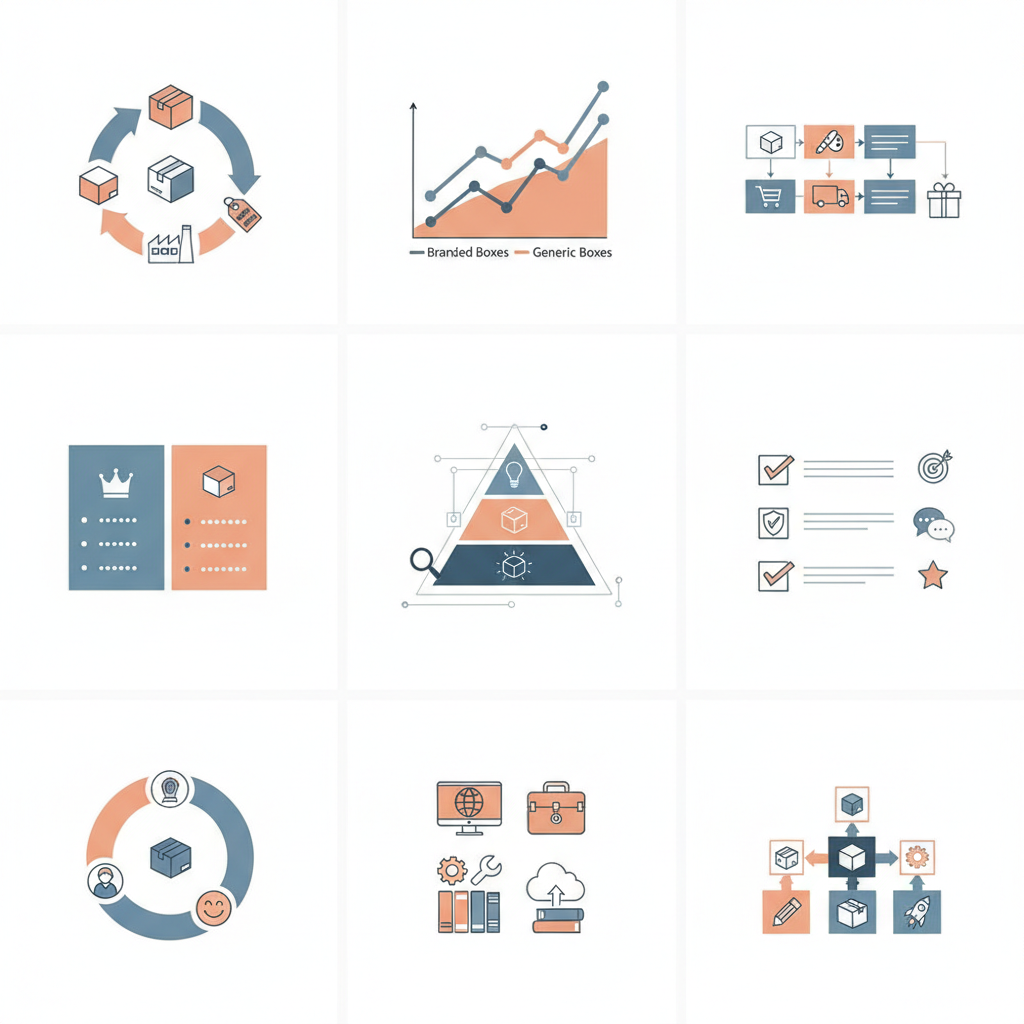
Mastering custom dropshipping product boxes is essential for turning one-time buyers into loyal brand advocates, boosting perceived value, and driving repeat purchases through memorable unboxing experiences.
Why Custom Packaging Transforms Dropshipping Brands
Dropshipping product box solutions represent the ultimate game-changer for online entrepreneurs seeking to build memorable brands. As ASG’s CEO with years in cross-border e-commerce, I’ve witnessed how custom packaging transforms customer perception and drives repeat business. This comprehensive guide covers everything from basic definitions to advanced branding strategies that actually work in today’s competitive market.
When I started ASG dropshipping company, I noticed something fascinating: custom packaging wasn’t just about protection—it was about creating experiences. Studies show that personalized packaging can increase customer loyalty by up to 40%. Yet most dropshippers overlook this powerful branding opportunity.
Many entrepreneurs focus solely on product sourcing while neglecting the unboxing moment. But think about your own experiences: receiving a beautifully packaged order creates emotional connections that generic boxes simply can’t match. This is where dropshipping product box services become your competitive advantage—even when scaling on platforms like Walmart dropshipping or sourcing from the best shoes manufacturer in China.
What You’ll Learn in This Guide
In this guide, I’ll share practical insights from working with 2300+ factories and serving thousands of global sellers. We’ll explore how custom packaging elevates perceived value, builds brand recognition, and turns one-time buyers into loyal advocates.
You’ll discover why packaging matters more than ever, how to implement branded solutions without breaking the bank, and the specific strategies that separate successful dropshipping brands from the competition.
The article contains seven main sections, each exploring key aspects of dropshipping product boxes, from definitions and strategies to operational excellence, supplier selection, future trends, real-world lessons, FAQs, and a final action plan.
- Dropshipping product box
- What is dropshipping?
- What do you need to start dropshipping?
- How do you find dropshipping suppliers?
- Does Amazon allow dropshipping?
- From product sourcing to order fulfillment
- Dropshipping product box
Dropshipping product box
What is Dropshipping Product Box and Why It’s Your Secret Weapon
Let’s cut through the noise. When I talk about a dropshipping product box, I’m not just referring to the cardboard your item ships in. That’s a package. What I’m describing is a strategic, branded experience. It’s the complete, tangible representation of your brand that lands on your customer’s doorstep. In my years of running ASG and advising countless sellers, I’ve seen a simple truth: the unboxing moment is a make-or-break point for customer loyalty and repeat business.
Think of it this way. Your online store is your digital handshake. The dropshipping product box is the follow-up hug. It’s where the pixels of your website become a physical reality. This is where you prove you’re not just another faceless dropshipper, but a legitimate brand that cares about the customer journey from click to unboxing. A study by Dotcom Distribution found that 40% of consumers are more likely to make a repeat purchase from an online merchant that delivers premium packaging Dotcom Distribution’s Ecommerce Consumer Study. That’s a conversion lever most sellers are ignoring.
The Core Working Principle: From Generic to “Wow”
The principle is straightforward but transformative. Instead of your product arriving in a plain, unbranded polymailer or a box plastered with your supplier’s logos and Chinese characters, it arrives in packaging that is uniquely yours. Here’s how we make it work at ASG:
1. You Sell: A customer buys a product from your branded Shopify store.
2. We Source & Customize: Our system receives the order. We procure the product and then place it into your custom-branded packaging materials—a box, a mailer, tissue paper, a thank-you card.
3. We Ship Directly: The fully branded dropshipping product box is shipped directly to your customer, with your return address and branding.
4. You Build Brand Equity: The customer receives a cohesive, professional experience that builds trust and memorability for your brand, not the factory’s.
This process turns the biggest weakness of traditional dropshipping—the generic, disconnected delivery experience—into a formidable strength.
Why Investing in Your Product Box Isn’t Optional
I tell every seller I work with: your packaging is a mobile billboard for your brand. It’s marketing you’ve already paid for. Here’s why it’s critical:
Builds Instant Credibility: A branded box screams “legitimate business,” not “random AliExpress drop shipper.” This directly combats refunds and chargebacks from skeptical customers.
Drives Social Proof & UGC: A beautiful unboxing experience is shareable. Customers post it on Instagram, TikTok, and YouTube. This user-generated content is free, authentic advertising. Retail TouchPoints reports that UGC can increase conversion rates by up to 161% Retail TouchPoints on UGC.
Increases Perceived Value: You can sell the same $15 product as your competitor, but if yours arrives in a premium dropshipping product box, customers feel they got more for their money, boosting satisfaction and reducing price sensitivity.
Fosters Emotional Connection: A handwritten thank-you note (digitally printed to scale) or a small freebie creates a moment of delight. This emotional hook is what turns a one-time buyer into a lifelong fan.
Main Types of Dropshipping Product Boxes
Choosing the right format depends on your product and brand vibe. Here’s my breakdown:
The Rigid Mailer Box: The king of premium unboxing. Perfect for apparel, cosmetics, electronics, and subscription boxes. Offers great protection and a luxury feel. This is what we use for most of our clients aiming for a high-end market.
Corrugated Mailer Box: The durable, cost-effective workhorse. Lighter than rigid boxes but still offers strong protection for books, smaller gadgets, and heavier items. Ideal for brands with an eco-friendly or minimalist aesthetic.
Poly Mailers (Branded): Don’t underestimate a well-designed polymailer. For soft goods like clothing, accessories, or plush toys, a custom-printed polymailer is lightweight, reduces shipping costs, and still delivers your brand message clearly.
Key Elements of a High-Converting Product Box
Here’s a quick table of what every box needs, from non-negotiable to brand-elevating:
| Element | Purpose | Pro-Tip from Janson |
| Brand Logo & Colors | Instant recognition. | Ensure high-resolution print. Use Pantone colors if possible for consistency. |
| Unboxing Experience | Creates a memorable “reveal.” | Use tissue paper, branded stickers to seal the box, or a ribbon. The goal is to add layers. |
| Thank You / Insert Card | Personal touch, drives repeat business. | Use it for thank yous, discount codes for next purchase, or social media prompts. |
| Product Protection | Functional necessity. | Use appropriate void fill (crinkle paper, air pillows) that aligns with your brand image. |
| Shipping Label | Operational must-have. | We ensure the “Ship From” address is localized (e.g., a US return address for US customers) to build trust. |
Busting Common Misconceptions
Let me clear up the doubts I hear every day:
“It’s too expensive for my margins.” This is short-term thinking. Start simple. A custom thank-you card and branded tissue paper inside a standard box can cost pennies per order but dramatically lift perception. Scale up to full custom boxes as your average order value grows.
“My supplier won’t do it.” This is exactly why we built our service at ASG. We handle the entire dropshipping product box customization as part of our fulfillment. You send us your design files, and we implement them at scale. The barrier to entry is gone.
“Customers just care about the product.” Data says otherwise. The unboxing experience directly impacts their perception of the product. A poorly presented great product often gets worse reviews than a mediocre product presented exceptionally well.
“It’s logistically impossible.” Not with automation. Our ERP and Shopify app sync your orders, and our warehouse team handles the custom packing based on your pre-set rules. You manage the brand; we execute the logistics.
In essence, your dropshipping product box is the final, critical touchpoint in the sales funnel. It’s where you close the loop on your brand promise. Ignoring it means leaving money, loyalty, and word-of-mouth marketing on the table. In the next section, we’ll dive into exactly how to design this system for your brand.

What is dropshipping?
The Core of Your Dropshipping Business: Mastering the Product Box Strategy
After establishing your brand’s foundation, the next critical piece is the engine that drives every sale: your product box. Think of your product box as the final, physical handshake between your brand and your customer. It’s not just a container; it’s a tangible representation of your brand promise, a silent salesperson, and the ultimate tool for customer retention. In my years at ASG, I’ve seen sellers transform their businesses by shifting from viewing this as a simple shipping task to treating it as a strategic brand touchpoint.
Why Your Product Box is Your Silent Sales Partner
The unboxing experience is the climax of the online shopping journey. A study by Dotcom Distribution found that 40% of consumers are more likely to make repeat purchases from a brand that delivers premium packaging. This isn’t about vanity; it’s about psychology. A generic, flimsy poly mailer screams “commodity.” A sturdy, well-designed box with your logo whispers “brand.” It creates perceived value, justifies your price point, and triggers social sharing. When we help sellers implement a branded dropshipping product box strategy, we often see a direct correlation with reduced return rates and increased positive reviews. It’s the first physical proof that a customer’s trust in your online store was well-placed.
Deconstructing the Anatomy of a High-Converting Product Box
A winning box is a system, not an afterthought. Let’s break down the non-negotiables:
Structural Integrity: The box must survive the journey. We’ve learned through shipping millions of parcels that double-walled corrugated cardboard is the minimum standard for most goods. It protects your product and, by extension, your brand’s reputation.
Branding Canvas: Every surface is an opportunity. Your logo, brand colors, and a simple tagline should be prominent. This isn’t just for the customer; it’s free marketing when that box sits on their doorstep or in their office.
The “Wow” Inside: This is where you exceed expectations. Think branded tissue paper, a thank-you card with a handwritten feel (we use digitally printed custom cards that look personal), and product-specific inserts. For a skincare brand, that might be a small guide; for an electronic gadget, a QR code linking to a setup video.
Functional Necessities: The invoice/packing slip should be professional and clear. We always advise clients to use this to gently reinforce the no-questions-asked return policy, building post-purchase confidence.
Key Factors Influencing Your Product Box Strategy
Your approach depends on several variables:
Product Type & Fragility: Delicate jewelry requires rigid boxes with inserts, while apparel can use high-quality mailers. We categorize products for our clients to recommend the optimal dropshipping product box solution.
Target Audience & Brand Positioning: A luxury brand targeting high-income professionals needs a minimalist, premium unboxing. A fun, eco-conscious brand targeting Gen Z might use recycled materials with playful graphics.
Logistics & Cost Constraints: International shipping costs are weight and volume-based. A perfectly sized box is crucial. At ASG, our fulfillment algorithm selects the most cost-effective box size from our inventory to keep your shipping fees lean without compromising protection.
Scalability: Can your box design and assembly process handle 10 orders a day? 100? 1000? The strategy must be scalable from day one.
Strategic Solutions for Different Business Stages
Your dropshipping product box needs evolve with your business.
Stage 1: The MVP (Minimum Viable Product) Test: Don’t over-invest initially. Use a clean, unbranded but high-quality box. Include a simple, digitally printed thank-you card with your logo. Focus on perfect product protection and accurate delivery. The goal here is to validate your product and logistics, which is why our testing phase starts with ensuring the core delivery works flawlessly.
Stage 2: The Growth Phase: Once you have consistent sales (say, 20+ orders/day), invest in custom-printed boxes. Start with a single, versatile box size. Introduce branded tissue paper and a more designed insert. This is where we see most of our clients activate our custom packaging services.
Stage 3: Brand Authority & Scaling: For established sellers, this is about customization and efficiency. Implement multiple box sizes for different product categories. Use variable data printing for personalized messages. Consider sustainable materials as a brand pillar. Our system can manage multiple SKU-specific packaging rules automatically.
The 4 Pillars of a Successful Unboxing Experience
From overseeing countless client campaigns, I’ve distilled success into four factors:
1. Surprise & Delight: Go beyond the expected. A small, relevant free sample (e.g., a matching hair tie with a scrunchie order) costs little but creates immense loyalty.
2. Cohesive Storytelling: Every element—box, card, insert—must tell the same brand story. Is your brand about simplicity? Adventure? Wellness? The visuals and copy must align.
3. Flawless Functionality: The most beautiful box is a failure if the product arrives damaged. Protection is non-negotiable. We conduct “drop tests” on packaging before recommending it to clients.
4. Shareability: Design an unboxing moment that’s Instagram-worthy. A unique opening mechanism, a clever quote inside the lid, or vibrant colors encourages User-Generated Content (UGC), which is the most powerful marketing there is.
Time & Cost Analysis: DIY vs. Partnering with a Fulfillment Expert
| Factor | DIY Sourcing & Management | Partnering with ASG (Integrated Solution) |
| Setup Time | 4-8 weeks (sourcing suppliers, designing, sampling, quality control) | 1-2 weeks (finalize design with our team, approve samples) |
| Per-Unit Cost | Potentially lower material cost, but hidden costs in time, errors, and bulk storage fees. | Slightly higher per-unit, but includes sourcing, QC, storage, and seamless integration into fulfillment. |
| Operational Overhead | High. Managing inventory of boxes/materials, assembly labor, quality control, scaling headaches. | Near-zero. Our system automates picking, packing, and shipping with your custom kit. |
| Scalability | Difficult and stressful. Scaling packaging is a logistics nightmare most underestimate. | Built-in. Handles 1 or 10,000 orders with the same efficiency. |
| Expertise Access | Limited to your own trial and error. | Direct access to our team’s cumulative experience in packaging for international e-commerce. |
Common Pitfalls and How to Avoid Them
Pitfall: Underestimating Shipping Costs. An oversized box can double your shipping fee.
Our Countermeasure: We use packaging optimization software to match every order with the smallest possible box that still ensures safety, directly controlling your landed cost.
Pitfall: Inconsistent Quality. Nothing kills a brand faster than a customer receiving a premium box one time and a crushed, generic one the next.
Our Countermeasure: We source packaging from vetted, long-term factory partners (part of our 2300+ network) and have strict QC checks at our fulfillment centers.
Pitfall: An Unscalable Process. Hand-packing 50 orders feels manageable. Packing 500 is a different beast.
Our Countermeasure: Our entire operation is built for scale. Your custom dropshipping product box materials are stored in our warehouse and integrated into our automated picking process. When an order comes in, our packer is instructed on-screen exactly which box and inserts to use.
Pitfall: Forgetting the “Why”. Packaging that looks pretty but doesn’t align with the brand or protect the product is a waste.
Our Countermeasure: We start every packaging consultation by asking, “What is the core feeling you want your customer to have when they open this?”
Best-Practice Summary: Your Action Plan
1. Start with Function: Before any branding, ensure your product arrives perfectly. Choose protection over prettiness if you must.
2. Design for Your Customer: Your box should speak directly to your ideal buyer’s aesthetics and values.
3. Integrate Seamlessly: Your packaging process must be a smooth part of your fulfillment workflow, not a separate, manual bottleneck.
4. Measure the ROI: Track metrics like Customer Lifetime Value (LTV) and repeat purchase rate before and after implementing a branded box. You’ll often find the investment pays for itself.
5. Iterate and Improve: Use customer feedback and unboxing videos to see how people interact with your package. Then refine it.
Ultimately, your dropshipping product box is a direct reflection of how much you value your customer and your own brand. It’s an area where a strategic partnership with a fulfillment expert like ASG can provide not just operational relief, but a genuine competitive edge. We handle the complex logistics of sourcing, storing, and assembling your custom kit, so you can focus on the creative branding and marketing that drives sales.

What do you need to start dropshipping?
Section 3: The Engine Room: Advanced Strategies and Operational Excellence
The real differentiator in dropshipping isn’t just finding a product; it’s building a system that scales. It’s about moving from a reactive operator to a proactive architect of your business. Over the years at ASG, I’ve seen too many sellers hit a ceiling because their backend couldn’t support their frontend growth. This section is about building that scalable engine. We’ll move beyond the “what” and into the “how” of advanced operations, leveraging technology and strategy to create a competitive moat. Think of this as the playbook for turning a promising test into a sustainable, profit-generating machine.
Crafting a Data-Driven Sourcing Strategy
Gone are the days of guessing what might sell. Your sourcing strategy must be anchored in data. I tell my team and our clients to think like investors, not gamblers. Start with platforms like Jungle Scout or Helium 10 to analyze market demand, competition, and profitability before you even contact a supplier. Look for products with a consistent upward trend in search volume, not just a viral spike.
But data isn’t just external. Internally, you must analyze your own metrics. Which products have the highest customer lifetime value? Which have the lowest return rates? At ASG, we use this data to advise our partners on which items to double down on and which to phase out. For instance, a well-designed dropshipping product box that enhances unboxing can significantly boost repeat purchase rates, a metric you should track religiously. Your sourcing should evolve from chasing “hot” items to building a curated catalog of winners validated by your own sales data and customer feedback.
Leveraging Automation: The Tech Stack That Saves You Hours
Manual order processing is the fastest path to burnout and errors. Automation is non-negotiable. For Shopify sellers, our own ASG app is built for this exact purpose—it auto-syncs orders, updates tracking, and manages inventory in real-time. But your tech stack should extend beyond fulfillment.
Consider tools like Zapier to connect your storefront to email marketing platforms (Klaviyo, Omnisend) for abandoned cart flows. Use analytics dashboards (Google Data Studio, Looker Studio) to visualize performance without logging into five different platforms. The goal is to create a central nervous system for your business where information flows seamlessly. I’ve seen sellers reclaim 15-20 hours a week by automating just order entry and customer service ticket triaging. That’s time you can reinvest in marketing and product development.
Innovation in Customer Experience: Beyond the Transaction
Anyone can ship a box. Building a brand means delivering an experience. This is where innovation pays dividends. Simple, cost-effective touches transform a generic package into a memorable brand touchpoint.
We encourage our partners to use custom packaging and branded inserts. A thank-you card with a personalized note or a QR code linking to a loyalty program can work wonders. Consider including a small, relevant free gift or sample with orders over a certain value. The key is consistency. Every dropshipping product box that leaves your virtual warehouse should feel like it’s coming from your brand, not a faceless supplier. Data from a Baymard Institute study shows that nearly 70% of online carts are abandoned; a polished, branded post-purchase experience is a powerful tool to combat buyer’s remorse and encourage repeat business.
Advanced Optimization: Squeezing Margin from Every Angle
Optimization is a continuous process. Let’s break down a few advanced areas:
Shipping & Logistics: Don’t just accept the default shipping method. Analyze the delivery performance and cost of different carriers for each destination zone. Sometimes, splitting inventory across multiple fulfillment centers (like using ASG’s warehousing alongside a local US 3PL for top-selling items) can drastically cut delivery times and costs.
Dynamic Pricing: Use apps like Omnisell or Vitals to implement rules-based pricing. Automatically offer a small discount on slow-moving inventory or increase the price of a trending item by 2-3%. Small adjustments compound.
Post-Purchase Upsells: The sale isn’t over when the order is placed. Use post-purchase upsell apps like CartHook or Rebuy to offer complementary products, warranty extensions, or a subscription after the payment is confirmed, when customer commitment is highest.
Comparative Analysis: Dropshipping Models
Not all dropshipping is created equal. Understanding the models helps you choose your path.
AliExpress/General Marketplace Model: Pros: Vast selection, extremely low barrier to entry. Cons: Long shipping times (often 15-30+ days), inconsistent quality control, communication barriers, limited branding options. It’s a testing ground, not a foundation for a brand.
Specialized US/EU Agent Model (like ASG): Pros: Faster shipping (6-10 days to major markets), direct factory relationships for better pricing and QC, white-label/branding services, dedicated support. Cons: Higher initial product cost compared to ultra-cheap listings, often requires a partnership agreement.
Holding Inventory (Hybrid Model): Pros: Fastest delivery (1-3 days), complete quality control, highest branding potential. Cons: Requires capital for inventory, carries risk of dead stock, needs warehouse management.
For most serious sellers aiming to build a brand, the Agent Model offers the best balance of scalability, speed, and brand control without the capital risk of holding inventory.
Essential Tools & Resources for Scaling
Here’s my shortlist of tools beyond the obvious (Shopify, Facebook Ads):
Product Research: Helium 10, Jungle Scout (for Amazon data), EcomHunt, Dropship.io.
Marketing & Analytics: Triple Whale (for unified analytics), Klaviyo (email/SMS), Canva (creative assets).
Operations & Support: ASG Fulfillment App (for automation), Gorgias or RichChat (unified customer service helpdesk), Trello or Asana (project management for internal team).
Learning: My 1 resource is always real-world data from your own store. Supplement with communities like r/ecommerce on Reddit or specific Discord groups, but treat advice with skepticism—validate everything against your own numbers.
Implementation Checklist: From Setup to Scale
Ready to systemize? Follow this checklist:
1. Infrastructure: Store built (Shopify), payment gateway active, basic legal pages (Terms, Privacy) in place.
2. Supplier Onboarded: Partner chosen (e.g., ASG), communication channels established (e.g., dedicated agent, WhatsApp), pricing and terms agreed.
3. Automation Live: Fulfillment app installed and connected, order flow tested with a dummy order.
4. Branding Assets Ready: Logo, custom packing slip/thank-you card design files sent to supplier.
5. Analytics Configured: Google Analytics, Facebook Pixel installed, key dashboards set up.
6. Post-Purchase Sequence Built: Welcome email, shipping confirmation, delivery confirmation, and follow-up review request emails automated.
7. Scaling Budget Defined: Know your cost per acquisition (CPA) and have a reinvestment plan for profits.
Error Diagnosis & Quick Fixes
When things go wrong (and they will), stay calm and systematic.
Symptom: Sudden drop in conversion rate.
Diagnosis: Check site speed (use PageSpeed Insights), test checkout process for errors, review recent ad creative/landing page changes.
Quick Fix: Revert major recent changes, ensure all payment options are working.
Symptom: Customer complaints about wrong/missing items.
Diagnosis: Likely a fulfillment error. Check with your agent for their picking/packing process.
Quick Fix: Implement a barcode scanning system at the packing stage (a good agent will have this). For immediate remedy, apologize and ship the correct item immediately—it’s cheaper than a chargeback.
Symptom: Shipping times are ballooning.
Diagnosis: Could be a logistics bottleneck, a supplier stock-out, or a customs issue.
Quick Fix: Communicate proactively with customers. Offer a small discount on next purchase. Work with your agent to pre-position best-selling inventory in forward warehouses. The reliability of the dropshipping product box reaching the customer on time is paramount.
The goal isn’t to avoid errors entirely—that’s impossible. The goal is to have systems in place to detect, diagnose, and resolve them faster than your competition, turning potential brand damage into an opportunity to demonstrate exceptional customer service.

How do you find dropshipping suppliers?
Section 4: The Future of Dropshipping: Navigating Trends and Seizing Opportunities (2024-2029)
Looking ahead is not optional; it’s essential for survival and growth in dropshipping. The landscape is shifting faster than ever, driven by technology and evolving consumer expectations. In my years at the helm of ASG, I’ve learned that success doesn’t come from chasing yesterday’s winners, but from anticipating tomorrow’s game. Let’s dissect the forces shaping our future.
The 2026 Dropshipping Market Snapshot: Data-Driven Projections
While exact figures for 2026 are still crystallizing, analyst reports and our own internal data point to a trajectory of robust, but increasingly sophisticated, growth. The global dropshipping market, valued at over $225 billion in 2023, is expected to maintain a compound annual growth rate (CAGR) of over 23% through 2030 Source: Grand View Research. However, the nature of that growth is changing.
| Trend Dimension | 2024-2026 Projection | Impact on Sellers |
| Consumer Demand | Shift from generic to personalized, brand-driven purchases. | “White-label” generic products will struggle. Sellers must invest in brand storytelling and unique dropshipping product box experiences. |
| Technology Adoption | AI for hyper-personalization & predictive logistics; AR for virtual try-ons. | Operational efficiency will be table stakes. Winners will use tech to enhance customer experience, not just cut costs. |
| Logistics Expectations | “Fast” redefined from 7-14 days to 3-7 days for key markets like US/EU. | Partnerships with suppliers offering regional warehousing (like ASG’s 6-10 day US/EU delivery) become critical. |
| Platform Dynamics | Social commerce (TikTok Shop, Instagram) and niche independent stores rise vs. monolithic marketplaces. | Diversification across sales channels is key. Reliance on a single platform is a significant risk. |
| Sustainability & Ethics | Transparency in sourcing and carbon-neutral shipping options become purchase drivers. | Suppliers must provide verifiable data. Sellers who champion ethical practices will build stronger loyalty. |
The Tech Tsunami: AI, Automation, and the End of Manual Grind
Emerging technologies are dismantling the old, labor-intensive dropshipping model. At ASG, we’ve seen firsthand how integrating our ERP and Shopify App automates 90% of the order flow—from sync to shipment tracking. The next wave is about intelligence, not just automation.
AI is moving beyond chatbots. It’s about predictive analytics for inventory (preventing best-sellers from going out of stock), dynamic pricing algorithms, and AI-driven copywriting for product descriptions tailored to specific audiences. The impact? It frees you, the seller, to focus on strategy, marketing, and brand building—the high-value tasks that machines can’t replicate. If your supplier isn’t investing in this backend tech, you’re being left with manual processes that will cap your scalability.
Learning from the Leaders: Beyond Fast Shipping
The industry leaders are no longer just the ones with the cheapest prices. They are the ones mastering the complete customer journey. What are they doing?
Hyper-Specialization: They dominate a specific niche (e.g., eco-friendly pet products, premium kitchen gadgets for small spaces), becoming the authoritative voice.
Seamless Post-Purchase Experience: They provide proactive, branded tracking (not a generic Cainiao link) and surprise upgrades in their dropshipping product box.
Content as a Sales Engine: They use detailed blogs, video tutorials, and user-generated content to educate and build trust before the first click.
Leveraging Supplier Ecosystems: They partner with full-service agents like us who handle not just fulfillment, but also quality checks, custom packaging, and hassle-free returns, allowing them to present as a polished, direct-to-consumer brand.
The Evolving User: What Today’s Customer Actually Wants
The customer has evolved. They’re not just buying a product; they’re buying into an identity, a solution, and an experience. The demand patterns show:
1. Desire for Uniqueness: Mass-produced items from AliExpress are easy to find. Customers crave products that feel exclusive or part of a curated collection.
2. Impatience with Complexity: They expect the buying process to be simple and shipping to be fast and predictable. Delays or confusing tracking are conversion killers.
3. Demand for Transparency: They want to know where products come from, the materials used, and the brand’s values. This is where a trusted supplier with direct factory relationships (like our network of 2300+ partners) becomes your greatest asset.
The Competitive Landscape: Where Are the Windows of Opportunity?
The market is crowded at the bottom but wide open at the top. The low-effort, “find-a-cheap-product-and-markup” model is a red ocean. The real opportunities lie in:
The Brand-Building Gap: Most dropshippers are resellers. Few are builders. The window is open for sellers who use dropshipping as a supply chain to build a recognizable, beloved brand. This is why we offer customizable branding and packaging—it’s the differentiator.
The Service Gap: Many suppliers are just order processors. The opportunity is partnering with an agent that acts as an extension of your team—providing sourcing advice, quality control videos (as we do during testing), and proactive problem-solving.
The Niche Expertise Gap: Deep vertical knowledge (e.g., serving the “van life” community, or specific hobbyists) creates defensible businesses that algorithms and giants can’t easily replicate.
The 3–5 Year Forecast: Consolidation and Professionalization
The next five years will see a massive professionalization of the space. I predict:
1. Supplier Consolidation: Smaller, unreliable agents will fade. Large, tech-enabled, full-service providers (offering everything from sourcing to branded fulfillment) will dominate.
2. The Rise of the “Dropshipping Brand”: The stigma will disappear. Successful stores will be indistinguishable from traditional e-commerce brands, powered by agile dropshipping supply chains.
3. Regulation and Standardization: Expect more scrutiny on import taxes, product compliance (e.g., CE, FCC marks), and data privacy. Professional suppliers will navigate this for sellers.
Seizing the Trend Dividends: Your Action Plan for 2024+
To capture the value of these trends, you need a strategy, not just a store.
1. Choose Your Partner Wisely: Your supplier is your foundation. Vet them on technology (automation), logistics speed (6-10 day delivery to the West), and value-added services (branding, QC). Your partnership should feel like a strategic alliance.
2. Invest in Your Brand From Day One: Even if you start with a test order of 5 products, think about your brand name, story, and how the unboxing feels. That dropshipping product box is a tangible touchpoint.
3. Specialize Relentlessly: Go deep, not wide. Become the go-to source for a specific community.
4. Leverage Data, Not Just Gut Feel: Use tools to validate niches and products. Let your supplier’s market data (like the insights we share with clients) inform your decisions.
5. Build for Retention: Your first sale is just the beginning. Use email marketing, loyalty programs, and exceptional post-purchase care to turn buyers into repeat customers and advocates.
The future belongs to the prepared seller. It’s about moving from a transactional mindset (“I sold a widget”) to a relational one (“I served a customer and built my brand”). At ASG, we’re building our entire operation—from our factory networks to our one-on-one client support—to empower you to win in this new, exciting era of dropshipping.

Does Amazon allow dropshipping?
The Reality of Dropshipping: A CEO’s Perspective on Successes, Failures, and Hard-Earned Lessons
Having walked this path for years, I can tell you that dropshipping isn’t a get-rich-quick scheme; it’s a sophisticated logistics and customer service business. At ASG, we’ve processed millions of orders, and I’ve seen countless sellers rise and fall. The difference often boils down to one thing: their approach to the dropshipping product box—the entire end-to-end process from sourcing to delivery. Let me share the unfiltered truth, drawn from our hands-on experience, to help you navigate this landscape.
Inside Our Playbook: How ASG Manages the “Product Box” at Scale
Our operation is built on a simple but powerful principle: control what you can, automate the rest. The core of our system is our integrated ERP, which acts as the central nervous system for every dropshipping product box we handle.
When an order comes in, say for a popular kitchen gadget, our system instantly checks real-time inventory across our network of 2300+ factory partners. It’s not just about “in stock” or “out of stock”; we monitor stock levels to predict shortages weeks in advance. We then automatically route the purchase order to the factory with the best combination of price, location, and proven reliability.
The factory packs the item, often with the seller’s custom-branded packaging or a thank-you note we’ve pre-supplied. The package is then handed to one of our pre-vetted logistics partners based on the destination and service level. The tracking number is auto-pushed to the seller’s store dashboard. This isn’t magic; it’s a system refined through thousands of daily transactions. The key lesson here is that reliability in dropshipping isn’t luck—it’s engineered through robust systems and deep supplier relationships.
Application Scenarios: Tailoring the Strategy for Different Seller Archetypes
One size never fits all in e-commerce. Here’s how the dropshipping product box concept plays out for different types of sellers we work with:
The Agile Tester: This seller is running Facebook Ads to 5-10 products simultaneously. They need speed and flexibility. For them, we focus on ultra-fast sample procurement (we can get video reviews within 48 hours) and a low MOQ for testing—sometimes just 5 units per product. Their dropshipping product box priority is data velocity: quick feedback on product quality and market fit without sinking capital.
The Scaling Brand: This seller has a winning product and is moving 50+ units a day. Their nightmare is a stock-out during a winning ad campaign. For them, we shift focus. We might pre-position inventory in our warehouse for their top SKUs and implement stricter stock-level alerts. Their dropshipping product box is about risk mitigation and supply chain resilience. We work on forecasting models together to smooth out demand spikes.
The Niche Premium Store: Selling high-end yoga mats or artisan home decor, their entire margin is in perceived value. Here, the unboxing experience is the product. We invest heavily with them on custom packaging, tissue paper, and branded inserts. Their dropshipping product box is a marketing tool, and we treat it as such, ensuring every fold and print is perfect.
Cautionary Tales: Common Failure Points We’ve Witnessed (And Fixed)
I’ve seen promising stores crash because they ignored these pitfalls. Let me be blunt about where things go wrong:
1. The “Black Box” Supplier: A seller partners with a random AliExpress supplier. Orders are placed, but tracking is delayed or fake. The seller has zero visibility. When customers complain, the supplier ghosts them. The Lesson: You must have transparency. With ASG, every step, from factory dispatch to local carrier hand-off, is visible in your dashboard. You own the customer relationship; you must own the data.
2. The Quality Illusion: A seller finds a product with amazing photos and videos. They sell hundreds based on that marketing. Then, the real customer reviews start: “Cheap plastic,” “Broke in one use.” Chargebacks flood in. The Lesson: Never skip the physical sample. We insist on it. We send you a video of us testing the sample—weight, function, packaging. Trust, but verify.
3. The Logistics Lottery: A seller uses the cheapest, untracked shipping for all orders to maximize margin. Delivery times swing from 15 to 60 days. Customer satisfaction plummets, and their store’s reputation is destroyed by negative reviews. The Lesson: Shipping is part of your product. A study by McKinsey & Company found that delivery speed and reliability are top decision factors for online shoppers. We offer tiered logistics so you can match shipping to your brand promise.
Cross-Industry Lens: What Dropshipping Can Learn from SaaS and Manufacturing
The dropshipping product box isn’t an island. We’ve borrowed winning concepts from other industries:
From SaaS (Software-as-a-Service): The subscription model. We see advanced sellers treating their dropshipping product box like a recurring service. They focus on Customer Lifetime Value (LTV). They use our branded packaging to encourage repeat purchases, turning a one-time buyer into a subscriber to their brand’s lifestyle.
From Lean Manufacturing: The “Just-in-Time” inventory principle. Traditional retail holds stock “just in case.” Dropshipping, at its best, is “just in time” fulfillment. The product is made and shipped only after a customer order is placed. This eliminates inventory waste and cash lock-up, but it demands a perfectly synchronized supply chain—exactly what we’ve built.
Calculating True ROI: It’s More Than Just Product Cost
New sellers often fixate on the per-unit product cost. The real ROI calculation for your dropshipping product box is more complex. Let’s break it down:
| Cost Factor | Cheap, Unreliable Supplier | Professional Partner (Like ASG) | Impact on ROI |
| Product Cost | $8.00 | $9.50 | Higher initial cost. |
| Shipping Cost | $3.50 (30-60 day, untracked) | $7.50 (6-10 day, fully tracked) | Higher cost. |
| Customer Service Time | High (Chasing tracking, handling complaints) | Low (Automated tracking, proactive issue resolution) | Major hidden cost savings. |
| Refund & Chargeback Rate | High (e.g., 15% due to poor quality/slow shipping) | Low (e.g., 3% due to reliability) | Direct profit protection. |
| Brand Reputation | Damaged by poor reviews | Enhanced by reliable service & branding | Long-term customer value. |
| Your Time | Spent managing chaos | Spent scaling marketing & product development | Your most valuable asset is freed. |
The Verdict: While the upfront “landed cost” might be lower with the cheap supplier, the hidden costs of stress, lost time, and customer churn destroy true profitability. The reliable partner offers a higher, more predictable, and scalable ROI.
5 Golden Rules for Dropshipping Success, Distilled from Our Experience
If you take nothing else from this, cement these five rules:
1. Own the Customer Experience, Even If You Don’t Own the Inventory. You are the face of the brand. Your supplier’s failure is your failure in the customer’s eyes. Choose partners who make your brand look good.
2. Speed is a Feature, Not an Afterthought. In today’s market, fast shipping isn’t a luxury; it’s table stakes. A study by Narvar showed that 65% of consumers check delivery speeds before purchasing. Build your dropshipping product box with speed as a core component.
3. Transparency is Your Safety Net. You need real-time data on inventory, order status, and tracking. Blind trust in a supply chain is a recipe for disaster.
4. Quality is a Process, Not a Promise. Implement a ruthless sampling and quality audit process. Don’t bet your business on marketing images.
5. Plan for Things to Go Wrong. Have a backup supplier for your top products. Have a clear, generous returns policy. Your response to a problem often creates a more loyal customer than a flawless initial transaction.
Ultimately, mastering the dropshipping product box is about shifting from a transactional “order-taker” mindset to that of a strategic supply chain manager. It’s the difference between building a fleeting side hustle and a durable, sellable asset.

From product sourcing to order fulfillment
FAQ
I get it. When you’re considering a new dropshipping partner, questions pile up. You’re trusting someone with your business’s lifeblood—your product fulfillment and customer experience. Over the years at ASG, I’ve answered thousands of questions. Here are the most common ones, answered with the transparency and detail you deserve.
How quickly do you process and ship orders after I place them?
Our standard processing time is 1-3 business days. Once we receive your order and payment, our team springs into action. We leverage our direct connections to over 2,300 factory warehouses, which means we skip the middleman delays. For standard, in-stock items, our goal is to have your order packed and handed over to the logistics carrier within 48 hours. This speed is a core part of our value proposition, directly addressing the chronic fulfillment delays that plague many dropshipping suppliers. According to a report by SaleCycle, fast shipping is one of the top factors influencing online purchase decisions, and we’re built to meet that demand.
What is your average shipping time to the US and Europe?
This is where our logistics optimization truly shines. For major destinations like the US and Europe, our average door-to-door shipping time is 6-10 days. We achieve this through a combination of strategic warehousing, consolidated air freight, and partnerships with reliable last-mile carriers. We don’t just promise “fast shipping”; we have the data to back it up. This consistency is crucial because, as a seller, you need predictable delivery windows to manage customer expectations and build trust. Unreliable shipping is a primary reason for cart abandonment and negative reviews.
Do you offer any branding or custom packaging options?
Absolutely, and this is a service I’m particularly passionate about. We understand that a generic, unbranded dropshipping product box can kill your brand’s perceived value. Yes, we offer full white-label service. But we go beyond that. You can add custom branded packaging, personalized thank-you cards, and even on-demand printed inserts like warranty cards or instruction manuals. Think of the unboxing experience. A branded dropshipping product box transforms a generic transaction into a memorable brand moment. We’ve seen clients increase their repeat customer rate by over 30% after implementing a cohesive branded unboxing experience with us. It’s not just a box; it’s your brand’s handshake with the customer.
What happens if there’s a problem with the product or shipping?
We own it. Period. Our philosophy is simple: if an issue arises due to our procurement, quality check, or chosen logistics, we fix it at our cost. This means a free reshipment of the product. Our dedicated support team will proactively communicate with you every step of the way. We’ve structured our operations and built financial buffers specifically to handle these scenarios gracefully, so you don’t have to absorb the cost or damage your customer relationship. Transparency and accountability are non-negotiable in our partnership model.
Is there a Minimum Order Quantity (MOQ)?
For testing new products, our MOQ is incredibly flexible—as low as 5 units, and you can mix different products to reach that total. This low barrier is intentional. I remember how daunting it was to commit to large quantities when I was starting. Once we move into a formal partnership for a specific product line, MOQs are determined case-by-case based on the product’s complexity and customization level, but we always work to find a volume that makes sense for your growth stage. Our goal is to scale with you, not to lock you into commitments you can’t handle.
How do you handle quality control for the products?
Quality control is integrated into our process at multiple points. First, our sourcing team only works with vetted factories from our network of over 2,300 partners, many of whom we have long-term relationships with. Second, for new products or during your testing phase, we strongly recommend and can provide sample inspection videos before you commit to a bulk order. Finally, for ongoing orders, we employ batch sampling and have quality checkpoints at our consolidation warehouses. While no global supply chain is 100% immune to defects, our system is designed to catch issues before they ever reach your customer.
Can I integrate your service with my Shopify store?
Seamlessly. We developed our own proprietary Shopify app for this exact purpose. Once installed, it automates the entire workflow: product imports, inventory syncing, order forwarding, and tracking number updates are all handled in the background. It eliminates manual data entry, which is a massive time-sink and source of errors. If you prefer not to use the app, we also support integration via Google Sheets API. The principle is the same: automate to free up your time for marketing and customer service, which is where you should be focusing.
What are your payment terms and methods?
We aim for flexibility. For new partners starting a test order, payment is typically required upfront. This standard practice helps us move quickly. For established clients with a consistent order history, we can discuss more flexible terms. We accept payments via multiple channels including PayPal, wire transfer, and other major platforms to accommodate our global clientele. Every transaction is accompanied by a formal proforma invoice for complete clarity.
How does the switch from my current supplier to ASG work?
We’ve managed this transition dozens of times. The key is a structured, data-driven handover. We ask for a snapshot of your current operations: your existing supplier’s pricing, recent order data, and any pain points. Our team then prepares a comparative analysis and a phased transition plan. This might involve running a parallel test with a small batch of orders to ensure no service dip. Our systems are designed for scalability, so absorbing your order volume smoothly is a core competency. The goal is a transition so seamless your customers never notice a change—except for the faster delivery and better packaging.
Do you provide product sourcing or just fulfillment?
We are a full-service partner. While our core is fulfillment, product sourcing advice is a natural part of our service. You can send us links to products you’re interested in (from AliExpress, 1688, etc.), and we’ll provide a feasibility check, landed cost quote, and even source comparable or higher-quality alternatives from our direct factory network. Our value isn’t just in shipping a box; it’s in leveraging our entire supply chain ecosystem to improve your product margins and competitiveness. Think of us as your offshore sourcing and logistics department.

Dropshipping product box
Summary & Action Plan
Let’s recap the journey we’ve been on. We’ve dissected the dropshipping landscape, from navigating the intricacies of supplier selection to mastering the art of product box presentation. The goal was always clear: to equip you with a framework that moves beyond theory into actionable, profitable practice.
Here’s your consolidated blueprint for action.
Recap: Your Core Dropshipping Pillars
Success in this business rests on four non-negotiable pillars, forged from my years of navigating the supply chain:
1. Supplier Synergy: It’s not just about finding a supplier; it’s about forging a partnership. A reliable dropshipping agent like ASG acts as your operational backbone, handling procurement, quality checks, and logistics so you can focus on marketing and growth.
2. Product & Presentation Mastery: Your choice of product and its unboxing experience—the dropshipping product box—are your primary brand touchpoints. They directly dictate customer satisfaction and repeat business.
3. Process Automation: Leverage tools to eliminate manual drudgery. Integrations between your store, supplier systems, and marketing platforms are what scale a hobby into a business.
4. Data-Driven Iteration: Never stop testing. From ad copy to the packaging insert in your dropshipping product box, every element is an opportunity to optimize for better conversion and loyalty.
Your Immediate Next Steps (This Week)
Don’t let this be just another article you read. Act now:
Audit Your Current Setup: If you’re already running a store, review your last 10 customer service tickets. What were the top complaints? Shipping time? Product quality? Let that data dictate your first improvement.
Initiate a Supplier Conversation: Reach out to a potential agent or supplier. Don’t just ask for a price list. Present a specific dropshipping product box idea and ask about their customization capabilities, packaging options, and average handling time. This tests their service quality and flexibility.
Prototype One Upgrade: Choose one actionable tip from this guide—perhaps redesigning your thank-you card or clarifying your shipping policy on the product page—and implement it immediately.
Roadmap: Beginner to Advanced Trajectory
Your path will evolve, and your needs will change. Here’s how to navigate:
Beginner (Months 0-6): Your mantra is validate and simplify. Use a supplier’s existing catalog to test 3-5 products. Focus on nailing the basic customer journey: clear ads, a trustworthy checkout, and transparent communication. Don’t overcomplicate the dropshipping product box yet; ensure the base product arrives safely and as described first.
Intermediate (Months 6-18): Shift to systematize and brand. You’ve found a winner. Now, integrate your store with your supplier’s system (like our ASG Shopify App) for automation. Invest in basic branded packaging—a custom logo sticker on a polymailer can be a powerful start. Start collecting customer emails.
Advanced (18+ Months): Now you optimize and expand. Negotiate better rates based on volume. Develop a fully customized, memorable dropshipping product box experience. Explore expanding to new sales channels (Amazon, eBay) or vertically integrating with your supplier on a private-label product.
Commit to Continuous Learning
The landscape shifts fast. Stay sharp:
Follow Industry Hubs: Regularly read blogs like Shopify’s Entrepreneurship and Oberlo’s Blog for trends and tactics.
Analyze Case Studies: Look for detailed breakdowns on platforms like Niche Pursuits or eCommerceFuel. Real data beats generic advice.
Track Metrics Religiously: Use Google Analytics and your e-commerce platform dashboard not just to look at sales, but to understand customer acquisition cost, lifetime value, and packaging-related return rates.
Where to Find Expert Support & Next-Level Help
You don’t have to figure it all out alone. When you’re ready to move faster:
Leverage Your Supplier: A premium dropshipping agent should be a consultant. At ASG, our agents don’t just fulfill orders; they provide market insights, suggest dropshipping product box trends that are converting, and help troubleshoot logistics bottlenecks.
Consider a Mentor or Community: Paid communities like The Dropship Club or mentorship programs offer structured guidance and peer accountability that free forums can’t match.
Specialized Freelancers: For specific gaps—like designing that perfect dropshipping product box insert or writing high-converting product descriptions—platforms like Upwork or Fiverr can provide expert help on-demand.
The difference between those who try dropshipping and those who succeed in it is sustained, informed execution. Use this plan as your map. Start with one step this week, build on it next week, and always, always prioritize the customer’s end-to-end experience. That’s where real brands are built.