This comprehensive guide outlines the technical process of linking your TikTok Shop directly to CJ Dropshipping’s fulfillment network, enabling automated order synchronization and inventory management. By following these five steps, sellers can streamline their backend operations to focus more on content creation and marketing while ensuring their product data remains consistent across both platforms.
Many dropshippers ask me about how to connect TikTok Shop with CJ Dropshipping, and I’ve helped hundreds navigate this integration. Based on my experience at ASG dropshipping, I’ll show you the exact steps while highlighting why many sellers are switching to better solutions. The process involves creating accounts, configuring settings, and testing the connection – but there’s more to consider for long-term success. If you are just starting out, learning how to find a niche for dropshipping is the essential first step before setting up your store.
Optimizing Your TikTok Shop Fulfillment Strategy
Hey there, I’m Janson from ASG dropshipping. Over the years, I’ve watched countless sellers struggle with platform integrations, especially when trying to connect TikTok Shop with CJ Dropshipping. Here’s something that might surprise you: TikTok Shop sales grew by 300% in 2024 alone, but many sellers lose potential revenue due to slow fulfillment times from their dropshipping partners. That’s where the real challenge begins.
In this guide, I’ll walk you through the technical steps of connecting these platforms, but more importantly, I’ll share what most tutorials don’t tell you – the hidden costs, the fulfillment delays, and why so many successful TikTok sellers I work with have moved beyond CJ Dropshipping. For a broader perspective on your business model, you can explore how to do dropshipping effectively in today’s competitive market.
We’ll cover everything from account setup to product synchronization, plus I’ll introduce you to how ASG’s automated system handles TikTok Shop orders with 1-3 day processing times versus the industry standard. Whether you’re just starting your TikTok Shop journey or looking to optimize an existing setup, this guide will give you the insider perspective you need to make informed decisions about your dropshipping infrastructure.
The following list summarizes the primary sections of this guide, which provides a technical walkthrough of integrating TikTok Shop with CJ Dropshipping, analyzes the operational shifts required for social commerce success, and explores future industry trends for the 2024-2029 period.
-
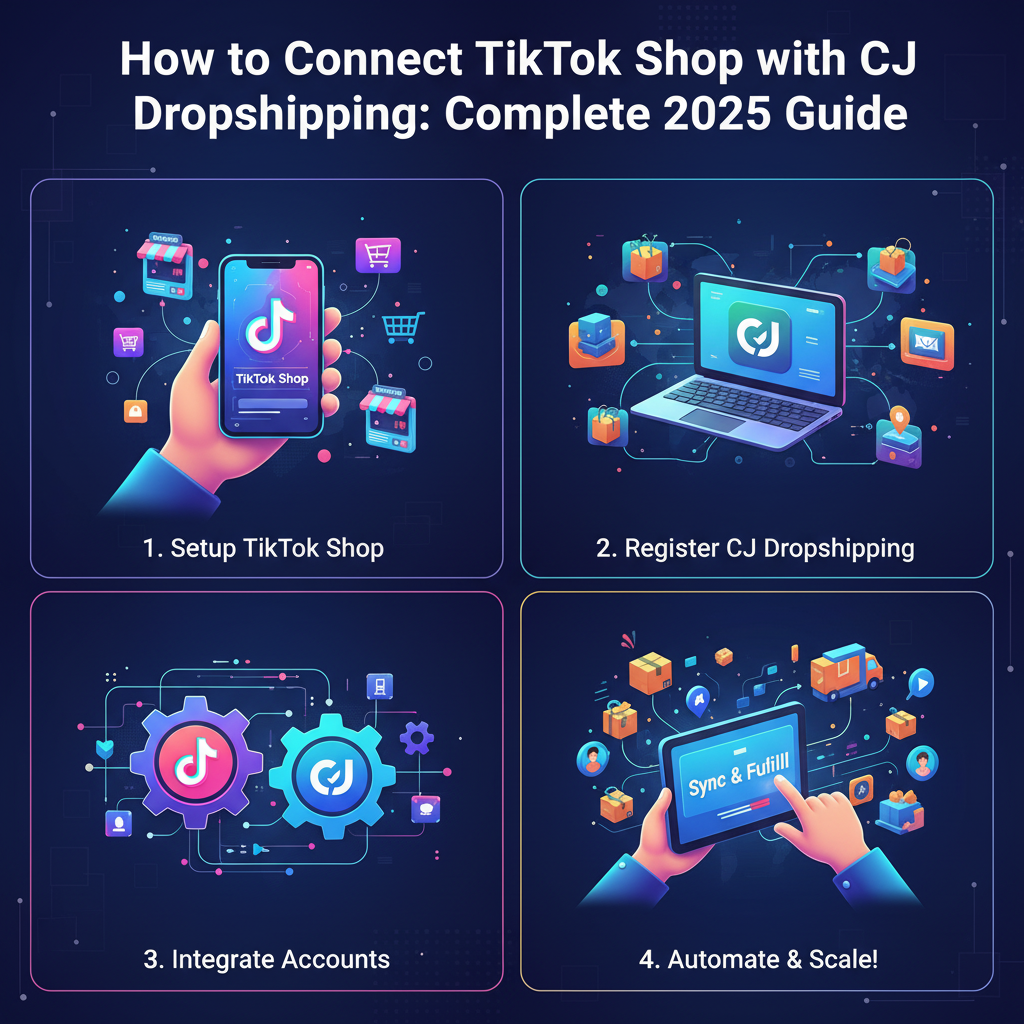
Connect TikTok Shop with CJ Dropshipping: Step-by-Step Process
-
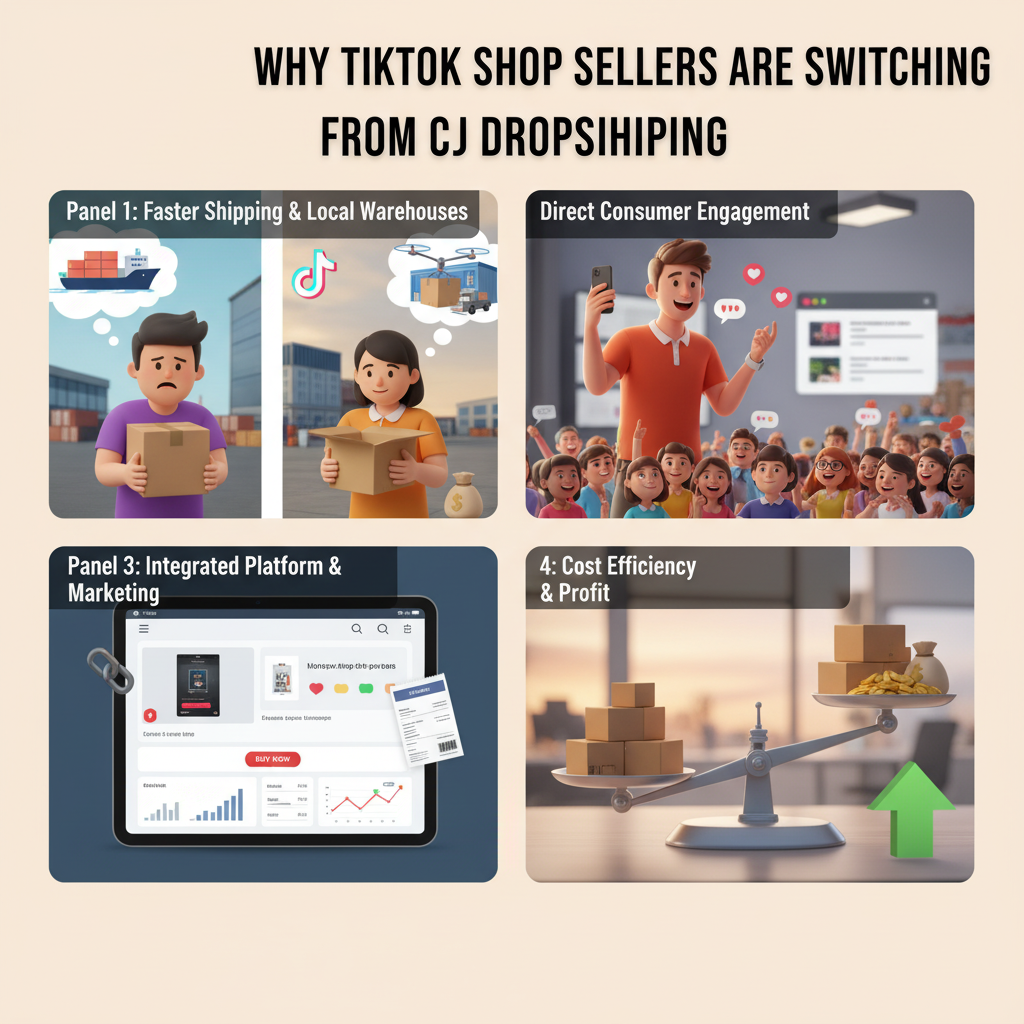
Why TikTok Shop Sellers Are Switching from CJ Dropshipping
-
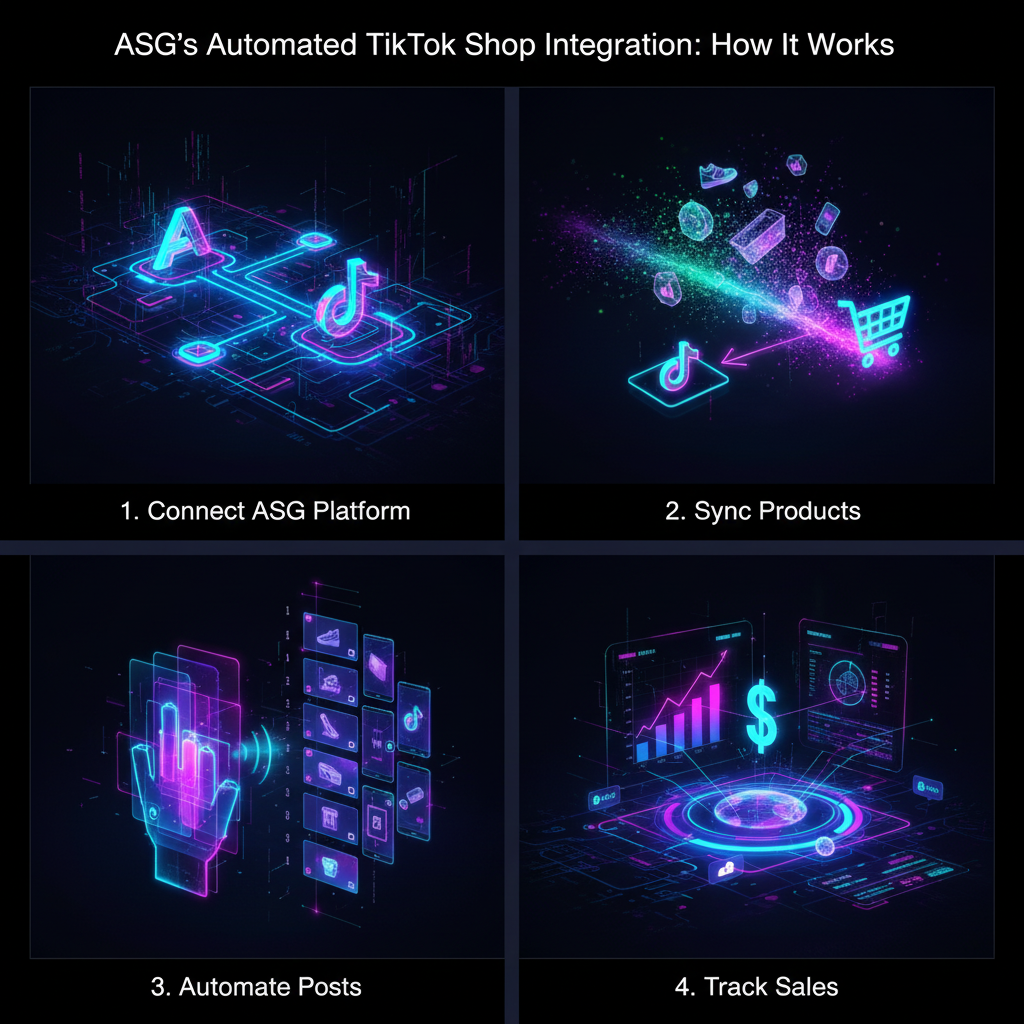
ASG’s Automated TikTok Shop Integration: How It Works
-
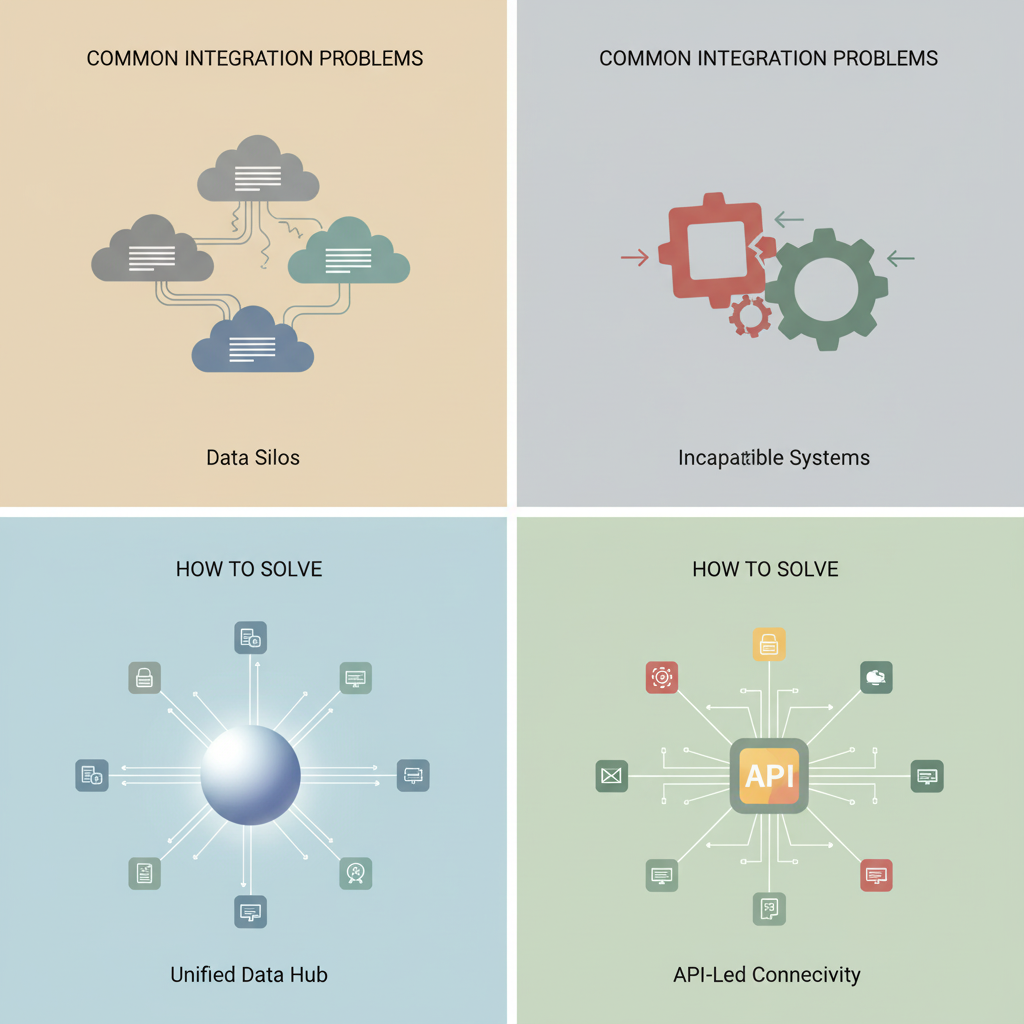
Common Integration Problems and How to Solve Them
-
Optimizing Your TikTok Shop for Maximum Sales
-
Or Make Sourcing Requests: Finding Better TikTok Products
-
Connect TikTok Shop with CJ Dropshipping: Final Verdict
Connect TikTok Shop with CJ Dropshipping: Step-by-Step Process
How Dropshipping Works: The Nuts and Bolts Explained
Let’s cut through the noise. When I first started in this industry, the concept of dropshipping seemed almost too good to be true. Over the years, I’ve seen countless sellers get burned by promises that weren’t backed by solid operations. At ASG, we’ve built our entire business model on making this process not just viable, but robust and reliable for our clients. Understanding the mechanics isn’t just theory—it’s the foundation for building a sustainable business.
What Exactly is Dropshipping?
At its core, dropshipping is a retail fulfillment method where you, the seller, don’t keep the products you sell in stock. Instead, when a customer places an order on your online store, you purchase the item from a third-party supplier (like ASG), who then ships it directly to your customer. You never see or handle the product. Your profit is the difference between the price you charge the customer and the wholesale cost you pay the supplier.
Think of it as being the conductor of an orchestra. You don’t play every instrument, but you coordinate all the parts—marketing, customer service, brand building—to create a beautiful symphony (a sale). The supplier handles the logistics and inventory. This model is why so many entrepreneurs, especially those starting with limited capital, are drawn to it. You can launch a store with hundreds of products without investing a single dollar in inventory upfront.
The Fundamental Working Principle: The Order Flow
The magic happens in a specific, automated sequence. Here’s a step-by-step breakdown of how it works from our perspective at ASG:
1. Customer Orders on Your Store: Your customer buys a product from your Shopify, WooCommerce, or other e-commerce platform.
2. Order Notification to Supplier: This is where automation is key. Ideally, your store should be connected to your supplier’s system. For instance, when you connect your TikTok Shop with CJ dropshipping, orders flow in automatically. Without integration, you’d manually forward the order details.
3. Supplier Processes & Ships: The supplier (us) receives the order, picks the product from the warehouse, packs it (often with your custom branding), and dispatches it via a chosen courier.
4. Tracking & Delivery: The supplier provides you with a tracking number, which you can pass to your customer. The product arrives at your customer’s doorstep.
5. You Pay the Supplier: You pay the supplier their wholesale cost for the product and shipping.
6. You Keep the Difference: Your revenue is the retail price minus the supplier’s cost and your overheads.
This entire chain relies on seamless communication and trust. A delay or error at the supplier’s end directly impacts your customer and your brand reputation. That’s why at ASG, we obsess over our 1-3 day processing time and transparent tracking.
Why is This Model So Important Today?
The importance of dropshipping has skyrocketed, and it’s not just a trend. It’s a fundamental shift in how commerce operates online.
Lower Barrier to Entry: It democratizes e-commerce. You don’t need a warehouse, packing staff, or a huge upfront investment. According to a Shopify report, it’s one of the top reasons entrepreneurs choose this model.
Unmatched Scalability: Testing new products is low-risk. If a product flops, you’re not stuck with dead stock. If it goes viral, your supplier handles the surge in fulfillment. This agility is crucial in the fast-paced social commerce era, especially when you connect your TikTok Shop with CJ dropshipping to capitalize on trends.
Focus on Core Competencies: It allows you, the seller, to focus on what truly drives business: marketing, customer experience, and brand building. You’re freed from the operational heavy-lifting of logistics.
The Main Types of Dropshipping Suppliers
Not all suppliers are created equal. Based on my experience, they generally fall into three categories:
1. Marketplace Suppliers (e.g., AliExpress): Great for absolute beginners due to vast product selection. However, shipping times are long, quality control is inconsistent, and communication can be challenging. It’s a starting point, not a long-term scaling solution.
2. Wholesale Dropshippers: These are professional suppliers, often operating from local warehouses (like in the US or Europe). They offer faster shipping, better quality control, and more reliable communication. This is where most serious sellers migrate. ASG operates in this category, but with a crucial difference—we’re based at the source, in China, giving us direct factory access and cost advantages.
3. Print-on-Demand Suppliers: Specialize in customized products like t-shirts, mugs, and posters. They only produce an item once it’s ordered. Perfect for niche branding but has higher unit costs.
Key Elements of a Successful Dropshipping Operation
To move from “trying dropshipping” to “running a successful dropshipping business,” you need to master these elements:
| Element | Why It Matters | The ASG Perspective |
| Supplier Reliability | Your entire customer experience depends on it. | We treat your customers as our own. Our direct factory partnerships and robust ERP system ensure stability. A McKinsey analysis on supply chains highlights reliability as the 1 factor for customer trust. |
| Shipping Speed & Cost | Slow shipping is the top reason for cart abandonment. | We offer multiple logistics lanes. Our standard 6-10 day delivery to the US/EU competes with local suppliers but at a fraction of the cost, balancing speed and affordability. |
| Profit Margin | Without healthy margins, you can’t reinvest or sustain marketing. | Our factory-direct model removes middlemen. This gives you the pricing power to run effective ads and still make a profit, unlike when sourcing from marked-up marketplace sellers. |
| Branding & Customer Experience | This is your only true moat. Anyone can sell the same product. | We provide white-glove services like custom packaging and thank-you cards. When you connect your TikTok Shop with CJ dropshipping through us, the unboxing experience feels premium, not generic. |
| Communication & Support | Problems will arise. How they’re fixed defines your brand. | Every ASG client gets a dedicated agent. Issues with sourcing, QC, or logistics? You have one direct line to solve it, fast. |
Common Misconceptions We Debunk Daily
Let me clear up some industry myths I hear all the time:
“Dropshipping is ‘easy money’.” False. It’s a lower-risk way to start an e-commerce business, but it’s still a business. The hard work shifts from logistics to marketing, customer service, and supplier management. The “easy” part is not managing inventory; the “hard” part is everything else.
“All suppliers are basically the same.” Dangerously false. The difference between a marketplace seller and a professional agent like ASG is the difference between a shaky side hustle and a scalable brand. One offers a commodity; the other offers a partnership.
“You have no control over fulfillment.” This is only true if you choose a bad supplier. With a professional partner, you have more control. You set the standards for packaging, shipping speed, and quality checks. We execute. You can even connect your TikTok Shop with CJ dropshipping platforms and have full visibility into the fulfillment process through integrated apps.
“It’s impossible to build a brand with dropshipping.” This was true in the early days of generic AliExpress packages. Today, with suppliers offering deep customization, it’s the opposite. Dropshipping gives you the agility to test brand concepts with minimal investment before you commit to bulk orders.
The essence of modern dropshipping isn’t about finding the cheapest supplier; it’s about finding the most reliable partner. It’s about leveraging a model that lets you be agile, customer-focused, and brand-driven. That’s the philosophy we’ve built ASG upon.
Why TikTok Shop Sellers Are Switching from CJ Dropshipping
Section 2: The Strategic Blueprint for Dropshipping Success
Let’s be honest: anyone can list a product online. The real challenge, the part that separates hobbyists from professionals, is building a system that’s reliable, scalable, and profitable. Over the years at ASG, I’ve seen countless sellers stumble not because their product idea was bad, but because their operational foundation was shaky. They treat dropshipping as a simple “order forwarding” game, when in reality, it’s a complex supply chain ballet. Your success hinges on mastering this dance.
The Core Problem: It’s Not Just About Finding Products
Most new sellers are obsessed with the “winning product.” While important, this is a surface-level focus. The deeper, more critical problem is a lack of a resilient and efficient supply chain ecosystem. You might find a hot product, but if your supplier can’t deliver it consistently, at a good price, and get it to your customer quickly, you’re building a business on quicksand. The common pain points—long shipping times, inconsistent quality, poor communication, sudden stockouts—are all symptoms of a weak supplier relationship and an unoptimized fulfillment process.
A Detailed Analysis of the Modern Dropshipping Landscape
The landscape has shifted dramatically. Platforms like TikTok Shop have compressed the product lifecycle, turning trends into sales spikes overnight. This puts immense pressure on your supply chain. A traditional AliExpress model, with its 15-30 day shipping windows, simply doesn’t cut it anymore. Customers, especially in key markets like the US and EU, now expect Amazon-like speed. A 2023 report by Jungle Scout found that 58% of online shoppers expect delivery within a week. Furthermore, platforms are increasingly holding sellers accountable for delivery performance and customer satisfaction. Your choice of fulfillment partner directly impacts your store’s health and longevity.
Key Factors Influencing Your Dropshipping Viability
Four pillars determine whether your store will thrive or dive:
1. Supplier Reliability & Communication: Can they deliver what they promise, every single time? How quickly do they respond to issues? I’ve learned that a supplier who proactively communicates a delay is worth ten who ship fast but go silent when problems arise.
2. Total Landed Cost & Profit Margins: It’s not just the product cost. You must factor in shipping, platform fees, payment processing fees, and potential duties. A $5 product with $8 shipping kills your margin. You need a partner who offers transparent, consolidated pricing.
3. Shipping Speed & Tracking Transparency: Speed is a conversion lever. Reliable, trackable shipping builds customer trust and reduces support inquiries. It’s a non-negotiable for building a reputable brand.
4. Scalability & Operational Support: Can your setup handle 10 orders a day? 100? 1000? Manual processes break under scale. You need systems that automate order processing, inventory updates, and tracking sync.
Solution Strategies for Different Seller Scenarios
Your strategy should match your stage.
For the Absolute Beginner (Testing Phase): Your goal is to validate products with minimal risk. Start with a supplier like ASG that offers low or no MOQ (Minimum Order Quantity). Use their product sourcing service—send them links from AliExpress or 1688, and let them procure and inspect samples for you. This eliminates the guesswork and language barrier. Focus on 3-5 products max.
For the Scaling Seller (1-50 orders/day): Efficiency is king. You must automate. Integrate your store with a supplier’s system (like our Shopify App) to auto-sync orders. This is the perfect time to connect TikTok Shop with CJ dropshipping or a similar robust fulfillment service to streamline multi-channel sales. Prioritize suppliers with fast (6-10 day) shipping options to key markets to boost customer satisfaction and repeat business.
For the Established Brand (50+ orders/day): It’s about optimization and branding. Negotiate better rates based on volume. Implement a custom branding program—custom packaging, thank you cards, inserts. This is where you transform from a “store” to a “brand.” Work closely with your agent on inventory forecasting to prevent stockouts during promotions.
The Four Non-Negotiable Success Factors
Based on my experience running ASG, these are the factors we bake into our own service, and you should demand from any partner:
1. Factory-Direct Sourcing: Cutting out middlemen is the single biggest lever for cost control and quality assurance. We source directly from over 2,300 verified factory warehouses, which is why we can offer more competitive pricing and better stock stability than agents who just resell.
2. Integrated Tech Stack: Manual data entry is a profit killer. Your supplier must offer seamless API or app integration with your sales channels (Shopify, TikTok Shop, WooCommerce) to automate order flow and tracking updates.
3. Proactive & Dedicated Support: You need a single point of contact—a dedicated agent—who understands your account and can solve problems fast. When an issue arises at 3 AM your time, you need confidence it’s being handled.
4. Transparent & Flexible Logistics: A one-size-fits-all shipping solution doesn’t exist. You need options: budget-friendly ePacket for non-urgent items, and premium lines like YunExpress or dedicated air freight for faster delivery. The key is knowing the cost and speed trade-off for each.
Realistic Time & Cost Analysis
Let’s move beyond theory. Here’s a concrete comparison based on a typical $20 retail product (e.g., a kitchen gadget), shipped to the US:
| Stage / Component | Traditional AliExpress Model | Optimized Agent Model (e.g., ASG) | Impact & Notes |
| Product Sourcing | 2-5 days (searching, communicating) | <1 day (agent does the legwork) | Agent expertise saves time and reduces error risk. |
| Sample Verification | 7-15 days shipping + self-inspection | 2-3 days (agent provides video check) | Faster validation prevents costly bulk order mistakes. |
| Procurement Lead Time | 3-7 days (after payment) | 1-3 days (pre-vetted suppliers) | Faster to warehouse = faster to customer. |
| Shipping Duration | 15-30+ days (ePacket/Standard) | 6-10 days (optimized lines) | The biggest CX differentiator. Directly affects reviews and repeat sales. |
| Product Cost | $5.00 | $4.50 (factory-direct advantage) | Higher volume with an agent can drive this down further. |
| Shipping Cost | $3.50 (ePacket) | $5.50 (premium line) | You pay more for shipping but gain speed and reliability, often allowing for higher retail price. |
| Total Landed Cost | $8.50 | $10.00 |
| Potential Retail Price | $19.99 | $24.99 | Faster shipping justifies a higher price point and improves conversion. |
| Gross Margin | $11.49 | $14.99 | Higher absolute profit per sale, despite higher cost. |
Common Pitfalls and How to Counter Them
Pitfall: Choosing a Supplier on Price Alone. The cheapest option is often the most expensive in the long run due to delays, errors, and lost customers.
Countermeasure: Always order a sample first. Use an agent’s inspection service. Test their communication speed with a pre-sales question.
Pitfall: Ignoring Shipping Deadlines During Promotions. You run a Black Friday sale but your supplier shuts down for a week.
Countermeasure: Plan with your supplier. Share your promotional calendar. Ensure they have the stock and labor to support your surge. A good agent will proactively discuss this with you.
Pitfall: Poor Packaging Damaging Brand Reputation. Your customer receives a tattered poly mailer with a generic invoice.
Countermeasure: Invest in custom packaging, even if it’s just a branded sticker or thank-you card. This is a low-cost, high-impact branding tool we strongly advocate for at ASG.
Pitfall: No Plan for Returns/Refunds. It will happen. If you haven’t discussed the process with your supplier, you’ll be stuck absorbing the cost.
Countermeasure: Before signing on, get their return policy in writing. Understand who covers the cost for defective items vs. customer remorse. A transparent agent will have a clear process.
Best-Practice Summary: Building a Foundation for Growth
Think of your dropshipping business as a house. You can’t build the penthouse (scaling, branding) on a weak foundation. Start by connecting TikTok Shop with CJ dropshipping or a similar professional agent to establish that core, reliable fulfillment pipeline. This frees you up to focus on what you do best: marketing, customer service, and brand building. Validate slowly, automate early, communicate constantly with your supplier, and never stop optimizing for customer experience. The goal isn’t just to make a sale; it’s to create a system that makes the ten-thousandth sale as smoothly as the first. That’s the professional path, and it’s the only one that leads to sustainable, long-term success in this game.

ASG’s Automated TikTok Shop Integration: How It Works
Section 3: Mastering the Operational Backbone: Strategy, Tech, and Advanced Optimization
Let’s get real. In dropshipping, the initial sale is just the start. The real game—the one that determines whether you build a sustainable brand or just a fleeting storefront—is won or lost in the backend. It’s about the strategy, the technology, and the relentless optimization that happens after the customer clicks “Buy Now.” Over the years at ASG, I’ve seen too many talented sellers stumble not on marketing, but on the operational grind. Here’s how you build an unshakeable foundation.
Crafting Your Core Fulfillment Strategy: Beyond Just Shipping
Your fulfillment strategy is your business’s circulatory system. It’s not just about getting a package from A to B; it’s about speed, reliability, cost-efficiency, and customer experience—all working in harmony. A common pitfall is choosing a logistics method based solely on the cheapest price. That’s a shortcut to poor reviews and chargebacks.
You need a multi-tiered approach. For test orders and low-margin items, a standard ePacket might be acceptable. But for your winning products and key markets, you must upgrade. We advocate for a hybrid model. For instance, using a reliable, faster option like YunExpress or 4PX for the US and EU can cut delivery times to 6-10 days, dramatically boosting customer satisfaction and repeat purchase rates. A Baymard Institute study found that 19% of cart abandonments are due to “slow delivery,” proving speed is a direct revenue driver.
My Pro-Tip: Segment your logistics. Use data from your analytics to identify your top-selling products and key customer geographies. For those, invest in premium shipping. The increased customer lifetime value (CLV) will far outweigh the marginal cost increase. At ASG, we automate this segmentation for our partners, applying the optimal shipping rule based on product SKU and destination country.
Leveraging Technology: The ERP and Automation Advantage
Manual order processing is a growth killer. If you’re copying and pasting order details from Shopify to your supplier, you’ve already capped your scalability. The difference between a hobby and a business often boils down to your tech stack.
An Enterprise Resource Planning (ERP) system, or a dedicated dropshipping app, is non-negotiable. The right tool automates order routing, inventory updates, and tracking number synchronization. For Shopify users, our own ASG app is built specifically for this. It connects your store, pulls orders automatically, and pushes tracking info back in real-time. This isn’t just about saving time; it’s about eliminating human error—the kind that leads to shipping the wrong item or missing an order entirely.
When you connect TikTok Shop with CJ dropshipping or similar platforms, this automation becomes even more critical. Social commerce platforms generate impulsive buys, and customers expect instant confirmation and fast follow-up. Without automation, fulfilling these orders manually will create a lag that kills the momentum and customer trust. A seamless tech bridge is what allows you to scale across multiple sales channels without your operations collapsing.
The Innovation Edge: Data-Driven Supplier Management
Innovation in dropshipping isn’t always about flashy new tech; sometimes, it’s about smarter processes. One of the most underutilized strategies is proactive supplier management. Don’t just find a supplier and hope for the best. You need to treat them as a variable in your supply chain equation.
This means conducting regular, data-backed performance reviews. Track metrics like on-time fulfillment rate, defect rate, and communication response time. We do this internally for our network of 2300+ factories. For example, if a particular factory’s defect rate spikes above 2%, it triggers an automatic review and potential sourcing shift. You can apply a simpler version: order samples periodically, not just at the start. Monitor customer feedback for specific products. If complaints about product quality for a particular item rise, it’s time to test a new supplier, even if the price is slightly higher.
My Pro-Tip: Build a “supplier bench.” Never rely on a single source. Have at least two vetted suppliers for your top 20 products. This redundancy protects you from stockouts, quality dips, or sudden price hikes.
Advanced Optimization: Mastering the Unit Economics
This is where pros separate from amateurs. Advanced optimization is about dissecting every cost component to maximize profit, not just revenue. Let’s break down a unit economic model:
Product Cost: Negotiate based on volume. With ASG, our aggregated purchasing power often secures rates 10-15% lower than what an individual seller can get.
Shipping Cost: Don’t accept the first quote. Compare multiple carriers for each route. Sometimes, a slightly more expensive carrier offers much better tracking and reliability, reducing support tickets and refunds.
Transaction Fees: Consider payment gateways with lower fees for your primary customer regions.
Customer Acquisition Cost (CAC): This is marketing’s domain, but operations affect it. A great post-purchase experience (fast shipping, good packaging) increases customer retention, effectively lowering your CAC over time.
Run this calculation for every product. You might find that a product selling for $40 has a profit margin of only $2.50. Is that sustainable after accounting for marketing and overhead? Probably not. Optimize or replace it.
Comparative Analysis: In-House vs. 3PL vs. Full-Service Dropshipping
Understanding these models is crucial for scaling.
In-House Fulfillment: You rent storage, manage inventory, pack, and ship. You have maximum control but also maximum capital expenditure (CapEx) and operational headache. It only makes sense at very high, consistent volumes.
Third-Party Logistics (3PL): You ship bulk inventory to their warehouse, and they store, pick, pack, and ship per order. Great for faster shipping times (2-5 days), but requires significant upfront inventory investment and ties up capital.
Full-Service Dropshipping (like ASG): No inventory investment. The supplier/agent holds stock and ships directly to your customer. Lowest barrier to entry and infinite scalability. The trade-off is slightly longer shipping times (though we’ve optimized to 6-10 days to key markets).
My Verdict: For 95% of sellers, especially when starting or scaling across new product lines, the full-service model is superior. It converts fixed costs (warehouse rent, staff) into variable costs, freeing up cash flow for marketing and growth. The key is choosing a partner that minimizes the traditional downsides—which is exactly why we built our systems for speed and reliability.
Essential Tools & Resources for Operational Excellence
Your toolkit should extend beyond your e-commerce platform.
1. Analytics: Google Analytics 4 for website traffic and user behavior. Your Shopify/other platform analytics for sales data.
2. Communication: Slack or Discord for internal team coordination; a dedicated helpdesk like Gorgias or Zendesk for customer service.
3. Finance: QuickBooks Online or Xero for accounting. An expense tracker like Expensify.
4. Project Management: Trello, Asana, or ClickUp to manage tasks, especially if you have a virtual assistant.
5. Supplier Vetting: Use platforms like ImportYeti or Jungle Scout’s Supplier Database to research potential suppliers’ export volumes and histories.
Critical Resource: Your dropshipping agent’s reporting dashboard. A good partner provides transparent data on order status, fulfillment speed, and inventory levels. Ours gives clients real-time visibility, which is indispensable for making quick business decisions.
Implementation Checklist: Your Operational Launchpad
Before you launch a new product or store, run through this:
Supplier Vetted: Samples received and approved. Communication channel established.
Logistics Locked In: Shipping methods chosen for target countries. Costs calculated into product pricing.
Automation Active: Order processing pipeline tested. Tracking sync is working.
Pricing Model Validated: All costs (product, shipping, transaction, marketing) accounted for. Profit margin meets target.
Customer Service Prepared: Return/refund policy is clear. FAQ and tracking info page are ready.
Inventory Buffer Confirmed: Your supplier or agent has confirmed stock levels to cover your initial forecast.
Error Diagnosis & Quick Fixes for Common Fulfillment Snags
Even with the best setup, issues arise. Here’s how to diagnose and fix fast:
Problem: Order marked as fulfilled, but no tracking number updates for days.
Diagnosis: Likely a supplier/agent delay in dispatch or a tracking number generation lag.
Quick Fix: Immediately contact your agent. At ASG, our system flags orders not scanned by the carrier within 48 hours for manual follow-up. Have a standard message template ready to inquire about the dispatch status.
Problem: Customer receives the wrong item.
Diagnosis: Picking error at the warehouse.
Quick Fix: Apologize immediately. Send the correct item via expedited shipping at your cost. Let the customer keep the wrong item—it’s cheaper than a return and builds immense goodwill. Then, analyze if this is a one-off error or a pattern with a specific product/supplier.
Problem: Package is stuck in customs.
Diagnosis: Incomplete or improper customs documentation, or the item is restricted.
Quick Fix: Proactivity is key. Work with a dropshipping agent that handles commercial invoices and customs forms professionally. For high-ticket items to sensitive countries, consider a DDP (Delivered Duty Paid) shipping option, where the agent pre-pays duties and taxes to avoid clearance delays.
Remember, a robust operational backend isn’t a cost center; it’s your brand’s credibility center. It’s what allows you to sleep soundly while your store makes sales around the clock. It’s the engine that lets you focus on what you do best: growing your business.
Common Integration Problems and How to Solve Them
Section 4: The Future of Dropshipping: Navigating Trends and Seizing Opportunities (2024-2029)
The dropshipping landscape isn’t static. It’s a high-speed train, and you need to know not just the next stop, but the entire route. Having built ASG from the ground up, I’ve learned that success isn’t just about executing today’s model flawlessly; it’s about anticipating tomorrow’s shifts. Let’s look beyond the horizon at the forces shaping our industry for the next 3-5 years.
The 2026 Dropshipping Market: A Data-Driven Forecast
Let’s ground our discussion in numbers. Based on current growth trajectories, technological adoption rates, and consumer behavior studies, here’s a snapshot of where we’re headed:
| Metric | 2023 Baseline | 2026 Projection | Key Driver |
| Global Dropshipping Market Size | ~$225 billion [^1] | ~$350 billion | E-commerce penetration, SME adoption |
| Average Order Processing Time | 3-5 days (Industry Avg.) | 1-2 days (Leaders) | Automation & localized fulfillment |
| Social Commerce Integration | Common (Basic Feeds) | Ubiquitous (Seamless API) | Platforms like TikTok Shop & Instagram Shops |
| Demand for “Hyper-Personalization” | Niche (<20% of sellers) | Mainstream (>60% of sellers) | AI-driven product curation & branding |
| Supplier Tech Stack Adoption | Low (Manual processes) | High (API-first, automated) | Competition & demand for scalability |
Grand View Research – Dropshipping Market Size Report
This data isn’t just abstract; it’s your roadmap. The pressure will be immense on suppliers who can’t keep up with sub-48-hour processing or offer deep technical integration. At ASG, we’re already investing heavily in our ERP and API infrastructure to meet these future benchmarks head-on.
The Game-Changers: AI, Automation, and Hyper-Localization
Emerging technologies aren’t just buzzwords; they’re the new cost of entry. Here’s how I see them playing out:
AI-Powered Everything: From dynamic pricing algorithms that adjust based on competitor stock levels to AI copywriting for product descriptions, the manual guesswork is vanishing. For you, the seller, this means tools that can predict best-sellers in your niche or automatically generate ad creatives. For us as your agent, it means using AI to pre-emptively flag potential supply chain disruptions or optimize packing routes.
Complete Automation: The future winner isn’t the one with the cheapest product, but the one with the most reliable, hands-off supply chain. Imagine a system where an order from your TikTok Shop triggers our procurement, updates your inventory, prints a custom-branded packing slip, and dispatches the carrier—all without human intervention. This level of automation is what separates a side hustle from a scalable asset. It’s why we obsess over our systems’ ability to connect tiktok shop with cj dropshipping and other platforms seamlessly.
Hyper-Localized Fulfillment: The “10-day delivery from China” standard is becoming a liability for many product categories. Consumers, conditioned by Amazon Prime, want speed. The answer is a distributed, agile network. We’re strategically expanding our warehouse partnerships beyond China to regions like Eastern Europe and North America. This allows for faster, cheaper last-mile delivery and reduces customs headaches—a critical advantage.
What the Leaders Are Doing Now (And You Should Too)
Don’t look at what the average dropshipper is doing; look at the top 1%. Their current playbook is your near-future necessity:
1. Building Real Brands: They’ve moved far beyond generic Aliexpress listings. They’re investing in custom packaging, cohesive brand storytelling, and unique product bundles. They use agents like us not just for logistics, but as a branding partner for custom packaging and inserts.
2. Diversifying Traffic & Sales Channels: Relying solely on Facebook Ads is a risky strategy. The leaders are masters of omnichannel presence. They’re leveraging influencer marketing, building email lists, and most importantly, tapping into native social commerce. They understand the power of a seamless connect tiktok shop with cj dropshipping workflow to capture impulse buys directly on social platforms.
3. Treating Data as a Core Asset: They don’t just look at sales numbers. They analyze customer lifetime value (LTV), return rates by supplier, and carrier performance data. They use this to ruthlessly optimize every part of their funnel, from which products they list to which logistics partner they use for a specific country.
The Evolving User: From Price-Sensitive to Experience-Obsessed
Your future customer’s demands are shifting. It’s no longer just about finding the lowest price.
The Demand for “Instant Gratification”: Speed is becoming a primary differentiator. A study by NielsenIQ found that over 50% of consumers consider delivery speed a key factor in their purchasing decision[^2]. Fast, reliable shipping is no longer a premium; it’s expected.
Transparency & Trust as Currency: Customers want to know the journey of their product. They value sustainability and ethical sourcing. Providing tracking isn’t enough; the reliability behind that tracking (which our direct factory relationships ensure) builds lasting trust.
Personalization at Scale: They expect recommendations and communication that feel tailored. This is where a supplier’s ability to support custom branding and flexible packaging becomes a direct enabler for your marketing.
The Competitive Landscape: Windows of Opportunity Are Still Open
The market is crowded at the bottom but wide open at the top.
The “Race to the Bottom” Trap: A sea of competitors is stuck competing on the thinnest of margins with identical, generic products. This is a losing game. The opportunity lies above this noise.
Your Window: Specialization & Premiumization: The real opportunity is in moving upstream. This means:
Niche Dominance: Become the go-to store for a specific, passionate community.
Product Curation & Bundling: Don’t just sell items; sell solutions and experiences.
Unmatched Customer Experience: Combine fast shipping (enabled by partners like us) with stellar post-purchase communication.
Your competitive edge isn’t finding a product no one else has; it’s delivering an experience and a brand story that no one else can replicate. Your supply chain is the foundation of that experience.
The 3-5 Year Forecast: Integration or Obsolescence
Looking ahead, I foresee a clear bifurcation:
1. The Integrated, Brand-Centric Model: Successful businesses will be deeply integrated ecosystems. Your store, your marketing channels (like TikTok Shop), your fulfillment agent (like CJ Dropshipping or ASG), and your customer service tools will communicate in real-time via APIs. The brand will be the central, valuable asset.
2. The Commoditized, Low-Margin Model: Suppliers and sellers who fail to adapt will be squeezed into pure commodity plays, competing solely on price and speed in a market where giants will always have the scale advantage.
The line between “retailer” and “brand” will continue to blur. You will either be a brand with a loyal following or a commodity reseller.
How to Seize the Trend Dividends: My Actionable Advice
So, how do you, as a seller, position yourself to win? Don’t just observe these trends; build your business around them.
Invest in Your Brand Now: Start small. Design a logo, write a brand story, order custom thank-you cards through your agent. These touches compound over time.
Prioritize Supplier Tech & Integration: Choose your fulfillment partner based on their tech stack and roadmap, not just their price list. Can they connect tiktok shop with cj dropshipping or similar platforms via a robust API? Do they offer automated inventory syncing? This is what will save you time and prevent errors at scale.
Build for Speed & Trust: Opt for suppliers with a track record of fast processing and stable quality. At ASG, our 1-3 day processing promise and direct factory links are designed for this exact future. Speed builds positive reviews; trust builds repeat customers.
Diversify Your Channels: If you haven’t explored TikTok Shop, Instagram Shopping, or Pinterest, now is the time. Set up those integrations. Social commerce is where growth is exploding.
Treat Your Supplier as a Strategic Partner: Move beyond a transactional relationship. Share your goals, your data, your brand vision. At ASG, our most successful clients are those we work with collaboratively—they get access to better insights, early product samples, and co-developed solutions.
The future belongs to agile, brand-focused entrepreneurs who leverage technology to create exceptional customer experiences. Your supply chain isn’t a backend operation; it’s the engine of your competitive advantage. Choose a partner that’s building for the future you envision.
Optimizing Your TikTok Shop for Maximum Sales
The Art of Integration: A Blueprint for Success
Over the years at ASG, I’ve seen countless sellers dive into dropshipping with enthusiasm, only to get bogged down by operational friction. The single biggest point of failure isn’t marketing or product selection—it’s the integration. A seamless connection between your sales channel and your fulfillment partner is the invisible engine of your business. When it hums, you scale effortlessly. When it sputters, you drown in manual work and customer complaints. Based on our work with over a thousand sellers, I’ve distilled the critical lessons on making these integrations not just work, but work for you.
Why a Flawless Integration is Your Competitive Moat
Think of integration as your business’s central nervous system. It’s not a “nice-to-have” tech feature; it’s the core infrastructure that determines your speed, accuracy, and scalability. A study by McKinsey found that companies leveraging advanced automation in their supply chains see up to a 30% reduction in operational costs and a 50% faster time-to-market. In dropshipping, this translates directly to your ability to test products faster, fulfill orders reliably, and maintain cash flow.
A poor integration means manually copying orders, constantly updating inventory counts, and inevitable errors where a sold-out item gets sold again. This kills customer trust. A robust, automated integration, however, turns your store into a self-managing asset. When a customer buys on your TikTok Shop, that order should flow instantly to your supplier’s system, trigger picking and packing, and feed back a tracking number—all without you lifting a finger. This automation is what allows solo entrepreneurs to manage volumes that would otherwise require a team.
Real-World Application: From TikTok Shop to Customer Doorstep
Let’s get concrete. A common scenario we optimize for is a seller using TikTok Shop to sell trendy home gadgets to the US market. Here’s how the integration lifecycle looks:
1. Listing Sync: The seller finds a viral ultrasonic cleaner on our platform. With our app, they push the product data (images, descriptions, variants) directly to their TikTok Shop with one click, ensuring the inventory count is live.
2. Order Automation: A customer purchases on TikTok. The order details (product, shipping address) instantly appear in the seller’s ASG dashboard. No manual data entry.
3. Fulfillment Trigger: Our system automatically assigns the order to our US fulfillment network. The warehouse picks the item, applies any custom branded packaging the seller has set up, and ships it.
4. Tracking & Closure: The tracking number is automatically pushed back to the seller’s TikTok Shop, updating the customer. The order is marked complete.
The entire process, from the “Buy Now” click to the shipping label being printed, can happen in minutes, 24/7. This speed is impossible with manual methods and is critical for capitalizing on TikTok’s fast-moving traffic.
Cautionary Tales: The High Cost of Integration Neglect
I’ll share a painful lesson from a now-successful client. Early on, they tried to connect TikTok Shop with CJ Dropshipping using only basic CSV exports and manual forwarding. They hit a viral product, generating 200 orders in a weekend—a dream scenario. But their manual process collapsed. Orders were missed, wrong items were shipped due to spreadsheet errors, and tracking wasn’t updated. Their store reputation plummeted with negative reviews and chargebacks. They spent weeks in damage control and lost thousands in potential profit.
The failure wasn’t CJ Dropshipping’s service per se; it was the lack of a true, real-time API integration. The lesson is universal: Volume exposes every weakness in your process. A manual or semi-automated workflow might limp along at 5 orders a day, but it will catastrophically fail at 50. Investing in a robust integration from the start is non-negotiable for anyone serious about growth.
Cross-Platform Comparison: Integration Capabilities
Not all integrations are created equal. Your choice of sales platform and supplier dictates your automation ceiling.
| Platform | Integration Ease with ASG | Key Limitation to Watch For |
| Shopify | Excellent. Native app, full API sync for orders, inventory, and tracking. | N/A – This is the gold standard. |
| TikTok Shop | Very Good. API connection for order import and tracking push is stable and fast. | Product listing sync can sometimes require a secondary tool for optimal efficiency. |
| WooCommerce | Good. Plugin available, but requires more technical setup on the store owner’s side. | Server performance of your WooCommerce site can affect sync reliability. |
| Amazon / eBay | Managed Service. We handle fulfillment, but integration is often via managed feeds or our dashboard. | Direct, full API integration is less common; often involves manual order approval steps. |
| Manual (Spreadsheets) | Basic. The fallback method. Google Sheets can be used but is 100% manual and error-prone. | No real-time data. Entirely reliant on human discipline, scaling is impossible. |
The table shows a clear hierarchy. Shopify offers the most seamless experience, which is why we’ve invested heavily in our app there. TikTok Shop is a close contender for order flow. Platforms like Amazon have more walls in their garden, making full automation trickier.
Calculating the True ROI of Automation
Sellers often balk at the monthly cost of a premium app or service. This is short-term thinking. Let’s break down the ROI with a simple calculation for a store doing 300 orders/month.
| Cost Factor | Manual Process (Hours/Month) | Automated Process (Hours/Month) | Hourly Rate @ $20/hr | Monthly Cost Saving |
| Order Processing & Entry | 15 hours | 0.5 hours | $20 | $290 |
| Inventory Management | 10 hours | 1 hour | $20 | $180 |
| Tracking Updates | 5 hours | 0 hours | $20 | $100 |
| Error Resolution | 10 hours | 2 hours | $20 | $160 |
| Total | 40 hours | 3.5 hours | $730 |
Monthly Integration App Cost (Estimate): $50
Net Monthly Saving from Automation: $730 – $50 = $680
This $680 isn’t just saved cost; it’s recaptured strategic time. Those 36+ hours can be reinvested in marketing, customer service, or product research—activities that directly generate more revenue. The ROI becomes exponential.
The 5 Golden Rules for Integration Success
From these experiences and analyses, here are my non-negotiable rules:
1. API or Die Trying: Never build a growth business on manual exports or half-baked plugins. Insist on a true, real-time API connection between your store and your supplier. It’s the foundation of everything.
2. Test the Flow at Low Volume: Before you launch a product, place 5-10 test orders yourself. Follow the entire journey: order placement, auto-import to supplier, fulfillment, tracking return, and customer notification. Identify and fix gaps immediately.
3. Own the Customer Communication: Even with perfect automation, ensure your branding is on the packing slip and that tracking emails come from your store (not your supplier’s generic address). Tools like AfterShip can help white-label this.
4. Audit Your Sync Weekly: Set a 15-minute weekly calendar invite. Log in and check for sync errors, failed orders, or inventory mismatches. Proactive maintenance prevents weekend fire drills.
5. Choose Partners, Not Just Vendors: Your supplier should care about your integration health as much as you do. At ASG, our support team proactively monitors connected stores for sync issues. Work with a partner who sees your operational efficiency as a shared goal, not just your problem to solve.
Mastering your integration is the ultimate force multiplier. It transforms you from an order-taking clerk into a true business operator, freeing you to focus on what truly moves the needle: growth.
Or Make Sourcing Requests: Finding Better TikTok Products
FAQ
Over the years, I’ve fielded countless questions from sellers just like you, looking to streamline their dropshipping operations and scale their businesses. I’ve compiled the most common and critical ones here, based on my team’s daily interactions with our clients. Think of this as a direct line to the insights we share behind the scenes.
What exactly is ASG Dropshipping, and how are you different from other agents?
We are a professional dropshipping fulfillment partner based directly at the source of manufacturing in China. Our core difference lies in our operational model and client focus. Unlike many platforms that act as middlemen, we work directly with over 2,300 verified factories and have a deep integration with sourcing hubs like 1688. This allows us to offer factory-direct prices, not just wholesale markups. Furthermore, our entire service—from our custom Shopify app to our one-on-one account managers—is built for sellers who are serious about branding and scaling, not just testing random products. We focus on providing stability, speed (1-3 day processing), and customization options that generic platforms often lack.
How do I start working with ASG? Is there a minimum order quantity (MOQ)?
Getting started is straightforward and designed to be low-risk. There’s no upfront fee or subscription. You begin by sharing your product links and target market with us for a quote. For testing, our MOQ is just 5 orders total, and you can mix different products within that. This allows you to validate suppliers and products with minimal investment. Once you’re ready to scale, we move to a formal cooperation model with dedicated support. Our goal is to remove barriers to entry.
Can I use ASG for my Shopify store? How does the integration work?
Absolutely. In fact, a significant portion of our clients are Shopify sellers. We’ve developed our own proprietary Shopify app to make the integration seamless. Once connected, your store’s orders sync automatically to our system. We then handle procurement, quality checks, packing, and shipping. Tracking numbers are automatically pushed back to your Shopify store, updating your customer’s order status. This automation is crucial for saving time and reducing errors as your order volume grows. You can also manage everything via Google Sheets if you prefer not to use the app.
How fast is your shipping, and what are the costs to key markets like the US and EU?
This is a top concern, and rightfully so. We offer a range of logistics solutions, but our core focus is on balanced speed and cost. For the US and most EU countries, our standard shipping lines typically deliver in 8-15 days. We also offer faster options like express shipping which can reduce this to 6-10 days. Costs vary based on product weight, dimensions, and destination, but we leverage our consolidated shipping volume to negotiate rates that are often 20-30% lower than what an individual seller could secure on their own. During onboarding, we provide a detailed shipping matrix based on your specific products.
Do you offer branded packaging and custom inserts?
Yes, and I believe this is a game-changer for building a real brand, not just a generic store. We provide custom packaging, branded poly mailers, thank-you cards, and even custom printed labels. This isn’t just about slapping a logo on a box; it’s about creating a memorable unboxing experience that increases customer loyalty and reduces returns. In a crowded market, this level of detail helps you stand out. We guide you through the design and implementation process.
How do you handle product quality control and what if there’s an issue?
Quality control is integrated into our process. For new products, we can provide sample check videos before you commit to a bulk order. For ongoing orders, our warehouse team performs spot checks. However, issues can happen with any supplier. Our policy is straightforward: if a problem is caused by us (e.g., we shipped the wrong item, a item is damaged due to poor packing), we take full responsibility. We will resend the correct product at our cost. This commitment to accountability is a cornerstone of our service and why clients trust us with their customer relationships.
What are your payment terms and methods?
We aim for flexibility. After we provide a quote and you confirm, we’ll send a proforma invoice. We accept payments via PayPal, bank transfer (TT), and other major methods. For established partners, we can discuss more flexible payment cycles. Transparency is key—there are no hidden fees. The quote you receive covers the product cost and our service fee; shipping is calculated and paid separately per shipment.
I’m already working with another dropshipping agent. How can I switch to ASG smoothly?
This is a common scenario. The smoothest transition involves planning. Share your current supplier’s quotes and recent order data with us. We’ll analyze it and provide a comparative report and a transition plan. We often recommend running a parallel test for a short period—sending some of your orders to us and comparing the fulfillment quality, speed, and communication. This data-driven approach minimizes risk. Our team is experienced in managing these switches and can handle the onboarding without disrupting your live orders.
Can I connect my TikTok Shop with ASG for dropshipping fulfillment?
Yes, you absolutely can. The process to connect TikTok Shop with ASG dropshipping is very similar to integrating a Shopify store. While we have a dedicated app for Shopify, for platforms like TikTok Shop, we typically use our API or the Google Sheets method for order import. You would forward your TikTok Shop orders to our system, and we handle the rest—sourcing, packing, and shipping directly to your end customer. This allows you to leverage TikTok’s massive traffic without worrying about the logistics complexity. Many of our clients successfully connect TikTok Shop with ASG dropshipping to capitalize on viral trends.
What kind of customer support do you offer?
We pride ourselves on responsive, professional support. Each client is assigned a dedicated account manager who understands your business. For day-to-day operations, you’ll communicate directly with your manager and their team via WhatsApp, email, or our system. For urgent issues, we have direct channels to escalate. We don’t use impersonal ticketing systems for core client communication because we believe in building partnerships. Our support covers everything from product sourcing questions to logistics tracking and after-sales resolution.

Connect TikTok Shop with CJ Dropshipping: Final Verdict
Summary & Action Plan
Let’s bring it all together. We’ve walked through the technical setup, the strategic considerations, and the crucial operational details of how to connect TikTok Shop with CJ dropshipping. The goal isn’t just to connect two dots; it’s to build a resilient, scalable, and profitable sales channel. Based on my years of navigating these waters, here’s your action plan.
Recap of Core Principles for Success
First, remember the foundational pillars we discussed. Your success hinges on speed and reliability. TikTok Shop’s algorithm favors stores with fast, consistent fulfillment. This is why choosing a dropshipping partner like CJ, or a service like ours at ASG, is critical. We focus on 1-3 day processing because we know that’s the benchmark for platform health. Secondly, product quality and branding are non-negotiable for long-term growth. Don’t just sell a generic item; use customization options to create a branded unboxing experience. Finally, maintain transparent communication with your supplier about stock levels and lead times to avoid the dreaded “out of stock” scenario that kills momentum on TikTok.
Your Immediate Next Steps (This Week)
Don’t overcomplicate the start. Here’s a practical, step-by-step list for the next seven days:
1. Finalize Your Supplier: If you’re proceeding with CJ, ensure your account is fully set up and you’ve identified 3-5 products with proven TikTok appeal and solid supplier ratings.
2. Run a Test Order: Before you connect TikTok Shop with CJ dropshipping for real, place a test order to your own address. At ASG, we always advise this. It lets you audit the packaging, shipping speed, and product quality firsthand. This single step can save you countless future customer service headaches.
3. Configure Your Store Settings: In your TikTok Shop Seller Center, meticulously set up your shipping profiles, return policies, and customer service details. Align them with the promises your supplier can actually keep.
4. Create Your First Batch of Content: Plan and shoot 5-10 short, authentic videos for your chosen products. Focus on showcasing the product in use and highlighting a unique selling point.
Roadmap: Beginner Focus vs. Advanced Scaling
Your path depends on where you are now:
For Beginners: Your mantra is “Simplify and Validate.” Start with a single niche and 1-3 products. Use the basic integration to connect TikTok Shop with CJ dropshipping. Focus 80% of your energy on creating engaging content and learning the platform’s analytics. Your primary KPI is not profit, but understanding what drives views and conversions. Use a simple spreadsheet to track your test order performance, supplier response times, and customer feedback.
For Advanced Sellers: Your focus shifts to “Systemize and Optimize.” You should be looking beyond the basic connection. Explore API-level integrations for full automation between your TikTok Shop, your supplier’s system, and your own inventory management. Consider diversifying suppliers for different product lines to mitigate risk. At this stage, partnering with a service that offers dedicated account management—like we do at ASG—becomes invaluable for handling complex logistics, custom packaging, and scaling your order volume efficiently without degrading service quality.
Commit to Continuous Learning
The TikTok and e-commerce landscapes change quarterly. To stay ahead:
Follow Official Sources: Regularly check the TikTok Seller Center Blog for platform updates and policy changes.
Analyze Case Studies: Look for in-depth breakdowns from reputable e-commerce educators. For example, studies published on sites like Shopify’s Blog often contain transferable traffic and conversion strategies.
Join Communities: Engage with other sellers in focused forums or Discord communities. The shared experiences there are a goldmine for troubleshooting and spotting new trends.
Where to Find Expert Help & Support
When you hit a wall—and you will—know where to turn. For platform-specific issues, always consult TikTok’s Seller Support first. For supply chain and fulfillment challenges, that’s where a specialized partner makes all the difference.
At ASG, we built our service precisely for sellers who are done wrestling with unreliable logistics. We handle the complex backend—factory sourcing, quality checks, 1-3 day processing, branded fulfillment—so you can focus on creating content and growing your brand on TikTok Shop. If the idea of having a dedicated agent to manage your product sourcing, inventory, and shipping while you scale sounds like the leverage you need, let’s start a conversation.
The journey to successfully connect TikTok Shop with CJ dropshipping is a blend of technical setup, strategic planning, and relentless execution. Start with the basics, validate your assumptions, and don’t hesitate to seek out partnerships that turn operational overhead into a competitive advantage. Now, go build something.



 Optimized by Seraphinite Accelerator