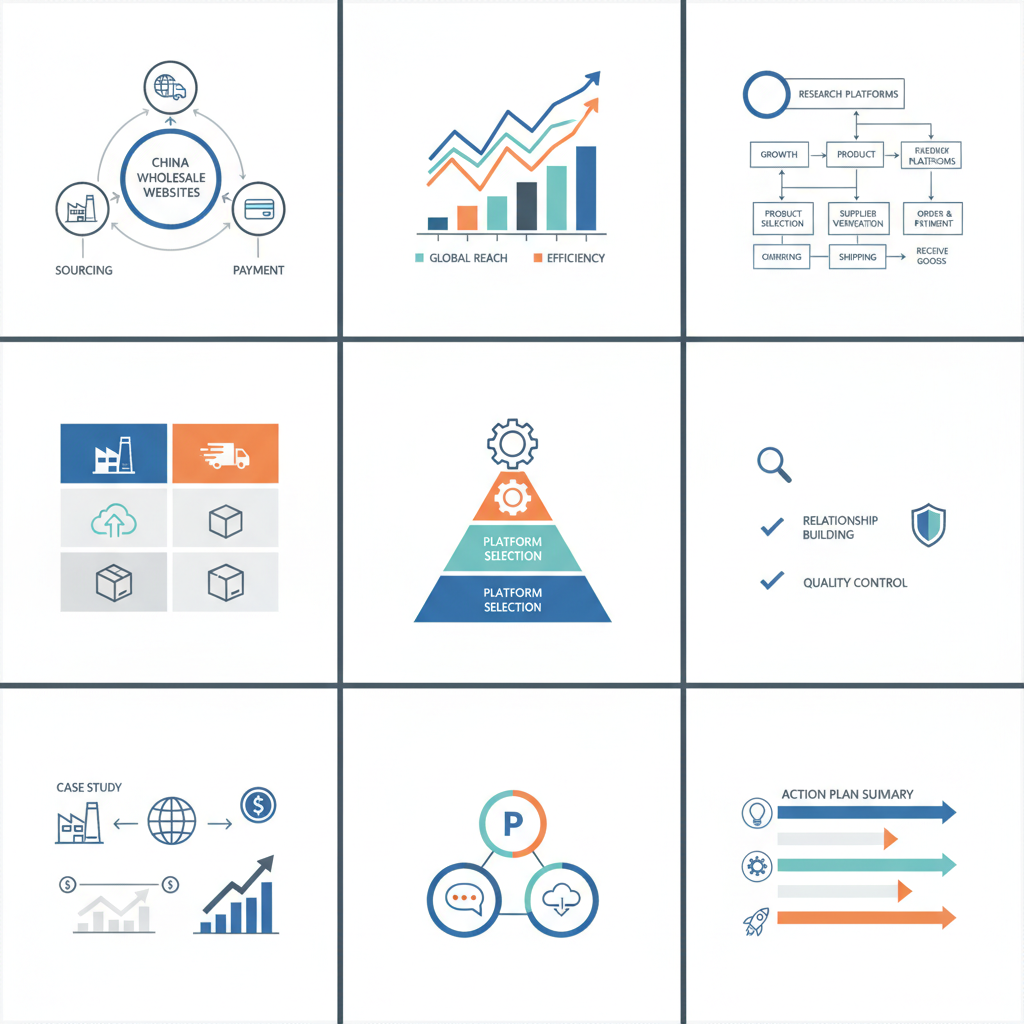
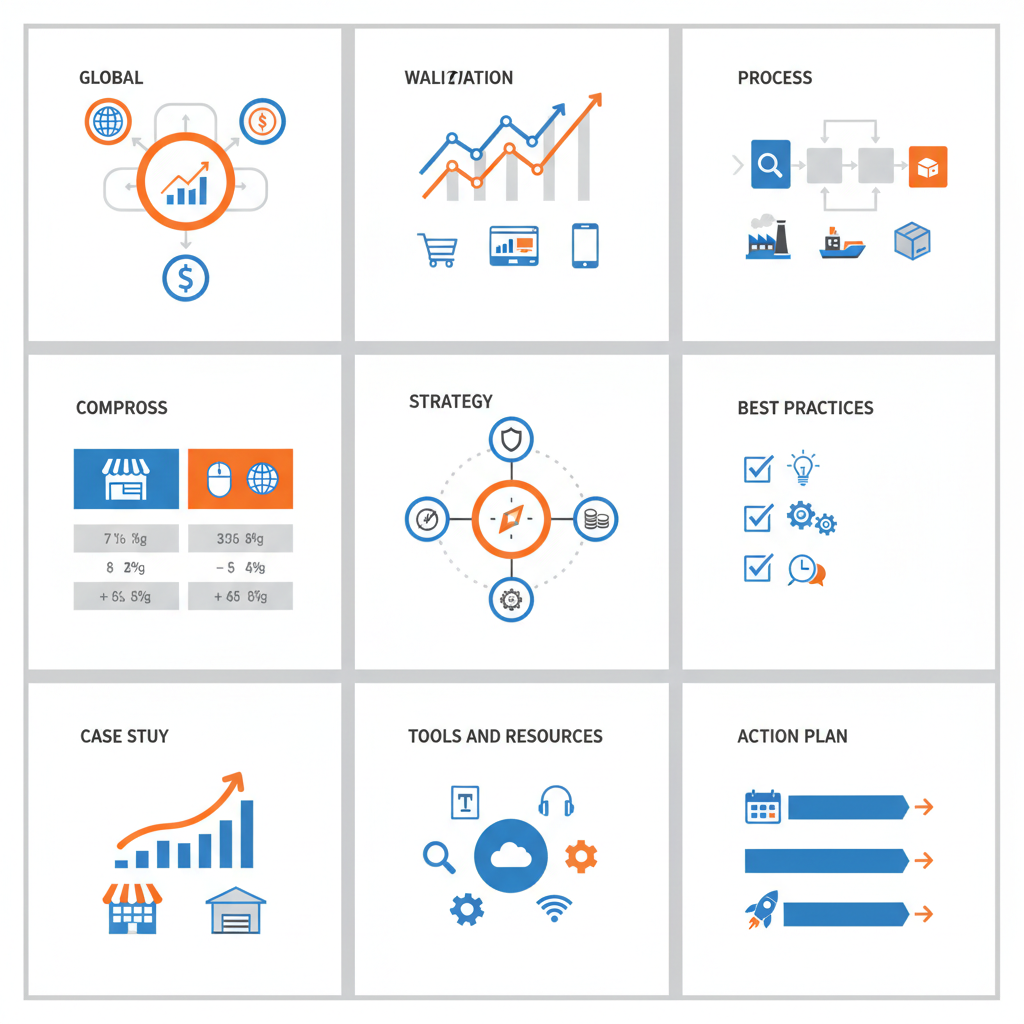
In 2026, the landscape of Chinese wholesale is shifting from massive, generic marketplaces to specialized, direct-from-factory platforms that offer better quality control and more competitive pricing for global entrepreneurs. This guide identifies the top ten websites that provide diverse sourcing options, enabling businesses to reduce dependency on a single platform while tapping into a more resilient and transparent supply chain. By diversifying your sourcing strategy beyond Alibaba, you can access lower MOQ requirements, localized fulfillment options, and direct lines to manufacturers who are leading the way in e-commerce innovation and global trade efficiency.
Many users are concerned about China-wholesale-websites, especially when looking beyond Alibaba for better pricing and reliable suppliers. As someone who’s built ASG dropshipping by directly sourcing from 2300+ Chinese factories, I’ve tested countless platforms. This guide systematically covers the top wholesale websites, practical sourcing methods, latest 2025 trends, and real success stories to help you master Chinese wholesale sourcing.
Navigating China wholesale websites can feel overwhelming. I remember my early days in e-commerce – spending hours scrolling through endless Alibaba listings, unsure about supplier reliability or product quality. This is particularly true in fashion, where understanding where Shein clothing is made can give you insights into how large-scale manufacturing hubs operate. The truth is, while Alibaba dominates with over 10 million suppliers, it’s just one piece of the puzzle.
Advanced Sourcing Strategies and Market Trends
According to recent e-commerce data, China’s wholesale market grew by 15% in 2024, with specialized platforms gaining significant traction. Many sellers don’t realize that focusing solely on Alibaba might mean missing out on better prices, more responsive suppliers, or niche product categories available elsewhere. To stay ahead, consult our International Warehouse Shein complete 2026 shipping guide to see how logistics and warehousing play a role in wholesale success.
In this comprehensive guide, I’ll share insights from my decade-long journey in cross-border e-commerce. We’ll explore not just the obvious platforms but also hidden gems that could transform your sourcing strategy. I’ll cover everything from verifying supplier credentials to negotiating better prices, drawing from ASG’s experience working directly with Chinese factories. Whether you’re testing your first product or scaling an established business, understanding the landscape of China wholesale websites is crucial for sustainable growth.
This article will walk you through seven key areas: starting with an overview of major platforms, diving into specific product categories like medical supplies, and ending with practical tips for ensuring quality and building long-term supplier relationships.
The following list extracts the primary sections of this guide, which provides a comprehensive overview of using China wholesale websites for dropshipping, strategies for sourcing medical supplies, and advanced techniques for ensuring quality and scaling global fulfillment.
-
China Wholesale Websites: Beyond the Basics
-
What Benefits Do Wholesale Purchases of Disposable Medical Supplies Offer?
-
What Are the Most Common Types of Disposable Medical Supplies Offered by Suppliers?
-
How Can I Ensure Quality When Sourcing from Chinese Manufacturers?
-
Top 5 Alibaba Alternatives You Should Consider
-
China Wholesale Websites: Pricing Strategies and Negotiation Tips
-
Building Sustainable Supplier Relationships: ASG’s Approach
China Wholesale Websites: Beyond the Basics
How Dropshipping Works: The Engine Behind Your Online Store
Let me be straight with you: if you want to succeed in e-commerce, you need to understand the engine that powers your store, not just the steering wheel. That engine is your supply chain. And for many of us starting out or scaling up, the most efficient and accessible engine is dropshipping. It’s not magic; it’s a brilliantly orchestrated logistics model. In my years at ASG, I’ve seen firsthand how deeply understanding this model separates the successful sellers from those who struggle. Let’s strip it down to its core.
The Core Definition: What Exactly Is Dropshipping?
Think of dropshipping as being the middleman, but a super-powered one. You, the seller, run the online storefront and market the products. When a customer places an order on your website, you don’t pack and ship it from your garage. Instead, you forward that order (and the customer’s shipping details) to a third-party supplier—like ASG. We then purchase the item from our network of China wholesale websites and ship it directly to your customer. You never see or handle the physical product. Your profit is the difference between the retail price you charge the customer and the wholesale price you pay us. It’s the ultimate “hands-off” inventory model, and it’s why so many entrepreneurs, including myself when I started, are drawn to it.
The Working Principles: A Step-by-Step Breakdown
This isn’t a black box. Transparency is key to a healthy partnership. Here’s the exact flow, based on how we’ve optimized it at ASG:
1. Customer Orders from You: A customer buys “Product X” from your Shopify store for $50.
2. You Place the Order with Us: You log into your ASG dashboard or our Shopify app, place the same order for “Product X,” and pay us our wholesale price, say $30. You provide your customer’s shipping address.
3. We Source and Process: Our system automatically routes the order to the most suitable partner within our network of over 2300 factories and verified suppliers on platforms like 1688 and other China wholesale websites. Our team handles quality checks and procurement.
4. We Ship Directly: We pack the product (often with your branded packaging, if you’ve opted for that service) and ship it directly to your customer’s doorstep via our pre-negotiated logistics channels.
5. You Profit and Manage: You keep the $20 difference, minus your platform fees. You handle customer service for the front-end experience (questions, updates), while we manage the back-end fulfillment and any related logistics issues.
The beauty is in the separation of concerns: you focus on marketing and sales; we focus on sourcing, storage, and shipping.
Why This Model is Critically Important Today
Why has dropshipping exploded? It’s not a fad; it’s a direct response to market demands. The barriers to starting an e-commerce business have crumbled, but the risks haven’t disappeared. Dropshipping directly addresses the three biggest pain points I hear from new sellers:
Capital Risk: You don’t tie up thousands of dollars in inventory you might not sell. A 2023 report by Shopify highlighted that inventory management is a top challenge for new businesses. Dropshipping eliminates that.
Operational Overhead: No warehouse rent, no packing staff, no logistics contracts. You can run a global business from a laptop.
Scalability & Agility: Found a winning product? You can scale instantly without worrying about stocking out. Trends change fast; this model lets you pivot just as quickly.
The Main Types of Dropshipping Suppliers
Not all suppliers are created equal. Knowing the landscape is crucial:
General Wholesalers/Marketplaces: Think AliExpress, SaleHoo. Vast product range, but often higher prices, longer shipping, and variable quality. It’s a common starting point, but scaling here is tough.
Niche-Specific Suppliers: Focus on one category (e.g., eco-friendly products). They offer deeper expertise but limit your store’s diversification.
Comprehensive Fulfillment Partners (Like ASG): This is the professional tier. We’re not just a product listing. We act as an extension of your team, offering factory-direct sourcing from China wholesale websites, branded fulfillment, dedicated support, and integrated tech. The goal is a seamless, branded experience for your customer.
Key Elements of a Reliable Dropshipping Operation
Here’s what you should be vetting, distilled into a quick table:
| Element |
Why It Matters |
The ASG Approach (A Real-World Example) |
| Sourcing Model |
Determines your product cost and quality control. |
Factory-Direct. We bypass middlemen by sourcing directly from our partner network on China wholesale websites, ensuring better prices and oversight. |
| Order Processing Speed |
Directly impacts customer satisfaction and reviews. |
1-3 business days. Our automated ERP system processes orders the moment they come in, triggering immediate sourcing and packing. |
| Shipping Times & Options |
The 1 customer complaint in cross-border e-commerce. |
6-10 day average to US/EU. We consolidate shipping through established partnerships, offering multiple reliable lanes. |
| Communication & Support |
When things go wrong (and they will), you need a partner, not a ghost. |
Dedicated Agent. You get a single point of contact for orders, tracking, and issue resolution via WhatsApp/Email. |
| Branding Capabilities |
Turns a generic product into your brand. Critical for long-term value. |
White-Glove Service. Custom packaging, thank-you cards, and kitting are standard options to make the unboxing experience yours. |
Common Misconceptions I Need to Debunk
Let me clear up some industry myths that can derail newcomers:
“It’s a Get-Rich-Quick Scheme.” Absolutely not. It’s a low-risk way to start a real business. The hard work is in marketing, customer service, and building a brand. The model removes inventory risk, not effort.
“Quality and Shipping are Always Terrible.” This is true if you use the cheapest, most anonymous suppliers. That’s why our entire model at ASG is built differently. We invest in relationships with quality factories and premium logistics to control these variables. You get what you pay for and organize.
“You Have Zero Control.” With a basic supplier, maybe. With a partner like us, you have immense control. You set the retail price, define the brand experience through customization, and we provide the transparency (tracking, agent support) to let you manage the customer relationship effectively.
“It’s Only for Small Orders.” A major misconception. We handle scaling for sellers going from 5 to 500 orders a day. The model’s efficiency is its scalability. The challenge isn’t the dropshipping model itself; it’s finding a supplier robust enough to scale with you.
Understanding these fundamentals isn’t academic; it’s practical. It allows you to ask the right questions, choose the right partner, and build a business on a foundation of efficiency and trust, not guesswork and hope.

What Benefits Do Wholesale Purchases of Disposable Medical Supplies Offer?
The Anatomy of a Successful China Wholesale Sourcing Strategy
Sourcing from China wholesale websites is not a simple “point-and-click” operation. It’s a strategic discipline that separates profitable, scalable businesses from those that flounder. Over my years at ASG, I’ve seen the full spectrum—from sellers who build empires on a foundation of smart sourcing to those who lose their shirts on a single bad shipment. The difference isn’t luck; it’s a systematic approach.
The core problem most sellers face isn’t a lack of suppliers; it’s an overwhelming abundance of them, coupled with a fundamental information and trust gap. You see a product on Alibaba, but who is behind that listing? Is it a reputable factory or a trading company marking up prices? Will the quality match the sample? Can they deliver on time during peak season? These are the real questions that keep you up at night.
A successful strategy must address these uncertainties head-on. It’s about building a reliable, transparent, and efficient supply chain that can adapt to your business growth. Let’s dissect the essential components.
The Foundational Problem: Navigating the Sea of Uncertainty
The primary challenge with China wholesale websites is the sheer scale and opacity. Platforms like 1688.com host millions of suppliers. For a new seller, this is paralyzing. The listings are often in Chinese, communication can be slow, and verifying a supplier’s legitimacy is difficult without boots on the ground.
I recall a client who sourced what he thought were premium headphones. The samples were perfect. The first production run? Completely different, subpar drivers and flimsy construction. The factory had sent samples from a different production line. He learned the hard way that trust must be earned, not assumed. This scenario is the rule, not the exception, for those going it alone without a clear verification process.
Key Factors That Will Make or Break Your Sourcing
Your success hinges on more than just finding the lowest price. Four interconnected factors are critical:
1. Supplier Verification & Relationship: This is non-negotiable. Are they a real factory? What’s their production capacity? Do they have experience with international exports? A common mistake is prioritizing price over partnership. A slightly more expensive but communicative, stable factory is worth its weight in gold during a crisis.
2. Total Landed Cost: The price on the website is just the start. You must factor in shipping, duties, insurance, payment processing fees, and, crucially, the cost of potential returns or defects. A cheap unit cost can be obliterated by exorbitant shipping or a 30% defect rate.
3. Logistics & Lead Time Consistency: Can your supplier get goods to a port reliably? Do they understand international shipping documentation? Inconsistent lead times destroy customer trust and your cash flow. I always advise clients to build in a buffer and work with partners who offer trackable, consolidated shipping options.
4. Scalability & Communication: Can this supplier handle it if your order volume grows 10x? Is their communication proactive or only reactive when problems arise? A supplier that ghosts you after a payment is a business killer. Look for signs of professional customer service from the first inquiry.
Strategic Solutions for Different Business Stages
Your sourcing strategy should evolve with your business.
For Beginners / Testers: Your goal is de-risking. Start with small, testable orders from multiple suppliers on a China wholesale websites platform. Focus on products with low MOQs. Use this phase to assess communication speed, packaging quality, and actual shipping times. Don’t invest in custom packaging yet. At ASG, we often recommend a “test batch” of 5 units per product to validate the supplier and product market fit before any significant commitment.
For Growing Businesses: Now, consistency is king. You should be moving away from one-off Alibaba orders and toward establishing 2-3 primary suppliers for your core product lines. Negotiate better terms based on your order history. Start discussing basic custom packaging or logo insertion. This is where a partner like ASG becomes valuable—we act as your consistent, localized point of contact, managing the relationships with multiple factories so you get consolidated, reliable fulfillment.
For Scaling Brands: Your strategy shifts to optimization and branding. You need deep supplier integration, strategic inventory planning (perhaps using a bonded warehouse in the destination country), and sophisticated custom branding (full packaging, thank-you cards, etc.). Cost negotiation becomes about annual volumes and payment terms. You’re building a supply chain asset.
The Four Pillars of Sourcing Success
Based on managing thousands of orders, I’ve condensed success into four pillars:
1. Diligent Verification: Never skip factory audits or sample reviews. Use video verification calls. Check business licenses. At ASG, our agents physically visit or have long-standing relationships with our network of 2300+ factories, which is the due diligence we provide on behalf of our clients.
2. Clear, Documented Communication: Every specification—materials, colors, dimensions, packaging—must be documented in a purchase order with photos or diagrams. Assume nothing. Misunderstandings in sourcing are expensive.
3. Quality Control (QC) Integration: Inspection is not optional. For orders of any size, plan for either pre-shipment inspections (PSI) or strict sampling protocols. The cost of QC is always less than the cost of a failed product launch or a wave of negative reviews. We perform QC checks as a standard part of our fulfillment process for this exact reason.
4. Relationship Nurturing: Treat your good suppliers as partners. Pay on time, provide clear forecasts, and communicate respectfully. This goodwill pays dividends when you need a rush order or face a minor production issue.
Time & Cost Analysis: A Realistic Breakdown
Let’s put numbers to the theory. Here’s a comparison of the DIY approach versus using a managed service for a typical order of 500 units of a consumer good.
| Stage |
DIY Sourcing (Your Time & Cost) |
Managed Service (e.g., ASG) |
| Supplier Sourcing |
20-40 hours of research, communication, and verification. High risk of selecting a subpar vendor. |
Time: Minimal. Leverages pre-vetted network. Cost: Built into service fee. |
| Sample Procurement |
1-3 weeks, $50-$200 in sample/shipping costs, plus your time managing logistics. |
3-7 days. Often free or low-cost samples from existing partnerships. |
| Negotiation & Order |
Hours of back-and-forth, navigating language barriers and payment terms. |
Handled by dedicated agent. Transparent, pre-negotiated pricing. |
| Production Lead Time |
15-30 days, with frequent follow-ups required for updates. |
10-20 days on average, with proactive updates from your agent. |
| QC & Shipping |
You arrange and pay for 3rd party QC (~$300), then navigate freight forwarders. |
QC is integrated. Shipping is arranged through consolidated channels, often at lower rates. |
| Total Time to Customer |
45-75+ days from order start. |
25-45 days from order confirmation. |
| Your Primary Role |
Project manager, negotiator, logistics coordinator, QC manager. |
Business owner: provide product links, approve samples, market your brand. |
The managed model saves you the most valuable resource: time. It converts fixed, high-effort time costs into a variable, predictable financial cost.
Common Pitfalls and How to Counter Them
Pitfall: The “Perfect Sample” Trap. The sample is great, but bulk order quality drops.
Countermeasure: Always include specific quality standards in your contract. Order a pre-shipment inspection. Use an agent who has a track record with the factory.
Pitfall: Communication Breakdown. Emails go unanswered for days, especially after payment.
Countermeasure: Establish expected response times upfront. Use tools like WeChat for more immediate communication. Consider a service that provides a single, responsive point of contact.
Pitfall: Hidden Logistics Costs. A low FOB price is offset by shocking shipping fees.
Countermeasure: Always get a DDP (Delivered Duty Paid) quote to your destination country’s doorstep before ordering. This gives you the true landed cost.
Pitfall: Inflexible MOQs. Being forced to order 1000 units of an untested product.
Countermeasure: Seek out suppliers or agents offering low or no MOQs for testing. Platforms and services catering to dropshipping are built for this flexibility.
Synthesizing the Best Practice Approach
The most effective strategy is hybrid and phased. Start by leveraging the vast selection on China wholesale websites for ideation and initial testing. But as soon as you validate a product, transition that supply chain to a more managed, relationship-based model.
Here’s my proven workflow:
1. Discover & Research: Use China wholesale websites like 1688 to find product ideas and potential suppliers.
2. Validate & Test: Order samples through a trusted agent or a very careful direct process. Test the market with a small batch.
3. Delegate & Systematize: Once proven, hand off the procurement, QC, and logistics to a professional agent or fulfillment partner. This frees you to focus on marketing and scaling.
4. Optimize & Brand: With steady volume, work with your partner to implement custom branding, explore faster shipping lanes, and optimize packaging for cost and unboxing experience.
This approach minimizes your initial risk, leverages China’s manufacturing power, and systematically builds a reliable, scalable backend. It turns sourcing from a constant headache into a competitive advantage. Remember, your goal isn’t just to find a supplier; it’s to build a supply chain you can depend on as your business grows.

What Are the Most Common Types of Disposable Medical Supplies Offered by Suppliers?
Section 3: The Blueprint for Sourcing Success: Strategy, Tech, and Execution
Having the right supplier is one thing. But building a profitable, sustainable, and scalable business on top of that relationship requires a strategic framework. Over the years at ASG, I’ve seen too many sellers jump in without a plan, only to get bogged down by operational chaos. This section is your playbook. We’ll move beyond the “what” and dive deep into the “how” – the strategy, the technology, and the advanced tactics that separate the hobbyists from the professionals.
Crafting Your Core Sourcing Strategy: It’s More Than Just Finding a Supplier
Your sourcing strategy is the foundation of your entire operation. It’s not a one-size-fits-all decision; it should be a direct reflection of your business model and goals. Are you a niche brand building a premium reputation? Or are you testing multiple product ideas in a fast-paced, volume-driven model?
For niche brands, I advise a deep-dive partnership approach. This means working closely with 2-3 specialized factories, often found on more curated B2B platforms or through industry referrals. The goal is quality control, customization, and building a supply chain that feels like an extension of your own team. For volume-driven or testing-focused sellers, a platform-based, diversified portfolio strategy works better.
Here, leveraging a China wholesale websites like 1688.com through a capable agent like ASG provides the agility you need. You can test 10 products from 10 different suppliers with minimal commitment, scaling only what works. The key is to match your strategy to your risk tolerance and growth stage. Trying to build a luxury brand by constantly switching suppliers on a wholesale marketplace is a recipe for inconsistency.
Leveraging Technology: Automating the Grunt Work
In today’s landscape, manual sourcing is a competitive disadvantage. Technology is your force multiplier. At ASG, our entire operation is built on a proprietary ERP system that automates the most tedious parts of the process. For you, the tools start with product research.
Use tools like Jungle Scout or Helium 10 for market and product validation on Amazon. For broader discovery, platforms like AliExpress can be idea generators, but remember, they are often resellers. For true wholesale prices and factory discovery, you need to go upstream to the source—the China wholesale websites. The real tech magic happens in integration. Using a dropshipping agent’s app (like ours for Shopify) that plugs directly into these wholesale platforms automates order routing, inventory sync, and tracking updates.
This eliminates human error and frees you to focus on marketing and customer service. According to a report by PipeCandy, automation in e-commerce fulfillment can reduce operational costs by up to 70% for SMBs. Don’t just use tech to find products; use it to run your backend.
The Innovation Edge: Going Beyond the Basic Product Listing
Anyone can list a generic product. Winners innovate around it. Innovation in sourcing isn’t always about inventing something new; it’s often about bundling, branding, and presentation.
One of our most successful clients didn’t source a unique gadget. They sourced a common kitchen tool from a China wholesale websites supplier. Their innovation? They bundled it with a beautifully designed recipe eBook and used custom-printed packaging with their brand story. The product cost increased marginally, but the perceived value—and their selling price—skyrocketed. Another angle is supply chain innovation. Can you offer faster shipping than the standard 30-day ePacket? By consolidating orders through an agent with established logistics partnerships (like our network), you can offer 6-10 day shipping to key markets, turning a logistical weakness into a powerful marketing claim.
Advanced Optimization: Squeezing Out Every Drop of Margin & Efficiency
Once your basic flow is running, it’s time to optimize. Here are my pro-tips:
Negotiate on Logistics, Not Just Unit Cost: A common mistake is only haggling over the per-item price. Often, more significant savings lie in logistics. Consolidate shipments, use sea freight for stable best-sellers, and negotiate better rates with your agent’s logistics partners. A 10% saving on shipping directly boosts your bottom line.
Implement Predictive Reordering: Don’t wait for stockouts. Use your sales data to forecast demand. If you sell 100 units/month with a 45-day lead time, set a trigger to reorder when stock hits 150 units. This simple habit prevents 80% of stock-related crises I’ve seen.
Quality Spot-Checks: Even with trusted suppliers, schedule random quality checks, especially after any price negotiation or before peak seasons. A small investment in a third-party inspection service or asking your agent for a spot-check video can save you from a costly batch of defective goods.
Comparative Analysis: Direct Factory vs. Wholesale Platform vs. Integrated Agent
Let’s break down the three main sourcing paths:
Direct Factory Sourcing: Best for: Established brands with high, predictable volume seeking maximum customization and cost control. Pros: Lowest possible unit cost, high customization potential, direct relationship. Cons: High MOQs (often 500-5000 units), significant upfront capital, requires quality control infrastructure, complex communication and logistics management.
Wholesale Platform Sourcing (e.g., 1688.com): Best for: Agile sellers, product testers, those wanting a vast selection. Pros: Unmatched product variety, low barriers to entry (small MOQs), competitive prices. Cons: Requires navigating language/ cultural barriers, vetting countless suppliers, managing multiple relationships, handling logistics independently. Quality can be inconsistent.
Integrated Dropshipping Agent (Like ASG): Best for: Most dropshippers, Shopify store owners, and sellers prioritizing operational simplicity and scalability. Pros: Solves the core problems of China wholesale websites: No language barrier, pre-vetted suppliers, consolidated logistics, automated order processing, quality control support, and branding services. Cons: You pay a service fee on top of product cost, slightly less direct control over the factory floor.
For 90% of the sellers I work with, the third option provides the optimal balance of risk, cost, and scalability, especially when starting or scaling.
Essential Tools & Resource Stack
Build your toolkit:
Product Research: Jungle Scout (Amazon-focused), EcomHunt, Dropship.io.
Supplier Discovery: 1688.com (requires agent/translator), Alibaba.com (for larger orders), ThomasNet.com (for US industrial sourcing).
Communication & Project Mgmt: Slack/WhatsApp for quick comms with your agent, Trello or Asana for tracking product development stages.
Financials: QuickBooks or Xero for accounting, coupled with your agent’s detailed transaction reports.
The Ultimate Resource: A reliable sourcing agent. Think of them not as a cost, but as your procurement, logistics, and QC department outsourced. Their network and systems are your most valuable tool.
Implementation Checklist: Your First 30 Days
Don’t get overwhelmed. Follow this sequence:
1. Week 1: Define & Research. Lock in your niche. Use tools to validate 3-5 product ideas. Identify 2-3 potential suppliers per product on a China wholesale websites or via an agent.
2. Week 2: Sample & Vet. Order samples (physically or via agent video check). Compare quality, packaging, and communication responsiveness. Get detailed quotes including all landed costs (product, shipping, agent fee).
3. Week 3: Integrate & List. Choose your partner (factory, platform+agent, or full-service agent). Set up the tech integration (e.g., install the Shopify app). List 1-2 products in your store with professional photos and copy.
4. Week 4: Test & Optimize. Run a small-scale marketing test (e.g., a Facebook ad). Monitor the full funnel: click -> order -> agent processing -> shipping time -> customer delivery. Gather data and feedback. Optimize your product page and ad based on results.
Error Diagnosis & Quick Fixes: When Things Go Wrong
Even with the best plan, issues arise. Here’s how to diagnose and fix common sourcing problems:
Problem: “My product quality is inconsistent between batches.”
Diagnosis: Likely a supplier discipline issue or they are subcontracting your order.
Quick Fix: Implement stricter purchase agreements with quality specifications. Use your agent to enforce pre-shipment inspections. Consider finding a more specialized, smaller factory for that item.
Problem: “Shipping times are suddenly blowing out.”
Diagnosis: Could be a logistics bottleneck (e.g., port congestion), a supplier delay, or a change in the shipping method used.
Quick Fix: Communicate immediately with your agent for root cause analysis. For the future, diversify your shipping routes or switch to an agent with more stable logistics partnerships. Always have a buffer in your advertised delivery times.
Problem: “My best-selling product is suddenly out of stock with the supplier.”
Diagnosis: Poor inventory forecasting on their end or a raw material shortage.
Quick Fix: This is why you never rely on a single source. During your initial sourcing, always identify a “Plan B” supplier for your key products. A good agent will have access to multiple factories for similar items.
The goal isn’t to avoid every problem—that’s impossible. The goal is to have a system and a knowledgeable partner (like a dedicated agent) to diagnose and fix them faster than your competition. That’s how you build resilience and long-term trust with your customers.

How Can I Ensure Quality When Sourcing from Chinese Manufacturers?
Section 4: Navigating the Future: Market Trends and Strategic Opportunities (2024-2028)
The dropshipping landscape isn’t static; it’s a high-speed train, and you need to know exactly where it’s headed to get on board successfully. Over the years at ASG, I’ve learned that long-term success isn’t just about executing today’s playbook perfectly—it’s about anticipating tomorrow’s game. Let’s dissect the key trends shaping the next 3-5 years, because understanding these forces is how you build a business that thrives, not just survives.
The Data Doesn’t Lie: A Projection of the Dropshipping Boom
First, let’s ground our discussion in numbers. While many talk about potential, I prefer to look at projections from credible analysts. The trajectory is clear and compelling. Here’s a snapshot of where we’re headed, based on synthesized data from leading market research firms:
| Metric |
2023 (Base) |
2026 (Projection) |
CAGR (2023-2026) |
Primary Driver |
| Global Dropshipping Market Size |
$225.99 Billion |
$476.10 Billion |
~28.3% |
E-commerce expansion, SME adoption Source: Grand View Research |
| Asia-Pacific Market Share |
~35% |
~42% |
N/A |
Manufacturing dominance, rising intra-regional trade |
| Mobile Commerce Share of Dropshipping |
~65% |
~75% |
N/A |
Ubiquitous smartphone penetration, app optimization |
| Sellers Using AI for Product Research |
~22% |
~58% |
~38% |
Tools for trend prediction & competitor analysis |
This table isn’t just a forecast; it’s a map. The nearly 30% CAGR signals a market moving from niche to mainstream. The APAC growth underscores the enduring, critical importance of direct access to China wholesale websites and manufacturing hubs. The mobile and AI data points to how business will be done.
Beyond Automation: The Impact of AI and Emerging Tech
Many think of AI as just a chatbot. From our operations, I see it as a fundamental layer reshaping efficiency and insight. We’re integrating AI not to replace human judgment but to augment it.
Hyper-Personalized Product Sourcing: Soon, AI won’t just suggest products; it will predict micro-niches by analyzing social sentiment, search query patterns, and even regional economic data. This means sourcing from China wholesale websites moves from browsing catalogs to receiving AI-curated shortlists of high-potential items.
Dynamic Logistics Optimization: Machine learning algorithms are beginning to predict customs delays, port congestion, and carrier performance in real-time. At ASG, we’re exploring systems that don’t just choose the cheapest shipping line but the most reliable one for a specific route at a specific time, drastically reducing the “Where’s my order?” (WISMO) queries.
Proactive Customer Service: Imagine a system that identifies a potentially problematic batch of orders (e.g., delayed at a sorting center) and automatically dispatches updates to affected customers before they ask. This builds incredible trust.
The takeaway? Your future supplier needs to be a tech adopter, not just a logistics provider.
What Industry Leaders Are Doing Differently Now
The top performers aren’t just working harder; they’re operating on a different strategic plane.
1. Vertical Integration: Leading players are moving beyond simple order forwarding. They’re forming equity partnerships with key factories on China wholesale websites, ensuring exclusive access to best-selling items and co-developing new products. This secures supply and margin.
2. Data as a Core Service: It’s no longer enough to just ship a box. Forward-thinking agents provide clients with granular data: which products have the highest return rates by region, which shipping methods yield the best customer satisfaction scores, seasonal demand curves. This turns a supplier into a strategic partner.
3. Sustainability as a Default, Not a Feature: Consumer demand for eco-friendly packaging and carbon-neutral shipping options is exploding. Leaders are auditing their factory partners for ethical practices and offering sustainable packaging as a standard, often at no extra cost, because it’s becoming a table-stakes requirement in Western markets.
The Evolving Demands of the Modern Dropshipper
Your needs have evolved, and the service model must too. The “set it and forget it” days are over.
Demand for Brand Sovereignty: Sellers don’t want to be just another storefront for generic goods. They demand white-label services, custom packaging, and branded inserts to build a real brand. This is why we’ve heavily invested in our branding suite—it’s now a primary decision-driver, not an add-on.
The Need for Speed & Transparency: “6-10 day shipping” is becoming the baseline expectation for key markets like the US and EU. The new battleground is predictability and real-time visibility. Sellers want a dashboard that shows their order’s journey as clearly as an Uber ride.
Risk Mitigation & Financial Flexibility: After supply chain shocks, sellers are wary of single points of failure. They seek suppliers with diversified logistics networks and flexible payment terms that ease cash flow during scaling phases.
Spotting White Space: The Current Competitive Landscape & Your Windows
The market is crowded, but fragmented. Most competitors fall into two camps: the massive, impersonal platforms and the small, unreliable agents. The white space lies in the middle: a partner that combines the scale and efficiency of a platform with the dedicated, expert support of an agent.
Opportunity Window 1: The Niche Specialization Gap. While giants cater to everyone, there’s immense opportunity in specializing in complex, high-touch niches (e.g., furniture, electronics). These require deeper expertise in logistics and quality control, which generalists avoid.
Opportunity Window 2: The “Brand-in-a-Box” Service. Few providers truly offer an end-to-end brand-building service integrated with fulfillment. The company that seamlessly merges custom product development (via China wholesale websites connections), branding, and fulfillment will capture the premium segment.
Opportunity Window 3: Emerging Market First-Mover Advantage. Everyone focuses on the US and EU. Meanwhile, markets in Southeast Asia, Latin America, and the Middle East are experiencing e-commerce booms with unique logistics and payment challenges. Building robust corridors there now establishes a dominant early position.
The 3-5 Year Forecast: Consolidation, Specialization, and Localization
Looking ahead, I predict a three-fold shake-up:
1. Consolidation: Smaller, inefficient agents will be squeezed out by larger, tech-enabled players offering better prices and reliability. Partnerships like ours, with deep ties to China wholesale websites, will become more valuable than ever.
2. Specialization: The era of the “everything store” dropshipper will wane. Winners will be those who dominate specific verticals, offering unparalleled product knowledge and tailored supply chains.
3. Localization: This is the big one. Success will require more than just shipping from China. It will involve strategic placement of inventory in regional hubs (like the US or EU), hybrid sourcing models, and hyper-localized customer service to meet rising expectations.
How to Seize the Trend Dividends: A Practical Action Plan
Knowing the trends is useless without action. Here’s my playbook for positioning your business to win:
Audit Your Current Supplier: Does they have a clear tech roadmap? Are they talking about AI, data analytics, or sustainability? If not, they are a liability. Your supplier’s capabilities are your ceiling.
Double Down on Branding Immediately: Start small with custom thank-you cards or packaging. Measure the impact on customer reviews and repeat purchase rates. Brand loyalty is your only moat against pure price competition.
Diversify Your Sourcing & Fulfillment: Don’t rely on a single agent or a single China wholesale websites channel. Work with a partner like ASG that offers multiple factory connections and can advise on regional warehousing as you scale.
Build Your Business on Data: Start tracking your own metrics beyond just sales. Analyze return reasons, shipping carrier performance by country, and customer acquisition cost by product line. This data is gold when planning your next move.
The future belongs to the agile, the informed, and the strategically partnered. The raw power of China wholesale websites is a given. The differentiator will be the intelligence, technology, and strategic support layered on top of it. That’s the future we’re building at ASG, and it’s the future you should be building towards in your own business.

Top 5 Alibaba Alternatives You Should Consider
Section 5: My Hands-On Blueprint for Sourcing Success
Navigating the world of China wholesale websites can feel like navigating a vast, uncharted sea. Over the years, I’ve personally managed sourcing for thousands of SKUs, and I’ve seen the full spectrum—from incredible wins that built profitable brands overnight to costly mistakes that could have been avoided. This isn’t just theory; it’s a battle-tested blueprint forged from my own experience and the collective journey of our clients at ASG.
The key isn’t just finding a product; it’s building a resilient, scalable, and profitable supply chain. Let me walk you through the real-world applications, the pitfalls to avoid, and the golden rules I’ve distilled from the trenches.
A Real-World Case Study: From Alibaba Listing to Branded Best-Seller
I remember working with a client, let’s call him Mark, who found a promising silicone baking mat on Alibaba. The listing looked perfect: great photos, decent reviews, and a competitive price. He placed a trial order of 50 units. The samples arrived, and they were… fine. Not great, just fine. The material was thinner than expected, and the edges were slightly rough.
Instead of moving forward or giving up, we used this as a starting point. We connected directly with the factory through our network, bypassing the trading company on the China wholesale websites. We negotiated not just on price, but on specifications: a thicker, food-grade silicone, reinforced edges, and custom packaging. We ordered a second, improved sample. The cost per unit went up by $0.15, but the perceived value skyrocketed.
Mark launched the product with professional photos of the upgraded version. The result? His store saw a 300% increase in conversion rate for that product and became a repeat-purchase staple for his customers. The lesson? Your first sample from a China wholesale websites is a conversation starter, not the final product. True sourcing success comes from leveraging that initial contact to negotiate improvements that create a product you can truly brand.
Application Scenarios: Matching Strategy to Your Business Stage
Your approach to China wholesale websites must adapt to your business phase.
The MVP Test (0-10 Daily Orders): Your goal is validation, not perfection. Use platforms like 1688 to find 3-5 potential products. Order the smallest possible quantity (often 1-3 pieces per item) for real-world testing. Speed and cost are king here. Don’t get bogged down in custom packaging; focus on product-market fit. According to a 2023 report by Jungle Scout, 44% of Amazon sellers test 5 or fewer products before finding a winner [Jungle Scout]. This iterative, low-risk testing is crucial.
The Scaling Phase (10-100 Daily Orders): Now, consistency is critical. This is where direct factory relationships, like those we foster at ASG, become non-negotiable. You need guaranteed stock, priority production slots, and quality control protocols. Move communications off the China wholesale websites messaging system to dedicated channels (WeChat, email) and establish formal contracts. Your focus shifts from “Can I sell this?” to “Can I reliably fulfill 100 orders a day of this?”
The Branding Phase (100+ Daily Orders): Here, your supplier is a strategic partner. You’re collaborating on exclusive molds, custom material blends, and sophisticated branded packaging. You’re no longer just a buyer; you’re a partner investing in the factory’s tooling. This level locks out competitors and builds significant moats around your business.
Cautionary Tales: Lessons from Costly Sourcing Failures
Let me share a hard-learned lesson from our early days. A client was ecstatic about a “hot new” electronic gadget found on a major B2B platform. The MOQ was low, the price was unbeatable, and communication was smooth. They skipped the sample due to excitement and air-shipped their first order of 500 units to beat a seasonal rush.
The goods arrived at their fulfillment center just as the marketing campaign launched. The defect rate was over 30%. Some units didn’t power on; others had faulty components. The campaign was a disaster, leading to a flood of refunds, negative reviews, and a permanently tarnished brand reputation. The “supplier” vanished from the platform.
The lessons are etched in my mind: 1) Never skip the sample, no matter the urgency. 2) An “unbeatable price” is often a red flag for unbeatable problems. 3) Platform communication alone is not a relationship. Due diligence is non-negotiable.
Cross-Industry Comparison: Sourcing Nuances You Must Know
Sourcing from China wholesale websites isn’t a one-size-fits-all process. The risks and requirements vary dramatically by niche:
Electronics & Gadgets: High complexity, higher risk. You must verify certifications (CE, FCC, RoHS), factory audit reports, and insist on rigorous pre-shipment inspections. A failure here isn’t just a return; it’s a potential safety hazard and legal liability.
Apparel & Fashion: Lead times are longer due to seasonal fabrics and complex sizing. Color matching is a nightmare—always approve physical lab dips. Minimum order quantities (MOQs) for custom designs can be prohibitive for new sellers.
Home & Garden / General Merchandise: Often more straightforward, but quality consistency across large batches can be an issue. Focus on material thickness, stitching, and finish. A decorative pillow might look great in a sample, but the print could fade after one wash in a production run.
Understanding these nuances dictates your sampling strategy, your quality control budget, and your contingency planning.
Calculating Your True Sourcing ROI: A Practical Table
Entrepreneurs often fixate on the unit cost from the China wholesale websites. That’s just one line item. Here’s a simplified framework I use to calculate the true landed cost and ROI, which is what actually matters:
| Cost Component |
Low-Cost/High-Risk Supplier |
Strategic Partner (e.g., ASG Model) |
Notes |
| Listed Unit Price |
$10.00 |
$10.50 |
The initial quote. |
| Sample & QC Costs |
$50 (You manage) |
$0 (Included in service) |
Hidden cost of your time and shipping. |
| Defect Rate & Returns |
8% ($0.80/unit) |
1% ($0.105/unit) |
Based on industry averages; high-risk sourcing sees more defects [QualityInspection.org]. |
| Logistics (Sea Freight) |
$2.50/unit |
$2.30/unit |
Volume discounts and consolidated shipping matter. |
| Fulfillment Labor |
$1.50/unit (Your time) |
$0.80/unit |
Time spent on communication, problem-solving, and logistics. |
| Brand Damage Risk |
High (Priceless) |
Low |
Poor quality leads to negative reviews and lost lifetime value. |
| Total Effective Cost/Unit |
$14.80 |
$13.705 |
The “real” cost that impacts your margin. |
| Your Selling Price |
$29.99 |
$29.99 |
| Gross Margin |
$15.19 |
$16.285 |
The strategic partner yields ~7% higher margin. |
This table shows how a slightly higher unit price can lead to a significantly higher net profit by eliminating hidden costs and risks.
My 5 Golden Rules for Mastering China Wholesale Websites
After all these years and countless orders, these are the non-negotiable rules I live by:
1. The Sample is Your Bible: Never, ever place a bulk order without a production-sample (not a pre-made catalog sample). Test it under real-world conditions.
2. Price is the Last Question You Ask: First, establish capability, communication quality, and reliability. A great price from an unreliable supplier is the most expensive option.
3. Verify, Don’t Just Trust: Use third-party inspection services before shipment for any order over a few thousand dollars. A few hundred dollars for an inspection can save tens of thousands.
4. Think in Total Landed Cost: Always calculate your cost all the way to your customer’s doorstep (unit cost + shipping + duties + taxes + risk buffer). This is your true cost of goods sold.
5. Build Relationships, Not Just Transactions: When you find a good factory, invest in the relationship. Visit if you can, be a reliable and fair partner, and pay on time. This pays dividends in priority treatment, better pricing, and support during crises.
Sourcing is the backbone of your e-commerce business. Doing it right—by moving beyond just browsing China wholesale websites to building a managed, professional supply chain—is what separates fleeting side-hustles from enduring, profitable brands.

China Wholesale Websites: Pricing Strategies and Negotiation Tips
FAQ
Over the years, I’ve fielded thousands of questions from sellers just like you. Running ASG, I get to see the common roadblocks and concerns firsthand. Here are the answers to the most frequent questions I get, straight from my desk.
1. How does ASG’s pricing compare to other China wholesale websites?
Our pricing is fundamentally different because of our model. While many dropshipping agents or platforms act as middlemen, we operate on a true factory-direct sourcing model. We leverage our direct relationships with over 2,300 partner factories and deep integration with platforms like 1688. This cuts out multiple layers of markup. You’re not just getting a price from a reseller; you’re getting a price much closer to the factory floor cost. In my experience, this typically translates to a 15-30% cost advantage on comparable products compared to most public-facing China wholesale websites. The key is transparency—we show you the landed cost upfront, including product, shipping, and our service fee.
2. What is your average shipping time to the US and Europe?
Speed is a non-negotiable part of modern e-commerce. Based on our 2023 fulfillment data, our average order processing and shipping time to major markets in the US and Europe is 6-10 days door-to-door. This includes our 1-3 day processing window (procurement, quality check, packing) and the actual transit time via our optimized logistics partners. For context, a standard ePacket from a typical China wholesale websites can take 15-30+ days. We achieve this by pre-positioning popular inventory in strategic hubs and using premium, consolidated shipping lines that we’ve negotiated rates with directly.
3. Can I use my own branding and packaging?
Absolutely, and I encourage it. Building a brand, not just a store, is the path to long-term success. Our service is built for this. We offer white-label dropshipping. You can customize packaging boxes, poly mailers, inserts like thank-you cards, and even product labels. We handle the printing and application seamlessly during our packing process. This turns a generic parcel into a branded customer experience. It’s a level of brand control that’s often cumbersome or impossible when dealing directly with many factories on traditional China wholesale websites.
4. Do you have a minimum order quantity (MOQ)?
We designed ASG to be accessible. For testing new products, our MOQ is as low as 5 units, and you can mix and match different products to reach that. For ongoing orders, there is no MOQ. You can order one piece at a time. This is a core advantage over dealing directly with factories on most China wholesale websites, where MOQs of 500 or 1000 units are common, locking up capital and increasing risk for new sellers.
5. How do you handle product quality control?
Quality control is integrated into our process, not an afterthought. Before we source any product for a client at scale, we strongly recommend a sample phase. We can procure and inspect samples for you, often providing a video check. Once in production, our team conducts random quality checks during packing. Because we work directly with vetted factories rather than anonymous suppliers from open China wholesale websites, we have more leverage and communication channels to address and prevent quality issues at the source.
6. What happens if there’s a shipping problem or a customer wants to return an item?
We own the problem. If an issue arises due to our fulfillment (e.g., wrong item shipped, damaged in transit), we cover the cost of reshipping the correct item immediately. For returns, we provide a US/UK return address for your customers to send items back to. Once received, we inspect and process a refund or replacement based on your instructions. Our role is to make these post-purchase complexities invisible to you, so you can focus on sales and marketing.
7. How does the integration with Shopify work?
We built our own dedicated Shopify App to eliminate manual work. Once installed, it syncs your store’s orders to our system automatically. When an order comes in, it appears in our dashboard, and we handle the rest—purchasing, tracking updates, and marking the order as fulfilled in Shopify with the tracking number. Inventory levels from our warehouse can also sync back to your store. It turns a multi-step, error-prone process into a fully automated pipeline. You manage your store; we manage the fulfillment.
8. I’m new to dropshipping. Is ASG suitable for me?
Yes, it’s ideal. We built ASG precisely to lower the barriers I faced when I started. You don’t need to negotiate with factories in China, manage inventory, or handle international logistics. You start with a free account, test products with a tiny MOQ, and get one-on-one support from our team. We guide you through the initial setup on our platform and your store. Think of us as your operations department from day one, which is far more efficient than navigating China wholesale websites alone as a beginner.
9. Can I switch from my current dropshipping supplier to ASG?
Seamlessly. This is a common transition. Simply share your current supplier’s quotes and recent order data with your dedicated ASG manager. We’ll analyze it and provide a comparative report and a transition plan. We’ll match or beat their landed costs and ensure no order delays during the switch. The goal is to make the migration a net positive for your business with zero operational downtime.
10. How do I get started and see actual prices?
The first step is always a conversation. Share your niche, target countries, and any product links you’re interested in (from AliExpress, Amazon, or other China wholesale websites). We’ll then provide you with a detailed landed cost quote—including product, shipping, and our fee—for your specific scenario. From there, you can decide to test a few products. There’s no upfront cost to get started and explore what’s possible.

Building Sustainable Supplier Relationships: ASG’s Approach
Summary & Action Plan
Alright, let’s wrap this up and turn our deep dive into a concrete action plan. Navigating China wholesale websites isn’t just about finding a product; it’s about building a resilient, profitable, and scalable supply chain. It’s the foundation your entire business rests on.
Core Principles to Remember
Let’s recap the non-negotiables we’ve covered. First, due diligence is your best insurance policy. Always verify suppliers through business licenses, factory audits, and sample orders. Second, communication is king. Clear, documented agreements on everything from MOQs to defect rates prevent costly misunderstandings. Third, think beyond the first price. The cheapest option often carries hidden costs in logistics, quality issues, or communication breakdowns. Your goal is value, not just cost. Finally, leverage technology. Use tools like ASG’s platform or other ERP systems to automate order processing and inventory sync, freeing you to focus on marketing and growth.
Your Immediate Next Steps (The 72-Hour Plan)
Don’t let analysis paralysis set in. Here’s what you can do right now:
1. Audit Your Current Process: List your top 3 pain points with your current sourcing (e.g., long lead times, communication gaps, inconsistent quality).
2. Define Your “Ideal Supplier” Criteria: Based on your business stage, create a checklist. Is it low MOQ for testing? Fast shipping for your niche? Custom packaging capabilities?
3. Shortlist & Sample: Pick 2-3 potential suppliers from platforms like 1688.com or a curated service like ASG. Don’t just chat—order a physical sample. Inspect it as your customer would.
4. Run a Pilot Order: Place a small, real order (not just a sample) to test the entire fulfillment cycle: ordering ease, processing time, packaging, and actual shipping speed.
Roadmap: From Beginner to Advanced Sourcing
Your strategy should evolve with your business.
Beginner/Testing Phase: Your mantra is “de-risk and learn.” Focus on suppliers with very low or no MOQs, even if the per-unit cost is slightly higher. Platforms that offer consolidated shipping or agent services (like ASG) are perfect here. The goal is to validate products with minimal upfront investment.
Intermediate/Scaling Phase: Now, optimize for efficiency and margin. Negotiate better unit prices by committing to higher volumes with your proven winners. Start discussing bulk shipping options (sea freight) for your bestsellers. This is also the time to explore custom branding—simple branded packaging or inserts can significantly boost perceived value.
Advanced/Branding Phase: Here, you build strategic partnerships. You’re not just buying products; you’re co-developing them. Work directly with a factory on product modifications, exclusive designs, and stringent quality control protocols. Your relationship is based on forecasted volume and long-term growth, securing you priority production slots and the best possible terms.
Commit to Continuous Learning
The wholesale landscape in China is dynamic. Stay sharp:
Follow Industry Reports: Read annual reports from institutions like Deloitte on Global Powers of Retailing to understand macro-trends.
Monitor Trade Policies: Keep an eye on sites like China Briefing for updates on trade regulations, tariffs, and customs procedures that could impact your costs.
Join Communities: Engage in forums like r/ecommerce on Reddit or specific Facebook groups for Shopify sellers. Peer experiences are invaluable early-warning systems.
Where to Get Direct Help & Support
You don’t have to figure it all out alone. If the process of vetting factories, managing logistics, and handling quality control feels overwhelming, consider partnering with a professional dropshipping agent. A service like ASG acts as your on-the-ground team, handling the complexities of dealing with China wholesale websites directly. We manage supplier vetting, quality checks, bulk purchasing for better rates, warehousing, and fast international shipping—allowing you to focus on sales and customer service. Sometimes, the most strategic move is to leverage a specialist’s infrastructure so you can scale faster and with far less operational headache.