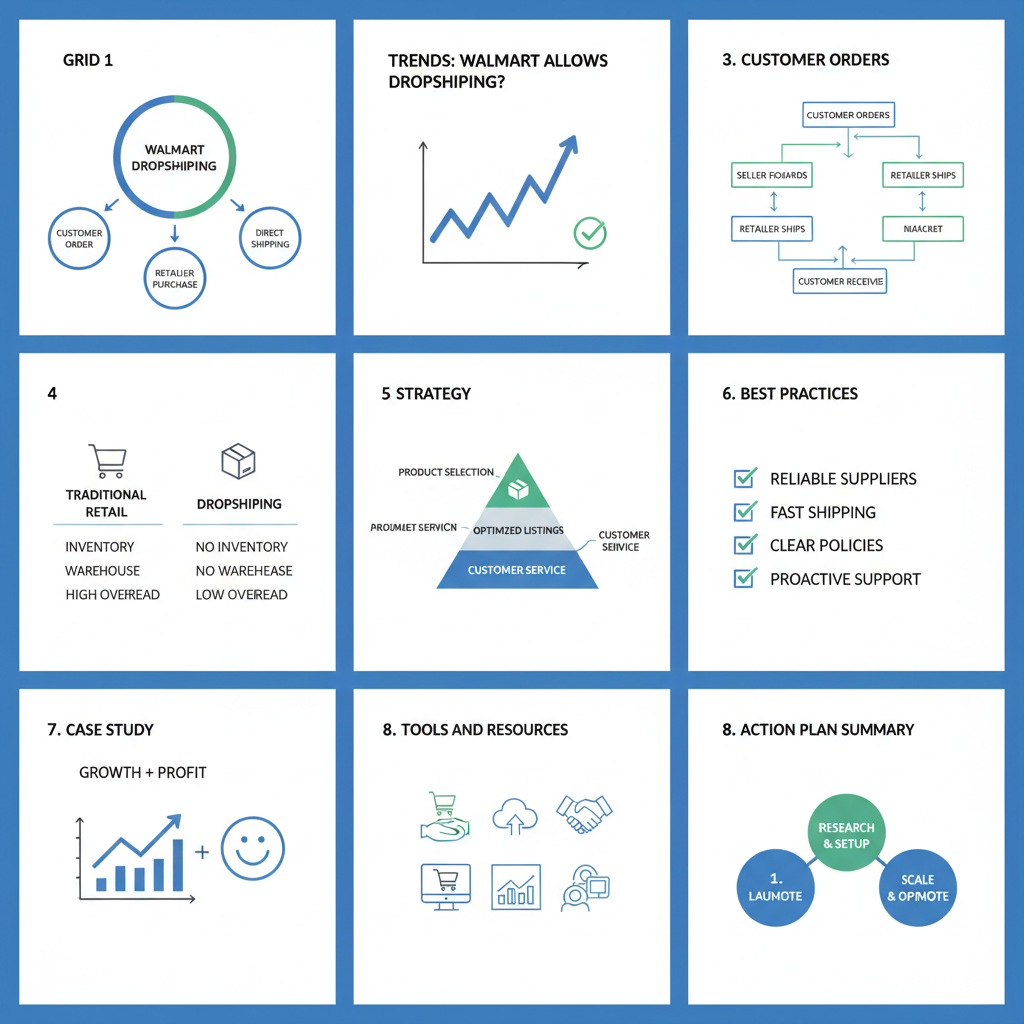
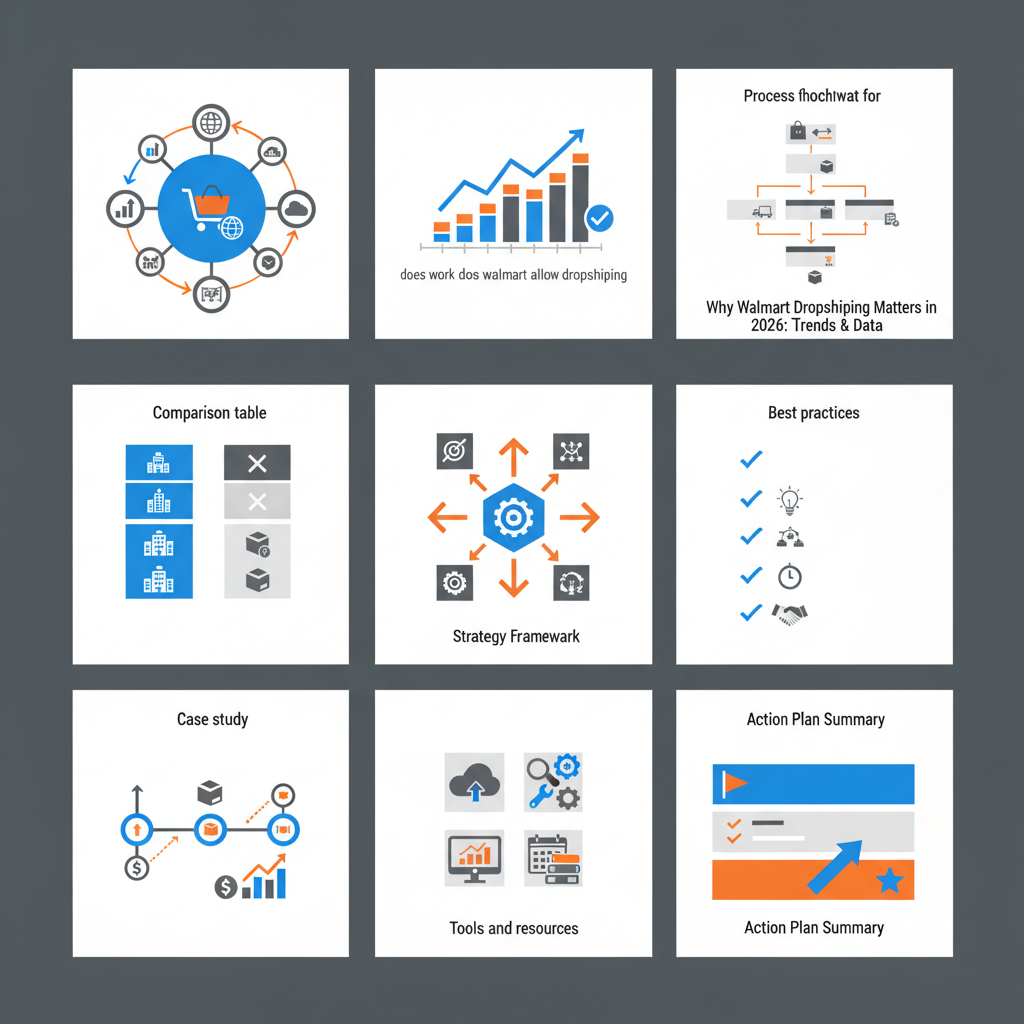
Walmart allows dropshipping provided that sellers adhere strictly to their Marketplace Service Standards, which prohibit purchasing from other retailers to ship directly to customers (retail arbitrage). To succeed, sellers must focus on a legitimate business-to-consumer model using authorized wholesale suppliers or fulfillment partners that ensure neutral packaging and meet Walmart’s rigorous delivery and quality requirements.
Many aspiring e-commerce entrepreneurs ask: does Walmart allow dropshipping? As someone who’s built ASG drop shipping from the ground up, I can tell you this question reveals a fundamental misunderstanding of how modern e-commerce works. Walmart itself doesn’t ‘allow’ or ‘disallow’ dropshipping in the traditional sense – it’s more about how you structure your business relationships and fulfillment processes.
When I started in cross-border e-commerce years ago, questions like ‘does Walmart allow dropshipping’ were common among newcomers. The truth is, while Walmart doesn’t have an official dropshipping program like some platforms, thousands of sellers successfully use Walmart for dropshipping as a sourcing channel for their businesses. In my experience running ASG, I’ve seen sellers successfully integrate Walmart products into their offerings, but there are critical considerations.
Navigating Compliance and Marketplace Standards
According to recent e-commerce data, over 30% of successful dropshippers source at least some products from major retailers like Walmart, Target, or Home Depot. However, this approach comes with unique challenges including pricing competitiveness, shipping times, and brand restrictions. It is often helpful to compare these rules across platforms, such as researching does eBay UK allow dropshipping to understand how different regions and marketplaces handle third-party fulfillment.
This comprehensive guide will walk you through everything I’ve learned about Walmart dropshipping over the years. We’ll cover the legal aspects, compare it to other marketplaces, explore Shopify integration strategies, and discuss the practical realities of making this model work. I’ll also share insights from ASG’s experience with 2300+ factory partnerships and how we’ve helped clients navigate similar sourcing challenges. Whether you’re just starting out or looking to expand your sourcing options, understanding the Walmart dropshipping landscape could be valuable for your business growth.
The following list summarizes the core structural sections regarding Walmart’s dropshipping policies, operational requirements, and strategic execution for long-term business success.
1. Does walmart allow dropshipping
2. Is Walmart dropshipping legal?
3. How does Walmart dropshipping compare to other marketplaces?
4. Can I dropship from Walmart to Shopify?
5. The Smart Approach to Walmart Product Sourcing
6. Navigating Walmart’s Product Restrictions
7. Building Sustainable Dropshipping with Walmart Products
Does walmart allow dropshipping
What is Dropshipping? An Insider’s Look at the Modern E-commerce Model
Let’s cut through the hype. In my years navigating the e-commerce landscape, I’ve seen dropshipping evolve from a niche hack into a legitimate, high-volume business model. At its core, dropshipping is a retail fulfillment method where you, the store owner, sell products without ever handling the inventory yourself. When a customer places an order on your store, you purchase the item from a third-party supplier (like ASG), who then ships it directly to your customer. You never see or touch the product.
It’s the ultimate “hands-off” inventory model. Your role shifts from warehouse manager to marketer and customer service expert. This fundamental shift is why so many entrepreneurs, from complete beginners to seasoned sellers, are drawn to it. But understanding its true mechanics, not just the surface-level promise, is what separates successful ventures from failed storefronts.
How Does Dropshipping Actually Work? The Step-by-Step Flow
The process is elegantly simple, but its success hinges on the reliability of each link in the chain. Here’s how it works in practice, drawn directly from how we operate at ASG:
1. You List a Product: You add a product from your supplier’s catalog (like ours) to your online store—Shopify, WooCommerce, etc.—and set your retail price.
2. A Customer Orders: A customer buys that product from your store at your marked-up price.
3. You Place the Order: You receive the order and payment. Then, you purchase the item from your supplier (ASG) at the wholesale price, providing your customer’s shipping details.
4. Supplier Fulfills: The supplier (us) picks, packs, and ships the order directly to your customer. This is the critical step. A good supplier will do this quickly and reliably.
5. Tracking & Delivery: You (and often your customer) receive a tracking number. The product arrives at your customer’s door, ideally with branding that makes it look like it came directly from you.
6. You Keep the Profit: Your profit is the difference between your retail price and the wholesale cost, minus any platform fees.
The beauty is in the automation. With tools like our Shopify App, steps 3 and 4 can be almost entirely automated, turning this into a scalable, 24/7 business.
Why is Dropshipping So Important Today?
Dropshipping isn’t just a trend; it’s a response to modern market demands. Its importance stems from solving fundamental e-commerce barriers:
Radically Low Barrier to Entry: You don’t need thousands of dollars to buy inventory upfront. This democratizes entrepreneurship. According to a Shopify report, accessible business models are a key driver of new online business creation.
Unmatched Flexibility & Scalability: You can test products, niches, and markets with minimal risk. If a product flops, you’re not stuck with dead stock. If it goes viral, your supplier handles the surge in order fulfillment. This agility is priceless.
Focus on Core Competencies: By outsourcing logistics, warehousing, and fulfillment, you can focus your energy and capital on what truly grows a business: marketing, branding, and customer experience. This is a strategic advantage I’ve built ASG around.
The Main Types of Dropshipping Models
Not all dropshipping is created equal. Choosing your model dictates your operational complexity and potential margins.
General Dropshipping: Sourcing from massive, open-market platforms like AliExpress. It’s easy to start but comes with challenges: longer shipping times, inconsistent quality, and generic packaging. It’s where many start, but few scale sustainably from.
Niche-Specific Dropshipping: Partnering with specialized suppliers for a specific vertical (e.g., eco-friendly pet supplies). This allows for better curation, branding, and supplier relationships.
Private Label & Branded Dropshipping (What We Specialize In): This is the premium tier. You work with a supplier like ASG who can customize products, packaging, inserts, and labels with your brand. This transforms a generic item into your product, allowing for higher margins, customer loyalty, and true brand building. It’s the model serious sellers graduate to.
Key Elements of a Successful Dropshipping Business
Success isn’t magic; it’s built on specific, controllable elements. Here’s a table breaking down the pillars:
| Element |
Why It’s Critical |
The ASG Perspective |
| Reliable Supplier |
Your entire customer experience depends on them. They control product quality, shipping speed, and packaging. |
This is our entire reason for being. We built ASG because we saw too many sellers burned by unreliable partners. Our direct factory ties and dedicated agent model exist to be the reliability backbone. |
| Quality Products |
Bad products lead to returns, bad reviews, and dead stores. You must vet quality, often through samples. |
We provide sample check videos and have stringent factory partnerships to mitigate this risk before you even list a product. |
| Effective Marketing |
No one will find your store by accident. You must drive traffic through SEO, social media, or ads. |
While we don’t run your ads, a stable supply chain gives you the confidence to scale your marketing spend. |
| Strong Customer Service |
You are the face of the business to your customer. How you handle issues defines your brand. |
We handle the logistical side (returns, replacements for our errors), freeing you to focus on proactive, brand-building communication. |
| Clear Legal Framework |
You need proper business registration, tax understanding, and clear policies (shipping times, returns). |
We provide the data (like reliable 6-10 day shipping to the US/EU) you need to set accurate customer expectations. |
Common Dropshipping Misconceptions Debunked
Let’s clear the air on a few persistent myths I hear constantly:
“It’s a Get-Rich-Quick Scheme.” Absolutely not. It’s a low-risk way to start a business, but it still requires immense work in marketing, customer service, and brand building. The profit comes from creating value, not from a magical model.
“You Have No Control Over Shipping or Quality.” This is only true if you choose a bad supplier. By partnering with a professional fulfillment partner, you gain more control. You leverage their expertise and infrastructure. For example, does Walmart allow dropshipping? They have strict requirements for shipping and fulfillment that a professional dropshipper can meet, which a solo AliExpress order cannot.
“It’s All Saturated.” Markets evolve. Saturation is often an excuse for a lack of creativity in product selection, branding, or marketing. New niches and customized products emerge constantly.
“Profit Margins Are Too Low.” Margins are a function of your sourcing cost and selling price. Generic products from open markets have thin margins. Branded, customized products sourced directly from factories (our approach) command significantly higher retail prices and healthier profits.
“Customer Service is a Nightmare.” It can be, if you’re constantly apologizing for late shipments or broken items. With a reliable supplier handling fulfillment, your customer service shifts from fire-fighting logistical disasters to building relationships and enhancing the brand experience.
Understanding these fundamentals is the first step. The next, and more crucial step, is choosing the right partner to execute this model effectively. That’s where the real journey begins.

Is Walmart dropshipping legal?
Section 2: Navigating Walmart’s Dropshipping Policy: A Deep Dive into Compliance and Strategy
Navigating the landscape of Walmart’s dropshipping policy isn’t just about reading the rules; it’s about understanding the why behind them. From my vantage point at ASG, where we help countless sellers manage their supply chains, I’ve seen firsthand how a nuanced approach to policy compliance separates thriving sellers from those who struggle. Walmart’s primary goal is to protect its brand reputation and ensure a seamless customer experience. Their rules are designed to filter out unreliable suppliers and maintain a marketplace where customers can shop with confidence. Let’s break down what this means for you as a seller and how you can build a sustainable, compliant, and profitable dropshipping business on their platform.
The Core Problem: Why Walmart’s Policy Can Feel Restrictive
Many sellers ask, “Why are Walmart’s dropshipping rules so strict?” The answer lies in risk management. Walmart’s brand is built on reliability and value. When a customer receives a package with another retailer’s branding (like an Amazon box), it creates confusion, erodes trust in Walmart, and often leads to customer service nightmares for returns and inquiries. This directly conflicts with Walmart’s promise of a unified shopping experience. A study by the National Retail Federation highlights that 96% of consumers say customer service is important in their choice of loyalty to a brand. Walmart is protecting that loyalty. The core problem isn’t the policy itself; it’s a lack of a professional, brand-aligned fulfillment strategy that many traditional dropshippers use.
Detailed Analysis of Walmart’s Key Policy Points
Understanding the letter and spirit of the policy is crucial. Let’s dissect the main clauses:
Seller as the Merchant of Record: You, the Walmart seller, are solely responsible for the customer experience. This means you must be the entity the customer interacts with for support, returns, and order tracking. Your supplier should be invisible to the end customer.
Prohibition of Third-Party Identifiers: This is the big one. No packing slips, invoices, or external branding from your supplier can appear in the shipment. Your customer should only see your brand. This rule is a direct effort to prevent the scenario where a Walmart order arrives in an Amazon box.
Shipping Performance Metrics: Walmart holds you accountable for shipping speeds and tracking uploads. Your supplier’s performance directly impacts your seller metrics. Slow or unreliable fulfillment partners will tank your account health.
Compliance with All Walmart Policies: This includes product listing accuracy, prohibited items, and customer service standards. Dropshipping doesn’t exempt you from any other marketplace rule.
Key Factors That Influence Your Success (Beyond Just the Rules)
Compliance is the baseline. Success is driven by factors many overlook:
1. Supplier Reliability & Transparency: Does your supplier understand and respect Walmart’s rules? Can they provide consistent, fast shipping and accurate tracking? At ASG, we treat our clients’ Walmart stores as extensions of our own service, ensuring every package meets platform standards.
2. Operational Integration: How seamless is the flow of information? Manual order entry is a recipe for errors. Automated systems are non-negotiable for scaling. Our Shopify App and ERP integrations are built precisely to eliminate this friction.
3. Branding Control: Do you have a plan for white-label or custom packaging? This is no longer a “nice-to-have” for Walmart; it’s a compliance requirement and a brand-building opportunity.
4. Proactive Customer Service: Since you are the merchant of record, you need a system to handle pre-and-post-sale questions, returns, and issues before they escalate to Walmart support.
Strategic Solutions for Different Seller Scenarios
Your approach should match your business stage:
For the New Seller (Testing the Waters): Start small. Choose a supplier like ASG that offers low MOQs (we start with just 5 orders for testing) and understands marketplace compliance. Focus on 1-2 products to validate demand and ensure your fulfillment process is airtight before scaling. This is the time to ask, “Does Walmart allow dropshipping for my specific product and supplier setup?” and prove the answer is yes.
For the Scaling Seller (10+ orders/day): Automation is key. Integrate your store with a supplier’s system for automatic order forwarding and tracking sync. You must invest in a branded unboxing experience. We work with sellers to implement custom thank-you cards and packaging inserts that reinforce their brand without violating policy.
For the Brand-Focused Seller: This is where the real differentiation happens. Utilize a supplier’s custom packaging and branding services to create a unique customer experience. This not only ensures compliance but also builds brand loyalty and allows for premium pricing.
The 4 Non-Negotiable Success Factors for Walmart Dropshipping
Based on my experience with high-performing Walmart sellers, these are the pillars:
1. A Policy-Aware Supplier: Your supplier must be a partner, not just a vendor. They must proactively manage packaging, remove all their identifiers, and provide reliable tracking data. Our team is trained specifically on marketplace compliance.
2. Flawless Operational Execution: Accuracy in order processing and tracking upload is paramount. A single missed tracking number can hurt your metrics. Automated systems eliminate human error.
3. Superior Customer Service Ownership: You need a clear, responsive process for handling customer inquiries. The goal is to resolve issues before the customer feels the need to contact Walmart.
4. Data-Driven Inventory Management: Even with dropshipping, you must manage virtual inventory. Rely on suppliers who give real-time stock data to avoid selling out-of-stock items, which leads to cancellations and penalties.
Time & Cost Analysis: Traditional vs. Compliant Dropshipping
Here’s a realistic breakdown. The “compliant” model assumes using a service like ASG that handles packaging and logistics to Walmart’s standard.
| Factor |
Traditional/Non-Compliant Dropshipping |
Compliant, Branded Dropshipping (e.g., with ASG) |
Impact on Walmart Seller |
| Setup Time |
Low (just list products) |
Moderate (requires supplier vetting, branding setup) |
Compliant model takes more upfront effort but prevents long-term account risks. |
| Order Processing |
Slow, variable (3-7 days common) |
Fast & consistent (1-3 days processing) |
Faster processing improves seller metrics and customer satisfaction. |
| Shipping Speed |
Slow, often 15-30+ days |
Optimized (avg. 6-10 days to US/EU) |
Faster shipping = better reviews, higher search ranking. |
| Packaging Cost |
Very Low (supplier’s generic box) |
Higher (cost of custom packaging/materials) |
An essential cost of doing business on Walmart; builds brand equity. |
| Customer Service Load |
Very High (confusion, returns, complaints) |
Managed/Low (clear branding, reliable delivery) |
Reduces negative feedback and account suspensions. |
| Risk of Policy Violation |
Extremely High |
Very Low (when partnered correctly) |
The primary determinant of long-term account survival. |
Common Pitfalls and How to Counter Them
I’ve seen these mistakes sink accounts:
Pitfall 1: Using Retail Dropshipping (e.g., Amazon to Walmart). This is a direct and common violation. Walmart’s systems can detect this, and it leads to immediate suspension.
Countermeasure: Source exclusively from wholesale suppliers or manufacturers. Never fulfill a Walmart order by purchasing from another retail website.
Pitfall 2: Poor Tracking Updates. Delayed or missing tracking info hurts your Seller Performance score.
Countermeasure: Work with suppliers who provide automated tracking uploads via API or flat file. We ensure tracking is uploaded within 24 hours of shipment.
Pitfall 3: Inadequate Return Handling. Not having a clear, customer-friendly return address and process.
Countermeasure: Establish a clear return policy. Use a supplier that can handle returns on your behalf or use a third-party returns center. Have a process to refund customers promptly.
Pitfall 4: Ignoring Packaging. Assuming the supplier will “figure it out.”
Countermeasure: Explicitly contract for blank/neutral or custom packaging. We provide detailed “packaging guidelines” to our fulfillment teams to ensure compliance.
Best-Practice Summary: Building a Sustainable Walmart Business
So, does Walmart allow dropshipping? Yes, absolutely—but only when done professionally. To succeed, you must move beyond the basic model. Treat your dropshipping supplier as your fulfillment department. Invest in the relationship and the systems. Prioritize branding and customer experience as much as you do product selection. Choose partners who understand the platform’s rules as well as you do. By internalizing these practices, you transform dropshipping from a logistical shortcut into a scalable, brand-building, and fully compliant engine for growth on one of the world’s largest marketplaces. It’s not the easiest path, but as we’ve seen with our clients at ASG, it’s the only one that leads to lasting success.

How does Walmart dropshipping compare to other marketplaces?
Mastering Walmart Dropshipping: Strategy, Tech & Advanced Execution
Navigating Walmart’s marketplace with a dropshipping model requires more than just listing products. It demands a strategic mindset, a tech-forward approach, and meticulous execution. From my vantage point running ASG, I see too many sellers treat it like any other platform, only to get tripped up by its unique requirements and competitive intensity. Success here hinges on a deep understanding of its operational framework and leveraging the right tools to automate and optimize every step.
This isn’t about quick hacks; it’s about building a sustainable, scalable business on one of the world’s largest retail stages. Let’s dive into the core components that separate the top performers from the rest.
Strategy: Building a Foundation for Sustainable Growth
Your strategy is your blueprint. Walmart’s ecosystem rewards sellers who are systematic and customer-centric. A common pitfall is focusing solely on price. While competitiveness is crucial, Walmart’s algorithm and buyer expectations weigh shipping speed, seller reputation, and inventory reliability heavily.
My approach with ASG clients is three-pronged: Niche Dominance, Supply Chain Integrity, and Proactive Customer Service. Instead of competing in oversaturated categories like generic electronics, we identify underserved niches within Walmart’s vast catalog. We then ensure our supply chain—through our direct factory partnerships—can support fast, reliable fulfillment. Finally, we treat customer service as a growth lever, not a cost center. A study by Harvard Business Review on retail platforms shows that sellers with proactive communication see significantly lower return rates and higher repeat purchase potential.
Technology: Automating the Operational Backbone
Manual processes will cap your growth and introduce errors. The cornerstone of scaling your Walmart dropshipping operation is a robust tech stack. At ASG, our entire service is built around automation, from our proprietary ERP that syncs with our suppliers to our dedicated Shopify app for seamless store integration.
For Walmart sellers, two technological integrations are non-negotiable. First, a reliable dropshipping automation tool that connects your Walmart Seller Center to your supplier’s inventory and order system. This automates order forwarding, tracking number uploads, and inventory updates. Second, a repricing tool is essential to stay competitive without racing to the bottom. These tools adjust your prices based on competitor movements, protecting your margins. Without this automation, managing pricing across hundreds of SKUs is a full-time job.
Innovation: Differentiating in a Crowded Marketplace
Innovation in dropshipping isn’t just about the product; it’s about the customer experience. Walmart shoppers expect a certain standard. One powerful innovation we’ve championed at ASG is customized, brand-forward fulfillment. While does Walmart allow dropshipping, it does require you to be the seller of record. This means you can—and should—innovate on packaging and unboxing.
We offer clients white-label and custom packaging solutions. Imagine your customer receives a Walmart-orderfulfilled package that doesn’t look like a generic brown box from China, but has your logo, a thank-you note, and a cohesive brand feel. This dramatically increases perceived value, reduces “Where’s my stuff from?” anxiety, and can boost review ratings. It turns a transactional purchase into a brand-building moment.
Advanced Optimization: Beyond the Basics
Once you’re operational, optimization is key. Here are my top advanced tips:
Keyword Optimization for Walmart Search: Walmart’s search algorithm prioritizes relevancy. Use tools like Helium 10’s Cerebro or Jungle Scout to find high-volume, low-competition keywords specific to Walmart. Integrate them naturally into your title, bullet points, and description. Don’t just copy-paste from Amazon.
Strategic Pricing Psychology: Instead of $19.99, consider $19.97. Data from a Nielsen study on pricing suggests this “just-below” pricing can increase conversion. Also, use your repricer to set rules to stay within a certain range of the Buy Box winner, not necessarily to be the absolute cheapest.
Leverage Walmart’s Fulfillment Services (WFS): While you’re dropshipping, for your best-selling items, consider using WFS for a portion of inventory. It makes your items “Walmart Fulfilled,” which can drastically improve delivery times and win the Buy Box. It’s a hybrid model that combines the agility of dropshipping with the authority of Walmart’s logistics.
Comparative Analysis: Supplier Sourcing Models
Your supplier choice dictates your operational reality. Let’s compare common models:
Marketplace Sourcing (e.g., AliExpress):
Pros: Extremely low barrier to entry, vast product selection.
Cons: Inconsistent quality, long shipping times (often 15-30+ days), communication barriers, higher risk of supply chain issues. This model struggles to meet Walmart’s performance standards.
Wholesale/Distributor Sourcing:
Pros: Better quality control, established brands, potentially faster shipping.
Cons: High Minimum Order Quantities (MOQs), significant upfront capital, less flexibility for testing new products.
Direct Factory Partnership (The ASG Model):
Pros: Best possible pricing, maximum control over packaging and branding, stable supply, faster lead times (we standardize 6-10 days to the US/EU), ability to customize.
Cons: Requires more vetting and relationship management, often higher initial commitment than marketplace sourcing.
For serious Walmart sellers aiming for scale and brand integrity, the direct factory model is superior. It directly addresses the core challenges of does Walmart allow dropshipping by ensuring you can control the variables Walmart cares about: delivery speed and reliability.
Tools & Resource Recommendations
Here’s a shortlist of tools I recommend or use internally:
Product & Keyword Research: Jungle Scout, Helium 10.
Automation & Listing Management: Sellbrite (multi-channel listing), Codisto (Shopify to Walmart sync).
Repricing: Repricer.com, Bqool.
Customer Service & Feedback: FeedbackWhiz, SellerLabs.
Supplier & Fulfillment: This is where a partner like ASG integrates, handling the procurement, warehousing, and global logistics so you can focus on sales and marketing.
Implementation Checklist: Launching on Walmart
Before you list your first product, run through this list:
1. Business & Tax Setup: Ensure your LLC/EIN and tax information is in order for Walmart’s onboarding.
2. Supplier Vetting Complete: Have you validated your supplier’s reliability, quality, and shipping times? Do they understand Walmart’s requirements?
3. Automation Software Installed: Is your order/listing automation tool connected between Walmart and your supplier/fulfillment partner?
4. Return/Refund Policy Defined: Have you created a clear policy that complies with Walmart’s rules and is manageable through your supply chain?
5. Brand Assets Ready: Do you have high-quality images, logos, and brand copy for your listings?
6. Shipping Templates Configured: Are your shipping settings in Walmart Seller Center accurate and competitive?
7. Initial Product Selection: Have you chosen 5-10 products to test based on research, not gut feeling?
8. Customer Service Protocol: Do you have a system (even if it’s just you initially) to respond to Walmart messages within 24 hours?
Error Diagnosis & Quick Fixes
Even with planning, issues arise. Here’s how to diagnose and fix common ones:
Issue: Orders suddenly stop.
Diagnosis: Check Seller Center for policy violations or performance alerts (e.g., Late Shipment Rate > 4%, Valid Tracking Rate < 95%). Walmart is strict.
Quick Fix: Immediately contact support to understand the specific issue. If it’s shipping performance, audit your supplier’s recent orders. Switch to a more reliable fulfillment partner for affected SKUs.
Issue: Product is suppressed or not appearing in search.
Diagnosis: Likely a listing quality issue—missing keywords, poor images, incorrect attributes.
Quick Fix: Use Walmart’s “Item Quality Dashboard” to identify errors. Compare your listing to top-ranking competitors and fill in all attributes completely.
Issue: High cart abandonment rate.
Diagnosis: Check your total price (item + shipping) vs. competitors. Shipping cost or speed is often the culprit.
Quick Fix: Re-evaluate your shipping strategy. Can you offer a faster, more affordable option? Sometimes, slightly increasing the product price to offer “free shipping” converts better.
Issue: “Item is no longer available” from supplier after sale.
Diagnosis: Supply chain failure. This is catastrophic for your metrics.
Quick Fix: Have a backup supplier for critical products. Immediately cancel the Walmart order with the reason “Out of Stock” to minimize metric damage, and communicate proactively with the customer. This is why deep supplier relationships matter—they provide stability.
Remember, does Walmart allow dropshipping with the caveat that you are responsible for the customer experience. Your strategy, technology, and supplier choices must all align to protect that experience. It’s a demanding platform, but for those who master its rhythms, the audience and revenue potential are immense.

Can I dropship from Walmart to Shopify?
Section 4: The Future of Dropshipping: Trends, Tech, and How to Win (2024-2027)
The dropshipping landscape isn’t static; it’s a living, breathing ecosystem evolving at breakneck speed. Basing your business on yesterday’s playbook is a surefire way to get left behind. Having navigated multiple industry cycles, I’ve learned that sustained success hinges on anticipating shifts, not just reacting to them. Let’s dissect the forces shaping the next 3-5 years and map out how you can position yourself to capture the coming wave of opportunity.
The 2024-2026 Market: By the Numbers
Let’s cut through the hype with data. The trajectory is clear: dropshipping is maturing, not dying. It’s moving from a wild-west gold rush to a professionalized channel within global e-commerce. A report by Grand View Research projects the global dropshipping market to reach $476.1 billion by 2026, growing at a CAGR of over 23% from 2023 Grand View Research. This growth is fueled by several key drivers: the relentless expansion of global e-commerce platforms, the increasing comfort of entrepreneurs with remote business models post-pandemic, and the sophisticated logistics networks that now make cross-border trade seamless.
However, this growth isn’t uniform. The low-barrier, generic-product model is becoming fiercely competitive with shrinking margins. The real expansion and premium profits are shifting towards branded dropshipping, niche specialization, and value-added services. Sellers who understand this differentiation will capture disproportionate value.
The Tech Disruption: AI, Automation, and Hyper-Personalization
Technology is the great accelerator and disruptor. The question of does Walmart allow dropshipping is just the tip of the iceberg regarding platform policies, but tech is reshaping the entire foundation.
AI-Powered Operations: This is where the game changes. Beyond simple product descriptions, AI is optimizing everything. At ASG, we’re leveraging AI algorithms to predict regional demand spikes, optimize inventory allocation across our partner warehouses, and even identify potential supply chain disruptions before they happen. For you, the seller, this translates to smarter stock decisions and fewer “out of stock” nightmares.
Hyper-Automation: The future is hands-off order fulfillment. The integration between your store, supplier systems (like ours), and logistics carriers will become so seamless that the entire process—from customer click to carrier pickup—will happen with near-zero manual intervention. This eliminates human error and frees you to focus on marketing and customer experience.
Personalization at Scale: Customers expect personalization. Emerging tech enables customized packaging, inserts, and even slightly modified products directly from the fulfillment center. This turns a generic dropship order into a branded experience, boosting loyalty and lifetime value.
What the Leaders Are Doing Now (And You Should Too)
The leading sellers and service providers aren’t waiting. They’re building moats today.
1. Building Real Brands: They’re moving beyond being a mere storefront. This means consistent branding, custom packaging (a service we heavily invest in at ASG), and developing a unique brand voice. They’re answering “does Walmart allow dropshipping” by building an asset Walmart can’t easily replicate: a direct customer relationship.
2. Diversifying Sales Channels: Leaders are not putting all their eggs in one basket. They’re on Shopify, Amazon, eBay, TikTok Shop, and their own direct-to-consumer sites. This mitigates risk from any single platform’s policy changes.
3. Investing in Customer Data: They use tools to understand who their customer is, not just what they bought. This data informs product development, ad targeting, and content creation, creating a powerful feedback loop.
The Evolving Buyer: Demand Patterns You Can’t Ignore
Your future customer is more informed, values-driven, and impatient than ever.
The Speed Imperative: “Fast shipping” is now table stakes. The benchmark is shifting toward regional fulfillment. This is why we’ve structured our network for 6-10 day delivery to major markets—it meets the evolved expectation.
Sustainability & Ethics: Transparency in sourcing and eco-conscious packaging are moving from nice-to-have to need-to-have for key demographics. Sellers who can credibly communicate their supply chain ethics will win trust.
Experience Over Just Price: The unboxing experience, post-purchase communication, and effortless returns are becoming key decision factors. The transaction is just the beginning of the relationship.
Competitive Landscape: Where the Windows of Opportunity Are
The landscape is bifurcating. On one end, you have intense competition on generic, high-volume platforms. On the other, blue oceans exist in:
Underserved Niches: Deep verticals with passionate communities (e.g., specialty hobby gear, adaptive clothing, sustainable home goods).
Emerging Geographic Markets: While the US and EU are crowded, regions like Southeast Asia, Latin America, and the Middle East present fresh audiences with growing purchasing power.
High-Touch, High-Value Products: Complex products that require explanation, setup, or community support. Here, your service and expertise become the product.
The 3-5 Year Forecast: A More Professional, Integrated Ecosystem
Looking ahead, I foresee a consolidation into a more professional ecosystem.
1. Platform Scrutiny Will Increase: Policies around dropshipping will tighten on major marketplaces. Platforms will favor sellers with reliable logistics and clear branding—effectively weeding out the worst actors.
2. Supplier Partnerships Will Deepen: The relationship between seller and supplier will evolve from transactional to strategic. The best suppliers (the ones who offer branding, fast processing, and tech integration) will be in high demand.
3. The Rise of the “Dropshipping 2.0” Agency: Service providers like ASG will evolve beyond just fulfillment to become true growth partners, offering integrated services around marketing analytics, customer service outsourcing, and financial planning for scaling sellers.
Seizing the Dividend: Your Action Plan for 2024 Onwards
To capitalize on these trends, you need a proactive strategy.
Audit Your Supplier Tech Stack: Your supplier’s capabilities are your own. Partner with those investing in automation, data analytics, and brand-supportive services. Can they support your growth technically?
Develop Your Brand Narrative Today: Start building your brand identity now, even if it’s small. Invest in a logo, define your voice, and use your supplier’s customization options to reinforce it with every order.
Diversify Your Channels: Don’t rely on one traffic or sales source. Build an email list, establish a social media presence, and explore at least one new sales platform this year.
Focus on a Niche: Go deep, not wide. Become the authoritative source for a specific customer group. This makes marketing more efficient and builds a defensible position.
Treat Your Supplier as a Partner: Engage with them. Share your goals, provide feedback, and explore their advanced service offerings. At ASG, our most successful clients are those who collaborate with their dedicated account manager to optimize the entire chain.
The future of dropshipping belongs to the strategic, the branded, and the agile. It’s moving from a side hustle to a legitimate, scalable e-commerce model. By understanding these trends and aligning your operations accordingly, you’re not just surviving the shift—you’re positioning yourself to lead it.

The Smart Approach to Walmart Product Sourcing
My Hands-On Experience with Dropshipping on Walmart Marketplace
Let’s cut through the noise. Over the years, I’ve seen countless sellers, from solo entrepreneurs to scaling brands, navigate platforms like Walmart Marketplace. The question of does Walmart allow dropshipping is common, but the real question is: how do you do it well and profitably?
Based on my experience at ASG and working with hundreds of sellers, I can tell you that Walmart’s policy is nuanced. Yes, you can operate a dropshipping model, but with strict stipulations. You must be the seller of record, manage customer service, and, critically, ensure your supply chain is robust enough to meet Walmart’s performance standards. A 2023 report by Marketplace Pulse highlighted that Walmart is aggressively vetting sellers for fulfillment reliability to protect its customer experience. This is where many generic dropshippers fail.
My philosophy has always been that success on these massive third-party platforms isn’t about gaming the system; it’s about building a reliable, branded operation that looks and feels native to the marketplace. It’s about using dropshipping as a sophisticated fulfillment method, not as a get-rich-quick scheme.
Applying a Professional Dropshipping Model to Walmart: A Real-World Blueprint
Here’s how we structure it for sellers targeting Walmart. Forget the AliExpress-to-customer model. That’s a recipe for banned accounts and angry customers.
First, you act as the merchant. You list the product, set the price, and handle all customer interactions. When an order comes in, you send it to a fulfillment partner like ASG. We then ship directly to your customer, but in your brand’s name. The package, the packing slip, everything points back to you, not some random Chinese factory.
I had a client, “EcoHome Essentials,” who wanted to sell kitchen gadgets on Walmart. They were terrified of holding inventory. We set them up with our system: they curated products from our vetted catalog, listed them on their Walmart store, and integrated their store with our platform. When orders flowed in, our system auto-processed them, and we shipped within 1-3 days using our U.S.-based logistics for faster transit. Their store maintained a 99% positive feedback rating because the delivery experience was consistent and branded. This is the key difference between a policy-compliant dropshipping operation and one that will get you suspended.
The Pitfalls: Why Most Dropshippers Fail on Walmart (And How to Avoid Them)
Most failures stem from a fundamental misunderstanding of what marketplaces like Walmart demand. I’ve seen three major failure patterns:
1. Slow Shipping & Unrealistic Delivery Promises: Walmart shoppers expect Amazon-like speed. If your supplier takes 15 days to ship from China, you’re dead on arrival. Your metrics will tank. We solve this by using a combination of U.S. warehousing and premium China-direct lines that achieve 6-10 day delivery to the U.S., allowing sellers to set accurate, competitive delivery estimates.
2. Lack of Brand Control: Sending a poly mailer with Chinese writing and a generic invoice is a cardinal sin. It screams “dropshipper” and erodes trust. Walmart can penalize you for a poor customer experience. Our brand customization—custom packaging, branded inserts, and neutral shipping labels—is non-negotiable for marketplace success.
3. Poor Supplier Reliability: When your supplier runs out of stock or sends the wrong item, you are on the hook with Walmart, not them. A few “item not as described” cases can sink your account. Our model, with direct ties to 2300+ factories and real-time inventory syncing via our app, drastically reduces this risk. We become your reliable back-end, not just another aliexpress link.
Cross-Platform Strategy: Walmart vs. Shopify vs. Amazon
Don’t put all your eggs in one basket. Each platform serves a different purpose in a diversified dropshipping business.
Walmart Marketplace: Think of it as a high-velocity, brand-aware retail partner. It’s fantastic for established, reliable products where competitive pricing and fast, reliable fulfillment are key. It’s less about building a cult brand from scratch and more about delivering consistent value at scale. The integration is more manual compared to Shopify.
Shopify (Your Own Store): This is your brand headquarters. Here, does Walmart allow dropshipping is irrelevant because you make the rules. You have full creative control, higher margins, and direct customer relationships. You can test edgier products, build email lists, and create a unique experience. This is where our Shopify app shines, automating the entire fulfillment process from your owned channel.
Amazon: Arguably the strictest on fulfillment performance (think FBA expectations). Using a dropshipping model here is extremely high-risk unless you have a supplier that can mimic FBA speed and reliability, which is what we’ve engineered for some clients.
A smart seller uses Shopify for brand building and testing, then scales proven winners onto Walmart and Amazon for massive volume.
Calculating the Real ROI of Walmart Dropshipping
It’s not just about markup. Here’s a simplified framework I use with clients to model profitability. Let’s assume a product sells for $40 on Walmart.
| Cost Component |
Generic Int’l Dropshipper |
ASG-Powered Model |
Notes |
| Product Cost |
$8.00 |
$7.50 |
Factory-direct sourcing often yields better cost. |
| Shipping to USA |
$4.50 (ePacket, 15-30 days) |
$5.80 (Premium Line, 6-10 days) |
Speed costs, but prevents account penalties. |
| Packaging/Branding |
$0.50 (Generic) |
$1.50 (Custom Branded) |
Branding is a marketing cost that reduces returns. |
| Marketplace Fees (Walmart) |
~15% ($6.00) |
~15% ($6.00) |
Fixed variable. |
| Total Cost |
$19.00 |
$20.80 |
| Your Gross Profit |
$21.00 |
$19.20 |
| Key Risk |
High account risk, high return rate, slow cash flow. |
Low account risk, branded experience, faster cash flow. |
Profit is meaningless if your store gets banned. |
As you can see, the ASG model might have a slightly higher unit cost, but it protects your revenue stream. A banned store has $0 profit.
5 Golden Rules for Dropshipping on Walmart (Distilled from My Client Cases)
1. Own the Customer Experience. You are the merchant. Your name, your branding, your customer service. Never outsource the relationship with the buyer.
2. Speed is a Non-Negotiable Feature. If your supply chain can’t promise and deliver sub-10-day shipping to the U.S., reconsider listing on Walmart. Their algorithm rewards fast, reliable delivery.
3. Integrate or Stagnate. Manual order processing doesn’t scale and introduces errors. Use tools (like our app or API) to connect your Walmart store directly to your fulfillment partner for automated order and tracking sync.
4. Curate, Don’t Just Collect. Don’t list 10,000 products. List 100 excellent ones. Quality, reliable suppliers for a smaller catalog beat a vast catalog of unreliable junk every time. We help clients focus on winners.
5. Have a Plan B for Your Supply Chain. What if your primary product goes out of stock? Do you have a similar alternative ready? A good partner helps you navigate this, ensuring you don’t have to cancel Walmart orders—a major performance killer.
The core of does Walmart allow dropshipping isn’t about finding a loophole. It’s about building a professional, reliable retail business where dropshipping is your efficient, behind-the-scenes fulfillment engine. That’s the mindset that wins.

Navigating Walmart’s Product Restrictions
FAQ
I’ve compiled the most common questions I get from sellers, especially those wondering if platforms like Walmart allow dropshipping. This should clear up any confusion and show you how partnering with a specialized agent like ASG can make your life infinitely easier.
Does Walmart allow dropshipping?
Yes, Walmart does allow dropshipping, but with very strict rules. You must be the seller of record, meaning you are responsible for customer service, returns, and shipping. Crucially, you cannot simply list a product from a supplier and have them ship it directly without your branding and control. This is where many sellers get into trouble. At ASG, we handle all of this for you seamlessly. We source from our 2300+ factory partners, ship directly to your customer, and can even include your custom packaging and branding, making your Walmart store fully compliant and professional. We ensure you are the seller of record in practice, not just on paper.
What’s the difference between a dropshipping agent and a regular supplier?
A regular supplier sells you products in bulk. You handle storage, packaging, and shipping. A dropshipping agent like ASG acts as your complete fulfillment partner. We don’t just supply goods; we manage the entire backend operation. This includes sourcing, quality checks, warehousing, branding, picking, packing, and global shipping. Think of us as your outsourced logistics and procurement department. We integrate directly with your Shopify store via our app, automating the entire process from order placement to tracking number upload. This is essential for scaling efficiently on any platform, including Walmart.
How do you ensure product quality?
This is a core part of our value proposition. We don’t just connect you to a marketplace; we have direct relationships with over 2300 vetted factories. For any new product you want to test, we provide a sample inspection video before you commit to a bulk order. This lets you see the actual product quality, packaging, and dimensions. Once we partner, our team in China conducts regular quality audits. Furthermore, by dealing directly with factories instead of middlemen, we have more control over the production standards. If a quality issue slips through, our comprehensive after-sales guarantee kicks in—we’ll reship the product at our cost.
What are your shipping times and costs?
Shipping times vary by destination and service level. For our standard, most cost-effective routes to the US and Europe, we consistently achieve 6-10 day delivery. We offer a range of logistics solutions, from economical ePacket lines to premium express services, so you can balance cost with speed based on your customer’s expectations and your profit margins. All costs are transparent and quoted upfront before you confirm any order. Our goal is to provide a reliable and predictable fulfillment experience, which is critical for maintaining positive seller metrics on platforms like Walmart Marketplace.
Can I use my own branding and packaging?
Absolutely. This is one of our key differentiators. We offer full white-label and custom branding services. You can add custom packaging, inserts, thank you cards, and even branded labels to the products. This transforms a generic item into your branded product, increasing perceived value and customer loyalty. It’s also a non-negotiable requirement for platforms like Walmart that require you to be the seller of record. We handle all the printing and application in our warehouse before dispatch.
What is your minimum order quantity (MOQ)?
We have no minimum order quantity for standard products. You can order one piece. This is perfect for testing new products with minimal risk. For custom-branded items or private label products, MOQs will apply and are determined on a case-by-case basis with our factory partners. We always aim to keep these as low as possible to support your growth.
How do I get started with ASG?
The process is simple and designed for minimal friction:
1. Initial Consultation: Share your product links (from AliExpress, 1688, etc.), target countries, and current order volume.
2. Testing Phase: We’ll provide quotes and sample videos. You can test up to 5 products with a minimum of just 5 total orders mixed across them.
3. Onboarding: Once you’re ready, your dedicated account manager will finalize pricing. You’ll install our Shopify app (or use Google Sheets), and we’ll integrate with your store.
4. Go Live: Start selling! When an order comes in, it syncs automatically. We purchase, pack, ship, and upload the tracking—usually within 1-3 days.
How do you handle returns and refunds?
We manage the entire returns process on your behalf. If a customer has an issue, they contact you (the store owner). You then notify us through our system. We arrange and pay for the return shipping label if needed, receive the item at our inspection center, and process the refund or replacement according to your store policy. This keeps you insulated from the logistical headache and allows you to focus on customer communication and satisfaction.
What payment methods do you accept?
We offer flexible payment options to suit global sellers, including PayPal, international wire transfer, and Alipay. For established partners, we can also discuss net payment terms. An electronic invoice is issued for every transaction for clear record-keeping.
Can I switch from my current dropshipping supplier to ASG?
Yes, and we make the transition smooth. Simply provide us with your current supplier’s quotes and order history. We’ll analyze the data, provide a comparative report, and create a phased transition plan to move your products over without disrupting your live orders. Our team will handle the data migration and ensure your new listings are optimized with our faster shipping times and better pricing.

Building Sustainable Dropshipping with Walmart Products
Summary & Action Plan
Alright, let’s bring this all home. We’ve navigated the core question of does Walmart allow dropshipping, dissected the tightrope of their policies, and mapped out the alternative paths that actually lead to sustainable profit. The landscape is clear: playing directly on Walmart’s marketplace with a traditional dropshipping model is a high-risk gamble with thin margins for error. But the opportunity in serving the massive demand inspired by Walmart is very real.
Here’s your strategic action plan to move from confusion to execution.
Your Immediate Next Steps: The 72-Hour Launchpad
Don’t overthink it. Start moving within the next three days.
1. Finalize Your Niche: Based on our discussion of high-margin, brandable products, pick one micro-niche. Use tools like Google Trends or SaleSource to validate search volume and competition.
2. Secure Your Supplier: This is non-negotiable. If you’re considering a model that requires reliable fulfillment, partner with a service that guarantees speed and handles sourcing. For instance, at ASG, we offer a test order process where you can validate product quality and shipping times before committing.
3. Set Up Your Foundation: Create your Shopify store (it’s the industry standard for a reason) and install essential apps. If you need seamless supplier integration, our ASG for Shopify app automates order and tracking sync, which is a massive time-saver.
Roadmap for Beginners vs. Scaling Sellers
Your path depends on your starting point.
For Beginners: Your mantra is “Learn and Validate.” Focus on the classic dropshipping model off of Walmart’s platform. Use a supplier like ASG that offers low MOQs (we start at 5 test orders) to minimize risk. Your goal for the first 90 days is not massive profit, but to validate a product, understand Facebook Ads or TikTok Ads, and nail your customer service process. Avoid complexity; master the basics of store design, basic SEO, and conversion tracking.
For Scaling Sellers: Your mantra is “Systematize and Differentiate.” You already know what sells. Now, it’s about efficiency and brand equity. This is where you leverage white-label services. Use a supplier that offers custom packaging and branding to turn generic products into your brand. Integrate advanced analytics, and consider outsourcing tasks like ad management or customer service. Your focus shifts from daily operations to strategic growth and building a business that can eventually be sold.
Commit to Continuous Learning
The e-commerce world doesn’t stand still. What works today might not work in six months.
Follow Industry Leaders: I regularly gain insights from blogs like Common Thread Collective for brand-building and Shopify’s blog for platform updates.
Analyze Case Studies: Don’t just read theory. Seek out detailed case studies on platforms like Niche Pursuits or EcomCrew to see real-world applications of strategies.
Track Policy Changes: If you ever reconsider a marketplace model, make it a quarterly task to review the seller policies on Walmart’s Seller Center to avoid catastrophic surprises.
Where to Get Expert Support & Execute Flawlessly
You don’t have to build every piece of this machine yourself. The right partners are force multipliers.
If your plan involves creating a branded, customer-centric business with reliable logistics (the anti-Walmart-dropshipping model), then your supply chain is your most critical partner. This is the core problem my team and I built ASG to solve.
We act as your integrated sourcing, warehousing, and fulfillment arm. You handle marketing and customer relationships; we ensure the product arrives quickly, reliably, and in packaging that reinforces your brand, not a generic box. From automated order processing with our Shopify app to dedicated account management for scaling sellers, we provide the infrastructure so you can focus on growth.
Ready to execute with a partner that understands the need for speed, branding, and reliability? Let’s discuss how to structure your supply chain. Reach out to our team for a consultation tailored to your niche and scale. Let’s build something that lasts.