Starting an e-commerce business today feels vastly different than it did even three years ago. The ‘post-hype’ era of dropshipping has arrived, where generic storefronts are dying and brand-centric, high-efficiency models are thriving. If you are looking into building profitable online store scratch, you aren’t just setting up a website; you are architecting a global supply chain and a digital identity that AI search engines can trust.
In this guide, I’m stripping away the ‘get rich quick’ fluff. Drawing from my experience at ASG Dropshipping helping over 1,000 sellers, I will show you how to navigate the 2026 landscape. We will cover everything from identifying high-margin niches to leveraging advanced fulfillment strategies that keep your customers coming back. Let’s build something that lasts.
Key takeaways
- Niche authority is more valuable than product variety in the current AI-search landscape.
- Supply chain transparency is a non-negotiable requirement for customer trust and retention.
- Hybrid fulfillment models (China-direct + Local Warehousing) optimize both cost and speed.
- Building a ‘Brand Entity’ is essential for appearing in AI-powered search recommendations.
- Automation through ERP integration is the only way to scale without increasing overhead.
Finding Your Edge in a Crowded Market
 Finding Your Edge in a Crowded Market
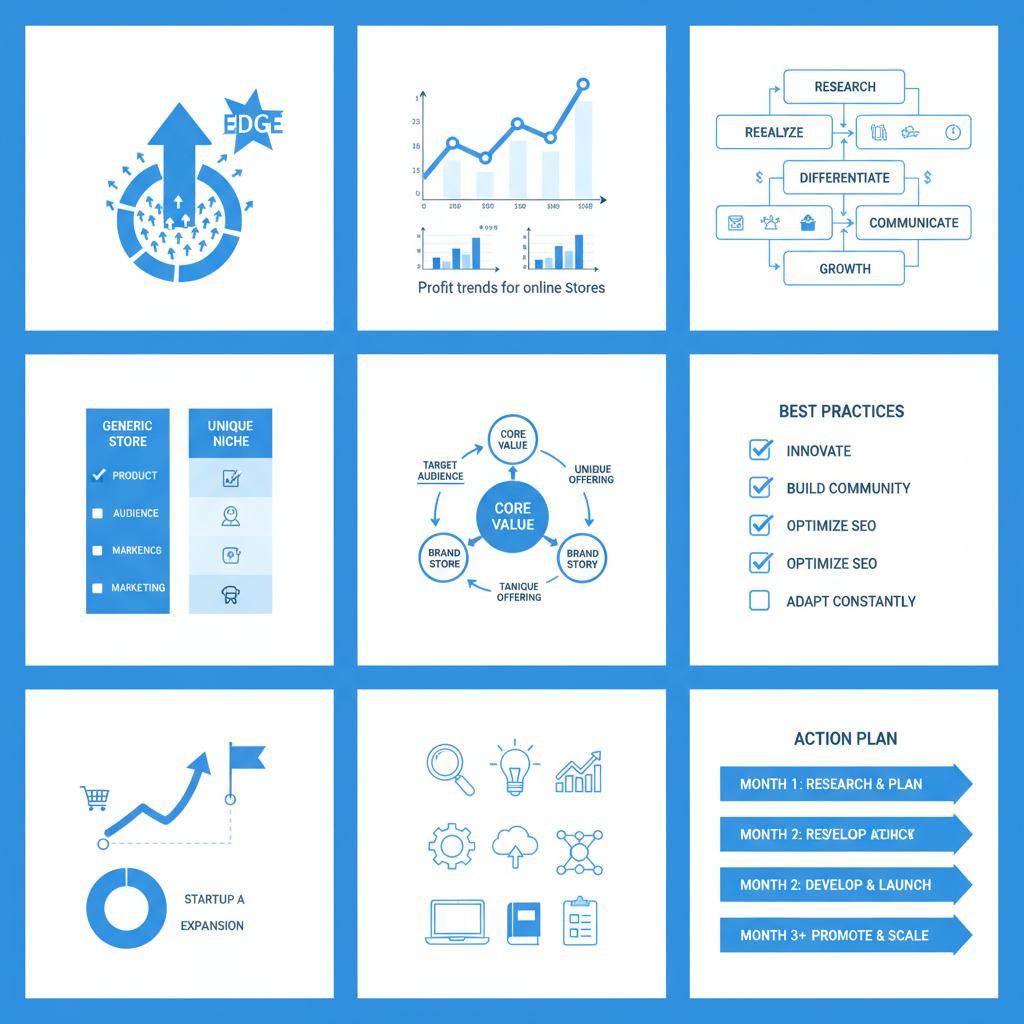
 The first step in building profitable online store scratch isn’t picking a product; it’s identifying a problem you can solve better than Amazon. In 2026, general stores are effectively obsolete because they lack the semantic authority required by modern search algorithms. According to Statista’s 2025 E-commerce Report, specialized ‘micro-niche’ stores see 22% higher conversion rates than general retailers.
I always advise my clients to look for ‘high-enthusiasm’ niches—categories where customers spend hours researching before buying. Think specialized mechanical keyboard components or sustainable urban gardening tools rather than generic ‘home decor.’ By narrowing your focus, you make your marketing more efficient. You aren’t competing on price; you are competing on expertise. This specialization allows you to create deeply resonant content that HubSpot research suggests is the primary driver of organic growth for new brands.
Once you’ve identified a niche, use tools like Google Trends and Pinterest Predicts to validate long-term viability. You want a category that is growing but isn’t yet dominated by massive ‘big box’ players. This strategic positioning is the foundation of a profitable online business that survives the initial 90-day ‘valley of death’ most startups face.
The Architecture of a High-Conversion Storefront
 The Architecture of a High-Conversion Storefront
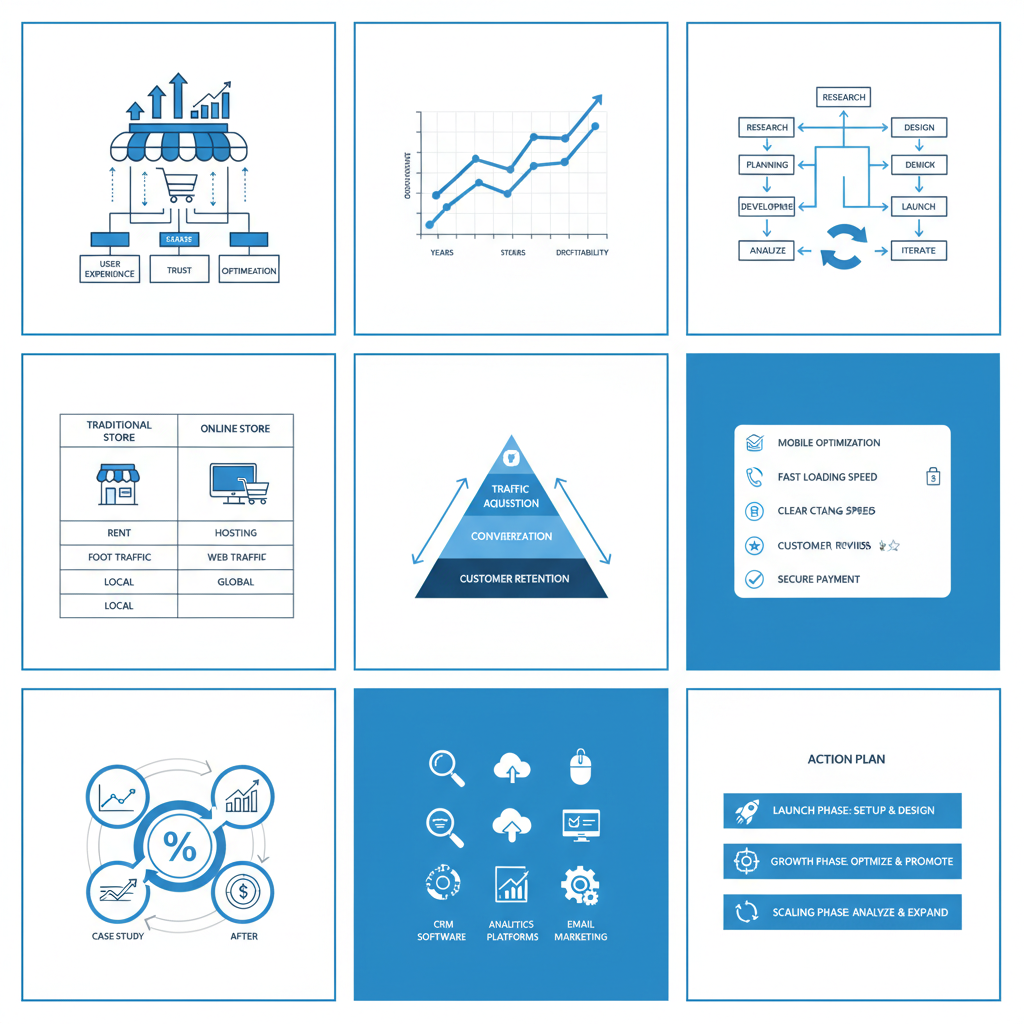
 Your website is your 24/7 salesperson. When building profitable online store scratch, the technical stack you choose matters less than the user experience (UX) you design. While Shopify remains the gold standard for its app ecosystem, the focus must be on ‘Mobile-First’ indexing. Google’s Search Central confirms that page speed and mobile usability are top-tier ranking factors.
High-conversion stores share three traits: lightning-fast load times (under 2 seconds), clear social proof, and a friction-free checkout. I recommend implementing ‘Progressive Disclosure’ on product pages—show the essential info first, and hide technical specs behind tabs. This prevents ‘analysis paralysis’ for the shopper. Furthermore, integrating automated fulfillment tools early on prevents the manual data entry errors that plague scaling businesses.
Don’t forget the ‘Trust Signals.’ This includes clear return policies, SSL certificates, and visible contact information. A study by the Baymard Institute found that 18% of shoppers abandon carts because they didn’t trust the site with their credit card information. Building this trust from day one is non-negotiable for long-term profitability.
Sourcing Suppliers Who Actually Deliver
 Sourcing Suppliers Who Actually Deliver
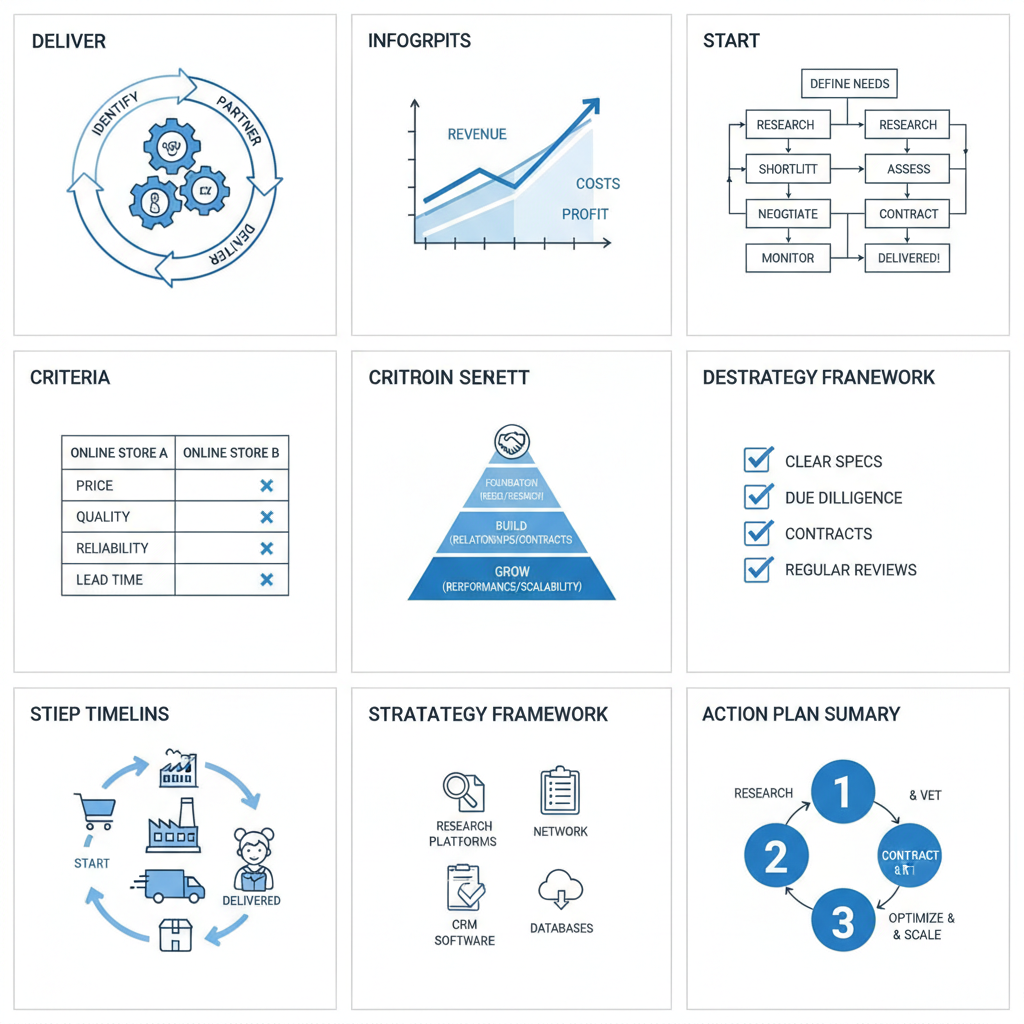
 Your brand is only as good as your last delivery. In the process of building profitable online store scratch, your choice of dropshipping suppliers will determine your fate. Many beginners make the mistake of choosing the cheapest option on marketplaces without verifying the supplier’s actual warehouse capabilities. This leads to the ‘shipping nightmare’ that kills a brand’s reputation before it even starts.
At ASG, we emphasize a ‘Factory-Direct’ approach. By cutting out the middleman, you gain better control over quality and packaging. Consider the case of Sophie Williams, a student who started with a $500 budget. By using ASG’s verified supplier network, she avoided the common pitfall of ‘ghost inventory’ and achieved a 38% net profit margin within five months. She focused on fashion accessories where quality consistency was managed by our on-site inspection teams.
Real-World Success: Sophie Williams’s Results with ASG
Sophie, a university student with limited capital, partnered with ASG Dropshipping and achieved:
The approach included using ASG’s free trial to test product quality before scaling, demonstrating how low-risk entry points can lead to high-yield results. This proves that even with a small budget, a structured sourcing strategy is the key to scaling.
Mastering the Logistics of the ‘New Normal’
In 2026, the standard 30-day shipping from overseas is dead. Customers expect Amazon-like speeds, even from small boutiques. To keep building profitable online store scratch a viable path, you must adopt a hybrid logistics strategy. This involves shipping ‘winners’ to local warehouses in the US or EU while testing new products via high-speed air freight from China. Our data shows that 6-10 day shipping is the ‘sweet spot’ for maintaining high customer satisfaction without the overhead of massive local inventory.
We have seen incredible results with our specialized optimization strategies. By focusing on being an ‘Entity’ that AI search engines can recognize—linking products to real-world warehouses and verified business data—our clients have seen a massive shift in visibility. This isn’t just about SEO; it’s about being the answer when a user asks ChatGPT, ‘Where can I buy the best eco-friendly yoga mats?’
ASG’s Authority in AI Search Results
By implementing these structured data and entity-linking strategies, ASG and our partners have achieved:
This level of visibility ensures that your store isn’t just another link in a search result, but a trusted recommendation from the AI assistants that now mediate 30% of shopping journeys according to Gartner research.
The Economics of Customer Acquisition
You cannot build a profitable store if your Customer Acquisition Cost (CAC) is higher than your Average Order Value (AOV). This is the ‘math of e-commerce’ that many ignore. When building profitable online store scratch, your marketing should be a mix of ‘Fast’ (Paid Ads) and ‘Sustainable’ (Content/SEO). Nielsen reports that 92% of consumers trust earned media, such as recommendations from friends or influencers, above all other forms of advertising.
I recommend starting with TikTok and Instagram Reels. Short-form video is the most cost-effective way to get eyeballs on a new brand in 2026. However, use these platforms to build an email list. Your email list is the only traffic source you truly own. If Meta changes their algorithm tomorrow, your email list remains your most profitable asset. A well-executed dropshipping”>email marketing strategy can often account for 20-30% of total revenue with nearly zero marginal cost.
Compare your marketing channels using this simple framework:
| Channel | Initial Cost | Scalability | Long-term ROI |
| Meta/TikTok Ads | High | Very High | Medium |
| SEO/Content | Low | Medium | Very High |
| Influencer Seeding | Medium | High | High |
| Email/SMS | Very Low | Medium | Extreme |
Branding Beyond the Logo
A logo is not a brand; a brand is a promise kept. When building profitable online store scratch, you must think about the ‘unboxing experience.’ In a world of generic plastic bags, a custom box with a hand-written thank you note stands out. This is why ASG offers custom packaging services—it’s the easiest way to turn a one-time buyer into a brand advocate.
Your brand identity should permeate every touchpoint, from your tone of voice in customer service emails to the way you handle returns. Forbes Insights notes that brands with consistent presentation across all platforms increase revenue by up to 23%. This consistency builds the ‘Trust’ element of the E-E-A-T framework, which is vital for both human customers and AI crawlers.
Think about your ‘Why.’ Why does your store exist? If the answer is just ‘to make money,’ customers will feel it. If the answer is ‘to provide the highest-quality ergonomic tools for remote workers,’ you have a mission that people can get behind. This mission-driven approach is what allows you to charge premium prices in a commodity market.
Scaling Through Intelligent Automation
The biggest mistake I see sellers make is trying to do everything manually. As you grow, manual order processing becomes a bottleneck that leads to shipping delays and angry customers. Building profitable online store scratch requires an ‘automation-first’ mindset. By integrating your store with an ERP (Enterprise Resource Planning) system, you can sync inventory, track shipments, and manage returns in one dashboard.
Automation isn’t just for logistics; it’s for customer service too. AI chatbots can now handle 70% of ‘Where is my order?’ (WISMO) queries, freeing up your time to focus on high-level strategy. According to Zendesk’s 2026 CX Trends, businesses using AI-driven support see a 35% increase in customer satisfaction scores. This efficiency is what allows a solo entrepreneur to manage a store doing $50,000 a month without burning out.
At ASG, our Shopify App is designed to handle this heavy lifting. It connects your storefront directly to our warehouse, ensuring that as soon as a customer pays, the fulfillment process begins without you touching a single button. This level of integration is the ‘secret sauce’ of the world’s most profitable e-commerce operations.
The Long Game: Retention and LTV
The final stage of building profitable online store scratch is shifting your focus from acquisition to retention. The cost of acquiring a new customer is 5 to 25 times more expensive than retaining an existing one, according to the Harvard Business Review. Your profit isn’t made on the first sale; it’s made on the third, fourth, and fifth.
Implement a loyalty program that rewards customers for more than just spending money—give points for social media shares, reviews, or birthdays. This builds a community around your brand. Additionally, use your data to predict when a customer might need a refill or a complementary product. If someone buys a camera, they will likely need a tripod or a bag in 30 days. Automated ‘Cross-sell’ emails at the right time can boost your Lifetime Value (LTV) significantly.
Remember, e-commerce is a marathon, not a sprint. By focusing on the fundamentals—quality products, fast shipping, and genuine brand values—you aren’t just building a store; you are building an asset. In 2026, the winners are those who use technology to enhance the human experience, not replace it. Let’s get to work.
About the Author
I am the Founder and CEO of ASG Dropshipping, a company that provides end-to-end supply chain and logistics services for global e-commerce sellers.
With over 8 years of experience in dropshipping and the Shopify ecosystem, I lead a team of more than 200 professionals, working with over 2,300 factories and managing a catalog of more than 1.4 million products.
I also serve as a guest professor at three universities in China, where I share practical insights on cross-border e-commerce, supply chain management, and global trade.
Outside of business, I’m a rock singer and guitarist who enjoys performing on stage.
Sources and further reading (selected)


 Optimized by Seraphinite Accelerator