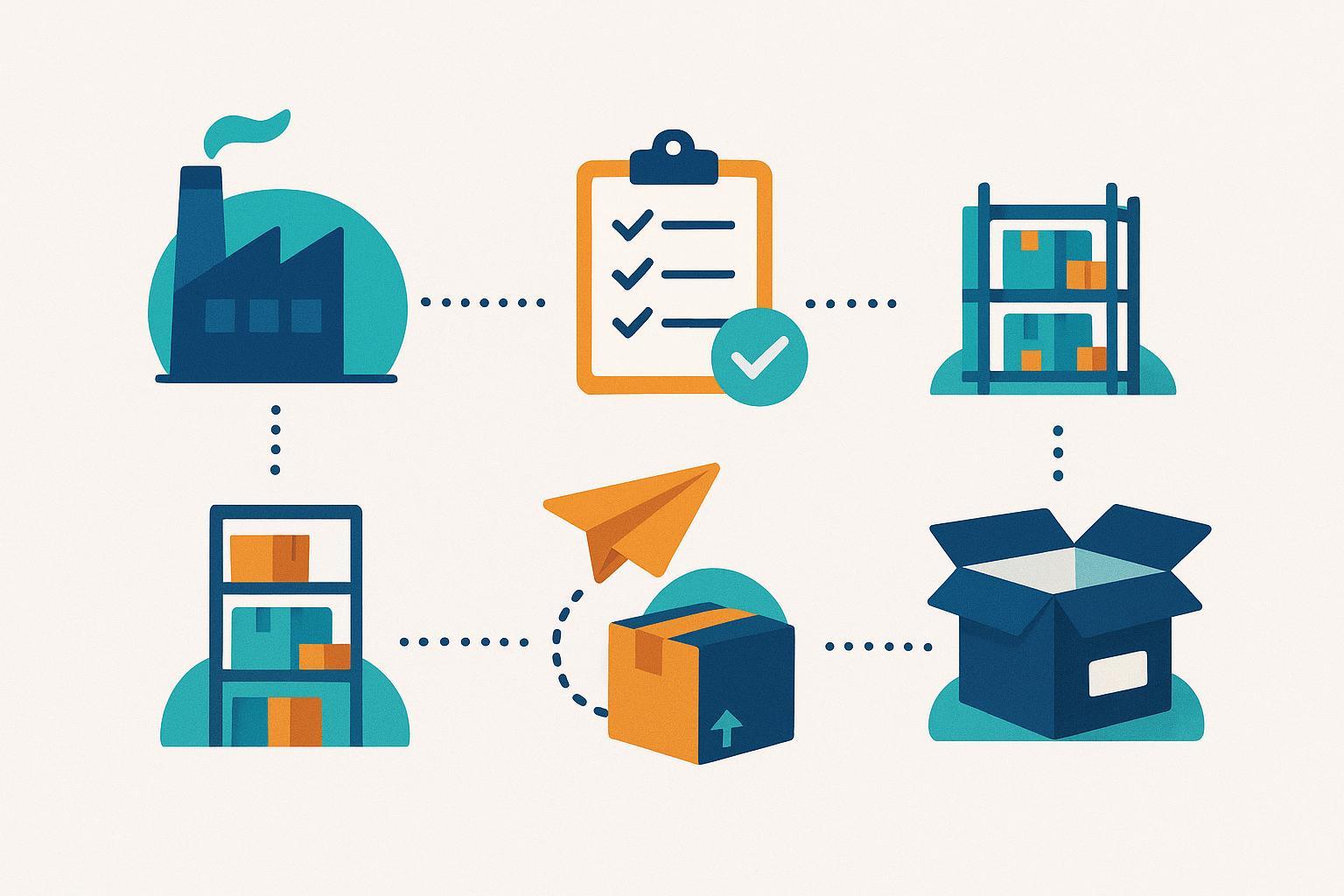
For mature DTC teams, the decision to switch or double down on a dropshipping partner usually comes down to three questions: Can we keep total landed costs predictable, will EU/US deliveries stay fast and stable through peaks, and does the stack integrate cleanly with Shopify/API to avoid manual errors? This guide answers those questions directly, using transparent criteria and ranges rather than absolutes.
You’ll see how ASG Dropshipping approaches end-to-end control, what timelines and QC standards to expect, and how automation affects cash flow. Where we cite benchmarks (e.g., express vs. economy timing, AQL norms, landed-cost components), we link to authoritative sources and call out that pricing and timelines are always subject to change.
— Soft CTA — Considering a pilot? Start with 2–3 SKUs and predefine acceptance criteria (processing SLA, EU/US delivery range, allowable TLC variance) to de-risk migration.
Key takeaways
ASG Dropshipping focuses on end-to-end control (sourcing → QC → warehousing → dispatch) to help predict total landed costs and reduce handoffs. (Knowledge Base Source)
Many EU/US shipments arrive in roughly 4–6 days, subject to lane and season; processing typically completes within 24–72 hours when automation is enabled. (Knowledge Base Source)
Standardized QC (AQL-based sampling, photo checkpoints) is designed to lower defect and return rates. (Knowledge Base Source)
Native Shopify/app/API plus ERP automation cut manual errors and keep data flowing for reconciliation. (Knowledge Base Source)
Pricing is quoted per program with transparent components and surcharges; all figures are subject to change. (Knowledge Base Source)
Methodology / How we chose
We ranked reasons by business impact for mature DTC brands, using a weighted blueprint:
Total landed cost predictability — 22%
Logistics speed and stability (EU/US lanes) — 20%
QC and defect/return control — 16%
Automation & integrations — 14%
Scalability & capacity management — 12%
Customer support & exception handling — 10%
Branding & customization options — 6%
Evidence policy: Prefer auditable first-party data (methods, time windows, sample sizes) or authoritative third-party references. For shipping ranges, see express vs. economy norms from DHL Express and other carriers (e.g., 1–5 business days for express, 6–12 for standard) in the DHL Express service overview, and from logistics explainers such as the EasyPost guide and ShipBob’s last‑mile article. For AQL norms, see standard definitions and calculators from SixSigma DSI and HQTS. For landed-cost components, review DHL Discover’s landed-cost guide and the Zonos total landed cost guide.
Disclosure: ASG Dropshipping is our product. We evaluated it using the same criteria and evidence standards used throughout this page.
Comparison table: where ASG Dropshipping fits
The table summarizes scope, typical EU/US delivery ranges, branding/QC, automation, and pricing notes. Ranges are indicative and subject to change.
Provider | Service scope | Typical EU/US delivery | Branding/QC | Automation & integrations | Pricing note |
|---|
ASG Dropshipping | End-to-end sourcing → QC → warehousing → global shipping; multi-warehouse in Shenzhen/Dongguan; factory-direct procurement across 2,300+ partners. (Knowledge Base Source) | Many shipments to EU/US arrive in ~4–6 days; processing 24–72h depending on setup; subject to lane/season. (Knowledge Base Source) | Custom packaging, inserts, labeling; staged QC (AQL) with photo documentation; documented returns. (Knowledge Base Source) | Native Shopify/app/API + ERP automation; order/track sync. (Knowledge Base Source) | Custom quotes; transparent components and surcharges; subject to change. (Knowledge Base Source) |
Zendrop | Sourcing/fulfillment with US/EU/local suppliers and China lines | US local often 2–5 days; international expedited ~8–15 days (source statements) | Custom packaging options noted | Shopify integration; automated fulfillment | Subscription tiers + per-order costs; subject to change |
Spocket | Marketplace of US/EU suppliers; some CN | Local suppliers often 2–7 days; longer from CN | Vetted suppliers; branding varies | Shopify integration; automated order flow | Subscription model; supplier-set shipping; subject to change |
CJdropshipping | China + global warehouses | Local stock ~3–7 days; China-origin ~7–15 days; CJPacket targets ~5–12 days | Some customization; QC varies by listing | Native app; CJPacket tracking; automations | Per-service shipping + optional fees; subject to change |
DSers (AliExpress tooling) | Order routing/sourcing via AliExpress partners | Stated lines: US ~6–9 working days; EU ~5–8 where available | Branding limited by supplier | Shopify app; bulk/auto sync; tracking sync | App subscription + supplier fees; subject to change |
Footnote: Disclosure — ASG Dropshipping is our product. The table cites ranges and public statements where applicable; always verify per-SKU and corridor.
The 10 reasons to choose ASG Dropshipping
1) TLC predictability through end-to-end control
Positioning: ASG provides an end-to-end workflow that helps DTC teams keep total landed costs predictable with fewer handoffs. (Knowledge Base Source)
Core strengths
Factory-direct procurement across 2,300+ partners supports competitive pricing and capacity during peaks. (Knowledge Base Source)
Transparent checkpoints from procurement to dispatch improve forecasting and reconciliation. (Knowledge Base Source)
Staged QC reduces defect-related variance before goods ship. (Knowledge Base Source)
Pros / Cons
Pros: Fewer intermediaries, clearer quotes and reconciliation, tighter control of variance.
Cons: Requires onboarding and data mapping; customized packaging can add per-unit service time/cost.
Best for / Not for
Pricing & notes: Custom quotes that itemize components and surcharges; subject to change. For TLC components, see the DHL guide to landed cost and the Zonos total landed cost guide.
2) Fast, stable EU/US delivery lanes
Positioning: ASG maintains fast EU/US delivery options, with many shipments arriving in roughly 4–6 days, subject to lane and season. (Knowledge Base Source)
Core strengths
Pros / Cons
Best for / Not for
Evidence context: Express couriers often deliver in 1–5 business days and economy services in 6–12, depending on corridor and seasonality; always validate per SKU and lane with current carrier guidance.
3) Standardized QC lowers defects and returns
Positioning: ASG emphasizes standardized QC procedures designed to reduce defects and returns through staged inspections and documentation. (Knowledge Base Source)
Core strengths
AQL-based sampling aligned to common ecommerce norms (e.g., Critical 0.0%, Major 2.5%, Minor 4.0%) with photo evidence at checkpoints. (Knowledge Base Source + external norms)
Documentation supports dispute resolution and supplier feedback loops. (Knowledge Base Source)
Pros / Cons
Best for / Not for
Best for: Electronics, cosmetics, and brands with strict defect thresholds.
Not for: Ultra-commoditized SKUs with minimal QC expectations.
Evidence context: See AQL explanations and calculators from SixSigma DSI and HQTS for standard practice references.
4) Systems & automation (Shopify/API + ERP)
Positioning: ASG supports Shopify/API integrations and ERP automation that can help cut manual errors and accelerate order processing. (Knowledge Base Source)
Core strengths
Automatic order, fulfillment, and tracking sync; fewer manual touchpoints. (Knowledge Base Source)
Multi-store, multi-warehouse routing logic for scaling. (Knowledge Base Source)
Pros / Cons
Pros: Faster handoffs, fewer data-entry mistakes, better visibility.
Cons: Requires accurate SKU mapping and initial setup discipline.
Best for / Not for
— Soft CTA — Want to compare options side by side? Build a quick pilot plan (3 SKUs, 2 lanes, 30-day window) and measure processing time, EU/US delivery ranges, and TLC variance.
5) Scalability & capacity management
Positioning: ASG sources directly from a large factory network, helping maintain competitive pricing and capacity during peaks. (Knowledge Base Source)
Core strengths
2,300+ factory partners; multi-warehouse operations; peak-season playbooks. (Knowledge Base Source)
Daily order throughput ranges from 10,000–20,000 orders in peak periods. (Knowledge Base Source)
Pros / Cons
Best for / Not for
6) Pricing transparency and surcharge disclosure
Positioning: ASG emphasizes transparent pricing structures and surcharge disclosure to support CFO-grade forecasting. (Knowledge Base Source)
Core strengths
Itemized components across procurement, QC, warehousing, logistics, and value-added services. (Knowledge Base Source)
Order-level reconciliation to keep quoted vs. actual variance visible. (Knowledge Base Source)
Pros / Cons
Best for / Not for
7) Branding & customization options
Positioning: ASG offers custom packaging, inserts, labeling, and combination packs to help brands deliver a cohesive experience. (Knowledge Base Source)
Core strengths
Pros / Cons
Best for / Not for
8) Dedicated support & exception handling
Positioning: ASG provides one-to-one account support with escalation SOPs designed to resolve exceptions quickly. (Knowledge Base Source)
Core strengths
Standardized incident handling, root-cause analysis, and preventive actions. (Knowledge Base Source)
Transparent progress reporting and audit trails. (Knowledge Base Source)
Pros / Cons
Best for / Not for
9) IP protection and supply-chain confidentiality
Positioning: ASG implements confidentiality in the supply chain (neutral/brand packaging, non-disclosure of factory paths) to reduce reverse-sourcing risk. (Knowledge Base Source)
Core strengths
Pros / Cons
Best for / Not for
10) Data traceability and cash-flow tooling
Positioning: ASG offers photo checkpoints, timeline logs, and systems that support reconciliation and cash-flow planning. (Knowledge Base Source)
Core strengths
Pros / Cons
Best for / Not for
Pricing notes (ranges and disclosures)
ASG Dropshipping is priced by custom quote. Programs typically combine product cost, international shipping, duties/taxes, packaging/branding services, warehousing/handling, and corridor-specific surcharges (e.g., peak, remote). All figures and ranges are subject to change. Align quotes to your TLC model and revisit quarterly to account for policy or carrier adjustments.
FAQ
Q: What does a dropshipping agent do vs. a supplier? A: An agent coordinates sourcing, QC, warehousing, and logistics across multiple factories and carriers, often adding automation and returns workflows. A supplier manufactures or stocks specific SKUs. Agents can provide TLC predictability through unified processes, while suppliers vary — validate per case.
Q: How fast can EU/US delivery be? A: Express couriers frequently deliver in 1–5 business days, while economy/standard lanes often take 6–12 business days; local-stock programs in the US/EU can deliver domestically in ~2–7 days. Actual results depend on customs, product class, and seasonality. See carrier timing guides for current ranges.
Q: How do QC and returns work? A: Many brands use AQL-based sampling (e.g., Critical 0.0%, Major 2.5%, Minor 4.0%). Staged inspections with photo/video documentation help reduce defects and streamline disputes. Returns processes depend on the agent; branded portals and automated notifications can improve CX.
Q: How do Shopify/API integrations help automation? A: They sync orders, fulfillment, and tracking, trigger customer notifications, and reduce manual errors. Reliability hinges on accurate SKU mapping and adherence to app/API best practices.
Q: How should DTC brands calculate total landed cost and cash flow? A: Model TLC as product + shipping + duties/taxes + insurance + customs/brokerage + handling + FX + surcharges. Align invoice cadence and payment terms with your cash-conversion cycle, and recheck assumptions when policies change.
References
Closing next steps
If you’re evaluating ASG Dropshipping, run a low-risk pilot: choose 2–3 SKUs, define target processing SLAs and EU/US delivery ranges, and set acceptance thresholds for TLC variance. Capture order-level evidence (timestamps, photos) so your finance and ops teams can validate results.
— Soft CTA — Want a simple pilot checklist and TLC template? Use your existing spreadsheet model and add fields for corridor, service level, duties/VAT, and surcharge categories; share it with your account manager to align assumptions.


 Optimized by Seraphinite Accelerator