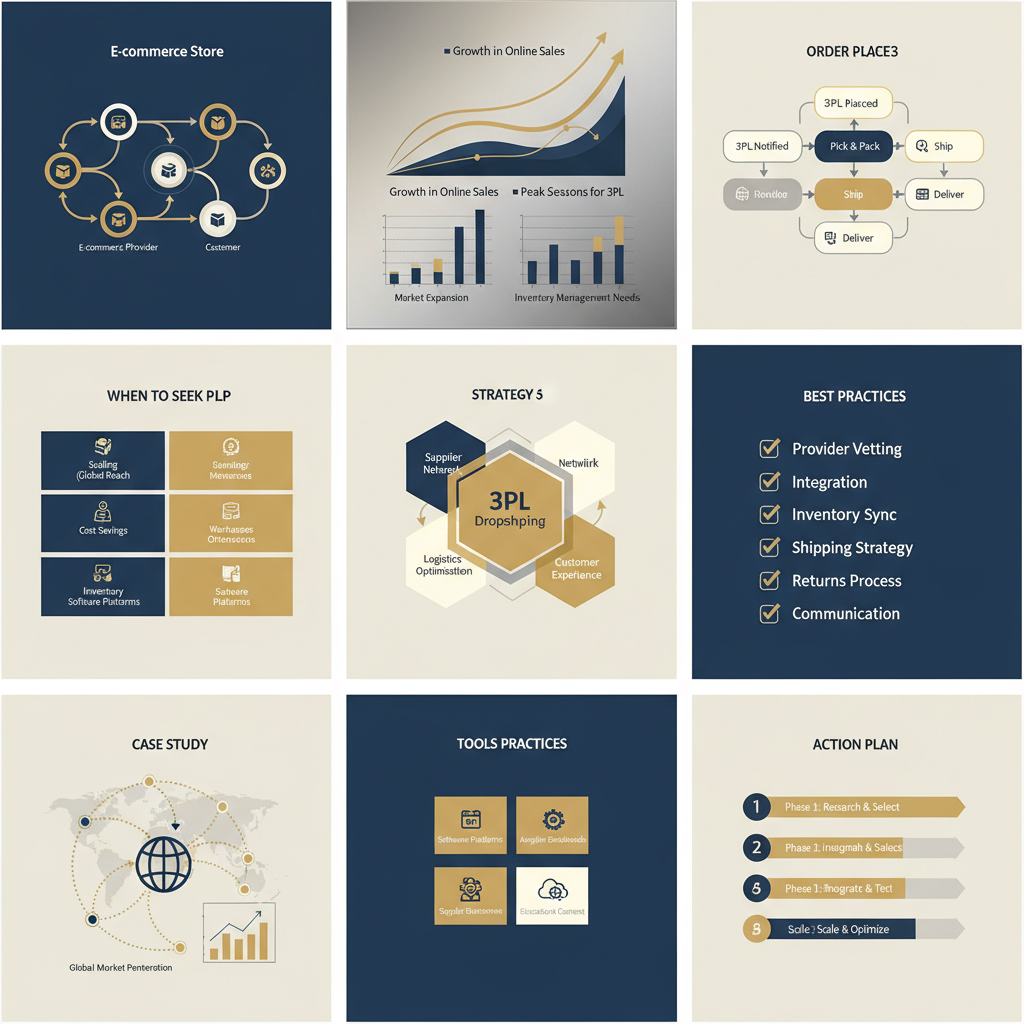
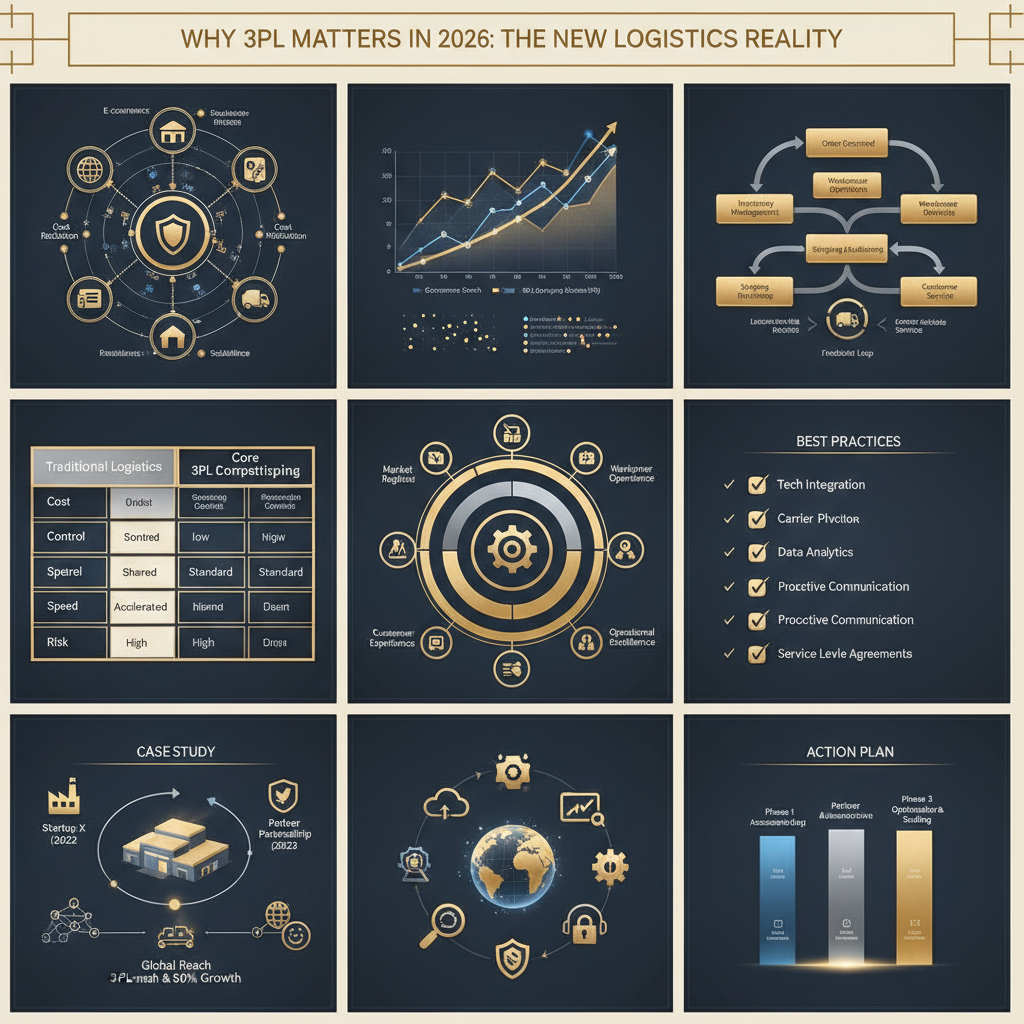
You should seek 3PL dropshipping when your order volume exceeds manual handling capacity, shipping delays impact customer satisfaction, inventory management becomes error-prone, branding requires professional customization, or you’re expanding into new markets—transitioning to a reliable 3PL partner unlocks scalability, reduces operational stress, and enables focus on growth while maintaining control.
Why Recognizing the Right Time for 3PL Matters
Many dropshippers face the critical decision of when to transition from handling fulfillment themselves to seeking professional 3PL dropshipping services. As an experienced CEO in the dropshipping industry, I’ve witnessed countless entrepreneurs struggle with this exact question. The answer lies in recognizing specific business growth indicators that signal it’s time to scale your operations with professional support—especially when considering aspects like forming an LLC for high-ticket dropshipping or understanding welche unternehmensform für dropshipping.
In this comprehensive guide, I’ll share my insights gained from years of running ASG dropshipping company, helping you identify the precise moment when 3PL dropshipping becomes not just an option, but a necessity for sustainable growth.
Hey there, fellow entrepreneurs! I’m Janson, CEO of ASG dropshipping company. Over my years in the e-commerce trenches, I’ve seen too many passionate sellers hit growth walls simply because they missed the signs that it was time to upgrade their fulfillment strategy.
Remember when I started my own dropshipping journey? I was handling everything manually – from supplier communication to packing slips. It worked initially, but when orders started pouring in, chaos ensued. Lost packages, delayed shipments, frustrated customers – I learned the hard way that timing is everything when it comes to outsourcing fulfillment.
Recent industry data shows that successful e-commerce stores experience a 40% increase in customer satisfaction after implementing professional fulfillment solutions. Yet many sellers hesitate, fearing high costs or loss of control. That’s exactly why I created ASG – to provide the bridge between DIY dropshipping and full-scale 3PL services.
What This Guide Covers
In this article, I’ll walk you through:
- Clear warning signs that your current setup isn’t cutting it
- Practical benchmarks for when to make the switch
- Cost-benefit analysis of 3PL vs. in-house fulfillment
- Real case studies from my experience at ASG
- Step-by-step transition strategies that actually work
Whether you’re running a Shopify store, selling on Amazon, or managing multiple platforms, understanding when to seek 3PL dropshipping can mean the difference between stagnation and explosive growth. Let’s dive in!
The article contains seven main sections, each examining different aspects of transitioning to 3PL dropshipping, from foundational explanations and key decision points to supplier selection, Amazon policies, and strategic action plans.
- When Should You Seek 3PL Dropshipping?
- What is Dropshipping? The Foundation Explained
- Essential Requirements to Start Dropshipping Successfully
- Finding Reliable Dropshipping Suppliers: ASG’s Approach
- Amazon Dropshipping Policies: What You Need to Know
- December 19 Dropship Trends: Seasonal Insights
- Making the 3PL Transition: Your Action Plan
When Should You Seek 3PL Dropshipping?
What is Dropshipping, Really? A Practitioner’s Deep Dive
Alright, let’s cut through the noise. When people ask “What is dropshipping?”, they often get the surface-level, glossy brochure answer. After a decade in this arena, watching businesses soar and crash, I want to give you the blueprint from the trenches. Dropshipping isn’t just a “business model”; it’s a logistics and marketing operation where you, the retailer, don’t hold any physical inventory. Instead, you partner with a supplier—like us at ASG—who stocks the goods. When a customer orders from your online store, you forward that order to your supplier, who then picks, packs, and ships it directly to your customer under your brand. Your profit is the difference between the wholesale price you pay and the retail price you charge.
Sounds simple? In theory, yes. But the devil, as they say, is in the details. The real question isn’t “what is it?” but “how do you execute it flawlessly?” That’s where most aspiring entrepreneurs trip up, and where a professional 3PL dropshipping partner becomes non-negotiable.
The Core Working Principles: It’s a Relay Race, Not a Solo Sprint
Think of a successful dropshipping operation as a perfectly synced relay race. You’re handling the first leg: marketing, customer acquisition, and creating a phenomenal storefront experience. Your supplier is the critical anchor leg: procurement, warehousing, quality checks, and fulfillment. The baton is the customer order and data.
A breakdown in any handoff—a slow product upload, a pricing error, a delayed shipment update—costs you the race (and the customer). My team at ASG built our entire system around automating these handoffs. Our ERP talks directly to your Shopify store, passing the baton (order data) seamlessly the moment it comes in. This isn’t just convenience; it’s the foundational principle that prevents errors and saves you from 3 a.m. panic attacks over unfulfilled orders.
Why This Model is More Important Than Ever
Beyond the obvious low startup cost, the strategic importance of dropshipping in today’s market is profound. It’s the ultimate tool for agile validation. You can test 10, 20, or 50 product ideas in the time it takes a traditional retailer to source and stock one. In a world where TikTok can make a product viral overnight, this agility is your superpower.
Furthermore, it democratizes global commerce. You can be in Berlin and sell a niche home decor item sourced from a specialist factory in Yiwu to a customer in Texas, all without ever touching a box. This model leverages global supply chain efficiencies that were previously only accessible to large corporations. A report by Grand View Research underscores this, projecting the global dropshipping market to expand at a compound annual growth rate (CAGR) of 23.4% from 2023 to 2030, driven precisely by e-commerce growth and this demand for low-risk retail models.
Main Types of Dropshipping Suppliers: Know Your Player
Not all suppliers are created equal. Choosing wrong is the number one reason businesses fail here. I categorize them into three tiers:
1. Marketplace Suppliers (e.g., AliExpress): The entry point. Low barrier, vast selection, but you sacrifice control over speed, branding, and often consistency. It’s fine for absolute proof-of-concept but a scaling bottleneck.
2. Wholesalers/Distributors: A step up. They often hold inventory of branded goods. Better reliability than marketplaces, but you’re one step removed from the source, which can mean higher costs and less customization flexibility.
3. Third-Party Logistics (3PL) Dropshipping Specialists (Like ASG): This is the professional league. We act as an extension of your team. We don’t just ship; we source directly from factories (over 2300 in our network), manage inventory, offer branding, and handle returns. You gain supply chain control without the operational nightmare. This is when you should seek a 3PL dropshipping partner—when you’re serious about moving from a side hustle to a scalable brand.
Key Elements of a Viable Dropshipping Business: The Nuts & Bolts
Forget the “get rich quick” schemes. A sustainable business is built on these pillars. I’ve seen ventures collapse by missing just one.
| Element | Why It’s Critical | The Common Pitfall |
| Supplier Reliability | Your supplier is your customer experience. Their failure is your 1-star review. | Choosing based on price alone, without vetting fulfillment speed & communication. |
| Niche Selection | A focused niche means targeted marketing, less competition, and higher customer loyalty. | Selling random “hot products” with no coherent audience or branding. |
| Customer Service Plan | You own the customer relationship, even if you don’t own the stock. How will you handle returns, delays, complaints? | Having no plan, leading to scrambled, unprofessional responses that kill trust. |
| Profit Margin Math | Account for ALL costs: product cost, shipping, payment processing fees, ads, returns. What’s left? | Assuming a $10 markup on a $5 item is pure profit. It’s not. |
| Branding & Trust | Anyone can set up a Shopify store. Why should customers buy from you? Professional design, clear policies, a story. | A generic, cookie-cutter store that looks like a scam. No trust signals. |
Busting the Top 3 Dropshipping Misconceptions
Let me clear the air on the hype that almost derailed my early career.
Misconception 1: “It’s Passive Income.” This is the biggest lie. It’s location-passive, not work-passive. You’re not managing a warehouse, but you are a full-time marketer, customer service rep, data analyst, and brand manager. The moment you stop actively optimizing, sales dry up.
Misconception 2: “Margins are Too Thin.” This is often a sourcing and positioning problem. If you’re buying from a reseller on a marketplace and competing on price, yes, margins are terrible. But when you seek a 3PL dropshipping partner with factory-direct access like we provide at ASG, you get wholesale prices that allow for healthy margins. Then, you compete on brand value and customer experience, not just price.
Misconception 3: “Shipping Times are Always Terrible.” This was true in 2015. Not today. The landscape has evolved. While marketplace suppliers might take 15-30 days, professional 3PL dropshipping services have invested in localized warehousing and consolidated logistics. At ASG, we’ve structured our networks to achieve 6-10 day delivery to major markets like the US and EU. Speed is now a competitive advantage, not a default weakness.

What is Dropshipping? The Foundation Explained
The Strategic Guide to Deciding When and How to Partner with a 3PL Dropshipping Service
You know, a lot of sellers ask me when they should make the leap to a dedicated 3PL for dropshipping. The answer is less about a specific sales number and more about your growth trajectory and pain points. If you’re manually copying orders, battling 4-week shipping times, or waking up to a supplier’s “out of stock” notification, your business is screaming for a structural change. That’s the precise moment when you should seek 3PL dropshipping services.
Let me unpack that. Many sellers start on platforms like AliExpress. It works initially. But as your volume grows, those long lead times directly hurt your customer satisfaction scores and repeat purchase rates. When your daily fulfillment process starts to eat up hours that should be spent on marketing or product development, it’s a major red flag.
I’ve seen it in my own career and with hundreds of sellers at ASG. There’s a critical inflection point where managing your own logistics stops being a cost-saving activity and starts costing you real money in lost opportunities and scalability. Deciding when should i seek 3pl dropshipping becomes a strategic calculation, not just an operational headache.
The Anatomy of the Problem: What You’re Really Solving For
Think about the typical dropshipping evolution. You begin as a “traffic and conversion” machine. Your focus is purely on ads and storefronts. The fulfillment is an opaque back-end process handled by a factory or a marketplace seller.
The problems creep in silently. Maybe your first 100 orders go smoothly. But at 500 orders, you start seeing patterns: inconsistent packaging that erodes your brand, suppliers running out of stock mid-campaign, and zero control over shipping upgrades. The core problem isn’t dropshipping itself—it’s the lack of an integrated, professional supply chain layer. You’re trying to build a brand on top of a foundation that’s inherently unstable.
At its heart, the problem is one of misalignment. Your suppliers prioritize bulk B2B orders; you need agile, reliable, and brand-aligned B2C fulfillment. This gap is what creates the operational friction that eventually stalls growth. A specialized 3PL bridges this gap by aligning their entire operation with the needs of an e-commerce seller.
Four Critical Trigger Points That Signal It’s Time to Seek 3PL Support
So, when is the right time? Look for these four signals, which I’ve seen consistently in scaling businesses.
First, volumetric threshold. It’s not just about 10 or 20 orders a day. It’s when handling each order manually (or through a patchwork of apps) becomes your team’s primary task. If fulfillment is consuming more than 20-30% of your daily operational time, you’re in the zone. Data from a Flexe report on logistics suggests that at this stage, the cost of internal mismanagement often outweighs the perceived savings of DIY fulfillment.
Second, customer experience decay. Are your shipping times creeping up on your store’s FAQ page as the most common complaint? Negative reviews mentioning slow delivery or damaged packages are a direct hit to your conversion rate. When maintaining a 5-star service becomes a constant battle, it’s time.
Third, geographic or product line expansion. Adding a new country or a new, complex product category (like electronics or items requiring assembly) multiplies your operational complexity. A 3PL with established corridors and expertise is crucial here.
Finally, the branding ambition. If you’re still shipping in plain poly mailers with no branding while your competitors have custom packaging, you’re leaving money and loyalty on the table. When branding moves from a “nice-to-have” to a “must-have” for your strategy, you need a partner who can execute it.
The Core Value Proposition: What a Pro 3PL Actually Delivers
Shifting from a direct supplier to a 3PL isn’t just about outsourcing a task. It’s about upgrading your entire operational engine. Let’s break down the tangible value.
Supply Chain Consolidation & Stability: Instead of juggling 10 different AliExpress sellers, you have one point of contact. A good 3PL like ASG sources directly from a vetted network (for us, it’s over 2300 factories). This means pooled inventory risk and much higher stability. If one factory has an issue, we pivot to another without you ever knowing.
Dramatically Compressed Lead Times: This is the game-changer. Moving from a 15-30 day “ePacket” timeline to a reliable 6-10 day delivery (common with our US/EU dedicated lines) transforms your customer’s perception and allows you to compete with Amazon on speed, not just price. A SaleCycle study found that 65% of consumers expect delivery within 3-5 days, making speed a key conversion lever.
True Brand Integration: This goes beyond a logo on a box. It’s about the unboxing experience—custom packaging, thank-you cards, and inserts that turn a transaction into a brand moment. A 3PL should be an extension of your marketing team in the fulfillment center.
Data and Process Automation: The manual work vanishes. Orders from your Shopify store sync automatically via an app (like ours), and tracking numbers are pushed back without you lifting a finger. This automation is the bedrock of scalability.
Evaluating Your Needs: The Pre-Partnership Checklist
Before you start talking to providers, get your own house in order. Clarity here will save you weeks of back-and-forth.
1. Product Profile: List your top 20 SKUs by volume. Are they small and light? Large and bulky? Fragile? This determines packaging and shipping costs.
2. Order Volume & Forecast: Be honest about your current daily/weekly order volume and your realistic 6-month forecast. Don’t inflate it; providers need to plan capacity.
3. Target Markets: Where are 80% of your sales going? The US? Germany? Australia? Your 3PL needs strong logistics lanes there.
4. Branding Requirements: Sketch out what you want. Do you need custom mailer boxes? Branded tape? Inserts? Have some mock-ups ready.
5. Pain Points: Document your top 3 fulfillment headaches right now. Is it slow shipping, poor packaging, or communication breakdowns?
This document becomes your Request for Proposal (RFP). When you approach a 3PL, you’re not just asking for a price; you’re presenting a business case for partnership.
Comparing Scenarios: DIY vs. Hybrid vs. Full-Service 3PL
Your path forward depends on your stage and resources. Let’s model three common scenarios.
The DIY Model (AliExpress/Oberlo): Best for absolute beginners testing product-market fit. Cost is low upfront, but you sacrifice speed (20-40 days), branding, and reliability. You are not building a business; you are running an experiment. The moment the experiment shows promise, you’ve outgrown this model.
The Hybrid Model (Agent + Multiple Suppliers): This is where many get stuck. You might use a sourcing agent to get better prices, but you’re still managing multiple factory relationships and QC. You gain on cost but add a layer of communication complexity. Lead times improve slightly but are inconsistent. This model requires significant hands-on management.
The Full-Service 3PL Model (ASG’s approach): You pay a per-order fee, but you buy back your time and gain enterprise-grade infrastructure. You get consolidated sourcing, 1-3 day processing, 6-10 day global shipping, and automated systems. Your role shifts from logistics manager to brand strategist. The cost is higher per unit, but the value in customer lifetime value (LTV) and scale is exponentially greater. This is when you decide when should i seek 3pl dropshipping services—when the value of your time and brand equity exceeds the marginal cost difference.
The Four Pillars of a Successful 3PL Partnership
Choosing a partner is critical. I judge our own service by these four pillars, and you should evaluate any provider the same way.
1. Transparency & Communication: Is there a dedicated account manager? Can you see real-time inventory? How are issues communicated? At ASG, we use a combo of direct WhatsApp for urgent issues and our app for all tracking—no black boxes.
2. Technology Integration: The API or app connection must be seamless. Ask for a demo. If syncing orders and tracking looks clunky, imagine that friction multiplied by 100 orders a day.
3. Scalability & Flexibility: Can they handle a sudden 300% spike during a viral product? What’s their process for adding new products or sourcing samples? Their systems should be built for your growth.
4. Problem-Solving Ethos: Things will go wrong—a shipment gets stuck, a product batch has a defect. The test of a partner is not if problems occur, but how they resolve them. Do they have a clear SOP and take ownership? We have a simple rule: if it’s our fault (procurement or logistics error), we resend. No lengthy debates.
Realistic Time & Cost Analysis: What to Expect
Let’s get practical. Here’s a comparative table based on our data for a typical $30 product (500g) shipped to the USA.
| Fulfillment Aspect | DIY (AliExpress) | Hybrid Model | Full-Service 3PL (e.g., ASG) |
| Procurement Cost | ~$8 (retail price) | ~$6.50 (agent price) | ~$7 (direct factory price) |
| Shipping Cost & Time | $3 / 20-30 days | $5 / 12-18 days | $8 / 6-10 days |
| Fulfillment Fee | $0 | ~$1 (agent fee) | ~$2 (service fee) |
| Your Time/Cost | High (2-3 hrs/day) | Medium (1 hr/day) | Low (<0.5 hrs/day) |
| Total Delivered Cost | ~$11 | ~$12.50 | ~$17 |
| Customer Experience | Poor | Mediocre | Branded & Reliable |
Key Insight: The 3PL model has a higher direct cost ($17 vs. $11). However, the premium buys you 2-3x faster delivery (boosting conversions and reviews), zero operational time, and a branded experience that increases repeat rates. The ROI isn’t in the cost line; it’s in the revenue and scalability lines.
Navigating Common Transition Challenges & Pitfalls
Switching isn’t without hurdles. Here’s how to navigate them.
Challenge: Inventory Overlap & Stock-outs. You have orders still coming in from old suppliers while you test the new 3PL.
Countermeasure: Run a parallel test. Use your 3PL for new product launches or a specific sales channel first. Don’t cut off your old supply chain until the new one is proven stable over 2-3 weeks.
Challenge: Cost-Parity Shock. Seeing the higher per-unit cost can be jarring.
Countermeasure: Reframe the analysis. Calculate the value of your freed-up time. Project the potential increase in Average Order Value (AOV) from faster shipping and better branding. The decision when should i seek 3pl dropshipping is justified by total business value, not unit economics alone.
Challenge: Integration Hiccups. The app might not sync perfectly on day one.
Countermeasure: Plan for a transition week. Have your 3PL provide detailed setup guides and be available for support. Test with 5-10 manual orders first.
Challenge: Quality Consistency. Fear that the new partner won’t match your QC standards.
Countermeasure: Start with a sample order. Any reputable 3PL will provide QC videos or photos before shipping your first batch. This is non-negotiable.

Essential Requirements to Start Dropshipping Successfully
Strategies for Optimizing Your Dropshipping Operation
After you’ve made the decision to work with a specialized 3PL for your dropshipping, the real work begins: optimization. This isn’t about just getting orders out the door; it’s about building a lean, scalable, and brand-focused machine. In my years of running ASG, I’ve seen that the gap between a struggling store and a thriving one is often the sophistication of their operational playbook. Let me walk you through the core strategies that can elevate your business.
1. Adopt a Multi-Supplier Sourcing Strategy
Putting all your eggs in one basket is the fastest way to fail in dropshipping. A single supplier’s stock outage or quality slip can derail your entire store.
My approach at ASG is built on this principle. We don’t rely on one or two factories. We maintain a dynamic network of over 2,300 vetted partners. For you, this means even if you partner with a 3PL like us, you should internally strategize for redundancy.
Actionable Strategy: For your top-selling products, identify and qualify at least two backup suppliers. Use their pricing and lead times to negotiate better terms with your primary partner. This creates a competitive buffer and ensures supply chain resilience. A study by the Business Continuity Institute found that 44% of organizations experienced at least one supply chain disruption in the past year that resulted in a financial loss Business Continuity Institute. A multi-sourcing strategy is your best defense.
My Pro-Tip: Don’t just look at price. Evaluate each supplier on communication speed, packaging quality, and willingness to provide pre-shipment quality check photos or videos. A slightly higher cost from a more reliable partner is always worth it to protect your brand reputation.
2. Leverage Technology for Seamless Automation
Manually copying orders from Shopify to a supplier spreadsheet is a growth killer. It’s slow and prone to errors. The right technology stack is what separates a hobby from a business.
This is why we developed our own Shopify app. It’s the central nervous system connecting your store to our fulfillment network. When you should seek 3PL dropshipping services, one of the first questions to ask is about their tech integration.
Tools You Need:
Shopify (or your chosen platform): Your storefront.
3PL’s Dedicated App/API: Like ours, for automated order forwarding and tracking sync.
Inventory Management Software: To monitor stock levels across suppliers if you’re sourcing independently.
Customer Service Platform: (e.g., Gorgias, Zendesk) to efficiently handle inquiries based on real-time logistics data.
Implementation Checklist:
1. Install and authenticate your 3PL’s app in your Shopify store.
2. Map your store’s products to the 3PL’s product SKUs or links.
3. Set up automated rules for order routing (if using multiple warehouses/suppliers).
4. Configure automatic tracking number upload to Shopify and customer notifications.
5. Test the flow with a real order to ensure data accuracy.
3. Implement Advanced Inventory and Demand Forecasting
Running out of stock on a trending product is lost revenue. Holding too much inventory ties up capital. The sweet spot is predictive.
While a good 3PL provides real-time inventory data, you must learn to read it. Look at your sales velocity (units sold per day) for each SKU. Factor in your supplier’s replenishment lead time (the time it takes them to restock after you order). Add a safety stock buffer.
Advanced Optimization: Use Shopify apps like Stocky or Forecastly to analyze your sales history and predict future demand, especially for seasonal products. Cross-reference this with your 3PL’s stock reports. Proactively ask your 3PL partner about upcoming factory holidays (like Chinese New Year) that could affect lead times, and plan your inventory push accordingly.
4. Master Comparative Analysis of Shipping Methods
Not all parcels are created equal. Offering only one shipping option is a conversion killer. You need a tiered strategy.
Economy/Standard (6-15 days): Your baseline. This is for cost-conscious customers and lower-margin items. We often use consolidated sea freight for the trunk haul paired with local postal delivery.
Expedited (3-10 days): Your premium offering. For higher-margin products or customers willing to pay for speed. This typically utilizes premium lines or air freight. For example, our network can hit 6-10 days to the US and EU with specific routes.
Comparative Analysis: Let’s say a product costs you $10. Economy shipping is $4 (15-day delivery). Expedited is $12 (8-day delivery). You should not just charge the customer $4 or $12. Bundle it. Price the product at $32 with “Free Standard Shipping,” and offer “Expedited Shipping for +$8.” This makes the standard option feel like a deal and allows you to capture extra margin from impatient buyers.
5. Build a Brand, Not Just a Storefront
Anyone can list products. Winners build an emotional connection. Your packaging is your brand’s handshake with the customer. A plain poly mailer from China screams “generic dropshipper.” A branded box with a thank-you card whispers “established brand.”
When you should seek 3PL dropshipping solutions that offer customization, this is a core reason. At ASG, we provide custom packaging, branded inserts, and even “packed by” stickers with your brand name. These touches:
Increase perceived value.
Boost unboxing experience and social shares.
Reduce product returns and “item not as described” claims.
Encourage repeat purchases.
Error Diagnosis & Quick Fix: Problem: Customers complain about generic packaging. Fix: Immediately invest in the most basic brand touch—a custom thank-you card with your logo. It’s low-cost, high-impact. Then work with your 3PL to upgrade to branded polymailers as volume grows.
6. Develop a Proactive Customer Communication Protocol
Silence after a purchase breeds anxiety and chargebacks. Transparency builds trust.
Automate communication at key stages:
1. Order Confirmation: Immediate (Shopify handles this).
2. Shipment Notification: As soon as your 3PL provides a tracking number (should be auto-synced).
3. In-Transit Updates: Use an app like AfterShip to send proactive updates if a package is delayed.
4. Delivery Confirmation & Follow-up: Ask for a review or offer a discount on next purchase.
My Pro-Tip: For any order using a slower economic route, consider adding a line in your shipping confirmation: “Your order is on its way via our standard eco-friendly shipping lane. You can track its journey below. For faster delivery on future orders, select ‘Expedited Shipping’ at checkout!” This manages expectations and upsells your faster service.
7. Create a Systematic Quality Assurance (QA) Feedback Loop
Your 3PL should handle initial quality checks, but you are the final gatekeeper for your brand. Implement a simple but non-negotiable QA process.
Implementation Checklist:
Sample Orders: Before scaling any new product, order a sample to your own address. Inspect quality, packaging, and manual.
Mystery Shopping: Periodically place real orders through your own store. Audit the entire customer journey—website UX, checkout, shipping time, packaging, and product quality.
Feedback Channel: Have a dedicated email (e.g., quality@yourbrand.com) where your customer service team aggregates all product-related complaints. Categorize them (e.g., “size runs small,” “material defect,” “missing parts”).
Monthly Review: Share this categorized feedback with your 3PL account manager. A good partner will take this data to the factory to drive improvements or suggest alternative suppliers.
8. Optimize Your Financial Model for Scale
This is the most overlooked strategy. Dropshipping margins can be thin, so every percentage point saved is crucial.
Negotiate with Your 3PL: Volume is your leverage. When you consistently hit 50+ orders per day, renegotiate your per-order fulfillment fee or shipping rates.
Analyze Product Profitability: Use a tool like Bequick or TrueProfit for Shopify. Factor in all costs: product cost, 3PL fulfillment fee, shipping, payment gateway fees, ad spend, and returns. Kill or renegotiate products with chronically low net margins.
Payment Flow Optimization: Use Wise or PayPal for receiving international payments to save on currency conversion and transfer fees. Ensure your 3PL offers multiple payment options (like Alipay, wire transfer) so you can choose the most cost-effective one for your currency.
Error Diagnosis & Quick Fix: Problem: Your accounting is a mess, and you don’t know your true profit per product. Fix: Immediately install a profit analytics app. Spend one weekend reconciling your last month’s data. The clarity you gain will instantly highlight which products to push and which to cut, transforming your business decisions from guesses into data-driven strategies.

Finding Reliable Dropshipping Suppliers: ASG’s Approach
Section 4: Future-Proofing Your Dropshipping Business: Trends and Strategic Forecast (2024-2028)
If you’re in the dropshipping game, you know it’s not about riding a single wave; it’s about spotting the next one. As someone who’s been on both the seller and supplier sides, I can tell you that success is increasingly about strategic foresight, not just operational efficiency. Many sellers ask me, “when should i seek 3pl dropshipping”? The answer lies in understanding these market forces. If you’re looking at scale, brand building, or navigating complex logistics, partnering with a 3PL-like service becomes critical. Let’s break down the landscape.
Here’s a snapshot of the key market drivers shaping the next few years:
| Trend Area | Key Driver (2024-2026) | Impact on Dropshipping | Opportunity Window |
| Consumer Demand | Hyper-personalization & Experience-Driven Purchases | Move beyond generic products. Demand for custom packaging, branded unboxing, and unique product variants will surge. | Building a memorable brand, not just a store. |
| Logistics & Tech | AI-driven Predictive Logistics & Hyperlocal Warehousing | Faster, cheaper, more reliable delivery. AI forecasts demand to pre-position stock closer to end-customers. | Reduced shipping times/costs, lower cart abandonment. |
| Supply Chain | Supply Chain Transparency & On-Demand Manufacturing | Buyers want ethical sourcing and carbon footprint data. Tech enables small-batch, customized production runs. | Competitive edge through sustainability stories and exclusive products. |
| Commerce Platforms | Social Commerce & Shoppable Video Maturation | Direct buying on TikTok, Instagram, YouTube Shorts becomes mainstream. Requires seamless platform integration. | Lower-funnel, impulse-driven sales channels. |
The New Consumer: Why “Fast & Cheap” is No Longer Enough
Today’s online shopper has evolved. They’re not just buying a product; they’re buying into an identity and an experience. Our data at ASG shows that orders with even simple custom thank-you notes have a 15% higher repeat purchase rate. A report by McKinsey & Company highlights that 71% of consumers now expect companies to deliver personalized interactions, and this expectation is becoming a baseline in e-commerce McKinsey & Company.
This shift means generic, white-label packages from Shenzhen will struggle to build loyalty. The winners will be sellers who leverage suppliers capable of on-demand printing, custom packaging, and creating a unique brand aura around a commodity item. This is a prime moment to seek 3pl dropshipping partners who offer these value-added services as a core competency.
The Tech Revolution: AI, Automation, and the End of Manual Drudgery
The days of manually copying orders from Shopify to AliExpress are numbered—and good riddance. Emerging technologies are automating the entire backend. AI tools are now sophisticated enough to analyze sales data, predict which SKUs will trend, and even suggest optimal stock levels in regional warehouses. For fulfillment, computer vision can automate quality checks, and blockchain is beginning to provide immutable tracking from factory floor to customer door.
The implication is massive: operational costs plummet, error rates drop, and you can focus on marketing and customer service. A forward-thinking 3PL partner invests in these technologies so you don’t have to. When evaluating a partner, ask about their tech stack—are they using automation just for order routing, or for intelligent inventory prediction?
Learning from the Leaders: From Resellers to Brand Architects
Look at the most successful e-commerce brands today. They rarely start as pure resellers. They often begin with a unique angle, a specific audience, and a relentless focus on customer experience. They use dropshipping not as an end state, but as a flexible, low-risk launchpad. They test products with a supplier like ASG, gather customer feedback, and then work with us to iterate—creating custom bundles, limited editions, or co-branded packaging.
Their “best practice” is a hybrid model: using a reliable 3PL agent for fulfillment while they control the brand narrative, customer relationships, and data analytics. This model de-risks scaling and is a clear indicator of when you should seek 3pl dropshipping expertise—when you’re ready to graduate from finding products to building a brand.
The Competitive Landscape: Your Next Window of Opportunity
The barrier to entry in dropshipping is still low, which means competition on generic goods is a brutal race to the bottom. The real opportunity lies in underserved niches and emerging markets. While everyone fights over the US and Western Europe, regions like Southeast Asia, Latin America, and the Middle East are experiencing explosive e-commerce growth. Furthermore, competition is forcing vertical specialization. Instead of selling “home goods,” successful sellers are dominating micro-niches like “sustainable kitchenware for apartments” or “ergonomic gear for remote developers.”
The window is open for sellers who can identify these niches and partner with a supplier agile enough to source and fulfill for them. This is a strategic inflection point where you must seek 3pl dropshipping services with a deep, curated supplier network, not just a broad catalog.
The 3-5 Year Forecast: Integration, Sustainability, and Speed
Looking ahead to 2026-2028, I see three dominant themes: deeper platform integration, non-negotiable sustainability, and the “Prime Effect” on global delivery expectations.
1. Seamless Ecosystem Integration: Your Shopify store, your email marketing platform (Klaviyo, Omnisend), your CRM, and your 3PL’s system will need to communicate in real-time without manual intervention. API-driven, end-to-end visibility will be standard.
2. The Green Mandate: Carbon-neutral shipping and sustainable packaging won’t be a marketing bonus; they’ll be a consumer expectation and potentially a regulatory requirement in key markets. Partners who can provide this data and these options will be essential.
3. The 5-Day Global Standard: The benchmark for “standard” shipping from China to major markets will compress from 10-15 days down to 5-8 days, driven by optimized air routes, AI-powered customs clearance, and hyper-local fulfillment hubs. Sellers whose suppliers can’t meet this pace will lose.
Seizing the Dividend: Your Action Plan for the Next Phase
So, how do you position yourself to capture these trend dividends? It starts with a proactive partnership. Don’t wait for your current, fragmented supplier setup to break under scale. The time to seek 3pl dropshipping support is before you hit a growth wall. Here’s my action plan for you:
1. Audit Your Weakest Link: Is it long shipping times hurting conversion? Is it the inability to offer custom branding? Is it stockouts during promotions? Pinpoint the single biggest constraint on your growth.
2. Partner, Don’t Just Purchase: Start conversations with potential 3PL partners like us at ASG not just about price, but about their roadmap. Can they help you with branded fulfillment? Do they have plans for EU or US warehouses? How are they implementing AI?
3. Run a Strategic Pilot: Don’t switch everything at once. Use your next product test or marketing campaign as a pilot project with a new partner. Test their full suite: sourcing speed, communication, customization options, and delivery reliability.
4. Own Your Data & Customer: Use your 3PL to handle the operational complexity, but you must own the customer relationship and the data. Invest in tools that help you understand your customers, so you can tell your 3PL partner exactly what to build and ship next.
The future belongs to agile, brand-focused sellers powered by intelligent, integrated supply partners. The question isn’t if you’ll need this level of partnership, but when you should seek 3pl dropshipping capabilities to unlock your next phase of growth. The window is open now.

Amazon Dropshipping Policies: What You Need to Know
The Art of Strategic Delegation: My Framework for When to Bring in 3PL Dropshipping
In the early days of ASG, I tried to control every link in the chain myself—product sourcing, quality checks, packing slips, even haggling with freight forwarders. It was unsustainable. The real growth began when I learned to strategically delegate the operational heavy lifting. This journey from micro-manager to strategic CEO taught me that knowing when should i seek 3pl dropshipping is not a sign of weakness, but the ultimate leverage for scaling your brand.
It’s a critical inflection point. Move too early, and you might erode your thin margins. Move too late, and you’ll drown in operational chaos, watching your customer satisfaction scores plummet while your stress levels skyrocket. Based on my hands-on experience scaling my own business and now serving thousands of sellers, I’ve developed a clear framework to identify this pivotal moment.
My “Breaking Point” Moment with ASG and the Hard Lessons Learned
Let me tell you about the quarter that changed everything for me. My brand was growing, hitting around 50 orders a day. I was still manually processing every single order—downloading spreadsheets, emailing suppliers, tracking shipments across 10 different tabs. My “team” was just me and a part-time virtual assistant.
The breaking point came during a product launch that unexpectedly went viral. Daily orders spiked to over 200. My system collapsed. Orders were delayed by weeks because I couldn’t communicate with 8 different suppliers fast enough. Tracking numbers were lost. Customer service emails became a terrifying, unreadable wall of complaints. My supplier for the main product ran out of stock, and I had no backup plan. We lost money, but worse, we torched the trust of our early adopters.
The lesson was brutal but clear: My role as the founder had become the single biggest bottleneck to growth. I was a decent marketer but a terrible, overwhelmed logistics manager. I needed a partner who could turn my operations from a fragile, manual process into a reliable, automated engine. That failure was the direct catalyst for building what ASG is today—a solution for founders facing that exact “breaking point.”
Application Scenarios: When the 3PL Dropshipping Signal is Flashing Red
So, when exactly does that signal start flashing? It’s rarely just one thing. It’s a confluence of pressures. Here are the concrete scenarios where I advise my clients to seriously consider a partner like ASG:
Scenario 1: The Scaling Struggle. You’re consistently processing 20-50+ orders daily, and the manual workload is eating into your time for marketing, product development, and customer relationship building. If you’re spending more than 15-20 hours a week on fulfillment, it’s time. A 3PL can automate up to 90% of these manual tasks, freeing you to focus on revenue-generating activities.
Scenario 2: The Geographic Expansion Push. You’ve nailed your domestic market and want to test the waters in the EU, UK, or Australia. International shipping, taxes (like IOSS), and customs from a DIY model are a compliance nightmare. A 3PL with a global fulfillment network can store inventory locally, slashing delivery times and costs, which is critical for conversion rates in new markets.
Scenario 3: The Brand-Building Phase. You’re moving beyond generic listings and want to create a memorable unboxing experience. You need custom branded packaging, inserts, and thank-you cards. Coordinating this with multiple suppliers and packers is complex. A full-service 3PL can integrate this branding seamlessly into the fulfillment process.
Scenario 4: The Product Line Diversification. You’re adding new, more complex product categories (e.g., from apparel to electronics). Each category has different storage, handling, and shipping requirements. Managing this complexity across disparate suppliers will cripple efficiency. A single 3PL partner can consolidate and streamline fulfillment for your entire catalog.
Cautionary Tales: The High Cost of Getting the “When” Wrong
I’ve seen the fallout from bad timing firsthand, both in my own past and with clients who came to us too late.
Case A: The Premature Pivot. An eager seller with only 5-10 orders per week signed up for a premium 3PL with high fixed storage fees and complex integration. The fees consumed over 30% of his already slim margins. He burned through his capital in 4 months without achieving the volume needed to make the unit economics work. Lesson: If your volume is low, the per-order cost of a sophisticated 3PL can be a profit killer. Start with a flexible, pay-as-you-go agent model.
Case B: The Stubborn DIYer. A successful Shopify store owner was doing 100+ orders/day herself with a small team. She viewed a 3PL as an unnecessary cost. Then, a key team member left. Order processing time ballooned from 2 days to 10 days. Their Trustpilot score tanked from 4.5 to 3.2 in two months, and sales dropped 40%. The cost of lost reputation and sales far exceeded any 3PL fee. Lesson: Operational risk is a real cost. A reliable 3PL is business insurance.
Cross-Industry Comparison: Dropshipping vs. Other Models
It’s useful to contrast when you should seek 3PL dropshipping with other e-commerce models. The triggers are different.
Traditional Warehousing (Holding Inventory): The trigger here is capital and space. You seek a 3PL when the cost and headache of leasing your own warehouse space, hiring staff, and managing inventory software outweigh the benefits of direct control. The calculus is about fixed costs and scalability.
Pure Marketplace Selling (e.g., Amazon FBA): The decision is often made for you by the platform’s requirements for fast shipping (like Prime). You’re essentially using Amazon’s 3PL from day one. The question becomes when to supplement FBA with a secondary 3PL for your own website or other channels.
Hybrid Dropshipping (Our Model at ASG): This is where the “when” question is most strategic. You seek a hybrid agent/3PL when you need the agility of dropshipping (no inventory risk) combined with the control, speed, and branding of a 3PL. The trigger is the desire to move up the value chain—offering faster shipping than AliExpress, providing custom packaging, and having a single point of contact for all your orders, all while maintaining a low-risk model.
The ROI Calculation: Making the Financial Case
Don’t make this decision on a gut feeling. Run the numbers. Here’s a simplified framework I use with clients:
| Cost Factor | DIY/Supplier Direct Model | Using a 3PL Dropshipping Agent (e.g., ASG) | Notes |
| Time Cost (Founder/Team) | High. 15-30 hrs/week on order processing, supplier comms, tracking. | Low. <5 hrs/week for oversight. | Value your time at an hourly rate. 20 hrs/week at $50/hr = $1,000/week cost. |
| Order Processing Cost | Variable. Often “free” but hidden in time. | $1 – $3 per order (service fee). | This buys automation, error reduction, and single-point management. |
| Shipping Cost & Speed | Often slower (15-30 days), cheap epacket. | Faster (6-12 days), better rates via agent’s volume. | Faster delivery reduces refunds, increases repeat purchase rate. A Voxware study found 69% of consumers are less likely to shop again after a late delivery. |
| Error & Issue Rate | High. Manual processes lead to wrong items, lost tracking. | Low. Systematized picking/packing reduces errors. | Cost of a mistake: refund + reshipment + lost customer. |
| Branding & Customization | Nearly impossible at scale. | Fully possible (packaging, inserts). | Enhances Customer Lifetime Value (LTV). |
The ROI Equation: `[ (Time Savings Value + Increased Revenue from Faster Shipping/Branding) – (3PL Service Fees) ] > 0`
If this is true, and you value your strategic time, the decision becomes clear.
The 5 Golden Rules for Timing Your 3PL Partnership
Distilled from countless case studies and my own scars, here are my non-negotiable rules:
1. Rule of 20: When you consistently hit 20+ orders per day and the manual process is your primary growth blocker, start evaluating.
2. The Weekend Test: If you dread Mondays because of the backlog of orders to process, you’re already late. A good system should run without you.
3. Margin Check: Your average order margin must be able to absorb the per-order service fee (typically $1-$5) without making the business unprofitable. If your margin is under 20%, optimize product cost first.
4. The Communication Sinkhole: If you’re spending more time emailing/chatting with suppliers about orders than you are engaging with your customers on marketing, the balance is wrong.
5. Strategic Readiness: Only make the move when you are ready to treat your fulfillment partner as a strategic extension of your team, not just a vendor. This means clear communication, shared data, and collaborative problem-solving.
Knowing when should i seek 3pl dropshipping is about honest self-auditing. It’s admitting that to win the game (building a brand), you can’t be the one moving all the pieces on the board. Your job is to design the strategy. Let a professional partner execute the logistics tactics. That’s how you scale.

December 19 Dropship Trends: Seasonal Insights
FAQ
You’ve got questions. We’ve got answers. Over the years, I’ve found that many sellers face similar hurdles when they start thinking about when to seek out a professional 3PL and dropshipping partner. Let’s dive into the most common ones.
What exactly is the difference between standard dropshipping and using a 3PL service like ASG?
It’s a crucial distinction. In the basic dropshipping model, you, the seller, act as a middleman. When a customer buys from you, you place the order with a supplier (often on a marketplace like AliExpress), and they ship it directly to your customer. This is fragmented.
With a professional 3PL and dropshipping service like ours, you integrate with a partner who manages the entire back-end supply chain for you. We handle sourcing directly from factories (not resellers), quality checks, warehousing, order processing, packing, and global logistics—all under one roof. The key difference is control, speed, and branding. When you work with us, it’s a coordinated partnership, not just a transaction. You should seek 3PL dropshipping when you move past the testing phase and want to build a real, scalable brand.
At what point in my business should I consider switching from AliExpress dropshipping to a service like ASG?
This is the million-dollar question. Based on my experience with hundreds of sellers, the tipping point usually arrives between 5-15 daily orders. Why? Because that’s when the cracks in the AliExpress model begin to show painfully: shipping times of 15-30+ days start destroying your customer reviews and repeat business, communication with multiple suppliers becomes a full-time job, and you have zero control over packaging quality. A study by the Baymard Institute highlights long delivery times as a top reason for cart abandonment. If you’re serious about growth and customer satisfaction, that’s your signal to seek 3PL dropshipping.
How do I know if my sales volume justifies the cost of a 3PL?
It’s not just about raw order count; it’s about value and time. Do a simple audit. Calculate how many hours per week you spend on supplier communication, tracking orders, and handling shipping issues. Then, put a dollar value on your time. Next, calculate the potential uplift from faster shipping (which can increase conversion rates by up to 20% according to McKinsey analysis) and improved customer lifetime value from better experiences. If the cost of our service is less than the value of your recaptured time plus the projected revenue increase, it’s justified. Often, sellers find this point is reached much sooner than they think.
My products are unique/custom. Can a 3PL still handle my dropshipping?
Absolutely, and this is where we shine. Generic suppliers can’t help here. At ASG, our direct factory networks are built for this. If you have a design for custom apparel, unique home decor, or branded electronics, we work with our partner factories to source the blank products and handle the on-demand printing, embroidery, or assembly. We then store them and fulfill orders directly. This is the core of brand-building. You should definitely seek 3PL dropshipping when customization and unique branding are key to your strategy.
Is it complicated to switch my existing store over to ASG’s system?
We’ve made this as frictionless as possible because we’ve done it countless times. The process is structured. You provide details about your current products, suppliers, and order volume. We then conduct a cost and process analysis, showing you a clear comparison. Once you approve, we help you migrate your product listings, integrate our Shopify App (which automates everything), and create a transition plan so no customer orders are missed. The goal is to hand off the operational headache and let you focus on marketing and growth.
What are the hidden costs I should watch out for when evaluating a 3PL?
Transparency is non-negotiable. Beware of providers with low per-order fees but hidden charges. Key questions to ask: Are there monthly account fees or minimums? What are the exact costs for receiving inventory, storage (per pallet/shelf/bin), and pick-and-pack fees? Are packaging materials included? How are shipping costs calculated—are they dynamic and carrier-based? At ASG, we operate on a clear, all-inclusive per-order fulfillment model after the product cost. We provide upfront quotes so you know your exact landed cost before you sell the item.
How does inventory management work if I’m not holding stock myself?
This is the magic of the model. You don’t pay for or manage physical inventory. We do. Our system shows real-time stock levels from our factory partners and warehouse networks. When you connect your store via our app, inventory counts are synced automatically. When a product is low, we proactively work with the factories to replenish based on your sales velocity. Your job is to monitor sales data and trends; our job is to ensure the stock is always there to meet demand. This eliminates the massive capital risk of holding inventory.
Can I test products before committing to a long-term partnership?
Of course. We encourage it. Smart business is about de-risking decisions. We offer a structured testing phase. You can send us links to up to 5 products you’re interested in. We’ll source samples, provide you with inspection videos and detailed cost breakdowns, and fulfill a small batch of test orders (we have a low 5-order MOQ for testing). This allows you to validate product quality, delivery times, and market response with minimal commitment before scaling. It’s a practical first step to take when you’re deciding when to seek 3PL dropshipping.
What happens if there’s a problem with an order, like a lost package or defective item?
This is where partnership is proven. We have a clear “we own the problem” policy. If an issue arises due to sourcing, warehousing, or a logistics error on our end, we immediately rectify it—whether that’s reshipping a product at our cost or providing a full refund. You are insulated from that operational risk and cost. Our dedicated agent works with you to resolve the issue directly with the end customer, maintaining your brand’s reputation. This safety net is a primary reason to seek a professional 3PL dropshipping partner over a faceless platform.
How fast can you actually ship orders once they’re placed?
This is our operational heartbeat. Our standard processing time (from us receiving your customer’s order to handing it to the carrier) is 1-3 business days for in-stock items. From there, our global logistics network takes over, with an average transit time of 6-10 days to major markets like the US and EU. This means your customer can receive their order in 7-13 days total, which is competitive with domestic shipping for many regions and a world away from ePacket shipping times. Speed builds trust and turns customers into repeat buyers.

Making the 3PL Transition: Your Action Plan
7. Summary & Action Plan
Alright, we’ve covered a lot of ground. You’ve seen firsthand, through my experience, the common pitfalls and the powerful solutions a proper 3PL dropshipping model brings to the table. It’s not just a logistics change; it’s a business model upgrade. Let’s pull it all together into a clear, actionable plan you can follow starting today.
Core Takeaways and Decision Checklist
Let’s quickly recap the non-negotiables. When should you seek 3PL dropshipping? The answer crystallizes around a few critical pressure points.
First, your volume is outgrowing DIY efforts—manually forwarding 30-50 orders daily is costing you time, accuracy, and potentially sales from slow fulfillment. Second, your brand’s reputation is on the line due to inconsistent shipping times or poor packaging, directly impacting customer trust and lifetime value. Third, you need deeper cost control and supply chain visibility to scale profitably, not just generate more sales. Fourth, you’re ready to build a real brand, not just resell generic items, and need customization capabilities. If you’re nodding to two or more of these, the time is now. It’s the strategic shift from being a ‘seller’ to a ‘brand operator.’
Your Immediate 72-Hour Action Steps
Don’t let this become another “I’ll do it later” project. Momentum is key. Here’s what you can do in the next three days.
1. Internal Audit: Pull your last 30 days of store data. Calculate your average order value, daily order volume, and fulfillment cost per order. Jot down the three biggest logistical headaches you faced.
2. Requirements List: Based on our discussion, make a simple list: What are your must-haves? Think: target delivery timelines (e.g., US under 10 days), need for branded packaging, specific Shopify app integration, and your budget per order.
3. Schedule Demos: Reach out to 2-3 providers (like us at ASG, for instance) that align with your list. A genuine demo isn’t a sales pitch; it’s a discovery session. Come prepared with your audit data and specific questions about their process for a product similar to your best-seller.
Roadmap: From Beginner Testing to Advanced Scaling
Your path forward depends on where you are.
For Beginners / The Testers: Your goal is validation with minimal risk. Start by identifying 2-3 potential winning products. Partner with a 3PL that offers low or no MOQ testing phases—like our 5-order test batch. The focus here isn’t massive volume; it’s validating product quality, shipping accuracy, and customer unboxing experience. Use this phase to document the entire flow from your supplier to the end customer.
For Scaling Sellers: Your roadmap is about systemization and delegation. Your action plan should involve integrating your 3PL’s system (like our dedicated app) fully with your store for 100% automated order routing. This is the stage to negotiate better bulk rates, implement advanced branded packaging, and work with your 3PL agent on a proactive inventory forecasting plan to prevent stockouts during peak sales.
Building Your Continuous Learning Loop
The e-commerce landscape never stops moving. To stay ahead, build a learning habit.
I recommend dedicating 30 minutes a day to industry news. Follow resources like Practical Ecommerce for broad strategies and Digital Commerce 360 for data and trends. For deep dives into logistics and supplier management, the Flexport Blog offers invaluable insights, even if you’re not their customer. Remember, knowledge of global supply chain dynamics directly informs your purchasing and marketing decisions.
Where to Find Expert Help and Support
You don’t have to figure this out alone. When you’re ready to implement or hit a complex bottleneck, seek expert support.
The best place to start is with a potential partner’s existing client base. Ask providers for case studies or, even better, if they can connect you with a similar-sized merchant for a referral. For platform-specific issues, the official Shopify Community Forums are a goldmine. And of course, when you’re looking for a partner that handles the entire pipeline from factory floor to your customer’s door—with the branding and speed modern DTC demands—that’s the core problem we solve at ASG. My team and I are here to provide that end-to-end support, turning your logistical challenges into a competitive advantage.