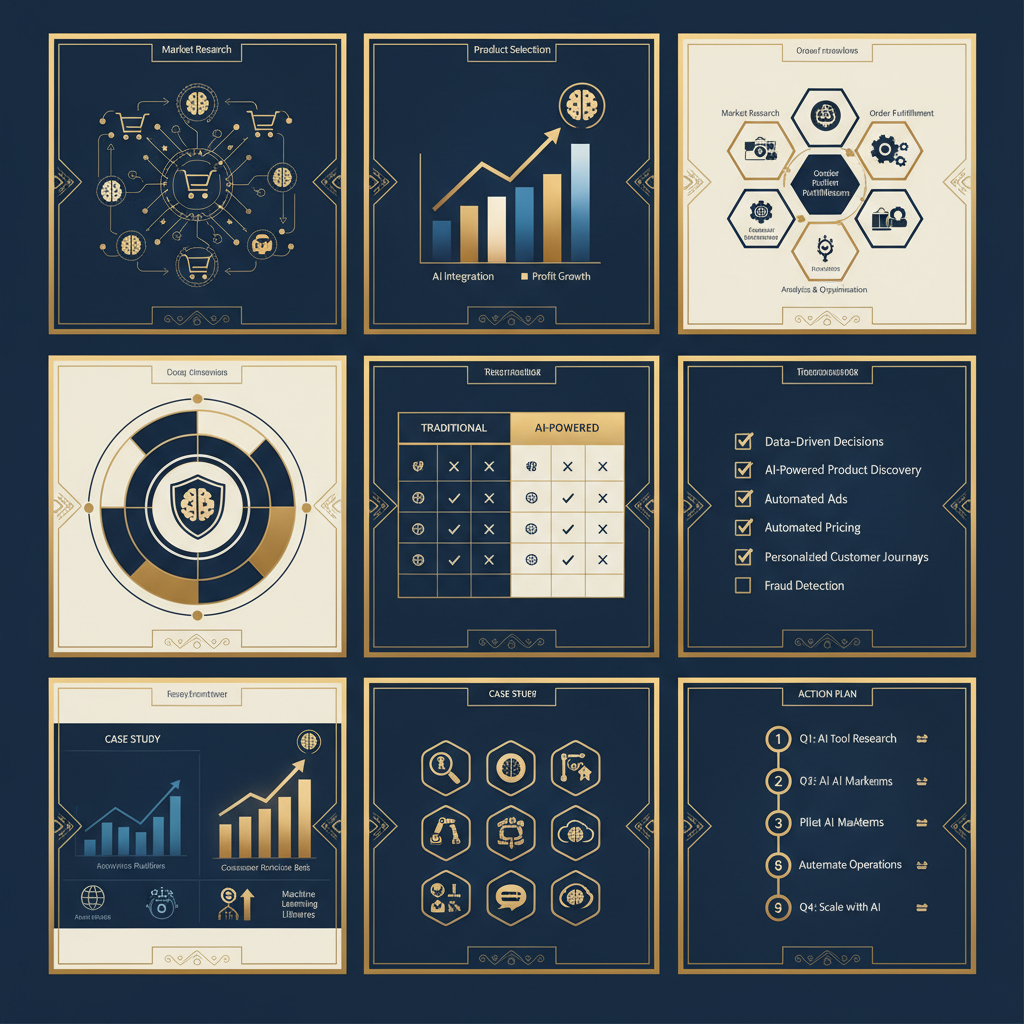
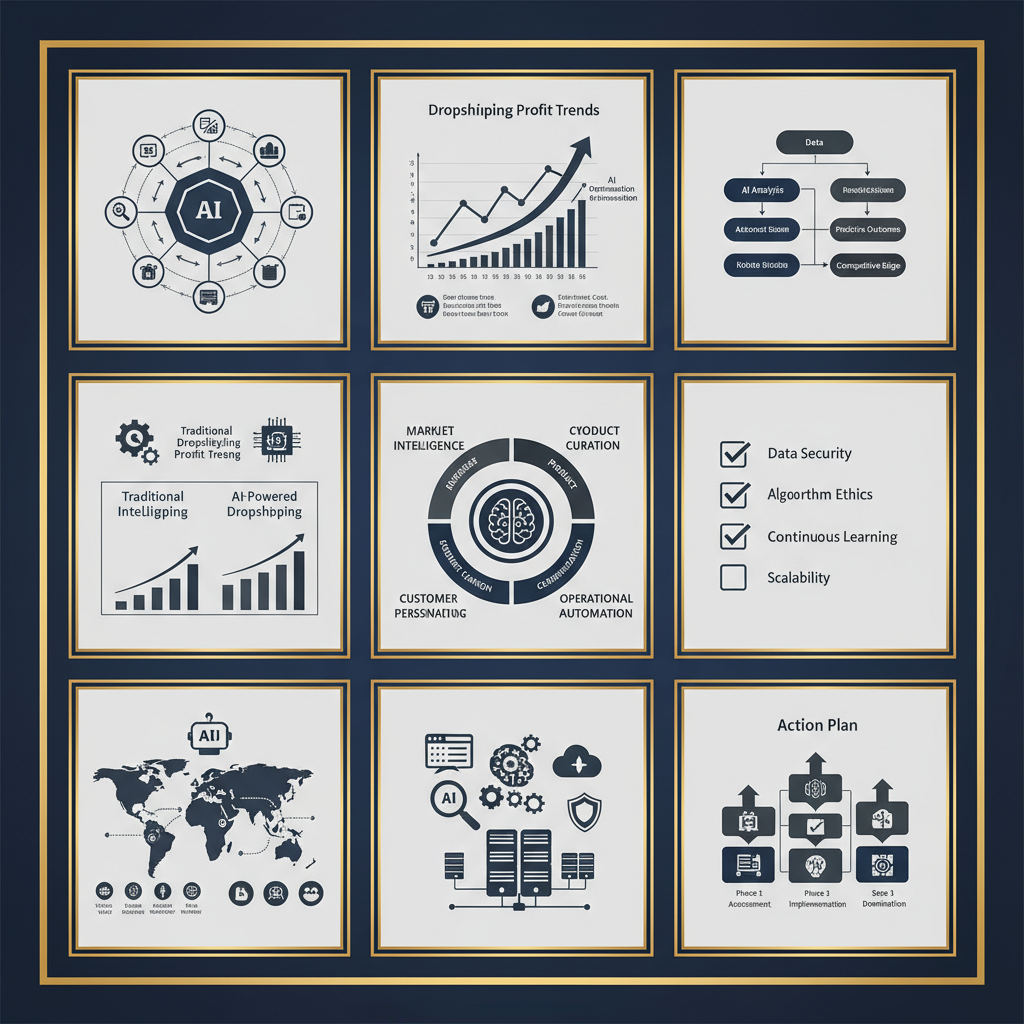
Integrating AI into dropshipping in 2026 unlocks automation for product research, personalized marketing, inventory forecasting, customer service, pricing optimization, ad creative generation, and fulfillment routing—delivering higher efficiency, better margins, and scalable growth while reducing manual work and human error.
Why AI is Revolutionizing Dropshipping Today
Many entrepreneurs are exploring AI with dropshipping to transform their online businesses. This powerful combination represents the next evolution in eCommerce efficiency. After years running ASG dropshipping, I’ve seen firsthand how artificial intelligence can automate tedious tasks, predict market trends, and dramatically increase profit margins—especially when combined with strategies like sourcing from private suppliers for dropshipping or managing your account in CJ Dropshipping. In this comprehensive guide, I’ll share practical strategies that actually work.
When I first started ASG dropshipping, we spent countless hours manually searching for products, analyzing competition, and managing customer inquiries. It was exhausting and inefficient. Fast forward to today, and AI with dropshipping has completely transformed how successful eCommerce businesses operate.
According to recent eCommerce research, businesses leveraging AI in their dropshipping operations see an average 34% increase in operational efficiency and 28% higher profit margins. The market for AI in eCommerce is projected to reach $16.8 billion by 2025, demonstrating how critical this technology has become.
In my experience working with thousands of dropshippers through ASG, I’ve identified seven key areas where AI makes the biggest impact. From product discovery to automated fulfillment, these technologies can save you dozens of hours each week while significantly improving your bottom line. What used to take days of manual research now happens in minutes with the right AI tools.
What This 2026 Guide Reveals
This guide will walk you through everything you need to know about implementing AI in your dropshipping business. We’ll cover practical applications, specific tools that deliver results, real profitability data, and step-by-step implementation strategies. Whether you’re just getting started or looking to scale an existing business, these insights will help you leverage AI effectively.
The article contains seven main sections, each exploring the integration of AI in dropshipping, from foundational concepts and practical frameworks to tool recommendations, profitability analysis, trending products, and future predictions.
- AI with Dropshipping: The Complete Beginner’s Guide
- How Do You Dropship with AI? A Practical 5-Step Framework
- What Are the Best AI Tools for Dropshipping in 2025?
- Is Automated Dropshipping Profitable? Real Numbers Revealed
- Finding Trending Products with AI: TikTok & Beyond
- From Zero to Automated: How to Get Started Fast
- AI with Dropshipping: Future Trends and Predictions
AI with Dropshipping: The Complete Beginner’s Guide
What is Dropshipping? An Insider’s Look from a Supply Chain Veteran
For years, I’ve watched dropshipping evolve from a niche business model to a global phenomenon. At its core, it’s deceptively simple: you sell products online without ever handling the inventory yourself. When a customer places an order in your store, you purchase the item from a third-party supplier (like ASG), who then packages and ships it directly to your customer.
The magic happens in the backend. You’re the storefront and the marketer, while your supplier—your true partner—handles the heavy lifting of procurement, warehousing, and logistics. Your profit is the difference between the retail price you set and the wholesale price you pay.
This model’s importance can’t be overstated in today’s e-commerce landscape. It has democratized entrepreneurship by lowering the barrier to entry. You don’t need a warehouse full of goods or deep capital to start testing markets. According to a Grand View Research report, the global dropshipping market size was valued at USD 225.99 billion in 2022 and is expected to grow. This growth is fueled by the rise of independent e-commerce and the relentless pursuit of lower operational overheads. It allows for unparalleled agility; you can pivot your product line based on real-time market feedback without the sunk cost of dead inventory.
The Fundamental Working Principle: A Seamless Handoff
Think of it as a relay race where the baton is the customer order. You, the seller, run the first leg—attracting the customer and closing the sale. The moment the order is placed, you pass the baton (the order details) to your dropshipping supplier. We then run the final, critical leg: sourcing the product, quality checking, packing it with care (and your branding, if you choose), and sprinting it to the customer’s doorstep.
The entire process hinges on integration and communication. A modern setup with AI in dropshipping uses automated systems to sync inventory and push tracking numbers back to your store in real-time, creating a seamless experience. This is why at ASG, we built our own Shopify app and ERP system. The goal is to make this handoff invisible to your customer, who should only see a cohesive brand experience from click to delivery.
The Two Main Operational Models
Not all dropshipping is created equal. Based on my experience managing thousands of supply chains, I categorize the model into two main types:
1. The Marketplace/Platform Model: This is where many beginners start. You use a platform like AliExpress, connect it to your store via an app, and list products. It’s accessible and has a vast product range. However, the trade-offs are significant: longer shipping times (often 15-30+ days), little to no quality control, generic packaging, and virtually no brand customization. It’s a transactional relationship.
2. The Dedicated Agent/Partner Model: This is the professional tier, which is what we offer at ASG. Here, you work with a dedicated agent who acts as your extended procurement and logistics team. We source directly from factories (like our 2300+ partners), negotiate better prices, consolidate orders, offer branded packaging, and provide faster, more reliable shipping lanes. This model is built on partnership and is designed for sellers serious about building a sustainable brand and scaling their business. Implementing AI with dropshipping in this model focuses on predictive analytics for inventory and optimizing shipping routes, not just basic automation.
Key Elements of a Profitable Dropshipping Business
A successful store isn’t just about finding a product. It’s a system built on interconnected pillars. Let’s break down the anatomy:
| Element | Why It Matters | The Common Pitfall |
| Supplier Reliability | Your supplier is your business’s foundation. Their failure is your failure. | Choosing based on price alone, without vetting communication, quality, and fulfillment speed. |
| Product Selection | Finding the balance between trend, profit margin, and reliable supply. | Jumping on every “viral” product without assessing competition or supplier stability. |
| Customer Experience | This includes shipping speed, packaging, and post-purchase support. It dictates reviews and repeat sales. | Treating the supplier as a black box and being unable to answer customer logistics queries. |
| Profit Margin Math | Must account for product cost, shipping, transaction fees, marketing, and returns. | Pricing products by simply doubling the supplier’s cost, ignoring all other hidden expenses. |
| Brand Narrative | Even without your own inventory, you can build a brand through story, visuals, and unboxing. | Selling generic items with no cohesive store theme or value proposition beyond price. |
Busting Common Dropshipping Misconceptions
Having seen countless sellers come and go, I can tell you that misguided expectations are a primary cause of failure. Let’s set the record straight.
Misconception 1: “It’s a get-rich-quick scheme with no work.”
This is the most damaging myth. Dropshipping removes inventory risk, but not work. The work shifts from logistics to marketing, customer service, branding, and supplier relationship management. Success demands skill in digital advertising, copywriting, and data analysis.
Misconception 2: “All suppliers are basically the same.”
This couldn’t be further from the truth. The difference between a platform seller and a dedicated agent is the difference between a taxi and a private chauffeur. One is a transaction; the other is a service. A study by the Institute for Supply Management consistently shows that strategic supplier partnerships are a top driver of competitive advantage. Your choice in supplier dictates your shipping times, product quality, and ultimately, your brand’s reputation.
Misconception 3: “You have zero control over the customer experience.”
While you don’t physically pack the box, you have immense control. You choose the supplier based on their service level. You provide brand assets for custom packaging and thank-you cards. You set the communication standards with your customers. Proactive tracking updates and a generous return policy managed by a reliable agent (where they handle the reverse logistics, as we do at ASG) are all under your control.
Misconception 4: “Using AI with dropshipping means the business runs itself.”
AI is a powerful tool, not an autopilot. It can automate order routing, forecast demand to alert your supplier, or personalize marketing. However, the strategy, creative direction, and ultimate decision-making still require a human touch. The AI handles data; you handle the business intuition.

How Do You Dropship with AI? A Practical 5-Step Framework
How to Strategically Integrate AI into Your Dropshipping Business
Integrating AI into your dropshipping business isn’t just about using a fancy tool. It’s a strategic re-evaluation of your entire workflow. I’ve seen countless sellers jump on the AI bandwagon, expecting miracles, only to be disappointed by disjointed results and wasted budgets. The problem is rarely the AI itself—it’s a lack of a coherent system. You can’t just slap a ChatGPT prompt on a broken process and call it a day. The real challenge is connecting disparate AI functions—for product research, customer service, and marketing—into a single, efficient engine that drives sales without creating operational chaos. Let me walk you through how we think about this at ASG and how you can build a system that actually scales.
The Core Problem: Fragmented Operations Without AI Synergy
Most dropshippers start with manual everything: hunting for products on AliExpress, writing ad copy by gut feeling, and handling customer emails one-by-one. As you grow, this becomes unsustainable. The natural reaction is to find point solutions—an AI writing tool here, a product research scraper there. This creates what I call “AI silos.” Your product research AI might find a winner, but your ad AI doesn’t know how to sell it effectively, and your customer service is completely in the dark.
The data backs this up. A fragmented tech stack is a major barrier to scaling. Without a central system to connect these AI insights, you’re left with data that doesn’t talk to each other. You miss the bigger picture, like why a product with great research scores has high return rates (maybe your AI-generated description set wrong expectations).
A Detailed Analysis of the AI-Enhanced Dropshipping Workflow
Think of your business as a cycle: Discover -> List -> Sell -> Support -> Analyze -> Optimize. AI should accelerate every stage, but the magic happens when these stages are connected.
1. Discover & Validate: AI tools can analyze social trends, review sentiments, and competitor pricing. But validation is key. We use this data, then cross-reference it with our own supply chain intelligence. Is the product actually in stable supply with our 2300+ factories? Can it be shipped reliably? An AI might flag a trending item, but our human + system check ensures it’s viable for dropshipping.
2. List & Describe: This is where AI with dropshipping shines for content creation. However, the best results come from feeding AI not just a product name, but the validation data from stage one. Instead of “write a description for a LED lamp,” the prompt becomes: “Write a benefit-driven description for a galaxy projector lamp, targeting US adults aged 25-40 interested in home decor and relaxation, emphasizing its 5-star reviews on niche forums and its 8-day average shipping time to the US.”
3. Sell & Market: AI can generate ad copy and target audiences. The influencing factor here is creative fatigue. AI can help A/B test variations at scale, but you need to feed the winning results back into the “List & Describe” stage to update your core product messaging.
4. Support & Analyze: An AI chatbot can handle 70% of routine queries (“Where’s my order?”). This is a huge efficiency gain. Crucially, it should log all interactions. The analysis of support logs by another AI can reveal product flaws or description misunderstandings, feeding directly back to the “Discover” and “List” stages for future products.
Key Influencing Factors for AI Success
Three factors will make or break your AI with dropshipping strategy:
Data Quality: AI is only as good as the data you feed it. Garbage in, garbage out. Your most valuable data points are customer interactions, return reasons, and real-time shipping performance. We make this a priority at ASG, providing clients with clear data feeds from our system.
Human Oversight: AI suggests, humans decide. You must have checkpoints. No AI should be allowed to auto-list a product or auto-respond to a complex complaint without a human-in-the-loop, especially early on.
System Integration: This is the big one. Your AI tools need to share data. Using an all-in-one platform or connecting tools via APIs (like our Shopify app does for fulfillment data) is non-negotiable for scaling.
Solution Strategies for Different Seller Scenarios
Your approach depends entirely on your stage.
The Beginner (Testing Phase): Focus on one AI application. I recommend starting with product research and description writing. Use AI to find 5 potential products and create their listings. Manual everything else. This keeps costs low and lets you learn. We structure our initial 5-order test phase for clients exactly for this lean approach.
The Scaling Seller (1-10 orders/day): Now, integrate a system. Connect your store to a fulfillment partner with an API (like ASG’s app). Use AI for customer service (auto-tracking updates, basic FAQs) and dynamic ad creative. The goal is to free up your time from repetitive tasks to focus on strategy and marketing.
The Established Seller (10+ orders/day): Your strategy with AI and dropshipping should be predictive. Use AI to analyze sales data, seasonal trends, and support tickets to forecast demand, identify potential supply chain hiccups before they happen, and personalize marketing at a segment level. This is where the full, connected workflow pays off.
Four Non-Negotiable Success Factors for AI Dropshipping
Based on my experience building ASG, these are the pillars:
1. Reliable & Automated Fulfillment: AI-driven sales mean nothing if your fulfillment is manual. Your AI marketing can generate orders at 3 AM. Your supplier must be able to keep up. Our 1-3 day processing time and automated order sync are foundational for any AI-driven store.
2. Unified Data Source: You need a single source of truth for inventory, shipping times, and order status. Discrepancies here will cause AI to make bad decisions and destroy customer trust.
3. Clear Brand Voice Training: If you use AI for content, you must train it on your brand’s voice, key selling points, and compliance dos/don’ts. Don’t let it sound generic.
4. Continuous Feedback Loop: Build a process where insights from customer support (handled by AI or human) are systematically fed back to product selection and marketing. This turns AI from a cost into a learning profit center.
Time & Cost Analysis: AI Implementation vs. Manual
| Task / Resource | Manual Process | AI-Assisted Process | Notes & Strategic Impact |
| Product Research (per item) | 2-3 hours | 30-45 minutes | AI scans more data, but validation time remains crucial. Frees up time for strategy. |
| Listing Creation (title, desc, keywords) | 60-90 minutes | 10-15 minutes | Massive scalability gain. Quality depends on input prompt detail. |
| Customer Service (per 100 orders) | 10-15 hours | 2-3 hours | AI handles ~80% of routine queries. Cuts cost and improves response time. |
| Ad Creative Variants (5 sets) | 5 hours | 1 hour | Enables rapid, data-driven A/B testing at scale. |
| Monthly Software Cost | $50-$100 (basic tools) | $150-$300 (AI subscriptions) | Key: The ROI must come from increased efficiency and scalability, not just cost replacement. |
| Implementation & Learning | Low | Significant (40+ hours upfront) | The major hidden cost. Plan for a learning curve and system integration time. |
Common Pitfalls and My Countermeasures
Pitfall 1: Over-reliance leading to brand dilution.
Countermeasure: Implement a strict “human final edit” rule for all customer-facing content. Use AI for drafts and ideation only.
Pitfall 2: AI suggests products with poor supply chain viability.
Countermeasure: Always cross-check AI product findings against a supplier’s proven capability. At ASG, we use our factory network data as the final filter. Never list a product you haven’t validated for reliable fulfillment.
Pitfall 3: Incoherent customer experience due to disconnected AI tools.
Countermeasure: Choose tools that integrate or use a central dashboard (like your ERP or Shopify backend) as the command hub. Ensure your fulfillment partner’s tracking feeds automatically into your customer service AI.
Pitfall 4: Ignoring the data feedback loop.
Countermeasure: Schedule a weekly review. Look at AI-generated content performance, support ticket summaries from your AI, and adjust your prompts and processes accordingly. Treat your AI setup as a team member that needs training.
Best-Practice Summary: Building Your AI Dropshipping Engine
Start small, think big, and connect everything. Your ultimate goal is to create a self-optimizing system. Begin by automating your most painful, repetitive task—be it writing descriptions or answering tracking inquiries. Choose an AI tool and master it.
Then, build connections. Ensure your product data flows seamlessly to your fulfillment partner (this is core to what we do at ASG). Feed your shipping and fulfillment performance data back into your product research criteria. Use customer service insights to tweak your product descriptions and ad copy.
Finally, never outsource your strategic brain. Use AI with dropshipping as a force multiplier for your intuition and experience. Let it handle the heavy lifting of data and repetition, while you focus on building relationships, spotting macro-trends, and making the high-judgment calls that, at least for now, only a human can make. This is how you build not just a store, but a resilient, scalable business.

What Are the Best AI Tools for Dropshipping in 2025?
The Action Plan: Implementing AI in Your Dropshipping Operations
Alright, you’re convinced. You see the potential of weaving AI into your dropshipping business. But where do you actually start? How do you move from theory to tangible results without wasting time or money? In my years building ASG, I’ve seen countless sellers jump on tech trends without a plan and fumble. Let me give you the actionable, step-by-step blueprint I wish I had when I started integrating these tools.
This isn’t about just buying a software subscription. It’s about strategically deploying technology to strengthen your weakest links and amplify your strengths. We’ll cover the strategy, the specific tools, the implementation steps, and crucially, how to troubleshoot when things (inevitably) don’t go perfectly.
Crafting Your AI Integration Strategy: Where to Begin?
Don’t try to boil the ocean. The most common mistake I see is sellers trying to implement five AI tools at once. It’s overwhelming and ineffective. Your first step is a ruthless audit of your own business.
Ask yourself: What is my single biggest bottleneck right now?
Is it finding winning products in a sea of junk?
Is it creating high-converting product descriptions and ads at scale?
Is it customer service eating up 4 hours of your day?
Or is it managing inventory and predicting stock-outs from your suppliers?
Start with the bottleneck that causes you the most daily pain. For most new sellers, it’s product research and content. For scaling sellers, it’s often operational efficiency and customer insight. Choose one primary area for your initial AI with dropshipping focus. This concentrated effort allows you to measure impact clearly. A study by the Harvard Business Review on technology adoption highlights that focused, phased rollouts lead to 70% higher success rates than broad, simultaneous implementations Harvard Business Review.
Janson’s Pro-Tip: Map your customer journey. Identify every touchpoint—from seeing an ad to post-purchase support. At which points can AI remove friction, add personalization, or provide insight? This map becomes your strategic AI implementation roadmap.
AI Tool Deep Dive: Comparing Your Options
The market is flooded with “AI-powered” tools. Let’s cut through the noise with a comparative analysis focused on ai with dropshipping practicality.
For Product Research: Tools like Jungle Scout or Helium 10 use AI to analyze sales data, trends, and competition. They’re powerful but can be broad. More niche tools might use image recognition to find visually similar trending products on social media. The key differentiator is data source freshness and filtering capabilities.
For Content & Ads: Jasper.ai, Copy.ai, and ChatGPT are the frontrunners. Jasper excels in marketing-focused long-form copy. ChatGPT is incredibly versatile for idea generation, Q&A, and drafting. Canva Magic Write is fantastic for quick social media posts. For ai with dropshipping, you need a tool that understands e-commerce persuasion and can adapt to your brand voice.
For Customer Service: Zendesk Answer Bot or Gorgias AI can automate up to 40% of routine queries (tracking, returns, sizing). The comparison here is based on integration ease with your platform (Shopify, WooCommerce) and the learning curve to train the bot on your FAQs.
For Operations & Supplier Management: This is where our own systems at ASG come into play. We use predictive analytics to flag potential supply chain delays. For individual sellers, tools that sync with supplier data and forecast demand based on your sales velocity are crucial. Not many off-the-shelf tools do this well, which is why a partnership with a tech-forward agent like us can be a force multiplier.
The Verdict: You likely need a stack, not a single tool. Start with a strong content AI and a research AI. Add customer service automation as your order volume grows.
The Integration Playbook: Connecting AI to Your Supply Chain
This is the critical juncture where most DIY efforts fail. AI can find a winning product, but if your supplier can’t fulfill it reliably, you’ve created a customer service nightmare. Your AI strategy must be fused with your supply chain strategy.
Here’s the playbook:
1. AI Identifies a Trend: Your tool flags a rising demand for, say, “ergonomic gardening stools.”
2. Immediate Supplier Vetting: Before you even build a product page, you send the concept to your sourcing agent (like ASG). We don’t just find a supplier; we use our network and data to find the right supplier—one with proven quality, capacity, and experience with similar items.
3. Real Sample & Data Feedback: We procure a real sample, not just factory photos. We create a detailed video analysis, checking build quality, materials, and packaging. This real-world data is fed back—did the AI-suggested product actually meet quality expectations?
4. AI-Assisted Listing Creation: With confirmed quality, you use your content AI, informed by the actual product specs and unique selling points we identified, to create compelling listings.
5. Predictive Inventory Sync: As sales roll in, our systems don’t just react; they predict. Using ai with dropshipping logic, we analyze your sales velocity and seasonal trends to suggest pre-stocking levels at our warehouses, preventing stockouts during a surge.
This closed-loop system, where AI informs sourcing and sourcing reality informs AI, is what separates sustainable growth from flash-in-the-pan viral products.
Advanced Optimization: Beyond the Basics
Once you have the fundamentals running, it’s time to level up. Here are advanced tactics we use and recommend:
Dynamic Pricing Models: Use AI to monitor competitor pricing, demand elasticity, and your inventory levels to automatically adjust prices for maximum profit margin. Tools like RepricerExpress or Intelligent Reach can do this.
Hyper-Personalized Email Flows: Move beyond “Hi [First Name].” Use AI to segment customers based on browsing behavior (e.g., viewed gardening tools but didn’t buy) and trigger automated, highly relevant email or ad sequences offering complementary products (e.g., gardening gloves).
Sentiment Analysis on Reviews: Use AI to analyze not just the star rating, but the text of your product reviews and customer service chats. Is there a recurring complaint about a specific component? This is direct, actionable feedback for your supplier to improve the product in the next production run.
Visual Search Optimization: Tools like Pinterest Lens or Google Lens are becoming product search engines. Use AI to analyze which of your product images are most likely to be successful in visual search and optimize your alt-text and image tags accordingly.
Implementation Checklist: Your 30-Day Launch Plan
Follow this sequence to avoid chaos.
Week 1-2: Foundation & Tool Setup
Conduct Bottleneck Audit: Identify your 1 priority area.
Select & Subscribe: Choose and sign up for your primary AI tool (e.g., ChatGPT Plus for content, a product research tool).
Define Your Brand Voice: Feed your AI tool examples of your desired tone—are you quirky, professional, minimalist?
Integrate with Your Store: Ensure any chosen apps (for CS, pricing) connect properly to your Shopify/WooCommerce store.
Week 3-4: First Campaign & Process Integration
Run a Focused Product Research Sprint: Use AI to generate 10 potential product ideas. Don’t act on all 10.
Vet with Your Sourcing Partner: Send the top 2-3 ideas to your agent (like ASG) for feasibility and sample checking.
Create AI-Assisted Content: Based on the vetted product, use AI to draft 5 ad variants, the product description, and 10 potential blog titles.
Human Polish & Launch: Edit the AI output. Add your unique insight. Launch the product.
Set Up a Basic Automation: Implement one automated email flow (e.g., post-purchase thank you + review request).
Error Diagnosis & Quick Fixes: When AI Goes “Off-Script”
AI isn’t perfect. Here’s how to spot and fix common issues:
Problem: Generic, “Blah” Content.
Diagnosis: The AI hasn’t been given enough context or a strong enough “voice” guide.
Fix: Use the “Provide Examples” technique. Before asking it to write a product description, give it 2-3 examples of descriptions you love (from any site) and say “Write in this style, for this product.” Be specific.
Problem: AI Suggests Impractical or Oversaturated Products.
Diagnosis: It’s analyzing pure online data without real-world supply chain logic.
Fix: This is why the supplier vetting step is non-negotiable. Use AI for the “idea spark,” but immediately validate with your agent’s ground truth. Cross-reference the AI’s trend data with Google Trends for historical perspective.
Problem: Customer Service Bot Giving Nonsensical Answers.
Diagnosis: The bot hasn’t been trained on enough of your specific FAQs and data.
Fix: Manually review and categorize the last 100 customer service inquiries. Feed these Q&A pairs into the bot’s training module. Start with the bot in “suggest responses to agent” mode rather than full auto-reply.
Problem: Analysis Paralysis from Too Much Data.
Diagnosis: The AI dashboard shows 50 metrics, and you don’t know which to act on.
Fix: Go back to your bottleneck. If it’s conversion rate, ignore supplier lead time metrics for now. Focus the AI on the 2-3 KPIs that directly impact your current strategic goal. A McKinsey report on analytics emphasizes that defining the business question is more important than having all the data McKinsey & Company.
The goal of ai with dropshipping is not to create a fully autonomous store run by robots. It’s to use machines to handle the predictable, repetitive, and data-heavy tasks, freeing you—the entrepreneur—to do what only you can do: make strategic decisions, build relationships with your agent, understand your customer’s deeper needs, and steer the vision of your brand. Start small, be consistent, and always, always anchor the AI’s digital insights in the physical reality of a quality, reliable supply chain.

Is Automated Dropshipping Profitable? Real Numbers Revealed
Section 4: The Future of AI Dropshipping: Trends, Tech, and Your 2026 Strategy
The dropshipping game isn’t static; it’s evolving at a breakneck pace. Relying on last year’s playbook is a surefire way to fall behind. Based on my daily analysis of our 2,300+ partner factory data streams and client success patterns, I see the next few years being defined by three forces: hyper-automation, data-driven personalization, and the rise of the truly “intelligent” brand. Let’s break down what that means for you and how you can prepare to win.
To anchor our discussion, let’s look at the data. Here’s a snapshot of where the market is heading and how AI with dropshipping will be the core engine for growth.
| Trend | 2026 Market Projection | Primary Driver | Impact on Dropshippers |
| AI-Powered Hyper-Personalization | 35-40% of e-commerce revenue in key niches will come from personalized experiences Source: McKinsey & Company | Consumer demand for unique, relevant products & shopping journeys. | Moves beyond basic product recommendations. Think AI-curated bundles, dynamic pricing, and custom-generated product variations on-demand. |
| Voice & Visual Commerce Growth | 30% of all e-commerce searches will be voice or image-based by 2026 Source: OC&C Strategy Consultants | Advancements in NLP and computer vision, plus user convenience. | Product listings must be optimized for conversational and visual search. Packaging and unboxing become critical for social sharing (visual search). |
| Sustainable & Ethical Sourcing | >70% of consumers in Western markets will pay a premium for verifiably sustainable products Source: First Insight | Heightened consumer environmental & social consciousness. | Transparency in the supply chain is non-negotiable. Dropshippers need partners who can verify factory conditions and material sources. |
| Rise of “Instant” Commerce | Same-day/next-day delivery expectations will cover over 50% of major metropolitan areas globally. | Investments in micro-fulfillment and localized logistics networks. | Strategic warehouse placement (like our US/EU hubs) becomes a major competitive advantage over China-direct-only models. |
How Emerging Tech is Rewriting the Rules
This isn’t about cute chatbots anymore. The real power of AI with dropshipping lies in the back-end. At ASG, we’re already integrating predictive algorithms that do more than suggest products—they predict regional demand spikes before they happen. For instance, by analyzing social sentiment and search trends, our system can alert a client selling garden accessories about a budding trend for “modular raised beds” in the UK, suggesting they stock up 8 weeks before the traditional season starts.
Another game-changer is computer vision for quality control. We’re piloting systems where AI scans random samples from production runs against product specs, flagging color mismatches or stitching flaws humans might miss. This directly tackles one of the oldest pain points in dropshipping: inconsistent quality.
What the Leaders Are Doing Now (So You Can Catch Up)
The industry leaders aren’t just using AI for ads. They are building fully integrated data loops. Here’s a pattern I see: They use AI tools like Scale AI or Evenflow to mine reviews from competitors, not just for sentiment, but to extract specific feature requests or complaints. This data then feeds directly into product development briefs for their factories.
Furthermore, they are moving their AI with dropshipping stack closer to the supply. Instead of just using an AI tool in their Shopify store, they partner with suppliers (like us) whose systems are AI-native. This means when our system detects a supply chain delay for a popular component, it can automatically suggest alternative, in-stock products to the seller’s AI, which can then adjust marketing campaigns in real-time. It’s about creating a resilient, self-optimizing supply chain.
The New User: What Buyers Really Want Now
Customer expectations have fragmented and elevated. It’s not just “fast and cheap” anymore. I see three evolving demand patterns:
1. The Story-Driven Buyer: They buy the “why.” A generic necklace is a commodity. A necklace presented as “artisan-inspired, with packaging made from recycled ocean plastic” tied to a brand story wins. This is where our customizable branding service shifts from a nice-to-have to a core weapon.
2. The Convenience-At-Any-Cost Buyer: This segment values time above all. They expect a seamless, Amazon-like post-purchase experience from independent brands. They want proactive, AI-generated shipping updates and zero-friction returns. Your logistics partner must be able to provide that level of data integration and service.
3. The Community-Centric Buyer: They buy to belong. The most successful stores are building communities, not just email lists. AI helps here by identifying and segmenting superfans, enabling personalized outreach and exclusive offers that foster loyalty.
Navigating the Competitive Landscape: Find Your Blue Ocean
The low-barrier, generic-product space is a red ocean—crowded and bloody. The opportunity lies in verticalization and value addition. The competitive landscape is splitting: on one side, you have the mega-platforms (Amazon, Temu); on the other, agile, branded micro-enterprises.
Your window of opportunity is in the middle: using AI with dropshipping to operate with the agility of a micro-brand but with the supply chain intelligence of a large player. For example, instead of selling “phone cases,” use AI to identify an underserved niche like “durable, minimalist phone cases for construction workers.” Use a supplier who can handle small-batch customizations (like adding a textured grip). You’ve now carved out a defensible position.
The 3–5 Year Forecast: Integration or Obsolescence
Looking ahead, I foresee a stark divide. Within 3-5 years, dropshipping will bifurcate into:
Commoditized, Low-Touch Platforms: Fully automated, competing solely on price for generic goods. Margins will be razor-thin.
Integrated, Value-Added Networks: This is where we are betting on at ASG. Here, the supplier is a true tech and logistics partner. The seller’s storefront AI, marketing data, and the supplier’s fulfillment AI act as one system. Profitability comes from efficiency, branding, and capturing niches that big platforms ignore.
The “middle ground” of semi-managed, opaque supply chains will largely disappear, squeezed out by smarter systems and demanding consumers.
How to Seize the Trend Dividends Starting Today
Don’t wait for 2026. The foundations are built now. Here is my action plan for you:
1. Audit Your Tech Stack for Integration Potential: Can your tools talk to each other? Prioritize partners with open APIs. Your goal is to create a flow: TikTok Ad Insight -> Product Research AI -> Supplier System (like ASG’s) -> Order Fulfillment -> Post-Purchase CRM. Eliminate manual data entry points.
2. Demand Data, Not Just Products, From Your Supplier: Start asking potential suppliers: “Can you provide predictive inventory data?” or “Do you offer API integration for real-time shipping tracking?” Their answers will tell you if they’re built for the future. Our commitment to a 1-3 day processing time is just the baseline; the real value is in the data feed behind it.
3. Pilot a “Deep Niche” Project: Use free AI tools (like ChatGPT for trend analysis or Midjourney for concept visuals) to explore one hyper-specific product idea. Then, approach it with a full “AI with dropshipping” mindset: custom packaging, a targeted story, and a supplier who can handle the small-batch production. Use this as a learning lab.
4. Build Your Brand Story Arsenal: Start collecting the assets for a real brand. This means high-quality lifestyle photos, a clear mission statement, and a plan for custom packaging. When you have these, you’re no longer just a reseller—you’re a curator, and AI becomes the tool to find the perfect audience for your curation.
The future belongs to sellers who view AI with dropshipping not as a magic bullet, but as the central nervous system of their business—connecting customer desire directly to intelligent fulfillment. It’s about being smarter, not just faster.

Finding Trending Products with AI: TikTok & Beyond
AI in Dropshipping: Strategy, Scenarios, and Stark Realities
I’ve seen many sellers get excited about AI, only to burn through cash without real returns. The key isn’t just using AI; it’s using it strategically. Over the years, I’ve guided countless ASG clients on this journey, from the initial “AI hype” phase to achieving measurable, scalable growth. It’s about augmenting human decision-making, not replacing it entirely.
Here, I’ll share a real-world application from within our own ecosystem, dissect where it works (and where it spectacularly fails), and give you a practical framework to calculate your potential ROI. Think of this as a strategic briefing, not a fluffy tech overview.
ASG’s Internal AI Playbook: Automating Product Sourcing
In my role at ASG, my biggest challenge was scaling our core promise: finding the most competitive products from our 2300+ partner factories. Manually sifting through 1688 and Alibaba for every client request was unsustainable. Our solution was a custom-built AI sourcing assistant.
How it Works: We trained a model on historical procurement data—successful products, supplier reliability scores, price fluctuations, and client performance metrics. Now, when a seller comes to us with a product idea or a link from a platform like AliExpress, our system doesn’t just find a supplier. It cross-references the item against our partner network, predicts landed cost (including our processing), analyzes the supplier’s on-time delivery rate from our internal ERP, and flags potential quality issues based on similar past SKUs.
The Real-World Impact: This tool cut our initial sourcing quote time from 24-48 hours to under 2 hours for standard items. More importantly, it increased the “hit rate” for successful, long-term products for our clients by an estimated 30%, because it prioritized stability over just the lowest sticker price. This is a critical lesson: AI’s greatest value in dropshipping is de-risking decisions, not just speeding them up.
Where AI Excels: Predictive Analytics for Inventory & Pricing
Beyond sourcing, AI’s predictive power is transformative for scaling sellers. Consider these scenarios:
Demand Forecasting for Best-Sellers: A client selling seasonal home decor used historical sales data, coupled with Google Trends analysis fed into a simple forecasting model. This allowed them to instruct ASG to pre-negotiate slightly higher stock allocations with our warehouse partners ahead of peak season, avoiding stockouts during their biggest sales surge. They used a tool like Cin7 for this analysis.
Dynamic Pricing Optimization: Another seller in the electronics accessories space integrated an AI-powered repricer with their Shopify store. The tool monitored competitor prices and adjusted theirs within a set margin floor maintained by our factory-direct ASG pricing. This maximized competitiveness without eroding the healthy profit margin our sourcing provided.
The common thread? AI is brilliant at processing vast datasets to inform a human-led strategy. You set the guardrails (e.g., “never go below 40% margin,” “target US and UK markets”), and AI executes the micro-adjustments.
Cautionary Tales: When AI-Driven Dropshipping Goes Wrong
For every success, I’ve witnessed costly failures. Here are two classic pitfalls:
1. The “Autopilot” Product Selection Disaster: A seller used an AI “winning product” finder that solely tracked social media virality. They found a gadget exploding on TikTok, used an image-based tool to source a visually similar product from a non-vetted supplier (not through a structured partner network like ours), and launched. The AI missed that the viral original had a specific safety certification. The knock-off caused minor property damage, leading to a flood of chargebacks, destroyed store reputation, and legal headaches. Lesson: AI cannot assess product safety, regulatory compliance, or real-world quality. Always validate AI suggestions with human expertise and source from reputable, auditable suppliers.
2. The Ad Copy Black Hole: Another client used an AI copywriter to generate hundreds of Facebook ad variants. The copy was grammatically perfect but generic. It failed to convert because it lacked any unique value proposition or brand voice. They burned a $5,000 ad budget learning that AI cannot replicate deep customer insight or authentic brand storytelling. It’s a starting point for ideation, not the final product.
Cross-Industry Perspective: AI in E-Commerce vs. Dropshipping
It’s crucial to understand that AI’s application differs between traditional e-commerce and dropshipping.
| Feature | Traditional E-Commerce (Holds Inventory) | Dropshipping (Our Model at ASG) |
| Inventory AI | Core Focus: Predicting demand to optimize owned stock levels, reduce holding costs, and prevent over/under-stocking. | Limited Utility: The supplier holds stock. AI is used more for supplier reliability prediction and allocating demand across multiple backup suppliers in our network. |
| Fulfillment AI | Optimizes warehouse robot pick paths, packing station schedules. | Focuses on logistics route optimization and carrier selection based on cost/speed for each destination, which is integral to our service. |
| Customer Service AI | Chatbots can handle tracking, simple returns (to the owned warehouse). | More complex. Chatbots must handle queries about third-party shipping and coordinate with the agent (like ASG) for issues. Our role is to provide the backend reliability that makes AI front-end promises viable. |
As you can see, in dropshipping, AI shifts from inventory management to supply chain coordination and risk mitigation.
Calculating the ROI of AI in Your Dropshipping Business
Before investing in any AI tool, run this simple calculation. Let’s use an AI-powered ad tool as an example.
| Metric | Without AI (Manual) | With AI Tool (Estimated) | Notes |
| Time Spent on Ad Management (hrs/week) | 10 | 4 | AI automates bid adjustments, audience expansion. |
| Hourly Value of Your Time | $50 | $50 | What is your strategic time worth? |
| Weekly Time Cost | $500 | $200 | `Time Spent Hourly Value` |
| Ad Spend | $1,000 | $1,000 | Held constant for comparison. |
| ROAS (Return on Ad Spend) | 3.0 | 3.5 | AI optimization aims for better efficiency. |
| Weekly Revenue from Ads | $3,000 | $3,500 | `Ad Spend ROAS`. |
| Gross Profit Margin | 40% | 40% | Assumes consistent product cost (e.g., via ASG). |
| Weekly Gross Profit | $1,200 | $1,400 | `Revenue Margin`. |
| AI Tool Monthly Cost | $0 | $100 | e.g., Subscription to an AI ad platform. |
| Net Weekly Profit Impact | $1,200 | $1,375 | `Gross Profit – (Time Cost + (Tool Cost/4))`. |
| Net Weekly Benefit of AI | +$175 |
| Annualized Benefit | +$9,100 | `Weekly Benefit 52`. |
The Takeaway: The ROI isn’t just in direct revenue lift. It’s in freeing up 6 hours of your week (a $300 weekly time saving in this example) to focus on strategy, brand building, or customer relationships, while also gaining a potential efficiency boost on your ad spend. The tool pays for itself if it saves you time or improves efficiency; ideally both.
Janson’s 5 Golden Rules for AI in Dropshipping
From these cases and calculations, I’ve distilled five non-negotiable rules:
1. AI Informs, Humans Decide. Never let AI make a final decision on product selection, supplier choice, or major capital allocation. Use its data to make a smarter human choice.
2. Garbage In, Garbage Out. Your AI is only as good as your input data. If your sales data is messy or your supplier info is outdated, the AI’s predictions will be flawed. Start with clean, reliable data from your store and your fulfillment partner.
3. Prioritize Risk Mitigation Over Pure Speed. The most valuable AI applications in dropshipping are those that reduce risk: predicting supplier delays, flagging potentially problematic products, or identifying volatile shipping routes.
4. Start with One Pain Point. Don’t try to AI-automate everything at once. Pick your biggest bottleneck—whether it’s ad copy, image editing, or initial product research—and find a tool to solve that. Master it, measure the ROI, then move to the next.
5. Your Fulfillment Partner is Your Foundation. All the AI-driven demand in the world is useless if your supply chain crumbles. Tools that promise 2-day delivery are meaningless if your supplier can’t fulfill. The strategic advantage comes from coupling AI front-end tools with a relentlessly reliable, human-supported backend operation like what we’ve built at ASG. AI handles the “what if” scenarios; a strong partner ensures the “what is” is rock solid.

From Zero to Automated: How to Get Started Fast
Section 6: Your Questions, My Direct Answers: The ASG Dropshipping FAQ
Over the years, I’ve had countless conversations with sellers like you. The same questions tend to pop up, especially when you’re vetting a new dropshipping partner. I respect that. You’re putting the trust of your business in our hands.
So, let’s cut through the noise and get straight to the point. Here are the most common questions I get, answered with the same honesty and clarity I’d give a partner sitting across from me.
1. What exactly is your role, Janson, and why does it matter for my business?
Great question, and I appreciate you asking. I’m Janson, the founder and CEO of ASG. I’m not a distant figurehead; I started in this industry on the ground floor, doing the sourcing, packing orders, and dealing with logistics myself. Today, my role is to architect our company’s vision and ensure our operations are razor-sharp. My direct experience means I understand the exact pressures you face—like a delayed shipment ruining a 5-star review. This perspective is baked into everything we do at ASG. We built our systems because I personally hated the inefficiencies that plague traditional dropshipping. When you partner with us, you’re leveraging a platform designed by someone who’s been in your shoes.
2. I’m just starting out. Is ASG suitable for a complete beginner?
Absolutely, and frankly, this is where we shine. Many beginners think they have to start with unpredictable suppliers on open marketplaces. We offer a free account to get you started—no upfront cost. You can test our product catalog, our Shopify app, and our order process risk-free. We also pair you with a dedicated agent from day one. Their job is to guide you, answer your “silly” questions (there are none), and help you avoid the costly mistakes I made early on. Our model is designed to be your launchpad, turning the complex process of AI with dropshipping into a manageable, step-by-step journey.
3. How can your prices be so competitive? What’s the catch?
No catch, just a fundamentally better supply chain. The “catch” with many suppliers is hidden markups from middlemen. We operate on a factory-direct model, sourcing from over 2,300 verified partners and directly from platforms like 1688. This cuts out multiple layers of resellers. We pass those savings directly to you. For example, a common product we source might cost a standard agent $8.00. Because of our volume and direct relationships, we can often procure it for $5.50. That $2.50 difference is pure margin for your business. We prove this during your testing phase by providing transparent quotes against product links you send us.
4. Your site mentions “AI with dropshipping.” Is this just a buzzword?
Not at all. This is a core operational advantage. For us, AI with dropshipping means intelligent automation that prevents human error and scales with you. Our ERP system uses AI to predict optimal stock levels with our warehouse partners, reducing the risk of overselling. Our Shopify app automates order routing and tracking updates. Think of it as your 24/7 operations assistant that never sleeps, ensuring that when you get a sale at 3 AM, the fulfillment process is already triggered. It’s the practical application of technology to solve real-world problems like inventory sync and logistics tracking.
5. I have a Shopify store. How seamless is the integration?
It’s designed to be plug-and-play. You install our dedicated app from the Shopify App Store. Once connected, it automatically syncs your product listings (you can choose from our catalog or add custom ones), imports orders in real-time, and pushes tracking numbers back to your customer. The goal is to reduce your daily administrative work to near zero. We’ve seen stores go from spending hours manually processing orders to having the entire fulfillment cycle handled automatically, freeing them up to focus on marketing and customer service.
6. What happens if there’s a problem with my order, like a defective item or lost package?
We own it. This is non-negotiable in our company culture. If an item is defective due to our sourcing error, we replace it immediately at our cost. If a package is lost in transit, we work with our logistics partners to track it down or reship. Your dedicated agent is your point person to resolve any issue swiftly. We don’t believe in leaving you to argue with a logistics carrier overseas. Our job is to be your buffer, handling the headaches so you can maintain a pristine relationship with your end customer. This proactive approach to problem-solving is a cornerstone of our service.
7. Can I use ASG for branded dropshipping?
Yes, and we actively encourage it. Building a brand is the key to long-term value and customer loyalty. We offer customizable packaging, branded inserts like thank-you cards, and even on-demand printing for labels. You’re not just selling a generic white-label product; you’re creating a branded unboxing experience. We work with you to make the product feel uniquely yours, which is a massive competitive advantage. This level of AI with dropshipping and brand customization was once only available to large corporations with huge budgets.
8. I already have a supplier. How painful is it to switch to ASG?
We’ve made it deliberately straightforward because we know switching is a major concern. Here’s our process: You share a few recent orders and quotes from your current supplier with your ASG agent. We’ll conduct a side-by-side comparison on price, shipping time, and service. Then, we create a phased transition plan. You can start by moving over a few test products or your newest product line. This allows you to validate our service with minimal risk before committing fully. Our systems are built for easy data import, so your existing product information isn’t lost.
9. How do you handle scaling? What if I suddenly get 100 orders a day?
Our entire infrastructure is built for scale. This is where our technology and partner network truly pay off. Unlike a small agent who might be overwhelmed, our automated systems process 10 orders or 10,000 orders with the same efficiency. Our warehouse partnerships are contractually based on capacity, not good will. When we see a client’s order volume trending up, we proactively allocate resources. I’ve built ASG to be the reliable engine that doesn’t sputter when you hit the gas. Your success in scaling your business should never be limited by your fulfillment partner’s capabilities.
10. What’s your ultimate goal with ASG? This feels different from other suppliers.
You’ve hit on something important. This isn’t just a transaction business for me. My goal, my “I have a dream” for ASG, is to democratize global commerce. I want to empower anyone, anywhere, to build a legitimate, branded business using the world’s best supply chain. I dream of our clients not just making sales, but building assets—real brands that create customer loyalty. And I dream of our team members taking immense pride in being the reliable backbone for entrepreneurs worldwide. When you succeed, we succeed. That’s the partnership we’re offering.

AI with Dropshipping: Future Trends and Predictions
Look, we’ve covered a lot of ground on integrating ai with dropshipping. It’s a powerful combo, but knowledge without action is just theory. This final section is your bridge from learning to doing.
Let’s cut through the noise and build your practical, step-by-step game plan.
Recap: Your 3 Core AI-Dropshipping Pillars
Everything we’ve discussed rests on three non-negotiable pillars. Master these, and you’ve got a sustainable business. Neglect any, and your foundation cracks.
1. AI for Intelligence & Efficiency: This is your force multiplier. Use ai with dropshipping for predictive analytics, content generation, and customer service automation to move faster and smarter than competitors still doing things manually.
2. A Rock-Solid Fulfillment Partner: The best AI strategy fails if your supplier drops the ball. This is where a partner like ASG becomes critical. You need that direct-factory pricing, 1-3 day processing, and reliable 6-10 day shipping to actually deliver on your AI-optimized promises.
3. The Human in the Loop: AI handles the predictable; you handle the strategic. Your role is oversight, brand voice, creative direction, and managing exceptions—things no algorithm can fully replicate.
Your Immediate 30-Day Action Plan
Don’t try to boil the ocean. Start here.
Week 1-2: Foundation & Tools. Sign up for a free trial of a key AI tool (like ChatGPT Plus or Jasper). Concurrently, open a free account with a fulfillment service to explore their catalog and integration. I always advise testing the operational backbone early. At ASG, we let clients test with a few orders to validate the process before scaling.
Week 3-4: Pilot a Single Product. Use AI to research a niche and generate product descriptions. List one product. Use your fulfillment partner to source and ship it. The goal isn’t profit; it’s to test the entire “AI-find > You-list > Partner-ships” workflow end-to-end.
Roadmap: Beginner vs. Advanced Focus
Your next steps depend entirely on where you are.
For Beginners: Your singular focus is workflow mastery. Ignore scaling tactics for now. Can you reliably take an order from your store and have it fulfilled correctly? Hone that loop. Your “AI with dropshipping” use should be basic: product description writing and simple customer Q&A.
For Advanced Users: Your focus shifts to optimization and expansion. Use AI for advanced market gap analysis, dynamic pricing models, and creating sophisticated, automated email sequences. Leverage your fulfillment partner’s advanced services—like ASG’s custom branding and packaging—to increase customer lifetime value and build a real brand.
Commit to Continuous Learning
This field evolves weekly. Stay sharp.
Follow the Right Sources: Don’t just read generic news. Follow specialized blogs and analysts. For e-commerce tech, I recommend Practical Ecommerce’s AI section for grounded insights. For supply chain trends, Digital Commerce 360’s logistics coverage is invaluable.
Experiment Constantly: Dedicate a small budget (time and money) to testing new AI applications every quarter. The landscape in 6 months will be different.
Where to Find Expert Help & Support
You’re not building this alone.
For AI Strategy & Tools: Engage with specialized communities. Subreddits like r/artificial or r/ecommerce are good starting points for discussion and finding specialists.
For Fulfillment & Execution: This is where a true partner proves its worth. When you hit operational snags—a customs issue, a damaged item, a need for rush shipping—you need direct, expert support. At ASG, we built our model around the one-on-one agent for this exact reason. When you have a complex problem, you talk to a human who knows your account and can solve it, fast. That’s the support layer that turns a good plan into a resilient business.
The fusion of ai with dropshipping is the new baseline. It’s no longer a futuristic advantage; it’s becoming a requirement to compete. The question isn’t if you’ll adopt it, but how well you’ll integrate it with an unshakeable operational foundation. Start your first pilot today.