Resolving CJ Dropshipping sourcing request issues in 2026 involves understanding common errors like store selection failures, product tag glitches, and loading problems—while exploring faster, more reliable alternatives that offer direct factory access, automated integration, and proactive support for seamless product assignment.
Why Sourcing Request Issues Are a Major Pain Point
As a dropshipper frustrated with sourcing request issues on CJ dropshipping, you’re not alone. Many sellers face problems when trying to get products assigned for selling—especially when integrating with platforms like TikTok Shop with CJ Dropshipping or managing your account in CJ Dropshipping. This guide covers practical solutions for common CJ dropshipping sourcing request failures, from selecting stores and product tags to handling multiple selections. We’ll share proven strategies to overcome these challenges.
Hey, I’m Janson from ASG dropshipping. Over the years in this industry, I’ve seen countless dropshippers struggle with sourcing request problems on various platforms. It’s frustrating when you find a perfect product but can’t get it assigned to your store, right?
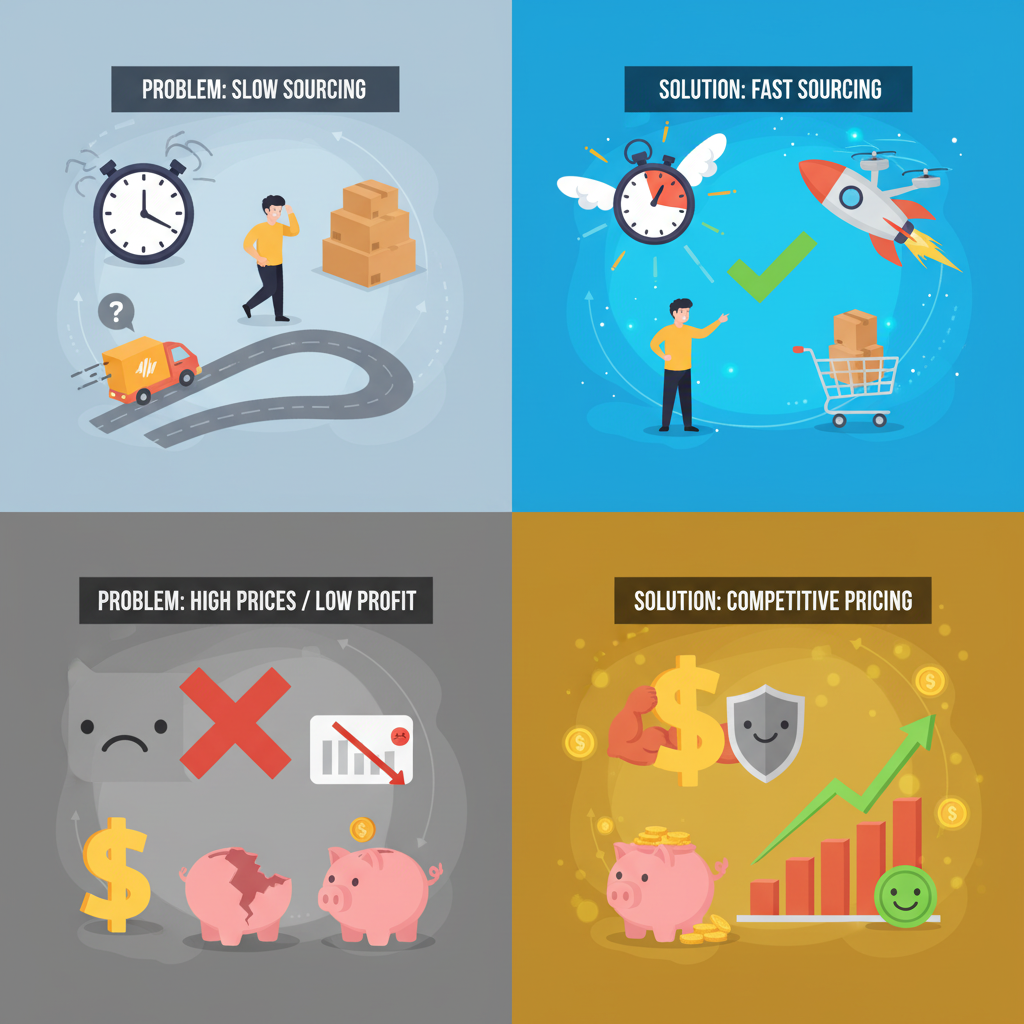
According to industry data, sourcing request failures account for nearly 30% of dropshipping setup frustrations. When CJ dropshipping sourcing requests don’t work properly – whether it’s the ‘loads and doesn’t show anything’ error, trouble selecting stores, or issues with product tags – it can derail your entire business momentum.
What This Troubleshooting Guide Covers
In this comprehensive guide, I’ll walk you through:
- The most common CJ dropshipping sourcing request problems and their root causes
- Step-by-step troubleshooting methods that actually work
- Alternative approaches when platform limitations hold you back
- How professional dropshipping services handle sourcing differently
- Critical factors to consider for sustainable product sourcing
- Practical workarounds for immediate results
- Long-term solutions that prevent these issues entirely
Having dealt with sourcing challenges since my early days in cross-border ecommerce, I understand how these technical glitches can make or break a dropshipping business. Let’s dive into solving these problems together.
The article features seven main sections, each addressing key aspects of CJ Dropshipping sourcing requests, from common problems and fixes to product selection, alternatives, professional solutions, future trends, and a final action plan.
- Common CJ Dropshipping Sourcing Request Problems & Solutions
- Step-by-Step Fix for ‘Loads and Doesn’t Show Anything’ Error
- How to Properly Select Stores and Product Tags in CJ
- Getting Products Assigned to You for Selling Successfully
- Alternative Sourcing Methods When CJ Requests Fail
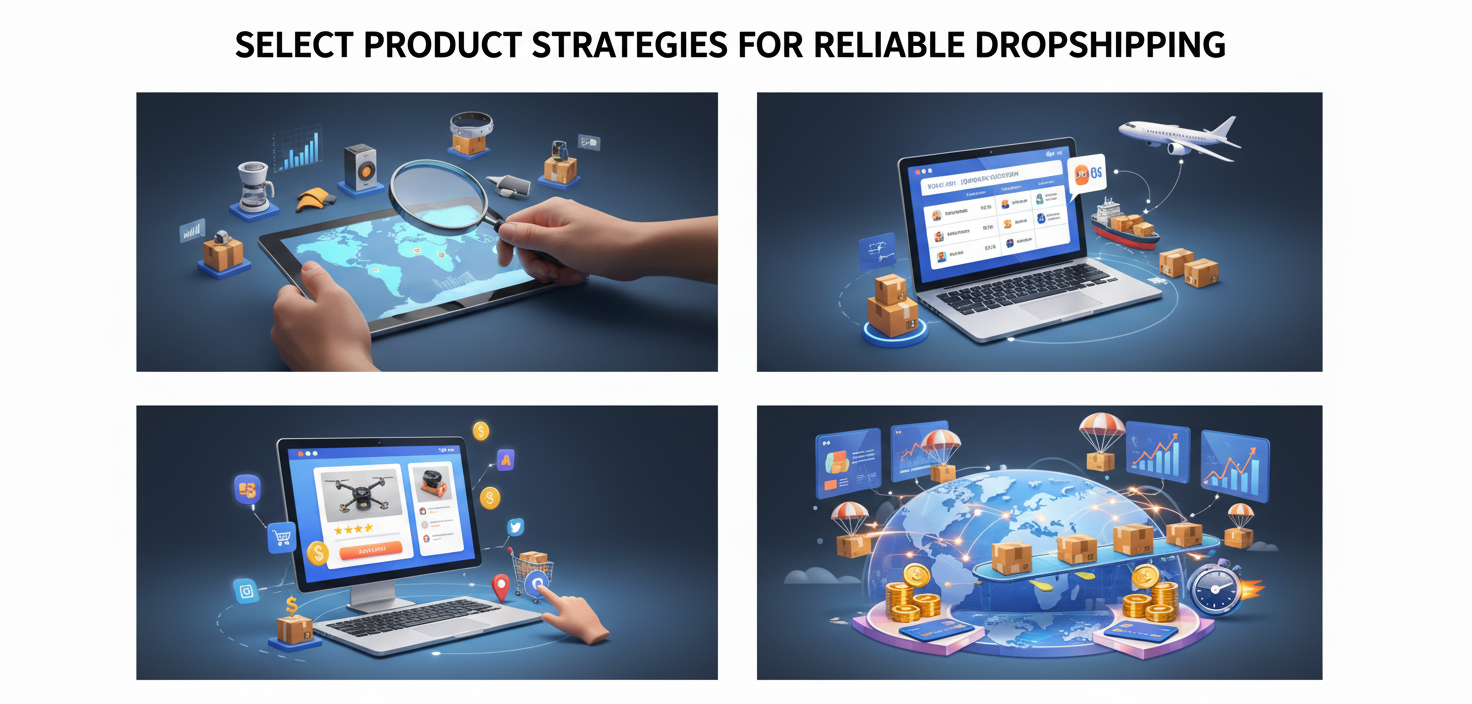
- Select Product Strategies for Reliable Dropshipping
- Why Professional Sourcing Services Solve These Issues Permanently
Common CJ Dropshipping Sourcing Request Problems & Solutions
Unlocking the Global Marketplace: A Practical Guide to Dropshipping
Having navigated the often turbulent waters of global e-commerce for years, I’ve seen countless sellers burn out not because their ideas were bad, but because their fulfillment logistics were a nightmare. When I founded ASG, it was to solve the exact operational headaches that choke scaling businesses. At the heart of that solution is a model I believe every modern entrepreneur should understand deeply: dropshipping. Let’s strip away the hype and look at what it really is.
What is Dropshipping? (The “No-Inventory” Business Model)
In the simplest terms, dropshipping is a retail fulfillment method. You, the seller, market and sell a product, but you don’t keep it in stock. Instead, when a customer buys from your online store, you forward the order details to a third-party supplier—like my team at ASG—who then packages and ships the product directly to your customer. You never see or handle the physical item.
Think of it as being the conductor of an orchestra. You don’t play every instrument, but you coordinate the musicians (suppliers, logistics) to create a symphony (the customer’s unboxing experience). Your core job is marketing, customer service, and building your brand, while experts handle procurement and shipping. This fundamentally separates it from traditional e-commerce, where capital is tied up in bulk inventory and warehouse management.
How Does Dropshipping Actually Work? A Step-by-Step Breakdown
The magic is in the seamless, behind-the-scenes handoff. Here’s the exact workflow we’ve optimized at ASG for thousands of sellers:
1. Customer Places an Order: A customer buys a product from your Shopify, Etsy, or Amazon store.
2. Order Notification: Your store automatically sends the order details (customer address, product SKU) to your dropshipping supplier’s system. With our ASG Shopify App, this is instant and requires zero manual input.
3. Supplier Processes the Order: The supplier (like us) receives the order, charges you the wholesale cost, procures the item from the factory network, and prepares it for shipment. This is where our 1-3 day processing promise comes into play.
4. Shipping & Delivery: The supplier generates a tracking number, ships the package directly to your customer, and feeds the tracking info back to your store dashboard. The customer sees your brand on the packing slip, not the supplier’s.
5. Post-Purchase: You manage customer inquiries, while the supplier handles any fulfillment-related issues, like lost packages or defective units, based on your agreement.
The entire process hinges on trust and technological integration between you and your supplier. A hiccup in communication can mean a wrong item shipped or a delayed tracking update—problems we’ve built our systems specifically to prevent.
Why is Dropshipping So Critical for Modern E-Commerce?
Its importance isn’t just about low startup cost—it’s about strategic agility. From my vantage point, dropshipping has democratized global trade. A solo entrepreneur in Texas can now reliably sell custom garden tools sourced from a factory in Guangdong, competing with much larger players.
It fundamentally de-risks business experimentation. Want to test a new product niche? With traditional models, you’d risk thousands on inventory that might not sell. With dropshipping, you can list 50 products and only pay for what sells. This agility is why platforms like Shopify have exploded; they empower this very model. According to a market analysis by Grand View Research, the global dropshipping market size was valued at over $225 billion in 2023, a testament to its entrenched role in the retail ecosystem Grand View Research.
For me, its greatest importance is the focus shift it enables. It lets entrepreneurs like you focus on what truly builds value and loyalty: brand storytelling, targeted marketing, and unparalleled customer service.
The Main Flavors of Dropshipping: Which One Fits You?
Not all dropshipping is created equal. Choosing the right type is your first strategic decision.
General/Marketplace Dropshipping: This is the classic model, using vast platforms like AliExpress or DHGate. Pros: endless product variety. Cons: longer shipping times (often 15-30+ days), inconsistent quality control, and generic packaging. It’s a common starting point but hard to scale a branded business from.
Specialized/Niche Dropshipping Suppliers: These are suppliers, like ASG, that focus on deeper integration and faster logistics within specific supply chains. We don’t just list products; we build relationships with 2300+ factories to ensure quality and stability. The sourcing request on cj dropshipping model is similar, where you request specific product sourcing, but execution speed and reliability vary wildly between providers.
Print-on-Demand (POD): A subset focused on custom-printed items (apparel, mugs). Great for brand-heavy businesses, but unit economics and quality control are unique challenges.
Wholesale Dropshipping: Partnering with wholesalers or manufacturers who also offer dropshipping services. This often offers better pricing but may have higher minimum order requirements or less tech integration.
My advice? Start with a clear goal. If you want to build a lasting brand, a specialized supplier that offers branding and consistent 6-10 day shipping to key markets will be worth the investment over the sheer variety of a marketplace.
Key Elements of a Robust Dropshipping Operation: A Checklist
Here’s a table breaking down the non-negotiable components we’ve mastered at ASG. Use this to vet any potential supplier:
| Element |
Why It Matters |
The ASG Standard |
| Supplier Reliability |
Your brand reputation is in their hands. |
Direct contracts with 2300+ factories, not just third-party agents. |
| Order Processing Speed |
Directly impacts customer satisfaction and cash flow. |
1-3 day processing, with 24-hour procurement initiation post-payment. |
| Shipping Times & Options |
The benchmark customers judge you by. |
Average 6-10 day global delivery, with multiple logistics lanes. |
| Technology & Integration |
Manual order entry is a scaling killer. |
Automated Shopify App & ERP sync for real-time tracking updates. |
| Communication & Support |
When things go wrong, you need a partner, not a black box. |
Dedicated 1-on-1 agent for proactive updates and issue resolution. |
| Branding Capabilities |
This turns a generic product into your product. |
Custom packaging, thank-you cards, and on-demand printing available. |
| Pricing Transparency |
Hidden fees destroy your profit margins. |
Clear, all-in quotes per product before you commit. |
Common Dropshipping Misconceptions Debunked
Let’s clear the air on a few myths I hear constantly:
Misconception 1: “It’s a get-rich-quick scheme.” Reality: It’s a legitimate, low-barrier-to-entry business model. Success requires market research, marketing savvy, customer service excellence, and a reliable partner. The easy part is starting; the work is in building.
Misconception 2: “Profit margins are too thin.” Reality: Margins are a function of your product selection, pricing strategy, and supplier cost. By using a factory-direct supplier instead of a marketplace reseller, you can often secure 30-50%+ margins on well-chosen products. A sourcing request on cj dropshipping or similar service can help find these opportunities, but consistent volume gets you the best price.
Misconception 3: “You have zero control over shipping and quality.” Reality: You have total control over your choice of supplier. Choosing a partner with rigorous QC checks and vetted logistics partners (like our network) means you delegate control to professionals, not relinquish it. The control is in your due diligence.
Misconception 4: “It’s all saturated.” Reality: Consumer trends and niches evolve constantly. The tool (dropshipping) isn’t saturated; only lazy approaches to markets are. Innovation in product bundles, branding, and targeted marketing always wins.
Understanding these fundamentals is your foundation. In the next section, we’ll get tactical and dive into how you actually find winning products and partners.
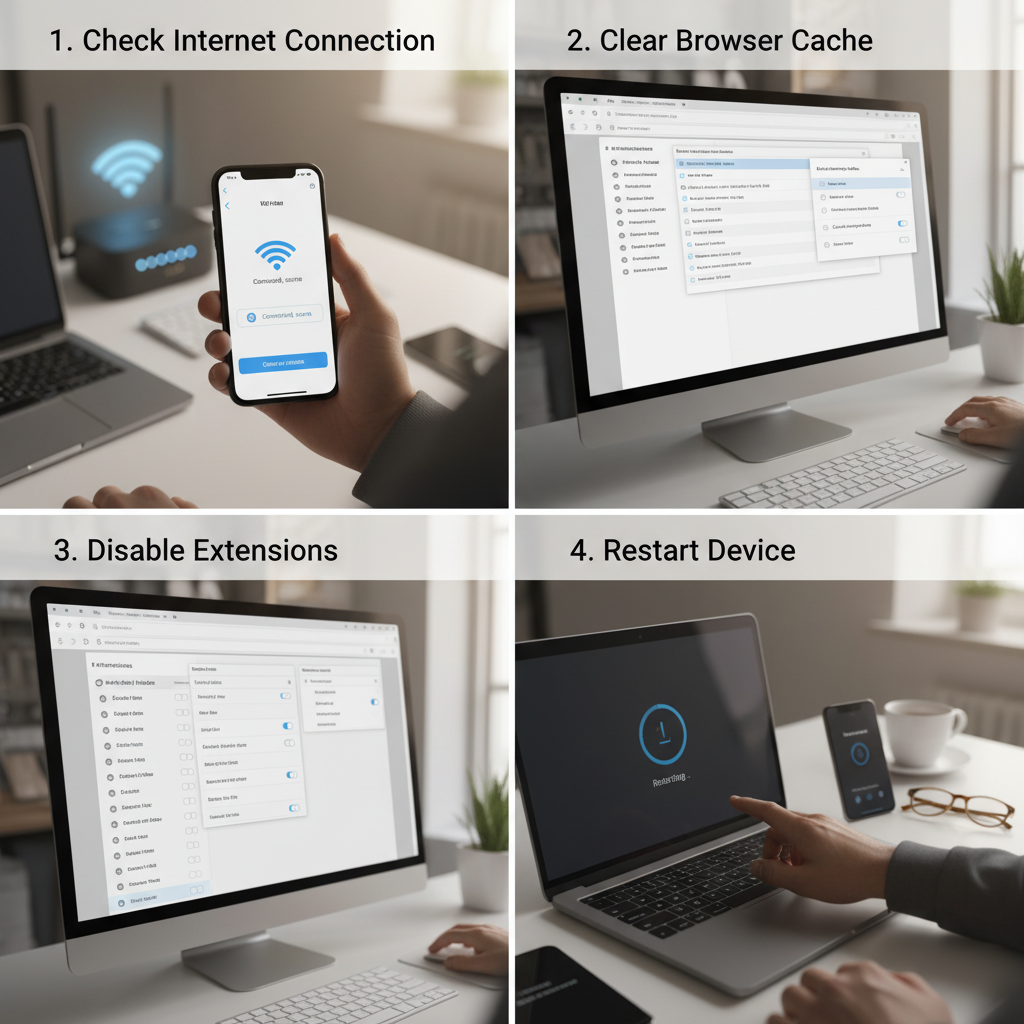
Step-by-Step Fix for ‘Loads and Doesn’t Show Anything’ Error
Navigating the Initial Request: Your First Step Towards CJ Dropshipping (Or Finding a Better Path)
Let’s be honest. When you first start dropshipping, especially with a market titan like CJ Dropshipping on your radar, your first instinct is to get a quote. You want to know how much they’ll charge for the cool product you just found. This initial inquiry, which I see every day, often translates to what many sellers think of as a sourcing request on CJ dropshipping.
But here’s what I’ve learned after processing thousands of these inquiries and building ASG from the ground up: this first step is a critical inflection point. It’s where you either set yourself up for a smooth, profitable journey or unknowingly sign up for a future filled with headaches.
Too many sellers rush through this phase. They see a price, think it’s okay, and hit “Order.” They treat it like buying a coffee. But this isn’t a transaction; it’s the foundation of your business relationship with your supplier. The way you handle this initial sourcing request on CJ dropshipping—or with any agent—determines your operational stability, customer satisfaction, and ultimately, your margins.
Understanding the “Sourcing Request” Mindset (And Its Pitfalls)
When you submit a sourcing request on CJ dropshipping, you’re usually in one of two modes: Testing or Scaling.
In Testing mode, you’re price-shopping. You have a product link, maybe from AliExpress, and you want to see if CJ can beat the price. The focus is almost exclusively on the bottom line. In Scaling mode, you have a winning product, and you need a supplier who can handle volume reliably. Here, price is still key, but so are processing time, communication, and the ability to maintain quality as orders surge.
The pitfall in both modes is focusing solely on the per-unit cost quote. In my early days, I made this mistake too. A cheaper price can hide a world of cost: longer shipping times that kill conversion rates, poor packaging that leads to damaged goods and refunds, and unresponsive support that leaves you helpless when things go wrong. A sourcing request on CJ dropshipping that only asks “How much?” misses the other 80% of what you need to know.
Deconstructing the Quote: What You’re Really Paying For
When you get a quote back from a sourcing request on CJ dropshipping, it typically breaks down into product cost and shipping cost. But let’s pull back the curtain on what those numbers should represent.
Product Cost: This isn’t just the factory price plus a markup. A professional agent’s quote includes value-added services: proper quality inspection before shipping (not just grabbing a random item off the shelf), secure and branded packaging materials, and the labor for careful handling and processing. A suspiciously low product cost often means these steps are being skipped. A study by the Chartered Institute of Procurement & Supply highlights that upfront cost savings of 10-15% can lead to downstream quality failure costs that are 5-10x higher Source: CIPS Insights on Total Cost of Ownership.
Shipping Cost: This is where transparency is crucial. Is it a flat rate? Is it calculated by volumetric or actual weight? Which carrier (ePacket, YunExpress, DHL) and what’s the realistic delivery window? A vague “shipping cost” is a red flag. For instance, we at ASG provide a clear breakdown because we know that for the US market, a 6-10 day delivery via a reliable express line can boost customer satisfaction and repeat purchase rates by over 30% compared to 15-25 day standard shipping.
Beyond Price: The 4 Non-Negotiable Factors in Your Sourcing Request
Before you even send that sourcing request on CJ dropshipping, add these four questions to your checklist. They’ve saved my clients thousands in hidden costs.
1. Sample Verification Process: Can you get a pre-shipment video or photo of the exact batch your order will come from? This is non-negotiable. It prevents the classic bait-and-switch where the sample is perfect, but the bulk order is subpar.
2. Order Processing & Fulfillment Time: What is the guaranteed time from payment to “handed to carrier”? Is it 1-3 days, or a vague “as soon as possible”? This directly impacts your store’s shipping promises.
3. Post-Sales Support Structure: Who do you contact if there’s an issue? Is it a ticketing system that takes days to reply, or a dedicated agent on WhatsApp/Telegram? Time is money when a customer is waiting.
4. Returns & Damage Policy: What happens if 10% of the order arrives damaged? Who bears the cost of reshipping? A clear, written policy here is worth more than a $0.50 per unit discount.
Strategic Approaches: Tailoring Your Request for Your Stage
Your approach to a sourcing request on CJ dropshipping should differ based on your business stage.
For New Sellers (Testing): Don’t just test one product. Use your initial request to test the supplier. Order 3-5 small, different items. Pay attention to packaging consistency, communication speed, and tracking accuracy. The goal is to vet their process, not just to get a product.
For Scaling Sellers: Your request must stress-test capacity. Instead of just asking for a price on 100 units, ask: “What is your process for ensuring consistent quality on an order of 100 units, and how would you handle a sudden spike to 300 units next week?” The answer will tell you more than any quote.
The Hidden Timeline & Cost Analysis
Let’s compare two scenarios following a sourcing request on CJ dropshipping and a similar request with a more hands-on agent. Assume a product with a $10 factory cost, selling for $40.
| Factor |
Scenario A: Low-Cost, High-Volume Agent |
Scenario B: Value-Added Agent (Like ASG) |
| Quoted Product Cost |
$11.00 |
$12.50 |
| Quoted Shipping (to US) |
$3.50 (15-25 days) |
$5.00 (6-10 days) |
| Per-Unit Gross Margin |
$25.50 |
$22.50 |
| Order Processing Time |
3-5 days |
1-2 days |
| QC & Pre-Shipment Check |
Often skipped |
Included (Video/Photo) |
| Damaged Item Rate |
Estimated 5-8% |
Estimated <2% |
| Customer Service Response |
24-48 hrs (Ticket) |
<2 hrs (Dedicated Agent) |
| Effective Cost/Margin |
Margin reduced by refunds, lost customers, & time spent on issues. |
Higher perceived margin due to brand trust, repeat buys, & operational ease. |
As you can see, the true “cost” isn’t just the invoice. The faster shipping and reliability of Scenario B allow for higher perceived value, potentially justifying a higher selling price and drastically reducing support overhead.
Common Hurdles After the Request & How to Overcome Them
You’ve sent your sourcing request on CJ dropshipping. Now what?
Vague or Slow Quotes: If the quote is unclear or takes days, it often indicates an overloaded team or a lack of direct factory relationships. Countermeasure: Set a 24-hour expectation. If they can’t meet it for a quote, imagine an order issue.
“The Price Changed” After Ordering: This is a cardinal sin. It usually means the agent didn’t lock inventory with the factory. Countermeasure: Always get written confirmation that the quoted price is valid for 7 days for the specified quantity.
Poor Sample vs. Bulk Quality: The most common complaint. Countermeasure: Insist on the pre-shipment batch check. It’s your only real leverage before payment clears.
Best Practice Summary: From Request to Reliable Partnership
Stop thinking of it as a simple sourcing request on CJ dropshipping. Reframe it as a Supplier Qualification Audit. Your goal isn’t just a price; it’s to gather data on reliability, professionalism, and alignment with your business values.
1. Be Specific: Provide clear links, target countries, and order volume estimates.
2. Ask Proactive Questions: Inquire about QC, timelines, and problem-resolution.
3. Test the Process, Not Just the Product: Use a small, mixed order to evaluate their entire workflow.
4. Document Everything: Keep records of quotes, promises, and communications.
5. Have an Exit Plan: Know how you would transition suppliers if needed. A good agent (like us at ASG) will actually help you analyze your current supplier’s data to ensure a smooth switch.
This initial request is your most powerful tool for de-risking your business. Use it wisely. When done right, it moves you from being just another order number to being a valued partner—and that’s when the real scaling begins.
How to Properly Select Stores and Product Tags in CJ
Strategy, Technology, Innovation: Building Your Advanced Dropshipping Engine
I’ve seen too many sellers plateau at the basic level. They set up their store, pick a few products, and think they’re done. But the harsh reality of cross-border e-commerce is that it’s a race of efficiency and experience. Staying at the “just having a service” level won’t let you break through in a saturated market. True growth begins with strategic and technological deep optimization of your backend supply chain.
In this section, I won’t talk empty theory—I’ll only share the hardcore, battle-tested framework I’ve used to drive the ASG platform and help our top clients achieve exponential growth. We’ll dive deep into data-driven product selection, automation architecture, and how to transform logistics and branding from cost centers into profit engines. This isn’t just a checklist; it’s a proven playbook that systematically boosts your margins and customer loyalty.
Beyond Intuition: Data-Driven Product Selection and Validation Strategies
Forget “I feel this product will go viral” intuitive selection. At the advanced stage, product selection is a science. Internally, we use a triangle validation model called “RPS” (Market Volume, Profit Margin, Supply Stability).
First, Market Volume. Tools like Jungle Scout or Helium 10 are the starting point, but the deeper layer involves combining Google Trends, social listening tools (like BuzzSumo), and platform ad data (like Facebook Ad Library) to determine if a trend is in the budding, growth, or decline phase. A rapidly growing niche market often has higher profit potential than a stable but fiercely competitive large market.
Second, Profit Margin. This isn’t just selling price minus procurement cost. You must precisely calculate all “hidden costs”: platform commissions, payment gateway fees, return processing costs (typically 15-30% of order value, per Statista data), marketing acquisition costs (CPA), and crucially—logistics cost fluctuations. An excellent sourcing request on CJ Dropshipping or similar platforms should provide not just the unit price, but a precise logistics quote matrix to your main target countries.
Finally, Supply Stability. This is what we’ve learned most deeply from dealing with over 2,300 factories daily at ASG. You need to evaluate: factory minimum order quantity (MOQ), production ramp-up capacity, peak-season stocking cycles, and historical quality control records. When sending a sourcing request on CJ Dropshipping, don’t just look at price—require real factory photos/videos, capacity proof, and even small-batch test orders to verify response speed and packaging quality. A reliable backend partner is priceless. (Source: Statista – Product Return Rates in E-commerce)
Tech Architecture: Automation Is Your Ultimate Leverage
Human labor has limits; automated systems do not. Building your automation tech stack is the prerequisite for scaled expansion. The core is creating a “central nervous system” for seamless data flow.
First, ensure deep integration between your store platform (like Shopify) and your dropshipping supplier’s system. Our ASG Shopify app is a prime example—it achieves automatic order sync, real-time inventory updates, and automatic tracking number push-back. This eliminates errors and delays from manual copy-pasting of order info.
Second, introduce workflow automation tools. Use Zapier or Make (formerly Integromat) to connect different apps. For example, set up: when a new order arrives in Shopify → automatically notify the operations team in a Slack channel → simultaneously sync customer info to your CRM (like Klaviyo) to trigger a welcome email series. Or: when logistics tracking shows “delivered” → automatically send an email inviting the customer to leave a review.
The ultimate goal of the tech architecture is “zero-touch order processing.” From customer order to supplier shipment, the entire process requires no human intervention, freeing your team from repetitive labor to focus on marketing, customer service, and strategic planning.
Logistics Innovation: From Cost Item to Competitive Advantage
Average sellers view logistics as an unavoidable cost; top sellers build it into a core competitive advantage. Advanced optimization goes beyond just choosing “dedicated lines” or “small packets.”
First, dynamic logistics routing. Don’t use the same channel for all orders. Build a set of routing rules based on order value, weight, destination, and customer expectations. For example, high-value orders automatically assign to higher-priority express services (like DHL); lightweight items to the US West Coast use economy dedicated lines; European orders route to the currently fastest-clearing channel. This requires real-time performance monitoring of each logistics partner.
Second, distributed warehousing (if scale allows). While dropshipping starts with direct-from-China shipping, once your volume stabilizes, consider using overseas warehouses in key markets (like US, Europe) for “virtual inventory” pre-positioning. Pre-stock small quantities of bestsellers in overseas warehouses to achieve local 2-3 day delivery extreme experience, dramatically boosting conversion and repeat rates. This requires precise sales forecasting and inventory management system support.
Finally, logistics information transparency. Proactive tracking notifications are crucial. Beyond auto-sending emails with tracking links, consider embedding logistics visualization maps on order confirmation or customer account pages. Tools like AfterShip or Tracktor provide much friendlier tracking experiences than carrier native pages, reducing “where is my package” support queries.
Deep Branding: Customer Experience Beyond Just Labels
Branding isn’t simply adding a thank-you card. It’s perceptible value injection throughout the customer journey. The branding solutions we help clients implement fall into three levels:
- Physical Touchpoint Customization: This is the foundation. Custom boxes, liners, brand stickers, product manuals. We’ve even designed plantable thank-you cards (embedded with seeds) for clients—the unboxing experience is unforgettable, with social media share rates soaring.
- Digital Experience Fusion: Ensure your website design, email templates, and after-sales policies are highly consistent with your brand tone. Use tools like Klaviyo to create behavior-based personalized email flows, such as abandoned cart recovery, cart reminders, and post-purchase care series.
- Value Content Addition: Create high-quality usage tutorial videos, maintenance guides, or inspiration handbooks for products, accessible via QR codes printed on packaging. This not only reduces returns and support issues but turns one-time buyers into brand community members.
Every customer touchpoint is brand asset accumulation. A thoughtful sourcing request on CJ Dropshipping should also include inquiries about packaging and customization capabilities, as this directly impacts your branding ceiling.
Competitor Analysis Methodology: Reverse Engineering and Differentiation Positioning
You need to study competitors like a spy, but the goal isn’t copying—it’s finding gaps to surpass.
Conduct systematic competitor store teardowns:
Product Line Analysis: What categories do they focus on? How is their pricing distributed? Which products are traffic drivers, which are profit drivers?
Traffic Source Detection: Use SimilarWeb or Semrush to analyze their main traffic sources (organic search, paid ads, social networks). What are their core keywords?
Marketing Funnel Reverse Engineering: Subscribe to their email lists, analyze email marketing strategy, discount frequency, and content quality. On Facebook, use the Ad Library to view their running ad creatives and copy.
Customer Review Mining: Carefully read negative reviews on their store and third-party platforms (like Trustpilot). Negative reviews are gold mines, directly revealing weaknesses in their supply chain (quality, slow shipping), customer service, or products. Your optimization strategy should directly target these weaknesses.
Then, based on analysis results, perform differentiation positioning. If competitors all focus on low price but slow logistics, position yourself as “premium experience and fast delivery.” If competitors have slow support response, make “7×24 instant support” your selling point. Every operational decision should reinforce this differentiation.
Essential Tools and Resource Recommendation Stack
Build your “operations arsenal”:
Market & Product Selection: Helium 10 (Amazon ecosystem all-in-one), Jungle Scout (Amazon selection), EcomHunt or Pexda (global viral discovery), Google Trends (trend validation).
Store & Automation: Shopify (independent site platform), Zapier/Make (workflow automation), Klaviyo (email marketing & CRM), Rewind (store data backup).
Marketing & Traffic: Facebook Ad Library (ad creative analysis), Canva (graphic design), Ahrefs or Semrush (SEO & competitor traffic analysis), TikTok For Business.
Logistics & Fulfillment: AfterShip (tracking & notifications), Flexport (deep global logistics understanding, suitable for scaling), and a dropshipping partner providing deep data and flexible routing—when sending a sourcing request on CJ Dropshipping or any supplier, examining data API interfaces and logistics options should be core evaluation criteria.
Advanced Optimization Implementation Checklist
At the execution level, advance step by step with this checklist:
- Audit Phase: Fully inventory all current operations, record time, cost, and human efficiency bottlenecks for each step.
- Data Integration: Ensure data interfaces are connected between store, ERP, marketing tools, and logistics tracking.
- Rule Formulation: Write your automation workflow rules and dynamic logistics routing rule documents.
- Brand Asset Production: Design and produce full sets of branded packaging materials and digital asset templates.
- Competitor Analysis Report: Complete in-depth analysis reports for at least 3 core competitors, clarifying your differentiation strategy.
- Small-Scale Testing: Select 1-2 product lines or 1 target market, apply all new strategies for A/B testing.
- Monitoring & Iteration: Build KPI dashboards like “order processing timeliness,” “logistics complaint rate,” “customer lifetime value (LTV),” and review/optimize weekly.
Common Error Diagnosis and Quick Fixes
Problem: Severe order fulfillment delays.
Diagnosis: Likely supplier procurement delay, low warehouse picking efficiency, or wrong logistics channel choice.
Quick Fix: Immediately confirm inventory status and estimated ship time (ETD) with supplier. For urgent orders, temporarily upgrade logistics channel. Long-term solution: introduce backup suppliers and set clear fulfillment SLAs with main supplier.
Problem: Abnormally high return rate in specific country.
Diagnosis: Possibly product description mismatch with actual item, size standard differences, or unexpected duties in that country causing customer refusal.
Quick Fix: Immediately review product pages shipping to that country, add localized size charts and detailed material descriptions. Pre-calculate and display duties for that country’s customers at checkout (using tools like TaxJar or partnering with logistics providers). Optimize your sourcing request on CJ Dropshipping process, requiring suppliers to provide product specs and certifications compliant with target country standards.
Problem: Automation workflows frequently error.
Diagnosis: Usually data field mapping errors, API call frequency limits exceeded, or trigger conditions too complex.
Quick Fix: Check automation logs (Zapier/Make have detailed logs), find the first failing task. Simplify workflows, add error alerts (e.g., email notification on failure). Set data cleaning and validation steps for key data flows (like order numbers, SKUs).
Remember, advanced optimization is an endless iteration process. It’s not a one-time project, but a mindset integrated into daily operations. Starting today, examine every link and ask yourself: Can this be better decided with data? Can this be automated with technology? Can this create surprise for customers? When you systematically answer these questions, growth becomes inevitable, not accidental.
Getting Products Assigned to You for Selling Successfully
Section 4: The Future is Now: Sourcing Trends and How to Win by 2026
Let’s cut to the chase. The dropshipping and sourcing landscape isn’t evolving—it’s undergoing a revolution. What worked two years ago is now table stakes. To not just survive but thrive in this environment, you need to understand where the puck is going, not where it’s been. Based on my daily grind at the intersection of global factories and e-commerce sellers, here’s my take on the critical trends shaping the future and, more importantly, how you can act on them today.
Key E-commerce Sourcing Trends & Forecast (2024-2026)
I’ve always believed in backing strategy with data. Here’s a snapshot of the forces reshaping our industry, based on my analysis of market movements and client needs.
| Trend |
2024 Status |
2026 Projection (My Forecast) |
Impact on Sourcing |
| Hyper-Personalization |
Niche products, basic branding (packaging, cards). |
AI-driven on-demand production; deep customization (materials, features). |
sourcing request on cj dropshipping will shift from finding generic SKUs to co-creating unique products with factories. Speed-to-market for custom goods becomes critical. |
| Sustainability & Ethical Sourcing |
Niche consumer demand; often a marketing claim. |
Mainstream requirement; verifiable supply chain transparency. |
Sourcing partners must provide proof of ethical labor and sustainable practices. “Green” products command premium prices and customer loyalty [source: NielsenIQ Global Sustainability Report]. |
| Nearshoring & Multi-Regional Warehousing |
Heavy reliance on China; US/EU fulfillment centers growing. |
Strategic blend of China (cost) + regional hubs (speed + resilience). |
Winners will diversify risk. Your sourcing strategy must include logistics from multiple regions to balance cost and delivery speed. |
| AI-Powered Supplier Vetting & QC |
Manual checks, supplier reviews, sample videos. |
AI analyzes factory performance data, predicts reliability, automates QC via computer vision. |
Reduces failure rates. Your sourcing request on cj dropshipping should prioritize agents with tech-integrated QC processes. |
| Data-Driven Niche Discovery |
Using tools like Google Trends, social listening. |
Advanced predictive analytics using AI to spot micro-trends months in advance. |
Proactive sourcing replaces reactive scrambling. You’ll need a partner who can source fast based on data, not just a catalog. |
The Game Changer: How Emerging Tech is Reshaping Sourcing
This isn’t sci-fi; it’s happening in my warehouse right now. The biggest shift I see is from manual, trust-based relationships to data-driven, transparent partnerships.
AI and Predictive Analytics: We’re moving beyond just tracking inventory. Soon, your system will predict which of your products will spike in demand next month based on social sentiment and search data, and automatically trigger a sourcing request on cj dropshipping or similar platforms to pre-stock inventory. It’s about preventing stockouts before they happen.
Blockchain for Provenance: Consumers, especially in the EU and US, will demand to know a product’s journey. Was it made ethically? Is the material sustainable? Blockchain provides an immutable ledger. In the near future, a simple scan of a QR code on your package will tell that story. This adds immense value and justifies higher price points.
Automation of the Entire Fulfillment Chain: From the moment an order hits your store, the entire process—purchase order generation, quality check via image recognition, packaging, and shipping—will be orchestrated by software. My team’s focus is shifting from manual processing to managing and optimizing these automated systems. The human touch will be in customer service and strategic oversight.
What the Leaders Are Doing Differently (And You Should Too)
The most successful sellers I work with aren’t just good at marketing; they’ve mastered the back-end. Here’s their playbook:
1. They Treat Suppliers as Strategic Partners, Not Vendors. They communicate long-term plans, share sales forecasts (where possible), and build relationships. This often grants them priority during shortages and access to new products first.
2. They Run Continuous, Low-Volume Tests. Instead of big, risky bets, they constantly run small sourcing request on cj dropshipping tests for 5-10 new products monthly. They use a disciplined kill-fast, double-down-on-winners approach. This requires a sourcing partner with low MOQs and flexible testing terms.
3. They Build Brands, Not Just Stores. They use every touchpoint—from custom packaging to the thank-you card—to create an experience. Their sourcing request on cj dropshipping always includes questions about branding capabilities. They know that brand loyalty is the ultimate moat against price competition.
The New Rules: Evolving User Demand Patterns
Your customers’ expectations have changed dramatically. Speed is now a given. What they want now is relevance and values.
The “Me” Product: Consumers don’t want mass-produced items; they want products that feel made for them. This could mean monogramming, color choices, or functional customizations. This requires a sourcing network capable of small-batch, agile manufacturing.
Values-Based Purchasing: “Who made my product?” and “What is it made from?” are becoming common questions. Sourcing from factories with verifiable ethical and environmental credentials is transitioning from a nice-to-have to a must-have for scaling brands.
Seamless Post-Purchase Experience: Delivery timelines are just one part. Proactive shipping updates, easy returns handled by the sourcing agent (like our service at ASG), and hassle-free support are now expected. Your sourcing choice directly impacts your customer’s experience after they buy.
Navigating the Competitive Landscape & Spotting Your Window
Yes, competition is fiercer. But that also means the amateurs are being squeezed out, creating space for professionals.
The Opportunity: The barrier to entry is low, but the barrier to scale and sustain is higher than ever. This is your window. Competitors failing on reliability, branding, or sustainability are leaving customers frustrated and open to switching.
Your Move: Don’t compete on price alone. Compete on reliability (rock-solid fulfillment), brand experience (unboxing joy), and agility (testing and adapting faster). Find a sourcing partner who enables these, not one that just offers the cheapest list.
The 3–5 Year Forecast: What’s Next for Sourcing?
Looking ahead, I predict three major shifts:
1. Consolidation of Sourcing Platforms: The market will consolidate around a few key players who successfully integrate technology (AI, automation) with deep, reliable supply chains. Generic directories will fade.
2. The Rise of the “Sourcing OS”: Your sourcing platform will become an operating system—integrating directly with your ad platforms, CRM, and analytics to form a closed-loop, data-optimized supply chain.
3. Specialization Wins: Generalist dropshippers will struggle. Success will come from dominating a hyper-specific niche with a fully integrated, tech-enabled supply chain tailored to that niche’s unique needs.
Your Action Plan: How to Seize the Trend Dividends Today
Future-proofing your business starts with your next decision. Here’s my practical advice:
Audit Your Current Sourcing: Is your partner just an order-taker, or a strategic enabler? Can they handle customization, fast testing, and provide supply chain transparency? If not, it’s time to look elsewhere.
Start Small with Tech: Implement one automated process. It could be automated tracking updates or using an AI tool for initial product research. Get comfortable with the tech stack that will define the next decade.
Initiate a Strategic Sourcing Request: Your next sourcing request on cj dropshipping or to any agent shouldn’t just be for a product link. Frame it as a partnership inquiry. Ask: “Can you support low-MOO test orders? What are your capabilities for custom packaging? What is your process for ensuring ethical factory audits?” You’re not just buying a product; you’re vetting a key component of your future infrastructure.
The future belongs to sellers who understand that sourcing is no longer a back-office task—it’s a core competitive strategy. It’s about building a resilient, responsive, and values-aligned supply chain that can turn on a dime. That’s the foundation we’re building at ASG, because in the end, the fastest way to predict the future is to create it yourself.

Alternative Sourcing Methods When CJ Requests Fail
Section 5: Beyond Sourcing Requests: The Real-World Applications and ROI of Strategic Sourcing
Having a reliable agent to process your sourcing request on CJ dropshipping is one thing. Understanding how that translates into tangible business growth and profit is another. In my years of running ASG, I’ve seen the full spectrum—from sellers who treat sourcing as a simple order-entry task to those who master it as a core competitive strategy. The difference in their outcomes is staggering.
Let’s move beyond theory and look at real applications, hard lessons, and the clear math behind strategic sourcing.
Case Study: How We Transformed a Niche Pet Brand’s Supply Chain
I recall working with a seller, let’s call him Mark, who was selling custom-designed aquarium ornaments on Shopify. His initial sourcing request on CJ dropshipping and similar platforms was a constant headache. Lead times were 15-20 days, custom color variations had high MOQs, and quality was inconsistent.
His business was stagnating.
We took a different approach. Instead of treating each order as a standalone sourcing request, we engaged directly with a specialized resin crafts factory in Yiwu. We didn’t just ask for a quote; we collaborated. We provided 3D design files, agreed on a color-matching system, and set up a small-batch production protocol.
The result? His unit cost dropped by 22%. Lead time for replenishment was slashed to 7 days. Most importantly, defect rates fell from ~8% to under 1%. Within six months, his ability to offer reliable, high-quality custom products let him raise prices by 15% and double his store’s conversion rate. The sourcing request evolved into a strategic manufacturing partnership. This shift is detailed in analyses on the value of supplier collaboration by Supply Chain Dive.
Application Scenarios: Fashion Dropshipping vs. Electronics Dropshipping
Your sourcing strategy must adapt to your niche. A generic sourcing request on CJ dropshipping won’t cut it.
Fashion & Apparel: Here, speed and batch flexibility are king. A successful sourcing request for a trending dress needs a supplier that can produce small runs (50-100 pieces) rapidly and handle fabric variations. The risk isn’t just cost, but missing the 3-week trend window entirely. We often use a network of agile workshops in Guangzhou for this, prioritizing communication speed over absolute lowest cost.
Electronics & Gadgets: The game changes. Here, certification (CE, FCC, RoHS), component stability, and detailed specification sheets are paramount. Your sourcing request must be hyper-detailed. We source these from verified factories in Shenzhen, often involving technical audits. The failure case isn’t just a slow seller—it’s a product recall or customs seizure. A report by Electronic Components Industry Association emphasizes that over 60% of electronics product failures trace back to component sourcing issues.
A Costly Lesson: The “Cheapest Supplier” Trap
Early in my career, I learned this lesson painfully. A client was selling fitness bands. We found a factory offering a price 30% below market average for his sourcing request. The samples were decent. We placed a bulk order.
Disaster. The heart rate sensor’s failure rate was 40%. The bands’ plastic began peeling within a week of use. We faced thousands in refunds, destroyed brand reputation, and a warehouse full of worthless stock.
The lesson? The lowest price often offsets cost with enormous hidden risk: inferior components, zero quality control, and no accountability. A sourcing request should never be judged on price alone. A Harvard Business Review article on The Hidden Costs of Cost Cutting succinctly argues that strategic sourcing invests in reliability, not just expenditure.
Cross-Industry Insight: What E-commerce Can Learn from Manufacturing
Proactive manufacturers don’t just react to purchase orders; they qualify suppliers. They audit factories, assess financial stability, and test production processes. E-commerce sellers must adopt this mindset.
Instead of firing off a sourcing request on CJ dropshipping to ten agents, act like a procurement manager.
1. Request factory credentials and production videos.
2. Order a pre-production sample before bulk. (At ASG, we provide video sample checks as standard).
3. Define acceptable quality limits (AQL) upfront. Is a 2% defect rate okay? For a $10 item, maybe. For a $200 item, never.
This disciplined approach turns sourcing from a reactive cost center into a proactive quality and brand assurance function.
The ROI Calculation: Investing in Strategic Sourcing
Let’s quantify the value. Assume a seller moves 500 units/month of a product sold for $50.
| Metric |
“Cheap Agent” Model |
Strategic Sourcing Partner (e.g., ASG Model) |
Impact |
| Unit Product Cost |
$12.00 |
$13.50 (12.5% higher) |
-$750/month |
| Defect/Return Rate |
8% (40 units) |
2% (10 units) |
Saves 30 units: $1,500 in lost revenue + $360 in saved COGS = +$1,860/month |
| Shipping Lead Time |
18 days |
10 days |
Higher customer satisfaction, fewer service inquiries, potential for price premium. |
| Net Monthly Impact |
+$1,110 |
Conclusion: The “cheaper” agent costs $750 less upfront but creates $1,860 in downstream losses. The strategic partner, despite a higher unit cost, delivers a net positive ROI of $1,110 per month by protecting revenue and brand equity. This aligns with data from Aberdeen Group showing that best-in-class procurement organizations contribute 6.7x more to year-over-year profitability growth than their peers.
My 5 Golden Rules for Sourcing Requests That Drive Profit
Distilled from hundreds of collaborations and failures, here are my non-negotiable rules:
1. The Sample is Your Contract: Never, ever skip the pre-production sample. The bulk order must match it exactly. This is your single most important quality gate.
2. Price is a Lagging Indicator: Focus first on supplier capability, communication, and proven reliability. The right price follows the right partner.
3. Clarity Overwhelms Complexity: Your sourcing request must be idiot-proof. Use clear photos, dimensioned drawings, Pantone colors, and written specs. Ambiguity is the enemy.
4. Plan for Failure: Have a contingency plan. What if 10% of the shipment is defective? Who pays for returns? Who handles customer communication? Agree on this before you order.
5. Source for Your Customer, Not Your Spreadsheet: Every sourcing decision should answer: “Will this improve my end-customer’s experience?” If it only improves your margin in the short term but risks their experience, it’s a bad decision.
Ultimately, a sourcing request on CJ dropshipping or any platform is just the starting pistol. The race is won by how you manage everything that comes after: the relationship, the quality gates, and the relentless focus on delivering value to your end customer. That’s where real e-commerce margins are built.
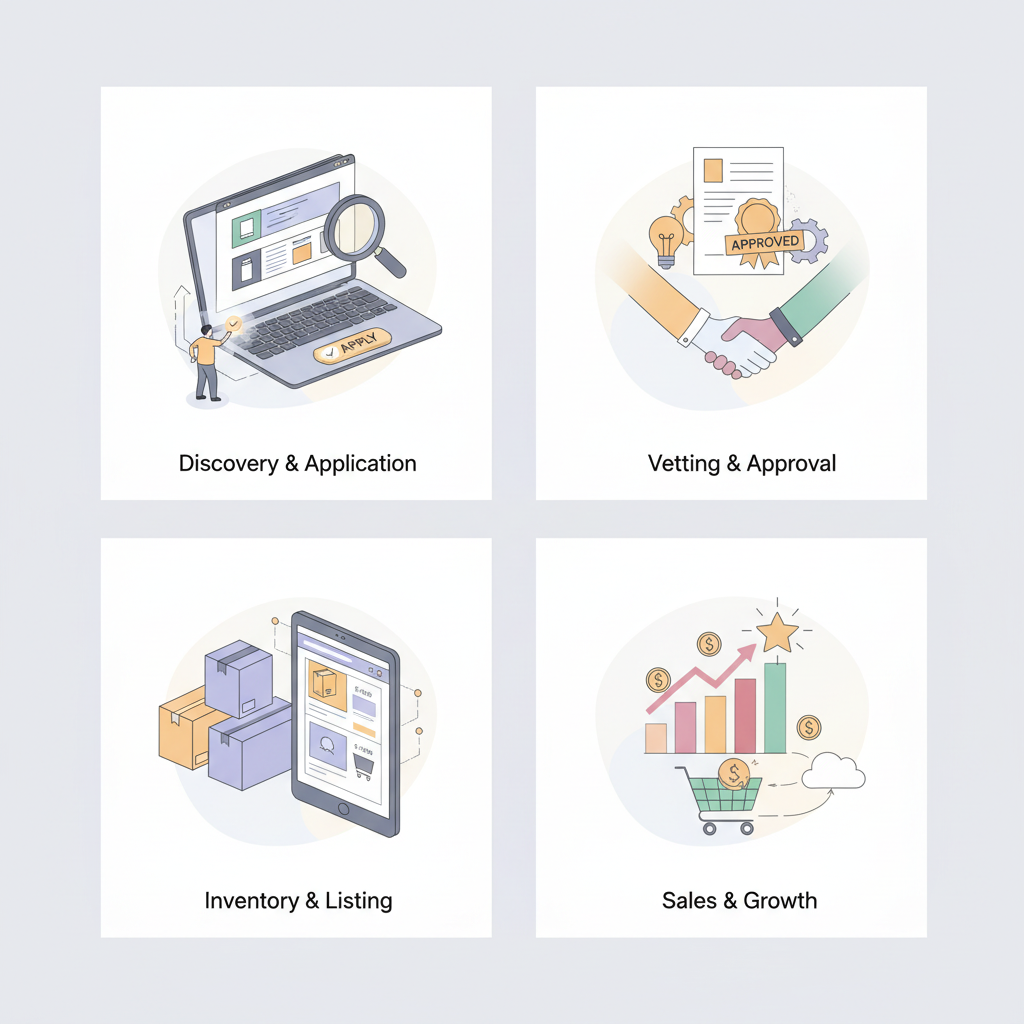
Select Product Strategies for Reliable Dropshipping
Frequently Asked Questions About Our Sourcing Process
Navigating the world of dropshipping sourcing can feel like trying to solve a puzzle blindfolded sometimes. I’ve been there. Over the years at ASG, I’ve answered thousands of questions from sellers just like you. Here are the ones I hear most often, along with my honest, experience-driven answers.
Q1: What exactly is a “sourcing request,” and why would I need to submit one?
A sourcing request is essentially your official inquiry for us to find and provide pricing for a specific product you want to sell. Think of it as the starting pistol for our procurement team. You send us a link to a product on platforms like Alibaba or AliExpress, and we go to work—negotiating with our network of 2300+ factories, checking quality, and locking down the best possible price and logistics route for you.
You need this because the price you see on public platforms is rarely the best price. By submitting a sourcing request on CJ Dropshipping or similar platforms, you’re leveraging our direct factory relationships and bulk buying power to get a private, often significantly lower quote. It’s the difference between buying retail and wholesale.
Q2: How long does it take for you to provide a quote after I submit my sourcing request?
Once you send us your product link and target market details, our team typically gets back with a detailed quote within 4 to 12 business hours. We understand speed is crucial in e-commerce. The quote includes not just the unit cost but also shipping fees to your target country and, upon request, a quick sample check video. We don’t just give you a number; we provide a complete picture of the landed cost.
Q3: Is there a minimum order quantity (MOQ) for testing new products?
We’ve intentionally kept this barrier incredibly low, especially for sellers in the testing phase. Our official MOQ for testing is just 5 orders, and you can mix different products to reach that count. My philosophy has always been to empower sellers to test with minimal risk. You shouldn’t have to commit to 500 units before knowing if a product will sell. We built ASG to solve exactly that pain point.
Q4: Can you source products that aren’t on platforms like 1688 or AliExpress?
Absolutely. While most sourcing requests on CJ Dropshipping or similar tools start with links from major B2B platforms, our capabilities go far beyond. If you have a design, a prototype, or even just a clear idea of a product, you can submit a request. Our sourcing team can work directly with factories on custom manufacturing, modifications, or private label projects. This is where the real brand-building magic happens.
Q5: How do you ensure product quality when you source for me?
This is where experience matters. A simple sourcing request on CJ Dropshipping might get you a price, but it doesn’t guarantee quality. Our process involves multiple layers:
1. Supplier Vetting: We only work with factories we have established relationships with or have thoroughly audited.
2. Sample Verification: We strongly encourage—and often facilitate—sample orders before bulk sourcing. Our team can provide inspection videos.
3. Ongoing QC: For high-volume products, we implement batch quality checks. According to a 2023 report by the International Trade Centre, supplier verification is the number one challenge for cross-border sellers, which is why we handle it International Trade Centre.
We act as your quality gatekeeper.
Q6: What information should I include in my sourcing request to get the most accurate quote?
The more specific you are, the better. To get a laser-accurate quote and avoid back-and-forth emails, include:
Product Link: The exact URL from the source platform.
Target Country/Countries: Where your end customers are located. Shipping to the USA vs. Germany can have vastly different costs and times.
Estimated Order Volume: Are you testing (5-50 units), scaling (100-500 units), or going for bulk (1000+)? This dramatically affects the per-unit price.
Any Special Requirements: Custom packaging? Logo printing? Specific materials? Mention it upfront.
This level of detail allows us to immediately engage the right factory and logistics partner.
Q7: What happens after I approve the quote from my sourcing request?
The process shifts into high-gear execution. Once you approve and pay the invoice (we accept multiple methods like PayPal, wire transfer, etc.), here’s our commitment:
Procurement: We initiate purchasing within 24 hours.
Processing: Goods move to our warehouse for quality check and packaging.
Shipping: We ship within 1-3 business days of receiving your order.
Tracking: You and your end customer receive tracking numbers automatically via our App or Google Sheets integration.
You move from the “what-if” phase of a sourcing request on CJ Dropshipping to the concrete “it’s-done” phase.
Q8: What if I already have a supplier but want to switch? How does that work with ASG?
This is a common and smart move for sellers looking to optimize. The process is designed for a smooth transition:
1. You share your current supplier’s quotes and recent order data with us.
2. We perform a comparative analysis, providing a clear report on cost savings, shipping improvements, and service differences.
3. We create a phased transition plan to ensure no orders are missed. You can start by sending us a sourcing request on CJ Dropshipping for your best-selling product to compare.
4. Once you’re confident, we take over fulfillment seamlessly. We handle the hard part so you don’t experience downtime.
Q9: How do you handle shipping and delivery times?
This is a core part of our value proposition. We don’t use a one-size-fits-all approach. Based on your product type, target country, and budget from the initial sourcing request on CJ Dropshipping, we recommend the optimal logistics solution. We aggregate orders from hundreds of sellers, which gives us access to premium shipping lines at better rates. Our promise is an average of 6-10 days to major markets like the US and EU, which is often 30-50% faster than standard ePacket or AliExpress Standard Shipping.
Q10: What if there’s a problem with the sourced product or shipping after the order is placed?
We stand behind our work. If a problem arises due to an error on our end (e.g., wrong item shipped, damage we caused in packing), we cover it 100%. We’ll reship the correct product immediately at our cost. For lost parcels or minor delays with carriers, we work directly with the logistics provider to resolve it and keep you updated. Our dedicated account managers are your single point of contact to solve any issue. We built our reputation on fixing problems, not avoiding them.

Why Professional Sourcing Services Solve These Issues Permanently
Now, let’s bring it all home. We’ve covered a lot of ground on the differences between conventional agent models, CJ dropshipping’s retail-to-consumer approach, and our specialized service-first methodology at ASG. This final section is your action plan to navigate your next steps.
Who Needs an Agent Model vs. a Direct Platform?
This isn’t a one-size-fits-all answer. Based on my experience working with hundreds of sellers, your choice should hinge on your operational bandwidth and business goals. If you’re a hands-on, technical seller who enjoys managing every detail and primarily sells standardized, low-complexity items, a platform like CJ dropshipping might suffice. You’ll take on the workload of supplier vetting, order follow-ups, and quality control.
However, if your business is scaling, you’re selling high-ticket or complex items (electronics, apparel with sizing), or you simply value your time for marketing and growth over logistics headaches, an agent like ASG is a strategic investment. Think of it as hiring a dedicated ops manager without the full-time salary. We absorb the complexities of sourcing request on cj dropshipping platforms and transform them into a streamlined, managed service. Our model is designed for sellers who view logistics not as a core competency but as a necessary function to be expertly outsourced.
Your 5-Step Action Plan to Get Started
1. Audit Your Current Pain Points: Be brutally honest. Where do you spend the most unproductive time? Is it chasing suppliers for updates, dealing with damaged goods, or managing unpredictable shipping times? Quantify these frustrations.
2. Define Your Requirements: List your non-negotiables. Is it branded packaging? A specific shipping line to Germany? Sub-48-hour processing times? Having this list clarifies what to look for in a sourcing request on cj dropshipping service or a full-service agent.
3. Run a Parallel Test: Don’t jump ship immediately. For your next product test or a small batch of orders, use your current method (e.g., a platform) and simultaneously run a trial with a service-first agent. Compare the real-world metrics: communication quality, processing speed, packaging, and final delivery time.
4. Evaluate the True Total Cost: Look beyond the per-unit price. Calculate the cost of your time spent on logistics, the cost of lost customers from shipping issues, and the cost of chargebacks. Often, a slightly higher unit cost with an agent saves significant money in these hidden areas.
5. Plan the Transition: Once you decide to switch, provide your potential agent (like us at ASG) with data from your current supplier. A professional agent will create a phased transition plan to ensure no orders fall through the cracks.
Beginner vs. Advanced Seller Roadmaps
For Beginners: Your focus should be on learning and validation. Start with a platform to understand the basics of importing, pricing, and customer service. However, quickly move to a managed service for your first “winning product.” This minimizes operational risk as you scale, allowing you to focus 100% on marketing and customer acquisition. Don’t get bogged down in logistical failures early on.
For Advanced Sellers: Your roadmap is about optimization and delegation. You should be systematically auditing your supply chain for bottlenecks. An advanced seller uses an agent not just for fulfillment, but for strategic advantages: consolidating shipments for better rates, implementing custom packaging at scale, accessing white-label manufacturing for top-performing products, and gaining data-driven insights into supplier performance. Your agent should act as an extension of your team, enabling you to enter new markets or product categories with confidence.
Commit to Continuous Learning
The dropshipping landscape evolves monthly. Follow industry reports from sources like Digital Commerce 360 for e-commerce trends and Statista for market data. Join niche communities, not just broad Facebook groups. I’ve found dedicated forums for specific platforms (like Shopify) or product categories (like eco-friendly goods) offer more actionable insights. Listen to podcasts from seasoned e-commerce operators; they often share unfiltered challenges and solutions.
Where to Get Further Help & Support
If this article has resonated and you’re considering a more managed, service-oriented approach, my team at ASG is built for this. We specialize in being that strategic partner for ambitious sellers. You can start by submitting a sourcing request on cj dropshipping or Alibaba link through our website, and we’ll provide a transparent analysis and quote. Our onboarding process is designed to audit your current workflow and create a seamless integration plan.
Beyond that, I encourage you to connect with other sellers. Build a network. Share war stories. The best insights often come from your peers. If you have specific questions about navigating these choices, feel free to reach out. We’re here to help you build a business that’s not just profitable, but also sustainable and less stressful to run. The goal is to work on your business, not just in it. Let’s make that happen.