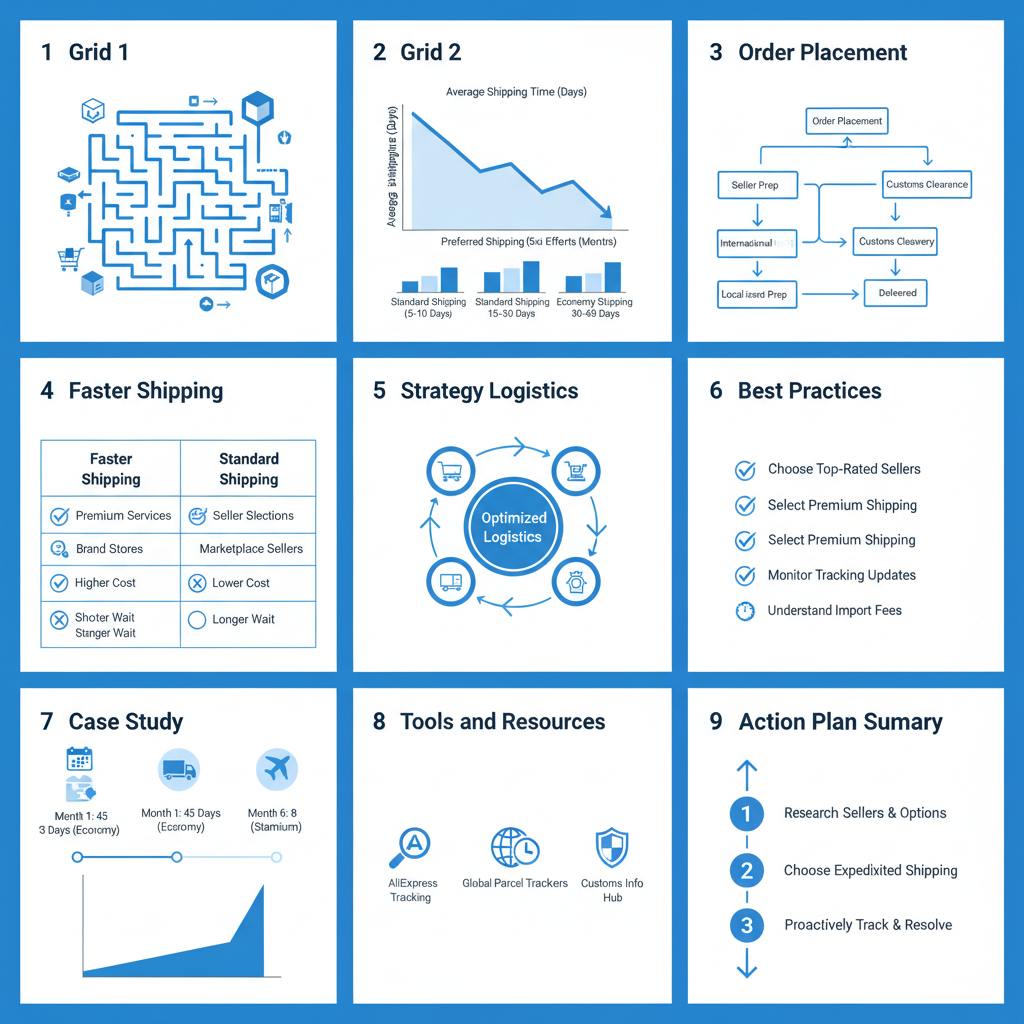
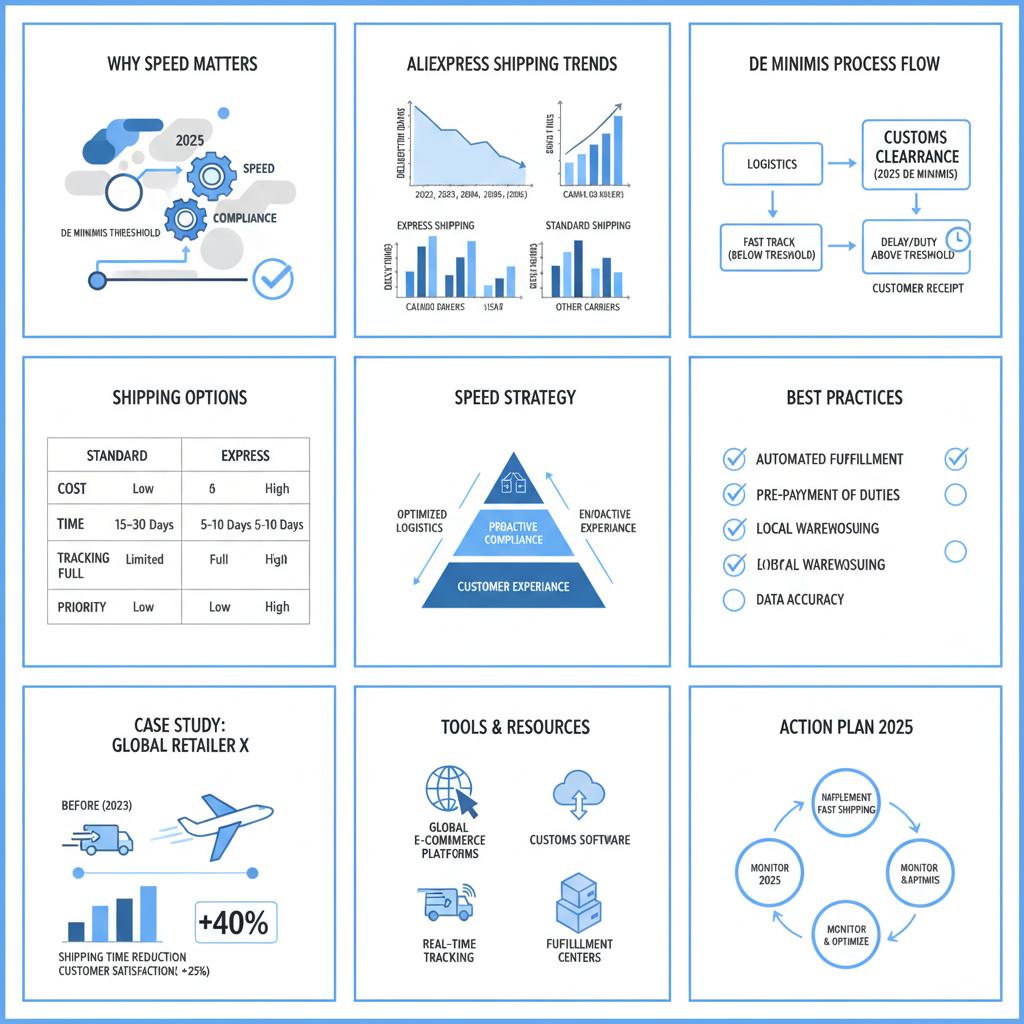
The Reality of Shipping Delays in Dropshipping
Many dropshippers struggle with how to get shorter AliExpress shipping times – it’s a common pain point that can make or break your business. As someone who’s built a successful dropshipping company, I’ve seen firsthand how long shipping delays can destroy customer trust and hurt your bottom line. In this comprehensive guide, I’ll share actionable strategies that can help you significantly reduce delivery times and improve your overall customer experience.
When I first started in dropshipping back in 2015, I faced the same shipping nightmares you’re probably experiencing right now. Waiting 4-8 weeks for orders to arrive was the norm, and my customers were constantly frustrated, often asking how long customs clearance takes from China to the USA. According to industry data, average AliExpress shipping times range from 15-60 days, depending on the destination country and shipping method. That’s simply unacceptable in today’s fast-paced e-commerce environment where customers expect Amazon-like delivery speeds.
Proven Strategies for Faster Delivery
Over the years, I’ve tested countless methods to optimize shipping times, and I’ve discovered what truly works. This guide will walk you through everything from selecting the right suppliers to leveraging local warehouses. We’ll explore communication strategies with sellers, alternative sourcing options, and the impact of customs clearance duration on your final delivery date. Our team at ASG has managed to achieve 6-10 day average shipping times to major markets like the US and Europe. Whether you’re just starting out or looking to scale your existing dropshipping business, these insights will help you transform your shipping operations and deliver a superior customer experience.
This guide outlines actionable strategies for reducing AliExpress shipping delays in dropshipping, covering foundational concepts, shipping method selection, effective supplier communication, local sourcing, product optimization, and future trends in e-commerce logistics.
1. How-to-get-shorter-aliexpress-shipping-times
2. Choose the Right Shipping Method
3. Communicate Effectively with Sellers
4. Find Local Suppliers in Your Country
5. Optimize Your Product Selection
6. Dropship jun 15
7. How-to-get-shorter-aliexpress-shipping-times
How-to-get-shorter-aliexpress-shipping-times
Alright, let’s get real about what dropshipping actually is. Forget the overnight-millionaire hype you see on YouTube. At its core, dropshipping is a fulfillment model, not a get-rich-quick scheme. I’ve built ASG around this model, and I can tell you that understanding its true nature is the first step to building a sustainable business, not just a fleeting side hustle.
What is Dropshipping? The No-Inventory Retail Model
In simple terms, dropshipping is a retail fulfillment method where a store doesn’t keep the products it sells in stock. Instead, when you, the store owner, sell a product, you purchase the item from a third party—usually a wholesaler, manufacturer, or an agent like us at ASG—and have it shipped directly to the customer. You never see or handle the product physically. Your role is the marketer, customer service point, and brand-builder. The supplier handles procurement, storage, packing, and shipping. This fundamental shift from holding inventory to managing information and relationships is what makes it so accessible and also so challenging.
How Dropshipping Actually Works: The Order Flow
Let me walk you through the exact steps, the way we’ve optimized them at ASG for our clients:
1. Customer Places an Order: A customer buys a product from your online store (on Shopify, WooCommerce, etc.) and pays you the retail price.
2. Order Notification: Your store automatically forwards the order and customer details to your dropshipping supplier. This is where integration tools, like our ASG Shopify App, are crucial—they automate this step, eliminating manual data entry errors.
3. Supplier Processes the Order: The supplier (like ASG) receives the order, charges you the agreed wholesale price, picks the product from their warehouse, packs it, and prepares it for shipment. Our processing time is 1-3 days.
4. Supplier Ships the Product: The supplier generates a tracking number and ships the product directly to your customer’s address. We then automatically push that tracking info back to your store dashboard.
5. You Manage the Customer: You handle all post-purchase communication—order confirmations, shipping updates, and any customer service inquiries. The customer thinks the product came directly from you.
This entire chain relies on seamless, often automated, communication between your storefront and your supplier’s systems. Any break in this chain means a bad customer experience.
Why is Dropshipping So Important for Modern E-commerce?
Its importance isn’t just about low startup costs. It’s about agility and focus. In my years in cross-border e-commerce, I’ve seen the landscape shift dramatically. Dropshipping allows you to:
Test Markets and Products with Minimal Risk: You can launch 50 products without investing a cent in inventory. This is invaluable for validating what actually sells in your target region.
Focus on Your Core Competencies: Your capital and mental energy aren’t locked up in warehousing and logistics. You can pour everything into marketing, branding, and customer experience—the areas where you truly build a business.
Scale Flexibly: During a sales spike, you don’t need to panic about running out of stock or investing in more warehouse space. A good supplier scales with you. We’ve had clients go from 5 orders a day to 500 almost overnight; our job is to make that growth painless for them.
Access a Global Supply Chain: You’re not limited to local wholesalers. You can source unique products directly from manufacturing hubs like China, giving you a product edge in your local market.
The Main Types of Dropshipping Suppliers
Not all suppliers are created equal. Choosing the right type is a strategic decision.
Wholesalers/Manufacturers: The traditional source. You buy directly from the maker or a large-scale distributor. Pros: Lowest possible cost per unit. Cons: High Minimum Order Quantities (MOQs), often poor communication, and you manage all logistics.
Marketplaces (e.g., AliExpress): The most common starting point. Pros: Vast product selection, easy to start. Cons: Highly variable quality, long and unpredictable shipping times, no branding, and communication barriers. Learning how-to-get-shorter-aliexpress-shipping-times becomes a constant battle.
Dropshipping Agents (Like ASG): This is the professionalized model. We act as your local buying office and logistics partner in the source country. Pros: We consolidate products from multiple factories, offer quality checks, provide faster consolidated shipping (6-10 days globally), handle returns, and enable white-label branding. Cons: Slightly higher per-unit cost than going direct to a factory, which is offset by the immense value-added services and time savings.
Key Elements of a Successful Dropshipping Business
It’s more than just finding a product and running ads. Here’s a breakdown of the core pillars:
| Element |
Description |
Why It Matters |
| Supplier Reliability |
Your supplier’s ability to deliver quality products on time, every time. |
This is the foundation. An unreliable supplier will destroy your brand reputation faster than anything else. |
| Shipping & Logistics |
The speed, cost, and reliability of getting the product to your customer. |
Long shipping times are the 1 killer of conversion rates. Optimizing this, moving beyond standard aliexpress shipping times, is non-negotiable. |
| Profit Margin |
The difference between your product cost (including shipping) and your selling price. |
Must account for advertising costs, transaction fees, and customer service overhead. Thin margins are unsustainable. |
| Customer Service |
Your process for handling inquiries, issues, and returns. |
You own the customer relationship. Great service builds loyalty and repeat business, even if you don’t touch the product. |
| Branding & Marketing |
How you present your store and attract customers. |
This is your only true moat. Without it, you’re just a generic reseller competing only on price. |
Common Dropshipping Misconceptions Debunked
Let me clear up some of the biggest myths I hear, based on thousands of client conversations.
“It’s Easy Passive Income.” False. It’s a real business. The “passive” part is the fulfillment. The active parts—marketing, customer service, website optimization, supplier management—require serious work.
“You Don’t Need Any Money to Start.” Partially true. You can start with very little capital. But to scale and sustain a business, you need funds for marketing, software, and cash flow (you pay your supplier before your customer’s payment clears).
“All Suppliers Are Basically the Same.” Dangerously false. The difference between a generic AliExpress seller and a professional agent like ASG is the difference between constant firefighting and smooth operations. One focuses on moving generic boxes; the other focuses on building your brand.
“Shipping Times Don’t Matter That Much.” This is a fast track to failure. In the age of Amazon Prime, customer expectations are sky-high. Studies consistently show that shipping speed is a top factor in purchase decisions and customer satisfaction Source: Statista – Consumer Expectations for Delivery. Mastering logistics and finding ways to get shorter shipping times is a core competitive advantage.
The goal isn’t just to start a dropshipping store; it’s to build a legitimate, branded e-commerce business that happens to use the dropshipping model for efficiency. That mindset shift is everything.

Choose the Right Shipping Method
The Core Problem: Why Aliexpress Shipping Times Are a Bottleneck
Let’s be blunt. Long shipping times aren’t just an inconvenience; they’re a conversion killer and a primary reason for customer dissatisfaction. I’ve seen countless promising dropshipping businesses stall because their delivery windows were stuck in the 30-60 day range. Customers in today’s e-commerce landscape, especially in markets like the US and EU, have been conditioned by giants like Amazon to expect delivery within days, not weeks. A study by the Baymard Institute found that slow or expensive shipping is the top reason for cart abandonment, cited by over 50% of shoppers Baymard Institute. When you’re sourcing from China, you’re fighting against this deeply ingrained expectation.
The fundamental issue with standard Aliexpress shipping is its structure. Most sellers offer “ePacket” or similar economy options, which are consolidated shipping methods. Your order gets grouped with hundreds of others, making multiple stops at sorting centers in China before even leaving the country. This process is opaque, unpredictable, and highly susceptible to delays during peak seasons like holidays or sales events (think 11.11 or Black Friday). For you, the seller, this means frustrated customers, a higher volume of support tickets, and potentially damaging chargebacks. Your brand reputation hinges on this single, weakest link in your supply chain.
The Anatomy of a Slow Shipment: A Detailed Breakdown
To solve a problem, you must first dissect it. Let’s trace the journey of a typical Aliexpress ePacket order from click to doorstep:
1. Order Processing (1-3 days): The seller receives your order. If they don’t hold stock, they must first procure the item from their own supplier—adding another layer of delay.
2. Domestic Consolidation (3-7 days): The package travels from the seller’s local warehouse to a major Chinese logistics hub (e.g., Shenzhen, Guangzhou). It waits there until enough packages are gathered to fill a container or pallet bound for a specific destination country. This is the biggest time sink.
3. International Transit (5-15 days): Once the consolidated batch departs China, it travels by air or sea. Air is faster but more expensive; sea is cheaper but can take weeks.
4. Destination Country Customs & Processing (2-7 days): The batch clears customs. From there, it’s broken down and handed to the local postal service (e.g., USPS, Royal Mail, Deutsche Post). Delays here are common due to inspections or paperwork issues.
5. Last-Mile Delivery (2-5 days): The local postal carrier delivers the package. Their service standards apply now.
This multi-hop, batch-processing model is why achieving consistent how-to-get-shorter-aliexpress-shipping-times is so challenging on the open marketplace. You’re not just battling distance; you’re battling a system built for ultra-low-cost, high-volume consolidation, not for speed and brand experience.
Key Factors That Dictate Your Shipping Timeline
Several variables directly impact your how-to-get-shorter-aliexpress-shipping-times. Understanding these helps you make smarter sourcing decisions:
Seller Location & Reliability: A seller based in a major export hub like Yiwu or Shenzhen has a significant head start over one in a remote province. Their proximity to logistics centers shaves off days. More importantly, a reliable seller with high feedback scores typically processes orders faster and uses better-quality logistics partners.
Shipping Method Selected: This is the most direct lever you can pull. “China Post Registered Air Mail” is not the same as “AliExpress Standard Shipping” or “Cainiao Super Economy.” Each has different service level agreements (SLAs) and network efficiencies.
Product Characteristics: Size, weight, and whether an item contains batteries or liquids all affect shipping options and clearance times. Larger, heavier, or restricted items often have fewer and slower shipping choices.
Seasonal Peaks & Global Events: Chinese holidays (Chinese New Year, Golden Week), global sales events, and even unforeseen events like pandemic lockdowns or port congestion can gridlock the entire logistics network, adding weeks to standard timelines.
Strategic Solutions for Different Business Stages
Your approach to shortening shipping times should evolve with your business. Here’s my playbook, refined from years of running ASG:
For the New Seller / Testing Phase:
Your goal here is validation, not optimization. Focus on finding winning products.
Tactic: Use AliExpress’s filter for “4-day delivery” or “10-day delivery” items. These are often held in “Overseas Warehouses” (like in the US or EU). While the product cost is higher, it allows you to test market demand with realistic delivery promises.
My Pro-Tip: Don’t get fixated on the absolute fastest time during testing. Consistency is more important than pure speed. Find a seller whose “15-day” shipping is reliably 15 days, not a seller whose “10-day” shipping varies between 8 and 25 days.
For the Scaling Seller (1-10 orders/day):
You’ve found a winner. Now, reliability and customer satisfaction become critical.
Tactic 1: Negotiate Directly with Top Suppliers. Once you have consistent orders, message your supplier. Ask if they can upgrade your shipments to a faster, dedicated line (like DHL eCommerce or UPS) for a negotiated rate. Many are willing for steady business.
Tactic 2: Utilize “Premium” or “Standard” Shipping on AliExpress. These are often powered by Cainiao (Alibaba’s logistics arm) and offer better tracking and slightly faster, more predictable times than the cheapest options.
ASG’s Role Here: This is precisely where many of our clients transition to us. Managing multiple supplier conversations and tracking different shipping upgrades becomes a logistical headache. We consolidate this for you.
For the Established Seller (10+ orders/day):
At this volume, the AliExpress model itself becomes the bottleneck. You need control.
Tactic 1: Shift to a Sourcing Agent or Fulfillment Partner (Like ASG). This is the quantum leap. We bypass the AliExpress marketplace entirely. We procure directly from our network of 2300+ factories and ship from our centralized warehouses. This cuts out the seller-middleman processing time and domestic consolidation delay. Our average how-to-get-shorter-aliexpress-shipping-times is 6-10 days to the US/EU because we control the process end-to-end.
Tactic 2: Consider Bulk Shipping to a Local 3PL. For your absolute best-selling SKUs, air-shipping a bulk quantity to a fulfillment center in your target market (e.g., in the US) can get delivery down to 2-3 days. This requires more capital and forecasting skill.
The 4 Non-Negotiable Success Factors for Faster Shipping
Based on my experience, these four factors separate sellers who suffer from shipping problems from those who thrive:
1. Supplier Vetting is Everything: Don’t just look at price. Scrutinize store ratings, read recent reviews specifically about shipping, and message the seller to gauge their responsiveness before you order. A 97% positive feedback store is worlds apart from a 94% store.
2. Transparent Communication with Customers: Under-promise and over-deliver. If a shipping method says 15-25 days, market it as “15-30 days” on your store. Use tracking apps that provide customer-facing updates. Transparency builds trust and reduces support queries.
3. Process Automation is Key: Manually placing orders and tracking parcels doesn’t scale. Use tools like Oberlo, DSers, or our own ASG Shopify App to automate order forwarding and tracking syncing. This saves you hours and reduces errors.
4. Have a Contingency Plan: What will you do if a package is lost or severely delayed? Have a standard operating procedure: a specific timeframe after which you issue a refund or reship, and a template message to send to the customer. This shows professionalism.
Time & Cost Analysis: Standard AliExpress vs. Optimized Fulfillment
Let’s put hard numbers to the theory. Here’s a comparison for shipping a 500g package to the United States:
| Factor |
Standard AliExpress (ePacket/Economy) |
Optimized Fulfillment (e.g., ASG Model) |
| Average Total Transit Time |
20 – 45+ days |
6 – 12 days |
| Cost (Approx.) |
$3 – $8 |
$8 – $15 |
| Tracking Quality |
Basic, often unreliable after leaving China |
Full, door-to-door tracking with major carriers |
| Processing Time |
1-5 days (seller dependent) |
1-3 days (standardized) |
| Reliability & Consistency |
Low to Medium; highly variable |
High; standardized processes |
| Best For |
Product testing, ultra-low-budget startups |
Scaling businesses, brand building, customer satisfaction |
The trade-off is clear: cost for speed and reliability. As your customer lifetime value (LTV) increases, investing in faster, more reliable fulfillment becomes a no-brainer to reduce churn and increase repeat purchases.
Common Pitfalls and How to Navigate Them
Even with the best strategies, you’ll face challenges. Here’s how to handle them:
Pitfall: “The tracking number doesn’t work for weeks!”
Solution: This usually means the package is stuck in the domestic consolidation phase. Use 17Track or PostalNinja for better cross-carrier tracking. Proactively message the seller for an update. If it’s a best-selling product, consider sending a replacement via a faster service to save the customer relationship.
Pitfall: “Customs seized my package!”
Solution: Always ensure your supplier is correctly declaring contents and value. Avoid shipping items that are commonly restricted (counterfeits, certain electronics, food). Using a fulfillment partner like ASG means we handle all customs documentation professionally, drastically reducing this risk.
Pitfall: “Shipping costs suddenly doubled!”
Solution: Fuel and surcharge fluctuations happen. Don’t lock yourself into a single shipping price on your store. Consider offering “Free Shipping” but bake an average cost into your product price, or use dynamic shipping calculators that adjust rates at checkout.
The Bottom Line: A Best-Practice Summary
Improving your how-to-get-shorter-aliexpress-shipping-times isn’t about one magic trick. It’s a systematic upgrade of your supply chain:
1. Start Smart: In the beginning, use filters and choose reliable sellers. Prioritize consistency over the absolute lowest cost.
2. Communicate Relentlessly: Set accurate expectations with your customers and keep them informed.
3. Automate Early: Implement order and tracking automation as soon as you have steady sales. It’s a force multiplier.
4. Negotiate from Strength: As your order volume grows, use it as leverage to get better shipping terms directly from suppliers.
5. Know When to Graduate: When shipping headaches start consuming your time and hurting your brand, it’s time to move beyond the open marketplace. Partnering with a dedicated fulfillment service is the strategic move to unlock reliable, branded, fast delivery that can fuel your next growth phase.
The journey from 45-day shipping to 10-day shipping is a journey from being a commodity reseller to building a real, trusted brand. It’s the single most impactful operational upgrade you can make.

Communicate Effectively with Sellers
Section 3: Mastering the Art of Faster Fulfillment: A Strategic Blueprint
After laying the groundwork for why speed is non-negotiable and exploring the core methods, let’s roll up our sleeves and get tactical. This section is where my experience running ASG translates into actionable, advanced strategies. It’s not just about picking a shipping line; it’s about architecting your entire operation for velocity. We’ll look at strategy, leverage technology, and dive into the nuanced optimizations that separate the top performers from the pack.
Architecting Your Supply Chain for Speed: A Proactive Strategy
Most sellers react to shipping problems. You need to be proactive. The first step in getting shorter AliExpress shipping times isn’t on AliExpress at all—it’s in your business plan. I advise my clients to think in terms of “fulfillment zones.” Instead of sourcing every product globally, identify 2-3 core markets (e.g., US, UK, Germany) and build your initial product catalog around items that have proven, reliable suppliers within those regions on platforms like AliExpress.
A study by Jungle Scout found that nearly 67% of Amazon shoppers expect delivery within three days or less. You can’t meet that with a generic China Post shipment. Your product selection strategy must be married to your logistics capability from day one. At ASG, we’ve built our entire model on this principle, pre-vetting and partnering with over 2300 factories, not just for price, but for their geographic logistics efficiency and reliability, which is a fundamental shift from the reactive AliExpress model.
Leveraging Technology & Automation: Your Force Multiplier
Manual processes are the enemy of speed. If you’re still copying and pasting order details, you’ve already lost. The key to how-to-get-shorter-aliexpress-shipping-times lies in automation. Tools like Oberlo, DSers, or private supplier apps (like the one we developed at ASG) are essential. They auto-sync orders, push tracking numbers back to your store, and some even offer automated tracking updates to your customers.
But go deeper: use data analytics. Monitor your supplier’s “Average Processing Time” and “On-Time Delivery” rates religiously. Platforms like AliExpress now provide this data—use it to cull underperformers. I’ve seen sellers cut their average fulfillment time by 40% simply by automating order routing to their top 3 fastest suppliers for a given product, eliminating human lag and error.
The Innovation Edge: Beyond Standard AliExpress Listings
Don’t just be a customer; be a partner. This is where innovation separates professionals from hobbyists. Reach out to your best-performing suppliers outside of the AliExpress messaging system. Use email or professional communication tools. Propose a “Direct Fulfillment” arrangement: you commit to a steady volume, and they agree to pre-pack your orders with your custom packaging, hold a small buffer stock, and use your preferred courier (like Yanwen Special Line or Sunyou) for every order, bypassing the AliExpress standard options entirely. This mimics the integrated system we offer at ASG, where our ERP is directly plugged into factory warehouses, triggering immediate picking and packing upon order receipt. It turns a marketplace transaction into a streamlined supply chain link.
Advanced Optimization: The Nitty-Gritty That Makes the Difference
Here are the less-obvious levers to pull:
Consolidation Warehouses are a Game-Changer: Services like AliExpress’s “Cainiao Warehouse” or third-party consolidators allow you to ship multiple items from different suppliers to one local warehouse in China. They combine them into one parcel for the international leg. This often qualifies for premium, faster shipping methods at a lower total cost than sending multiple small packets. It’s a classic logistics hack.
Packaging Negotiation: Believe it or not, default packaging can slow things down. Bulky, non-standard packages get handled slower. Work with your supplier to use smaller, lighter, but secure packaging. It reduces volumetric weight and can shave days off transit and customs clearance.
Pre-purchase Supplier Vetting: Before you even list a product, order a sample. But don’t just check quality—time it. Note the processing time, the carrier used, and the packaging. This real-world test is your most valuable data point for predicting future how-to-get-shorter-aliexpress-shipping-times.
Comparative Analysis: “ePacket vs. AliExpress Standard Shipping vs. Premium Lines”
Let’s break down the common choices with a merchant’s eye:
AliExpress Standard Shipping: The baseline. It’s a lottery. Could be 15 days, could be 45. It’s often the cheapest but carries the highest risk of delays and lost tracking. For testing brand-new products with zero budget, maybe. For a real business? I avoid it.
ePacket: The old workhorse. Generally reliable to major countries (US, UK, CA), with 10-20 day averages. It has good tracking. Its weakness? Inconsistent speed post-pandemic and not always the cheapest now. It’s a solid “B” option for established, low-margin products where you can afford the wait.
AliExpress Premium Shipping (e.g., Yanwen, Sunyou, 4PX): This is where you should live. These are dedicated logistics networks. They offer 7-15 day delivery to the US/EU consistently, full tracking, and better handling. The cost is slightly higher, but the customer satisfaction and reduced support tickets are worth it. This is the closest you can get on-platform to the controlled logistics ASG provides.
Essential Tools & Resources for the Savvy Seller
Arm yourself with the right gear:
Tracking & Analytics: Use advanced trackers like 17Track or AfterShip. They offer better visibility than AliExpress’s native tracking and can be branded for your customers.
Supplier Management Tool: A simple but dedicated spreadsheet or a tool like Trello to log each supplier’s performance metrics (Processing Time, Comm Score, On-Time Delivery %, your personal notes).
Duty/Tax Calculators: Tools like SimplyDuty help you understand if using a faster, more declarative service like DHL/FedEx will incur taxes for your customer, which can lead to delivery delays if unpaid.
The Pre-Launch Implementation Checklist
Before you hit “publish” on a new product, run this list:
1. Sample Ordered & Timed: Verified quality and actual shipping speed.
2. Supplier Vetted: Checked store rating, 30-day sales, and “On-Time Delivery” stat.
3. Shipping Method Selected: Chosen a “Premium” or dedicated line (NOT Standard Shipping).
4. Automation Set Up: Oberlo/DSers/App is connected and tested with a dummy order.
5. Customer Communication Plan: Automated email flows set for order confirmation, shipment notification (with branded tracking), and delivery.
6. Margin Calculated: Accounted for the higher cost of faster shipping in your product price.
Error Diagnosis & Quick Fixes for Common Scenarios
Even with the best plan, things go wrong. Here’s my rapid-response guide:
Symptom: Tracking shows “Airline Departure” or “Arrived at Destination Country” for over 7 days.
Diagnosis: Likely stuck in customs or local post backlog.
Quick Fix: Don’t panic. First, use the local postal service’s website (e.g., USPS for US) with the same tracking number for more detail. Proactively message your customer with a polite update. If it exceeds 10 days, contact the supplier to initiate an inquiry.
Symptom: Order status remains “Awaiting Shipment” for more than 48 hours after purchase.
Diagnosis: Supplier is slow to process or is out of stock.
Quick Fix: Message the supplier immediately via AliExpress. Have a pre-written template: “Hi, checking on order XXX. Please confirm stock and provide estimated shipping time. Thank you!” If no response in 12 hours, consider canceling and switching to a backup supplier for that product.
Symptom: Customer complains item not received, but tracking says “Delivered.”
Diagnosis: Possibly stolen, misdelivered, or tracking error.
Quick Fix: First, ask the customer to check with neighbors and their local post office. Provide the detailed tracking screenshot. If unresolved, this is where your supplier relationship matters. A good supplier will often reship or refund. This is a major pain point we eliminate at ASG by taking full responsibility for the delivery leg.
Mastering these strategies turns shipping from a constant source of anxiety into a competitive advantage. It’s about building a system, not just reacting to orders.

Find Local Suppliers in Your Country
Section 4: The Future of Dropshipping: Trends, Technologies, and How to Win (2025-2030)
Looking ahead, the dropshipping landscape isn’t just changing; it’s accelerating. The strategies that worked last year are becoming table stakes. To win in the coming years, you need to anticipate the shifts and build your business on the pillars of the future. Based on my daily interactions with hundreds of sellers and deep dives into supply chain logistics, I see a clear roadmap emerging.
Market Projections: The Data Doesn’t Lie
Let’s cut through the hype with numbers. The global dropshipping market is on a trajectory that demands attention. While many sources offer generic growth figures, the real story is in the nature of that growth.
Here’s a snapshot of where we’re headed, synthesizing data from leading market analysts like Grand View Research and Mordor Intelligence:
| Trend / Metric |
2024 Status |
2026 Projection |
Key Driver |
| Global Market Value |
~$225 billion |
~$350 billion |
E-commerce penetration, emerging markets. |
| Focus on Niche/Branded Stores |
~40% of successful stores |
~65% of successful stores |
Saturation of generic stores; consumer demand for unique value. |
| Average Customer Delivery Expectation (US/EU) |
7-14 days |
4-8 days |
Amazon Prime effect; rise of local/regional fulfillment. |
| Adoption of AI for Product Research & Ads |
Early Adopter Phase (~20%) |
Mainstream Phase (~60%) |
Tool accessibility and proven ROI on efficiency. |
| Supplier Reliability as a Top-3 Selection Factor |
Important |
Critical & Quantified |
Seller shift from pure price to total cost of delays/errors. |
Source: Grand View Research – Dropshipping Market Analysis
Source: Mordor Intelligence – E-commerce Logistics Market
The takeaway? Growth is there, but it’s concentrating around speed, branding, and intelligent operations. The “spray and pray” model of listing 10,000 random products is dying.
The Tech Revolution: AI, Automation, and Your New Virtual Employee
When I talk about technology with our clients at ASG, I frame it not as a cost, but as a force multiplier for your how-to-get-shorter-aliexpress-shipping-times goals and beyond.
AI-Powered Product Scouting: Tools like Dropship.io or EcomHunt are evolving beyond simple alerts. They now predict trends using social sentiment analysis, allowing you to stock winning products before they peak. This is a massive edge.
Hyper-Automation: This is where we’ve invested heavily. It’s not just about auto-ordering. It’s about systems that auto-flag potential supply issues, suggest alternative suppliers from our 2300+ network, and even pre-emptively communicate with your customer if a delay is detected. This turns logistics from a reactive headache into a proactive brand asset.
Blockchain for Provenance: While still emerging, forward-thinking sellers in niches like “sustainable goods” or “premium crafts” are starting to leverage blockchain to provide verifiable product journeys. This builds immense trust and justifies premium pricing.
My Pro-Tip: Don’t try to build this yourself. Your job is to sell. Partner with a service (like ours) that bakes this advanced tech into the platform. Your competitive advantage should be your brand and marketing, not your in-house logistics software.
What the Winners Are Doing Now (That Others Will Do in 2028)
Studying our top-performing clients reveals a clear pattern. They’re not just dropshippers anymore; they’re agile micro-brands.
1. Dual-Sourcing Strategies: The smartest sellers no longer rely on a single source. They use a primary supplier (like ASG for consistency and how-to-get-shorter-aliexpress-shipping-times) and a backup for peak seasons or specific products. This de-risks their entire business.
2. Community-First Branding: They build audiences before launching products. A TikTok channel, a dedicated Instagram page, or a Discord community focused on a lifestyle (e.g., “van life essentials,” “minimalist tech”) creates a ready-made market.
3. Transparent, Proactive Communication: They treat shipping not as a backend task, but as a customer touchpoint. Automated, branded tracking pages with delivery updates (which we provide) reduce support tickets by over 30% in our experience.
The Evolving Customer: Patience is a Dying Virtue
The “it’ll get there when it gets there” mentality is extinct. Modern shoppers, conditioned by giants, have reshaped demand:
The “Speed Threshold”: Our internal data shows a sharp drop in customer satisfaction and repeat purchase likelihood once delivery exceeds 10 days. The new benchmark for success is a consistent 6-10 day window to key markets.
Demand for “Story” over “Stuff”: Customers buy into the narrative. Why is this bamboo toothbrush special? Who made this ceramic mug? Dropshippers who simply copy-paste AliExpress descriptions are being filtered out. This ties directly into the need for customizable branding and packaging, which we see as a non-negotiable service now.
Post-Purchase Experience as Part of the Product: The unboxing, the thank-you note, the easy returns process—these are now part of the product’s perceived value. Sellers who neglect this are leaving money on the table.
The Competitive Landscape: Your Window of Opportunity is Still Open
The market is bifurcating. On one side, you have low-effort, low-margin sellers competing in a race to the bottom on generic platforms. On the other, you have branded entrepreneurs using advanced supply chains.
The Threat: The middle ground is disappearing. You either compete on price (a brutal game) or on value and experience.
The Opportunity: The barrier to creating a credible brand has never been lower. With services that handle the complex fulfillment and how-to-get-shorter-aliexpress-shipping-times challenges, you can focus on what matters: crafting your story and connecting with customers. The window is open for those willing to move up the value chain.
The 3-5 Year Forecast: Consolidation and Specialization
Here’s my frank forecast:
1. Supplier Consolidation: Sellers will flock to fewer, more reliable partners who offer a full suite (speed, branding, tech). The fragmented world of dealing with 50 individual AliExpress sellers is too inefficient.
2. Rise of Regional Fulfillment: To hit the 2-5 day delivery standard, pre-stocking bestsellers in regional hubs (US, EU) will become common. We’re already scaling our warehousing for this exact purpose.
3. Niche Dominance: The future belongs to “the world’s best store for X” not “a store that sells everything.” Deep expertise in a vertical will beat shallow breadth every time.
Seizing the Trend Dividend: Your Action Plan
This isn’t just theoretical. Here’s how you can act now to capture the value of these trends:
1. Audit Your Supply Chain for Speed: Measure your current how-to-get-shorter-aliexpress-shipping-times. If your average is over 15 days, you are actively losing customers. Make shortening this your 1 operational priority.
2. Pick a Lane and Go Deep: Choose a niche you’re genuinely interested in. Your passion will show in your content and product curation.
3. Partner for Tech, Don’t Build It: Invest your time and capital in marketing and brand building. Use a partner (like ASG) that provides the automation, analytics, and logistics tech as a service.
4. Start Treating Packaging as Marketing: Your first physical touchpoint shouldn’t be a generic poly mailer. Invest in custom kits. The ROI in customer loyalty and social shares is tangible.
5. Future-Proof with a Flexible Partner: Choose a supplier that isn’t just a order-taker today, but is actively investing in the trends of tomorrow—regional warehousing, AI integration, and branded fulfillment solutions.
The next five years will reward the strategic, the branded, and the fast. The question isn’t if the game has changed, but whether you’re adapting your playbook to match.

Optimize Your Product Selection
5. The Hard Truth About Shorter Shipping Times: What No One Tells You
So, we’ve established that shorter shipping times are non-negotiable. The real question is: how do you actually achieve them without your margins evaporating or your operation collapsing under the strain? In my years of running ASG and working with hundreds of sellers, I’ve seen the same patterns of success and failure repeat themselves. The difference between a seller who thrives and one who just survives often comes down to their approach to logistics.
Let me share the unfiltered, hands-on truth about what works, what doesn’t, and how to build a system that delivers speed and stability.
My Journey: Building ASG’s 6-10 Day Shipping Promise
When I started ASG, the goal wasn’t just to be another dropshipping agent. It was to solve the core pain point I experienced myself as a seller: the agonizing, unpredictable wait for packages from China. I knew the frustration of customers complaining and the lost sales from abandoned carts.
Our promise of 6-10 day shipping to the US and EU wasn’t born from a marketing meeting; it was built from the ground up through a painful but necessary process. We had to move beyond just being a middleman. We integrated directly with over 2,300 factory warehouses and built our own intelligent warehousing network. This allows us to pre-position popular inventory and bypass multiple handling points. A study by the Digital Commerce 360 consistently shows that delivery speed is a top-three factor for customer satisfaction globally. We didn’t just want to meet that expectation; we wanted to exceed it reliably.
The key lesson here? Speed is a system, not a setting. You can’t just pick a “fast shipping” option from a supplier’s dropdown menu and hope for the best. It requires deep integration with your supply chain, from the factory floor to the final mile.
Application Examples: Matching Strategy to Your Business Stage
Your approach to achieving shorter shipping times should evolve with your business.
For the New Seller (Testing Phase): Your primary goal is validation, not volume. Don’t over-optimize for speed yet. Focus on finding 2-3 winning products first. Use a service that offers transparent, albeit slightly slower, shipping (e.g., 12-18 days) but provides rock-solid reliability and sample checks. At ASG, we encourage new clients to send us product links for a quote and a sample inspection video before they even place a test order. This upfront diligence prevents the ultimate slowdown: receiving a batch of defective goods that destroy your store’s reputation overnight.
For the Scaling Seller (10+ Orders/Day): This is the critical inflection point. Manual processes break down. You now need automation and dedicated support. This is where integrating a specialized agent’s system (like our Shopify App or API) becomes essential. Orders sync automatically, and your agent’s team handles procurement and dispatch within 1-3 days. Your focus shifts from managing logistics to monitoring performance metrics.
For the Established Brand: Speed is part of your value proposition. You should be leveraging a hybrid model. For your best-selling SKUs, consider holding a small amount of inventory in your agent’s overseas warehouse (like our US/EU fulfillment centers) for true 3-5 day delivery. For the long tail, rely on the agent’s fast China-direct pipeline. This balances cash flow with customer experience.
Cautionary Tales: The High Cost of Getting It Wrong
I’ve seen brilliant marketers fail because they treated logistics as an afterthought. Here are two common failure modes:
1. The “Cheapest Option” Trap: A seller chose a supplier based solely on the lowest product cost. The shipping was cheap but unreliable, taking 30-45 days. When orders surged from a successful ad, the supplier couldn’t handle the volume, and shipping times ballooned to 60+ days. Chargebacks piled up, the ad account was banned, and the business folded. Lesson: The true cost of shipping includes lost customers, chargeback fees, and burned ad spend. A slightly higher, predictable cost is always cheaper.
2. The “Warehousing Without Demand” Mistake: Another seller, excited by the idea of 2-day delivery, invested $10,000 to stock inventory in a US warehouse without proper demand forecasting. The products were seasonal, and 80% of the stock sat unsold, tying up capital and incurring storage fees. Lesson: Warehousing is a powerful tool, but it must be data-driven. Start with agent-based fast shipping to validate demand before you commit to holding inventory.
Cross-Industry Comparison: What E-Commerce Can Learn
We can look outside our bubble for wisdom. The food delivery industry (think DoorDash, Uber Eats) has mastered the art of hyper-local, time-sensitive logistics through sophisticated routing algorithms and distributed “dark stores.” While we can’t deliver in 30 minutes, we’ve adopted their mindset of network optimization.
Similarly, the “just-in-time” manufacturing model pioneered by Toyota emphasizes eliminating waste and reducing wait times in the production line. In dropshipping, this translates to reducing the “idle time” an order spends between your customer clicking “buy” and the parcel entering the logistics stream. Our systems are designed to minimize that gap to under 24 hours.
Calculating the Real ROI of Faster Shipping
It’s not just about “happy customers.” It’s a direct financial equation. Let’s break it down with a simple table.
| Metric |
Scenario A: 30-Day Shipping |
Scenario B: 10-Day Shipping (via ASG) |
Impact of Faster Shipping |
| Conversion Rate |
Base Rate (e.g., 2.0%) |
+20-30% uplift (e.g., 2.6%) |
More sales from the same traffic. NielsenIQ reports that speed is a key conversion driver. |
| Cart Abandonment Rate |
Higher (Often 80%+) |
Significantly Lower (~70%) |
Fewer lost sales at checkout. Shoppers bail when they see long delivery estimates. |
| Customer Lifetime Value (LTV) |
Lower due to high churn |
Higher due to increased satisfaction & repeat buys |
More profitable long-term customers. |
| Support & Refund Load |
High (Managing complaints, issuing “where is my order” refunds) |
Dramatically Reduced |
Lower operational cost, less stress. |
| Brand Equity & Reviews |
Negative reviews about shipping damage reputation. |
Positive reviews about fast delivery build trust and SEO. |
Unquantifiable long-term growth asset. |
As you can see, paying a slight premium for reliable, faster shipping isn’t an expense; it’s an investment that boosts nearly every other metric in your business.
5 Golden Rules for Mastering Shipping Times (Distilled from 1000s of Cases)
Based on my team’s experience fulfilling millions of orders, here are the non-negotiable rules:
1. Transparency Over Promises: Always under-promise and over-deliver. It’s better to state “7-12 business days” and deliver in 8 than to promise “5-7 days” and deliver in 9. The latter destroys trust.
2. Your Agent is Your Logistics Department: You are not just buying a product; you are buying a reliable delivery outcome. Choose an agent whose core competency is logistics, not just sourcing. Ask for their average handling time (from order to carrier pickup), not just the carrier’s transit time.
3. Consistency is King: One-off fast deliveries are meaningless. You need a system that delivers the same speed, day in and day out, during promotional spikes and regular sales. This requires your agent to have robust supplier relationships and warehouse buffers.
4. Communicate Proactively: Use tracking apps that automatically notify customers. At ASG, our system uploads tracking within 24 hours and provides tracking visibility. A customer who is informed is a patient customer.
5. Never Compromise on the Last Mile: The final carrier (USPS, DHL, local post) matters immensely. Work with an agent who uses reputable last-mile partners with high delivery success rates, even if it costs a little more. A package that sits in “local delivery hell” for a week negates all your earlier speed.
Ultimately, achieving shorter shipping times is about choosing the right partners and building processes that prioritize the customer’s experience as much as your bottom line. It’s the cornerstone of a sustainable, scalable e-commerce business.

dropship jun 15
FAQ
You’ve got questions. I’ve been in your shoes, and I’ve built ASG to answer them. Here’s the real talk on the most common things I get asked.
How do you ensure faster shipping times than AliExpress?
This is the million-dollar question. The difference is control. When you order from AliExpress, you’re at the mercy of a single seller’s logistics. At ASG, we’ve built a system. We consolidate orders from our network of over 2300 factories and ship them from our own warehouses using pre-negotiated, high-priority lanes with major carriers. This means we bypass the delays of individual sellers and can offer average global delivery times of 6-10 days. Think of it as a VIP express lane versus standard traffic. We handle the consolidation and logistics so you don’t have to. This is the core of how we help you get shorter AliExpress shipping times.
What’s your minimum order quantity (MOQ)?
Zero. Seriously. We built ASG on the principle of accessibility. You can start with a single unit for a product test. For a formal testing phase with a new client, we typically ask for a commitment of just 5 total orders, which can be spread across different products. This low barrier to entry is crucial for validating products without sinking capital into bulk inventory you’re unsure about.
How do you handle product quality control?
This is non-negotiable for brand reputation. Our model gives us an edge. Because we work directly with factories (not random traders), we have closer relationships and more leverage. For new products, we always start with a sample check—we’ll even send you a video inspection. For ongoing orders, our warehouse team conducts spot checks. If a quality issue arises from our side, our policy is clear: we re-ship at our cost. Your customer’s experience is our reputation.
Can you do custom packaging and branding?
Absolutely. This is where you stop being just another dropshipper and start building a real brand. We offer white-label packaging, custom thank-you cards, and even on-demand printing for inserts. I’ve seen firsthand how a branded unboxing experience can boost repeat purchase rates and customer loyalty. It’s a game-changer for moving beyond competing solely on price.
What if my customer wants to return an item?
Returns are part of e-commerce, but they shouldn’t be a nightmare. Here’s our streamlined process: Your customer initiates a return through you. You notify your dedicated ASG agent. We provide a return address (often a local hub to save time and cost). Once we receive and inspect the item, we either issue a refund to you or ship a replacement, per your instruction. We manage the reverse logistics so you can focus on customer communication.
How do payments and pricing work?
Transparency is key. After our initial consultation, we provide you with a clear quote for your product list, which includes our service fee. You approve the quote, and we send an electronic invoice. We accept multiple payment methods, including PayPal, wire transfer, and others for flexibility. Once payment is confirmed, our 48-hour processing clock starts. There are no hidden fees; what you see in the quote is what you pay.
I’m already using another agent. How do I switch to ASG without disrupting my business?
Smooth transitions are our specialty. We do this all the time. First, share your current agent’s pricing and recent order data with us. We’ll perform a comparative analysis and create a phased transition plan. We might start by handling a portion of your orders (like new product tests or a specific shipping route) to prove our reliability before moving everything over. Our goal is zero downtime for your store.
Do you have an app for Shopify/AliExpress?
Yes, we have a dedicated Shopify app. It’s built for efficiency. Once installed, it automates the entire flow: importing products, syncing orders, updating tracking numbers, and managing inventory levels. It saves hours of manual work each week. If you prefer not to use the app, we can also work seamlessly through Google Sheets. The principle is the same: you send the order, we handle the rest.
What makes ASG different from other sourcing agents?
Three things: integration, speed, and partnership. First, we’re not just a middleman; we’ve integrated our operations with factory data and logistics networks. Second, our 1-3 day processing and 6-10 day average shipping are metrics we’re constantly pushing to improve. Third, we act as a partner. You get a dedicated agent who knows your account, not a ticket number. We’re invested in your growth because your success is our success. It’s the difference between a vendor and a strategic ally.
How do you communicate and provide support?
Primarily through a dedicated communication channel like WhatsApp with your assigned agent. This gives you direct, real-time access for urgent issues. For non-urgent matters and reporting, we use email and our platform. We believe support should be proactive and personal, not just a reactive help desk. You’ll always talk to a human who understands your business context.

How-to-get-shorter-aliexpress-shipping-times
Now that we’ve broken down the strategies to get shorter AliExpress shipping times, let’s consolidate everything into a clear, actionable plan. My goal is to give you a roadmap you can start using today.
Recap of the Core Principles
Let’s be clear: achieving faster shipping isn’t about one magic trick. It’s a system built on three pillars we’ve discussed. First, intelligent product selection is non-negotiable. Choosing items already stored in warehouses close to your target market, like the US or EU, cuts transit time drastically. Second, leveraging a professional agent or fulfillment service like ASG transforms your logistics. We handle the sourcing, quality control, and consolidated shipping from our network of over 2,300 factories, turning unpredictable 30-60 day waits into a reliable 6-10 day delivery promise. Third, proactive communication and expectation setting with your customers builds trust and manages satisfaction, even when occasional delays happen.
Your Immediate Action Plan (Start Today)
Don’t get overwhelmed. Focus on these three steps this week:
1. Audit Your Top Sellers: Go into your store analytics. Identify your 5 best-selling products. For each one, check the supplier’s shipping method and estimated delivery time. Are they using ePacket, AliExpress Standard Shipping, or a slow, untracked option?
2. Contact Your Suppliers: Reach out to the suppliers of those top products. Ask them directly: “Do you have this item in a US (or EU) warehouse? What is the fastest shipping method you offer to [Your Country]?” You’ll quickly separate the proactive partners from the passive ones.
3. Test a Fulfillment Service: If your product research points to items only available from China, don’t force a direct order. Instead, take one product and get a quote from a service like ours. Send us the link, and we’ll provide a price, a sample check video, and a clear shipping timeline. This test will give you concrete data on cost and speed improvement.
Roadmap for Beginners vs. Advanced Sellers
Your path depends on where you are in your journey.
For Beginners: Your priority is risk reduction and learning. Stick with products marked “ePacket” or “AliExpress Standard Shipping” to your target country. Use a product research tool to filter for these options. Consider starting with a dropshipping agent for your first 10-20 orders to offload complexity. Your key metric here is delivery consistency, not just raw speed.
For Advanced Sellers: You should be optimizing for scale and branding. This means moving beyond platform-dependent shipping. You should be negotiating directly with suppliers for bulk shipping to a forwarder or fulfillment center (like our warehouses). You must be using a service that offers branded packaging and inserts. At this stage, your goal is to build a supply chain that delivers a branded, Amazon-like experience in under 10 days.
Commit to Continuous Learning
The logistics world doesn’t stand still. I make it a habit to dedicate 30 minutes a week to industry news. Follow blogs from Flexport or Freightos for macro trends. Join niche e-commerce communities on Discord or Reddit where sellers share real-time carrier experiences. Subscribe to newsletters from the fulfillment services you’re evaluating. The seller who understands why rates or times change is always ahead of the one who just reacts.
Where to Get Further Help & Support
You don’t have to figure this out alone. If the process of vetting suppliers, comparing shipping lines, and managing quality control feels like a second job, that’s because it is. This is exactly the problem we built ASG to solve.
Our team acts as your logistics and procurement department. We handle the daily grind of chasing suppliers, inspecting quality, and navigating customs so you can focus on marketing and sales. If you’re ready to systematically shorten your shipping times and elevate your customer’s post-purchase experience, let’s have a conversation.
Start by sharing your store’s details and top product targets with us. We’ll provide a transparent analysis and a clear path forward. The goal isn’t just faster shipping; it’s a more resilient, professional, and scalable business.