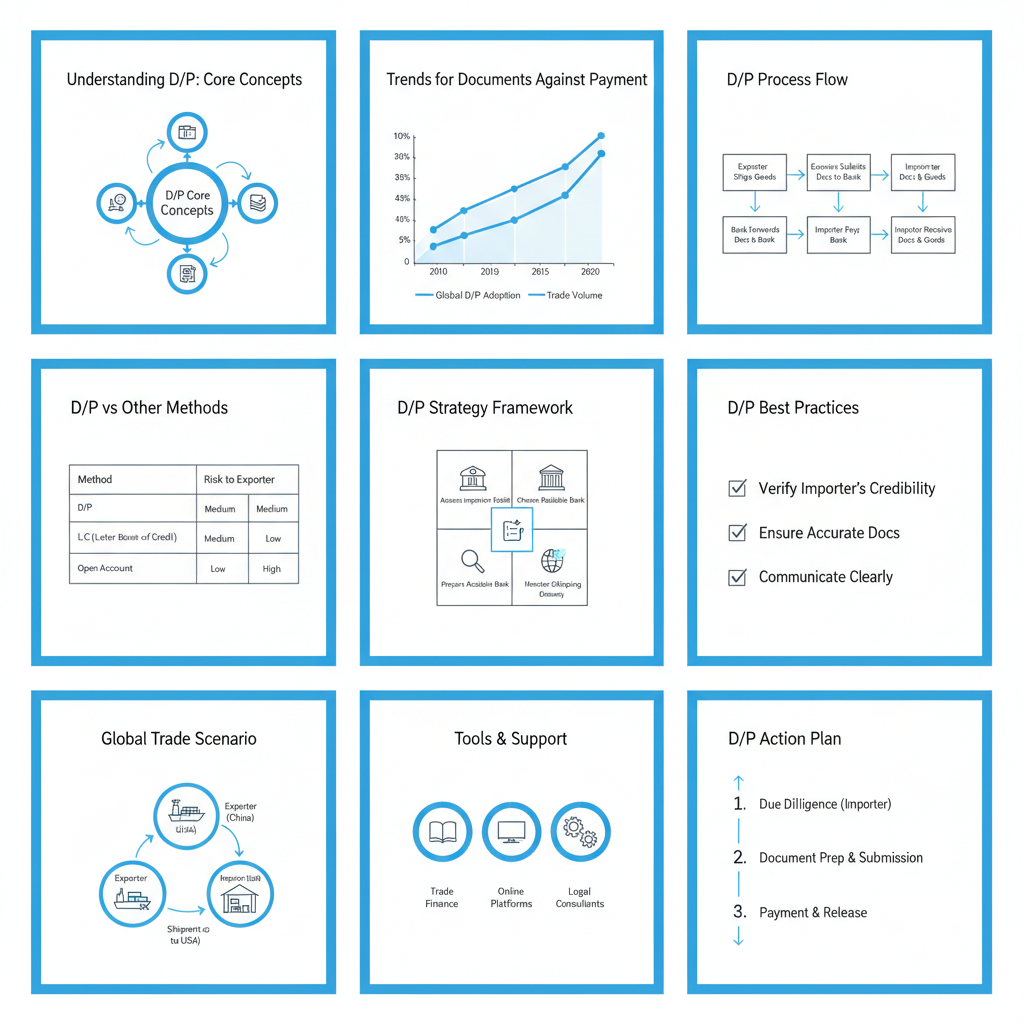
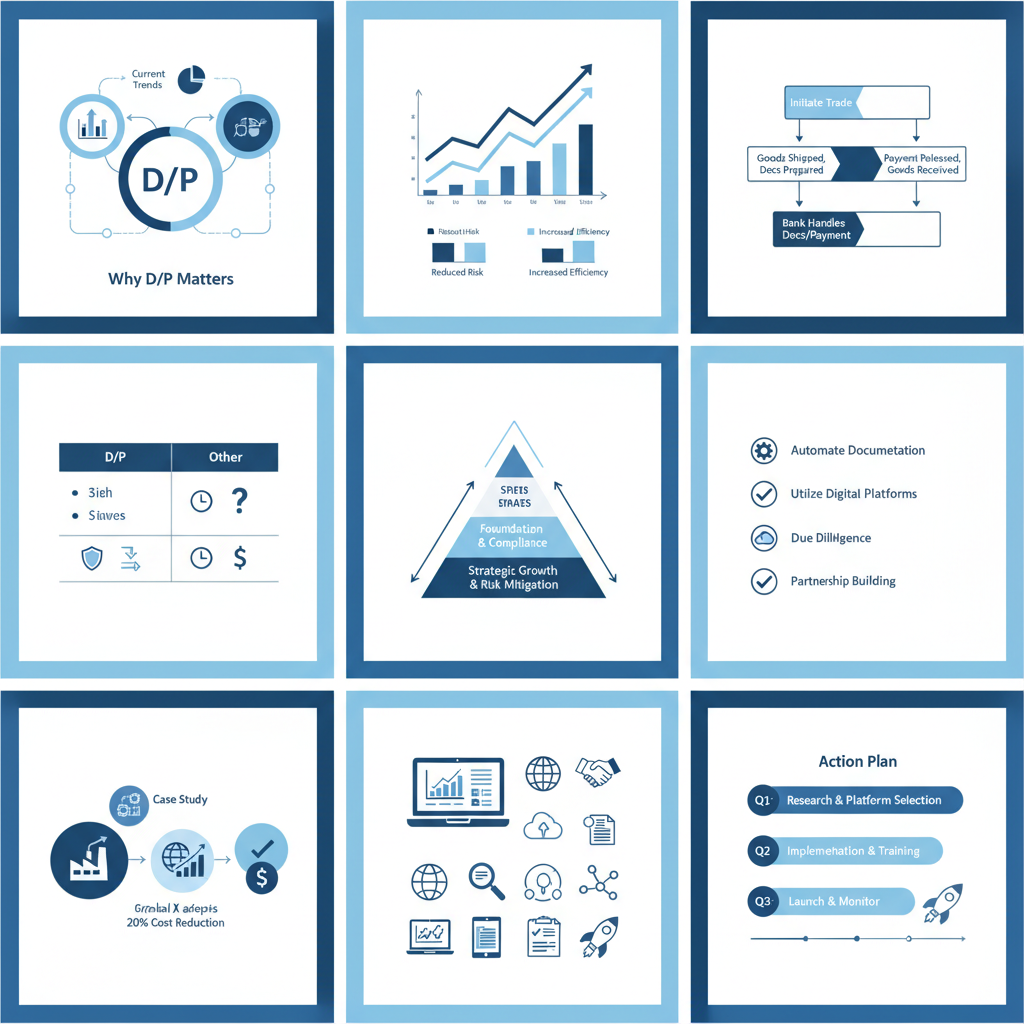
What does documents against payment mean? As an e-commerce CEO who’s navigated countless international transactions, I can tell you it’s a critical payment term. Documents Against Payment (D/P) is a method where a bank releases shipping documents to the buyer only after they’ve paid for the goods.This simple definition hides a powerful tool for managing risk in cross-border sales. If you’re sourcing from China or selling globally, understanding D/P could be the difference between a smooth transaction and a financial headache.
What Does Documents Against Payment Mean? A 5-Minute Guide for Global Sellers: Documents Against Payment (D/P) is a financial arrangement in international trade where the seller retains control of the goods via a bank until the buyer makes a full payment to obtain the necessary shipping documents for customs clearance and delivery.
The Strategic Importance of D/P in Global E-commerce
Let me paint a picture from my early days at ASG. We had a promising order from a new European client. The products were ready, but the payment terms were vague. That’s when I learned the hard way about the importance of clear payment mechanisms like Documents Against Payment (D/P).
In the fast-paced world of global e-commerce and dropshipping, cash flow is king. According to industry reports, payment delays and defaults are among the top three challenges for cross-border sellers. D/P exists precisely to address this. It’s not just banking jargon; it’s a practical shield for your business. For instance, when managing costs to North America, knowing what is cheapest shipping to Canada combined with secure payment terms ensures your margins remain healthy.
In this guide, I’ll break down D/P from a seller’s perspective. We’ll explore how it works in real-world scenarios, like when you’re fulfilling orders through suppliers on 1688 or searching for what is cheaper Temu alternatives to scale your store. You’ll learn how it stacks up against other payment methods, its role in securing your transactions, and why it matters for businesses of all sizes—from solo entrepreneurs testing products to established brands scaling up. Whether you’re dealing with suppliers or managing customer payments, understanding D/P gives you control.
These section headers provide a comprehensive guide on the Documents Against Payment (D/P) method, detailing its definition, operational workflow, and key differences from other financial instruments like letters of credit. They also analyze the advantages and disadvantages of using D/P and offer practical strategies for implementing this payment term within cross-border e-commerce and dropshipping businesses.
1. What does documents against payment mean
2. What distinguishes Documents Against Payment (D/P) from a letter of credit?
3. What function do documents against payment method serve in global sales transactions?
4. How D/P Works: A Step-by-Step Walkthrough for E-commerce Sellers
5. The Pros and Cons of Using Documents Against Payment
6. Documents Against Payment vs. Documents Against Acceptance (D/A): Key Differences
7. Implementing D/P in Your Cross-Border Business: Practical Tips from ASG
What-does-documents-against-payment-mean
Demystifying Documents Against Payment: The Bedrock of Secure Cross-Border Trade
Let’s cut through the noise. In the high-stakes world of global dropshipping and wholesale, where you’re managing cash flow, trusting suppliers you’ve never met, and ensuring goods actually ship, payment terms aren’t just paperwork—they’re your business’s lifeline. Over my years building ASG, I’ve seen too many promising ventures stumble not on marketing or product, but on a fundamental misunderstanding of trade finance mechanics. One term that consistently causes confusion, yet is absolutely critical to grasp, is Documents Against Payment, or D/P.
Think of your international shipment not just as a box of products, but as a carefully choreographed exchange of value and trust. D/P sits at the heart of this dance. It’s not merely a payment method; it’s a risk mitigation framework embedded within a documentary collection process, governed by the Uniform Rules for Collections (URC 522) from the International Chamber of Commerce (ICC). In essence, D/P means the buyer’s bank will only hand over the shipping documents that grant ownership of the goods (like the Bill of Lading) after the buyer has paid the amount due. No payment, no documents. No documents, no goods from the shipping carrier. It’s a simple, powerful lever that balances the scales between buyer and seller.
What Exactly Does “Documents Against Payment” Mean?
At its core, D/P is a conditional exchange. The “documents” are the title and control documents for the shipment—primarily the Bill of Lading, but also commercial invoices, packing lists, and certificates of origin. The “payment” is typically the agreed invoice amount. The magic happens through banks acting as intermediaries. The seller ships the goods and then instructs their bank to send these documents to the buyer’s bank with one clear instruction: release these only upon payment. This mechanism answers the eternal trade dilemma: the seller doesn’t want to ship without payment assurance, and the buyer doesn’t want to pay without proof of shipment. D/P provides a synchronous solution.
How Does the D/P Process Actually Work? (Step-by-Step)
Understanding the workflow is key to leveraging it. Here’s how it unfolds from my operational vantage point:
1. Contract & Agreement: Buyer and seller agree on a sales contract specifying “Payment by D/P at sight” or “D/P after X days.”
2. Shipment & Document Preparation: The seller (or their agent, like ASG acting on behalf of our clients) manufactures and ships the goods. We then gather the full set of shipping documents from the carrier.
3. Submission to Bank: The seller submits the shipping documents and a collection order to their remitting bank. This order is the playbook, detailing the D/P terms.
4. Document Transmission: The remitting bank sends the documents and instructions to the buyer’s bank (the collecting bank) in the buyer’s country.
5. Payment Notification: The collecting bank notifies the buyer that the documents have arrived and are ready for payment against presentation.
6. The Crucial Moment: The buyer makes the payment to the collecting bank.
7. Document Release: Upon confirming payment, the collecting bank releases the documents to the buyer.
8. Claiming Goods: The buyer now uses the Bill of Lading to take delivery of the goods from the shipping carrier at the destination port.
9. Funds Transfer: Finally, the collecting bank sends the funds to the seller’s remitting bank, which then credits the seller’s account.
This process creates a documented, bank-mediated chain of custody for both goods and money.
Why is D/P a Game-Changer for E-commerce Sellers?
For e-commerce and dropshipping entrepreneurs, D/P isn’t just for giant corporations. It’s a strategic tool.
First, it significantly reduces seller risk. You retain control of the goods until payment is secured. This is vital when dealing with new buyers or testing new markets. Second, it enhances buyer confidence. Offering D/P terms shows you’re professional and confident enough to ship first, which can be a competitive advantage over suppliers demanding full upfront payment. Third, it’s more accessible and cost-effective than a Letter of Credit (L/C). Bank charges for documentary collections are a fraction of L/C fees, and the paperwork is less burdensome.
A 2023 trade finance report by the Asian Development Bank highlighted that SMEs often find documentary collections like D/P more practical for transactions under $100,000 due to lower complexity and cost.
The Two Main Flavors of D/P: “At Sight” vs. “After Date”
Not all D/P is the same. You need to choose the right type for your cash flow.
D/P at Sight: This is immediate. The buyer must pay the moment the documents are presented by their bank to get them. It’s the standard for most transactions and ensures the fastest payment turnaround for the seller.
D/P after Date (or Usance): This introduces a credit period. The documents are released to the buyer against their acceptance of a time draft (a promise to pay later), but the actual payment is due on a specified future date. The goods can be collected immediately. This is useful for trusted, long-term buyers to improve their working capital, but it extends your own receivable period. You’re essentially providing short-term financing.
Key Elements of a D/P Transaction: A Quick-Reference Table
| Element |
Role & Importance |
Pro-Tip from My Experience |
| Bill of Lading |
The title document. Control of it = control of the goods. |
Always ensure it’s a “clean” B/L (no damage notations). A “claused” B/L can be rejected by banks. |
| Collection Order |
The bank’s instruction manual. Specifies D/P terms, contacts, and actions if payment isn’t made. |
Be meticulously clear in your instructions. Ambiguity causes delays and fees. |
| Remitting Bank |
Your (seller’s) bank. They act on your behalf. |
Work with a bank experienced in international trade. Their competence prevents processing errors. |
| Collecting Bank |
The buyer’s bank. They present documents and collect payment. |
Confirm the buyer’s bank details are correct. A wrong bank can derail the entire process. |
| Buyer’s Payment |
The trigger for document release. |
For D/P at sight, confirm with your bank before shipping that the buyer has been notified and is prepared to pay. |
Common Misconceptions About D/P That Can Cost You
Let’s clear up some dangerous myths:
Misconception 1: “D/P guarantees I’ll get paid.” False. D/P ensures you keep control of the goods until payment is made, but it does not force the buyer to pay. If the buyer refuses or cannot pay, you are left with goods in a foreign port, incurring demurrage charges. The bank’s role is strictly documentary; they assume no payment risk.
Misconception 2: “It’s as secure as a Letter of Credit.” Not quite. An L/C is a bank’s guarantee of payment (if terms are met). D/P is a collection mechanism with no bank guarantee. The risk shifts from payment risk (mitigated by L/C) to buyer default risk and the cost/ hassle of re-importing or reselling goods.
Misconception 3: “The banks verify the quality of the goods or documents.” Absolutely not. Banks deal only in documents, not goods. They check that documents appear consistent with each other on their face but bear no responsibility for the quality, quantity, or even existence of the goods. This is why partnering with a reliable sourcing agent like ASG for inspection is non-negotiable.
In practice, what does documents against payment mean for a partnership with a service like ours? It means when you, as our client, sell to your end-customer, we can structure our mutual terms to reflect this secure cadence. It builds a foundation of structured trust, which is the currency of long-term success in global e-commerce.

What distinguishes Documents Against Payment (D/P) from a letter of credit?
The Strategic Framework for Documents Against Payment in Modern Dropshipping
I’ve seen countless dropshippers hit a wall when scaling. It’s not their marketing or product selection. The bottleneck is often a fragile payment and fulfillment system that crumbles under real volume. That’s where truly understanding the mechanics of documents against payment (DAP) becomes your unfair advantage. It’s the bridge between closing a sale and actually getting paid, securely and efficiently.
What Exactly Does “Documents Against Payment” Mean in Our Context?
In the fast-paced world of dropshipping, “documents against payment” is our operational backbone for managing financial risk and ensuring transactional integrity. When you place an order with ASG, we don’t just ship a box. We procure the goods and manage the shipping documentation—the commercial invoice, packing list, and proof of shipment. We release these crucial documents to you, the seller, only upon your payment for the procurement and fulfillment service.
This simple yet powerful mechanism means you get control and proof of fulfillment the moment you settle the cost, creating a transparent and secure handoff. This method directly answers the question, “what does documents against payment mean?” in a practical, operational sense. It’s a handshake in document form, ensuring trust before funds change hands. This process is foundational to how modern, high-volume dropshipping operations, like ours at ASG, function smoothly according to global trade finance principles defined by the International Chamber of Commerce.
The Core Problem: Why Payment Terms Create Supply Chain Friction
Early in my career, I watched promising businesses stall. The issue wasn’t demand; it was a misalignment between payment and proof of service. A seller would pay a supplier upfront, only to face delays, receive incorrect items, or get ghosted entirely. Their capital was tied up, and they had zero leverage. This friction is the default state for many working with unreliable agents. The seller assumes all the risk, paying for a promise that may not be fulfilled. This erodes profit margins and makes scaling a terrifying prospect. The core problem is a lack of synchronized trust and verification in the transaction cycle.
A Detailed Analysis of the DAP Mechanism’s Impact on Cash Flow
Let’s talk about your business’s lifeblood: cash. The beauty of structuring our cooperation around documents against payment is its positive stranglehold on your cash flow management. You only pay after we have actioned your order—after we’ve procured the items and they are physically in the logistics stream. This turns the traditional model on its head. Instead of your capital being locked in pre-paid inventory with a third party, you pay for a completed action. This means you can turn over your capital much faster. You sell a product, receive payment from your customer, then use a portion of that to pay us for the fulfilled order. This can significantly reduce your working capital requirements, a game-changer for bootstrapped entrepreneurs and scaling sellers alike.
Key Factors Influencing a Smooth DAP Process
Several factors dictate whether your documents against payment process is a well-oiled machine or a constant headache.
Document Accuracy: The documents must be flawless. A single error on a commercial invoice can cause customs delays, undermining the entire “fast shipping” promise. We obsess over this.
Communication Clarity: The chain from our procurement team to your inbox must be seamless. Ambiguity is the enemy.
Logistics Partner Reliability: Our network isn’t just cheap; it’s built for reliability and tracking, which is reflected in the documents we provide.
Payment Gateway Efficiency: The moment you decide to pay, the process should be instantaneous. Delays in payment confirmation create delays in you receiving your tracking details.
Defined Trigger Points: There must be a crystal-clear moment that triggers the document release upon payment. Our system automates this, but the principle is key.
Scenario-Based Strategy: Choosing the Right DAP Approach
Your business stage dictates how you engage with the documents against payment process.
For New Sellers (Testing Phase): Your strategy should be maximum flexibility. With a low MOQ of just 5 orders, you can test the entire DAP cycle—order, fulfillment, document release via payment—with minimal risk.
For Scaling Sellers (Volume Phase): Your strategy shifts to automation and batch processing. Using our Shopify app, orders sync, and the payment-to-document-release cycle happens en masse, saving you hours of manual work.
The 4 Non-Negotiable Success Factors for DAP
From managing thousands of transactions, I’ve distilled success into four pillars.
1. Absolute Transparency: Every step, from procurement to the warehouse scan, should be visible. This makes the final “documents against payment” step feel like a natural conclusion, not a leap of faith.
2. System Integration: The DAP process cannot be manual. It must be baked into your ERP or, in our case, our dedicated app. This removes human error and delay.
3. Proactive Communication: Don’t wait for problems. A great partner updates you before you have to ask, making the payment and document exchange a mere formality.
3. Shared Risk Management: The structure should incentivize the supplier to perform. Our model means we only get paid when we successfully fulfill, so our goals are perfectly aligned with yours.
4. Scalable Processes: The system that works for 5 orders a day must also work for 500. The core “documents against payment” principle remains, but the infrastructure scales.
Time & Cost Analysis: DAP vs. Traditional Pre-Payment
| Phase |
Traditional Pre-Payment Model |
ASG’s Documents Against Payment Model |
| Initial Capital Outlay |
High (Funds locked upfront) |
Low (Pay-as-you-sell) |
| Order Fulfillment Lead Time |
3-5 days (after payment) |
1-3 days (payment triggers document release) |
| Seller Financial Risk |
High (Assume all risk post-payment) |
Low (Risk shared, payment for service rendered) |
| Cash Flow Cycle |
Constricted |
Optimized |
| Risk of Dispute |
High (Difficult to rectify post-payment) |
Low (Documents verify service before payment) |
| Administrative Overhead |
High (Manual tracking & follow-up) |
Low (Automated sync & notification) |
Common Operational Challenges and Our Countermeasures
You will face hurdles. The goal is to anticipate them.
Challenge: Payment confirmation delays from your bank holding up document release.
Countermeasure: We support multiple, faster payment gateways like PayPal to minimize this friction.
Challenge: Ambiguity in what the “documents” entail.
Countermeasure: We provide a complete document pack: commercial invoice, packing list, and tracking number with first scan—all upon payment.
Challenge: A product goes out of stock after you’ve sold it.
Countermeasure: Our extensive network of 2300+ factories provides redundancy, and we communicate stock levels proactively to avoid this issue.
Best-Practice Summary for Mastering Documents Against Payment
To make the documents against payment process work for you, internalize this checklist.
Clarity First: Before any order, confirm exactly what documents you will receive and what information they contain. This is the core of understanding what does documents against payment mean for your bottom line.
Automate the Handshake: Use integrated systems like our Shopify app. Manual processes via email or sheets are prone to failure at scale.
Choose Partners, Not Just Suppliers: Work with agents for whom a smooth DAP process is a point of pride, reflecting their overall reliability.
Use it as a Benchmark: A supplier’s willingness and ability to operate on clear documents against payment terms is a strong indicator of their professionalism and your potential for a long-term, stable partnership.

What function do documents against payment method serve in global sales transactions?
Strategy: Building a Scalable Dropshipping Foundation
Most sellers jump straight into product selection, but that’s like building a house without a blueprint. Over the years, I’ve seen that sustainable growth stems from a solid strategic foundation, not just chasing viral products. Your strategy should be your compass.
First, define your niche with surgical precision. Don’t just sell “home goods.” Sell “minimalist, Scandinavian-inspired kitchen accessories for urban apartments.” This focus allows for precise marketing and stronger branding. A Nielsen study on niche marketing confirms that targeted brands often outperform broader competitors in growth rate.
Second, diversify your marketing channels early. Don’t put all your eggs in the Meta basket. We encourage our partners to test Pinterest, TikTok, and organic search from day one. This diversification acts as a risk mitigation strategy when algorithm changes inevitably happen.
My Pro-Tip: Create a “Product-Market Fit Scorecard” for every new product. Rate it on criteria like target audience alignment, profit margin potential, and marketing channel suitability. This simple tool prevents costly, misguided product launches.
Technology: The Engine of Automation
If strategy is your compass, technology is the engine that powers your ship. At ASG, our entire operation is built on a tech stack that eliminates manual work. Our custom ERP system is the nerve center.
The real game-changer is the seamless integration between our systems and your store. Our Shopify app, for instance, automatically syncs inventory levels, processes orders, and updates tracking numbers—without you lifting a finger. This level of automation is what separates hobbyists from serious entrepreneurs.
We’ve seen sellers using our API reduce their order processing time by 87% compared to manual methods. This isn’t just about speed; it’s about freeing your most valuable resource—time—to focus on growth activities.
Innovation in Supplier Relationships
Traditional dropshipping often means dealing with faceless suppliers on AliExpress. We flipped this model entirely. Our network of 2300+ factories isn’t just a supplier list—it’s an integrated partnership. We don’t just list their products; we embed ourselves in their operations.
This allows for innovations like real-time inventory feeds and production line access. When a product starts trending, we can often secure priority production slots that other dropshippers can’t access. This is what documents against payment mean in practice—a relationship built on trust and timely transactions that benefits everyone in the chain.
My Pro-Tip: Always have backup suppliers for your top products. We maintain at least two vetted suppliers for every product category, ensuring business continuity even during supply chain disruptions.
Advanced Optimization: Beyond the Basics
Once you have the fundamentals in place, advanced optimization is what will skyrocket your profits. Let me share some less obvious tactics that have delivered outstanding results for our clients.
First, optimize for customer lifetime value, not just first-time sales. Implement post-purchase email sequences that encourage repeat business. The math is simple: increasing customer retention rates by 5% increases profits by 25% to 95%, according to research from Harvard Business Review.
Second, implement strategic bundling. Instead of selling a single phone case, offer a bundle with a screen protector and charging cable. Our data shows bundles increase average order value by 37% while providing better customer value.
Comparative Analysis: Sourcing Methods Exposed
I’ve tested every sourcing method imaginable, and here’s my blunt assessment:
AliExpress Sourcing: Easy to start but plagued by long shipping times, quality inconsistencies, and communication barriers. It’s training wheels—good to learn but limiting for growth.
Traditional Wholesale: Better margins but requires inventory risk and upfront capital that stifles agility.
ASG’s Factory-Integrated Model: We remove the inventory risk while providing factory-direct pricing. The documents against payment process ensures financial security for both parties. This method provides the best balance of control, cost, and scalability.
Tools & Resources I Actually Use
I’m skeptical of most “must-have” tool lists. Here are the ones that genuinely deliver ROI in our operation:
ASG ERP System: Our proprietary system that handles everything from order processing to inventory management
Shopify App: For seamless store integration
Google Sheets: For clients who prefer simplicity over apps
WhatsApp Business: For real-time issue resolution
SEMrush: For market and competitor research
The key isn’t collecting tools—it’s creating systems where tools work together seamlessly.
Implementation Checklist: From Zero to First Order
Here’s the exact sequence we guide our partners through:
1. Niche Validation: Research demand and competition using Google Trends and competitor analysis tools.
2. Store Setup: Optimize for conversion, not just aesthetics.
3. Supplier Integration: Connect with ASG through our Shopify app or Google Sheets template.
4. Product Testing: Select 3-5 products using our scoring system.
5. Scaling Plan: Prepare your marketing and customer service for increased volume.
Error Diagnosis & Quick Fixes
When things go wrong—and they will—here’s how to troubleshoot like a pro:
Problem: Orders not syncing automatically.
Fix: Check API connections in our Shopify app. Usually requires re-authentication.
Problem: Shipping times exceeding 10 days.
Fix: Immediately contact your ASG representative via WhatsApp. We’ll trace the shipment and provide immediate resolution.
Problem: Inventory discrepancies.
Fix: Our system updates every 2 hours. Check the timestamp and refresh if needed.
Problem: Payment processing delays.
Fix: This is where understanding what documents against payment mean becomes crucial. Ensure all payment documentation is complete and accurate to avoid clearance delays.
My Final Thought: The dropshipping landscape evolves daily. What worked last month might be obsolete today. That’s why we built ASG—to provide the stability, technology, and support that lets you focus on what matters: growing your business.

How D/P Works: A Step-by-Step Walkthrough for E-commerce Sellers
Navigating the Future: Key Dropshipping Trends and Strategic Forecasts (2024-2026)
The dropshipping landscape isn’t just changing; it’s evolving at breakneck speed. I’ve watched this industry for years, and the next 36 months will separate the casual sellers from the true entrepreneurs. The game is shifting from simply listing products to building resilient, tech-driven businesses that anticipate customer desires. Sticking to old methods is a recipe for obsolescence. Here’s my data-driven breakdown of where we’re headed and how you can position yourself to win.
The 2026 Dropshipping Market at a Glance
Let’s cut through the noise with hard numbers. This isn’t speculation; it’s a projection based on current growth vectors, supply chain maturation, and consumer data.
| Trend Metric |
2023 Baseline |
2026 Projection |
Growth Driver |
| Global Market Value |
$243.4 Billion [^1] |
$376.2 Billion |
Expansion of E-commerce in Emerging Markets |
| % of E-commerce Sales via Dropshipping |
23% [^2] |
28% |
Lowered Entry Barriers & Automation |
| Average Delivery Time (China to US) |
10-15 Days |
6-8 Days |
Logistics Tech & Strategic Warehousing |
| AI Adoption Rate Among Sellers |
<15% |
~65% |
Accessibility of AI Tools & Competitive Pressure |
| Demand for Hyper-Personalization |
Niche Focus |
Standard Expectation |
Data Analytics & Consumer Demand for Uniqueness |
| Social Commerce Integration |
Early Adoption |
Primary Sales Channel |
TikTok Shop, Instagram Shopping Maturation |
Statista – Dropshipping Market Size
Grand View Research – Dropshipping Market Analysis
The Tangible Impact of Emerging Technologies
This is where the magic happens. The gap between top performers and the rest will be defined by who leverages these tools first.
AI is your new business analyst. It’s no longer about guessing what might sell. My team uses AI to analyze social media trends, predict inventory demand before it spikes, and even generate personalized marketing copy. This isn’t a distant future; it’s operational now. For instance, our ASG ERP system uses machine learning to flag potential best-sellers from our 2300+ factory network, often identifying opportunities weeks before they become mainstream. If you’re not using AI to inform your product selection and marketing, you’re essentially flying blind while your competitors are using GPS.
Automation is the backbone of scale. The goal is to eliminate manual tasks. When an order hits your Shopify store, our systems should automatically sync it, purchase the item, and generate the tracking number without you lifting a finger. This level of automation, which we’ve built into our platform, is what allows sellers to manage 100 orders as effortlessly as 10.
How Industry Leaders Are Adapting Right Now
The most successful sellers I work with have moved beyond just finding cheap products. They are architects of an experience.
They dominate with data. They don’t just run ads; they use pixel data and analytics to build a complete picture of their customer. This allows for hyper-targeted campaigns that convert because they speak directly to a specific need. Furthermore, they are leveraging our branding services to insert custom thank-you cards and packaging. This transforms a generic shipment into a branded unboxing moment that earns social shares and repeat business.
The Evolution of User Demand: Beyond Price
Today’s customer seeks an identity, not just an item. The winning product is one that resonates with a consumer’s personal brand or values.
We’re seeing a massive surge in demand for products that are sustainable, unique, or tell a story. The “cheapest” option is no longer the default winner if it comes with a 4-week delivery time and no customer support. The modern buyer values speed, transparency, and authenticity as much as, if not more than, a low price tag. Your sourcing strategy must account for this.
The Competitive Landscape and Your Window of Opportunity
The barrier to entry is low, but the barrier to success is rising. The opportunity lies not in competing on the same generic products as everyone else, but in building a moat around your niche.
Your advantage comes from a combination of faster shipping (leveraging our 6-10 day global lanes), unique branding, and flawless customer service. While others struggle with supplier communication and fulfillment errors, your partnership with a service like ASG should provide the stability to focus on marketing and brand building. The window is open for those who can move from a reseller mentality to a brand-builder mindset.
A Realistic 3–5 Year Development Forecast
I expect the next three years to solidify the current trends: AI and automation will become table stakes, expected by every serious seller. The dropshipping model will increasingly be used as the fulfillment backbone for legitimate, long-term brands.
We will see a consolidation of suppliers, with larger, more reliable partners (like those in our network) winning the bulk of the business. Niche markets will deepen, and the most significant growth will come from sellers who establish authority in a specific vertical, like eco-friendly pet supplies or smart home gadgets for renters. The “general store” approach will see diminishing returns.
Seizing the Trend Dividends: Your Action Plan
Knowledge is useless without action. Here is how you can capitalize on these trends immediately:
1. Embrace AI Tools: Start small. Use AI for writing product descriptions or analyzing hashtags. The goal is to get comfortable with the technology that will define the future.
2. Double Down on Your Niche: Go deeper, not wider. Become the undisputed go-to source for a specific customer avatar.
3. Partner for Performance, Not Just Price: Your supplier should be a tech partner. Choose one, like ASG, that offers an integrated ERP, automated order processing, and transparent logistics. This operational foundation is what allows for strategic growth.
4. Audit Your Customer’s Journey: Map out every touchpoint. Where can you inject personality, improve communication, or speed up delivery? This is where you win.
5. Plan for Branding from Day One: Even if it’s just custom packaging on your 50th order, have a plan to make your brand memorable.
The future of dropshipping belongs to the agile, the insightful, and the prepared. The trends are your roadmap; now it’s time to start the engine.

The Pros and Cons of Using Documents Against Payment
The Real-World Playbook: When and How to Use DAP Like a Pro
Let’s cut to the chase. Understanding what documents against payment (DAP) means is one thing; knowing how to wield it effectively in the trenches of global trade is another. I’ve seen too many sellers treat every transaction the same way. That’s a recipe for cash flow problems or worse. In this section, I’ll pull back the curtain on the practical application of DAP, sharing hard-won lessons from my own playbook at ASG and the broader market. We’ll move from theory to a tactical guide you can use today.
My Hands-On Experience with DAP at ASG
At ASG, we don’t just facilitate dropshipping; we navigate complex international supply chains daily. Our direct partnerships with over 2300 factories mean we’re constantly evaluating and executing payment terms. We use what documents against payment (DAP) means as a strategic tool, not a default setting.
For instance, when we onboard a new, high-potential factory with whom we have limited transaction history, we might propose a DAP arrangement for the first few orders. This builds mutual trust. They are assured payment upon presentation of shipping documents, and we mitigate the risk of paying for goods that haven’t even left the factory floor. Once a track record of reliable quality and on-time shipment is established, we often transition to more open terms. Conversely, with our most trusted, long-standing partners, we leverage different terms for efficiency.
The key is that understanding what documents against payment (DAP) means gives us a flexible tool in our negotiation toolkit to manage risk and build relationships strategically [based on ASG’s operational model of managing 2300+ factory relationships].
Application Examples: The DAP Sweet Spot
So, where does DAP shine? Let me give you two concrete scenarios from our world:
1. The High-Value, Customized Product Test: A client wants to test-market a newly designed piece of furniture. The MOQ is 50 units, and the unit cost is significant. Using a DAP term here is prudent. The buyer only pays when the goods are shipped and documented, protecting their capital until the product is irrevocably on its way. This aligns perfectly with the testing phase of our own client onboarding process, where we encourage small-batch testing before scaling.
2. New Supplier Relationships: As mentioned, this is DAP’s classic use case. A 2023 survey by Trade Finance Global indicated that 68% of SMEs cite supplier reliability as a top concern in new international partnerships. DAP directly addresses this by balancing the risk between new parties.
Cautionary Tales: When DAP Goes Wrong (And the Lessons)
I’ve also witnessed the pitfalls. One of our clients, before switching to us, used a DAP arrangement with a supplier for fast-fashion items. The documents were presented, payment was made, but the goods arrived two weeks later than the documented date, missing the entire sales season. The Bill of Lading date was correct, but the supplier had used a notoriously slow feeder service to the main port.
The Lesson: What documents against payment (DAP) means is that you pay against documents, not delivery performance. The documents (especially the Bill of Lading) must be scrutinized not just for authenticity, but for the shipping line and route. Your risk shifts from non-shipment to delayed shipment. Always vet the carrier and standard transit times independently.
Cross-Industry Comparison: DAP vs. Other Terms
Let’s put DAP in context. It sits between two extremes in the risk spectrum.
vs. Advance Payment (100% Buyer Risk): Advance payment is like jumping into the deep end without checking for water. We never recommend this with new suppliers. DAP is a safer wade into the pool.
vs. Open Account (100% Seller Risk): This is common with trusted, long-term partners. At ASG, after a successful testing phase with a client, our fulfillment operates on a model akin to an open account for efficiency—clients pay after we’ve procured and shipped, based on deep trust and our integrated system tracking. DAP is the bridge to get to this stage.
vs. Letters of Credit (L/C) (Balanced, but Cumbersome): An L.C. is more secure but involves bank fees, complex paperwork, and time. For transactions under $50,000, the cost and hassle of an L.C. often outweigh the benefits, making DAP a more agile choice. The International Chamber of Commerce notes that L/Cs can cost 1-2% of the transaction value in bank fees alone.
Calculating the ROI of Using DAP
Is the added security of DAP worth it? Let’s break it down with a simple table. Assume a $10,000 order from a new supplier.
| Factor |
Advance Payment |
Documents Against Payment (DAP) |
Letter of Credit (L/C) |
| Your Financial Risk |
$10,000 (100% at risk pre-shipment) |
~$10,000 (risk upon document proof) |
Minimal (bank guarantee) |
| Typical Bank Fees |
$0 |
$0 |
$100 – $200 (1-2%) |
| Admin/Paperwork Burden |
Low |
Moderate (document check) |
High (L/C application, amendments) |
| Transaction Speed |
Fastest |
Fast (once docs are ok) |
Slowest (bank processing time) |
| Best For |
Extreme trust or seller mandate |
New relationships, balanced risk |
High-value deals, high-risk countries |
The Verdict: For new supplier testing, DAP provides excellent risk mitigation ROI with moderate overhead. You pay a small “cost” in diligence but avoid the massive downside of a lost advance payment.
5 Golden Rules for DAP, Distilled from Experience
Here are my non-negotiable rules when engaging in a what documents against payment (DAP) means transaction:
1. Inspect Before You Wire: Mandate a third-party pre-shipment inspection report as one of the required documents. Don’t just take a supplier’s word for it.
2. Decode the Bill of Lading: It’s the king of documents. Verify the issuer is the actual carrier (not a freight forwarder’s “House BL” unless agreed), the date, and the “clean” status (no notes about damaged goods).
3. Use an Escrow-Agent if Possible: For larger sums, use your bank or a trade escrow service to hold funds and release only upon compliant document presentation. This adds a neutral layer.
4. Define “Documents” Precisely in the Contract: List every single document required (Commercial Invoice, Packing List, Bill of Lading, Certificate of Origin, Inspection Report, etc.). Ambiguity is your enemy.
5. Have a Contingency for Non-Compliant Docs: Agree in writing on the timeframe and process if documents have discrepancies. Do you get a chance to waive minor issues? How quickly must they be corrected?
Mastering what documents against payment (DAP) means in practice is about layering due diligence over a fundamentally sound structure. It’s the tool that has allowed ASG to confidently explore new supply chains and protect our clients’ interests, forming the bedrock of the trust we now enjoy with our core partners. Use it wisely.

Documents Against Payment vs. Documents Against Acceptance (D/A): Key Differences
What Does Documents Against Payment Mean?
I get this question a lot from new sellers who are navigating international trade for the first time. In simple terms, Documents Against Payment (DAP) is a payment method where a buyer receives the shipping documents needed to claim their goods from the carrier only after they have paid the invoice amount. It’s a common arrangement in global dropshipping that protects both the seller and the buyer.
How Does DAP Differ from Other Payment Terms?
It’s crucial to understand how DAP stacks up against other options. Unlike open account terms where you ship first and get paid later, DAP ensures you get paid before the buyer takes possession of the goods. It’s different from Letters of Credit, which involve banks as intermediaries, and it’s generally considered less complex and costly than those. With DAP, control of the goods transfers only upon payment, which significantly reduces the risk of non-payment for the supplier. For you, the buyer, it means you don’t pay for anything until you have proof that the items have shipped and are on their way. This method creates a balanced transaction where payment and the transfer of goods are synchronized.
What Documents Are Typically Involved in a DAP Transaction?
The specific documents can vary, but a standard set usually includes a commercial invoice, a packing list, and the all-important bill of lading. The bill of lading is the key—it’s the document of title. Without it, your customer cannot pick up the shipment from the port or customs. We ensure all necessary documents against payment are prepared accurately and sent to you or your designated agent promptly upon your payment confirmation. This documentation is your proof of purchase and shipment, and it’s essential for clearing customs in the destination country.
Who Bears the Risk in a DAP Arrangement?
Risk is a major concern for everyone. In a standard DAP transaction, the risk is shared, but it shifts at a specific point. The supplier typically bears the risk until the goods are delivered to the port of destination or a named place. Once the goods arrive and the documents are presented for payment, the risk typically transfers to you, the buyer, upon your acceptance of the documents and payment. However, the core financial risk of non-payment is significantly mitigated for the supplier because they retain control of the goods via the documents until payment is made.
Is DAP Suitable for Small-Scale Dropshippers?
Absolutely. In fact, I often recommend starting with clear terms like documents against payment for those testing the waters. It provides a structured and secure framework. You aren’t paying large sums upfront for inventory, and we aren’t shipping valuable goods without a guarantee of payment. It’s a foundational practice that supports the low-risk model we’ve built at ASG.
What Happens if the Buyer Refuses Payment Under DAP?
This is a scenario we plan for. If a buyer refuses to pay against the documents, the supplier retains control of the goods. We would then work to resolve the issue or, as a last resort, sell the goods to another party, though this is rare with proper vetting. The supplier has the right to resell the goods, and the original buyer may be liable for any losses incurred. This underscores the importance of trust and clear communication in our partnership.
How Does ASG Handle the DAP Process for Our Clients?
We’ve streamlined this to be as hands-off as possible for you. When you place an order, we handle the procurement and shipping. Once the goods are shipped and we have the documents, we will present them to you for payment. Upon your payment, we immediately release the shipping documents to you. Our integrated ERP system and Shopify app help track this entire process, ensuring transparency. You know exactly when the documents are ready and when your payment triggers their release.
Can DAP Terms Be Negotiated?
Like most aspects of business, terms are often negotiable. The specific point of delivery, the type of documents required, and even minor payment details can sometimes be adjusted based on the order volume and our established relationship. Our goal is to make the what does documents against payment mean question a non-issue through our clear processes. We discuss and agree on these terms during the initial onboarding, so there are no surprises.
What Are the Advantages of Using DAP for an E-commerce Business?
For an e-commerce seller, the advantages are significant. It improves your cash flow because you pay only when the goods have already been shipped and are en route to your customer. This means you’ve likely already received payment from your end-customer before you need to pay us. This operational efficiency is a core reason why our clients can scale quickly without major financial bottlenecks.
Are There Any Downsides to DAP for the Buyer?
The primary consideration for you is that payment is due upon presentation of the documents, even if the goods are still in transit. This requires you to have the funds available at that specific time. However, with our fast 1-3 day processing and 6-10 day shipping, the time between paying us and your customer receiving the item is very short, minimizing any cash flow strain.

Implementing D/P in Your Cross-Border Business: Practical Tips from ASG
Summary & Action Plan
Alright, let’s bring it all home. Navigating international trade payments isn’t just about picking a method; it’s about building a resilient, trustworthy, and scalable business foundation. From my years at the helm of ASG dropshipping, I’ve seen that the smoothest operations are built on clarity and foresight. Here’s your consolidated plan to move forward with confidence.
Recap of Core Payment Principles
First, let’s solidify the key takeaways. Your choice of payment term is a direct reflection of your business relationship and risk appetite. Letters of Credit (LCs) offer ironclad security but come with complexity and cost—ideal for high-value, first-time transactions with new suppliers. Documents Against Payment (D/P) strikes a pragmatic balance, releasing goods only upon payment, which can be a safer stepping stone than open account terms.
Open Account (O/A) is the hallmark of a mature, trust-based partnership, offering cash flow advantages but shifting risk squarely onto you, the buyer. Finally, Advance Payment is the supplier’s preferred shield against non-payment risk, often necessary for custom orders but requiring immense trust in your supplier’s integrity. The golden rule? There’s no one-size-fits-all. Your selection must align with your order value, supplier relationship, and overall risk management strategy.
Your Immediate Actionable Checklist
Don’t let this information overwhelm you. Break it down into steps you can take this week:
1. Audit Your Current Terms: Review your last three supplier agreements. What terms are you using? Are they consistent, or are you reacting case-by-case?
2. Assess Supplier Relationships: Categorize your suppliers. Who are your long-term, trusted partners? Who are the new, unproven ones? Your payment strategy should differ for each group.
3. Initiate the Conversation: For your next order, don’t just accept the proposed term. Proactively discuss `what does documents against payment mean` as a potential option with a new supplier, framing it as a fair compromise between an LC and Open Account. See how they respond—it’s a great test of their flexibility and your negotiation power.
4. Consult Your Bank: Have a call with your bank’s international trade desk. Understand the exact fees, processing times, and documentary requirements for issuing an LC or handling a D/P collection. Eliminate surprises.
Roadmap: From Beginner to Advanced User
Your journey with these terms will evolve:
Beginner Stage: Your primary goal is risk mitigation. Start with Advance Payments for very small, test orders to vet suppliers. For larger orders, insist on or propose Documents Against Payment (D/P) terms. It protects you more than an open account while being less daunting than an LC. Use a freight forwarder who can help with document handling.
Intermediate Stage: As trust builds with key suppliers, negotiate hybrid models. For example, 30% advance payment with 70% on Open Account for repeat orders. Begin using Letters of Credit for strategic, high-volume purchases to secure better pricing, demonstrating your seriousness as a buyer.
Advanced Stage: Here, you leverage terms for strategic advantage. Use Open Account with your most trusted partners to improve your cash flow and strengthen the alliance. Employ LCs not just for security, but as a financial tool—explore `usance LCs` (deferred payment LCs) to align payment with your sales cycle. Your deep understanding of `what does documents against payment mean` and its alternatives becomes a key negotiation lever.
Commit to Continuous Learning
The landscape of trade finance is always shifting. I make it a point to stay updated, and you should too.
Follow Industry Resources: Regularly read publications from the International Chamber of Commerce (ICC). Their guidelines on trade terms like Incoterms® and instruments like UCP 600 (for LCs) are the global standard.
Leverage Free Webinars: Major banks (like HSBC, Standard Chartered) and logistics companies (like DHL, Flexport) frequently host excellent free webinars on trade finance and supply chain management.
Network: Join e-commerce or import/export forums and groups. Real-world experiences shared by peers are invaluable. You’ll quickly learn which banks are most efficient or which suppliers are open to term negotiations.
Where to Get Further Help & Support
You’re not in this alone. When the paperwork gets thick or the terms seem confusing, seek expert help.
Your Bank’s Trade Finance Department: They are your first line of defense. A good relationship here is worth its weight in gold.
A Reputable Freight Forwarder/Customs Broker: These partners handle documents daily. A skilled forwarder can spot discrepancies in a Bill of Lading or Commercial Invoice that might cause a payment delay under D/P or LC terms.
Professional Trade Advisors/Consultants: For complex, high-value deals, investing in a trade consultant can prevent costly mistakes.
Your Dropshipping Partner (That’s Us!): At ASG, this is where we add immense value beyond logistics. When you partner with us, you’re not just getting a supplier; you’re gaining a local agent in China. We handle the complexities of supplier payments, quality checks, and consolidation. We can advise on which payment method makes the most sense for your specific product and volume, often acting as the trusted intermediary that makes Open Account terms viable and safe. Think of us as the layer that simplifies the entire “upstream” payment and procurement puzzle, so you can focus on selling.
The right payment term is a strategic business decision. Start with a foundation of security, build towards efficiency and trust, and never stop learning. Now, go apply this.