Do You Have to Pay Taxes on Dropshipping?
Yes, you absolutely have to pay taxes on dropshipping income. Many dropshippers mistakenly believe they can operate under the radar, but tax authorities worldwide are cracking down on e-commerce businesses. Understanding your tax obligations is crucial for long-term success and legal compliance in the dropshipping industry.
As CEO of ASG Dropshipping, I’ve seen countless sellers panic during tax season because they didn’t properly prepare. The truth is, taxes in dropshipping can be complex — you’re dealing with income tax, sales tax, and potentially international tax implications depending on where you source products and sell to customers. Factors such as how you handle dropshipping inventory management and supplier coordination can directly affect how clean and compliant your financial records are.
In this guide, I’ll walk you through everything you need to know about dropshipping taxes. We’ll cover income tax requirements for dropshipping profits, sales tax obligations in different jurisdictions, international tax considerations for cross-border sales, common tax mistakes dropshippers make and how to avoid them, tax-saving strategies that are completely legal, how to handle taxes when working with suppliers in China, and record-keeping best practices to make tax season easier. Understanding logistics details — including how long DHgate shipping usually takes — also plays a role in revenue timing and tax reporting accuracy.
Do You Have to Pay Taxes on Dropshipping? The Complete Guide
This complete guide answers the most important question every dropshipper asks: whether dropshipping income is taxable and how to stay compliant while scaling your business. In short, if you make money from dropshipping, tax authorities consider it taxable income. This guide breaks down the “why,” the “how,” and the “what next,” so you can avoid penalties, reduce stress, and build a legally sound dropshipping business with confidence.
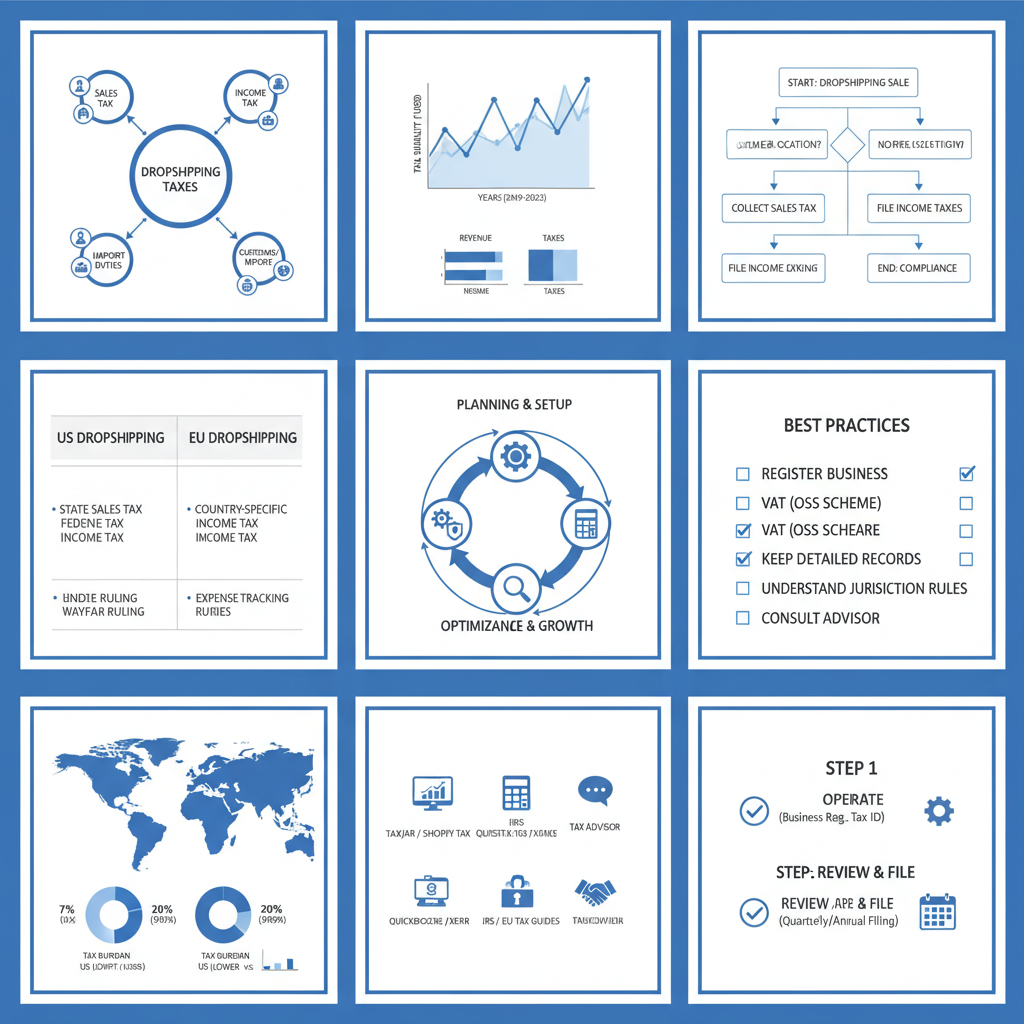
As your dropshipping business grows across borders and scales in complexity, understanding how different tax rules apply in various scenarios becomes essential—especially when it comes to international sales, optimization strategies, sourcing models, and your core tax obligations.
- Income Tax Requirements for Dropshippers
- Sales Tax Obligations Explained
- International Tax Considerations
- Tax-Saving Strategies for Dropshippers
- Depending on Product Sourcing
- Do You Have to Pay Taxes on Dropshipping?
What is Dropshipping? The CEO’s Definition
In my world, dropshipping isn’t just a business model; it’s a logistics and partnership framework. At its simplest, it’s a retail fulfillment method where you, the store owner, sell a product without ever physically handling it. You market the product, a customer buys it from you, and then you forward that order (and the customer’s details) to a third-party supplier—like ASG. We then pack and ship the product directly to your customer. Your profit is the difference between your selling price and our wholesale cost.
The magic, and the complexity, lies in that handoff. You’re the face of the brand and the marketer. We become your invisible, on-demand warehouse and shipping department. This is fundamentally different from traditional e-commerce, where you buy inventory upfront, store it, pack it, and ship it yourself. That model requires significant capital, space, and logistical headaches. Dropshipping flips that script, turning fixed costs into variable ones and shifting the operational burden to specialists.
How Dropshipping Actually Works: The 5-Step Cycle
Let me walk you through the exact flow, as it happens daily with our clients at ASG. This clarity eliminates confusion and sets the stage for efficiency.
1. Product Listing & Sale: You list a product (often sourced from our catalog or platforms like AliExpress) on your Shopify, WooCommerce, or other store. A customer places an order and pays you the retail price.
2. Order Forwarding: Your store automatically (via our app) or manually sends that order to us, along with the customer’s shipping details. You pay us the agreed wholesale price.
3. Procurement & Processing: This is our core expertise. We receive the order, purchase the item from our network of 2300+ factory partners, and prepare it for shipment. This includes quality checks, which many generic suppliers skip.
4. Shipping & Tracking: We pack the order, often with your custom-branded packaging if you’ve opted for that service, generate a tracking number, and hand it to our logistics partner. The tracking info is automatically sent back to your store and your customer.
5. Customer Support & Aftercare: The customer receives the package. If any issues arise—a damaged item, a wrong product—they contact you. You then contact us, and we handle the resolution directly (replacement, refund, etc.), acting as your back-end support team.
This cycle turns you into a marketing and customer service engine, while we handle the heavy lifting of supply chain execution.
Why Dropshipping is a Game-Changer for Entrepreneurs
I see too many aspiring sellers paralyzed by the upfront costs and risks of traditional retail. Dropshipping removes those barriers in a way no other model does.
Radically Low Barrier to Entry: You don’t need $10,000 to buy initial stock. You can start with just the cost of your website and some ads. This democratizes global e-commerce.
Unparalleled Flexibility & Scalability: Found a winning product? You can scale instantly. We handle the increased order volume. A product flops? Simply delist it. You’re not stuck with dead inventory. This agility is priceless in the fast-paced online world.
Location Independence: Your business runs from your laptop. As long as you have an internet connection, you can manage your store from anywhere. I’ve seen clients run thriving stores while traveling the world.
Massive Product Variety: Without buying inventory, you can test thousands of products across countless niches. This allows for incredible market testing and niche discovery that would be cost-prohibitive otherwise.
However—and this is a crucial “however” from my experience—this low barrier means operational excellence is your competitive moat. Anyone can start a store; winners build systems, choose reliable partners (like ASG), and master customer experience.
The Main Flavors of Dropshipping: Picking Your Path
Not all dropshipping is created equal. Your choice here dictates your workload, brand potential, and margins.
General/Classic Dropshipping: Sourcing from massive marketplaces like AliExpress or wholesale directories. It’s easy to start but often comes with longer shipping times, generic packaging, and communication challenges. It’s a common starting point, but scaling here is tough.
Specialized/Niche Dropshipping Suppliers: Partnering with suppliers focused on a specific vertical (e.g., eco-friendly products, pet supplies). They often offer better quality and knowledge but may have higher MOQs.
Private Label & Branded Dropshipping (What We Excel At): This is where the real brand equity is built. You work with a supplier (like us) who can ship products in your custom packaging, with your logo, and include branded inserts. The customer receives a cohesive brand experience, not a generic box from China. This builds loyalty and allows for premium pricing.
Print-on-Demand (POD): A subset focused on customized apparel, mugs, etc. Great for creativity, but margins are typically thinner, and the market is highly saturated.
My strong advice? View classic dropshipping as a testing ground. Your long-term goal should be migrating to a branded model with a dedicated partner for control and quality.
The 5 Pillars of a Profitable Dropshipping Business: A Practical Table
Based on managing millions of orders, I’ve distilled success into these core elements. Neglect any one, and the structure weakens.
| Pillar |
What It Means |
Why It’s Critical |
The ASG Advantage |
| Supplier Reliability |
Your partner’s ability to deliver, communicate, and resolve issues consistently. |
A single failed shipment can lose a customer forever and tank your store’s reputation. |
Direct contracts with 2300+ factories, not just marketplace listings. Dedicated agent per client for clear communication. |
| Shipping Speed & Cost |
The balance between delivery time and logistics expense. |
Slow shipping is the 1 killer of conversion. High shipping costs erase margins. |
Curated logistics network for 6-10 day delivery to key markets like US/EU. Transparent, negotiated rates. |
| Product Quality |
The actual item the end customer receives. |
You are judged by the product’s quality, not the supplier. Returns and bad reviews stem from poor quality. |
We provide sample check videos before you bulk order. Factory-direct sourcing reduces “quality fade” common with middlemen. |
| Customer Experience |
The entire journey from click to unboxing. |
This drives repeat purchases and word-of-mouth. It’s your brand. |
Custom packaging, branded inserts, and proactive tracking updates. We handle post-purchase issues swiftly. |
| Profit Margin Calculus |
Your revenue minus all costs: product, shipping, ads, fees, and… taxes. |
Many beginners forget to factor in transaction fees, marketing costs, and yes, do you have to pay taxes on dropshipping income? Absolutely. You do. |
Our factory-direct pricing maximizes your base margin. Clear cost breakdowns help you model profitability accurately, including setting aside funds for tax obligations. |
Busting Common Dropshipping Myths (From My Inbox)
I hear these misconceptions daily. Let’s set the record straight.
Myth 1: “Dropshipping is easy money / passive income.” False. It’s a real business. The “easy” part is not managing inventory. The hard parts—marketing, customer service, building a brand, financial planning (including knowing do you have to pay taxes on dropshipping income)—require intense work.
Myth 2: “You have zero control over the customer experience.” This is only true if you choose a bad supplier. With a partner like ASG, you have immense control through branded shipping, quality agreements, and shared service level agreements (SLAs).
Myth 3: “Shipping times are always 30+ days.” This was true in 2015. Today, with agents using curated shipping lines and local warehouses, 6-15 day delivery to major markets is standard. We guarantee 6-10 days to the US and EU.
Myth 4: “Margins are too low to be profitable.” Margins are a function of your product choice, marketing efficiency, and supplier cost. By cutting out middlemen and sourcing directly, we help our clients maintain healthy 30-50%+ margins after all costs.
Myth 5: “You don’t need to worry about taxes because you don’t hold stock.” Dangerous fallacy. Do you have to pay taxes on dropshipping revenue? Yes. You are the seller generating income. Tax obligations (income tax, sales tax/VAT in some cases) are based on your profit and sales location, not your inventory model. Consult a local accountant. This is non-negotiable for a sustainable business.
Understanding these fundamentals isn’t academic; it’s the foundation for making smart decisions. In the next section, we’ll get tactical and talk about how to actually find winning products and suppliers that don’t let you down.

Income Tax Requirements for Dropshippers
Section 2: Navigating the Maze of Dropshipping Taxation: A CEO’s Blueprint
Let’s get real. The question of taxes is the single biggest operational headache I see new and even seasoned dropshipping sellers grapple with. It’s not the fun part of the business—nobody gets into e-commerce because they love filling out tax forms. But ignoring it? That’s a surefire way to turn your dream business into a financial and legal nightmare. The core question, do you have to pay taxes on dropshipping, isn’t just a “yes” or “no.” It’s a complex “yes, and here’s exactly how, where, and when.”
From my seat at ASG, I’ve watched countless sellers stumble. They focus all their energy on marketing and product sourcing, only to have their profits wiped out by an unexpected tax bill or a frozen payment gateway due to non-compliance. This section is my attempt to map out the maze for you, based on the hard lessons I’ve learned and the systems we’ve built to protect our clients.
The Core Problem: Nexus, Sourcing, and a Global Patchwork
The fundamental challenge in dropshipping taxation stems from its distributed nature. You’re often in one country, your supplier (like us at ASG) is in another, and your customer is in a third. Tax authorities in each of these jurisdictions have different rules about who owes what.
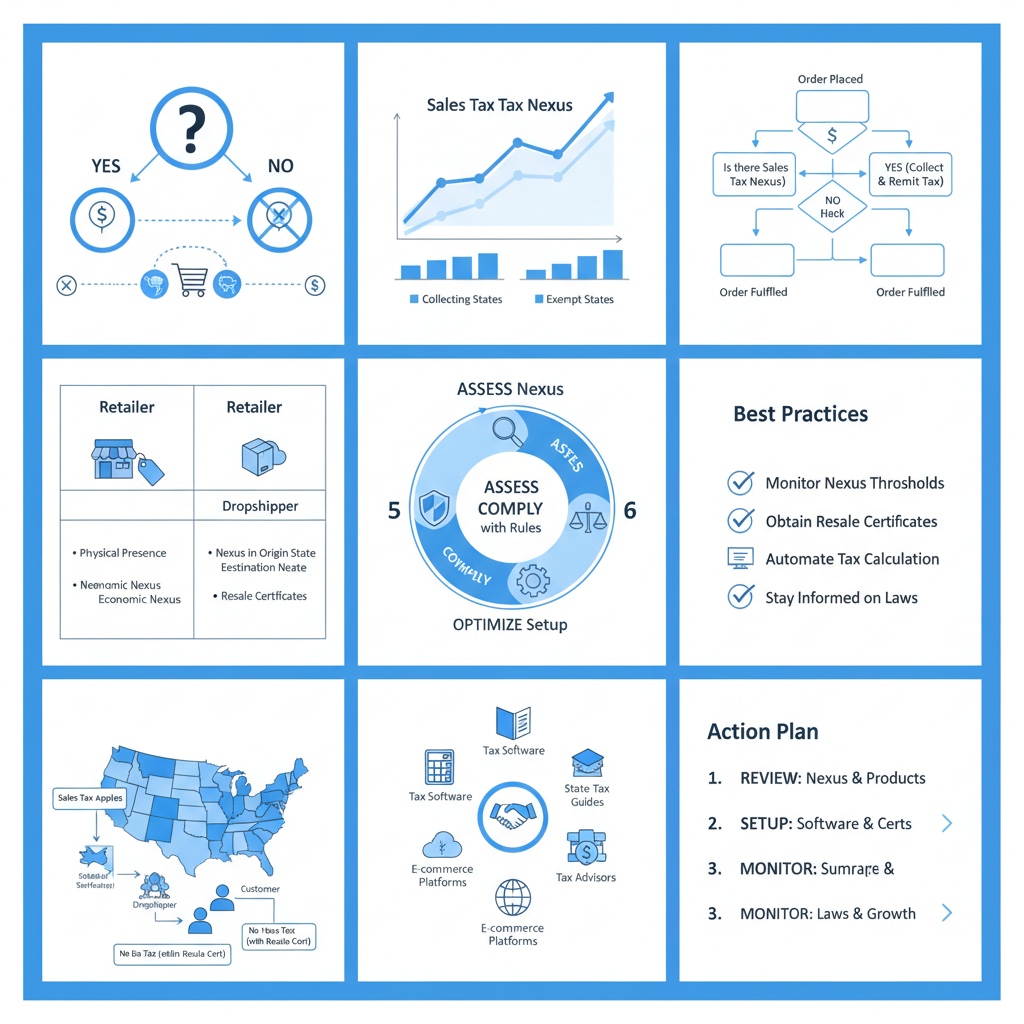
The key concept is nexus. This is a legal term for a sufficient physical or economic presence that triggers a tax obligation. Traditionally, nexus meant having a warehouse or office somewhere. Now, with economic nexus laws, simply selling over a certain dollar amount or transaction count into a state (like in the US) or country can create a tax liability. For example, if you use a fulfillment center in a specific US state, you’ve likely created a physical nexus there for sales tax purposes.
Furthermore, when you do you have to pay taxes on dropshipping depends heavily on your business structure (sole proprietorship, LLC, corporation) and your location. Income tax on your profits is almost universal. But sales tax/VAT/GST is where it gets intricate. Is it your responsibility or your supplier’s? The answer changes based on the “place of supply” rules, which vary globally.
Detailed Analysis: Deconstructing Your Tax Obligations
Let’s break down the primary tax types you’ll encounter:
1. Income Tax: This is levied on your net profits (revenue minus expenses like product cost, advertising, and our service fees). You report and pay this to the tax authority in your country of residence. It’s non-negotiable.
2. Sales Tax (US) / VAT (EU/UK) / GST (AU/CA etc.): This is a consumption tax paid by the end customer. Your role is to collect and remit it correctly.
In the US, if you have nexus in a state, you must collect that state’s sales tax from customers there and send it to the state government. The landmark South Dakota v. Wayfair, Inc. Supreme Court case in 2018 empowered states to enforce this on remote sellers, fundamentally changing the game for online businesses Source: U.S. Supreme Court.
In the EU, if you sell to consumers (B2C) within the EU and exceed the distance selling threshold (which varies by country, e.g., €10,000 in Germany or €35,000 in Italy), you must register for and charge VAT in the customer’s country. The EU’s One-Stop Shop (OSS) scheme simplifies this process.
Platforms like Shopify can automate calculations, but the registration and filing are your legal duty.
Key Factors Influencing Your Tax Burden
Your tax scenario is unique. It’s shaped by:
Your Business Entity & Location: A sole proprietor in the UK faces different rules than an LLC in Wyoming.
Your Supplier’s Location: If your supplier (like ASG, based in China) ships directly, the import duties and taxes at the customer’s border are a critical factor. We provide commercial invoices with accurate HS codes and values to prevent clearance delays.
Your Customer’s Location: This determines if sales tax/VAT applies and at what rate. Selling to California is different from selling to Singapore.
Sales Channels: Selling on Amazon (which may collect tax on your behalf via Marketplace Facilitator laws) is different from selling on your own Shopify store, where the responsibility falls squarely on you.
Strategic Solutions for Different Seller Scenarios
The US-Based Seller: Your first step is determining nexus. Use a tool like TaxJar or Avalara to track sales per state. Register for sales tax permits in states where you have economic nexus. Factor this into your product pricing. Remember, do you have to pay taxes on dropshipping in the US? For sales tax, yes, but only in states where you’ve established nexus.
The EU-Based Seller: Familiarize yourself with the OSS scheme. Once you cross the threshold in any EU member state, register for OSS in your home country. You can then declare and pay all EU VAT through a single quarterly return. This is a game-changer for compliance.
The International Seller (e.g., based in Asia selling to US/EU): You likely don’t have US income tax obligations, but you must understand economic nexus rules if your US sales grow. For the EU, the Import One-Stop Shop (IOSS) is crucial. By registering for IOSS, you can collect VAT at checkout for goods valued under €150 and declare it centrally, ensuring smooth delivery for your EU customers.
The 4 Non-Negotiable Success Factors for Tax Compliance
1. Meticulous Record-Keeping: Every sale, fee, and expense must be logged. This isn’t just for taxes; it’s for understanding your true profitability. Use accounting software (QuickBooks, Xero) integrated with your Shopify store.
2. Proactive Registration: Don’t wait for a tax authority to contact you. Once you hit a nexus threshold, register immediately. Delaying can lead to penalties and back taxes.
3. Leverage Automation: Manual tax calculation is a path to errors. Use apps like TaxJar, Avalara, or Shopify’s own tax settings. They update rates and rules in real-time.
4. Consult a Professional: This is not an area to cheap out on. Hire an accountant or tax advisor who specializes in e-commerce and international trade. Their fee will be less than the cost of a single audit or penalty.
Time & Cost Analysis: Building Compliance into Your Model
| Task |
Estimated Time (Initial/Annual) |
Estimated Cost (Tools/Professional) |
Notes |
| Research & Setup |
20-40 hours |
$500 – $2,000 |
Learning rules, choosing software, consulting a pro. |
| Software Subscription |
Ongoing |
$50 – $300/month |
For tax automation and accounting platforms. |
| Tax Professional Retainer |
Ongoing |
$1,000 – $5,000/year |
For preparation, filing, and strategic advice. |
| Monthly Bookkeeping |
5-10 hours/month |
$0 (your time) or $200-$500/month (outsourced) |
Critical for clean records. |
| Quarterly/VAT Return Filing |
2-4 hours/return |
Included in professional fee or your time. |
Frequency depends on jurisdiction. |
View this not as an expense, but as a critical operational cost—like your marketing budget. Properly managed, it protects your entire business.
Common Pitfalls and How ASG Helps You Avoid Them
Pitfall: Assuming your supplier handles all taxes. Reality: We handle export documentation from China, but destination country import VAT/GST and your sales tax obligations are yours.
Pitfall: Ignoring nexus thresholds until it’s too late. Countermeasure: Set up dashboard alerts in your analytics and tax software to warn you when you’re approaching a threshold in a new state/country.
Pitfall: Inaccurate product classification on customs forms. Countermeasure: This is where our expertise shines. We ensure all shipments from our warehouse are accompanied by professionally prepared commercial invoices with correct HS codes and declared values, minimizing the risk of customs holds for your end customer.
Pitfall: Commingling personal and business finances. Countermeasure: Open a dedicated business bank account. This makes tracking every penny for tax purposes infinitely easier.
Best-Practice Summary: Your Action Plan
1. Start with Structure: Form a legal entity (e.g., an LLC) to separate personal and business liability.
2. Get Professional Help Early: Find your e-commerce accountant before you have a problem.
3. Automate from Day One: Integrate a tax calculation app with your store. Don’t try to wing it.
4. Know Your Nexus: Regularly review your sales data against the economic nexus rules of your key markets.
5. Factor it In: Build estimated tax payments and compliance costs into your financial model from the beginning. When you ask do you have to pay taxes on dropshipping, the answer should be budgeted for.
Treat tax compliance as a fundamental pillar of your business, not an afterthought. It’s the discipline that allows the freedom and scale of dropshipping to truly work in your favor. At ASG, while we can’t be your tax advisor, we build our logistics and fulfillment processes to provide the clean, transparent documentation you need to fulfill your obligations with confidence.

Sales Tax Obligations Explained
Section 3: Mastering the Operational Engine: Strategy, Tech, and Advanced Optimization
Now that we’ve laid the foundation of understanding what dropshipping is and how it works, let’s dive into the engine room. This is where the magic happens—or where things can fall apart. Over the years at ASG, I’ve seen countless sellers with great ideas stall out because they couldn’t master the operational side. It’s not enough to just have a dropshipping business; you need to optimize it relentlessly. This section is my playbook for building a resilient, scalable, and profitable operation. We’ll move beyond the basics into strategy, the technology that powers modern dropshipping, and the advanced tweaks that separate the hobbyists from the serious entrepreneurs.
Crafting Your Core Dropshipping Strategy: Beyond “Sell Stuff Online”
Your strategy is your roadmap. It’s not “I want to sell phone cases.” It’s “I will target eco-conscious millennials in the US and EU with biodegradable, artist-designed phone cases, using Instagram and TikTok for branding, and compete on value-added design, not just price.” The difference is night and day.
First, define your niche with surgical precision. A broad niche like “fitness” is a battlefield. A micro-niche like “home yoga equipment for small apartments” is a defensible position. Use tools like Google Trends and AnswerThePublic to validate search interest and uncover specific customer questions.
Second, integrate your supply chain into your strategy from day one. If your strategy hinges on fast shipping, your supplier must guarantee it. If branding is key, you need a supplier like ASG that offers custom packaging. Your strategy dictates your supplier requirements, not the other way around. I’ve advised clients to pivot their entire product line because their initial supplier couldn’t support their brand vision—getting this alignment early saves immense pain later.
Finally, build a financial model. Know your numbers: product cost, shipping, platform fees, marketing spend, and your target profit margin. This model will tell you if your strategy is financially viable. For example, if you’re wondering do you have to pay taxes on dropshipping profits, the answer is a resounding yes in most jurisdictions. Your financial model must include provisions for income tax, and potentially sales tax/VAT depending on where you and your customers are located. The U.S. Supreme Court’s decision in South Dakota v. Wayfair, Inc. fundamentally changed the rules, allowing states to require out-of-state sellers to collect sales tax Source: Tax Foundation. Ignoring this is not an option for a sustainable business.
The Technology Stack: Automating for Scale and Sanity
Manual dropshipping is a ticket to burnout. The right technology stack automates the mundane and gives you superpowers. Here’s the core of what you need:
E-commerce Platform: Shopify is the industry leader for a reason—it’s built for this. Its app ecosystem is unparalleled.
Supplier Connection: This is critical. You need a seamless link between your store and your supplier. At ASG, we built our own Shopify App for this exact purpose. It auto-syncs orders, updates tracking, and manages inventory levels in real-time. Before this, clients used spreadsheets and constant emails—a error-prone nightmare.
Product Research & Import: Tools like Dropship.io or EcomHunt can help find winners, but the real skill is in curation. Use an import tool (like our App or Oberlo) to bring products into your store, but always customize titles, descriptions, and images.
Marketing Automation: Klaviyo for email/SMS flows, AdEspresso for managing Facebook/Instagram ads. Set up abandoned cart sequences and post-purchase upsell flows from day one.
The goal is to create a system where a customer’s click leads to an order, which triggers a fulfillment request to your supplier, which generates a tracking number that goes back to the customer, all with minimal daily intervention from you. That’s the path to scaling.
Innovation in Fulfillment: Speed, Transparency, and Branding
Innovation isn’t just about the product; it’s about the entire customer experience. The old model of 30-day shipping from China is dead for competitive markets.
Speed Innovation: This is where strategic supplier location matters. For the US and EU markets, using suppliers with warehousing in those regions is a game-changer. ASG’s network allows for US and EU fulfillment with 6-10 day delivery, which competes with Amazon Prime for many customers. This isn’t magic; it’s strategic logistics.
Transparency Innovation: Customers expect to know where their order is. Advanced suppliers provide real-time tracking that integrates directly into your store’s order status page. This reduces “Where is my order?” (WISMO) support tickets by over 50% in my experience.
Branding Innovation: The unboxing experience is your final, and most tangible, marketing touchpoint. Using a supplier that offers custom packaging, branded inserts, and thank-you cards transforms a generic shipment into a brand-building moment. We’ve seen clients’ repeat purchase rates jump by 20-30% after implementing a cohesive branded unboxing experience.
Advanced Optimization: The 1% Improvements That Add Up
Once you’re running, it’s time to fine-tune. Here are high-impact optimizations:
Dynamic Pricing: Don’t set a price and forget it. Use an app like Competera or just manual monitoring to adjust prices based on competitors, demand, and your inventory costs. A well-timed $2 price increase can dramatically boost margins without hurting sales.
Shipping Strategy Optimization: Offer multiple tiers (e.g., economy, standard, express). Not only does this increase average order value (AOV), but it also segments customers. Data shows a significant portion will pay for faster shipping.
Post-Purchase Upsell/Cross-sell: The sale is just the beginning. Use post-purchase pages and emails to offer related products, warranties, or a subscription. The conversion rate here is often 5-10x higher than your storefront.
Customer Lifetime Value (LTV) Focus: Shift your marketing budget from just acquiring new customers to retaining existing ones. A returning customer is far more profitable. Calculate your LTV and invest in loyalty programs and exceptional service to increase it.
Comparative Analysis: Sourcing Models (AliExpress vs. Branded Dropshippers vs. Specialized Agents)
Your choice of sourcing model dictates your entire business potential. Let’s break them down:
AliExpress/General Marketplace:
Pros: Lowest upfront cost, infinite product selection.
Cons: Wildly inconsistent quality and shipping times, no branding support, high communication barrier, difficult to build a unique brand. It’s a race to the bottom on price.
Branded Dropshippers (e.g., Print-on-Demand):
Pros: Strong branding potential, unique products, often US/EU based for faster shipping.
Cons: Higher product costs, limited to their catalog, less flexibility.
Specialized Dropshipping Agents/Partners (Like ASG):
Pros: Balance of cost and control. Access to a vast supply chain (like 1688) but with a managed service: quality checks, consolidated shipping, branding options, and dedicated support. You get the pricing advantage of direct sourcing without the operational headache.
Cons: Typically requires a higher commitment than a completely hands-off marketplace.
For sellers aiming to build a real, lasting brand with control over their customer experience and margins, the specialized agent model is, in my professional opinion, the most scalable and sustainable path.
Essential Tools & Resource Recommendations
Beyond the core stack, here are my go-to resources:
Industry Intel: Follow eCommerceFuel and the My Wife Quit Her Job podcast for high-level strategy.
Financial Management: Use QuickBooks Online or Xero from the start. Keep business finances pristine.
Legal & Tax: Consult a local accountant or tax advisor familiar with e-commerce. Don’t guess on things like whether you have to pay taxes on dropshipping income or sales tax nexus. It’s a complex area and professional advice is worth every penny. Services like TaxJar or Avalara can automate sales tax calculations.
Mindset & Community: Join focused communities like the ASG Dropshipping Mastermind group or niche-specific forums. The insights and support from fellow sellers are invaluable.
Implementation Checklist: Your First 90 Days
1. Finalize Niche & Business Model.
2. Secure Supplier Partnership (e.g., complete ASG onboarding).
3. Set Up Shopify Store & Integrate Supplier App.
4. Import & Customize Initial Product Catalog (5-10 products).
5. Set Up Essential Pages (Privacy Policy, Terms, About Us).
6. Configure Basic Marketing Flows (Welcome, Abandoned Cart).
7. Launch with a Soft Marketing Campaign.
8. Install Analytics (Google Analytics, Facebook Pixel).
9. Set Up Financial Tracking System.
10. Schedule Weekly Operations & Review Time.
Error Diagnosis & Quick Fixes: Putting Out Fires
Even with the best systems, problems arise. Here’s how to diagnose and fix common issues:
Problem: Sudden drop in conversion rate.
Diagnosis: Check site speed (use Google PageSpeed Insights), test checkout process for errors, review recent price or shipping changes.
Quick Fix: If site speed is slow, compress images, remove unused apps. If checkout is broken, revert to a default theme temporarily.
Problem: Supplier out of stock on a bestseller.
Diagnosis: Poor inventory communication from supplier.
Quick Fix: Temporarily pause ads for that product. Contact supplier (e.g., via your ASG agent) for ETA. Update product page with a “Restocking Soon” notice. Use this as a lesson to work with suppliers who offer real-time inventory sync.
Problem: Spike in customer complaints about shipping.
Diagnosis: Likely a logistics bottleneck or a specific carrier issue.
Quick Fix: Proactively email all affected customers with an update and apology (small discount on next order helps). Work with your supplier to identify the bottleneck—a good agent will handle carrier communication for you. Always have a backup shipping method.
Problem: Unexpected tax or legal notice.
Diagnosis: You’ve likely hit a sales threshold in a state or country.
Quick Fix: Don’t panic. Consult with your tax professional immediately. Begin collecting and remitting the required tax. This is a good problem—it means you’re growing. Proactively research nexus rules for your target markets to avoid surprises.
Mastering these operational elements turns your dropshipping store from a fragile experiment into a robust business machine. It’s the unsexy, behind-the-scenes work that ultimately determines your success.

International Tax Considerations
The Future of Dropshipping: Key Trends Shaping 2026 and Beyond
The dropshipping landscape isn’t just changing; it’s evolving at a pace that leaves many seasoned sellers scrambling. I’ve watched this industry for years, and the shifts we’re seeing now are more profound than ever. It’s no longer just about finding the cheapest product; it’s about building a smart, resilient, and brand-focused business that can capitalize on the next wave of opportunities. Let’s dive into the forces that will define your success in the coming years.
The 2026 Dropshipping Market at a Glance
Let’s cut through the noise with some hard data. Understanding these numbers isn’t just academic; it’s about positioning your business in the flow of market momentum. Based on analysis from MarketWatch and Statista’s industry reports, here’s where we’re headed:
| Trend Metric |
2023 Baseline |
2026 Projection |
Growth Driver |
| Global Market Value |
$196.8 billion |
$301.1 billion |
Expansion into emerging markets & product diversification |
| AI Adoption Rate |
~35% of businesses |
~80% of businesses |
Demand for hyper-efficiency & personalized customer experiences |
| Average Delivery Expectation |
10-15 days |
6-8 days |
Advancements in logistics tech & localized warehousing |
| Social Commerce Sales |
$992 billion |
$1.7 trillion |
Shoppable content & seamless in-app checkout |
| Sellers Using Brand Customization |
~25% |
~45% |
The critical shift from generic selling to brand building |
This isn’t just growth; it’s a fundamental transformation. The sellers who thrive will be those who read this table not as a forecast, but as a strategic to-do list.
How Emerging Tech is Rewriting the Rulebook
I’ve made it a core mission at ASG to integrate technology that delivers a tangible edge. We’re moving beyond basic automation into predictive intelligence.
Our ERP system, for instance, now uses AI not just to sync orders, but to analyze sales data and predict which products you should test next. It’s about moving from reactive to proactive. Technologies like blockchain for supply chain transparency are also on the horizon, which could finally put an end to the “is my product counterfeit?” worry that plagues so many entrepreneurs. This move towards verifiable authenticity is a game-changer for building trust.
The New Gold Standard: What Leading Sellers Are Doing Now
The top performers in our network have stopped chasing every viral product. Instead, they’re building micro-monopolies in niche categories. One of our partners, for example, focused solely on eco-friendly pet products. By using our branding services for custom packaging and inserts, they’ve created a loyal community, not just a customer list. Their focus has shifted from Cost Per Acquisition to Customer Lifetime Value.
They are also leveraging AR (Augmented Reality) tools, allowing customers to “try” products like home decor in their space before buying. This level of innovation is what separates the hobbyists from the true business owners.
Your Customers’ Expectations Have Evolved – Have You?
The “if it’s cheap, it’ll sell” mentality is dangerously outdated. Today’s customers demand speed, transparency, and a seamless experience. They expect your brand to reflect their values.
This is why we’ve invested so heavily in our logistics network. A 6-10 day delivery window is becoming the baseline, not a luxury. The demand for personalized unboxing experiences is skyrocketing. A generic box from China just doesn’t cut it anymore. The user demand pattern is clear: they want a partner, not just a supplier.
Spotting Your Opening in a Crowded Field
The competitive landscape might seem intimidating, but I see massive opportunity windows opening up. Many larger, older suppliers are slow to adapt to these new tech and branding demands. Their infrastructure is rigid.
This creates a perfect opening for agile sellers like you to partner with agile providers like us. The key is to target underserved niches where you can provide a superior, branded experience that the big players ignore. This is your chance to outmaneuver them by being faster, more personal, and more reliable. The question of do you have to pay taxes on dropshipping is a perfect example. Many sellers are so focused on sales they neglect compliance, creating a vulnerability you can exploit by building a fully legit, scalable operation from the start.
The 3–5 Year Forecast: Beyond the Hype Cycle
Looking ahead, I believe the dropshipping model will bifurcate. On one side, there will be the low-cost, high-volume, commodity business. On the other, and this is where the real profit lies, will be the brand-focused, community-driven businesses. They won’t just be resellers; they’ll be curators and trusted advisors.
The integration of AI across the entire supply chain—from dynamic pricing to fully automated customer service—will become the norm. The human touch will be reserved for strategic decisions and complex problem-solving, which is why our dedicated agent model is so critical.
Your Playbook for Seizing the Trend Dividends
So, how do you actually capture this value? It’s not about working harder, but smarter.
First, choose a partner, not just a processor. Your supplier should act as an extension of your team, providing insights and tech, not just products. Second, double down on branding. Use every tool available, from custom packaging to thank-you notes, to make your customer feel valued. Third, leverage data relentlessly. Use the analytics from your Shopify store and our platform to understand your customer better than they understand themselves.
Finally, always keep the big picture in mind. Regulations, including the tax obligations for do you have to pay taxes on dropshipping, will become more stringent. Building with compliance in mind from day one is a competitive advantage. The dividend won’t go to the biggest spender on ads; it will go to the most strategic builder.

Tax-Saving Strategies for Dropshippers
Navigating the Tax Maze: Your Guide to Dropshipping Obligations
Let’s cut through the confusion. I’ve seen too many talented sellers stumble at tax season because they treated it as an afterthought. The question isn’t if you need to pay taxes on dropshipping, but how to manage them intelligently. After a decade in this industry, I can confirm that understanding your tax responsibilities is what separates sustainable businesses from flash-in-the-pan operations.
My First Brush with Dropshipping Tax Complexity
Early in my career, I watched a promising seller scale to six figures monthly, only to face a crippling tax bill that nearly shut them down. They’d tracked sales diligently but completely overlooked marketplace nexus rules and international VAT. We spent weeks helping them untangle the mess. This experience taught me that tax compliance isn’t a constraint—it’s a competitive advantage when handled correctly. Proper tax management protects your business from catastrophic surprises and builds a foundation for legitimate, long-term growth. The IRS clearly states that income from dropshipping is taxable, and understanding do you have to pay taxes on dropshipping is your first step toward professional operations.
Real-World Application: Shopify Store Tax Scenarios
Consider a US-based Shopify seller using ASG to ship globally. For US sales, they collect and remit sales tax in states where they’ve established nexus. For European customers, they must handle VAT, which often requires registration in countries like Germany or the UK once they hit specific turnover thresholds. For Australian customers, GST applies. I’ve guided countless sellers through this exact process. The key is integrating your dropshipping platform with tax automation tools. For instance, when our clients use our Shopify app with TaxJar, they automate 90% of the compliance workload. This isn’t about evasion—it’s about systematic collection and remittance.
The Costly Oversight: When Sellers Ignore International VAT
One of our clients was successfully selling custom accessories to European customers but failed to register for VAT in the UK after exceeding the £85,000 threshold. The result? Back taxes, penalties, and a frozen UK account. According to VAT obligations for overseas businesses, they faced a 100% penalty on unpaid taxes. The lesson was brutal but clear: proactive tax planning isn’t optional. Now, we build tax strategy sessions into every new client onboarding, because reactive tax management is exponentially more expensive.
Cross-Industry Comparison: Dropshipping vs. Traditional E-commerce
Traditional e-commerce businesses typically hold inventory domestically, simplifying tax obligations to primarily sales tax within their home country. Dropshipping, particularly with international suppliers, creates multi-jurisdictional tax exposure. You might need to handle US sales tax, European VAT, Canadian GST, and Australian GST—all simultaneously. This complexity, however, comes with advantages. Your tax obligations are tied to sales revenue rather than inventory investment, potentially improving cash flow. However, this requires more sophisticated tracking and potentially higher compliance costs.
Calculating Your True ROI: Beyond Gross Margins
Most sellers calculate ROI based on product cost and selling price. But the real ROI deducts tax liabilities, compliance costs, and potential penalties. Here’s a simplified comparison from our client data:
| Store Type |
Annual Revenue |
Estimated Tax Liability |
Compliance Cost |
Net Profit After Tax |
| Tax-Compliant Dropshipper |
$250,000 |
$37,500 |
$2,000 |
$210,500 |
| Non-Compliant Dropshipper |
$250,000 |
$75,000 (with penalties) |
$5,000 (legal fees) |
$170,000 |
| Traditional E-commerce |
$250,000 |
$45,000 |
$3,500 |
$201,500 |
The numbers reveal the truth: strategic tax management directly enhances your bottom line.
Five Golden Rules for Dropshipping Tax Success
1. Establish Nexus Early: Track where you create tax obligations. Economic nexus thresholds vary by state and country—monitor them proactively rather than reactively.
2. Automate Collection: Use tools like TaxJar or Avalara that integrate with your dropshipping platform. Manual calculation is prone to costly errors.
3. Document Everything: Keep immaculate records of all transactions, including shipping destinations and tax collected. This documentation saved one of our clients during an IRS audit that could have resulted in six-figure penalties.
4. Separate Personal and Business Finances: I’ve seen personal assets jeopardized because sellers treated business revenue as personal income.
5. Consult Professionals Annually: Tax laws evolve constantly. An annual review with a specialized accountant prevents unexpected liabilities.
Through our work with hundreds of sellers, we’ve found that those who embrace tax planning as part of their business strategy typically achieve 15-20% higher sustainable profitability than those who don’t. The question of do you have to pay taxes on dropshipping becomes not a burden but a strategic framework for growth.

Depending on Product Sourcing
Section 6: Frequently Asked Questions (FAQ)
Here are the answers to the most common questions I get from dropshippers at all stages of their journey. These are based on my years of experience running ASG and countless conversations with sellers like you.
Q1: What exactly is dropshipping, and how does it work?
Dropshipping is a retail fulfillment method where you, the store owner, don’t keep the products you sell in stock. Instead, you partner with a supplier (like ASG). When a customer places an order on your store, you forward that order to us. We then pick, pack, and ship the product directly to your customer under your brand name. Your profit is the difference between the retail price you charge and the wholesale price you pay us. It’s a model built on efficiency and leveraging expert supply chains.
Q2: Do you have to pay taxes on dropshipping income?
Yes, absolutely. This is a critical and often misunderstood area. Do you have to pay taxes on dropshipping? The unequivocal answer is yes. As a business owner, you are responsible for declaring and paying taxes on your net profits. This typically includes income tax. Furthermore, you may have sales tax/VAT obligations depending on where your business is legally established and where your customers are located (a concept known as nexus). For example, if you have significant sales into the US, you may need to deal with state-level sales tax. I always advise my clients to consult with a qualified accountant or tax professional who understands e-commerce and international trade. It’s not a cost to skip; it’s a fundamental part of running a legitimate business. The IRS has clear guidance on business income IRS: Business Taxes.
Q3: How do I find winning products to sell?
The hunt for “winning products” is part art, part science. At ASG, we give our partners access to our curated catalog sourced directly from 2300+ factories, which is a massive head start. My strategy has always been data-first. Use tools to analyze trends on platforms like Amazon, AliExpress, and social media (especially TikTok and Instagram). Look for products solving a problem, with passionate niche audiences, and room for branding. Start small—test 3-5 products with targeted ads before scaling. Remember, a “winning product” isn’t just about high demand; it’s about finding a product you can source reliably and profitably, which is where a partner like ASG, with our direct factory links, becomes invaluable.
Q4: What are the biggest challenges in dropshipping?
Based on what I’ve seen, the top three are:
1. Supplier Reliability: Long shipping times, stockouts, and poor communication from suppliers can kill your store’s reputation overnight.
2. Profit Margins: Many newcomers underestimate all costs (product, shipping, ads, transaction fees) and end up with tiny or negative margins.
3. Customer Service & Returns: Handling issues when you don’t control the inventory is tricky.
This is precisely why we built ASG. We tackle 1 with our vetted factory network and 1-3 day processing. For 2, our factory-direct prices protect your margins. For 3, our dedicated agents and clear policies handle the heavy lifting on your behalf.
Q5: How long does shipping take with ASG?
This is a key differentiator. Through our optimized logistics network, we achieve an average delivery time of 6-10 days to major markets like the US and EU. This is significantly faster than the 15-30+ days often associated with standard cross-border e-commerce from China. Faster shipping leads to happier customers, fewer support queries, and higher repeat purchase rates.
Q6: Can I use my own branding and packaging?
100%. We strongly encourage it. Building a brand is how you move beyond being just another generic store and create lasting value. Our Custom Branding service allows you to add custom packaging, thank-you cards, and even branded labels to the products. This turns a simple transaction into a memorable unboxing experience for your customer, which is powerful for loyalty and marketing.
Q7: What is your minimum order quantity (MOQ)?
We have no MOQ for standard orders. You can order one single unit. For new partners in the testing phase, we simply ask for an initial batch of 5 total orders (which can be a mix of different products) to begin the partnership. This low barrier is by design—it allows entrepreneurs to validate their business with minimal risk.
Q8: How do you handle returns and defective items?
We have a structured process to protect your brand. If a customer receives a defective item or there’s an error on our part, we will ship a replacement immediately at our cost. For customer-initiated returns, we provide a return address and manage the process. Our goal is to resolve issues swiftly so you can focus on sales and marketing, not logistics headaches. Clear and fair return policies are also a trust signal for consumers, as noted by e-commerce platforms like Shopify Shopify: Returns.
Q9: I’m new and feel overwhelmed. Where should I start?
Start by validating your idea, not by building a perfect store. Pick a niche you’re genuinely interested in. Use our platform to find 2-3 potential products. Set up a simple Shopify store (it’s user-friendly), and run a small, targeted advertising campaign to see if there’s interest. Don’t overcomplicate it. Use our free account to get a feel for the process. And remember, every expert was once a beginner. The key is to start, learn from the data, and iterate.
Q10: Why should I choose ASG over other dropshipping suppliers?
It comes down to partnership, control, and scalability. We’re not just a faceless directory; we assign you a dedicated agent. We don’t just offer products; we offer direct factory access for better prices and stability. We don’t just ship; we provide brandable, fast shipping solutions. We’ve seen sellers hit ceilings with other suppliers due to slow shipping or inconsistent quality. Our entire system is built to remove those ceilings so your growth is never limited by your supply chain. In this business, your supplier is your most critical business partner. Choose one that grows with you.

Do You Have to Pay Taxes on Dropshipping?
Summary & Action Plan
Alright, let’s pull this all together. Navigating the tax landscape for dropshipping can feel like a minefield, but it’s a non-negotiable part of running a sustainable, professional business. From my years of building ASG and advising countless sellers, I’ve seen that those who get this right from the start build a foundation for long-term success, not just quick profits. Ignoring it is the fastest way to turn a promising venture into a stressful, costly headache.
Here’s your clear, actionable plan to move forward with confidence.
Recap: The Non-Negotiable Tax Pillars
Let’s solidify the core principles you must internalize. First, nexus is king. It’s not about where you are; it’s about where your economic activity is. Sales tax obligations are triggered by nexus in your customer’s state. Second, income tax is universal. Profits are taxable in your country of residence, regardless of your business model. Third, international sales add layers—VAT/GST for customers in many countries, and potential income tax complexities if you’re selling from a foreign platform. Finally, meticulous record-keeping isn’t just good practice; it’s your primary defense in an audit. You must track every sale, fee, and expense.
Your Immediate Next Steps (This Week)
Don’t let this overwhelm you. Break it down.
Step 1: Determine your current nexus footprint. List every state/country you’ve made sales to in the last year.
Step 2: Register for a Sales Tax Permit in your home state (if required) and any other state where you’ve established nexus (e.g., through exceeding economic thresholds).
Step 3: Set up sales tax collection immediately in your e-commerce platform (Shopify, WooCommerce, etc.) for those jurisdictions.
Step 4: Open a dedicated business bank account. Mixing personal and business finances is a record-keeping nightmare.
Step 5: Choose and set up a simple accounting software like QuickBooks Online or Xero. Link it to your bank account and sales channels to automate tracking.
Roadmap: Beginner vs. Advanced Focus
Your focus should evolve with your business scale.
Beginner (Just Starting/Testing): Your primary goal is compliance, not optimization. Focus squarely on Steps 1-5 above. Use a platform that handles basic tax calculations (like Shopify Tax). Crucially, understand that yes, you do have to pay taxes on dropshipping income, even if it’s small. File a Schedule C with your personal tax return. Don’t worry about international VAT yet; focus on mastering domestic (U.S.) sales tax first.
Advanced (Scaling/High Volume): Now it’s about optimization and strategy. Consider forming an LLC or S-Corp for liability protection and potential tax benefits. Explore automation tools like TaxJar or Avalara to handle multi-state nexus tracking and filing. Develop a formal international tax strategy—registering for VAT OSS schemes in the EU, understanding GST in Australia/Canada, and likely working with a cross-border tax specialist. Proactive planning here saves thousands.
Commit to Continuous Learning
Tax laws change. A rule that applies today might not next year. I make it a point to block time quarterly to review updates. Follow authoritative sources like the Tax Foundation for policy analysis or the AICPA for professional guidelines. Subscribe to newsletters from your accounting software provider; they often publish timely updates on nexus laws and rate changes. Treat this as an ongoing part of your business education, not a one-time task.
Where to Find Expert Help & Support
You’re not alone in this. Knowing when to delegate is a sign of a smart business owner. For foundational setup, a local CPA or EA (Enrolled Agent) who understands e-commerce is invaluable. For complex, multi-state, or international issues, invest in a firm that specializes in e-commerce tax. At ASG, while we are your fulfillment partner, we always advise our clients to build their own professional tax team. We can provide the clean, detailed data on your cost of goods and shipments—which is crucial for your accountant—but the final compliance responsibility and strategic advice must come from your chosen tax professional. Start building that relationship early.