Run the 4-vector Capacity Matrix, execute a 5-step Production Audit, score Lead-Time Stability, audit Stock Visibility, and follow a T-30/T-7/T-0 Backup Activation Timeline before any ad scale-up.
By Janson Wang – CEO and Founder, ASG Dropshipping (since 2019) | Last updated: June 29, 2026 | 19 min read
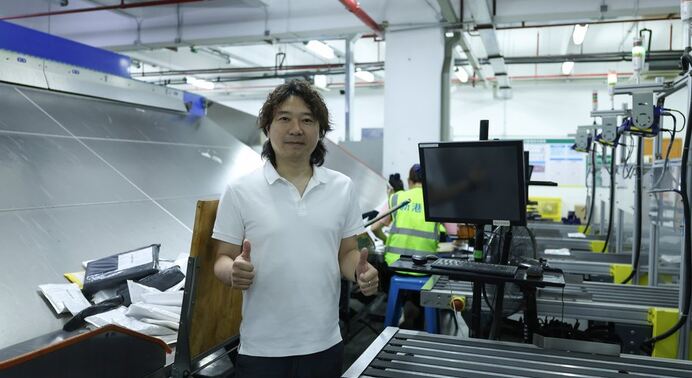
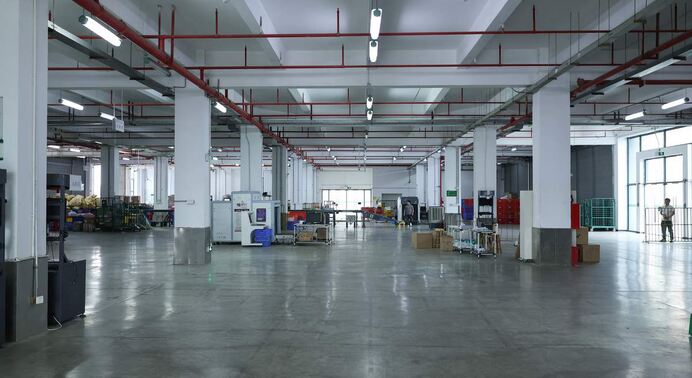 ASG Shenzhen warehouse – supplier capacity audit and lead-time stability test before a winning product scales.
To verify supplier capacity before scaling a winning Shopify or TikTok Shop product, run the 4-vector Capacity Matrix (daily output / buffer stock / lead-time variance / seasonal proof), execute the 5-step Pre-Scale Production Audit, score Lead-Time Stability on 5 factors, audit Stock Visibility against claimed levels, and follow the T-30/T-7/T-0 Backup Supplier Activation Timeline. Skipping verification typically costs 2-4 weeks of stockout after 5-10x ad scale-up.
Your ad creative just hit. CTR doubled, AOV climbed, repeat rate held above 20%. The instinct is to push spend 5x next week and ride the wave. The risk you do not see: your single China supplier was profitable at 40 orders per day and has never run your SKU at 300 per day. They will say “yes we can handle it” – because they want the business – but the production line, raw materials, operator shifts, and carrier handover were never sized for that volume.
By day 12 of the spike, your OTDR slips below 80%, TikTok Shop downranks your listing, and the ad money you spent on day 1-6 goes to acquiring customers whose orders will be late or cancelled. This article walks through the five framework you should run before pressing “scale” on any ad budget.
What this article covers (13 sections):
- Quick Answer – 5 frameworks before scale-up
- Why “supplier said yes” doesn’t survive 5-10x ad scale
- The Supplier Capacity Verification Matrix – 4 vectors
- The Pre-Scale Production Audit Protocol – 5 steps
- The Lead-Time Stability Scorecard – 5 factors
- Stock Visibility Verification – claimed vs real
- The Pre-Scale Backup Supplier Activation Timeline – T-30/T-7/T-0
- How ASG runs the 5 frameworks in one workflow
- Common mistakes that turn winning products into stockouts
- When NOT to verify supplier capacity (Steel-Manning)
- Want ASG to run a 48-hour capacity audit on your supplier? (CTA)
- Author bio, ASG data note, and external sources
- FAQ
Quick Answer: How do I verify supplier capacity before scaling a winning product?
Score the supplier on the 4-vector Verification Matrix in the first 48 hours of “we plan to scale”: daily output ratio vs your forecast scale-up, buffer stock days at current inventory, lead-time variance across at least 3 prior runs, and seasonal capacity demonstrated under prior peak. Total under 12 means proceed; 12-16 means proceed with backup activated; above 16 means do not commit ad spend yet.
Then execute the 5-step Pre-Scale Production Audit (real stock count, monthly output evidence, sample-batch consistency, QC photos from past production, lead-time historical data) before the first scale-up week.
For ongoing monitoring during the ramp, score the supplier weekly on the 5-factor Lead-Time Stability Scorecard, audit Stock Visibility against the supplier’s claimed levels using a simple ratio check, and follow the T-30/T-7/T-0 Backup Supplier Activation Timeline so a second supplier is contract-signed and sample-approved well before the first supplier hits its capacity ceiling. The full sequence takes 7-14 days during normal volume, which is dramatically cheaper than discovering the gap after 6-figure ad spend has already hit.
2. Why “supplier said yes” doesn’t survive 5-10x ad scale
Three structural reasons a single China supplier breaks when ad scale arrives, and each one operates on a different timeline.
Reason 1: Production-line saturation (day 1-7). Your supplier quoted a 7-day production lead time at 1,200 units per month. At 300 orders per day from your scaled ad spend, you need 9,000 units per month – 7.5x what the supplier was resourced to produce. Their honest lead time stretches from 7 to 21 days inside the first 24 hours of your spike, but you do not see this until late-ship rate starts climbing in week 2.
Reddit’s r/supplychain has a recurring thread on this pattern – “How do you audit the capacity and capability of a supplier” gets 30-50 new comments each quarter, with most veteran sellers warning that supplier-claimed capacity is often 30-60% above realized capacity at scale.
Reason 2: Raw-material dependency (day 7-14). Your supplier has buffer stock of finished product but their raw material supplier was sized to the old volume. The first 5 days of scale-up burn through finished inventory while raw material orders are still in transit. Your supplier dispatches steadily for a week, then suddenly stalls. From your dashboard it looks like the supplier “lost momentum”; from their floor it looks like they cannot complete production because the raw-material truck arrives next Tuesday, not today.
Reason 3: Operator and shift mismatch (day 14-30). Producing at sustained higher volume requires shift staffing that the supplier may not actually have. They have one operator trained on your design; running second-shift production needs a second operator with the same skill set, which they have to hire and train. Capacity claims rarely model this second-order shift constraint. The result is that scale-up appears to work for the first two weeks (existing operators run overtime), then collapses to baseline once overtime is no longer sustainable.
The pattern beneath all three is the same: the supplier is not dishonest; they have a real capability ceiling at your existing volume, and that ceiling does not flex linearly when ad spend scales. The verification step exists to discover the ceiling before your ad money depends on it.
3. The Supplier Capacity Verification Matrix – 4 vectors
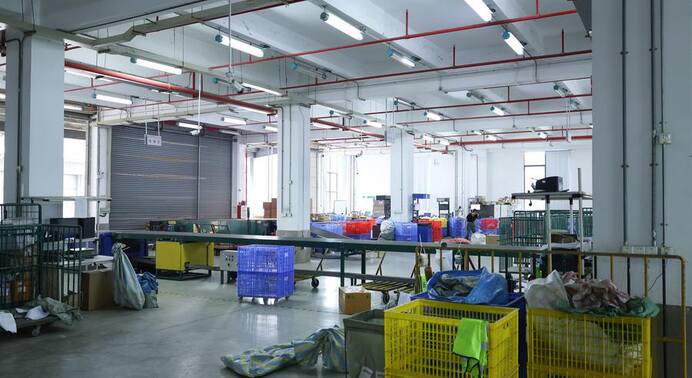 Capacity verification audit – reviewing supplier daily output records and buffer stock before ad scale-up.
Score the supplier on four vectors in the first 48 hours of any planned scale-up. Each runs 1-5. Total below 12 means proceed; 12-16 means proceed only with backup supplier already activated; above 16 means do not commit ad spend yet.
| Vector |
Question |
Score 1 (safe) |
Score 3 (caution) |
Score 5 (red zone) |
| V1. Daily output ratio |
Supplier’s stated daily output divided by your forecast scaled-up daily demand |
Output is 1.5x or more of forecast demand |
Output is 1.0-1.5x of forecast demand |
Output is below forecast demand |
| V2. Buffer stock days |
How many days of finished inventory currently sit at the supplier’s warehouse for your SKU |
14+ days of post-scale demand |
5-13 days |
Under 5 days, or supplier cannot verify with stock photos |
| V3. Lead-time variance (last 3 runs) |
Difference between quoted and actual lead time on past 3 production runs at similar batch size |
Variance under 10% on all 3 runs |
Variance 10-25%, or only 1-2 prior runs to compare |
Variance over 25%, or no historical data available |
| V4. Seasonal capacity proof |
Has the supplier hit the planned scaled volume during a prior peak season (Black Friday, Chinese New Year run-up)? |
Yes, twice or more with photo or shipping-record evidence |
Yes once, or claims yes without specifics |
No prior peak at this volume |
Scoring thresholds are heuristics from ASG supplier-audit practice, not a universal benchmark. Verification cost is roughly $50-$150 per supplier in trial-PO and audit time, plus 5-10 days of calendar time. That is the cheapest insurance you can buy against the 5-figure ad spend you are about to commit.
A worked example. A seller doing 60 orders per day on a $35 AOV plans to scale ad spend to $5,000 per day, projecting 300 orders per day within 14 days. Supplier candidate scores: V1 = 5 (current output 250/day, just under demand), V2 = 5 (only 2 days of buffer stock), V3 = 3 (variance 18% on past 2 runs), V4 = 5 (no peak history at this volume). Total = 18.
The Matrix says do not commit ad spend yet. The seller delays ad scale by 7 days, activates a pre-qualified backup supplier (Timeline below), and only then commits the budget. The math: 7 days of delay costs roughly $5,000 in opportunity cost; a 14-day stockout after committed scale would cost $40,000+ in refunds, late-ship penalties, and recovery ad spend.
4. The Pre-Scale Production Audit Protocol – 5 steps
Once the Matrix surfaces a green-or-yellow zone, run a 5-step audit before scaling. Each step is cheap individually; together they catch the gaps the Matrix score does not surface.
| Step |
What to verify |
Method |
Pass threshold |
| 1 |
Real stock count |
Request live video of warehouse showing your SKU stack, count visible cartons, multiply by units per carton |
Matches supplier’s claimed stock within plus or minus 10% |
| 2 |
Monthly output evidence |
Request shipping records or factory output logs from past 3 months |
Records show output at or above the level needed for your scale forecast |
| 3 |
Sample-batch consistency |
Order 2 samples 3 weeks apart, compare against original spec on color, weight, finish, function |
No drift visible between samples; both pass original spec |
| 4 |
QC photos from past production |
Request 20+ photos of past production runs showing inspection step, defect tracking, packing process |
Photos show consistent process and named QC lead |
| 5 |
Lead-time data on 3 prior runs |
Request PO-to-dispatch dates on past 3 batches at similar size to your projected scaled batch |
Three data points, variance under 25%, hit quoted lead time at least twice |
The single most useful step is #1 – real stock count via live video. Suppliers can fabricate any text-based claim about inventory; they have a much harder time fabricating a live walkthrough of the warehouse. If a supplier refuses or stalls on the video request, treat that refusal as a hard signal regardless of how the rest of the Matrix scores.
5. The Lead-Time Stability Scorecard – 5 factors
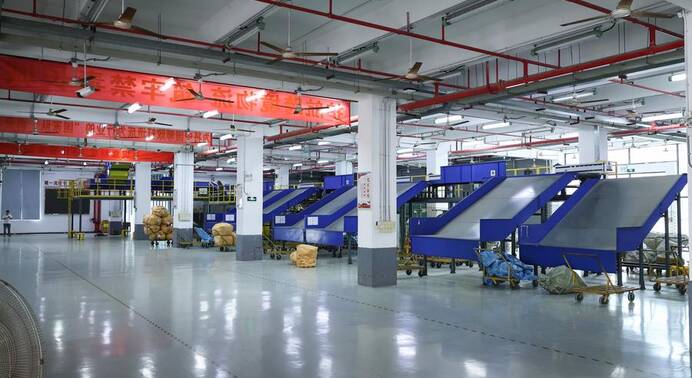 Lead-time stability review – cross-checking 3 prior runs and peak-season history.
Lead-time stability matters more than lead-time speed during a scale-up. A supplier with consistent 14-day lead time is more useful than one with variable 7-21 day lead time, because you can plan inventory and ad spend around the consistent one. Score on 5 factors weekly during the first 60 days of any scale-up.
| Factor |
What it measures |
Pass threshold |
| F1. Variance under 10% |
Difference between quoted and actual lead time on each batch |
Variance below 10% on most recent 3 batches |
| F2. 3 prior runs evidence |
Documented history of similar-size batches at similar lead time |
3+ runs with PO-to-dispatch dates verifiable |
| F3. Peak-season historical performance |
How the supplier behaved during prior Q4 or Chinese New Year run-up |
Lead time stretched but did not break; ratio under 1.5x normal |
| F4. Payment-term flexibility |
Will the supplier hold delivery if a payment is delayed 24-48 hours during a spike? |
Confirmed flexibility in writing, with stated tolerance window |
| F5. Communication SLA during peak |
How fast the supplier responds to inquiries when their volume is high |
Response under 24 hours; named single contact; no group-chat dilution |
Pass thresholds are heuristics from ASG supplier-audit practice; specific values vary by category, supplier scale, and destination lane. Peak-season historical evidence (F3) is the single strongest predictor of how the supplier will perform under your ad-scaled load.
6. Stock Visibility Verification – claimed vs real
Suppliers routinely overstate available stock during the sales conversation and quietly catch up when production matches the claim. This is not always dishonesty; it is often optimism plus internal coordination delays. The Stock Visibility Verification step closes the gap with a simple ratio check.
| Check |
How to verify |
Red flag |
| Claimed total stock |
Live warehouse video walkthrough, count visible cartons, multiply by units per carton |
Live count comes in below 70% of claimed; supplier refuses video |
| Inventory turnover (sell-through rate) |
Compare supplier’s stated monthly output vs reported customer-facing inventory |
Output stays flat for 30 days while stock claims keep climbing |
| Order accuracy rate |
Track wrong-SKU or short-shipment incidents per 100 orders |
Accuracy under 98% (industry benchmark from authoritative supplier-verification sources) |
| Real-time stock-update cadence |
How often does the supplier push inventory updates to your ERP or app? |
Updates only weekly or on request; no automated feed |
| Independent third-party audit |
Has the supplier been audited by an independent inspection firm in the past 12 months? |
No audit, no certifications, no third-party photo evidence available |
Industry-standard supplier-verification content (cited in InventorySource 2026 checklists and Reddit’s r/supplychain community threads) commonly recommends 98% order accuracy as the floor benchmark for scale-ready suppliers. ASG warehouses maintain accuracy logs by SKU and supplier; when accuracy drops below 98% for two consecutive weeks, the routing rule triggers a backup-supplier review. The point of Stock Visibility Verification is to anchor the decision in measurable claims rather than verbal assurance.
7. The Pre-Scale Backup Supplier Activation Timeline – T-30/T-7/T-0
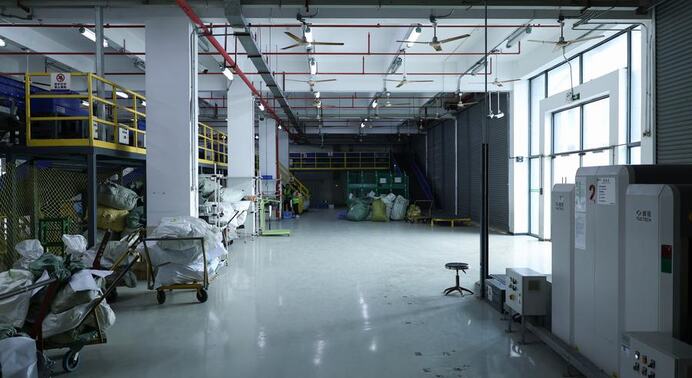 Backup supplier pre-qualification – sample run and SKU-WMS binding 30 days before scale-up.
The biggest difference between scale-up that survives and scale-up that breaks is whether the backup supplier was qualified before the ad budget went live – not after. The Timeline structures the prep into three windows.
| Window |
Trigger |
Actions |
Output |
| T-30 days |
Ad creative tests showing breakout signal |
Source 2-3 backup supplier candidates, request first sample, sign capacity-commitment LOI |
Backup supplier shortlist with samples in transit |
| T-7 days |
Primary supplier scores 12+ on Matrix or ad budget commit imminent |
Backup sample QC passes, backup PO placed at 25-30% of primary order volume, WMS routing rule pre-configured |
Backup supplier batch in production, ready to fulfill |
| T-0 (scale-up day) |
Ad spend goes live |
Primary fulfills 70-75% of orders; backup fulfills 25-30%; Lead-Time Scorecard monitored daily |
Dual-supplier fulfillment running with daily monitoring |
| T+14 days |
First 2 weeks of scaled volume complete |
Compare primary vs backup on lead time, defect rate, communication SLA; rebalance allocation |
Allocation locked at 50/50 or weighted toward better performer |
The Timeline only works if the backup supplier is pre-qualified before the scale-up. Stage T-30 looks early, but backup pre-qualification routinely takes 3-4 weeks of sample iteration, contract negotiation, and QC alignment. Sellers who try to find a backup supplier on T-0 typically lose 7-14 days to negotiation, and 7 of those days are exactly when OTDR matters most.
8. How ASG runs the 5 frameworks in one workflow
 ASG runs the 5 frameworks in one workflow – audit, protocol, scorecard, visibility, backup activation.
ASG’s role for a seller planning a winning-product scale-up is to operate the 5 frameworks above as a single coordinated workflow. We are not a sourcing platform or an ad agency; we coordinate the supplier-verification and warehouse-execution layer so the seller can commit ad budget with verified capacity behind it. The touchpoints come from our internal six-solution supply-chain SOP, items 2 (Supplier Verification and Factory Audit), 3 (6-Step QC Inspection), and 4 (Low MOQ Private Label, extended into capacity verification for non-private-label SKUs).
Capacity Matrix scored before any quote. Before ASG quotes a seller on a supplier, we run the 4-vector Matrix on that supplier and document the score with photo and shipping-record evidence. Suppliers scoring above 16 on any single vector do not get quoted for a scale-up project, even if their per-unit price looks favorable.
Pre-Scale Production Audit as a fixed checklist. Every supplier that passes the Matrix runs through the 5-step audit on a recorded checklist – real stock count, monthly output evidence, sample-batch consistency over 3 weeks, QC photos from past production, and lead-time data on 3 prior runs. The audit output is shared with the seller before any scale-up commitment.
Lead-Time Stability Scorecard weekly during ramp. Once the seller is scaled, we score the supplier weekly on the 5-factor Scorecard and alert the seller if any factor drops into the warning zone. The Scorecard is leading indicator; OTDR and SFCR are lagging indicator. We escalate before OTDR drops.
Stock Visibility Verification on a continuous basis. Each supplier in our network has stock-claim vs realized-output tracking continuously. Discrepancies above 30% trigger an audit; discrepancies above 50% trigger a supplier review.
Backup Activation Timeline as default for scale-up projects. When a seller signals intent to scale, the T-30/T-7/T-0 Timeline begins automatically. We pre-qualify backup suppliers from our network, route initial QC, and configure WMS so dual-supplier fulfillment is operational on T-0 without seller intervention.
What we will not promise. We do not promise that a supplier will sustain its claimed output at scale – capacity assertions are subject to raw-material availability, factory scheduling, QC pass rate, carrier capacity, and platform rules in force during the scale-up.
We do not guarantee fixed lead times during ramp; lead-time variance is expected to widen during the first 14-30 days of any 5-10x scale-up. We do not promise that backup activation will eliminate stockouts entirely; backups reduce stockout risk but cannot prevent every coincident-spike failure. We do not promise that any specific supplier in our network can serve every Shopify or TikTok Shop market without restriction.
9. Common mistakes that turn winning products into stockouts
Trusting the verbal “yes” instead of running the Matrix. Suppliers want the business; their incentive is to say yes to scale before checking whether the production line can handle it. The Matrix exists to remove this conversational shortcut – score the supplier on documented evidence, not on chat enthusiasm.
Skipping the live stock-count video. Text-based stock claims are the most common verification shortcut and the most reliably wrong. A 10-minute video walkthrough of the warehouse catches more discrepancies than any other single step in the Audit Protocol.
Treating sample consistency as a one-time check instead of a 3-week consistency test. Suppliers can produce one perfect sample by hand-tuning. The consistency check between sample 1 (week 0) and sample 2 (week 3) is what separates “can produce” from “produces consistently”. Industry sources commonly recommend 5 supplier samples across staged batches as the minimum for scale-up qualification.
Activating the backup supplier on T-0 instead of T-30. Backup qualification is 3-4 weeks of work that compresses badly into the 48-72 hours of a real surge. Pre-qualify backup at the test-creative phase, not at the ad-commit phase.
Confusing supplier capacity assessment with capability assessment. Capability means “can the supplier produce a quality unit”; capacity means “can the supplier produce many units per day at consistent quality”. Reddit’s r/supplychain community emphasizes this distinction repeatedly – many sellers verify capability and then assume capacity, which is the bottleneck that hits at scale.
Not budgeting for raw-material lead time in the supplier’s lead time. Your supplier’s quoted 7-day lead time often assumes raw materials in stock. At 5-10x your old volume, raw materials need to be reordered, and that adds 3-7 days the supplier may not pre-warn you about. Pad the lead-time estimate by 30-50% for the first 30 days of scale-up.
10. When NOT to verify supplier capacity (steel-manning the other side)
Three scenarios where running the full verification protocol is genuinely the wrong call. None are hypothetical; they came from industry analysis of when supplier-verification investment is not justified by the expected return.
Flash viral micro-trend under 48 hours. A product spike driven by a single TikTok meme that is predicted to die within 24-48 hours has a sales window too short for the verification protocol to complete. Verification adds days; the trend will be over before those days elapse. The risk of stockout is acceptable because the trend dies before the stockout becomes a customer-facing problem. This applies narrowly – if the spike is sustained beyond 72 hours, run the Matrix immediately because the situation has crossed from “flash trend” into “scale-up project”.
Verified high-volume enterprise supplier with contract-committed capacity. Some sellers source from a brand’s official dropshipping program where capacity is contractually committed and supported by the brand’s enterprise infrastructure. In this scenario, running the full Matrix and Audit Protocol is duplicate work; the brand has already done equivalent verification at enrollment. Confirm the LOI commitments specifically cover scale-up volume, then proceed.
Single-trial PO of 50-100 units to test fit. If the scale-up plan is a small trial PO to test market fit at $1,000-$3,000 of total commitment, the verification cost ($50-$150 per supplier plus 5-10 days) is a meaningful fraction of the total project budget. For very small trial volumes, a single sample plus a verbal capacity check is appropriate; the full protocol is overkill. Move to the full protocol only when planned scale exceeds $10,000 of inventory commitment.
For everyone else – a seller with verified product-market fit on a winning SKU and plans to commit 5-figure or 6-figure ad spend within 30 days – the 5-framework verification is the cheapest insurance available. Skipping verification to save a week typically costs 2-4 weeks of stockout recovery and 5-15% permanent loss of recommendation-engine exposure on Shopify or TikTok Shop.
11. Want ASG to run a 48-hour capacity audit on your supplier?
If you have a winning SKU and a supplier you plan to scale on, send us four data points and we run the full Matrix and Audit Protocol within 48-72 hours:
- Your winning SKU (current daily order volume, planned scaled daily volume, AOV, target lane)
- Your current supplier (contact, quoted lead time, claimed daily output, claimed buffer stock)
- Your scale-up timeline (T-0 date when ad budget commits, current ad creative status)
- Your top destination markets (top 3 countries by order volume)
We reply with: the 4-vector Verification Matrix score on your supplier, the Pre-Scale Production Audit results on 5 steps, the projected Lead-Time Stability score, a Stock Visibility audit, and the recommended T-30/T-7/T-0 Backup Activation Timeline mapped to your specific scale-up date. No invoice until you sign off on the audit report.
Email: janson@asgdropshipping.com with subject line “Pre-Scale supplier audit”.
12. Author bio, ASG data note, and external sources
Janson Wang is CEO and founder of ASG Dropshipping. Per ASG records: ASG since 2019, 5M+ orders shipped, 200+ countries served, 4 warehouses in Shenzhen and Dongguan, roughly a 200-person team, 2,300+ verified factories in the supplier network, 0.3% QC defect rate from the six-step QC pipeline, and a sub-20-minute response SLA during operating hours. Contact: janson@asgdropshipping.com
ASG Data Note. ASG-specific numbers come from internal records since 2019.
Matrix scoring thresholds, Audit Protocol pass benchmarks, Lead-Time Scorecard factor weights, Stock Visibility ratios, and Backup Activation Timeline windows are heuristics from ASG supplier-audit and warehouse-execution practice, not published industry benchmarks. Industry-standard numbers cited in the article (98% order accuracy, 5 supplier samples, 3 prior-run lead-time data points) come from authoritative supplier-verification content surfaced by Perplexity-cited sources (InventorySource, Reddit r/supplychain, industry analysis).
We do not promise that any supplier will sustain its claimed output at scale, fixed lead times during ramp, full stockout prevention through backup activation, or that every supplier in our network can serve every Shopify or TikTok Shop market. Outcomes depend on supplier capability, factory scheduling, QC pass rate, raw-material availability, carrier capacity, destination customs, and platform rules in force during the scale-up.
External Sources (industry context, as of June 2026):
Related ASG articles for next-step reading:
13. FAQ
Q1: How do I audit the capacity and capability of a supplier before scaling?
Run the 4-vector Supplier Capacity Verification Matrix in the first 48 hours: daily output ratio vs forecast scaled demand, buffer stock days, lead-time variance across past 3 runs, and seasonal capacity proof. Score each 1-5. Total under 12 means proceed; 12-16 means activate backup; above 16 means do not commit ad spend. The Matrix is a heuristic from ASG audit practice; it surfaces gaps cheaper and faster than waiting for the supplier to fail at scale.
Q2: What documents should I request from a supplier before scaling?
Five documents are the minimum: monthly shipping records or factory output logs from past 3 months, PO-to-dispatch date data on 3 prior runs at similar batch size, QC photos from past production runs with named QC lead, samples from production runs 3 weeks apart (to test consistency), and live video walkthrough of current warehouse showing your SKU stack. Suppliers refusing or stalling on the video request are the highest-risk signal in the audit.
Q3: What is a good supplier lead-time variance threshold?
Industry-aligned best practice is variance under 10% on the most recent 3 production runs. Variance of 10-25% means the supplier is workable but you need a backup activated before scaling. Variance over 25% means the supplier is not scale-ready regardless of how attractive their per-unit price is – the savings will be wiped out by stockout-recovery cost.
Q4: How many backup suppliers should I have ready before scaling a winning product?
At least 1, ideally 2. With 1 backup pre-qualified at T-30, you can absorb a primary supplier failure within 7-14 days. With 2 backups pre-qualified, you can survive a coincident failure or unexpected capacity drop at either backup. The cost of pre-qualifying 2 backups (samples, contracts, QC alignment) typically runs $500-$1,500 total – a fraction of one week’s lost revenue if the primary fails.
Q5: What order accuracy rate should I require from a supplier?
98% or higher on a rolling 30-day window. Authoritative supplier-verification content (cited across InventorySource and Reddit r/supplychain community discussions) commonly uses 98% as the floor benchmark for scale-ready suppliers. Below 98%, customer-complaint volume becomes the dominant cost; above 98%, the math on scale-up works.
Q6: How long does a full pre-scale supplier verification take?
7-14 days during normal volume. The breakdown: Matrix scoring (24-48 hours), Production Audit Protocol (3-7 days for samples and records), Lead-Time Scorecard data collection (1-3 days), Stock Visibility Verification (1-2 days including video walkthrough), Backup Supplier Activation Timeline initiation (parallel to the others). Compress to 5 days under time pressure; the trade-off is fewer data points in the Lead-Time history.
Q7: Should I verify supplier capacity for a flash viral micro-trend?
Usually no, if the trend has died or is predicted to die within 48-72 hours. Verification adds days the trend does not have. Run the Matrix only if the spike is sustained beyond 72 hours and shows secondary momentum (continued shares, secondary trend cycles). Below that threshold, accept stockout risk and harvest the spike.
Q8: How do I confirm a supplier’s claimed daily output without physically visiting the factory?
Three remote methods. First, request shipping records or factory output logs from past 3 months; legitimate suppliers can produce these or a redacted version. Second, ask for QC photos with date stamps and operator IDs from past production. Third, run a live video walkthrough of the production floor with the supplier walking through their workstations. Each method individually can be spoofed; combining all three is hard to fake without the actual capacity behind it.
Q9: What’s the difference between supplier capability and supplier capacity?
Capability is “can this supplier produce a quality unit of my product”; capacity is “can this supplier produce many units per day at consistent quality”. Capability verification needs one good sample; capacity verification needs evidence of sustained output at the volume you plan to scale to. Many sellers verify capability and then assume capacity – this is the bottleneck that hits at scale, and it is exactly what the Capacity Verification Matrix is designed to surface before scale-up.
Q10: When should I switch from verifying my existing supplier to looking for a new one?
Switch when the existing supplier scores above 16 on the Matrix (red zone), refuses to provide documents requested in the Audit Protocol, shows lead-time variance above 25% on recent runs, or refuses live stock-count video. Below those triggers, work to improve the existing supplier (often quoting a higher per-unit price in exchange for committed capacity is cheaper than full supplier replacement). Above those triggers, switching is the rational choice even with the 3-4 week cost.