By Janson Wang — CEO & Founder, ASG Dropshipping (since 2019) | Last updated: May 28, 2026 | 10 min read
Hi — I’m Janson.
Real talk: if you landed here searching for a CJ Dropshipping review, you are probably past the honeymoon phase. Something broke.
Shared support stopped answering. Tracking went dark for 5 days.
Refund rate climbed past 4%.
I run ASG Dropshipping. We have processed over 10 million orders across 200+ countries since 2019, including 5M+ branded fulfillments. About 40% of our scaling clients came to us directly from CJ.
Here is why they switched. And how to know if you should too.
Quick Answer: Is CJ Dropshipping Still Worth It in 2026?
CJ Dropshipping is legit and works well for stores under 50 orders per day. Past that threshold, five structural limits start compounding: shared support queues, generic QC, opaque tracking, no written SLA, and no damage coverage. A private fulfillment agent fixes all five.
Below: 6 chapters. An honest CJ Dropshipping review from someone who competes with them.
Key Takeaways
- CJ Dropshipping is legit for stores at 0-50 orders/day. The platform works. The pricing is accessible. The product catalog is wide.
- Past 50 orders/day, 5 structural limits start costing more than they save: shared support, generic QC, tracking gaps, no SLA, no damage coverage.
- The tipping point is not about CJ being bad. It is about your store outgrowing a marketplace model that was never designed for high-volume branded fulfillment.
- A private dropshipping agent (ASG, HyperSKU, or similar) replaces shared queue with named manager, sampling with per-SKU QC, and Terms of Service with written SLA.
- Per ASG records: 10M+ orders processed, 5M+ branded fulfillments, 200+ countries. About 40% of scaling clients switched directly from CJ.
- Switching takes 7 days when done in sequence. Keep CJ as backup for 14 days during cutover.
Table of Contents
- Is CJ Dropshipping Legit? (An Honest Review from the Other Side)
- 5 Structural Limits That Show Up Past 50 Orders a Day
- The Tipping Point: When CJ Stops Working for Shopify Sellers
- CJ Dropshipping Alternatives: What a Private Agent Actually Changes
- ASG vs CJ: Side-by-Side on the 5 Things That Break at Scale
- What CJ Actually Costs You (The Hidden Math Most Sellers Miss)
- When You Should Stay on CJ (Honest Counter-Case)
- How to Switch: A 7-Day Cutover from CJ to Private Agent
Is CJ Dropshipping Legit? (An Honest Review from the Other Side)
Yes. CJ Dropshipping is a legitimate platform.
It is not a scam. It works.
Look — I compete with CJ directly. I could trash them here.
I will not. That would be dishonest.
Here is what they actually do well, and where they structurally cannot follow you past a certain scale.
CJ Dropshipping is a legitimate China-based dropshipping marketplace founded in 2014. It connects Shopify and other ecommerce platform sellers with Chinese suppliers, offering product sourcing, warehousing, and global shipping. For stores processing 0-50 orders per day, CJ is a functional and cost-effective option.
The structural limit is not legitimacy. It is scale.
CJ operates a shared-service marketplace model. That model works at low volume. Past 50 orders per day, friction compounds: shared support queues, generic QC sampling, inconsistent CJ Dropshipping tracking, and no written SLA.
No damage coverage either.
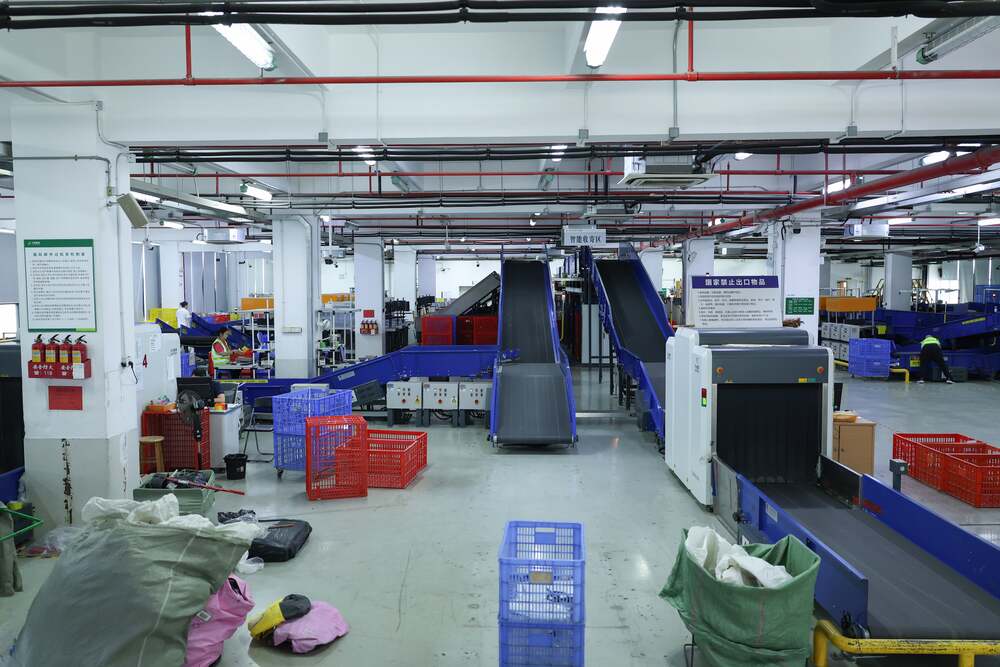
What “direct factory access” looks like on the other side of a CJ migration.
What CJ Does Well (Credit Where Due)
Wide product catalog. Accessible pricing.
No upfront commitment. Free to start.
For a Shopify seller testing products at 5-20 orders per day, CJ is a reasonable starting point. The onboarding friction is near zero.
I have no issue recommending CJ for stores at that stage.
Where the CJ Dropshipping Review Turns
The turn happens at volume. Not at intent.
CJ does not fail because they are dishonest. They fail because shared-service models have structural ceilings.
Those ceilings are invisible at 10 orders a day. They are visible at 100.
The next section breaks down exactly what those ceilings are.
CJ Dropshipping is legit. It works for 0-50 orders per day. The problem is not honesty. The problem is structure. Shared-service marketplaces have ceilings that become visible at scale.
5 Structural Limits That Show Up Past 50 Orders a Day
I get it — at 20 orders a day, CJ feels fine. Then you scale. And these 5 things start stacking up.
None of them is a dealbreaker alone. Together they cost 6-8% of monthly revenue.
Five structural limits define CJ Dropshipping at high volume.
(1) Shared support queue with 24h+ response times. (2) Generic QC sampling instead of per-SKU inspection.
(3) Inconsistent CJ Dropshipping tracking that goes dark 3-5 days mid-transit.
(4) No written SLA. (5) No unconditional damage coverage. Each one is manageable at 10 orders per day.
Together at 200 orders per day, they compound into 6-8% monthly revenue loss.
| Limit |
CJ at scale |
Private agent |
| 1. Support |
Shared ticket queue, 24h+ |
Named manager, sub-20 min |
| 2. QC |
Generic sampling |
Per-SKU 6-step pipeline |
| 3. Tracking |
Goes dark 3-5 days mid-transit |
Real-time updates, named contact |
| 4. SLA |
Terms of Service only |
Written contract, enforceable |
| 5. Damage coverage |
Case-by-case, platform arbitration |
Unconditional, no carve-outs |
Per ASG onboarding interviews with 200+ sellers switching from CJ in 2024-2025. Patterns reflect typical experience, not absolute guarantees.
The Tracking Problem Is the Loudest
Here is why. Your customer does not care about your backend. They care about one thing: where is my package.
When CJ Dropshipping tracking goes dark for 3-5 days, your customer opens a dispute. You open a ticket with CJ. CJ takes 24 hours to respond.
By then you have a chargeback. At 200 orders per day, that pattern eats 2-3% of revenue on its own.
Five limits, not one. Shared support, generic QC, dark tracking, no SLA, no damage coverage. Each one is manageable alone. Together at 200 orders per day, they cost 6-8% of monthly revenue. That is more than a private agent’s monthly fee.
The Tipping Point: When CJ Stops Working for Shopify Sellers
The answer is not “CJ is bad.” The answer is “your store outgrew CJ.”
Here is the specific moment that happens.
The CJ Dropshipping tipping point for Shopify sellers occurs at roughly 50 orders per day.
At that volume, three signals fire at the same time.
Dispute resolution lags behind customer patience.
24h+ agent response vs 4h customer expectation. QC failures push refund rates past 4%.
CJ Dropshipping tracking gaps trigger chargebacks. Platform arbitration cannot resolve them fast enough.
Below 50 orders per day, these signals stay under the noise floor. Above 50, they compound monthly. The math flips: the “free” marketplace costs more than a $2,500/month private agent.
 The tipping point is visible on the QC floor, not on the CJ dashboard.
3 Signals That You Have Crossed the Line
| Signal |
CJ still works |
Time to switch |
| Dispute hours/week |
Under 5 hours |
10+ hours |
| Refund rate |
Under 3% |
4%+ |
| Tracking complaints/week |
Under 5 |
15+ |
One Real Case: CJ Shopify Store at 180 Orders/Day
Last November, a US CJ Dropshipping Shopify store reached out to ASG. They were at 180 orders per day.
Refund rate: 6.2%. Dispute hours: 14 per week.
Root cause: CJ tracking went dark on 30% of shipments past day 7. Customers opened disputes before the package arrived.
They switched to ASG.
Refund rate dropped to 1.8% in 30 days. Dispute hours dropped to 3 per week.
Net savings: roughly $8,400 in month one. ASG’s fee: $2,500.
Numbers reflect a representative composite from ASG onboarding audits, not a single named client.
The tipping point is 50 orders per day on Shopify. Watch 3 signals: dispute hours, refund rate, tracking complaints. If 2 of 3 fire, CJ’s marketplace model is now costing you more than a private agent would charge.
CJ Dropshipping Alternatives: What a Private Agent Actually Changes
The word “alternative” implies a swap. Same thing, different brand. That is not what this is.
A private dropshipping agent is a structurally different model. Not a better version of CJ. A different category.
A CJ Dropshipping alternative for high-volume Shopify sellers is not another marketplace app. It is a private dropshipping agent: a dedicated fulfillment partner with a named account manager, per-SKU QC, written SLA, and unconditional damage coverage.
The structural difference is ownership. CJ owns the platform.
A private agent owns your outcome.
4 Things That Change When You Switch
1. Support model: from ticket queue to named WhatsApp contact. Response time drops from 24 hours to under 20 minutes.
2. QC depth: from random sampling to 6-step per-SKU inspection with photo at every stage.
Defect rate drops from 3-5% to 0.3%.
3. Accountability: from Terms of Service to a signed contract with damage coverage, response-time SLA, and dispute resolution timeline.
4. Scale capacity: from shared queue (breaks at spikes) to dedicated warehouse priority with 3-5x daily buffer for viral surges.
For the detailed vetting framework to evaluate any private agent, see our companion guide: 11 vetting questions for a dropshipping agent at scale.
A CJ Dropshipping alternative is not a better marketplace. It is a different model. Named manager replaces ticket queue. Per-SKU QC replaces sampling. Written SLA replaces Terms of Service. Ownership of outcomes replaces platform arbitration.
ASG vs CJ: Side-by-Side on the 5 Things That Break at Scale
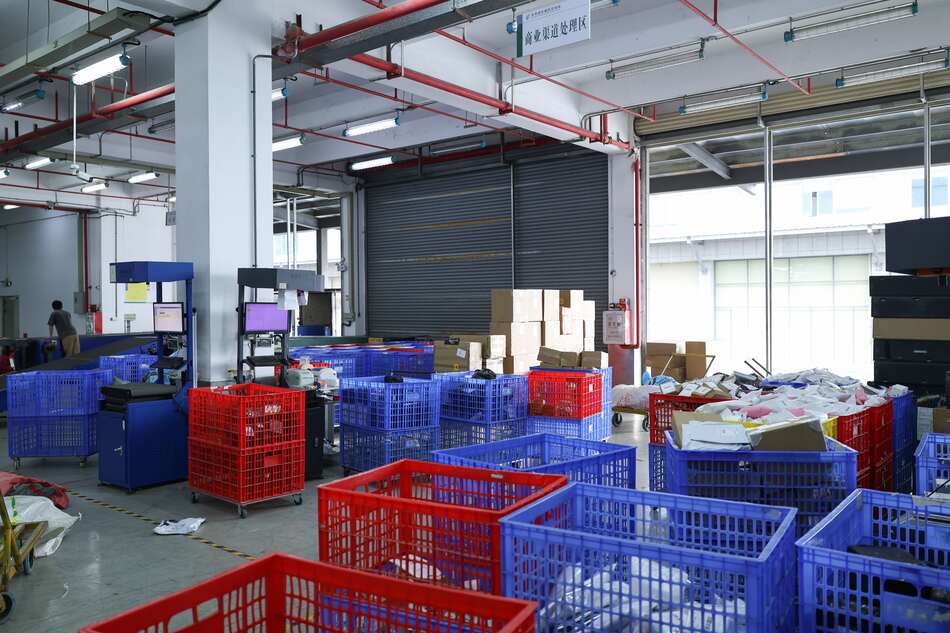 ASG warehouse bins — per-SKU organization that a shared marketplace model cannot replicate at scale.
Here is the comparison I would want to see if I were the one switching. No marketing language. Just structure.
ASG and CJ Dropshipping serve different scale tiers. CJ fits 0-50 orders per day on a self-service marketplace model.
ASG fits 50-500+ orders per day with named account management, per-SKU QC at 0.3% defect rate, sub-20-minute response SLA, written contract with unconditional damage coverage, and dedicated warehouse priority for viral spikes.
| Dimension |
ASG Dropshipping |
CJ Dropshipping |
| Account model |
Named manager + tech contact |
Shared ticket queue |
| Response time |
Sub-20 minutes (working hours) |
24h+ average |
| QC defect rate |
0.3% (6-step per-SKU pipeline) |
3-5% (generic sampling) |
| Tracking |
Real-time, named contact for issues |
Dark periods of 3-5 days common |
| Damage coverage |
Unconditional, no carve-outs |
Case-by-case, platform arbitration |
| Best for Shopify at |
50-500+ orders/day |
0-50 orders/day |
Per ASG records: roughly 200-person team across 4 warehouses in Shenzhen and Dongguan, 2,300+ verified factory network, 10M+ total orders since 2019. CJ comparison reflects publicly observable patterns as of May 2026.
For the broader context on ASG’s fulfillment model, our agent service page documents the full structure.
ASG and CJ serve different scale tiers. CJ fits startup volume. ASG fits scaling volume. The comparison is structural, not emotional. Pick the one that matches your daily order count today.
What CJ Actually Costs You (The Hidden Math Most Sellers Miss)
CJ looks free. It is not. The cost is hidden in 3 places most sellers never check.
CJ Dropshipping charges no monthly base fee. But three hidden costs stack up at scale: sourcing markup (typically 20-40% above 1688 live listing price), QC failure refunds (3-5% of revenue at 200 orders/day), and chargeback losses from tracking gaps ($3K-$8K per failed viral spike).
A private dropshipping agent charges $2,000-$5,000 monthly base. But transparent factory pricing, 0.3% defect QC, and real-time tracking eliminate the three hidden costs. Net result: the paid agent often saves $4,000-$8,000/month compared to the “free” marketplace at 200 orders/day.
Hidden Cost 1: Sourcing Markup
CJ sources from suppliers and adds margin. That is how they make money with no base fee.
Per ASG onboarding audits with sellers switching from CJ, the typical markup runs 20-40% above the live 1688 listing for the same SKU.
At 200 orders/day on a $20 product, 30% hidden markup equals $36,000/month in invisible cost.
Hidden Cost 2: QC Failure Refunds
CJ uses generic sampling. Not per-SKU inspection.
At 200 orders/day with a 3-5% defect rate, that is 6-10 refunds per day. Each refund costs $15-25 in product + shipping + customer service time.
Monthly: $2,700-$7,500 in avoidable refunds.
Hidden Cost 3: Tracking Gap Chargebacks
CJ Dropshipping tracking goes dark for 3-5 days on many shipments. Customers open disputes before the package arrives.
At 200 orders/day, even a 2% chargeback rate from tracking gaps costs $2,400/month.
A private agent with real-time tracking eliminates this category entirely.
 ASG operations floor — transparent pricing replaces hidden margin at scale.
CJ looks free. At 200 orders/day, three hidden costs (sourcing markup + QC refunds + tracking chargebacks) total $5,000-$12,000/month. A private agent at $2,500/month eliminates all three. The “free” option is the most expensive one.
When You Should Stay on CJ (Honest Counter-Case)
I sell the alternative. But I will not pretend every store needs it. Here are 3 scenarios where CJ is still the right call.
Three scenarios favor staying on CJ Dropshipping: (1) you are still testing products at under 20 orders/day with no winning SKU; (2) your monthly fulfillment budget is under $2,000; (3) you run a multi-niche store with 50+ SKUs and no concentration yet. In all three cases, the marketplace model buys you learning time at low cost.
1. You Are Still Product-Testing
Under 20 orders/day, you are testing. CJ lets you fail cheap on 8 products before finding the winner.
An agent at this scale is paying $2,500/month for nothing. Stay on CJ until you have signal.
2. Your Budget Is Under $2K/Month
A private agent realistically starts at $2,000/month. If your total fulfillment budget is under that, the math does not work yet.
Build revenue first. Reach the threshold. Then switch.
3. You Have No SKU Concentration
Private agents work best with concentrated SKU sets. They negotiate factory deals on your top 5-10 products.
If you run 50 SKUs with no clear winners, CJ’s broad catalog serves you better. Concentrate first.
CJ is the right choice for stores still testing, on tight budget, or with no SKU concentration. Switch only after you cross all three conditions. Switching too early wastes the agent’s value.
How to Switch: A 7-Day Cutover from CJ to Private Agent
You have decided. CJ served you well at startup. Now you need a private dropshipping agent.
Here is the 7-day plan. One decision per day.
Switching from CJ Dropshipping to a private agent takes 7 days in sequence. Day 1: run vetting calls on 2-3 agent candidates using the 11-question scorecard.
Day 2: select and sign SLA. Days 3-4: hand over top 5 SKUs with specs.
Day 5: pilot 20% of daily orders through the new agent. Day 6: review pilot data.
Day 7: full cutover. Keep CJ active as backup for 14 days during transition.
Why 7 Days (Not 30)
A real private dropshipping agent has the SLA template, SKU onboarding checklist, and named manager ready before you sign.
The bottleneck is your team, not the agent. Block 7 days. Execute one decision per day.
Keep CJ as Backup
Do not shut CJ down on day 1. Keep it running on your secondary SKUs for 14 days.
If the new agent performs, migrate everything. If not, you still have CJ as fallback. Zero risk.
For the deeper onboarding context, ASG’s agent service documents the full 7-day handover.
Running a Shopify store past 50 orders per day on CJ? Ready to see if a private agent saves you money?
Run the 11 vetting questions on ASG. We will answer every one on the first call. Contact ASG here.
About the Author
Janson Wang, Founder and CEO, ASG Dropshipping
8 years in cross-border ecommerce. ASG has run systematic fulfillment since 2019 for Shopify and independent stores doing 50 to 5,000 orders per day.
10M+ total orders processed. 5M+ branded fulfillments. 200+ countries served.
About 40% of our scaling clients switched from CJ Dropshipping. This review reflects those transitions.
Contact: janson@asgdropshipping.com | WhatsApp: +86 189 1525 6668
Frequently Asked Questions
1. Is CJ Dropshipping legit in 2026?
Yes. CJ Dropshipping is a legitimate platform.
It works well for Shopify stores under 50 orders per day. The structural limits show up at scale, not at startup.
2. Why does CJ Dropshipping tracking go dark?
CJ uses multiple shipping carriers. Handoff between carriers creates 3-5 day gaps where tracking data is unavailable. A private agent uses direct carrier relationships with real-time updates.
3. What is the best CJ Dropshipping alternative?
For stores past 50 orders per day, a private China dropshipping agent like ASG replaces CJ’s shared model with named management and per-SKU QC.
For stores still under 50, Zendrop and HyperSKU are mid-tier options.
4. Can I use CJ Dropshipping with Shopify?
Yes. CJ has a Shopify app for auto-importing products and forwarding orders.
CJ Dropshipping Shopify integration works for startup volume. The limits show at 50+ orders per day.
5. How long does it take to switch from CJ to a private agent?
Seven days in sequence. Day 1: vetting calls. Day 2: sign SLA.
Days 3-4: SKU handover. Day 5: pilot.
Day 6: review. Day 7: full cutover.
Keep CJ as backup for 14 days.
6. Does a private agent cost more than CJ?
On the invoice, yes. A private agent charges $2,000-$5,000 monthly base.
CJ charges no base fee. But CJ’s hidden costs (tracking disputes, QC refunds, lost orders) typically exceed agent fees at 50+ orders per day.
Final Thoughts
Switching from CJ is not a judgment on CJ. It is a math decision.
After 8 years, I have watched stores stay on marketplace fulfillment 6 months too long. And watched stores switch on time, recover their margin in month one, and never look back.
You do not need to hate CJ to outgrow it. You just need to know when the math flips.
The answer is: when your CJ Dropshipping tracking, support, and QC costs exceed $2,500 a month. Count them. Then decide.
Ready to run the numbers? Contact ASG here. We will do the comparison call with you.