In the early days of my career at ASG Dropshipping, I watched entrepreneurs struggle with spreadsheets and manual order entries for 12 hours a day. It was exhausting, prone to error, and frankly, unnecessary. Today, the global dropshipping market is projected to surpass $476.1 billion by 2026, and the difference between those who scale to six figures and those who quit within a month often comes down to one thing: their tech stack.
So, do you actually need the ‘best’ dropshipping app, or is it just another monthly subscription eating your margins? In this guide, I’m going to break down the reality of automation. We’ll look at how these tools bridge the gap between your storefront and global suppliers, why manual operations are a recipe for failure in 2026, and how to choose a tool that actually adds value to your bottom line instead of just cluttering your dashboard.
Key takeaways
- Automation is no longer optional; 77% of retailers are now using or piloting AI and automated fulfillment.
- The right app can reduce order processing time by up to 90%, allowing you to focus on marketing and brand building.
- Inventory syncing is the most critical feature to prevent overselling and customer dissatisfaction.
- Shopify remains the leading platform for dropshipping due to its massive ecosystem of over 11+ top-tier specialized apps.
- ASG Dropshipping provides a unique hybrid of app-based automation and direct factory sourcing to maximize margins.
Understanding Dropshipping Apps: Core Concepts
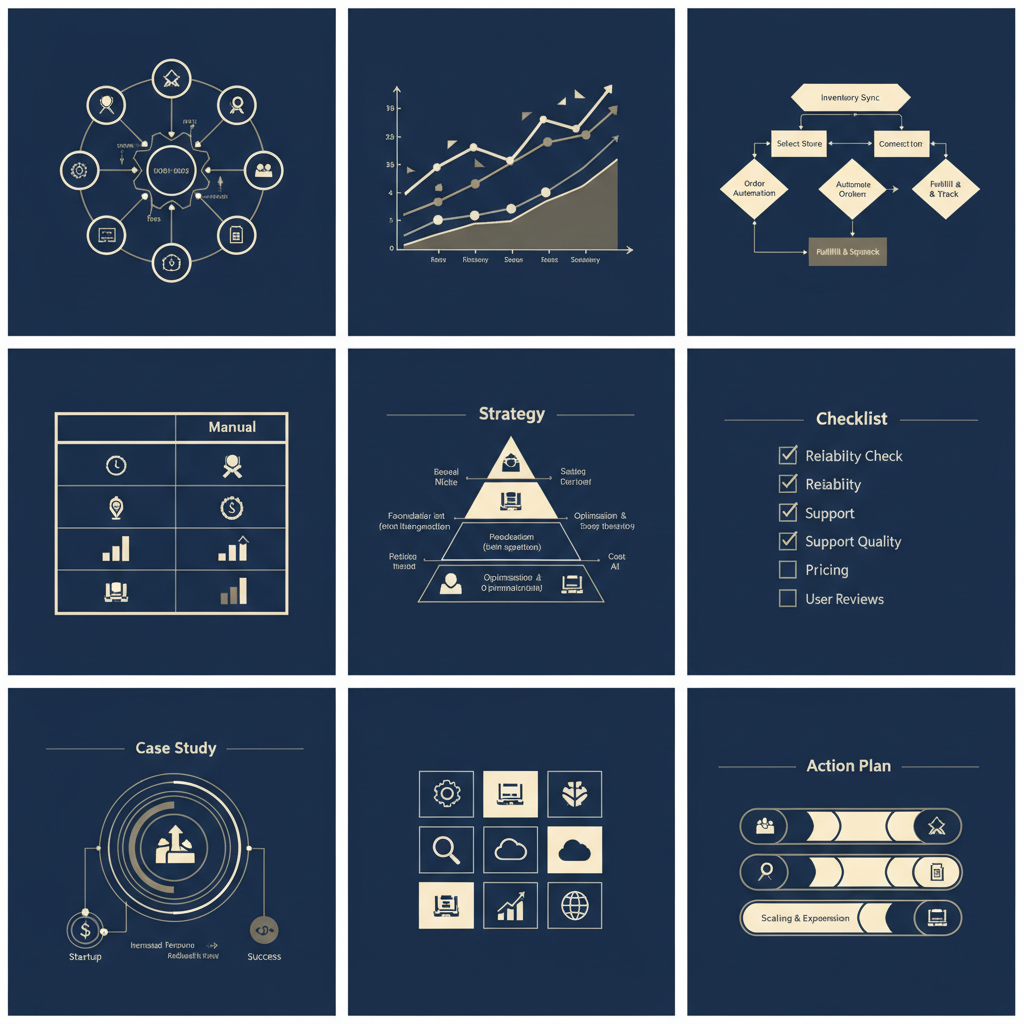 Understanding Dropshipping Apps: Core Concepts – Visual Guide
At its heart, a dropshipping app acts as the digital nervous system of your e-commerce business. It connects your front-end store (like Shopify or WooCommerce) directly to a supplier’s warehouse. Instead of you having to copy-paste customer addresses into an email, the app transmits that data instantly. According to shopify.com, these tools streamline product and order management by connecting a store directly to a supplier’s catalog, making it easy to import images and descriptions with a single click.
There are three main components to any high-quality dropshipping app: Sourcing, Syncing, and Fulfillment. Sourcing allows you to browse millions of products and add them to your store without ever touching the item. Syncing ensures that if a supplier runs out of stock in Shanghai, your store in New York reflects that change immediately. Finally, fulfillment automates the payment and shipping label generation. As noted by shopify.com, automated dropshipping relies on software integrations to handle the workflow, allowing for a hands-off approach to daily operations.
| Feature |
Manual Method |
Dropshipping App |
| Product Importing |
15-30 mins per item |
1-click (seconds) |
| Inventory Updates |
Manual check daily |
Real-time auto-sync |
| Order Fulfillment |
Manual address entry |
Automated bulk processing |
| Tracking Numbers |
Emailing customers manually |
Auto-sent to customer |
Without these core functions, you aren’t running a business; you’re performing data entry. In my experience at ASG, the ‘need’ for an app becomes an absolute ‘must’ the moment you hit more than 5 orders per day. Beyond that point, human error becomes inevitable, leading to wrong addresses and shipping delays that kill your merchant account standing.
Why the Best App Matters in 2026: Trends & Data
 Why the Best App Matters in 2026: Trends & Data – Visual Guide
The landscape of e-commerce has shifted dramatically. In 2026, consumers expect ‘Amazon-level’ transparency and speed. The dropshipping market is expected to reach $699.74 billion by 2029, and as shopify.com reports, retail automation is now a $31.77 billion industry. This growth means competition is fiercer, and your ability to respond to market trends faster than your competitors is your only real moat.
AI integration is the biggest trend we are seeing this year. Modern apps don’t just import products; they use AI to optimize titles for SEO and suggest pricing based on real-time competitor data. According to shopify.com, the best software in 2025 and 2026 includes powerful AI features that simplify product sourcing and competitive research. This allows small teams of 1-2 people to manage catalogs that previously required a staff of ten.
Furthermore, the shift toward ‘Local Dropshipping’ has made app choice critical. Apps that connect you with US or EU-based suppliers, such as Spocket or Zendrop, are seeing massive adoption because they offer 2-7 day shipping. As shopify.com highlights, domestic shipping is a key differentiator for brands wanting to move away from the ‘cheap’ perception of long-haul international shipping. If your app doesn’t give you access to these localized networks, you are essentially leaving money on the table.
Implementation Strategies: How to Choose and Setup
Choosing an app isn’t about finding the one with the most features; it’s about finding the one that fits your specific business model. If you are focusing on high-volume, low-margin goods from AliExpress, a tool like DSers is the industry standard. However, if you are building a premium brand, you might need a tool that offers custom packaging and private labeling. As ecomm.design points out, Shopify remains the top choice for fast growth because its app ecosystem is unmatched for automation.
My recommended implementation strategy follows a 3-step ‘Audit, Integrate, Automate’ framework. First, audit your niche. Are your suppliers mostly on AliExpress or are they independent brands? Second, integrate the app that has the highest rating for that specific supplier type. For instance, shopify.com lists AutoDS as a top choice for those needing global supplier partnerships including Walmart and Alibaba.
| App Name |
Best For |
Starting Price |
| DSers |
AliExpress High Volume |
Free / $19.90 |
| Spocket |
US/EU Original Brands |
$39.99 |
| Zendrop |
Custom Branding/Fast Ship |
$49.00 |
| Printful |
Print-on-Demand |
Free |
Once integrated, set up your automation rules immediately. This includes setting a ‘Global Pricing Rule’ (e.g., Cost x 3) and an ‘Inventory Buffer’ (e.g., mark as out of stock when supplier has 5 units left). This proactive setup prevents 90% of the common customer service headaches that plague new sellers.
Common Mistakes: Lessons from Real Failures
The most common mistake I see is ‘App Overload.’ Newbies often install five different dropshipping apps, thinking more tools equal more sales. In reality, this leads to conflicting inventory data and a slow website. A study by the St. Louis Fed, cited by shopify.com, suggests that while automation improves efficiency, poorly managed tech stacks can actually create new layers of complexity that hinder small business growth.
Another fatal error is ignoring the ‘Last Mile’ of data. Many sellers assume that because the app says a product is ‘shipped,’ their job is done. However, if the app doesn’t sync the tracking number back to the store correctly, the customer remains in the dark. According to shopify.com, auto-forwarding orders and auto-updating quantities are essential, but the feedback loop of tracking information is what actually builds trust.
Lastly, many entrepreneurs fail to verify the supplier’s actual performance through the app. Just because an app lists a supplier doesn’t mean that supplier is reliable. I always tell my clients at ASG to place a test order. If the app’s ‘estimated shipping time’ is 7 days but the package arrives in 21, you cannot build a sustainable business on that tool. Use the app’s internal ratings, but never let them replace your own due diligence.
Pro Tips from Janson: Insider Insights
After years of running ASG Dropshipping, I’ve realized that the ‘best’ app is actually a combination of software and human relationship. While apps like DSers are great for the 0-to-1 phase, once you are doing 20+ orders a day, you should look for a ‘Private Agent’ app or service. This is where we at ASG thrive. We provide the automation of an app but with the added layer of physical quality control and direct factory negotiation that a standard software-only solution can’t offer.
One pro tip is to leverage ‘Bundle Automation.’ Most standard apps struggle with bundles (buying Product A and Product B together). If you can find an app that allows for ‘Virtual Bundling’ without requiring separate shipping costs for each item, your Average Order Value (AOV) will skyrocket. As shopify.com mentions, tools like AutoDS offer customization features that can help simplify these more complex sourcing and branding needs.
Also, keep an eye on ‘Reverse Logistics.’ Most dropshipping apps are built for the ‘forward’ journey (Supplier to Customer). The real pros choose apps that have a built-in return management system or a US-based return address. This single feature can save you thousands in lost inventory and chargeback fees. Always look for apps that offer ‘Verified Returns’ or local warehouse options to handle the inevitable 3-5% return rate of e-commerce.
Key Takeaways & Next Steps: Your Action Plan
To answer the original question: Yes, you absolutely need a dropshipping app if you plan on scaling. Attempting to run a modern e-commerce store manually is like trying to win a Formula 1 race on a bicycle. The automation, accuracy, and speed provided by these tools are the baseline requirements for entry in 2026. As ecomm.design concludes, your choice of platform and its accompanying apps determines how quickly you can test, scale, and pivot.
Your immediate next steps should be: 1. Define your niche and target market (US vs. Global). 2. Select a primary platform, with Shopify being the most recommended for beginners and scalers alike. 3. Install one primary dropshipping app like DSers or Zendrop. 4. Set up your automation rules before your first sale. 5. As you grow, consider a hybrid model with a private agent like ASG to further optimize your supply chain.
Remember, the app is just a tool. Your success still depends on your marketing, your product selection, and your customer service. But with the right app handling the heavy lifting of fulfillment, you finally have the time to focus on what actually makes you money: growing your brand. For more advanced strategies, check out our ASG FAQ Knowledge Base which contains over 698 articles on mastering the supply chain.
Sources and further reading (selected)
- Shopify Blog – Best Dropshipping Apps: A comprehensive review of the top 11 dropshipping apps for Shopify for 2024-2025. Read more →
- Shopify Blog – Dropshipping Websites 2026: An updated look at the best dropshipping platforms and supplier directories for 2026. Read more →
- Shopify Blog – Dropshipping Software 2025: Exploration of software tools with AI features for sourcing and fulfillment. Read more →
- Ecomm.design – Best Platforms for Dropshipping: A comparison of e-commerce solutions like Shopify, Wix, and WooCommerce for dropshippers. Read more →
- Shopify Blog – Automated Dropshipping: Detailed guide on the benefits and tools for automating e-commerce workflows in 2026. Read more →
- Grand View Research: Market analysis and growth projections for the global dropshipping industry. Read more →
- St. Louis Fed – Automation Analysis: Economic analysis of how automation impacts small business efficiency and labor. Read more →
- Oberlo (Legacy) / Shopify Sourcing: Foundational concepts for understanding the dropshipping business model. Read more →
- Statista – E-commerce Automation: Data on the adoption of AI and automation in the global retail sector. Read more →
- ASG Dropshipping FAQ: Internal knowledge base covering 600+ topics on supply chain and agent services. Read more →