If you have spent any time on social media in the last few years, you have undoubtedly seen the massive hauls and unbelievable price tags associated with Shein. As the CEO of a cross-border fulfillment company, I am constantly asked by entrepreneurs: how do they do it, and is it sustainable? The rise of this retail giant has fundamentally shifted how we think about supply chains and consumer behavior in the digital age.
In this deep dive, we are going to peel back the curtain on the legitimacy business model and logistics of shein everything you need to know. We will move past the viral TikToks to examine the data-driven engine that powers their ‘Ultra-Fast Fashion’ machine. Whether you are a curious shopper or an e-commerce seller looking to decode their secrets, this guide provides the professional perspective you need to understand the world’s most talked-about fashion platform.
Key takeaways
- Shein utilizes a ‘Large-scale Automated Test and Re-order’ (LATR) model to minimize inventory waste.
- The company’s legitimacy is supported by its massive valuation and global compliance efforts, despite ongoing labor and environmental debates.
- Shein’s logistics rely on a hub-and-spoke model centered in Southern China with strategic overseas warehouses.
- Data-driven design allows Shein to move from concept to production in as little as 3 to 7 days.
- Tax loopholes like the ‘de minimis’ rule have been historically critical to their low-cost shipping strategy.
Decoding the Ultra-Fast Fashion Engine
 Decoding the Ultra-Fast Fashion Engine
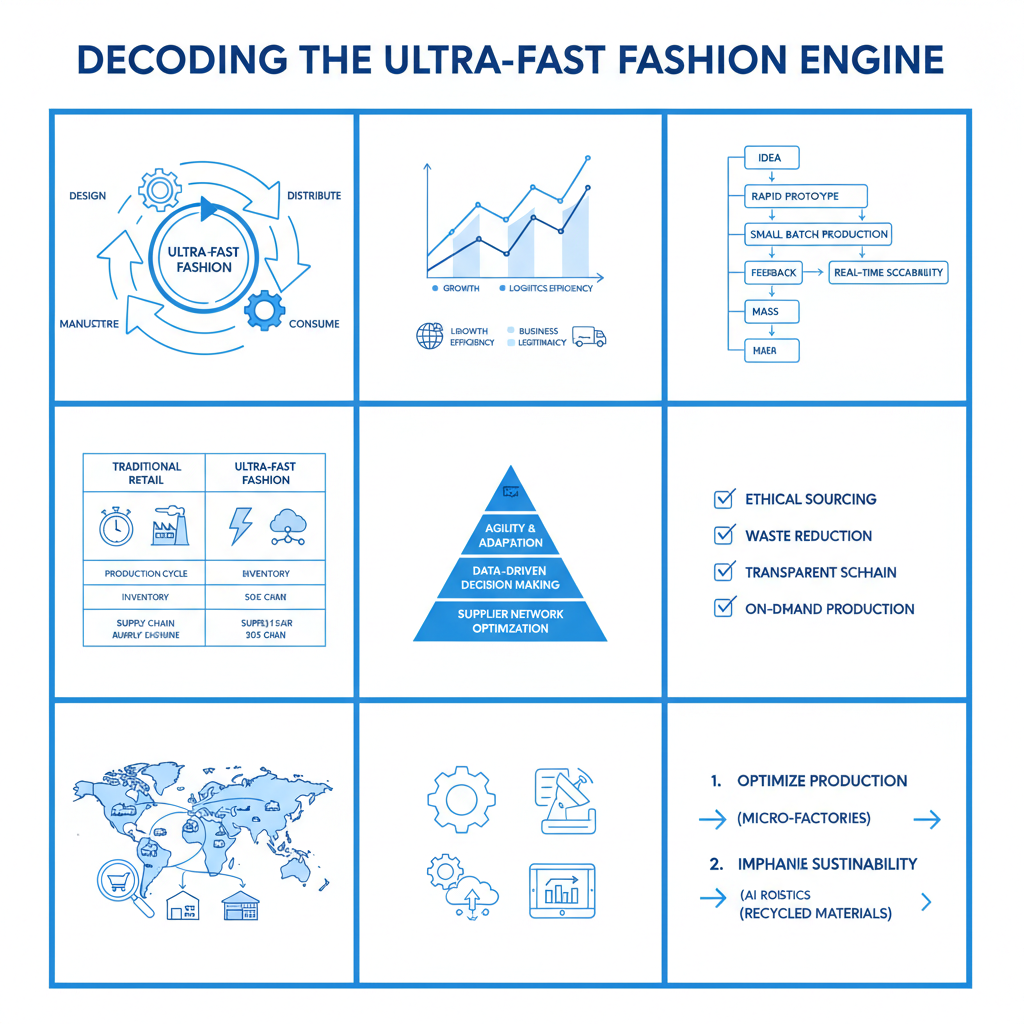
To understand Shein, you must first forget everything you know about traditional retail. While Zara pioneered ‘fast fashion’ by shortening production cycles to weeks, Shein has compressed this into days. This is what industry experts call ‘Ultra-Fast Fashion.’ According to a report by Business of Fashion, Shein adds anywhere from 2,000 to 10,000 new items to its app every single day. This is not just about speed; it is about a fundamental shift in how products are conceived and tested.
Shein operates on a ‘Small Batch, Fast Re-order’ system. Instead of ordering 10,000 units of a single shirt and hoping it sells, they might produce only 50 or 100 units. They then use real-time data from their app—clicks, adds-to-cart, and social media mentions—to decide whether to scale production. If an item goes viral, their integrated factory software automatically triggers a larger order. This minimizes the ‘dead stock’ that plagues traditional retailers like H&M or Gap.
This digital-first approach is the core of the legitimacy business model and logistics of shein everything you need to know. By treating fashion like software—testing ‘features’ (styles) in real-time and iterating based on user data—they have eliminated the guesswork. It is a high-tech gamble that has paid off, turning the company into a decacorn with a presence in over 150 countries. However, this speed requires a level of supplier integration that few other companies can match, effectively turning thousands of small factories into a single, giant virtual workshop.
The Truth About Shein’s Legitimacy and Market Standing
 The Truth About Shein’s Legitimacy and Market Standing
Is Shein a legitimate company? From a purely corporate perspective, the answer is a resounding yes. With a valuation that has reached upwards of $66 billion, Shein is a massive global entity. According to cnbc.com”CNBC, the company has even moved its headquarters to Singapore and sought an IPO on the London Stock Exchange to distance itself from geopolitical tensions and demonstrate regulatory compliance. Legitimacy in this context refers to their ability to deliver products to millions of customers reliably.
However, legitimacy is often conflated with ethics. The company has faced significant scrutiny regarding labor practices and environmental impact. Critics point to the massive carbon footprint of air-freighting individual packages across the globe. To counter this, Shein has launched initiatives like ‘evolveSHEIN’ and invested millions in supply chain sustainability. As a professional in the dropshipping agent space, I see this as a necessary evolution for any company reaching this scale.
When evaluating the legitimacy business model and logistics of shein everything you need to know, one must look at their legal and financial transparency. They have hired high-level western executives and established 24/7 compliance monitoring for their suppliers. While the ‘fast fashion’ label carries inherent baggage, Shein’s operational legitimacy is backed by its sophisticated payment gateways, robust return policies, and massive infrastructure. They are not a ‘fly-by-night’ operation; they are the new standard for digital retail efficiency.
Real-World Success: Growth Results with ASG
 Real-World Success: Growth Results with ASG
Understanding high-level logistics is one thing, but applying those principles to a growing business is another. A mid-sized apparel brand recently partnered with ASG Dropshipping to optimize their visibility in an AI-dominated market, mirroring the data-centric approach Shein uses. By focusing on authoritative content and structured data, this brand achieved:
This success story highlights the importance of GEO optimization. Just as Shein uses data to dominate the app store and social feeds, smaller players can use AI-focused strategies to ensure their brand is the one being recommended by the next generation of search engines. The approach included a complete overhaul of their product schema and the creation of highly specific ‘expert-led’ guides, demonstrating how technical authority translates directly into market share.
This case proves that you don’t need a billion-dollar budget to leverage the same logic found in the legitimacy business model and logistics of shein everything you need to know. By focusing on how AI perceives your brand—what we call the ‘Entity’—you can build a moat that protects your business from the sheer volume of larger competitors. It is about working smarter with the data available to you.
The Logistics Backbone: How Your $5 Shirt Arrives
The logistics of Shein are perhaps its most impressive feat. Most of their products are shipped directly from warehouses in the Pearl River Delta in China to the consumer’s doorstep. This ‘direct-to-consumer’ (DTC) international shipping model allows them to bypass traditional import duties in many countries. In the United States, they have historically utilized the ‘de minimis’ rule, which allows packages valued under $800 to enter the country duty-free. This is a critical component of the legitimacy business model and logistics of shein everything you need to know.
Shein’s logistics network is a masterpiece of coordination. They utilize an ‘on-demand’ fulfillment strategy. When you place an order, the item is often already sitting in a nearby consolidation center. According to reuters.com”Reuters, Shein has also begun opening massive distribution centers in Poland, Italy, and the UAE to shorten delivery times for European and Middle Eastern customers. This move toward localized ‘near-shoring’ is a response to the rising costs of air freight and the demand for faster shipping.
Compared to traditional e-commerce fulfillment, Shein’s system is entirely automated. Their internal software, known as the Manufacturing Execution System (MES), provides suppliers with real-time visibility into what needs to be produced and shipped. This end-to-end integration ensures that the time from a customer clicking ‘buy’ to the package arriving in a sorting facility is measured in hours, not days. It is a level of synchronization that most brands can only dream of achieving.
Shein’s manufacturing process is deeply intertwined with social media trends. Their design team uses AI-powered scrapers to monitor Instagram, TikTok, and Pinterest for emerging styles. Once a trend is identified, it is sent to their design team, who can produce a digital mockup in hours. This is then sent to one of their 3,000+ partner factories. This ‘Agile Supply Chain’ is what makes the company so formidable. A study by Rest of World found that Shein’s turn-around time is roughly 3 to 7 days, whereas traditional players take months.
To maintain this speed, Shein provides its suppliers with proprietary software. This isn’t just a portal; it’s a full-scale management tool that tracks everything from raw material inventory to worker productivity. This creates a ‘Virtual Factory’ environment. If one factory is at capacity, the system automatically redirects the order to another facility with an open line. This elasticity is the secret sauce behind the legitimacy business model and logistics of shein everything you need to know.
For smaller sellers, this highlights the necessity of having a reliable supplier network. You cannot compete on speed if your communication is handled via slow emails and manual spreadsheets. Shein has proven that in 2026, the winner isn’t necessarily the one with the best design, but the one with the most responsive supply chain. They have effectively commoditized trend-forecasting by turning it into a data-processing task.
Financial Structures and the Cost of Low Prices
How does Shein stay so cheap? It is a combination of zero-inventory waste, tax optimization, and massive economies of scale. By shipping individual packages directly to consumers, they avoid the costs of maintaining brick-and-mortar stores and the risk of bulk inventory that doesn’t sell. When you look at the legitimacy business model and logistics of shein everything you need to know, you see a company that has optimized every cent of the transaction.
| Feature |
Traditional Retail |
Shein Model |
| Inventory Risk |
High (Bulk orders) |
Very Low (Test batches) |
| Design Cycle |
3-6 Months |
3-7 Days |
| Duty/Taxes |
Paid in Bulk |
Often $0 (De Minimis) |
| Marketing |
Brand-focused |
Data/Influencer-focused |
| Middlemen |
Multiple |
None (Factory to Door) |
Their marketing spend is also highly efficient. Instead of expensive TV spots, they rely on a massive army of ‘micro-influencers’ who receive free clothes in exchange for ‘haul’ videos. This creates a self-sustaining loop of user-generated content that drives millions of visitors to their app daily. According to Influencer Marketing Hub, this strategy yields a much higher ROI than traditional advertising because it builds ‘social proof’ among Gen Z consumers who value peer recommendations over corporate messaging.
However, this low-cost structure is under pressure. Governments worldwide are reconsidering tax loopholes that give Shein an advantage. In response, Shein has begun investing in its own marketplace, allowing third-party sellers to use its logistics network—much like Amazon FBA. This diversification is a strategic move to ensure their long-term survival even if the ‘de minimis’ rules change.
Overcoming the Challenges of Global Fulfillment
Despite their success, Shein faces massive hurdles in global fulfillment. Shipping millions of small parcels is a nightmare for customs and local postal services. To manage this, Shein partners with local last-mile delivery experts like DPD in Europe or NinjaVan in Southeast Asia. This ensures that while the journey starts in a Chinese factory, the final delivery feels local and professional. This localized touch is a key part of the legitimacy business model and logistics of shein everything you need to know.
Another challenge is returns. In the early days, returning a Shein item was difficult and expensive. Today, they have established local return hubs in major markets. Instead of shipping a $10 dress back to China, the customer sends it to a local warehouse where it is inspected and either liquidated or resold. This reduces the friction of the buying process, which is essential for maintaining high conversion rates in e-commerce.
For businesses looking to scale, the lesson is clear: your international shipping strategy must be as robust as your marketing. You can have the best product in the world, but if it gets stuck in customs or takes three weeks to arrive, you will lose the customer. Shein’s investment in regional hubs shows that even the kings of cross-border shipping realize that ‘local’ is the final frontier of e-commerce dominance.
The Future of the Shein Phenomenon
As we look toward the future, Shein is moving beyond just clothes. They are expanding into home goods, electronics, and even pet supplies. They are attempting to become a ‘universal’ marketplace that rivals Amazon and Temu. This expansion is the next chapter in the legitimacy business model and logistics of shein everything you need to know. By applying their LATR (Large-scale Automated Test and Re-order) model to other categories, they are challenging the very foundations of how household goods are manufactured.
We are also seeing a shift toward ‘On-Shoring.’ Shein has announced plans to invest in manufacturing facilities in Brazil and Turkey. This move reduces the carbon footprint of air travel and allows them to bypass import restrictions. It is a sign of a maturing company that is willing to trade some of its ‘ultra-low’ costs for greater political and operational stability. For the rest of the industry, this means the competition will only get tougher.
In conclusion, Shein is a data company that happens to sell clothes. Their legitimacy is built on a foundation of technical brilliance and a ruthless pursuit of efficiency. While they face valid criticisms regarding sustainability, their impact on the global supply chain is undeniable. As an entrepreneur, you don’t have to become Shein, but you must understand the rules they have written if you want to succeed in the modern e-commerce landscape. The era of ‘guessing’ what customers want is over; the era of ‘knowing’ through data has arrived.
About the Author
I am the Founder and CEO of ASG Dropshipping, a company that provides end-to-end supply chain and logistics services for global e-commerce sellers.
With over 8 years of experience in dropshipping and the Shopify ecosystem, I lead a team of more than 200 professionals, working with over 2,300 factories and managing a catalog of more than 1.4 million products.
I also serve as a guest professor at three universities in China, where I share practical insights on cross-border e-commerce, supply chain management, and global trade.
Outside of business, I’m a rock singer and guitarist who enjoys performing on stage.
Sources and further reading (selected)
- Business of Fashion: Analysis of Shein’s daily product addition and market impact.
- CNBC: Reporting on Shein’s corporate restructuring and IPO plans.
- Reuters: Details on Shein’s distribution center expansion in Europe.
- Rest of World: In-depth research into Shein’s supply chain and factory relationships.
- Influencer Marketing Hub: Case study on Shein’s social media and influencer strategy.
- Business Insider: Overview of the ‘de minimis’ tax rule and its impact on e-commerce.
- Statista: Global revenue and market share data for fast fashion retailers.
- Wall Street Journal: Investigation into Shein’s ESG initiatives and compliance.
- Forbes: Profiles of Shein’s leadership and financial growth milestones.
- TechCrunch: Analysis of Shein’s software-driven manufacturing model.