
Supplier Switching Guides for Dropshipping Fulfillment
Read these supplier switching guides in one order: switch only after a recurring failure is tied to a controllable cause, and only when the alternative route can be verified and piloted without removing your current fallback too early. Late dispatch, unstable quality, wrong packaging, oversells and stalled tracking each point at a different control point, and only one of those is the supplier. Name the control point first.
01–09
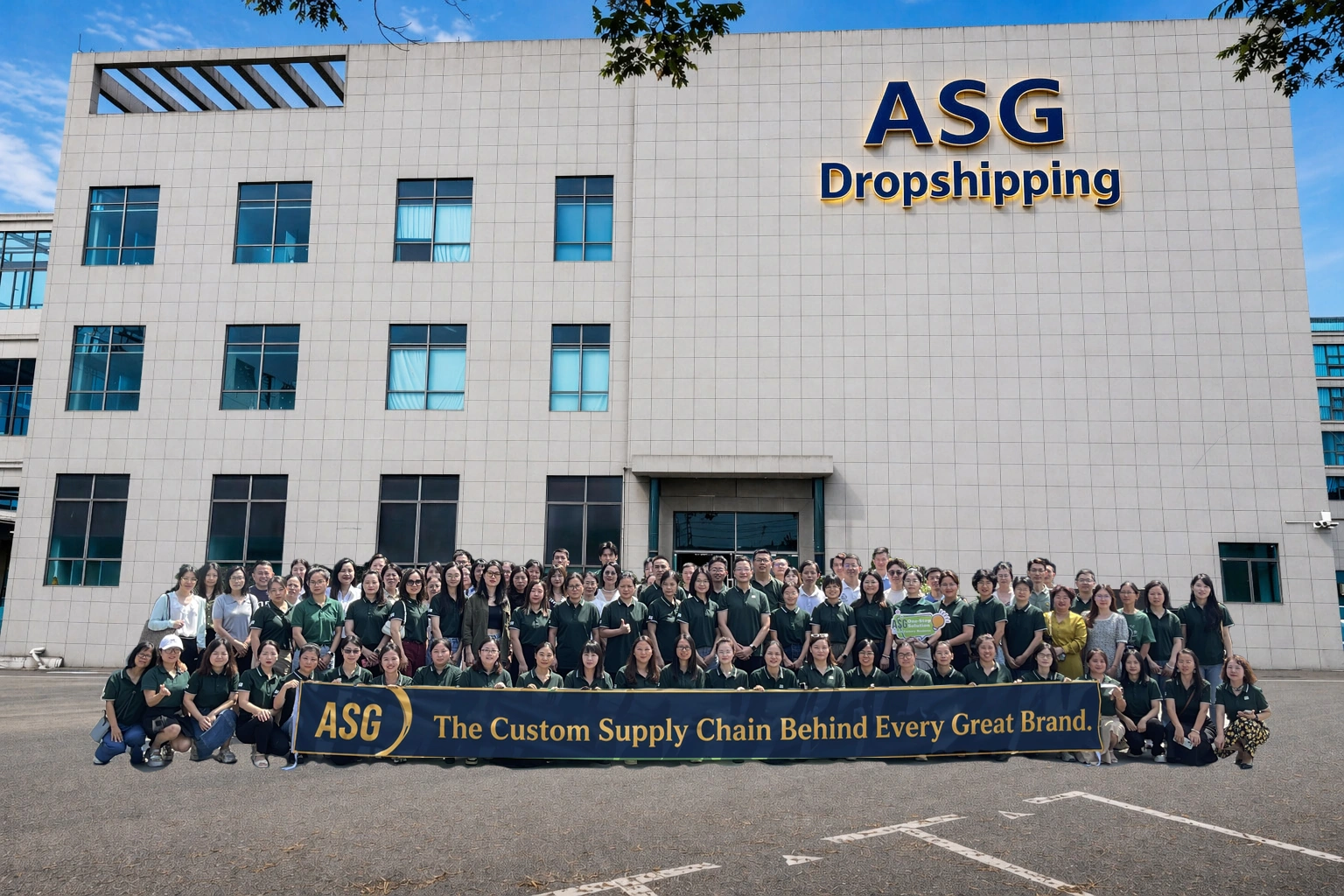
How to read this hub. It diagnoses and routes; it does not rank providers or quote prices. Photographs on this page show ASG locations and day-to-day operations in China; they do not establish a specific customer, order, supplier, route or performance result.
When a Supplier Switch Is Justified and When It Is Not
A switch earns its risk when the same failure repeats, the cause sits inside the supplier's control, and a written correction was refused or did not hold.
- If a failure repeats and the correction cannot be evidenced, then evaluate an alternative route, because the cause is not accidental.
- If the specification or packaging brief was never written down, then fix that first, because a new dropshipping supplier inherits the same ambiguity.
- If the failure sits in route design, carrier handoff or the last mile, then changing the supplier alone may not fix it, because the same logistics path can reproduce the failure.
- If you cannot name the record that would settle the cause, then pause, because a migration started on assumption carries it forward.
Switching creates its own exposure: specification drift, first-article quality, capacity, packaging versions, logistics, intellectual property, inventory accuracy and continuity.
Bottleneck Finder: Three Questions Before You Open a Guide
Answer three questions first. Each answer narrows the atlas below to one route.
- What failed, exactly? Name the object: a unit, an order, a batch, a shipment, a stock count or a reply. "Bad service" cannot be routed.
- Where did the handoff fail? Between specification and production, production and inspection, inspection and pack-out, pack-out and dispatch, dispatch and carrier, or carrier and customer.
- What evidence would settle the cause? Name the record you would read, and who holds it. If nobody holds it, that missing record is your first finding.
If two answers point at different routes, treat them as two cases; where one is a consequence of the other, fix the upstream route first.
The Operations Atlas: Seven Routes From Symptom to Evidence
Each route pairs a symptom with the control point that owns it, the record that settles it and the topic that answers it.
| Route | Symptom you can observe | Likely control point | Evidence that settles it | Topic that answers it |
|---|---|---|---|---|
| R1 Supplier execution | Confirmed dispatch dates slip batch after batch | Order confirmation and production scheduling | Confirmed dates against actual dispatch | Agent selection |
| R2 Specification | Units differ from the approved sample | Spec, sample approval and change control | Signed spec plus later change approvals | Supplier verification |
| R3 Quality | Complaints cluster on one repeating defect | Inspection criteria and disposition of failures | Checklist with defect classes and dispositions | Quality control |
| R4 Packaging | Mixed label versions, wrong inserts, damage | Packaging spec ownership and version control | Approved version plus that order's pack-out record | Diagnostic topic |
| R5 Inventory and order data | Oversells, wrong variants, stock kept in chat | Stock ledger and order mapping | Ledger export plus one traced order | Diagnostic topic |
| R6 Shipping | Transit varies by lane; tracking stalls | Route design, carrier acceptance, customs data | Events from label creation to first scan | Shipping route selection |
| R7 Exception communication | Customers see problems before you do | Cutoffs, named owner, escalation and closure | One exception file with owner and closure | Agent selection |
Responsibility Map: Four Roles, Not Four Quality Grades
Supplier, platform, private agent and fulfillment partner are roles, not quality grades. Their actual responsibilities come from the agreement and operating records, not the label.

| Role | Typical operating scope | What stays yours unless included | Evidence that shows the boundary |
|---|---|---|---|
| Direct supplier | Production to agreed specification, scheduling, first-article samples | Multi-supplier coordination, independent inspection, packaging version control | Signed spec, approved sample, confirmed schedule |
| Supplier platform | Catalog access, order workflow, support within its current policy | SKU-level criteria, custom packaging, a named exception owner unless included | Current policy, order log, stock export |
| Private agent | Supplier coordination, purchase follow-up, scoped checks and dispatch when included | Product decisions, compliance duties, anything outside written scope | Written scope, defect-class checklist, exception rule |
| Fulfillment partner | Receiving, storage, inventory records, pick and pack, carrier handoff when included | Supplier selection, production quality, specification ownership | Receiving record, stock ledger, acceptance scan |
A role removes work only when it also removes a documented decision.
The Switching Route Map: Six Stages With a Fallback Rail
Use six stages: diagnose, verify, pilot, parallel, staged migration and monitoring. Keep the current route as the fallback until each stage passes.
| Stage | What it produces | Fallback rail | Stop condition |
|---|---|---|---|
| 1 Diagnose | A named failure, its control point, the proving record | Current route unchanged | The failure cannot be observed twice |
| 2 Verify | The alternative's scope and evidence, read against your case | Current route unchanged | Evidence is refused or stays generic |
| 3 Pilot | One cohort covering each product type, lane and exception | Current route handles everything outside the cohort | A stage produces no record |
| 4 Run in parallel | Both routes live on comparable orders, same criteria | Either route can absorb the other's volume | Fallback capacity is quietly given up |
| 5 Migrate in stages | Volume moved by SKU group or lane, each with a dated review | Each stage stays reversible until its review passes | A stage passes on verbal assurance |
| 6 Monitor | A recurring review of the evidence used to diagnose | A second source stays warm where risk concentrates | Monitoring stops because it feels finished |
This sequence reduces exposure; it does not promise uninterrupted switching, fixed timing or guaranteed results.
Guide Index by Problem
Open the guide that matches the control point you named, not the loudest symptom.
- The coordinating party is the question. Nobody owns the handoffs: work through the dropshipping agent guide on scope, evidence and pilots.
- The supplier itself is the question. Confirm who you buy from before volume moves, with the supplier verification and sourcing guide.
- Quality is the question. Nobody has written what acceptable means: set criteria with the quality control checklist, including defect classes and disposition.
- The route is the question. Transit varies or tracking stalls: compare lanes with the shipping optimization guide.
Packaging and inventory stay diagnostic topics inside quality and fulfillment scope.
Six Questions to Answer Before You Switch Suppliers
Each question names one record to request, what it can confirm, and where one example stops being enough evidence.
Did the supplier miss a confirmed dispatch date?
Check: A completed order timeline with the promised and actual dispatch dates.
One order does not prove a recurring delay or another supplier's performance.
What happened after a product failed inspection?
Check: The QC exception and the written corrective action that followed.
One handled defect does not establish a long-term defect rate or a lasting correction.
Did the shipped packaging match the approved version?
Check: The packaging approval and a matching finished pack-out.
One matching pack-out does not show that every later order uses the same version.
Where did the shipment stop moving?
Check: The tracking and exception record from label creation to carrier acceptance.
One shipment does not establish route-wide delivery speed or peak capacity.
Did inventory and order status match during handoff?
Check: The stock and order-status handoff for one order across both systems.
One handoff does not prove later reconciliation or system-wide consistency.
Can you keep a fallback while testing the new supplier?
Check: A parallel switch plan with stages, fallback capacity and review dates.
A plan describes the intended controls; only execution can show whether the switch works.
We Are Loved by Our Customers

“Excellent dropshipping agent Stenfan. Last year, I worked with Lucy to find resources and products. ASG is always reliable and their products are of high quality.”

“Through ASG, I found new suppliers. Their service was perfect, providing top-notch brand customization and global logistics coverage.”

“High quality products and prompt service. ASG’s production follow-up helped solve quality problems and saved us time.”

“I have been working with ASG for a few years. Their product, service and brand customization saved me time and effort.”
Plate 08 · Decision terminal
Your Next Action: One of Four
Record one state, its evidence, the owner and the review date. Without named evidence the decision stays open.
- FIX CURRENT ROUTE. The control point is yours or correctable where you are; write the missing specification, criteria or cutoff, then re-observe.
- VERIFY ALTERNATIVE. The cause is outside your control but the alternative is unevidenced; collect scope and records before orders move.
- PILOT IN PARALLEL. Evidence is in hand and stop conditions written; run a covering cohort while the current route keeps the rest.
- PAUSE THE SWITCH. The failure cannot be observed twice, or the fallback would have to be dropped; hold and re-diagnose.
Frequently Asked Questions
When should I switch dropshipping suppliers?
Switch when the same failure repeats, the cause sits inside the supplier's control, and a written correction was refused or did not hold. A cheaper quotation is not a reason, and a failure you cannot observe twice is a diagnosis problem.
How do I tell whether the problem is my supplier or my own specification?
Read the specification, the approved sample and every change since. If the failure sits outside what was specified, execution is the control point. If nothing was specified, the ambiguity is yours.
Is a private agent better than a platform or a direct supplier?
No role is better in general. Platform, direct supplier, private agent and fulfillment partner divide the same work differently. Compare what each owns in writing against the handoff that failed.
What evidence should I collect before evaluating a new China fulfillment route?
Collect one record per suspected control point: confirmed against actual dispatch dates, a checklist with defect classes, an approved packaging version, a stock ledger export, one traced order and one shipment's tracking events.
Can I switch suppliers without interrupting current orders?
Nobody can promise that. You reduce exposure by piloting a covering cohort, running both routes in parallel, migrating by SKU group or lane, and keeping the fallback until each stage passes its review.
Which guide should I read first?
Start from the control point in the Bottleneck Finder. Coordination gaps route to agent selection, unknown factories to supplier verification, repeating defects to quality control, lane problems to shipping.
Need a Second Opinion Before You Switch?
Bring one recurring failure and the record behind it. We’ll help you identify the control point and plan the safest next test.